
| Table of Contents | |
Emergency Water Storage
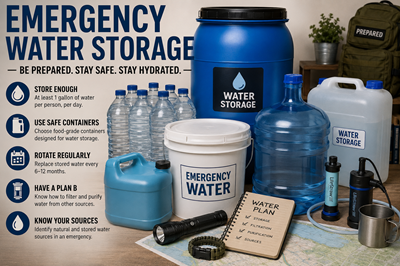
 Water is the single most important resource during almost every emergency. While food shortages may take weeks to become life-threatening, a lack of safe drinking water can quickly become a serious medical emergency. Every household should maintain an emergency water supply that provides enough water for drinking, food preparation, hygiene, and basic sanitation while also developing reliable backup methods to collect, filter, and purify additional water if stored supplies become depleted.
Preparedness experts generally recommend storing a minimum of four liters (one gallon) of water per person per day. Although a two-week supply is often considered the minimum goal, many experienced preppers gradually work toward storing one to three months of water while also preparing alternative sources that can sustain their household during longer disruptions.
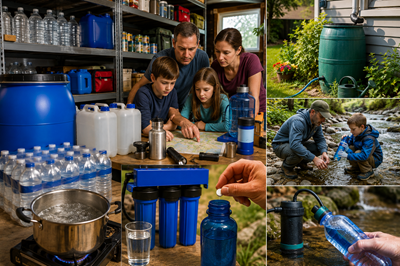
Successful emergency water preparedness extends beyond simply purchasing bottled water. It includes selecting appropriate storage containers, protecting water quality during storage, rotating supplies regularly, understanding water treatment methods, identifying local emergency water sources, and maintaining multiple methods of filtration and purification. A complete water preparedness plan combines stored water with the knowledge and equipment needed to safely produce additional drinking water whenever necessary.
Introduction
Water supports every aspect of survival. It regulates body temperature, transports nutrients, prepares food, supports sanitation, maintains hygiene, and allows countless everyday activities to continue during emergencies. Without dependable access to clean water, even a well-stocked emergency pantry quickly becomes less useful.
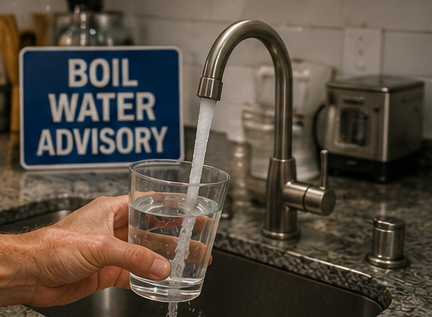 Modern society often assumes clean water will always be available by simply turning on a faucet. However, severe weather, earthquakes, floods, power outages, infrastructure failures, drought, contamination events, wildfires, and boil water advisories can all interrupt municipal water systems with little warning. Rural households may also experience well failures caused by electrical outages or damaged pumping equipment.
Emergency water storage should never be viewed as a single purchase. Instead, it should become part of an ongoing preparedness strategy that combines storage, conservation, filtration, purification, collection, and continuous planning. This learning hub introduces the core concepts every household should understand while providing access to more detailed training lessons covering each topic in depth.
Why This Matters
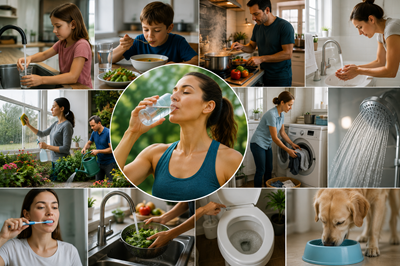 Every preparedness plan ultimately depends on water. Food can often be rationed, electricity can be replaced with alternative energy sources, and many conveniences can simply be postponed. Water offers far fewer alternatives. A family that loses access to safe drinking water may face dehydration, illness, poor sanitation, and rapidly declining living conditions within only a few days.
Proper planning provides options. Instead of reacting to shortages or standing in long lines during emergencies, prepared households already know how much water they require, where it is stored, how to protect its quality, and how to safely obtain additional supplies if necessary. Water preparedness reduces uncertainty while providing confidence that one of life’s most essential needs has already been addressed.
Developing a water preparedness plan also improves everyday resilience. Households with stored water are better prepared for temporary water main breaks, localized contamination events, planned maintenance, boil water advisories, and short-term power outages without requiring major lifestyle changes.
10 Most Common Water Storage Mistakes
Even households that make an effort to prepare often overlook important aspects of emergency water planning. The most common mistakes include storing too little water, relying only on bottled water, using improper containers, failing to rotate stored supplies, overlooking sanitation needs, ignoring water treatment, neglecting backup water sources, storing water improperly, forgetting special household requirements, and failing to build redundancy into their overall preparedness plan. Understanding these common mistakes before an emergency occurs allows you to correct weaknesses while conditions are still safe and comfortable.
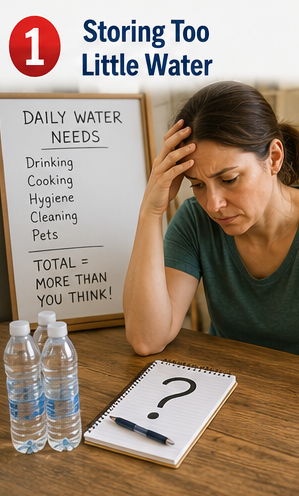 1. Storing Too Little Water
Many families underestimate how much water they actually use each day. While preparedness recommendations often suggest storing at least four liters (one gallon) per person per day, this represents only a basic starting point. Drinking, cooking, hygiene, cleaning, and caring for pets can quickly consume far more water than most people expect. A household that calculates its actual daily needs is far better prepared than one that simply guesses.
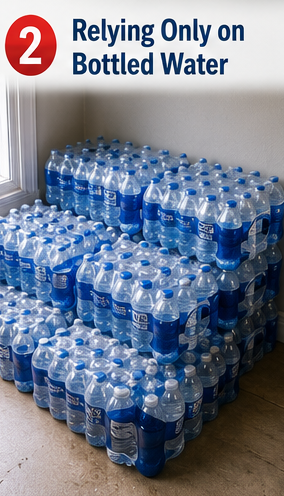 2. Relying Only on Bottled Water
Cases of bottled water are convenient and make an excellent first step toward preparedness, but they should not become your entire water strategy. Commercial bottled water is expensive to store in large quantities, requires significant space, and will eventually be consumed. A resilient preparedness plan combines bottled water with larger storage containers, refillable supplies, and methods for producing additional safe drinking water.
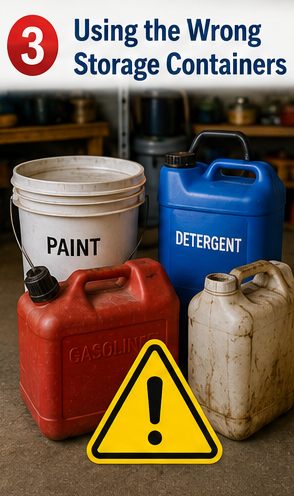 3. Using the Wrong Storage Containers
Not every container is suitable for storing drinking water. Containers that previously held chemicals, fuel, detergents, or other non-food products can contaminate stored water even after thorough cleaning. Some plastics also degrade over time when exposed to heat or sunlight. Food-grade containers specifically designed for water storage provide the safest and most reliable long-term solution.
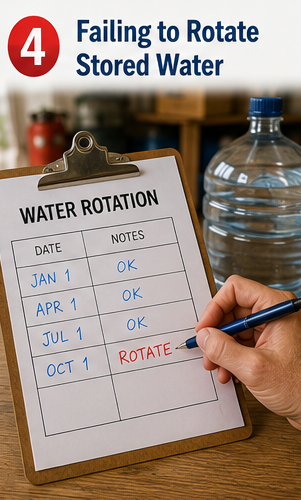 4. Failing to Rotate Stored Water
Water storage should not be viewed as a “fill it once and forget it” project. Although properly stored water often remains safe for long periods, regular inspections and scheduled rotation help maintain quality while allowing damaged containers, leaks, or contamination problems to be discovered before an emergency occurs. Establishing a simple rotation schedule turns water storage into a routine household task rather than an afterthought.
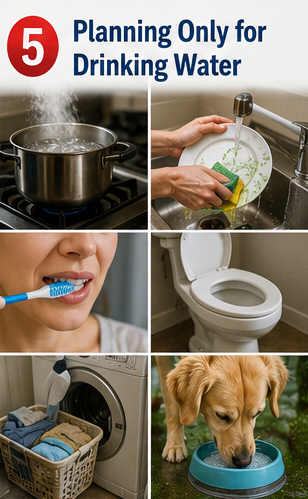 5. Planning Only for Drinking Water
Many preparedness plans focus entirely on drinking water while overlooking the many other ways water is used every day. Cooking, washing dishes, brushing teeth, personal hygiene, flushing toilets, laundry, cleaning, and caring for pets all require water. During extended emergencies, sanitation quickly becomes just as important as hydration in maintaining health and preventing disease.
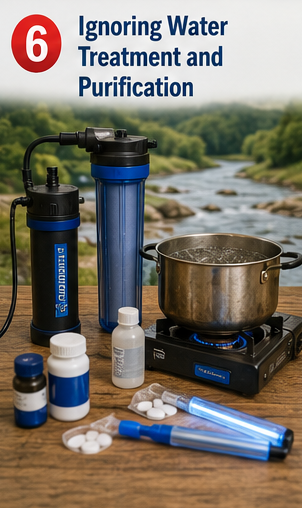 6. Ignoring Water Treatment and Purification
Stored water is only part of the solution. Every household should understand how to safely disinfect questionable water using boiling, chemical disinfectants, ultraviolet treatment, or other proven purification methods. Knowing how and when to treat water becomes essential once stored supplies begin to run low or alternative water sources must be used.
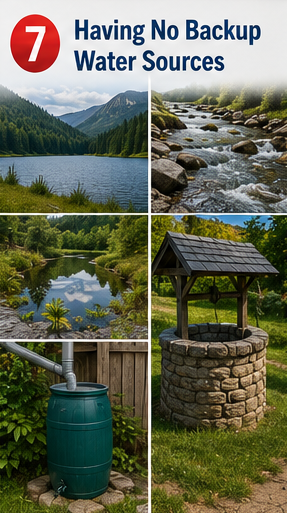 7. Having No Backup Water Sources
Eventually, every stored water supply has limits. Families should identify multiple alternative water sources before an emergency occurs, including rainwater collection systems, nearby lakes, rivers, ponds, springs, wells, or other dependable sources appropriate for their location. Knowing where additional water can be obtained provides valuable flexibility during long-term disruptions.
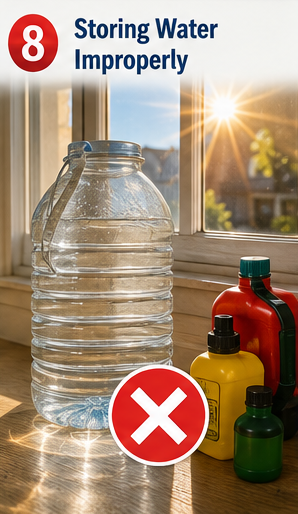 8. Storing Water Improperly
Even high-quality water can become compromised if stored under poor conditions. Water should be kept in a cool, dark location away from direct sunlight, chemicals, fuels, pesticides, and extreme temperatures whenever possible. Proper storage protects both the container and the water itself while extending its usable life.
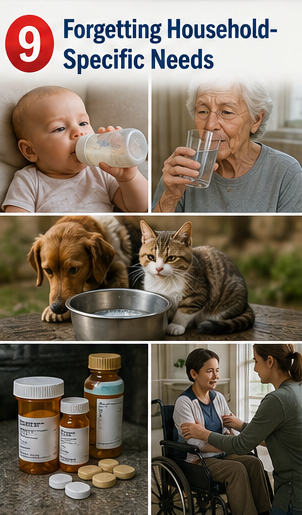 9. Forgetting Household-Specific Needs
Every household has unique water requirements. Infants may require water for preparing formula, elderly family members may have increased hydration needs, pets and livestock require daily water, and certain medical conditions can significantly increase water consumption. Emergency plans should always account for every member of the household rather than relying on generic estimates alone.
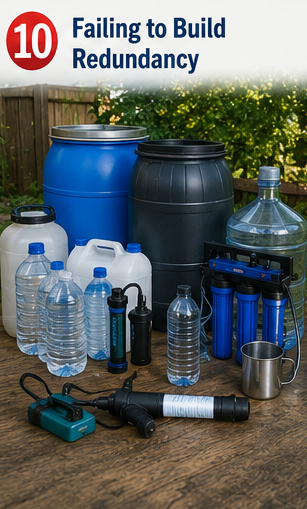 10. Failing to Build Redundancy
One of the most common preparedness mistakes is depending on a single solution. A truly resilient water plan layers multiple strategies together. It combines stored water, refillable containers, rainwater collection, filtration equipment, purification methods, and identified emergency water sources into one integrated system. If one method becomes unavailable, several others remain available to keep the household supplied with safe drinking water.
Water Storage Training & How To
The following training lessons explore each aspect of emergency water preparedness in greater detail.
Understanding Household Water Requirements
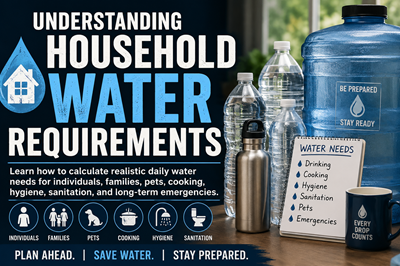 Learn how to calculate realistic daily water needs for individuals, families, pets, cooking, hygiene, sanitation, and long-term emergencies.
How Much Water Should You Store?
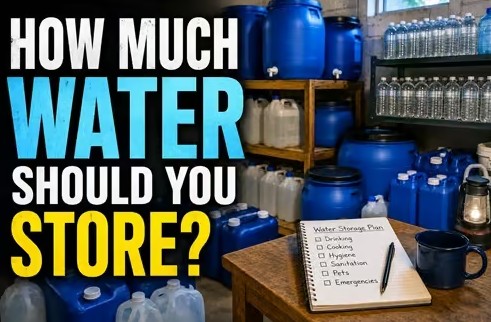 Explore recommended storage goals ranging from seventy-two-hour emergencies to long-term preparedness while learning practical methods for gradually building larger reserves.
Choosing Water Storage Containers
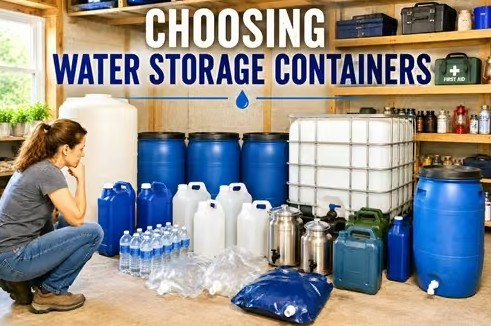 Compare bottled water, stackable containers, water barrels, tanks, jerry cans, collapsible containers, and other storage options while learning the advantages and limitations of each.
Building a Water Rotation Schedule
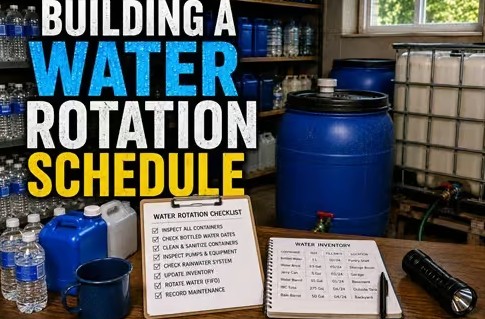 Develop simple maintenance routines that help preserve water quality while ensuring stored supplies remain organized and ready for use.
Treating Stored Water
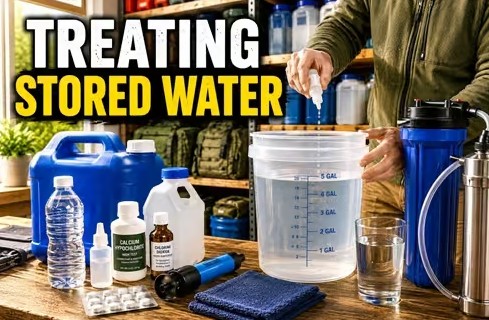 Learn when stored water requires treatment, how disinfectants work, and the safest methods for maintaining water quality over time.
Rainwater Collection Systems
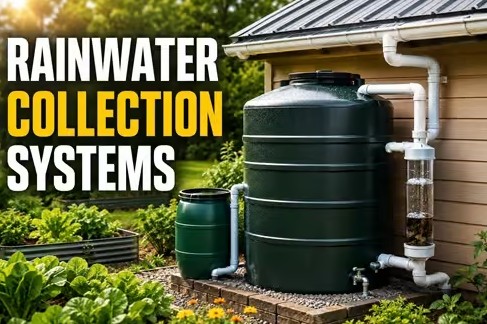 Understand how rainwater harvesting works, appropriate storage methods, legal considerations, and the role rainwater can play during emergencies.
Water Filtration Methods
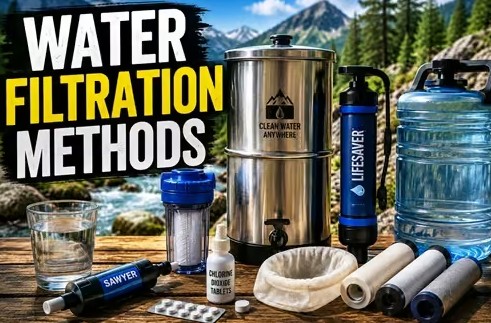 Compare gravity filters, portable filters, ceramic systems, membrane filters, activated carbon, and other filtration technologies while learning what each can and cannot remove.
Water Purification Techniques
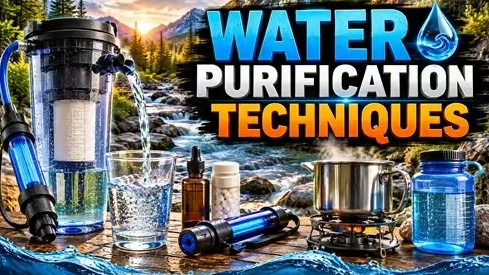 Learn when boiling, chemical disinfectants, ultraviolet treatment, and other purification methods should be used to eliminate dangerous microorganisms.
Finding Emergency Water Sources
Identify potential water sources available during disasters, including rivers, lakes, ponds, springs, snow, ice, rainwater, and household sources that are often overlooked.
Long-Term Water Storage
Develop layered storage strategies that combine household reserves, renewable collection systems, filtration equipment, and backup treatment methods for extended emergencies.
Common Water Storage Mistakes
Review the mistakes most frequently made by new preppers and learn practical ways to avoid them before they become serious problems.
Planning for Long-Term Water Security
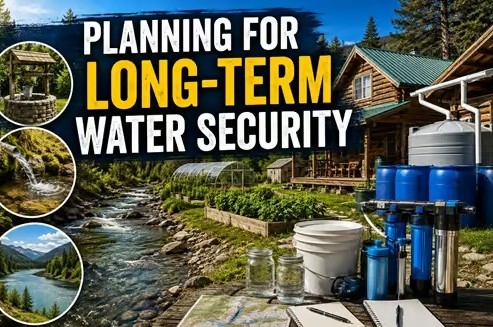 Long-term water planning is the process of ensuring that your household can continue obtaining safe water regardless of how long normal infrastructure remains unavailable. It is not built around a single piece of equipment or one dependable water source. Instead, it combines planning, practical skills, reliable equipment, and multiple independent systems that work together.
Safe Water Handbook: Complete Guide to Water Security & Purification
 Water is the most critical resource in any survival situation. While food supports long-term endurance, water determines immediate survival. The human body can function for weeks without food under the right conditions, but without water, physical and cognitive decline begins within hours and can become life-threatening within days.
Prepper Watch – Water
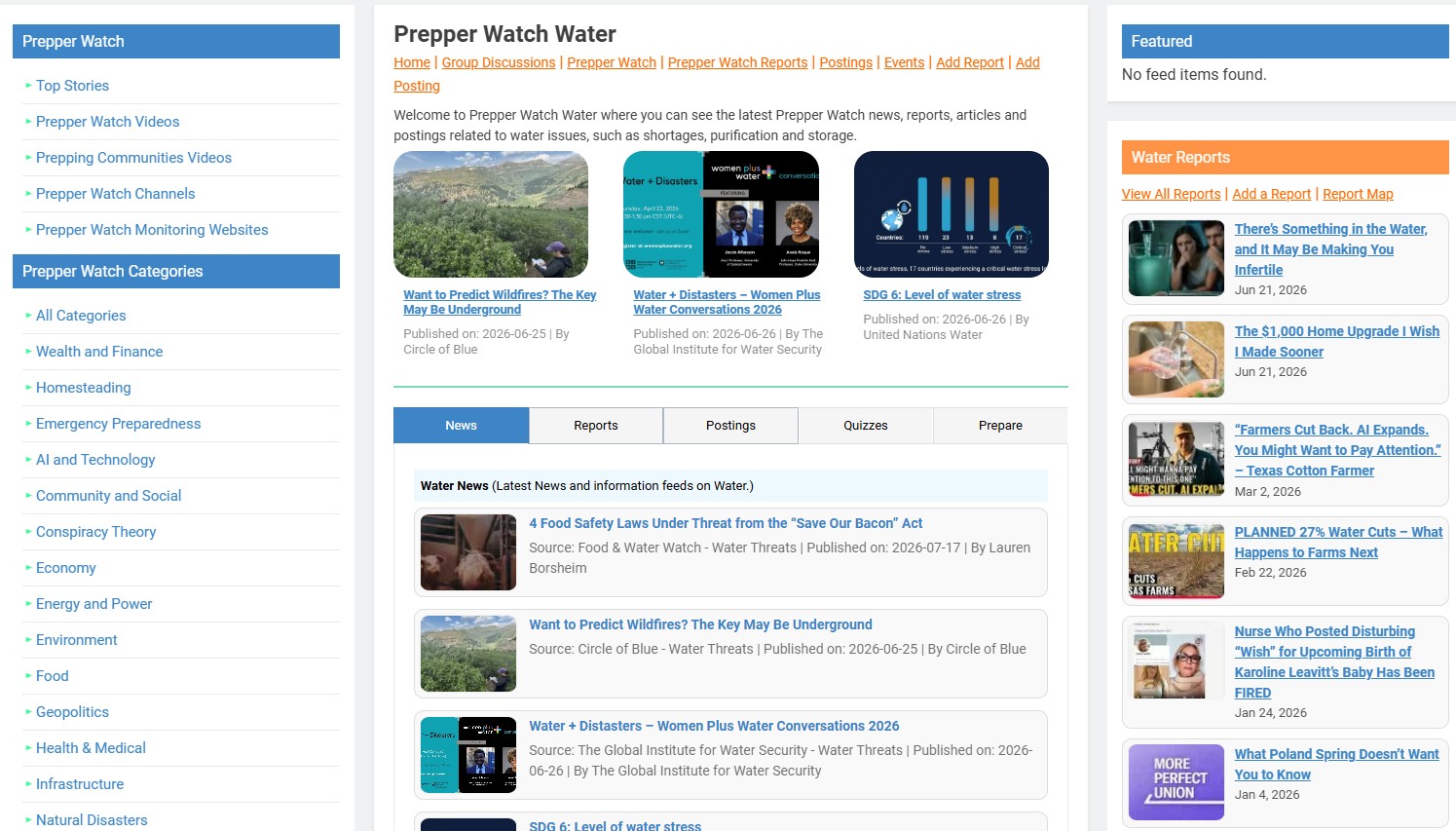
View the latest news and videos related to water issues, such as shortages, purification and storage in Prepper Watch – Water.
Prepper Watch Reports – Water
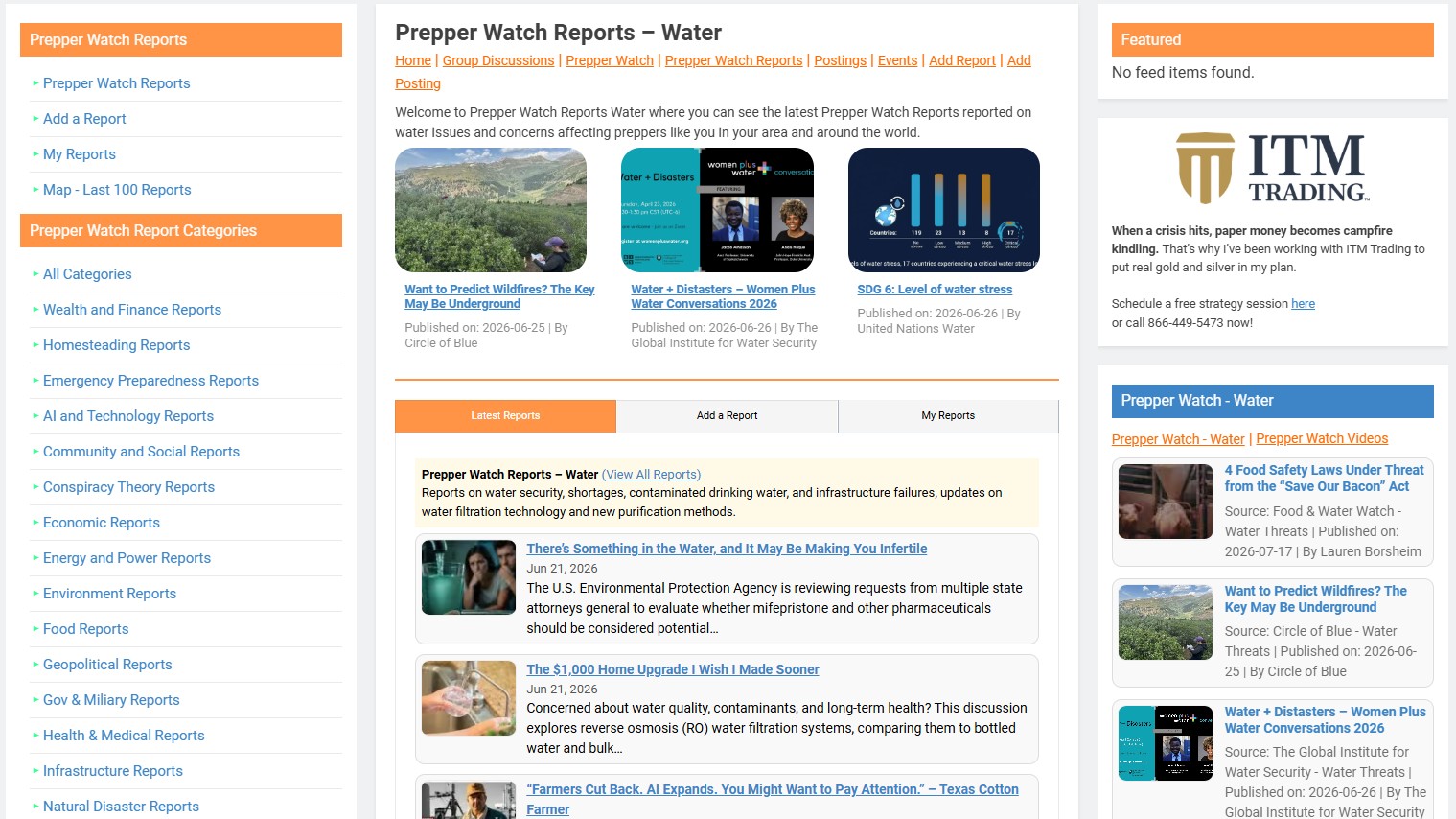
See a water issue in your area? Let other people know through Prepper Watch Report, where you report the news on the ground. It’s fast and easy! try it now Prepper Watch Reports – Water.
Prepper Watch Postings – Water
Find postings for water related topics such as water security, water filtration, water pollution, microplastic pollution, waterborne diseases, etc..
Take a Quiz
Think you understand emergency water preparedness?
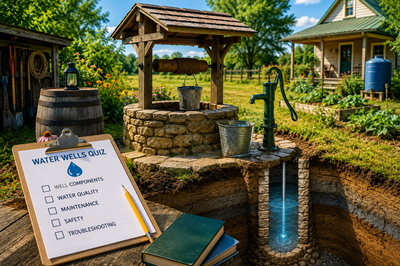
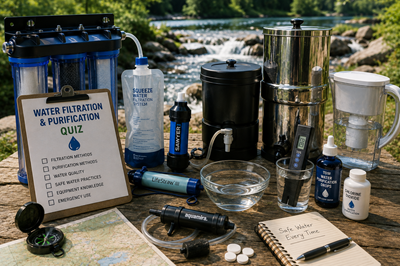
Test your knowledge by completing one of these Emergency Water Storage Quizzes and identify areas where additional training may strengthen your preparedness plan.
 Water Filtration & Purification
Related Categories
Continue exploring related preparedness subjects.
- Water
- Water Filtration
- Water Purification
- Rainwater Collection
- Food & Water
- Emergency Preparedness
- Off-Grid Living
- Survival Skills
Related Preparedness Topics
Emergency water planning connects closely with many other preparedness disciplines.
- Emergency Food Storage
- Food Preservation
- Emergency Cooking
- First Aid & Medical Preparedness
- Power Outages
- Emergency Communications
- Homesteading
- Gardening
- Disaster Planning
- Family Preparedness
Discussion Groups – Water
Preparedness improves when knowledge is shared. Join other members of Prepping Communities to discuss emergency water storage techniques, compare equipment, ask questions, share experiences, and learn how other households prepare for water shortages and infrastructure disruptions.
Prepper Offline™
Like what you see? This entire library of 10,000+ preparedness postings is available offline, no internet required.
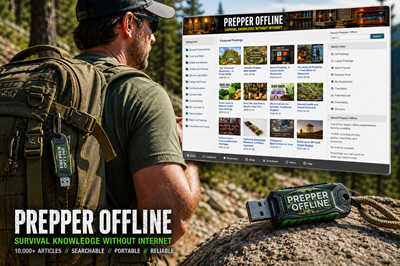
For the price of a good book, Prepper Offline gives you access to 10,000+ preparedness resources and more…
- Search across 10,000+ preparedness, survival, homesteading, and self-reliance resources in one organized library.
- Works completely offline with no internet connection required.
- Create multiple backup copies for your personal preparedness plans.
- Store it on a USB drive, flash drive, external drive, laptop, or desktop computer.
- Works like a website using any standard browser, but no internet connection is required.
- Keep a copy available in your home, vehicle, cabin, bug-out bag, emergency kit, or off-grid location when access matters most.
© Prepping Communities. This content is for informational purposes only and not professional advice. Use at your own risk.
Terms | Privacy | Guidelines