
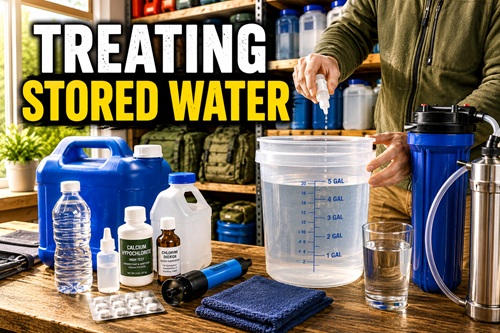
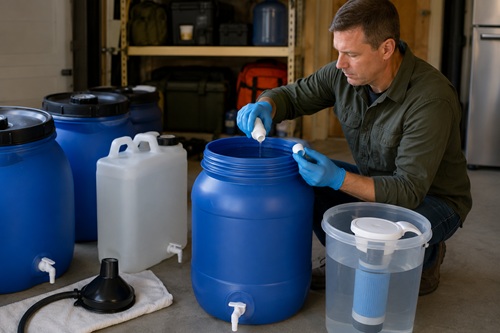
Many people are surprised to learn that water itself does not simply “go bad” with age. Pure water is chemically stable and does not spoil in the same way that food does. The reason stored water sometimes requires treatment is not because time alone makes it unsafe, but because the conditions surrounding the water may change. Microorganisms, contamination introduced during handling, deteriorating containers, or uncertain storage conditions can all influence whether treatment becomes necessary. Understanding these factors allows households to focus on maintaining water quality rather than replacing perfectly good water unnecessarily.
One of the most important considerations is the quality of the water before it entered storage. Water supplied by a properly operated municipal water system has already undergone treatment and typically contains a small residual disinfectant that helps suppress bacterial growth during distribution. When this water is transferred into clean, food-grade containers using proper sanitation procedures and stored correctly, it often remains suitable for extended periods without requiring additional treatment. In contrast, untreated well water, collected rainwater, spring water, or surface water may contain microorganisms that continue to survive or multiply during storage if they are not properly treated beforehand.
The condition of the storage container is equally important. Food-grade containers specifically manufactured for potable water protect stored water by resisting chemical breakdown and preventing outside contamination. Damaged lids, worn gaskets, cracked containers, or containers that have previously held chemicals may compromise water quality regardless of how clean the water was when originally stored. Even a small defect that allows insects, dust, or airborne contaminants to enter the container may justify retreating the stored water before it is consumed.
Human handling also plays a significant role in determining whether treatment becomes necessary. Every time a container is opened, transferred, refilled, or used, there is an opportunity for contamination to be introduced. Hands, funnels, hoses, transfer pumps, measuring cups, and dispensing spouts can all carry microorganisms if they have not been properly cleaned. This is one reason many preparedness plans recommend minimizing unnecessary opening of long-term storage containers while using smaller containers for everyday access.
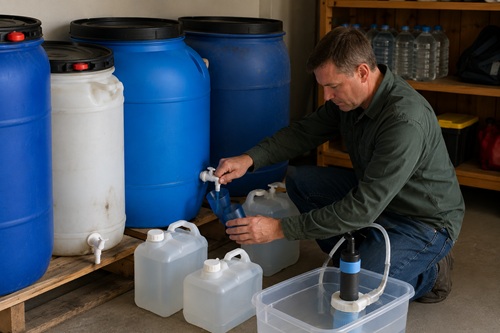
Storage conditions influence water quality over time as well. Containers stored in cool, dark environments generally experience fewer problems than those exposed to repeated temperature extremes, prolonged sunlight, or excessive humidity. Although proper storage conditions cannot eliminate every risk, they significantly reduce the likelihood that the storage environment itself will contribute to contamination or container deterioration. Protecting stored water from heat, freezing, ultraviolet light, and physical damage remains one of the simplest ways to preserve long-term water quality.
Another reason treatment may become necessary is uncertainty. During a prolonged emergency, a household may no longer know whether a storage container remained completely sealed, whether floodwater reached the storage area, or whether contaminated equipment was accidentally used during previous maintenance. When the history of stored water cannot be verified with confidence, retreating the water before use becomes a practical precaution that helps reduce unnecessary risk.
Preparedness planners should also recognize that different intended uses require different levels of water quality. Water used for flushing toilets, cleaning equipment, extinguishing fires, or irrigating gardens generally requires much less treatment than water intended for drinking, cooking, brushing teeth, preparing infant formula, or cleaning open wounds. Understanding the intended use helps determine whether treatment is necessary and what level of purification is appropriate.
One of the most valuable benefits of understanding when water requires treatment is avoiding unnecessary work. Some households routinely discard and replace perfectly usable water simply because a calendar date has arrived, while others fail to retreat water whose storage history has become questionable. Effective preparedness is based on evaluating actual conditions rather than relying solely on fixed timelines. A well-maintained storage system allows treatment decisions to be based on inspection, storage history, and water source rather than assumptions.
Ultimately, treating stored water should be viewed as a preventive measure rather than a response to visible problems. Most harmful microorganisms cannot be seen, smelled, or tasted, and water that appears perfectly clean may still require treatment if contamination is suspected. By understanding why treatment is sometimes necessary—and why it is not always required—households develop greater confidence in managing their emergency water supplies while avoiding both unnecessary waste and avoidable health risks.
Understanding Water Contamination
Before selecting a treatment method, it is important to understand what treatment is intended to address. Water can become contaminated in many different ways, and not all contaminants present the same risks or respond to the same treatment methods. Some hazards are biological and can be destroyed through disinfection. Others are chemical or physical in nature and require entirely different approaches. Learning to recognize these categories helps households select the safest and most effective treatment strategy for every situation.
The first and most commonly discussed category is biological contamination. This includes bacteria, viruses, protozoa, algae, fungi, and other living organisms that may cause illness when consumed. These microorganisms enter water through animal waste, human sewage, decaying organic matter, contaminated equipment, or naturally occurring environmental sources. Because biological contaminants are invisible to the naked eye, water may appear crystal clear while still containing harmful organisms. Chemical disinfectants, boiling, ultraviolet treatment, and certain filtration systems are designed specifically to address this category of contamination.
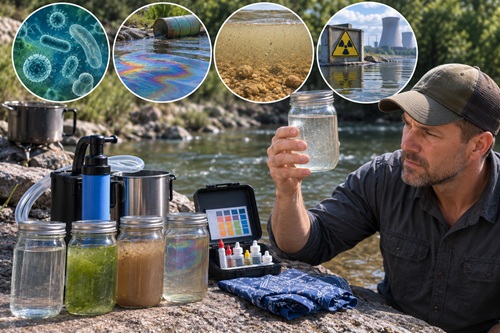
Chemical contamination presents a different challenge. Fuels, pesticides, herbicides, industrial chemicals, cleaning products, fertilizers, heavy metals, and other dissolved substances cannot usually be removed through ordinary disinfection. Adding bleach to chemically contaminated water does not make it safe to drink. In some cases, chemical reactions may even create additional hazards. Avoiding contaminated water sources remains the safest approach whenever chemical pollution is suspected.
Physical contamination refers to suspended particles such as dirt, sand, rust, sediment, leaves, insects, or other visible debris. Although these materials do not always present an immediate health risk, they often interfere with effective disinfection because microorganisms can hide within suspended particles. Pre-filtering cloudy water before applying chemical disinfectants or boiling greatly improves treatment effectiveness while producing cleaner, better-tasting water.
Radiological contamination, while much less common, represents another category that deserves recognition. Radioactive particles introduced through industrial accidents, nuclear incidents, or certain naturally occurring geological conditions require specialized treatment methods beyond the scope of ordinary household disinfection. Most routine emergency water treatment methods are not designed to remove radioactive contamination, making source selection especially important if such conditions are suspected.
It is also important to understand that contamination categories frequently overlap. Floodwater, for example, may contain biological pathogens, chemical pollutants, fuel residues, sewage, sediment, and decaying organic material simultaneously. Treating this type of water often requires several steps—including filtration, disinfection, and careful evaluation of chemical risks—rather than relying on a single treatment method.
For this reason, effective water treatment always begins with evaluating the source of the water before selecting a treatment method. Understanding what is likely to be present allows households to apply the appropriate combination of filtration, disinfection, storage, and ongoing maintenance while avoiding unnecessary treatment or false confidence.
The next section builds directly on this foundation by examining when stored water should actually be treated, allowing readers to distinguish between situations where treatment is recommended, situations where it is essential, and situations where properly stored water may not require additional treatment at all.
When Stored Water Should Be Treated
One of the most practical questions in emergency preparedness is knowing when stored water actually requires treatment. Treating every container regardless of its condition often wastes time, treatment supplies, and water, while failing to treat water when circumstances warrant may expose the household to unnecessary health risks. The goal is not to disinfect water repeatedly without reason, but to understand the situations where treatment improves safety and confidence.
The first consideration is the source of the water. Factory-sealed bottled water from a reputable manufacturer generally requires no additional treatment while the original seal remains intact and the bottles have been stored under appropriate conditions. Likewise, properly treated municipal tap water that was transferred into clean, sanitized food-grade containers and stored correctly often remains suitable for long-term storage without requiring routine retreatment. If the container has remained sealed and inspections reveal no damage or contamination, additional chemical treatment may not provide meaningful benefits.
Water should almost always be treated when it originates from an uncertain source. Rainwater collected from rooftops, untreated well water, spring water, river water, lake water, pond water, or melted snow may all contain microorganisms capable of causing illness. Even if these sources appear exceptionally clean, appearance alone cannot verify microbiological safety. Appropriate treatment before long-term storage significantly reduces the risk that microorganisms will survive and multiply over time.
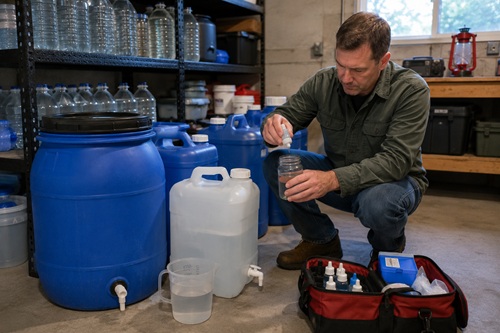
Stored water should also be treated whenever contamination is suspected. A storage container that was accidentally left partially open, exposed to floodwater, handled with contaminated equipment, or stored where insects or rodents may have gained access deserves careful evaluation before use. Even if the water looks and smells normal, uncertainty regarding its storage history often justifies retreatment as a precautionary measure.
Another situation requiring treatment occurs after prolonged interruptions to routine maintenance. Households occasionally discover forgotten containers that have remained in storage far longer than originally intended. While the water itself may still be usable, the condition of the container, seals, labels, and storage environment may no longer be known with confidence. Rather than relying on assumptions, retreating the water before consumption provides an additional layer of protection while the container itself can be inspected, cleaned, and returned to service.
Natural disasters frequently create conditions where treatment becomes essential. Flooding, hurricanes, earthquakes, wildfires, severe storms, and infrastructure failures may compromise both public water systems and privately stored water supplies. Floodwater can introduce sewage, chemicals, and microorganisms into storage areas, while damaged roofs or broken plumbing may expose containers to contamination. Any stored water affected by these events should be evaluated carefully before use and treated whenever appropriate.
Water treatment is equally important whenever containers are repeatedly opened during an emergency. Every opening introduces opportunities for microorganisms to enter through handling, airborne dust, transfer equipment, or contaminated dispensing spouts. Larger storage systems that are accessed frequently often benefit from transferring water into smaller daily-use containers, minimizing repeated exposure of the primary reserve while simplifying household water management.
Emergency evacuation presents another circumstance where treatment may become necessary. Water transported in vehicles, transferred between containers, or collected from unfamiliar sources during travel often experiences more handling than stationary household reserves. Portable water systems should therefore be inspected regularly, and water should be treated whenever contamination cannot be confidently ruled out.
Treatment is also recommended when household members have increased vulnerability to waterborne illness. Infants, older adults, pregnant women, individuals recovering from illness, and people with weakened immune systems may be more susceptible to microorganisms that healthy adults could tolerate without serious consequences. In these situations, a more conservative approach to water treatment provides additional protection for those at greatest risk.
The decision to treat stored water should never rely solely on its appearance. Clear, odorless water can still contain harmful microorganisms, while slightly cloudy water may simply contain harmless sediment. Visual inspection remains an important part of evaluating stored water, but treatment decisions should also consider the water source, storage history, container condition, handling practices, and any events that may have introduced contamination.
Ultimately, the safest approach is to treat water whenever reasonable doubt exists about its safety. The small amount of time and disinfectant required to retreat questionable water is insignificant compared to the consequences of consuming contaminated drinking water during an emergency. Understanding when treatment is appropriate allows households to preserve valuable treatment supplies while ensuring that water intended for drinking and food preparation remains as safe as possible.
When Stored Water Should Be Treated
| Situation | Treatment Recommended? | Reason |
|---|---|---|
| Factory-sealed bottled water with intact seal | Usually No | Manufacturer sealing and proper storage generally provide adequate protection. |
| Municipal tap water stored in sanitized food-grade containers | Usually No | Properly treated water stored correctly often remains suitable for long-term storage. |
| Rainwater collected for storage | Yes | May contain biological contaminants from roofs, gutters, and the environment. |
| Untreated well water | Yes | Natural microorganisms may be present. |
| River, lake, pond, or stream water | Yes | Surface water commonly contains bacteria, protozoa, viruses, and organic contamination. |
| Water with uncertain storage history | Yes | Storage conditions and possible contamination cannot be verified. |
| Water exposed to flooding or damaged storage | Yes | Floodwater and debris may introduce biological and chemical hazards. |
| Frequently opened storage containers | Often Yes | Increased handling raises contamination risk. |
| Water intended for medically vulnerable individuals | Strongly Recommended | Provides additional protection against waterborne illness. |
Understanding Water Disinfectants
Water disinfectants are substances that destroy or deactivate harmful microorganisms, reducing the likelihood that stored water will transmit disease. Although several different disinfectants are available for emergency preparedness, they all work toward the same objective: making biologically contaminated water safer to drink. Choosing the correct disinfectant depends upon the water source, storage conditions, expected storage duration, and the specific microorganisms that may be present.
The most familiar disinfectant is chlorine. Municipal water systems throughout much of the world rely on carefully controlled chlorine treatment because it is effective against a wide range of bacteria and viruses while leaving a small residual concentration that continues protecting the water as it travels through pipes and distribution systems. This residual disinfectant is one reason properly treated municipal tap water often stores successfully for extended periods when transferred into clean containers.
For household preparedness, unscented liquid household bleach is the most commonly recommended chlorine source. When it contains only sodium hypochlorite and no added fragrances, detergents, color-safe additives, or cleaning agents, household bleach can be used to disinfect drinking water when applied in the correct concentration. Because bleach gradually loses strength over time, fresh products should be rotated regularly as part of the household emergency supply.
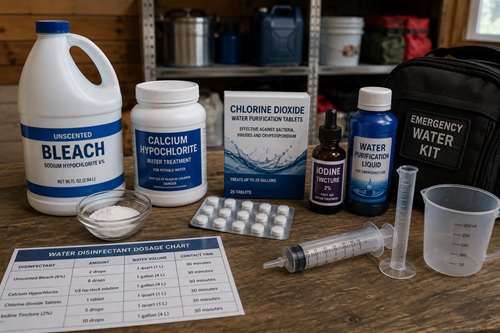
Calcium hypochlorite provides another highly effective chlorine source. Unlike liquid bleach, it is commonly sold as a dry granular or powdered product intended for water treatment or swimming pool sanitation. Properly stored calcium hypochlorite has a much longer shelf life than liquid bleach, making it popular among preparedness-minded households that wish to maintain long-term disinfection capability. However, because it is significantly more concentrated, it must first be mixed into a stock solution before being used to disinfect drinking water. Directly adding concentrated calcium hypochlorite to drinking water can produce unsafe chlorine levels.
Chlorine dioxide represents a different type of disinfectant that is frequently packaged as emergency water purification tablets. It is especially effective against certain microorganisms that are more resistant to ordinary chlorine treatment, including Cryptosporidium, one of the more difficult waterborne protozoa to control. The primary disadvantages are longer treatment times and higher cost compared to household bleach, although many preparedness kits include chlorine dioxide tablets because of their convenience and broad effectiveness.
Iodine has historically been used for emergency water treatment, particularly by military personnel, backpackers, and travelers. While effective against many bacteria and viruses, iodine is generally less desirable for routine household preparedness because it leaves a noticeable taste, may be unsuitable for long-term use, and is not recommended for certain individuals, including those with thyroid disorders, iodine allergies, or pregnant women. For these reasons, chlorine-based products have largely replaced iodine in many preparedness plans.
Commercial emergency water treatment products are available in a variety of forms, including tablets, liquids, powders, and concentrated solutions. Many are specifically formulated for outdoor recreation, disaster preparedness, and humanitarian response. These products simplify dosage calculations while providing clearly labeled treatment instructions, making them attractive options for emergency kits and bug-out bags.
It is important to recognize that disinfectants are designed primarily to control biological hazards. They do not remove sediment, fuel contamination, pesticides, heavy metals, industrial chemicals, or dissolved salts. Water that is chemically contaminated requires different treatment methods, and in many situations the safest decision is to locate an alternative water source rather than attempting to treat contaminated water.
Understanding how each disinfectant works allows households to select the most appropriate option for different situations instead of assuming every product performs identically. The following sections examine each treatment method in greater detail, beginning with the most commonly used household disinfectant: unscented household bleach.
Comparison of Common Water Disinfectants
Selecting the right disinfectant begins with understanding that every product has strengths, limitations, and situations where it performs best. No single disinfectant is ideal for every water source or every emergency. Some products are inexpensive and readily available, while others provide broader protection against difficult microorganisms. Shelf life, ease of use, storage requirements, and intended application should all be considered when building a household water treatment plan.
For most households, unscented liquid household bleach remains the primary emergency disinfectant because it is inexpensive, widely available, and highly effective against many bacteria and viruses. However, because bleach gradually loses strength over time, it requires periodic replacement as part of the household preparedness program.
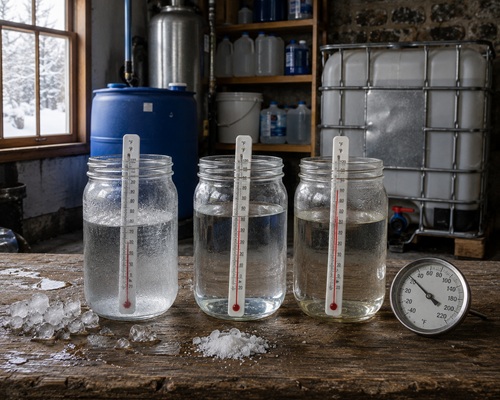
Calcium hypochlorite offers significantly longer storage life and allows a household to prepare large quantities of disinfecting solution when needed. This makes it especially valuable for long-term preparedness, although it requires more careful handling because of its concentrated form.
Chlorine dioxide tablets are popular for portable emergency kits because they are lightweight, individually packaged, and effective against a wider range of microorganisms than ordinary chlorine. Their primary disadvantages are cost and the longer treatment time required before water is ready for consumption.
Iodine remains useful in certain emergency situations but is generally considered a secondary option for household preparedness because of its taste, health considerations, and limitations during long-term use.
Regardless of the disinfectant selected, every household should carefully read and follow the manufacturer’s instructions. Using too little disinfectant may leave harmful microorganisms alive, while excessive amounts can make water unpleasant to drink or, in extreme cases, unsafe for consumption. Accurate measuring equipment should therefore become part of every household water treatment kit.
Comparison of Common Water Disinfectants
| Treatment Method | Effective Against | Advantages | Limitations | Best Use |
|---|---|---|---|---|
| Unscented Household Bleach (Sodium Hypochlorite) | Most bacteria and viruses | Inexpensive, widely available, easy to use | Loses strength over time, less effective against some protozoa | Household emergency storage |
| Calcium Hypochlorite | Most bacteria and viruses | Extremely long shelf life, economical for treating large quantities | Highly concentrated, requires preparation before use | Long-term preparedness |
| Chlorine Dioxide Tablets | Bacteria, viruses, Giardia, Cryptosporidium | Broad effectiveness, individually packaged, lightweight | Higher cost, longer treatment time | Bug-out bags, travel, portable kits |
| Iodine Tablets or Solution | Many bacteria and viruses | Compact, simple to carry | Taste, health restrictions, not recommended for long-term use | Short-term emergency use |
| Commercial Water Treatment Products | Varies by product | Easy dosing, clear instructions | Cost varies, effectiveness depends on formulation | Household and field preparedness |
How Chlorine Disinfects Water
Chlorine has served as one of the world’s most important drinking water disinfectants for well over a century. Modern municipal water systems rely on carefully controlled chlorine treatment to protect billions of people from waterborne diseases every day. Understanding how chlorine works helps explain why it remains one of the most trusted and widely recommended disinfectants for emergency preparedness.
When chlorine is added to water, it begins reacting almost immediately with microorganisms. Rather than physically removing bacteria and viruses, chlorine damages the protective outer structures of these organisms and interferes with the biological processes they require to survive. As these cellular structures break down, the microorganisms lose their ability to reproduce and eventually become inactive or die. This process is known as disinfection rather than filtration because the organisms remain in the water but are no longer capable of causing infection.
One of chlorine’s greatest advantages is its ability to leave behind a small residual disinfectant. After the initial treatment has neutralized most microorganisms, a small amount of chlorine remains dissolved in the water. This residual chlorine continues protecting the water against new contamination that might occur during storage or distribution. Municipal water systems intentionally maintain carefully controlled chlorine residuals for this reason, helping preserve water quality from the treatment plant to household taps.
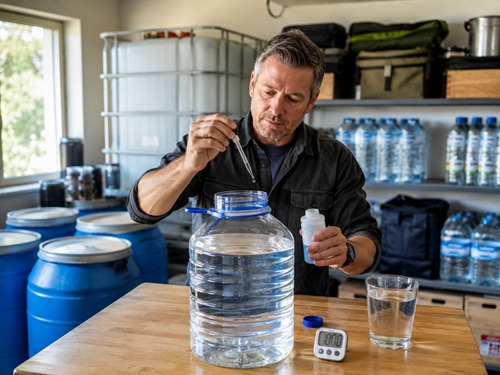
The effectiveness of chlorine depends upon several important factors. Water temperature, pH, clarity, and the amount of organic material present all influence how quickly and thoroughly chlorine works. Clear water generally disinfects more effectively because suspended particles do not shield microorganisms from contact with the disinfectant. Cloudy water often requires pre-filtration before chlorine treatment can achieve its full effectiveness.
Contact time is equally important. Chlorine requires time to react with microorganisms. Simply adding bleach and drinking the water immediately does not provide adequate protection because the disinfectant has not yet completed its work. Most household treatment recommendations specify a minimum waiting period before the water should be consumed, allowing the chemical reaction sufficient time to occur.
Organic matter also affects chlorine performance. Leaves, algae, soil, decaying vegetation, and other organic materials consume chlorine as the disinfectant reacts with them. This reduces the amount of chlorine available to attack harmful microorganisms. Water containing significant organic contamination may therefore require filtration before treatment or additional disinfectant according to established guidelines.
Although chlorine is highly effective against many bacteria and viruses, it is less effective against certain protozoan parasites, particularly Cryptosporidium. For this reason, surface water collected from lakes, rivers, or streams often benefits from combining chlorine treatment with filtration or other purification methods that address organisms more resistant to chlorine alone.
Another important consideration is chlorine concentration. More chlorine is not necessarily better. Excessive amounts do not significantly improve disinfection once recommended concentrations have been reached, but they can make water unpleasant to drink while increasing chemical exposure. Preparedness planning should therefore emphasize accurate measurement rather than excessive dosing. Proper treatment follows established recommendations using fresh disinfectants and sufficient contact time instead of relying on guesswork.
Understanding how chlorine disinfects water provides the foundation for selecting and using chlorine-based products safely. In the next section, you will learn how to choose the most appropriate chlorine product for household preparedness and how to ensure it remains effective throughout long-term storage.
Selecting the Correct Disinfectant
Choosing a disinfectant begins with evaluating the situation rather than reaching automatically for the same product every time. Factors such as the source of the water, expected storage duration, available equipment, environmental conditions, and household needs all influence which treatment method is most appropriate. A product that works exceptionally well for treating municipal tap water may not be the best choice for untreated river water collected during an extended emergency.
For routine household preparedness, unscented household bleach remains the most practical option for many families because it is inexpensive, readily available, and familiar. It is particularly well suited for treating properly filtered water intended for long-term storage in food-grade containers. Because most households already understand how to store and measure liquid bleach, it provides a simple starting point for emergency water treatment planning.
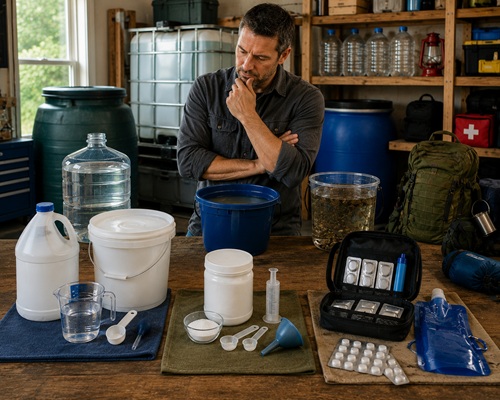
Households planning for long-duration emergencies often supplement liquid bleach with calcium hypochlorite because of its exceptional shelf life. Properly stored dry calcium hypochlorite can remain usable for many years, making it a valuable backup when liquid bleach has degraded or become unavailable. However, its concentrated nature requires additional care during storage and preparation, making it better suited for households willing to invest time in learning proper mixing procedures.
Portable emergency kits often benefit from chlorine dioxide tablets. Their lightweight packaging, precise dosage, and broad effectiveness make them particularly attractive for backpacking, evacuation kits, and field use. Because each tablet is individually packaged, there is little concern about measuring errors or chemical degradation after opening large containers.
The intended use of the water should also influence the choice of disinfectant. Water stored for drinking, cooking, food preparation, and medical care deserves the highest level of treatment confidence. Water intended only for cleaning equipment, flushing toilets, or extinguishing small fires generally does not require the same level of disinfection. Matching treatment effort to the intended use conserves supplies while maintaining appropriate safety.
Another practical consideration is household familiarity. During emergencies, simple procedures are generally more reliable than complicated ones. A disinfectant that every adult in the household understands and can safely use often provides greater real-world preparedness than a technically superior product requiring complex calculations or unfamiliar handling procedures.
Finally, every preparedness plan should include redundancy. Storing only one type of disinfectant creates unnecessary dependence on a single product. Many experienced preparedness planners maintain liquid bleach for routine household use, calcium hypochlorite for long-term backup, and chlorine dioxide tablets in portable emergency kits. This layered approach provides flexibility while ensuring that water treatment capability remains available even if one product becomes unavailable or reaches the end of its useful shelf life.
The next section will examine the most common household disinfectant in greater detail by explaining how to safely use unscented household bleach to treat stored water.
Using Unscented Household Bleach Safely
Unscented household bleach has long been recommended by emergency management agencies as one of the simplest and most effective methods for disinfecting drinking water. It is inexpensive, widely available, and capable of destroying many harmful bacteria and viruses when used correctly. Despite its familiarity as a household cleaning product, however, bleach should always be handled carefully and measured accurately when it is intended for drinking water treatment.
Not every bottle labeled “bleach” is suitable for disinfecting potable water. Only plain, unscented liquid household bleach containing sodium hypochlorite as the active ingredient should be used. Products containing fragrances, splash-less additives, detergents, color-safe formulations, thickening agents, or additional cleaning chemicals are not intended for drinking water treatment and should never be used for this purpose. Before storing bleach as part of an emergency preparedness plan, carefully read the product label to verify that it contains no unnecessary additives.
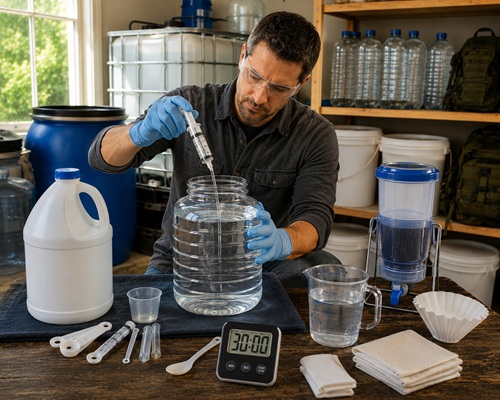
Another important consideration is concentration. Household bleach is manufactured in several different strengths, and the amount required for water treatment depends on the concentration listed on the label. Older emergency preparedness guides often assumed bleach contained approximately 5–6 percent sodium hypochlorite. Today, many products contain 7.5, 8.25, or even higher concentrations. Applying outdated dosage recommendations to stronger bleach may result in excessive chlorine levels. For this reason, always verify the concentration before calculating treatment amounts.
Bleach also has a limited shelf life. Unlike many emergency supplies, liquid sodium hypochlorite gradually loses strength even when stored under ideal conditions. Exposure to heat, sunlight, or repeated temperature fluctuations accelerates this process. Although older bleach may still possess some disinfecting ability, its concentration becomes increasingly unpredictable over time. Preparedness households should therefore include bleach in their normal household rotation schedule, replacing stored bottles periodically so their emergency supply remains reliable.
Accurate measurement is essential. Water treatment should never rely on estimating, pouring directly from the bottle, or assuming that “more is better.” Small measuring spoons, graduated syringes, measuring droppers, or dedicated water treatment measuring devices allow disinfectant to be added consistently and safely. These inexpensive tools should be stored together with the bleach so they remain available whenever emergency treatment becomes necessary.
Before adding bleach, inspect the water carefully. If the water is cloudy or contains visible sediment, it should first be filtered through clean cloth, coffee filters, sediment filters, or other appropriate pre-filtration methods. Suspended particles can shield microorganisms from the disinfectant, reducing the effectiveness of treatment. Clear water allows chlorine to contact microorganisms much more efficiently.
After adding the correct amount of bleach, thoroughly mix the water so the disinfectant is evenly distributed throughout the container. Simply adding bleach to the top of a large container without mixing may leave portions of the water insufficiently treated. Small bottles and jerry cans can usually be mixed by gently shaking or inverting the sealed container. Larger barrels or tanks may require stirring with sanitized equipment or circulating the water using a transfer pump.
The treated water should then remain undisturbed for the recommended contact period before it is consumed. During this time the chlorine continues reacting with microorganisms throughout the container. Opening the container repeatedly during the contact period should be avoided because it increases opportunities for contamination while reducing the effectiveness of the treatment process.
After treatment, the water should have a faint chlorine odor. This slight smell indicates that a small amount of residual chlorine remains available to continue protecting the water. If no chlorine odor can be detected after the recommended contact time, the treatment may have been consumed by organic matter or the disinfectant may have been too weak. In these situations, retreatment following established guidelines may be appropriate before using the water.
Proper storage after treatment is equally important. Once disinfected, water should be transferred only into clean, sanitized food-grade containers and sealed immediately. Treatment cannot compensate for poor storage practices. A properly disinfected supply placed into a contaminated container may quickly become unsafe again. Good sanitation, careful handling, and secure storage remain essential parts of maintaining treated drinking water.
Ultimately, household bleach provides an excellent emergency disinfectant because it combines effectiveness, affordability, and widespread availability. When used correctly—and only in its plain, unscented form—it allows households to safely disinfect many types of drinking water while supporting both short-term emergencies and long-term preparedness planning.
General Household Bleach Treatment Guidelines
Always follow the bleach manufacturer’s directions and current public health guidance. The table below is intended as a general preparedness reference only. Use only plain, unscented household bleach containing sodium hypochlorite.
| Water Condition | Preparation Before Treatment | Important Considerations |
|---|---|---|
| Clear water | No pre-filtration normally required | Use the correct bleach concentration and allow full contact time. |
| Slightly cloudy water | Filter through clean cloth or sediment filter if possible | Pre-filtration improves disinfectant effectiveness. |
| Very cloudy or muddy water | Allow sediment to settle, then filter before treatment | Heavy sediment reduces chlorine effectiveness. |
| Water with visible debris | Remove debris before disinfecting | Organic matter consumes chlorine. |
| Water with suspected chemical contamination | Do not rely on bleach alone | Locate another source or use specialized treatment methods. |
| Floodwater | Filter if possible, then disinfect | Consider multiple treatment methods if contamination is extensive. |
Treating Clear Water
Clear water is generally the easiest type of water to disinfect because there are few suspended particles to interfere with the disinfectant. Municipal tap water, properly collected rainwater after filtration, and many well water supplies often fall into this category when they have been stored under sanitary conditions.
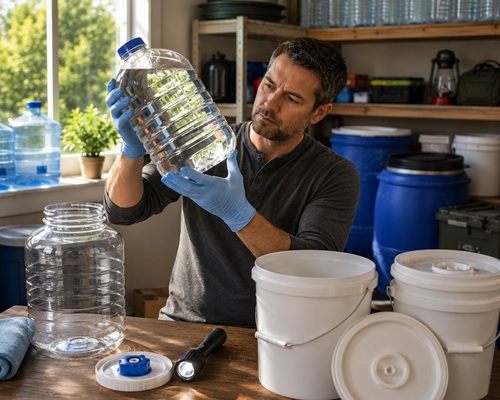
Before treatment begins, examine the container itself. Confirm that it is food-grade, free of visible damage, and equipped with a properly sealing lid. A clean container is just as important as clean water. Even perfectly disinfected water can become contaminated if stored inside a dirty or damaged container.
If the water appears clear and has no unusual odor, treatment can proceed according to the recommended disinfectant instructions. Accurate measurement, thorough mixing, and sufficient contact time remain the three most important factors influencing treatment success. Rushing the process or estimating quantities unnecessarily reduces confidence in the final result.
After treatment, inspect the container one final time before returning it to storage. Verify that the lid seals securely, labels remain readable, and the fill date and treatment date have been updated if appropriate. These simple steps help maintain an organized rotation schedule while documenting the maintenance history of every container.
For many households, treating clear water becomes a routine part of preparing new storage containers, rotating long-term reserves, or replenishing emergency supplies after use. Because the water begins in good condition, relatively little effort is required to produce a dependable emergency drinking supply.
Treating Cloudy Water
Cloudy water presents additional challenges because suspended particles interfere with the disinfection process. Dirt, fine sediment, algae, decaying vegetation, and other organic materials provide countless microscopic hiding places where bacteria, viruses, and protozoa may avoid direct contact with the disinfectant. Simply adding more bleach rarely solves this problem. Instead, the water should first be clarified as much as possible before chemical treatment begins.
The first step is allowing the water to remain undisturbed so heavier sediment can settle naturally to the bottom of the container. Depending on the amount of suspended material, this may require several hours. Once the water has cleared, the cleaner water near the top can be carefully poured into another sanitized container without disturbing the sediment layer below.
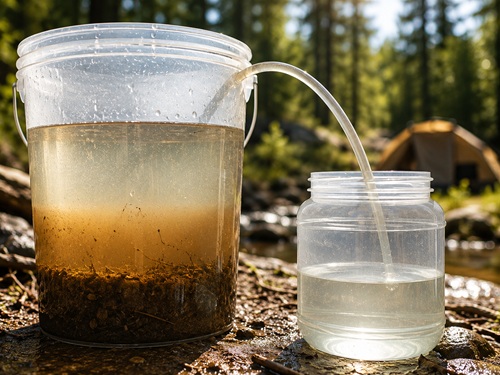
Additional filtration further improves water quality. Clean cloth, tightly woven fabric, coffee filters, commercial sediment filters, or portable water filtration systems remove much of the remaining suspended material. Although these methods do not necessarily eliminate microorganisms, they significantly improve the effectiveness of any disinfectant applied afterward.
Organic material deserves particular attention because chlorine reacts with leaves, algae, soil particles, and other natural debris before it attacks microorganisms. The more organic matter present, the more disinfectant is consumed. Proper pre-filtration therefore not only improves water clarity but also allows the disinfectant to work more efficiently.
Cloudy water often originates from rivers, ponds, floodwater, or heavily used rainwater collection systems after storms. Because these sources may contain both biological and chemical contaminants, treatment decisions should always consider the origin of the water rather than relying solely on its appearance. If chemical contamination is suspected, disinfectants alone cannot make the water safe.
After filtration and disinfection have been completed, the treated water should appear noticeably clearer and should remain stored in clean, food-grade containers protected from future contamination. Whenever possible, avoiding heavily contaminated water sources entirely remains preferable to attempting extensive treatment afterward.
Understanding the differences between treating clear and cloudy water allows households to apply disinfectants more effectively while avoiding one of the most common mistakes in emergency water treatment—attempting to disinfect heavily contaminated water without first removing the suspended material that limits disinfectant performance.
The next section examines pre-filtering before treatment in greater detail, explaining the different methods available and how filtration improves both water quality and disinfection effectiveness.
Pre-Filtering Before Treatment
One of the most effective ways to improve water treatment is to remove as much suspended material as possible before adding any disinfectant. This process, known as pre-filtering, does not usually make water safe to drink by itself, but it greatly improves the effectiveness of nearly every disinfection method that follows. Whether using bleach, chlorine dioxide, boiling, or ultraviolet treatment, cleaner water allows the treatment process to work more efficiently and reliably.
Suspended particles create two significant challenges. First, they reduce the clarity of the water, making it less appealing for drinking and household use. More importantly, they provide microscopic hiding places where bacteria, viruses, and protozoa may avoid direct contact with disinfectants. A tiny piece of organic material can shield harmful microorganisms from chlorine long enough for some to survive the treatment process. Removing these particles beforehand greatly increases the likelihood that the disinfectant will contact every microorganism present.
The simplest pre-filter is a clean piece of tightly woven cloth. Cotton fabric, clean bandanas, pillowcases, or several layers of cheesecloth can remove leaves, insects, coarse sediment, and other larger debris. While cloth filtration alone does not remove microorganisms, it provides an excellent first step when collecting water from rivers, lakes, ponds, or rainwater systems.
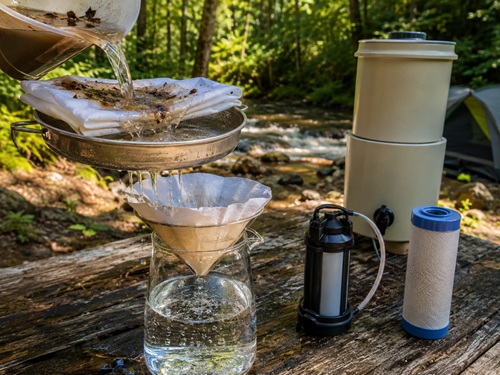
Coffee filters offer another inexpensive option for removing fine sediment. Although they work more slowly than cloth, they often produce noticeably clearer water. During emergencies, disposable paper coffee filters can become valuable additions to household water treatment supplies because they require no specialized equipment and occupy very little storage space.
Commercial sediment filters provide even greater effectiveness. Gravity-fed systems, portable backpacking filters, ceramic filters, hollow-fiber filters, and larger household sediment filters are capable of removing much finer particles than cloth alone. Many preparedness households incorporate these systems into their water treatment process because they improve both the appearance of the water and the performance of subsequent disinfection.
Allowing water to settle naturally before filtration is another useful technique. When water remains undisturbed for several hours, heavier particles gradually sink to the bottom of the container. The clearer water near the top can then be carefully poured into another container before final filtration. This simple process significantly reduces the amount of sediment reaching the filter, helping extend filter life while improving treatment efficiency.
Pre-filtering becomes particularly important after heavy rainfall, flooding, or when collecting water from fast-moving streams. Stormwater frequently carries large amounts of soil, decaying vegetation, and organic material that can overwhelm both disinfectants and fine filters. Removing as much debris as possible before disinfection produces better results while conserving treatment supplies.
It is equally important to understand the limitations of pre-filtration. Removing visible particles does not necessarily remove bacteria, viruses, or dissolved chemicals. Water that appears perfectly clear may still require complete disinfection before it is considered suitable for drinking. Pre-filtering should therefore be viewed as an important preparation step rather than a replacement for proper treatment.
Many experienced preparedness planners follow a simple sequence whenever questionable water must be processed: settle if necessary, pre-filter, disinfect, and then store the treated water in sanitized food-grade containers. Following this sequence consistently helps maximize water quality while reducing the likelihood that microorganisms survive the treatment process.
Ultimately, pre-filtering improves nearly every aspect of emergency water treatment. It increases disinfectant effectiveness, extends the life of filtration equipment, improves water appearance and taste, and reduces the amount of debris entering long-term storage containers. For these reasons, it should be considered a routine part of treating any water that does not already originate from a clean, treated municipal source.
Contact Time and Why It Matters
Adding a disinfectant to water is only the beginning of the treatment process. The chemical requires time to react with harmful microorganisms before the water can be considered properly disinfected. This waiting period, known as contact time, is one of the most commonly overlooked steps in emergency water treatment. Even when the correct amount of disinfectant has been added, consuming the water too soon may leave microorganisms alive because the chemical has not yet completed its work.
When chlorine-based disinfectants enter the water, they immediately begin reacting with bacteria, viruses, algae, and other organic materials. These reactions occur gradually rather than instantaneously. As the chlorine penetrates the protective outer structures of microorganisms, it disrupts essential biological functions until the organisms become inactive or die. This process requires sufficient time to reach completion.
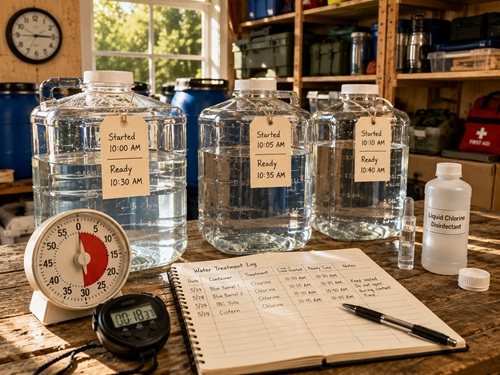
The amount of contact time required depends upon several factors. Water temperature, clarity, pH, disinfectant concentration, and the types of microorganisms present all influence how quickly treatment occurs. Cold water generally requires longer treatment because chemical reactions proceed more slowly at lower temperatures. Similarly, cloudy water containing suspended particles often requires additional time because the disinfectant must first react with the organic material before reaching microorganisms hidden within the debris.
For this reason, preparedness planners should resist the temptation to rush treatment simply because the water looks clean. Water that appears perfectly clear may still require the full recommended contact period before it can be consumed safely. The disinfectant continues working throughout the entire waiting period, gradually improving the microbiological safety of the stored water.
The container itself should remain sealed during contact time whenever possible. Opening the container repeatedly introduces unnecessary opportunities for contamination while allowing chlorine to dissipate more quickly into the surrounding air. Once the disinfectant has been mixed thoroughly throughout the container, leaving it undisturbed produces the most consistent results.
Many households find it helpful to record the treatment time directly on the container or in a maintenance log. A simple notation indicating when treatment was completed prevents uncertainty later, especially when multiple containers are being processed during the same maintenance session. Organized recordkeeping becomes particularly valuable when rotating larger water storage systems containing numerous containers.
After the recommended contact period has elapsed, the water should have a slight chlorine odor if chlorine-based disinfectants were used. This faint smell indicates that a small residual disinfectant remains available to continue protecting the water during storage. If no chlorine odor is present, retreatment according to established guidelines may be appropriate because the disinfectant may have been consumed by organic material or weakened through age.
Understanding contact time reinforces an important principle of emergency preparedness: successful water treatment depends not only on selecting the correct disinfectant but also on allowing that disinfectant sufficient time to perform its intended function. Patience during treatment significantly improves confidence in the safety of the finished water supply.
Temperature and Disinfection Effectiveness
Temperature influences nearly every aspect of emergency water treatment, yet it is often overlooked during preparedness planning. The same disinfectant applied to two identical containers of water may perform differently depending upon whether the water is warm, cool, or near freezing. Understanding this relationship helps households adapt treatment procedures to changing environmental conditions throughout the year.
Chemical reactions naturally proceed more slowly in cold water. As water temperature decreases, chlorine molecules move more slowly and require additional time to contact and inactivate microorganisms. This does not necessarily mean more disinfectant is always required, but it often means the recommended contact time becomes even more important. Rushing treatment during winter conditions may reduce overall effectiveness simply because the chemical reaction has not progressed far enough.
Warm water generally allows disinfectants to work more efficiently because chemical activity increases as temperature rises. However, excessive heat introduces different concerns. High temperatures accelerate the natural breakdown of chlorine-based disinfectants during storage, causing household bleach to lose strength more rapidly. Containers of bleach stored in hot garages, vehicles, or sheds during summer may become significantly less effective than identical products stored in cool indoor environments.
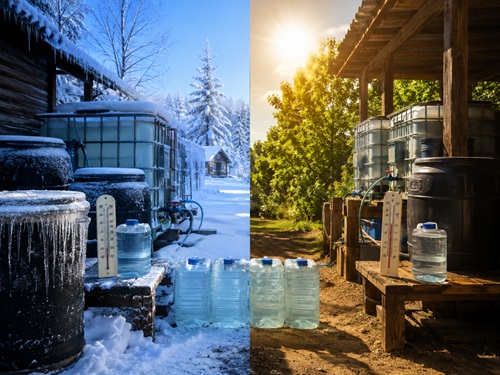
Temperature also affects the storage containers themselves. Plastic containers repeatedly exposed to freezing and thawing cycles expand and contract over time, increasing stress on lids, seals, and threaded fittings. Although properly manufactured food-grade containers tolerate normal seasonal changes well, prolonged exposure to extreme temperatures may shorten their service life or create opportunities for contamination if seals become damaged.
Winter conditions require additional planning for outdoor storage systems. Rainwater collection barrels, exposed plumbing, transfer pumps, valves, and hoses may freeze if they are not properly winterized. Ice expansion can crack containers, damage fittings, and render water systems unusable just when they are needed most. Households living in cold climates should incorporate seasonal freeze protection into their annual maintenance schedule.
Very hot climates create a different set of challenges. Water stored in direct sunlight or inside vehicles can reach temperatures well above the surrounding air temperature. These conditions accelerate plastic aging, increase chlorine loss, and may reduce overall water quality over long storage periods. Whenever possible, emergency water should be stored in cool, shaded, climate-controlled environments where temperatures remain relatively stable throughout the year.
Another practical consideration involves the temperature of collected water itself. Snowmelt, glacial streams, and cold mountain springs may require longer treatment periods than warmer water collected during summer months. While the water source itself may appear exceptionally clean, its low temperature slows the chemical reactions responsible for effective disinfection.
Preparedness planning should therefore account for seasonal environmental conditions rather than assuming every treatment situation will occur under ideal temperatures. Households that understand how temperature influences disinfectants, storage containers, and treatment equipment are better prepared to maintain safe drinking water throughout the entire year.
The next section examines treating large water storage systems, where many of these same principles must be applied on a much larger scale while managing barrels, tanks, cisterns, and IBC totes containing hundreds of gallons of stored water.
Treating Large Water Storage Systems
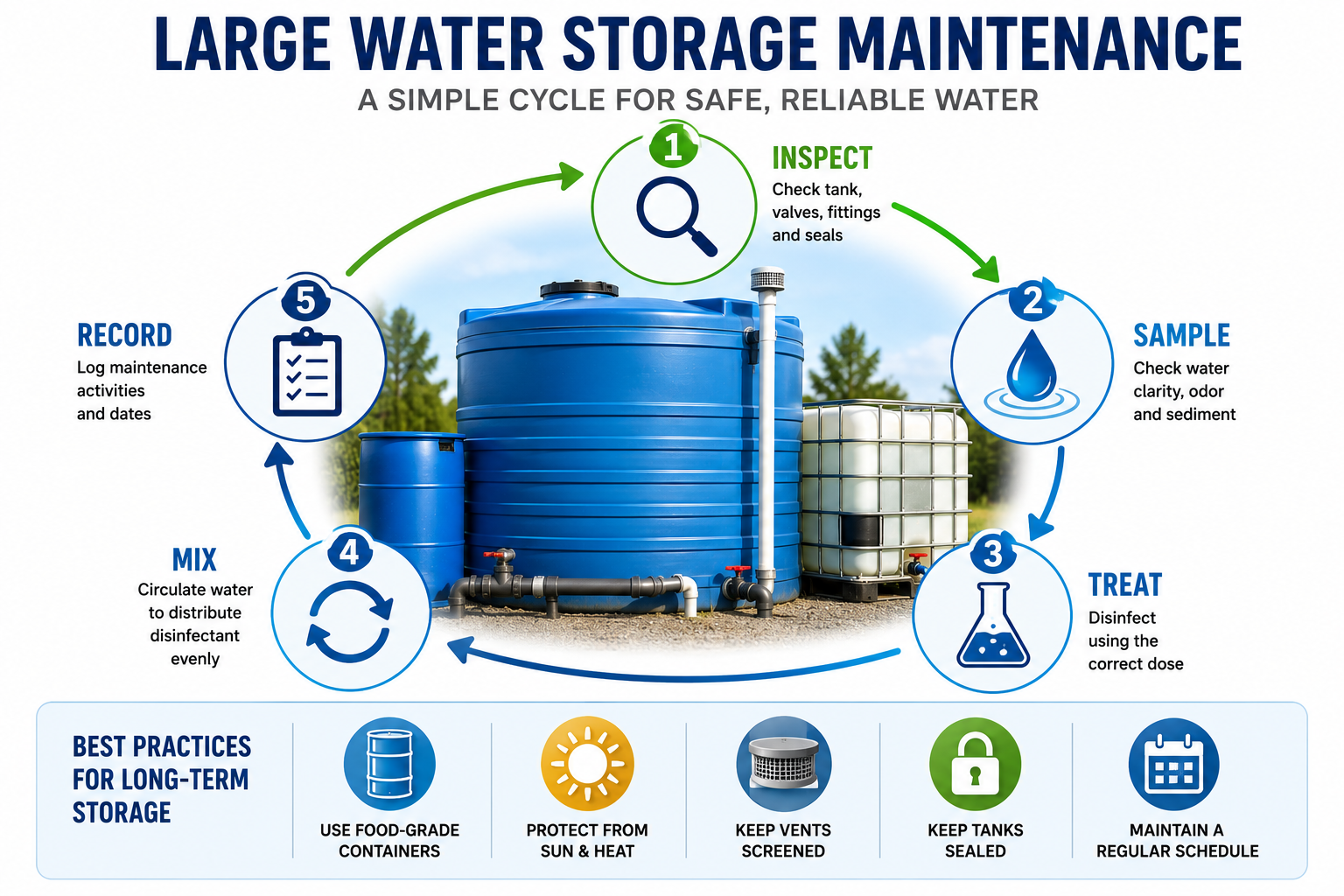
Large-capacity storage systems form the foundation of many long-term preparedness plans because they provide economical storage for hundreds or even thousands of gallons of water. Fifty-five-gallon barrels, IBC totes, above-ground storage tanks, underground cisterns, and integrated rainwater storage systems all allow households to maintain substantial emergency reserves while reducing the number of individual containers that require maintenance. Treating these larger systems, however, requires a different approach than treating small portable containers.
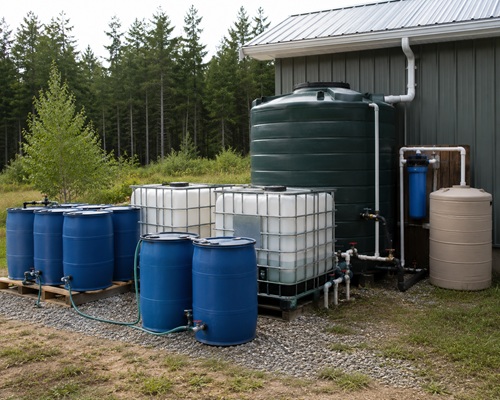
The first principle is recognizing that large storage systems are designed to remain in place. A full fifty-five-gallon barrel weighs approximately 460 pounds (209 kilograms), while an IBC tote may exceed 2,300 pounds (1,040 kilograms). Permanent storage tanks frequently weigh several tons when filled. Because these containers cannot be emptied and moved easily, treatment procedures should be designed around servicing the system where it is installed rather than transporting the water elsewhere.
Before any disinfectant is added, perform a complete inspection of the storage system. Examine the exterior for cracks, ultraviolet damage, bulging, corrosion, loose fittings, leaking valves, or signs of contamination around access ports. Verify that lids remain tightly sealed and that screened vents continue preventing insects, rodents, and debris from entering the system. If the container itself has been compromised, correcting the mechanical problem should take priority before treating the water.
If the stored water has remained protected inside a properly maintained, food-grade container and there is no reason to suspect contamination, complete replacement or retreatment may not be necessary simply because time has passed. Instead, treatment decisions should be based upon the condition of the water, the integrity of the storage system, maintenance history, and any events that may have introduced contamination.
When treatment is required, disinfectants must be distributed evenly throughout the entire volume of water. Simply pouring disinfectant into the access opening of a large barrel or tank does not guarantee thorough mixing. Many households circulate the water using transfer pumps, gently stir the contents with sanitized food-grade equipment, or introduce the disinfectant while the tank is being refilled so natural water movement provides mixing. Proper circulation ensures that every portion of the stored water receives adequate contact with the disinfectant.
Partially rotating large storage systems often provides a practical alternative to draining the entire container. Instead of replacing hundreds of gallons at one time, a portion of the stored water may be used for appropriate household purposes such as landscape irrigation, cleaning, livestock watering where appropriate, or other non-potable uses permitted by local regulations. The removed water is then replaced with freshly treated water, gradually renewing the overall storage supply while avoiding unnecessary waste.
Storage tanks connected to private wells or rainwater harvesting systems often operate as active components of the household water supply rather than passive emergency reserves. In these systems, treatment becomes part of ongoing water management rather than an occasional maintenance activity. Filters, sediment traps, first-flush diverters, transfer pumps, pressure systems, and treatment equipment should all be inspected together because every component influences overall water quality.
Sampling the stored water periodically provides additional confidence. Rather than assuming the entire tank requires treatment, a small sample can be inspected for unusual odor, discoloration, excessive sediment, algae growth, or other changes that may indicate developing problems. While visual inspection cannot confirm microbiological safety, it often identifies issues requiring closer evaluation before they become more serious.
Large storage systems also benefit from careful recordkeeping. Maintenance logs should document inspection dates, treatment activities, cleaning procedures, equipment repairs, partial rotations, and observations regarding water quality. These records help establish long-term trends while ensuring that future maintenance decisions are based on documented history rather than memory alone.
Perhaps the greatest advantage of large storage systems is that they support long-duration emergencies without requiring constant attention. Properly designed systems can safely store significant quantities of water for extended periods while requiring relatively little maintenance compared to managing hundreds of individual bottles. Their reliability depends not upon frequent replacement of every gallon but upon regular inspection, thoughtful maintenance, and appropriate treatment whenever conditions justify it.
Treating Small Portable Containers
Small portable containers occupy a unique position within a household preparedness plan because they combine storage, transportation, and everyday practicality. Bottled water, water bricks, food-grade jerry cans, collapsible containers, and reusable bottles are often handled much more frequently than stationary storage systems. As a result, they require a maintenance routine that emphasizes sanitation, inspection, and proper handling as much as water treatment itself.
The greatest advantage of portable containers is accessibility. Unlike large barrels or tanks, they can easily be emptied, cleaned, sanitized, refilled, and returned to service by a single person. This simplicity encourages more frequent maintenance while reducing the likelihood that contamination will remain unnoticed for long periods.
Before treating water inside a portable container, begin by inspecting the container itself. Check for cracks, dents, ultraviolet damage, worn handles, damaged threads, and deteriorated sealing gaskets. Even a properly disinfected water supply can quickly become contaminated if stored inside a damaged container that no longer seals correctly.
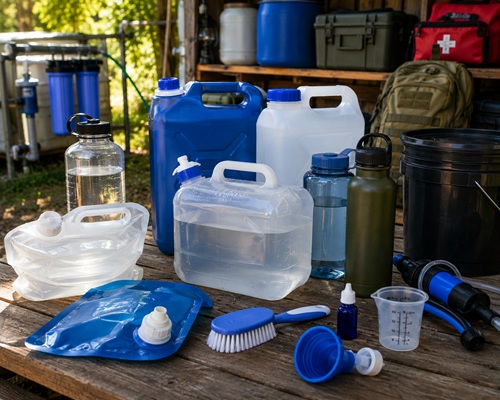
Portable containers should always be cleaned before they are refilled. Empty the remaining water, rinse away any sediment, and wash the interior with an appropriate cleaning solution if residue is present. Once cleaned, sanitize the container according to recommended procedures before introducing freshly treated drinking water. Performing these steps during every refill helps prevent contamination from accumulating over repeated use.
Wide-mouth containers offer a significant advantage because they allow direct inspection of interior surfaces. Sediment, algae, mold, or residue that might remain hidden inside narrow-neck containers can usually be identified and removed much more easily. This visual inspection provides additional confidence that sanitation procedures have been effective before the container returns to storage.
Portable containers used during outdoor activities deserve additional attention. Camping trips, hiking, hunting, gardening, emergency exercises, and water collection frequently expose containers to dust, mud, insects, and repeated handling. Even when filled only with potable water, these containers should be cleaned and sanitized before returning to long-term emergency storage.
Treating water immediately after collection often produces the best results. If water has been gathered from a spring, stream, rainwater system, or other renewable source, filtration and disinfection should normally be completed before the water is placed into long-term storage. Treating water at the earliest practical opportunity minimizes the time microorganisms remain active inside the container.
Portable containers also provide an excellent opportunity for regular preparedness training. Household members can practice measuring disinfectants, filtering water, transferring water between containers, and applying treatment procedures under normal conditions. These routine exercises improve familiarity with the equipment while helping identify problems before an actual emergency occurs.
Clear labeling remains just as important for portable containers as for larger storage systems. Every container should identify whether the contents have already been treated, when they were filled, and when they should next be inspected or rotated. Containers awaiting treatment should never be confused with those already designated as safe for drinking.
Many preparedness households maintain separate containers for different purposes. Some remain permanently filled as part of the emergency reserve, while others are reserved for collecting untreated water from renewable sources. Keeping these roles separate reduces the possibility of accidental cross-contamination while simplifying household organization.
When properly maintained, portable containers provide exceptional flexibility. They bridge the gap between renewable water sources and permanent storage while allowing clean drinking water to be transported safely wherever it is needed. Their value lies not only in their portability but also in the ease with which they can be inspected, cleaned, treated, and returned to service throughout the year.
Treating Rainwater Before Storage
Rainwater harvesting has become one of the most valuable renewable water sources available to preparedness-minded households. A properly designed rainwater collection system can supplement stored reserves, reduce dependence on municipal water supplies, and provide an ongoing source of water during extended emergencies. However, unlike treated municipal water, rainwater should not automatically be considered safe to store or consume without appropriate treatment.
Although rain itself begins as relatively pure water, it collects contaminants long before reaching the storage container. Dust, pollen, leaves, bird droppings, insects, roofing materials, airborne pollutants, and organic debris accumulate on rooftops and gutters between rain events. The first rainfall after a dry period often washes much of this material into the collection system. Treating collected rainwater therefore begins before it ever enters the storage tank.
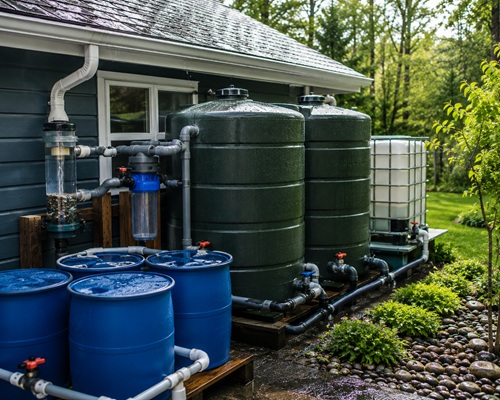
One of the most effective protective measures is the installation of a first-flush diverter. These devices automatically divert the initial portion of rooftop runoff away from the storage tank, allowing leaves, dirt, bird droppings, and other accumulated contaminants to be discarded before cleaner water begins filling the storage system. Properly maintained first-flush systems significantly improve the quality of collected rainwater while reducing the amount of sediment entering storage.
Pre-filtration provides the next layer of protection. Screens, gutter guards, leaf filters, and sediment filters remove progressively smaller debris before the water reaches the storage container. Although these devices do not eliminate microorganisms, they greatly improve water clarity while increasing the effectiveness of later disinfection.
Once the water has entered storage, treatment depends upon its intended use. Rainwater collected exclusively for irrigation, toilet flushing, or other non-potable purposes may require little or no additional treatment beyond routine maintenance of the storage system. Water intended for drinking, cooking, medical care, or food preparation, however, should always undergo appropriate purification before consumption.
Storage conditions play an important role in preserving treated rainwater. Opaque food-grade tanks or dark-colored containers reduce sunlight penetration, limiting algae growth while helping maintain water quality. Tight-fitting lids, screened vents, and sealed access openings further protect the stored water from insects, rodents, dust, and additional contamination.
Rainwater systems also benefit from regular seasonal maintenance. Gutters, downspouts, collection screens, first-flush diverters, overflow systems, and storage tanks should all be inspected periodically, particularly after storms or during autumn when falling leaves may increase debris accumulation. Maintaining the collection system itself often improves water quality more effectively than relying solely on additional chemical treatment afterward.
Ultimately, rainwater harvesting should be viewed as a renewable component of a layered preparedness strategy rather than a replacement for properly stored emergency water. When collected, filtered, treated, and stored correctly, rainwater provides households with an outstanding supplemental water source capable of supporting both everyday preparedness and extended emergency situations.
Treating Well Water
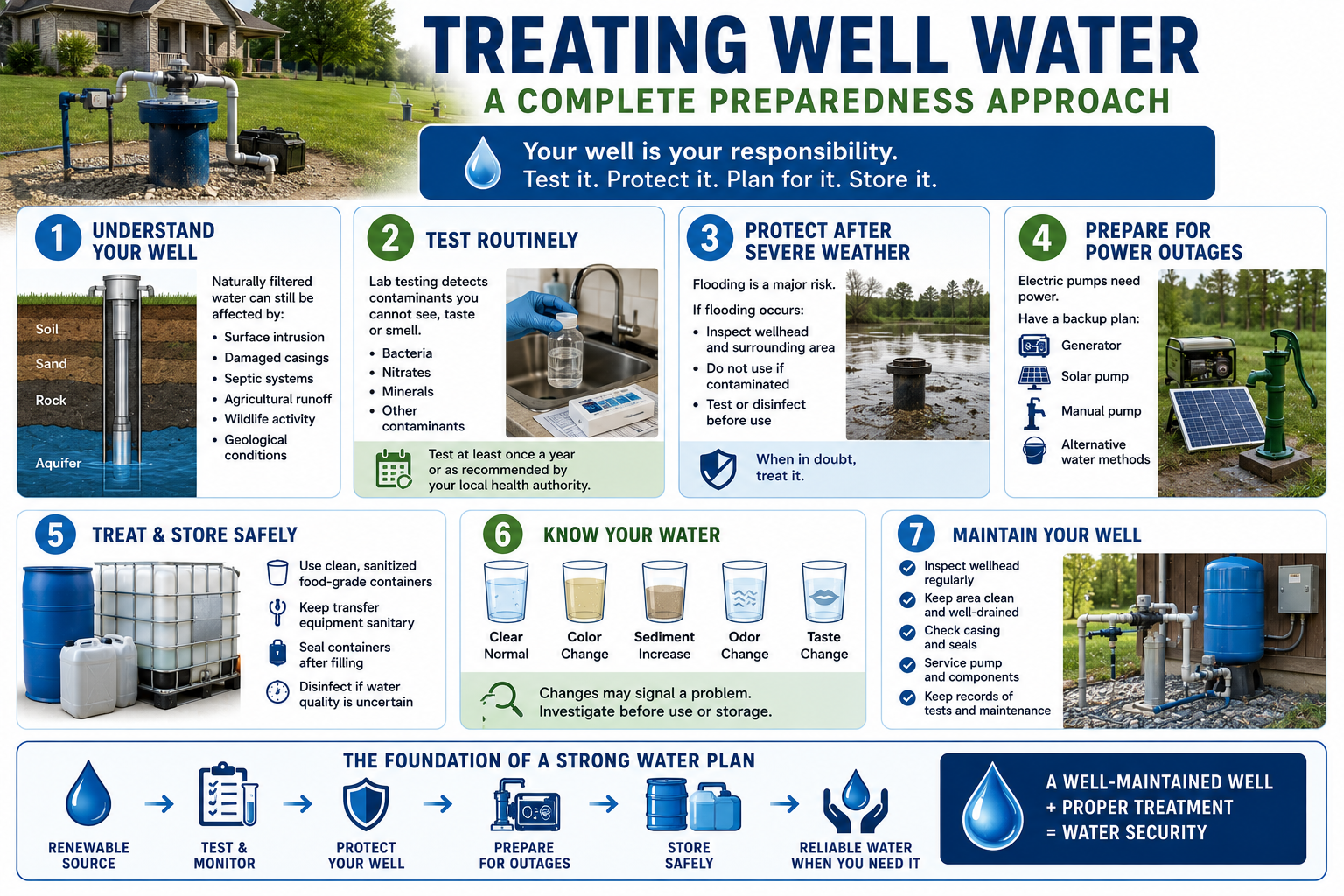
Private wells provide millions of households with dependable drinking water every day and often become one of the most valuable assets during emergencies. Unlike municipal water systems, however, private wells are generally the responsibility of the property owner. This means the homeowner must monitor water quality, maintain the well system, and determine when treatment is necessary. Understanding how well water differs from other water sources is an important part of long-term preparedness.
Many deep wells produce exceptionally clean water because it has been naturally filtered through layers of soil, sand, and rock before reaching the aquifer. Even so, naturally clear water should never be assumed to be free of microorganisms or other contaminants. Surface water intrusion, damaged well casings, flooding, nearby septic systems, agricultural runoff, wildlife activity, and geological conditions can all affect well water quality over time.
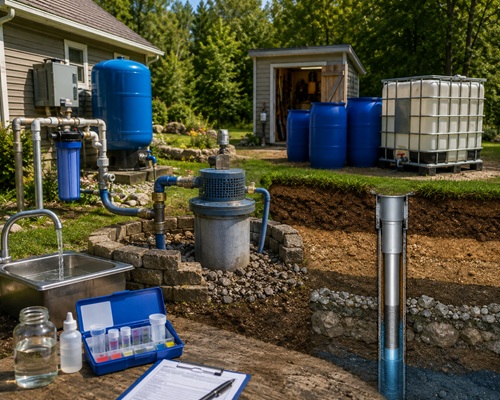
For this reason, routine water testing remains one of the most valuable maintenance activities for any household relying on a private well. Laboratory testing performed according to local public health recommendations provides valuable information about bacteria, nitrates, minerals, and other potential contaminants that cannot be identified through appearance, taste, or odor alone. Periodic testing establishes a baseline that makes future changes easier to recognize.
Following severe weather, additional precautions are often warranted. Flooding presents one of the greatest risks because contaminated surface water may enter the well through damaged casings, improperly sealed wellheads, or surrounding saturated soil. If flooding has occurred near the well, the water should be considered potentially contaminated until appropriate testing or treatment confirms its safety. Continuing to use untreated well water after a flood may expose the household to sewage, bacteria, and other hazards.
Preparedness planning should also include the equipment required to continue using the well during power outages. Many modern wells rely upon electric pumps that become inoperable when utility power fails. Backup generators, solar-powered pumping systems, manual well pumps, or alternative water collection methods help ensure the well remains usable during extended emergencies. Treating stored water becomes far less stressful when the household retains access to a renewable source.
When well water is collected for long-term storage, it should be handled with the same care as any other emergency water supply. Clean, sanitized food-grade containers should be used, transfer equipment should be kept sanitary, and storage containers should remain sealed after filling. If there is any uncertainty regarding the microbiological quality of the water, appropriate disinfection before storage provides additional protection while helping maintain long-term water quality.
Some wells contain naturally occurring minerals such as iron, manganese, sulfur, or calcium. Although these minerals may affect taste, color, or hardness, they are not necessarily health hazards. Chemical disinfection is intended to control microorganisms rather than alter mineral content. Specialized treatment systems may be appropriate if mineral concentrations become excessive, but disinfectants alone will not remove dissolved minerals from the water.
Households should also understand the normal characteristics of their well water. Changes in taste, odor, clarity, color, or sediment levels may indicate developing problems that deserve investigation before the water is consumed or placed into long-term storage. Familiarity with the well under normal conditions makes unusual changes much easier to identify during an emergency.
A properly maintained private well provides tremendous resilience because it supplies renewable water independent of municipal infrastructure. Combined with appropriate testing, treatment when necessary, backup pumping capability, and organized storage, well water often becomes one of the strongest foundations of a long-term household water preparedness plan.
Treating Surface Water
Surface water includes rivers, streams, lakes, ponds, reservoirs, and many natural springs. During prolonged emergencies, these sources often become the primary renewable water supply available to households without wells or municipal service. While surface water can sustain life when properly treated, it also presents some of the greatest microbiological risks found in emergency preparedness. Understanding these risks allows households to collect and treat surface water safely while avoiding unnecessary exposure to disease.
Unlike protected groundwater, surface water remains constantly exposed to the surrounding environment. Wildlife, livestock, human activity, decaying vegetation, storm runoff, agricultural drainage, and wastewater can all introduce bacteria, viruses, protozoa, and parasites into rivers and lakes. Even remote mountain streams that appear crystal clear may contain harmful microorganisms deposited miles upstream by animals or contaminated runoff.
Selecting the best collection point is the first step in reducing treatment requirements. Flowing water is generally preferable to stagnant water because continuous movement discourages some forms of biological growth and reduces the concentration of suspended material. Whenever possible, collect water upstream from campsites, livestock crossings, roads, industrial activity, agricultural operations, and other potential contamination sources.
Visual inspection provides useful information but should never be relied upon as the sole measure of safety. Clear water is easier to filter and disinfect than muddy water, but clarity alone does not indicate microbiological purity. Harmful bacteria, viruses, and protozoa are microscopic and cannot be detected simply by looking at the water. Every untreated surface water source should therefore be considered potentially contaminated until appropriate treatment has been completed.
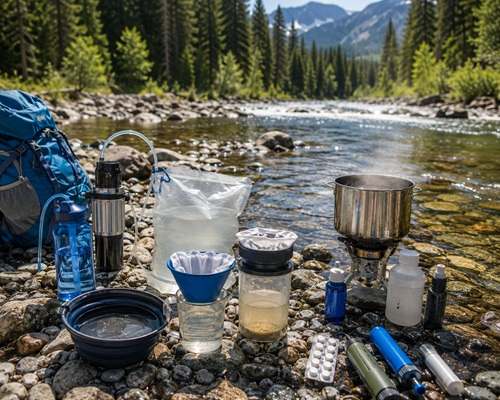
Pre-filtration becomes especially important with surface water because suspended sediment frequently accompanies natural water sources. Cloth filtration, coffee filters, settling, commercial sediment filters, or portable backpacking filters all improve water clarity before chemical treatment begins. Removing suspended material not only improves appearance but also allows disinfectants to contact microorganisms more effectively.
Biological treatment should always follow filtration. Depending upon available equipment, households may use boiling, chlorine-based disinfectants, chlorine dioxide tablets, ultraviolet treatment, portable purification systems, or combinations of these methods. Multiple treatment steps often provide greater confidence than relying upon a single process, particularly when the source water quality is uncertain.
Chemical contamination requires additional caution. Rivers and streams located downstream from industrial facilities, mining operations, agricultural areas, highways, or flood zones may contain pollutants that ordinary disinfection cannot remove. Fuel spills, pesticides, fertilizers, solvents, and heavy metals remain in the water even after bacteria have been destroyed. If chemical contamination is suspected, locating an alternative source generally represents the safest decision.
Seasonal conditions also influence surface water quality. Spring runoff often carries increased sediment and organic debris, while summer may encourage algae growth in warm, stagnant ponds. Autumn introduces falling leaves and decaying vegetation, and winter snowmelt may temporarily improve clarity while reducing water temperature. Understanding these seasonal changes helps households anticipate how treatment requirements may vary throughout the year.
Surface water should always be viewed as a renewable resource rather than an immediately safe drinking supply. With appropriate collection practices, careful filtration, effective disinfection, and proper storage, it can become one of the most valuable emergency water sources available. Successful preparedness depends not on avoiding surface water entirely, but on understanding how to manage it safely under a wide variety of conditions.
Treating Melted Snow and Ice
In cold climates, snow and ice often become valuable emergency water sources when rivers, lakes, or rainwater collection systems are inaccessible. Although many people assume fresh snow is naturally pure because it appears clean and white, snow and ice should be treated with the same caution applied to any other untreated water source. Atmospheric pollutants, dust, animal activity, and environmental contamination can all affect the quality of accumulated snow.
Freshly fallen snow collected from clean, undisturbed areas generally provides the best starting point. Snow gathered from rooftops, roadways, parking lots, or areas frequented by animals should be avoided whenever possible because it is more likely to contain pollutants, salt, fuel residues, or biological contamination. Similarly, the top layer of older snow may contain windblown debris that accumulated over time.
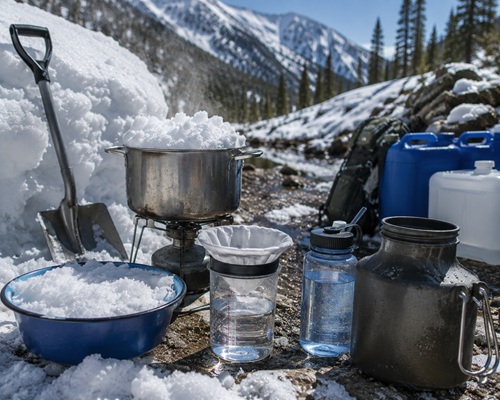
Melting snow efficiently requires planning. Placing a small amount of liquid water into the container before adding snow helps prevent scorching or damage to cookware while improving heat transfer. Because snow contains a surprisingly large amount of air, it produces far less water than many people expect. A large container filled with snow may melt into only a small amount of liquid water, making collection considerably more labor-intensive than many first imagine.
Once melted, the water should be treated just like water collected from any other natural source. Although snow often appears clean, melting does not destroy microorganisms. If the water will be used for drinking or food preparation, it should be filtered if necessary and disinfected using an appropriate treatment method before being placed into storage or consumed.
Ice collected from natural lakes, rivers, or ponds presents similar considerations. Clear ice generally contains fewer impurities than opaque or slushy ice, but it may still harbor microorganisms introduced before freezing occurred. Freezing alone does not reliably kill bacteria, viruses, or protozoa. Water obtained from melted natural ice should therefore receive the same treatment as liquid surface water.
Stored snow also changes over time. As temperatures fluctuate, repeated melting and refreezing may concentrate contaminants in certain layers or introduce additional debris through wind, animal activity, or human traffic. Collecting the cleanest available snow and treating it after melting provides the greatest confidence in the final water quality.
For households living in northern climates, snow and ice provide an important renewable backup water source. Combined with appropriate treatment procedures, they can significantly extend emergency water reserves during winter while reducing dependence on stored supplies alone.
Treating Water After Flooding
Flooding presents one of the most challenging water treatment situations a household may encounter. Unlike many natural water sources, floodwater often contains a complex mixture of biological, chemical, and physical contaminants that cannot be identified simply by appearance. Sewage, fuel, agricultural runoff, industrial chemicals, animal waste, household chemicals, decaying vegetation, and suspended sediment may all be present simultaneously. Because of these combined hazards, floodwater requires particularly cautious evaluation before it is considered for any household use.
The safest approach is to avoid using floodwater for drinking whenever another source is available. Properly stored emergency water, commercially bottled water, deep wells that have not been affected by flooding, or municipal water supplies restored by local authorities generally provide much safer alternatives. Treating heavily contaminated floodwater often requires multiple purification steps, and even then, some chemical contaminants may remain impossible to remove using household equipment.
If floodwater represents the only available source, begin by selecting the cleanest water possible. Areas with flowing water may contain less suspended debris than stagnant pools, although flowing floodwater can still carry significant contamination. Avoid collecting water near fuel spills, industrial facilities, agricultural operations, sewage overflows, or areas where chemicals may have entered the floodwater.
Pre-filtration becomes especially important under these conditions. Allowing the water to settle before carefully pouring off the clearer portion removes much of the heavier sediment. Additional filtration through cloth, coffee filters, commercial sediment filters, or portable water filters further improves clarity while reducing the amount of suspended material that could interfere with disinfection.
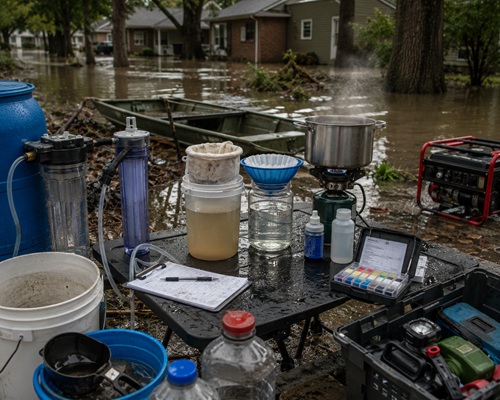
Once the water has been clarified as much as possible, appropriate biological treatment should be applied. Boiling, chlorine-based disinfectants, chlorine dioxide, or approved purification systems can reduce many biological hazards. However, households should understand that these methods are designed primarily to control microorganisms. They do not remove gasoline, pesticides, solvents, heavy metals, or many industrial chemicals commonly associated with floodwater.
Storage containers exposed to flooding also deserve careful inspection. Even if the water inside remained sealed, floodwater may contaminate the outside of the container, dispensing valves, threaded caps, or transfer equipment. Before opening any container recovered from a flooded area, thoroughly clean and sanitize the exterior to prevent contaminants from entering the stored water during use.
Private wells affected by flooding require special attention. Floodwater entering the well casing can introduce sewage and other contaminants into groundwater. Water from flooded wells should generally not be consumed until the well has been inspected, disinfected if appropriate, and tested according to local public health recommendations. Relying solely on appearance or taste is insufficient because many harmful contaminants remain undetectable without proper testing.
Flooding also provides an opportunity to reassess household preparedness. Reviewing the location of stored water, improving flood protection for storage areas, elevating containers above potential flood levels, and distributing reserves among several locations all reduce the likelihood that a future flood will compromise the entire emergency water supply.
Ultimately, floodwater should always be regarded as a high-risk source. While emergency treatment methods can reduce biological hazards, they cannot eliminate every possible contaminant. Whenever safer alternatives exist, they should be used instead. Preparedness planning focuses on avoiding unnecessary risks rather than relying on treatment methods beyond their intended capabilities.
Understanding Chemical Limitations
One of the most common misconceptions in emergency preparedness is the belief that disinfecting water automatically makes it safe to drink. In reality, chemical disinfectants are designed to control biological contamination, not every possible hazard that may be present in water. Understanding these limitations is essential because relying on the wrong treatment method can create a false sense of security while leaving dangerous contaminants behind.
Chlorine-based disinfectants, chlorine dioxide, iodine, and boiling all target living organisms such as bacteria, viruses, and many protozoa. These methods are highly effective when biological contamination is the primary concern. However, they do not remove dissolved chemicals that have entered the water through industrial pollution, agricultural runoff, fuel spills, household chemicals, mining activity, or naturally occurring geological conditions.
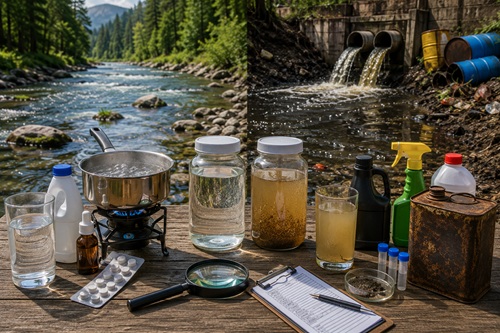
For example, adding household bleach to water contaminated with gasoline does not remove the fuel. Likewise, chlorine cannot eliminate pesticides, herbicides, heavy metals such as lead or mercury, antifreeze, solvents, or many industrial compounds. Although the water may become microbiologically safer, it may still remain chemically unsafe for human consumption.
Boiling presents similar limitations. Heating water destroys microorganisms through high temperatures, but dissolved chemicals remain behind after boiling is complete. In fact, because some water evaporates during boiling, the concentration of certain dissolved contaminants may increase slightly. Boiling should therefore never be viewed as a universal solution for every type of contamination.
Filtration also has limits. Many portable emergency filters effectively remove bacteria and protozoa, and some advanced filters reduce certain chemicals or heavy metals. However, not every filter removes viruses, and no single filter eliminates every possible contaminant. Understanding the capabilities of the specific filtration system being used is just as important as understanding the water source itself.
Activated carbon filters deserve special mention because they can improve taste and odor while reducing some organic chemicals and chlorine. However, activated carbon is not a complete purification system. It should generally be viewed as one component of a larger treatment strategy rather than a standalone solution for unknown water sources.
Preparedness planning should therefore begin with source selection whenever possible. Avoiding contaminated water is almost always safer than attempting to treat it afterward. Rivers downstream from industrial facilities, floodwater carrying fuel residues, agricultural drainage, or water exposed to hazardous chemical spills should be avoided whenever practical. No household treatment method can reliably address every combination of biological and chemical contamination.
Understanding these limitations also highlights the importance of redundancy. Combining careful source selection, pre-filtration, appropriate disinfection, proper storage, and ongoing inspection creates a much more dependable water management system than relying on any single treatment method alone. Each step addresses different risks while supporting the others.
Recognizing what disinfectants cannot do is just as important as understanding what they do well. Preparedness is strengthened not by assuming every treatment solves every problem, but by matching the appropriate treatment method to the specific hazards that are most likely to be encountered.
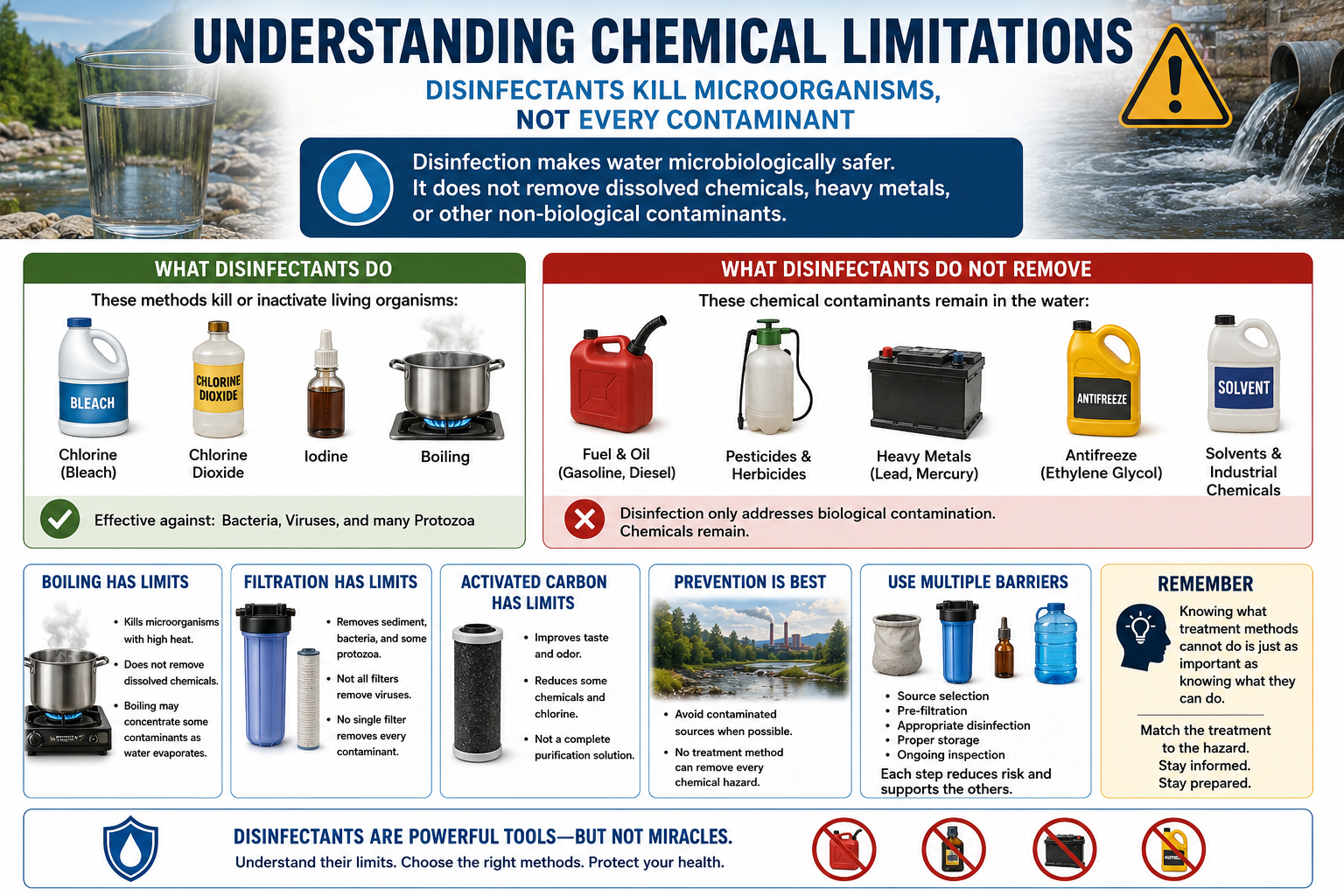
Contaminants Removed by Treatment vs. Filtration
| Contaminant | Chemical Disinfection | Boiling | Mechanical Filtration* | Activated Carbon** |
|---|---|---|---|---|
| Bacteria | ✓ Excellent | ✓ Excellent | ✓ Most filters | ✗ |
| Viruses | ✓ Excellent | ✓ Excellent | Varies by filter | ✗ |
| Protozoa (Giardia, Cryptosporidium) | Varies by disinfectant | ✓ Excellent | ✓ Most quality filters | ✗ |
| Sediment | ✗ | ✗ | ✓ Excellent | Limited |
| Leaves, insects, debris | ✗ | ✗ | ✓ Excellent | ✗ |
| Bad taste and odor | Limited | ✗ | Limited | ✓ Excellent |
| Chlorine taste | ✗ | ✗ | ✗ | ✓ Excellent |
| Heavy metals | ✗ | ✗ | Some specialized filters | Some reduction |
| Pesticides and industrial chemicals | ✗ | ✗ | Some specialized filters | Some reduction |
| Fuel contamination | ✗ | ✗ | Limited | Limited |
* Performance depends on the specific filter design and rating.
** Activated carbon improves many aesthetic qualities of water but is not a complete purification method.
Using Multiple Treatment Methods Together
One of the most important principles of emergency water preparedness is that no single treatment method addresses every possible hazard. Experienced preparedness planners therefore rely on a multi-barrier approach, combining several complementary methods that work together to improve overall water quality. Each step reduces a different category of risk, creating a much more dependable system than any individual treatment could provide alone.
The first barrier is always source selection. Beginning with the cleanest available water dramatically reduces the amount of treatment required later. Collecting clear spring water upstream from human activity is preferable to collecting muddy floodwater if both sources are available. Good decisions made during collection often have a greater impact on water quality than any treatment performed afterward.
The second barrier is pre-filtration. Removing leaves, sediment, insects, algae, and suspended organic material improves water clarity while allowing disinfectants to contact microorganisms more effectively. Even simple cloth filtration provides measurable benefits before additional treatment begins.
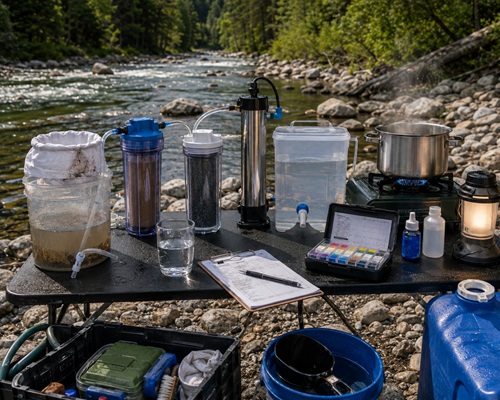
The third barrier is biological disinfection. Chlorine-based products, chlorine dioxide, boiling, or ultraviolet treatment reduce or eliminate harmful microorganisms that remain after filtration. Choosing the most appropriate method depends on the source water, available equipment, environmental conditions, and the anticipated duration of the emergency.
In situations involving uncertain water quality, combining filtration and chemical disinfection often provides greater confidence than either method alone. Filtration removes particles and many larger microorganisms, while the disinfectant inactivates organisms that pass through the filter. The result is a much more robust treatment process than relying on either method independently.
Some households also include activated carbon filtration after disinfection. Activated carbon improves taste and odor while reducing residual chlorine and certain organic compounds. Although it does not replace disinfection, it often makes treated water more pleasant to drink, encouraging proper hydration during prolonged emergencies.
Large household systems frequently integrate several treatment stages permanently. Rainwater harvesting systems may include leaf screens, first-flush diverters, sediment filters, storage tanks, ultraviolet disinfection, and activated carbon polishing before the water reaches household taps. Each component performs a specific function while supporting the overall reliability of the system.
Redundancy also improves preparedness when equipment fails. A damaged filter, expired disinfectant, or inoperable ultraviolet purifier does not necessarily eliminate the household’s ability to produce safe drinking water if alternative treatment methods remain available. Maintaining several treatment options provides flexibility while reducing dependence on any single piece of equipment.
Perhaps most importantly, combining treatment methods builds confidence. Households understand not only that their water has been treated, but also how it has been protected at each stage of the process. This layered approach reflects one of the central principles of preparedness: multiple independent protective measures generally provide greater resilience than relying on one solution alone.
The following section examines how to maintain treated water after disinfection so that the effort invested in producing safe drinking water continues protecting the household throughout long-term storage.
Maintaining Water Quality After Treatment
Treating water successfully is only the beginning of the process. Once water has been disinfected, every effort should be made to preserve its quality until it is actually needed. Poor storage practices, contaminated equipment, or unnecessary handling can quickly undo the benefits of careful treatment. Maintaining water quality after treatment therefore becomes just as important as the treatment process itself.
The first priority is transferring treated water only into clean, sanitized food-grade containers. Even perfectly disinfected water may become contaminated if it is poured into a container that contains dust, manufacturing residue, algae, bacteria, or traces of previously stored materials. Every storage container should be cleaned and sanitized before filling, regardless of whether it is brand new or has been used many times before.
Once filled, containers should be sealed immediately. The less time treated water remains exposed to the surrounding environment, the lower the risk of airborne dust, insects, microorganisms, or accidental contamination entering the container. Secure lids, intact gaskets, and properly tightened threaded caps all contribute to preserving water quality throughout long-term storage.
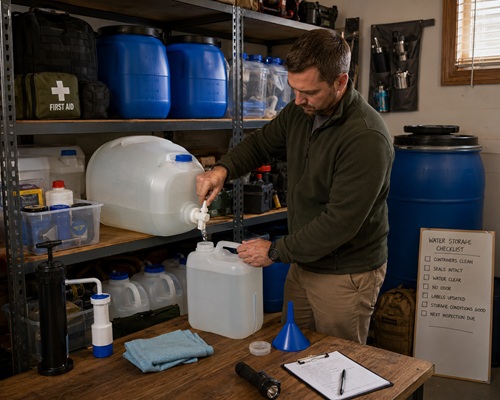
Handling should also be minimized. Every time a container is opened, there is an opportunity for contamination. Rather than repeatedly opening a large storage barrel whenever water is needed, many preparedness households transfer a smaller amount into a dedicated daily-use container. This simple practice protects the primary storage reserve while reducing wear on seals and dispensing equipment.
Storage conditions remain equally important after treatment. Cool, dark, climate-controlled locations provide the best long-term environment for both the water and its container. Direct sunlight, prolonged heat, repeated freezing and thawing, and high humidity all accelerate the aging of storage containers and may reduce overall system reliability. Protecting treated water from these conditions extends the useful life of both the container and its contents.
Chemical storage areas should always remain separate from potable water. Even tightly sealed containers should not be stored beside gasoline, pesticides, paints, solvents, fertilizers, pool chemicals, or cleaning products. Although food-grade containers provide excellent protection, accidental spills, fumes, or improper handling create unnecessary risks that can easily be avoided through thoughtful organization.
Routine inspections help verify that treated water remains properly protected. During scheduled maintenance, inspect containers for leaks, damaged lids, cracked plastic, ultraviolet deterioration, unusual odors, sediment, or signs of biological growth. Most problems identified during these inspections can be corrected quickly before they affect the quality of the stored water.
Labeling becomes even more valuable after treatment. Each container should clearly identify the fill date, treatment date if applicable, inspection schedule, and container identification number. These records simplify inventory management while eliminating uncertainty about which containers require attention during future maintenance cycles.
Preparedness households should also maintain clean transfer equipment. Funnels, hoses, pumps, measuring cups, and dispensing nozzles all come into direct contact with drinking water. These tools should be cleaned, sanitized, dried thoroughly when appropriate, and stored where they remain protected from contamination between uses. Well-maintained equipment reduces the likelihood of introducing microorganisms into treated water during future handling.
Another important habit is avoiding unnecessary taste testing. Some people repeatedly open long-term storage containers simply to inspect or sample the water. While curiosity is understandable, frequent opening increases contamination risk without providing significant benefits. Routine visual inspections of the container itself, combined with scheduled maintenance, generally provide a more reliable method of monitoring the storage system.
Maintaining water quality ultimately depends upon consistency rather than complicated procedures. Clean containers, careful handling, organized storage, routine inspections, and good recordkeeping work together to preserve the effort invested during treatment. By protecting treated water throughout storage, households ensure that it remains ready whenever normal water supplies become unavailable.
Common Water Treatment Mistakes
Treating drinking water is a straightforward process when proper procedures are followed, yet a number of common mistakes continue to reduce the effectiveness of emergency water treatment. Most of these errors occur because of misunderstanding rather than carelessness. Learning to recognize these problems before an emergency helps households avoid unnecessary risks while improving confidence in their preparedness plan.
One of the most common mistakes is assuming that clear water is automatically safe to drink. Many harmful microorganisms are microscopic and cannot be seen without specialized laboratory equipment. Crystal-clear mountain streams, freshly melted snow, and clean-looking rainwater may still contain bacteria, viruses, or protozoa capable of causing illness. Visual appearance should never replace proper treatment when the source is uncertain.
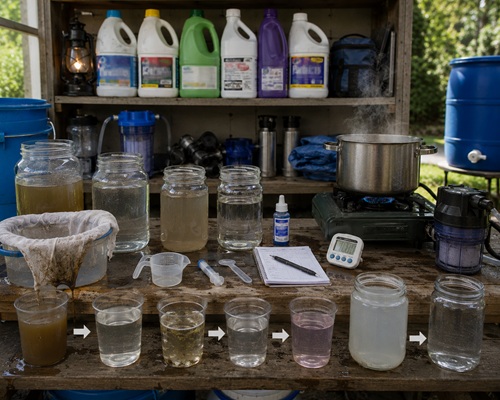
Another frequent mistake involves using the wrong type of bleach. Scented bleach, splash-less formulations, thickened products, color-safe bleach, and cleaning products containing additional chemicals are not intended for drinking water treatment. Only plain, unscented household bleach containing sodium hypochlorite should be considered for emergency water disinfection.
Incorrect measurement is another avoidable problem. Some people estimate quantities by pouring bleach directly from the bottle or assume that adding extra disinfectant provides additional protection. In reality, too little disinfectant may fail to control microorganisms, while excessive amounts can make water unpleasant to drink and unnecessarily increase chemical exposure. Careful measurement using appropriate tools remains the safest approach.
Failing to pre-filter cloudy water is another mistake that significantly reduces treatment effectiveness. Suspended sediment and organic material shield microorganisms from disinfectants, allowing some to survive. Filtering cloudy water before treatment dramatically improves the performance of chlorine, chlorine dioxide, and many other disinfection methods.
Some households overlook contact time entirely. Adding disinfectant and drinking the water immediately prevents the chemical from completing its work. Every treatment method requires sufficient time to react with microorganisms. Patience during this stage is one of the simplest ways to improve treatment success.
Improper storage after treatment also creates unnecessary problems. Treated water transferred into dirty containers or handled with contaminated equipment may become unsafe again despite proper disinfection. Good sanitation practices should continue throughout storage rather than ending once the disinfectant has been added.
Another common mistake is assuming that disinfectants remove every type of contamination. Chlorine, iodine, and boiling destroy microorganisms but do not eliminate heavy metals, fuel contamination, pesticides, industrial chemicals, or dissolved salts. Understanding these limitations helps households avoid using chemically contaminated water simply because it has been disinfected.
Preparedness planners sometimes neglect the treatment supplies themselves. Liquid bleach gradually loses strength over time, measuring tools become misplaced, replacement filters wear out, and purification tablets eventually reach the end of their recommended storage life. Including treatment supplies in the household rotation schedule ensures they remain dependable whenever they are needed.
Relying upon only one treatment method also limits flexibility. Equipment failures, supply shortages, or changing environmental conditions may make a preferred method temporarily unavailable. Maintaining several treatment options—such as filtration, boiling capability, chlorine-based disinfectants, and portable purification tablets—provides valuable redundancy while strengthening overall preparedness.
Finally, many households focus entirely on treatment while overlooking prevention. Clean collection methods, proper storage containers, organized maintenance, and careful handling often prevent contamination from occurring in the first place. Preventing contamination is almost always simpler than correcting it afterward.
Avoiding these common mistakes requires very little additional effort. Most can be eliminated through routine practice, organized procedures, accurate recordkeeping, and a clear understanding of how each treatment method is intended to work. Successful water treatment is built upon consistent habits rather than complicated techniques.
Developing a Household Water Treatment Plan
Every preparedness household should have a written plan describing how water will be treated under different emergency conditions. Emergencies rarely provide time to research disinfectant dosages, locate equipment, or debate treatment procedures. A well-developed plan eliminates uncertainty by identifying exactly how different water sources will be managed before they are ever needed.
The first step is identifying every potential water source available to the household. Municipal water, private wells, rainwater harvesting systems, rivers, lakes, springs, ponds, swimming pools for non-potable use, and stored emergency reserves all present different treatment requirements. Listing these sources allows the household to evaluate them individually rather than making decisions under stressful conditions.
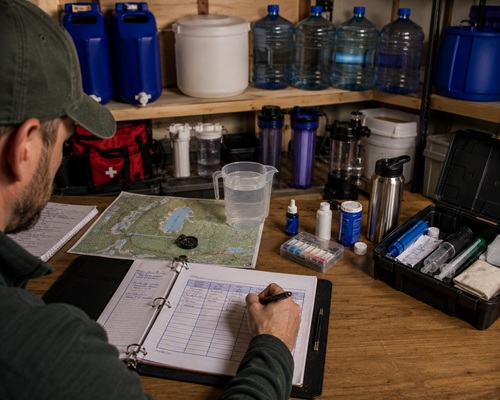
Next, identify the treatment methods available for each source. A municipal supply may require little additional treatment under normal conditions, while river water may require settling, filtration, chemical disinfection, and careful storage. Documenting these procedures creates a practical reference that remains useful even if internet access or electrical power is unavailable.
Treatment supplies should also be inventoried. Record the location of household bleach, calcium hypochlorite, chlorine dioxide tablets, measuring equipment, filters, pumps, spare gaskets, transfer hoses, and cleaning supplies. Keeping these items together in a dedicated water treatment kit reduces the time required to respond during an emergency.
Household responsibilities deserve attention as well. Every capable adult should understand the basic treatment procedures rather than relying on a single individual. Assigning responsibilities for collection, filtration, treatment, inventory updates, and equipment maintenance builds redundancy into the preparedness plan while ensuring that critical knowledge is shared.
Documentation forms another important component of the plan. Treatment dates, inspection records, filter replacement schedules, bleach rotation dates, and maintenance activities should all be recorded using both printed logs and digital records where practical. Accurate documentation supports long-term consistency while simplifying future maintenance.
The plan should also identify situations requiring more conservative decisions. Floodwater, suspected chemical contamination, damaged storage containers, or unknown water sources may justify locating an alternative supply rather than attempting treatment. Including these decision points in advance helps prevent unnecessary risk during emergencies.
Finally, the household water treatment plan should be reviewed annually alongside the broader preparedness program. New equipment, additional storage capacity, changes in household size, improved filtration systems, or expanded rainwater collection may all require revisions. Preparedness planning remains most effective when it evolves gradually with the household’s capabilities.
A written water treatment plan transforms emergency water management from an improvised response into a practiced household procedure. When every family member understands where water will come from, how it will be treated, and how it will be stored safely, the household becomes significantly more resilient during emergencies of every size and duration.
The next section will present a practical Household Water Treatment Decision Guide, followed by guidance on integrating water treatment into the broader household preparedness program.
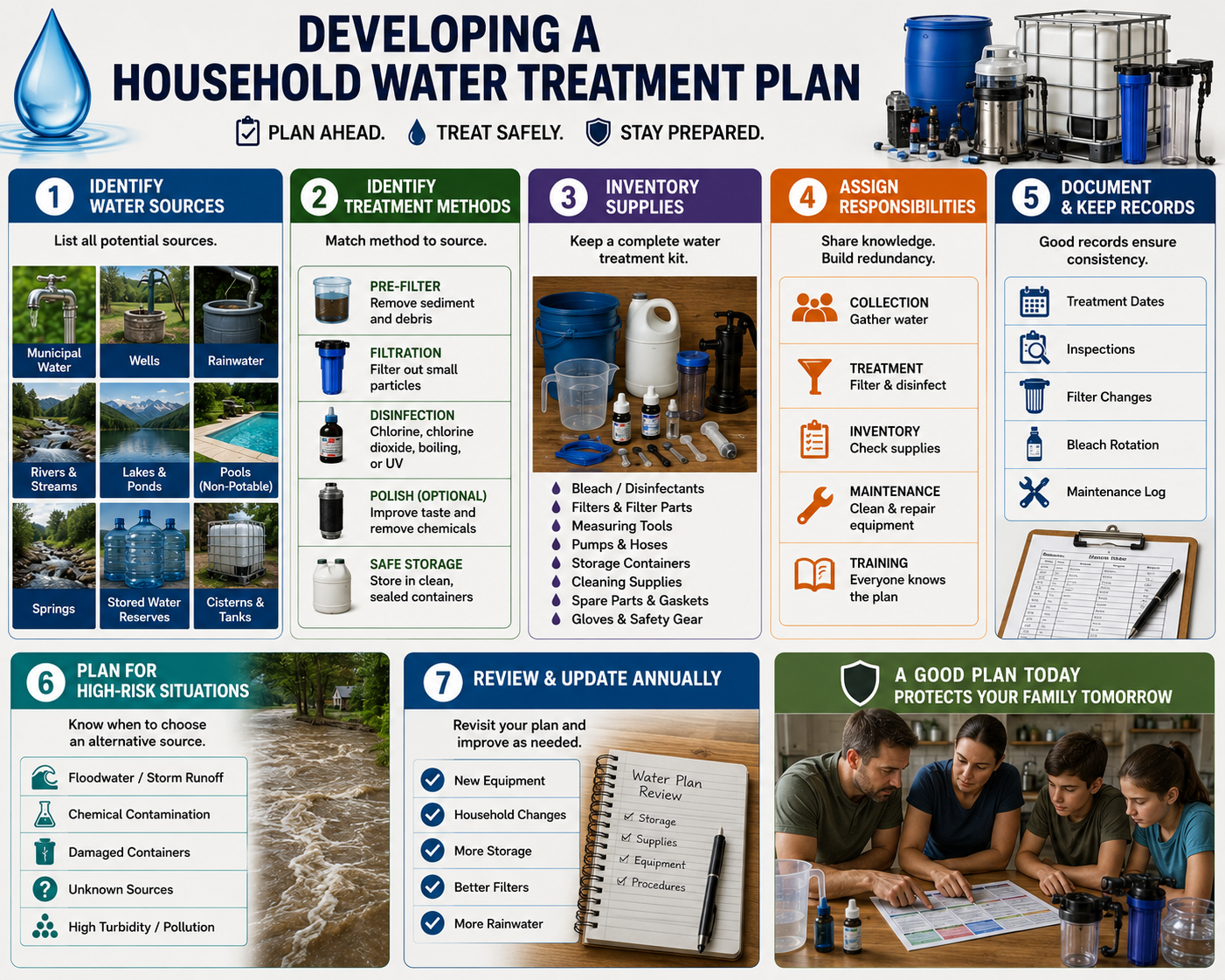
Household Water Treatment Decision Guide
During an emergency, deciding how to treat water should follow a logical process rather than relying on guesswork. A simple decision guide helps households evaluate each water source consistently while reducing the likelihood that important treatment steps will be overlooked. Instead of asking, “What treatment method should be used?” the better question becomes, “What condition is this water in, and what hazards am I trying to remove?”
The first decision involves identifying the water source. Factory-sealed bottled water with an intact seal generally requires no additional treatment before use. Properly stored municipal water transferred into sanitized food-grade containers usually requires little more than routine inspection if there is no indication of contamination. Water collected from wells, rainwater systems, rivers, lakes, streams, ponds, or melted snow should always be evaluated more carefully because each source presents different risks.
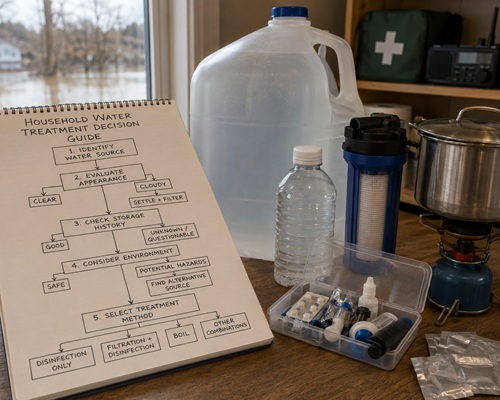
The next step is evaluating the appearance of the water. Clear water is generally easier to disinfect because there are fewer suspended particles protecting microorganisms. Cloudy water should first be clarified through settling and filtration before chemical disinfection or boiling begins. Treating heavily contaminated water without first removing suspended material often reduces the effectiveness of every treatment method that follows.
The storage history should also be considered. Water that has remained sealed inside clean food-grade containers under proper storage conditions presents fewer concerns than water collected recently from an unknown source or stored in containers of uncertain history. Understanding where the water came from and how it has been handled provides valuable context when selecting an appropriate treatment method.
Environmental conditions also influence the decision. Flooding, wildfires, industrial accidents, agricultural runoff, sewage overflows, or chemical spills may introduce hazards that ordinary disinfection cannot eliminate. When these conditions exist, locating an alternative water source generally represents the safest course of action whenever practical.
The final step involves selecting the appropriate treatment method or combination of methods. Some situations require only disinfection, while others benefit from filtration followed by chemical treatment or boiling. Matching the treatment process to the specific risks present provides better protection while avoiding unnecessary work.
By following a consistent decision-making process, households reduce uncertainty and improve confidence during emergencies. Organized procedures allow attention to remain focused on solving the problem rather than debating what to do next.
Household Water Treatment Decision Guide
| Situation | Recommended Action |
|---|---|
| Factory-sealed bottled water with intact seal | Inspect packaging. Use without additional treatment if the seal is intact. |
| Municipal tap water stored correctly | Inspect container and storage conditions. Treat only if contamination is suspected. |
| Private well water | Evaluate source history. Treat if quality is uncertain or after flooding. |
| Clear rainwater | Filter if necessary, then disinfect before drinking. |
| Cloudy rainwater or surface water | Allow sediment to settle, pre-filter, then disinfect. |
| River, lake, or stream water | Filter first, then disinfect or boil before use. |
| Floodwater | Avoid whenever possible. Use only if no safer alternative exists and apply multiple treatment steps. |
| Suspected chemical contamination | Do not rely on ordinary disinfection. Locate another source if possible. |
| Unknown storage history | Inspect carefully and retreat before consumption if confidence is lacking. |
Storing Water Treatment Supplies
Water treatment supplies are just as important as stored water itself. A household may have access to renewable water sources throughout an emergency, but without dependable treatment supplies, that water may remain unsafe for drinking. Proper storage of disinfectants, filters, measuring equipment, and related supplies ensures they remain effective whenever they are needed.
Chemical disinfectants deserve particular attention because their effectiveness changes over time. Liquid household bleach gradually loses strength, especially when exposed to heat or direct sunlight. It should be stored in a cool, dry location inside its original labeled container and rotated periodically according to the household maintenance schedule. Older bleach should be replaced before its effectiveness becomes uncertain.
Dry calcium hypochlorite generally provides a much longer storage life than liquid bleach, but it must also be protected from moisture. Humidity can damage the product, reducing its effectiveness while creating handling difficulties. It should remain sealed inside its original container or another approved storage container according to the manufacturer’s recommendations.
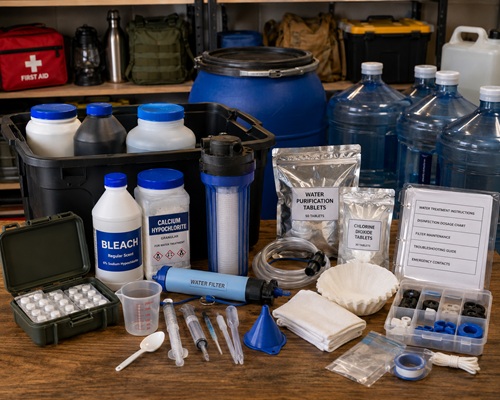
Water purification tablets should remain inside their original foil packaging until needed. Individual packaging protects the active ingredients from moisture and air while helping preserve their full treatment capability. Opened packages should be replaced if there is any doubt about their condition.
Filtration equipment should be stored clean and dry whenever possible. Portable filters, gravity systems, hoses, replacement cartridges, and ceramic elements all benefit from careful storage that prevents mold growth, freezing damage, or contamination between uses. Replacement filter elements should remain available because filters eventually reach the end of their service life.
Small support items are often overlooked but are equally important. Measuring spoons, syringes, droppers, funnels, clean cloths, coffee filters, spare gaskets, transfer hoses, and waterproof labels all contribute to safe and organized water treatment. Storing these items together inside a dedicated water treatment kit prevents them from becoming scattered throughout the home.
Documentation should accompany the supplies as well. Printed treatment instructions, dosage references, filter manuals, maintenance schedules, and emergency contact information remain available even during prolonged power outages when internet access may be unavailable. Waterproof page protectors or laminated instruction sheets provide additional durability for frequently used references.
Households should periodically inspect the entire treatment kit during routine preparedness reviews. Expired supplies should be replaced, damaged equipment repaired, and inventories updated. A treatment kit that is inspected annually is far more likely to perform reliably than one that remains forgotten until an emergency occurs.
Proper storage of treatment supplies supports the same preparedness principle that applies to stored water itself: equipment should remain organized, protected, maintained, and immediately ready for use. A well-stocked treatment kit complements stored water reserves by ensuring that renewable water sources can also be used safely when circumstances require.
Practicing Water Treatment Before an Emergency
Knowledge alone is rarely enough during an emergency. Practical experience builds confidence, improves efficiency, and often reveals small problems that would otherwise remain unnoticed until clean drinking water becomes critically important. For this reason, every household should periodically practice the complete water treatment process under normal conditions.
Practice begins with assembling the equipment. Locate treatment chemicals, filters, measuring tools, transfer containers, pumps, and storage containers exactly as they would be used during an actual emergency. Confirm that every item is present, functional, and easy to access without searching through storage areas.
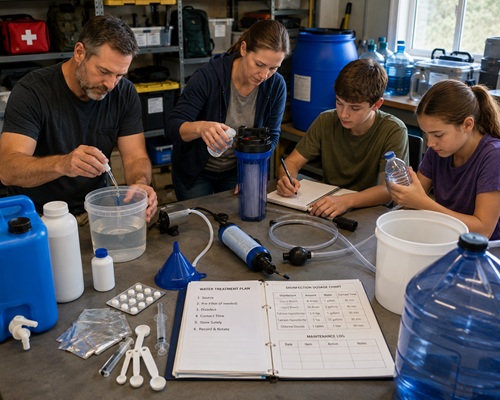
Next, perform a complete treatment exercise using clean tap water. Although the water may already be safe, practicing the procedure allows household members to become familiar with measuring disinfectants, mixing solutions, labeling containers, recording maintenance information, and organizing treated water. Repetition builds confidence while reducing mistakes.
Filtration equipment should also be tested periodically. Assemble gravity filters, portable backpacking filters, transfer pumps, or other treatment systems according to the manufacturer’s instructions. Verify that hoses fit correctly, seals remain watertight, valves operate smoothly, and replacement filters are available if needed. Equipment that works properly during practice is much more likely to perform reliably during an emergency.
Families should involve every capable household member in these exercises. Older children can assist with labeling containers, updating inventory sheets, preparing clean storage containers, or learning the basic principles of water treatment under adult supervision. Shared participation ensures that important knowledge is not limited to a single individual.
Practice sessions also provide opportunities to evaluate the household’s overall water management system. Are storage containers easy to reach? Can full containers be moved safely? Are treatment supplies stored together? Is the written treatment plan easy to understand? These questions often identify practical improvements that would not become apparent through reading alone.
Some households incorporate water treatment into camping trips, outdoor recreation, or preparedness weekends. Treating and using water under realistic conditions builds familiarity while demonstrating that emergency equipment serves practical everyday purposes as well. Experience gained during routine activities often proves invaluable when responding to real emergencies.
Training should also include troubleshooting. Learn how to recognize damaged containers, clogged filters, worn gaskets, expired disinfectants, leaking pumps, or incomplete inventories. Discovering these problems during practice is far preferable to encountering them when safe drinking water is urgently needed.
Preparedness is strengthened through routine experience rather than occasional study. Every practice session improves familiarity with the equipment, reinforces organized procedures, and increases confidence that the household can safely produce drinking water under a wide variety of emergency conditions.
Integrating Water Treatment into Your Preparedness Plan
Water treatment does not exist independently of the rest of household preparedness. It supports food storage, sanitation, medical care, hygiene, cooking, gardening, livestock, and countless other preparedness activities. Integrating water treatment into the broader emergency plan creates a resilient system where each preparedness capability reinforces the others.
Emergency food storage provides one of the clearest examples. Freeze-dried meals, dehydrated foods, powdered milk, infant formula, baking ingredients, and many staple foods all require clean water for preparation. Without dependable water treatment, even well-stocked food reserves may become difficult to use safely.
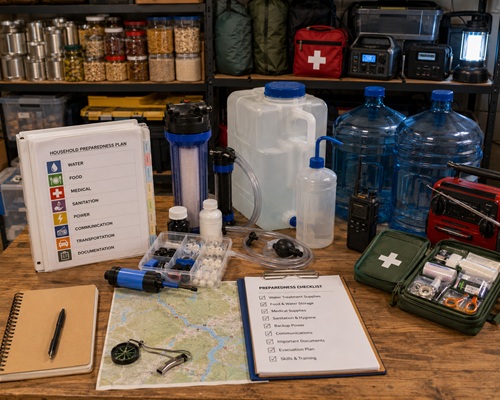
Medical preparedness also depends heavily upon treated water. Wound cleaning, hydration during illness, preparing oral rehydration solutions, washing medical equipment, and maintaining personal hygiene all require safe water. Households caring for infants, older adults, or medically vulnerable individuals should place even greater emphasis on maintaining dependable treatment capability.
Sanitation systems rely on clean water as well. Washing hands, cleaning cooking equipment, laundering clothing, and maintaining basic household hygiene all reduce the spread of disease during emergencies. Water treatment therefore contributes directly to overall household health rather than supporting only drinking water needs.
Backup power systems often play an indirect but important role. Generators, battery banks, solar power systems, and portable power stations may operate transfer pumps, ultraviolet purifiers, pressure systems, or well pumps. Coordinating maintenance of these systems alongside water treatment equipment ensures they remain available when required.
Communication plans also support water treatment. Weather alerts, boil water advisories, emergency broadcasts, and public health announcements provide valuable information that influences water management decisions. Reliable radios, satellite communicators, or other emergency communication systems help households adapt treatment procedures as conditions change.
Finally, documentation brings every component together. Inventories, treatment guides, maintenance logs, maps of nearby water sources, equipment manuals, and emergency contact information provide a complete reference system that remains available even when electronic devices fail.
Water treatment is ultimately one part of a much larger preparedness strategy. When integrated with food, medical care, communications, backup power, sanitation, and household planning, it helps create a complete emergency support system capable of sustaining the household through a wide variety of disruptions. The final sections of this handbook summarize these concepts and provide practical planning tools that readers can apply immediately within their own preparedness program.
In Summary
Treating stored water is one of the most valuable preparedness skills a household can develop because it transforms uncertain water supplies into dependable resources that support drinking, cooking, sanitation, hygiene, and medical care. While storing water remains the first step in preparedness, maintaining the knowledge and equipment needed to treat additional water greatly expands long-term resilience. A household capable of both storing and treating water is far better prepared than one relying solely on a fixed emergency reserve.
Successful water treatment begins with understanding the source of the water. Factory-sealed bottled water, properly stored municipal tap water, private wells, rainwater, rivers, lakes, streams, melted snow, and floodwater each present different challenges and require different treatment approaches. Recognizing these differences allows households to choose appropriate collection methods while avoiding unnecessary risks whenever safer alternatives are available.
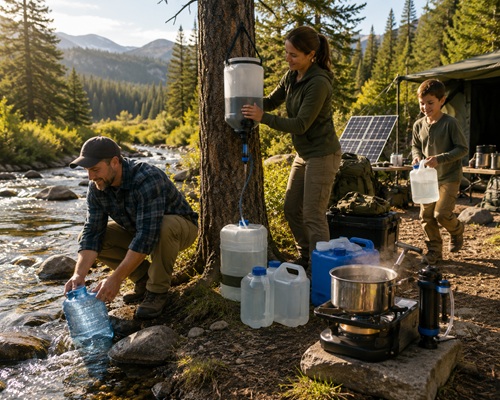
Equally important is understanding the strengths and limitations of available treatment methods. Chlorine-based disinfectants, chlorine dioxide, boiling, filtration, and other purification techniques each perform specific functions. Some are highly effective against bacteria and viruses, while others improve clarity, remove sediment, or reduce unpleasant tastes and odors. No single method solves every water quality problem, which is why experienced preparedness planners often rely on layered treatment systems rather than a single solution.
Proper storage remains essential even after treatment has been completed. Clean food-grade containers, careful handling, secure lids, organized labeling, routine inspections, and well-maintained treatment equipment all help preserve water quality throughout long-term storage. Treating water successfully is only part of the process; protecting that water afterward ensures the effort invested in treatment is not lost through preventable contamination.
Routine practice also strengthens preparedness. Measuring disinfectants, operating filters, maintaining treatment supplies, updating inventories, and reviewing household treatment plans build confidence through familiarity. These activities identify small problems long before they become significant during an emergency while ensuring every household member understands the basic procedures required to produce safe drinking water.
Perhaps most importantly, water treatment should never be viewed as an isolated task. It supports food preparation, medical care, sanitation, hygiene, communications, backup power, and every other part of the household preparedness plan. Integrating water treatment into regular preparedness maintenance creates a dependable system that continues supporting the household throughout both short-term disruptions and prolonged emergencies.
Ultimately, preparedness is strengthened not simply by storing more water, but by understanding how to evaluate, treat, protect, and manage water safely under changing conditions. Households that develop these practical skills gain confidence knowing they can continue producing safe drinking water long after stored supplies begin to decline.
Preparedness Action Plan
Learning about water treatment is only valuable if that knowledge is applied before an emergency occurs. Use the following action plan to evaluate your current preparedness, identify areas for improvement, and build a dependable household water treatment capability that can be maintained for years to come.
| Action Item | Why It Matters | Status |
|---|---|---|
| Review every household water source available to you. | Identifies all potential emergency water supplies before they are needed. | ☐ |
| Verify which water sources require treatment before drinking. | Prevents unsafe assumptions during emergencies. | ☐ |
| Purchase or inspect food-grade water treatment supplies (bleach, filters, purification tablets, etc.). | Ensures treatment equipment is available and functional. | ☐ |
| Check expiration or replacement dates for disinfectants and filter cartridges. | Confirms treatment supplies remain effective. | ☐ |
| Assemble a dedicated water treatment kit containing chemicals, measuring tools, filters, funnels, labels, gloves, and instructions. | Keeps all treatment equipment together for rapid deployment. | ☐ |
| Print and store water treatment instructions with your emergency supplies. | Provides guidance during power or internet outages. | ☐ |
| Practice filtering and disinfecting water using your actual equipment. | Builds confidence and identifies equipment issues before an emergency. | ☐ |
| Inspect and sanitize all water transfer equipment. | Prevents contamination after treatment. | ☐ |
| Review your household water treatment plan with every capable family member. | Ensures everyone understands basic procedures. | ☐ |
| Schedule an annual review of all water treatment equipment and supplies. | Keeps the entire system dependable over the long term. | ☐ |
Household Water Treatment Assessment
Use this worksheet to evaluate your current preparedness.
| Question | Yes | No | Needs Improvement |
|---|---|---|---|
| Does the household have more than one method of treating water? | ☐ | ☐ | ☐ |
| Are treatment chemicals stored properly? | ☐ | ☐ | ☐ |
| Are treatment supplies clearly organized and easy to find? | ☐ | ☐ | ☐ |
| Have all household members received basic instruction? | ☐ | ☐ | ☐ |
| Are treatment instructions available without internet access? | ☐ | ☐ | ☐ |
| Have filters and disinfectants been inspected within the past year? | ☐ | ☐ | ☐ |
| Can the household safely treat water from multiple sources? | ☐ | ☐ | ☐ |
Completing this action plan transforms water treatment from theoretical knowledge into a practical household capability. Even small improvements made consistently over time significantly increase long-term preparedness.
Skills Learned
After completing this handbook, you should now possess a comprehensive understanding of how stored water should be evaluated, treated, protected, and maintained throughout its storage life. More importantly, you should understand why each treatment method is used, when it is appropriate, and the limitations that must be considered before relying on treated water during an emergency.
You should now be able to identify the major types of emergency water sources and evaluate the risks associated with each. This includes recognizing the differences between municipal water, private wells, rainwater, rivers, lakes, streams, melted snow, floodwater, and previously stored household water.
You should understand how chlorine-based disinfectants, calcium hypochlorite, chlorine dioxide, iodine, boiling, filtration, and multi-barrier treatment systems work together to reduce biological contamination while recognizing that chemical contamination often requires different solutions.
You should also be able to determine when stored water requires treatment, when retreatment may be appropriate, and when locating an alternative water source is the safer decision. Understanding the importance of pre-filtration, contact time, proper storage, equipment maintenance, and accurate measurement allows you to produce safer drinking water with greater confidence.
Beyond treatment itself, you have learned how to organize treatment supplies, maintain water quality after treatment, inspect and rotate treatment equipment, avoid common mistakes, and integrate water treatment into a broader household preparedness program. These organizational skills are just as important as the treatment methods because they ensure the entire system remains dependable over many years.
Finally, you should now be capable of developing and maintaining a practical household water treatment plan that supports both short-term emergencies and long-term disruptions. Rather than depending upon a single technique or a fixed supply of stored water, you now understand how to combine renewable water sources, appropriate treatment methods, routine maintenance, and organized planning into a resilient household water management system.
Appendix A — Household Water Treatment Inventory
| Item | Quantity | Storage Location | Last Inspected | Replacement Due |
|---|---|---|---|---|
| Unscented Household Bleach | ||||
| Calcium Hypochlorite | ||||
| Chlorine Dioxide Tablets | ||||
| Portable Water Filter | ||||
| Gravity Water Filter | ||||
| Replacement Filter Elements | ||||
| Measuring Syringe/Dropper | ||||
| Funnels | ||||
| Clean Cloth Filters | ||||
| Coffee Filters | ||||
| Water Test Kit | ||||
| Printed Treatment Instructions |
Appendix B — Annual Water Treatment Inspection Log
| Inspection Date | Equipment Checked | Issues Found | Corrective Action | Initials |
|---|---|---|---|---|
Appendix C — Water Source Assessment Worksheet
| Water Source | Biological Risk | Chemical Risk | Preferred Treatment Method | Notes |
|---|---|---|---|---|
| Municipal Water | ||||
| Private Well | ||||
| Rainwater | ||||
| River/Stream | ||||
| Lake/Pond | ||||
| Snow/Ice | ||||
| Spring | ||||
| Other |
Appendix D — Water Treatment Maintenance Calendar
| Month | Recommended Activities |
|---|---|
| January | Inspect treatment kit and update inventory. |
| March | Check bleach age and replace if necessary. |
| May | Test portable filters and clean transfer equipment. |
| July | Review rainwater collection system and treatment supplies. |
| September | Practice household water treatment procedures. |
| November | Complete annual inspection, update records, and replace expired supplies. |
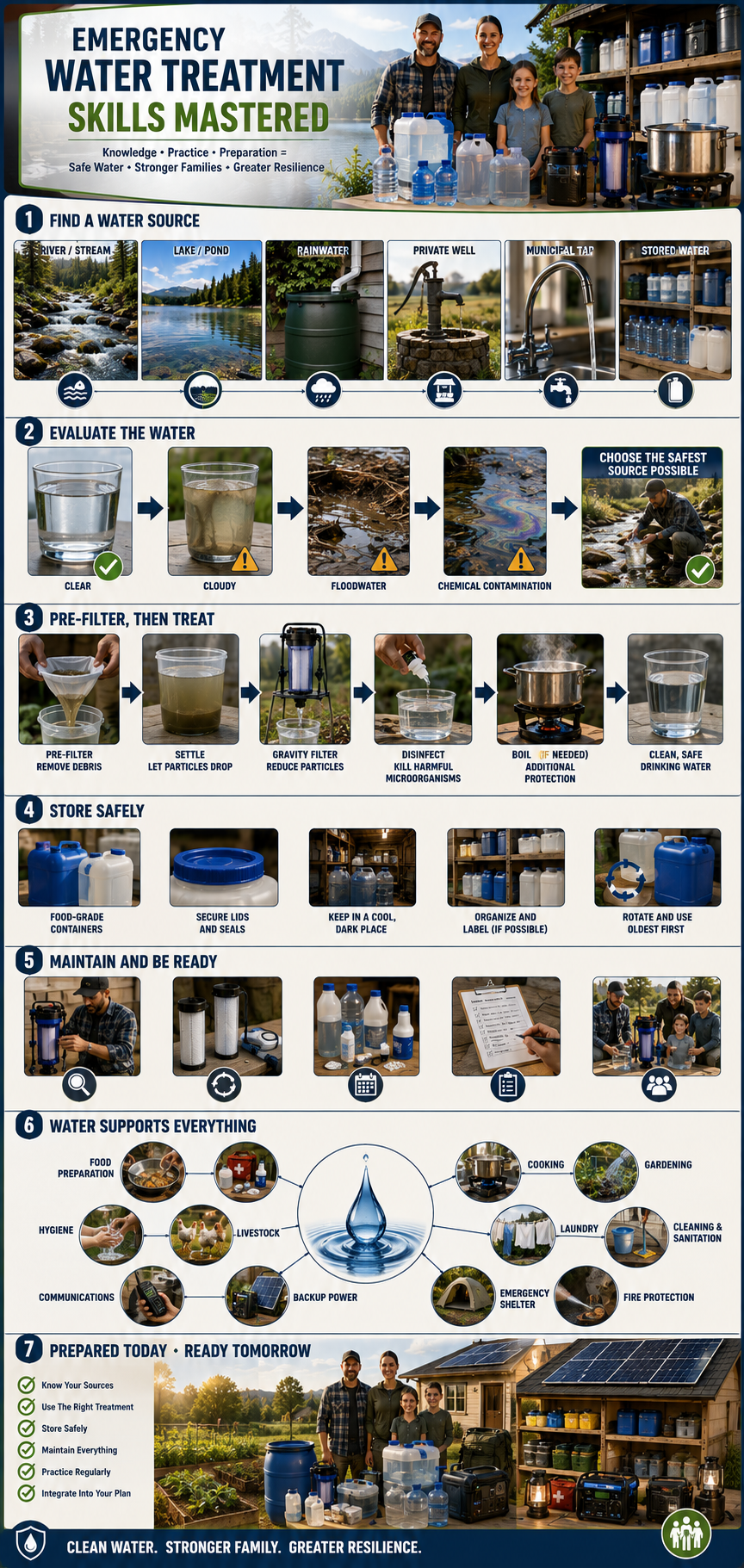
© Prepping Communities. This content is for informational purposes only and not professional advice. Use at your own risk.
Terms | Privacy | Guidelines