
How Long Could Your Household Manage Without Grocery Stores?
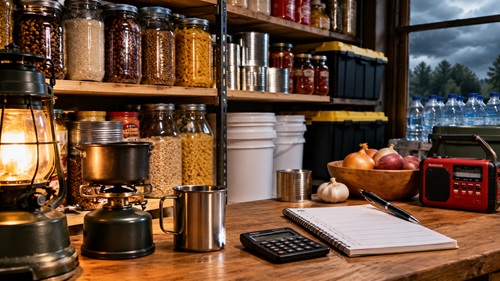
Most households have food tucked away in cupboards, freezers, and pantry shelves, but few have taken the time to calculate how long those supplies would actually last. A pantry might look well stocked until you begin counting meals, checking expiration dates, and considering what happens if the electricity goes out.
A prolonged power outage, severe weather event, transportation disruption, or interruption to food deliveries could make grocery shopping difficult or impossible for days or even weeks. Having food available is important, but so is knowing whether it provides adequate nutrition, how long it will last, and whether you can prepare it without relying on normal utilities.
Household size, dietary requirements, food allergies, physical activity, cooking water, fuel availability, and storage conditions all influence how useful those supplies will be during an emergency. Understanding these factors can reveal shortages and dependencies that aren’t obvious simply by looking at a full pantry.
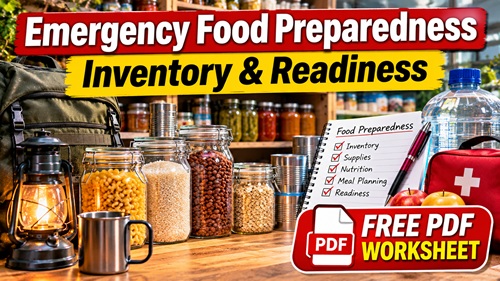
Download Your Free Emergency Food Preparedness Inventory & Readiness Worksheet
Prepping Communities has developed a free, printable 23-page Emergency Food Preparedness Inventory & Readiness Worksheet to help households evaluate their food supplies and determine how well they could manage an extended disruption to grocery access.
The worksheet covers everyday pantry foods, dry staples, ready-to-eat meals, and long-term emergency supplies. It provides space to record quantities, servings, calories, storage conditions, and replacement needs, along with calculations for estimating household food requirements over 14, 30, 60, and 90 days.
Having enough food on paper doesn’t always mean those supplies can be used during an emergency. A family might have several months of rice, pasta, and dried beans but discover that preparing much of it requires more water or cooking fuel than they have available. Refrigeration failures, poor storage conditions, and limited nutritional variety can also reduce the usefulness of an otherwise substantial food supply.
These considerations are included in the assessment, along with practical meal-planning exercises, food preservation and safety reviews, and space to document shortages and corrective actions. The goal is to help households understand what their existing supplies can realistically provide and where improvements would make the greatest difference.
For those just beginning to build an emergency food supply, the worksheet offers a practical way to establish priorities and increase supplies gradually. More experienced preppers can use it to review established inventories, check storage arrangements, and reassess their preparedness as household requirements change.
Get Your Free Printable Worksheet
Print the Emergency Food Preparedness Inventory & Readiness Worksheet, complete it using your household’s actual supplies, and keep it with your emergency preparedness records. Review it periodically as food is consumed, replaced, or added to storage.
A dependable emergency food supply is one that meets your household’s needs, can be stored and prepared safely, and remains practical when normal services are unavailable. Understanding those capabilities before an emergency is far more useful than discovering their limitations when grocery stores are no longer an option.

Don’t Forget Food for Your Bug-Out Bag
Building an emergency food supply at home is important, but households should also consider what happens if they need to evacuate. A well-stocked pantry won’t be much help if you have to leave it behind. Your bug-out bag should contain suitable, lightweight, calorie-dense foods that can be eaten without cooking or refrigeration, along with enough accessible drinking water and a realistic plan for replenishing supplies.
Weight is especially important when preparing an evacuation bag. Carrying several days of food, water, clothing, and emergency equipment can quickly become exhausting, particularly if you need to travel on foot. Each household member’s bag should reflect their physical abilities and individual requirements. Children should have smaller, lighter bags, while adults should plan to carry essential supplies for young children who cannot manage their own equipment.
To help households evaluate their evacuation supplies, Prepping Communities has also developed a free, printable 15-page Bug-Out Bag Inventory & Readiness Worksheet. It covers essential equipment, 72-hour food and water planning, evacuation arrangements, emergency communications, backpack weight, carrying ability, and practical readiness testing.
The two worksheets complement each other. One helps you assess the food available if you remain at home, while the other helps you prepare essential supplies if leaving becomes necessary.
© Prepping Communities. This content is for informational purposes only and not professional advice. Use at your own risk.
Terms | Privacy | Guidelines