
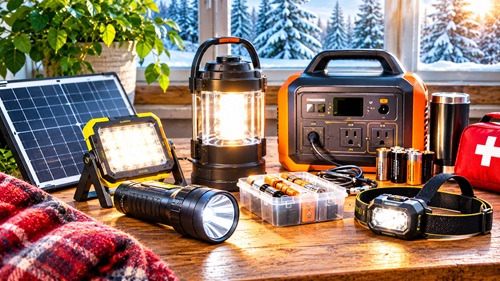
Could Your Household Manage 14 Days Without Electricity?
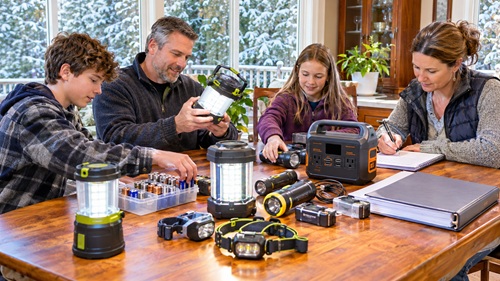
A power outage during the middle of a winter afternoon may not seem particularly serious at first. There is still some daylight coming through the windows, the family knows where the flashlights are stored, and everyone assumes the electricity will return before evening. But as the sun begins to set, the house becomes noticeably darker. Hallways, staircases, bathrooms, and entrances that are normally illuminated with the flick of a switch become difficult to navigate. Suddenly, something as ordinary as walking downstairs or preparing dinner requires more attention than usual.
Now imagine that the electricity does not return that evening, or the next morning. The household begins relying on flashlights, battery-powered lanterns, and whatever other lighting equipment happens to be available. Some lights are brighter than others, several batteries are partially discharged, and nobody is entirely certain how long the equipment will continue working. By the third or fourth evening, the family may already be conserving batteries, moving lights between rooms, and discovering that the inexpensive flashlight stored in a kitchen drawer is not particularly useful for preparing meals or safely navigating stairs.
If the outage continues for two weeks, emergency lighting becomes more than a matter of convenience. It affects household safety, food preparation, sanitation, medical care, security, communication, and the ability to perform everyday tasks after dark. During winter, when daylight hours are shorter and temperatures may be below freezing, the consequences of inadequate lighting can become even more serious.
Preparing for 14 days without electricity requires more than owning several flashlights. Households need to understand where lighting is essential, how much illumination different activities require, how long their equipment can operate, and whether sufficient batteries or charging arrangements are available. They also need to consider what happens when a light fails, a battery cannot be recharged, or a household member must move safely through the home during the night.
This posting is part of the Prepping Communities — Complete Emergency Preparedness Checklist Series. It is designed to help households evaluate their existing emergency lighting equipment, identify vulnerabilities, calculate realistic battery and backup electricity requirements, and develop a practical plan for maintaining essential lighting throughout a 14-day power outage.
Why Emergency Lighting Requires Its Own Preparedness Plan
Emergency lighting is often overlooked because most households already own a flashlight or two. A flashlight may be stored in the kitchen, another in the garage, and perhaps a camping lantern is packed away with outdoor equipment. These items can create a sense of preparedness, but owning them does not necessarily mean they will provide sufficient lighting during an extended emergency.
Consider a family of four living in a two-story home. When the electricity fails, they discover that their brightest flashlight is stored in the garage, the batteries in another have leaked, and their rechargeable lantern has not been charged since the previous camping season. The family can still produce some light, but moving safely between bedrooms, bathrooms, stairways, and the kitchen becomes inconvenient and potentially hazardous.
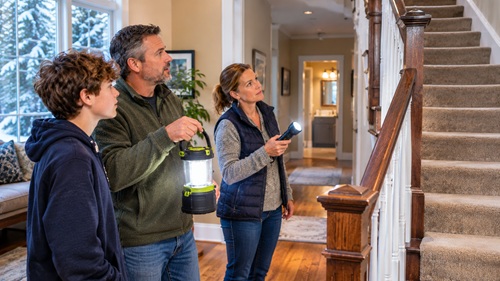
The problem becomes more noticeable when several people need lighting at the same time. One person may be preparing food, another may need to use the bathroom, and someone else may be searching for medication or checking the electrical panel. A single lantern cannot adequately support all these activities, particularly when household members are moving between different areas.
An effective emergency lighting plan therefore considers how light will be distributed throughout the home, which activities require dedicated illumination, and how equipment will be powered over time. It should also include a backup arrangement if the primary lighting system becomes unavailable.
The objective is not to illuminate the entire home as brightly as it would be under normal conditions. It is to provide enough reliable light for household members to remain safe, carry out essential activities, and move confidently through their surroundings.
Identifying Household Areas That Require Emergency Lighting
The first step in evaluating emergency lighting readiness is identifying which parts of the home become difficult or dangerous to use when the electricity fails. Staircases deserve particular attention because poor visibility increases the risk of falls. Steps, landings, handrails, and changes in floor level should be easy to identify, especially for people who may need to move through the house during the night. Hallways and routes between bedrooms and bathrooms are also important because these areas may be used when household members are tired or not fully alert.
Bathrooms present additional challenges. Water on floors, hard surfaces, and obstacles can create hazards when visibility is poor. Kitchens require sufficient light for food preparation, handling sharp utensils, using hot cookware, and maintaining food hygiene. Utility rooms and basements may contain electrical equipment, water shutoff valves, heating systems, and other components that household members may need to inspect during an emergency.
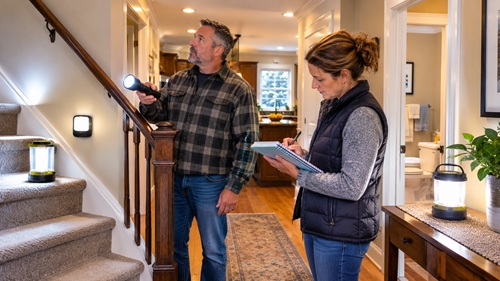
Entrances and exits should also be considered. If the household must evacuate during the night, people need to identify doors, stairs, and outdoor obstacles without searching for a flashlight at the last moment.
A practical assessment involves walking through the home during daylight and identifying these critical areas. Consider where portable lights could be placed without creating tripping hazards, whether they can be operated easily, and how household members would reach them if the outage occurred unexpectedly.
Emergency lighting should be arranged around the way people actually use the home. A lantern that works well on a dining table may not be suitable for a narrow staircase, while a small flashlight may be adequate for checking a cupboard but insufficient for preparing a meal.
Understanding Different Types of Emergency Lighting Equipment
Emergency lighting equipment comes in several forms, and each has advantages and limitations. Choosing suitable equipment begins with understanding how it will be used rather than simply selecting the brightest available product.
LED lanterns are useful for illuminating small rooms, dining tables, and shared activity areas. Unlike a conventional flashlight, which directs most of its light in one direction, many lanterns distribute illumination over a wider area. This makes them practical for reading, preparing meals, organizing supplies, or allowing several people to work together.
Flashlights are better suited to tasks requiring a concentrated beam. They can help household members inspect equipment, navigate dark corridors, identify outdoor obstacles, or locate supplies in storage areas. Their usefulness depends on beam pattern, brightness settings, battery capacity, and how comfortably they can be carried.
Headlamps offer another important advantage because they leave both hands free. During an emergency, this can be particularly useful when carrying supplies, performing basic maintenance, preparing food, or moving through an area where holding a flashlight would be inconvenient. A properly fitted headlamp can also reduce the temptation to hold a flashlight in the mouth or place it on an unstable surface.
Rechargeable LED work lights may provide substantial illumination for specific tasks, while smaller battery-powered nightlights can help mark safe routes between bedrooms and bathrooms. Motion-activated lighting may also be useful in certain areas, although its reliability depends on sensor performance, battery condition, and placement.
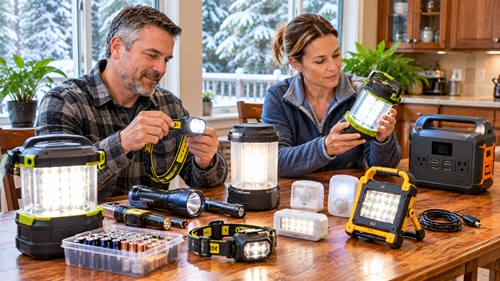
No single type of lighting is ideal for every situation. A practical household inventory usually benefits from a combination of room lighting, personal lighting, and smaller lights positioned in critical locations.
Understanding Lumens and How Much Light Is Actually Needed
One of the most confusing aspects of choosing emergency lighting equipment is understanding brightness ratings. Manufacturers commonly advertise lights using lumens, but a high lumen rating does not automatically mean that a particular light is suitable for every household task.
Lumens measure the total amount of visible light emitted by a source. They do not directly describe how evenly that light is distributed or how much illumination reaches a particular surface. A flashlight producing a narrow beam may appear extremely bright when directed at one object while leaving the surrounding room relatively dark. A lantern producing fewer lumens may provide more useful general illumination because its light is distributed over a wider area.
Illuminance, measured in lux, describes how much light reaches a surface. One lux is equivalent to one lumen per square metre when light is distributed uniformly. In actual homes, illumination varies with distance, beam shape, room surfaces, and the position of the light.
For emergency preparedness, the practical question is whether the lighting allows household members to perform necessary tasks safely. A small lantern may be sufficient for locating personal belongings or moving around a familiar room, while food preparation, reading medication instructions, and handling tools may require more concentrated illumination.
Brightness also affects battery consumption. Many LED lights can operate at several brightness settings, and the highest setting often consumes considerably more energy than lower settings. A lantern advertised as producing several hundred lumens may operate for many hours at its lowest setting but only a fraction of that time at maximum brightness.
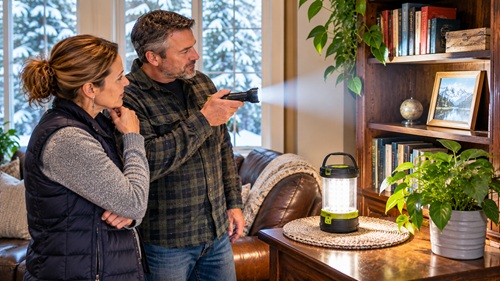
Households should test their lights in the locations where they will actually be used. The objective is to identify the lowest practical brightness that still provides adequate visibility for the intended activity, rather than automatically operating every light at maximum output.
Calculating Emergency Lighting Battery Runtime
Understanding battery runtime is one of the most useful skills in emergency lighting preparedness. A household may own several rechargeable lanterns, but without knowing their power consumption and usable battery capacity, it is difficult to estimate how long they will operate.
Consider an illustrative LED lantern that consumes an average of 5 watts while operating. If the lantern is used for six hours each evening, its daily energy consumption would be 5 watts × 6 hours = 30 watt-hours.
Over 14 days, that operating pattern would require 30 watt-hours × 14 days = 420 watt-hours of electrical energy.
This calculation describes the energy consumed by the lantern, not necessarily the amount that must be drawn from a backup battery or charging system. Charging losses, battery efficiency, and other factors can increase the energy required from the source.
Now consider a household using three identical lanterns for six hours each evening. The estimated daily consumption would be 3 × 5 watts × 6 hours = 90 watt-hours, representing 1,260 watt-hours over 14 days.
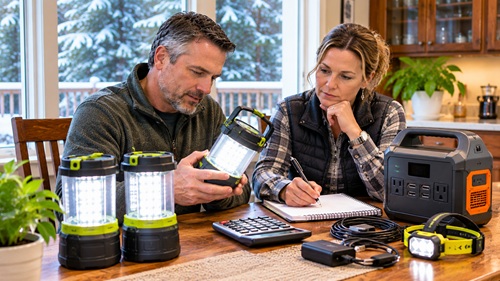
These examples demonstrate why lighting inventories should record both the number of lights and their expected daily operating time. Three lanterns may provide excellent illumination, but operating all of them continuously may consume resources that could be conserved through more deliberate lighting arrangements.
Actual runtime should be based on manufacturer specifications and, where practical, measured performance. Some lights reduce brightness automatically as their batteries discharge, while others shut off relatively quickly when their battery voltage falls below a certain level. Advertised runtime figures may also be based on lower brightness settings or specific testing conditions.
The most reliable approach is to test the equipment at the brightness settings the household intends to use and record how long it remains adequately illuminated.
Understanding Usable Illumination Versus Advertised Runtime
One detail that is easy to overlook when purchasing emergency lighting equipment is the difference between how long a light remains switched on and how long it provides useful illumination.
A flashlight advertised as having a 20-hour runtime may not maintain its original brightness throughout that period. Depending on the design, it may gradually become dimmer as the battery discharges or reduce its output automatically to conserve energy.
This distinction matters because different activities require different amounts of light. A dim flashlight may still be adequate for locating a familiar object in a bedroom, but it may no longer provide sufficient illumination for navigating stairs, inspecting electrical equipment, or reading medication instructions.
Manufacturers may also measure runtime according to standardized testing procedures that allow light output to decline substantially before the stated runtime ends. A long advertised runtime therefore does not necessarily represent the number of hours a device can provide its highest brightness.
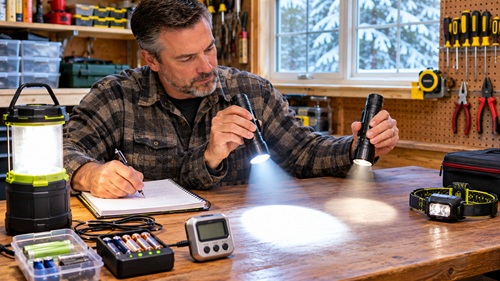
Households should test lighting equipment at the settings they expect to use during an emergency and observe when the illumination becomes inadequate for the intended activity. Recording this practical operating duration provides a more useful preparedness measurement than simply waiting for the device to shut off.
A reliable emergency lighting inventory should therefore distinguish between advertised runtime and usable runtime. The most important question is not whether the light is still glowing after several hours, but whether it remains bright enough to help household members perform necessary tasks safely.
Understanding Battery Capacity and Replacement Batteries
Emergency lighting equipment may use disposable batteries, rechargeable batteries, built-in lithium-ion battery packs, or external power sources. Each arrangement requires a different approach to planning.
Disposable batteries can provide a useful reserve because they do not require a charging system during the outage. However, their shelf life, storage conditions, and compatibility with the equipment must be considered. Batteries that have been stored for several years may have reduced capacity, and leaking batteries can damage flashlights or other devices.
Rechargeable batteries can reduce the need to store large quantities of disposable batteries, particularly when a dependable charging source is available. Their usefulness depends on battery condition, charging compatibility, and the amount of electricity available for recharging.
Battery capacity is often advertised in milliamp-hours, abbreviated mAh. However, comparing batteries solely by mAh can be misleading because batteries operate at different voltages. For a more meaningful energy comparison, capacity should be expressed in watt-hours.
The basic relationship is watt-hours = volts × amp-hours. For example, a battery rated at 3.7 volts and 2,000 mAh has a nominal energy capacity of approximately 3.7 volts × 2 amp-hours = 7.4 watt-hours.
That does not mean the entire 7.4 watt-hours will necessarily be available to the lighting device. Actual usable energy depends on battery condition, operating temperature, discharge rate, and the design of the equipment.
Households should also be careful when selecting replacement batteries. Different battery chemistries may have different voltage characteristics even when their physical dimensions are similar. Substituting rechargeable lithium-ion cells for ordinary disposable batteries in equipment not designed for them can damage the device or create a safety hazard.
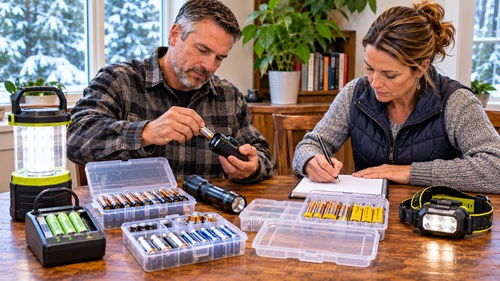
The safest approach is to use the battery types specified by the manufacturer and maintain a documented supply of compatible replacements.
Battery Storage and Cold-Weather Charging Safety
Batteries are often treated as simple accessories, but their condition and storage environment can determine whether emergency lighting equipment works when it is needed.
Disposable and rechargeable batteries should be stored according to manufacturer instructions, protected from moisture, physical damage, excessive heat, and conditions that could cause short circuits. Loose batteries should not be stored where their terminals can contact metal objects such as keys, tools, or coins.
Battery chemistry also matters during winter. Some batteries provide less usable energy in freezing conditions, meaning a flashlight or lantern may operate for a shorter period outdoors than it does inside a warm home.
Lithium-ion batteries require particular attention when charging in cold weather. Charging certain lithium-ion cells below freezing can cause metallic lithium to deposit inside the battery, potentially damaging the cell and creating safety risks. Some modern battery systems include protective electronics or specialized low-temperature charging arrangements, but these capabilities should never be assumed.
Households should follow the temperature limits specified by the battery or equipment manufacturer. Batteries that have been exposed to extreme cold may need to return to an appropriate temperature before charging, depending on the manufacturer’s instructions.
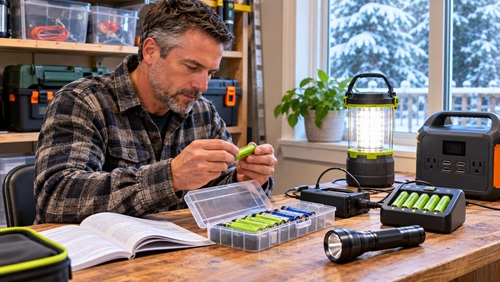
Damaged, swollen, leaking, or unusually hot batteries should not be used or charged. Rechargeable lighting equipment should be paired with compatible chargers, and batteries should never be modified or warmed using open flames, direct contact with heaters, or improvised methods.
These precautions are particularly important for households relying on rechargeable lighting throughout a prolonged winter outage. Protecting batteries from unsuitable conditions can improve reliability while reducing avoidable safety risks.
Planning Backup Charging for Rechargeable Lighting
Rechargeable emergency lighting can be practical during a prolonged outage, but only when the household has a realistic way to restore battery capacity.
Portable power stations, USB power banks, solar charging equipment, and vehicle charging systems may provide electricity for rechargeable lights. Each option has limitations, and the available charging energy must be considered alongside other household requirements.
For example, a household using rechargeable lanterns that collectively consume 60 watt-hours each day would require approximately 840 watt-hours over 14 days before charging losses. If those lights are recharged from a portable power station, the actual energy drawn from the station may be higher because some electricity is lost during charging and conversion.
A portable power station with a nominal capacity of 1,000 watt-hours should therefore not be assumed to provide the entire 14-day requirement without recharging. The usable capacity depends on the power station’s design, battery condition, operating temperature, and charging method.
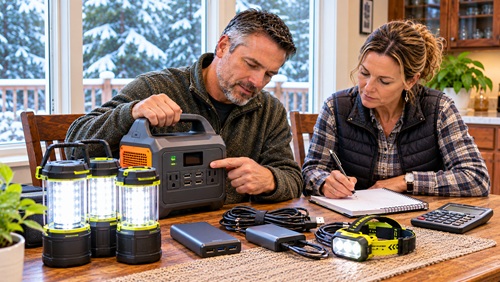
Solar charging may extend the useful operating period of rechargeable lighting equipment, but winter conditions can significantly affect performance. Short daylight hours, cloud cover, low sun angles, snow accumulation, and shading can reduce the amount of energy generated. A solar panel’s advertised wattage represents performance under specified test conditions, not a guarantee of daily winter production.
Vehicle charging may offer another option when the vehicle and charging equipment are suitable. However, households should avoid unnecessarily draining a vehicle’s starting battery, particularly during freezing weather. Running a vehicle for charging also requires attention to fuel availability and exhaust safety. Vehicles must never be operated in garages or other enclosed or partially enclosed spaces.
A reliable charging plan should identify how much electricity the lights require, how that electricity will be supplied, and what happens when the preferred charging method is unavailable.
Creating a Practical Household Lighting Arrangement
Once equipment and power requirements are understood, the next step is deciding how lights will be distributed throughout the home.
A common mistake is keeping all emergency lighting equipment in one storage container. While centralized storage can make inventory management easier, it may leave household members searching in darkness when an outage occurs unexpectedly.
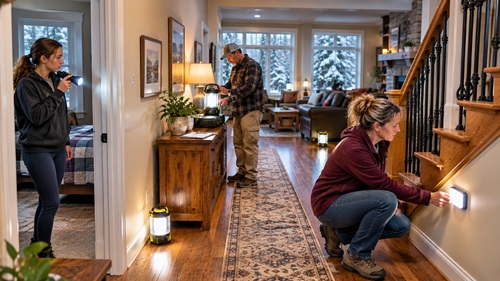
A more practical arrangement places suitable lighting within easy reach of bedrooms, primary living areas, and other critical locations. A flashlight or headlamp near each sleeping area can help people move safely when they wake during the night. A lantern in the kitchen or dining area can provide general illumination for shared activities, while smaller lights may help identify hallways and bathroom entrances.
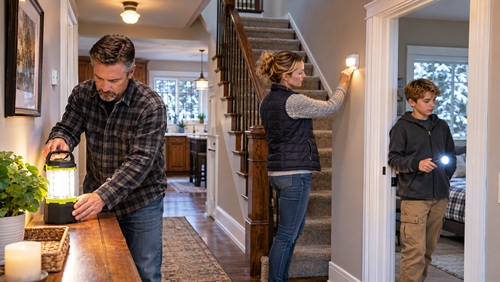
Placement matters as much as brightness. A lantern positioned at eye level may produce uncomfortable glare, while one placed too low may create shadows that obscure obstacles. Lights should be secured on stable surfaces or mounted using approved accessories rather than balanced on furniture where they could fall.
Households should also consider how lighting will be managed when people move between rooms. Carrying a lantern may be practical in some situations, but it can leave other household members without illumination. Dedicated personal lights help reduce this problem.
The objective is to establish a lighting arrangement that supports normal household movement without requiring constant improvisation. During a prolonged outage, simple routines can make a substantial difference in comfort, safety, and battery conservation.
A Realistic Emergency Lighting Scenario for a Family of Four
Consider a family of four living in a two-story home during a winter power outage. The household has two rechargeable LED lanterns, three flashlights, two headlamps, and a portable power station. At first glance, this seems like a reasonable collection of emergency lighting equipment, but the family has never tested how the lights would be distributed or how long the batteries would last.
When the electricity fails shortly before sunset, the family places one lantern in the kitchen and another in the main living area. The adults keep the headlamps available for preparing food, checking equipment, and moving between rooms, while the children have access to flashlights appropriate for their ages.
The family quickly discovers that the staircase between the bedrooms and the main floor remains poorly illuminated. Carrying a lantern upstairs provides temporary light, but it leaves the kitchen without general illumination. The household decides that a small dedicated battery-powered light near the staircase would improve safety without requiring a large amount of additional electricity.
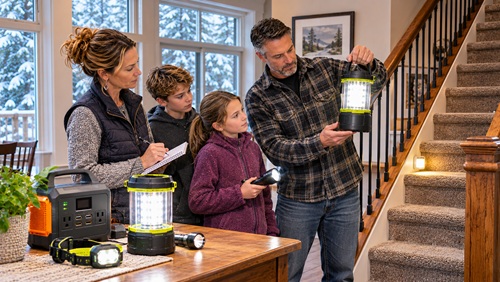
During the first evening, the family also notices that its lanterns are brighter than necessary for some activities. Reducing the brightness provides adequate illumination for reading and moving around the living room while potentially extending battery runtime.
The next challenge is charging. Both lanterns rely on rechargeable batteries, and the portable power station is also needed for communication devices and other essential equipment. The family must decide how much electricity can reasonably be allocated to lighting each day.
Rather than operating every light continuously, they establish a simple routine. General lighting is used in occupied rooms, personal lights are available for movement between areas, and unnecessary lights are switched off when rooms are empty.
Over the following days, the family records how long each light operates and how much charging is required. If the power station cannot be recharged, they may need to reduce operating hours or rely more heavily on flashlights using compatible replacement batteries.
This scenario illustrates why an emergency lighting inventory should consider equipment placement, usable brightness, operating time, battery supplies, and household routines together. A family may own enough lights but still discover important weaknesses when those lights are used in a realistic emergency situation.
Emergency Lighting and Fire Safety
During power outages, households sometimes turn to candles, oil lamps, or other flame-based lighting because these products are familiar and may already be available. However, open flames introduce fire risks that can be especially serious when people are tired, rooms are crowded with emergency supplies, or normal heating arrangements have changed.
Candles can ignite curtains, clothing, bedding, paper, and other combustible materials. They may also be knocked over by children, pets, or someone moving through a dark room. Fuel-burning lanterns introduce additional hazards, including burns, fuel spills, and potentially dangerous combustion products.
Battery-powered LED lighting is generally the safer choice for household emergency illumination because it does not require an open flame or combustion. However, electrical lighting equipment still requires appropriate handling. Damaged batteries, unsuitable chargers, and poorly manufactured devices can create overheating or fire hazards.
Rechargeable lights should be charged according to manufacturer instructions, using compatible charging equipment. Devices with swollen, damaged, leaking, or unusually hot batteries should not be used. Batteries should be protected from short circuits, physical damage, and excessive temperatures.
Households should also avoid placing lights where they could obstruct exits, create tripping hazards, or come into contact with water when the equipment is not designed for wet conditions.
Fire safety is an important reason to establish a dependable battery-powered lighting inventory before an outage occurs. When reliable LED lighting is already available, households are less likely to resort to improvised or hazardous alternatives.
Lighting for Children, Older Adults, and People With Disabilities
Emergency lighting arrangements should reflect the needs of everyone in the household. A lighting system that works well for healthy adults may be inadequate for young children, older adults, or people with vision, mobility, or cognitive limitations.
Older adults may require more illumination to distinguish steps, obstacles, and changes in floor level. Glare can also create difficulties, particularly when bright lights are directed toward the eyes rather than the surfaces that need to be illuminated.
People with limited mobility may need lights that can be operated without reaching difficult locations or manipulating small switches. Motion-activated lighting, large controls, and lights positioned near beds or mobility aids may improve accessibility when selected and tested appropriately.
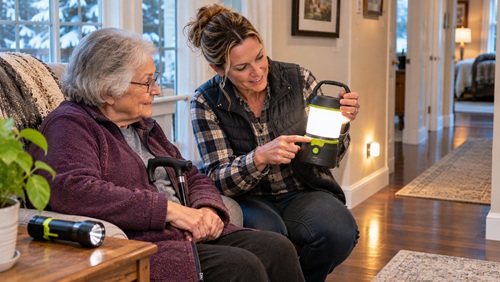
Children may feel anxious when familiar rooms become dark, particularly during a prolonged winter outage. Providing age-appropriate personal lighting and practicing simple routines can help them understand where to find their lights and how to use them safely.
Some household members may depend on illuminated displays, visual alerts, or other equipment associated with medical or accessibility needs. These requirements should be considered separately from general room lighting because they may involve additional electricity or specialized backup arrangements.
A practical lighting assessment asks whether every household member can locate, operate, and use the necessary equipment independently where appropriate. If assistance is required, the household should establish how that assistance will be provided during an outage.
Outdoor Emergency Lighting During Winter
Emergency lighting requirements do not stop at the front door. During winter, household members may need to navigate icy walkways, inspect outdoor equipment, access stored firewood, or reach a vehicle after dark.
Outdoor lighting presents additional challenges because equipment may be exposed to snow, moisture, wind, and freezing temperatures. A flashlight that works well indoors may not provide sufficient illumination for identifying uneven ground or icy surfaces outside.
Headlamps can be particularly useful because they allow people to keep their hands free while carrying supplies or maintaining balance. However, a concentrated beam may produce glare when reflected from snow, making adjustable brightness and beam patterns valuable.
Outdoor lighting equipment should have suitable environmental protection for its intended use. Manufacturers may provide ingress protection ratings indicating resistance to dust and water, but those ratings should not be interpreted as guarantees against every weather condition.
Cold temperatures can also reduce battery performance. Some batteries deliver less usable energy in freezing conditions, and certain rechargeable lithium-ion batteries must not be charged below specified temperatures unless the battery system is designed to manage those conditions safely.
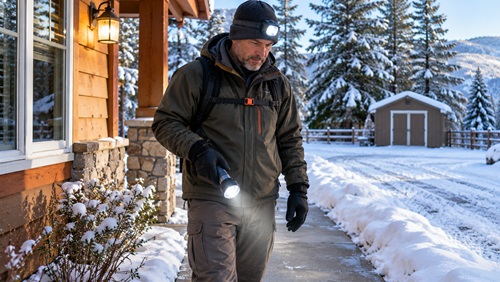
Households should test outdoor lighting equipment under appropriate winter conditions and determine whether spare batteries or backup lights need to be protected from extreme cold.
Even with adequate lighting, outdoor travel during severe winter weather can be hazardous. Emergency preparedness should reduce unnecessary trips after dark rather than encourage people to venture outside simply because lighting equipment is available.
Understanding How Winter Changes Lighting Requirements
Winter power outages create a different lighting challenge from outages occurring during long summer days. In many northern locations, households may experience only a limited period of daylight, leaving substantial portions of the morning and evening dependent on artificial illumination.
The number of hours requiring emergency lighting depends on latitude, season, weather, building design, and household routines. A family living in a northern rural community may need more hours of artificial light than a household in a region with longer winter daylight periods.
Cloud cover and snowstorms can further reduce natural light entering the home. Rooms with small windows, basements, and interior hallways may require illumination even during the day.
Winter also changes how households use their living spaces. If heating resources are limited, family members may spend more time together in a smaller occupied area. This can reduce the number of lanterns needed for general illumination, although personal lights and safe routes to bathrooms and exits remain important.
Lighting plans should therefore account for realistic winter operating hours rather than assuming that a few hours of evening use will be sufficient.
A household that calculates its lighting requirements based on six hours of daily operation may discover that it needs eight or ten hours during particularly dark winter conditions. That difference can substantially affect battery consumption over a 14-day period.
Testing the plan during the season when it is most likely to be needed provides a more realistic assessment than relying on summer conditions.
How Lighting Priorities Change During a 14-Day Power Outage
The challenges of emergency lighting change as an outage continues. During the first evening, households may rely on fully charged lanterns and fresh batteries without giving much thought to consumption. After several days, however, battery reserves and charging opportunities become more important. By the second week, maintaining reliable lighting may require deliberate conservation and careful equipment management.
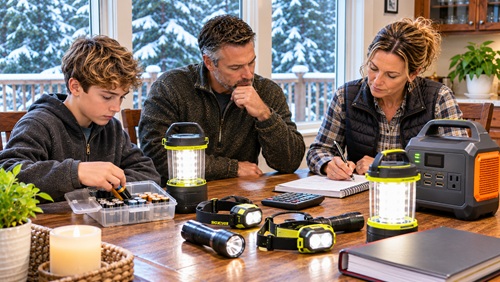
The First 24 Hours: Establishing Safe Lighting
During the first day, household members should locate their emergency lights, confirm that they operate correctly, and position them in critical areas. Stairways, bathrooms, entrances, and primary living spaces deserve particular attention. Rechargeable equipment should be checked for available capacity, while spare batteries should be identified and stored where they can be accessed easily.
Days 2 – 3: Measuring Actual Lighting Use
As the outage continues, the household should begin recording how many lights are being used and for how long. Brightness settings may need adjustment, and lights should be switched off when they are no longer required. If rechargeable equipment is being used, the household should determine whether its charging arrangements can replace the electricity consumed each day.
Days 4 – 7: Conserving Batteries and Maintaining Equipment
By the middle of the first week, battery consumption should be compared with the original plan. Lights that consume more electricity than expected may need to be used less frequently or replaced with more efficient alternatives. Equipment should be checked for damage, battery condition, and charging problems. Households should also confirm that personal lighting remains available for unexpected nighttime needs.
Days 8 – 14: Maintaining Essential Lighting
During the second week, the household should prioritize lighting needed for safety, medical requirements, food preparation, and essential movement. Decorative or unnecessary lighting may need to be reduced to conserve remaining energy. If batteries or charging resources become insufficient, alternative arrangements should be considered before the household loses the ability to navigate safely after dark.
The purpose of the 14-day plan is not to maintain normal household lighting at all costs. It is to ensure that essential activities can continue safely throughout the outage.
Testing Emergency Lighting Before an Outage
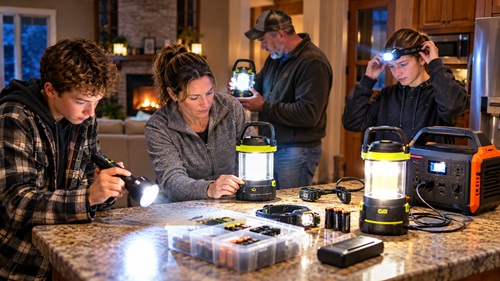
Emergency lighting equipment should be tested before the household depends on it. A flashlight that appears functional during a brief inspection may have limited battery life, while a lantern that has been stored for months may no longer hold a full charge.
A practical test begins by operating each light at the brightness setting intended for emergency use. Record how long it remains adequately illuminated and whether its brightness changes significantly as the battery discharges. For rechargeable equipment, record how long charging takes and how much energy the process requires when that information can be measured safely.
The household should also practice using the lights in their intended locations. A lantern may provide excellent illumination on a dining table but produce excessive glare in a narrow hallway. A headlamp may be comfortable for short tasks but less suitable for extended use if it is heavy or poorly adjusted.
A useful preparedness exercise is to simulate an evening without normal household lighting while keeping essential safety systems operational. Household members can practice moving between bedrooms, bathrooms, kitchens, and exits using only their planned emergency lights.
The exercise should not involve disabling smoke alarms, medical equipment, security systems, or other essential services. Vulnerable household members should not be placed in unsafe conditions merely to test the plan.
Testing provides an opportunity to identify weaknesses while normal electricity, replacement batteries, and other resources remain available. The results should be recorded and used to improve the household’s emergency lighting inventory.
Building an Emergency Lighting Equipment Inventory
An emergency lighting inventory should document more than the number of flashlights and lanterns stored in the home. It should identify each device, its intended use, battery type, brightness settings, estimated runtime, charging requirements, and current operating condition.
The inventory should distinguish between general room lighting, personal lighting, task lighting, and lights assigned to critical household locations. This helps reveal whether the household has adequate coverage rather than simply a large collection of equipment.
Battery supplies should be documented separately, including compatible replacement batteries, rechargeable battery packs, charging cables, power banks, and other supporting equipment. Battery condition and storage arrangements should also be reviewed because a supply of old or incompatible batteries may provide little practical value.
The household should identify how rechargeable equipment will be powered during an extended outage and estimate whether the available charging resources can support 14 days of essential lighting. These calculations should account for realistic operating hours, winter conditions, and the possibility that other household systems will compete for the same backup electricity.
Equipment maintenance should also be included. Damaged flashlights, unreliable switches, corroded battery compartments, missing charging cables, and depleted batteries should be identified before an emergency occurs.
Finally, the inventory should record where each light is stored and who may need assistance operating it. A well-organized emergency lighting plan ensures that equipment is not only available but accessible and practical for the people who will depend on it.
A Practical 14-Day Emergency Lighting Readiness Assessment
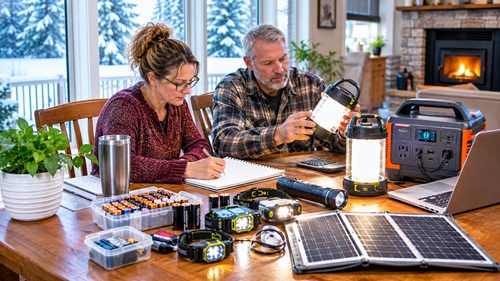
Before considering the household’s lighting arrangements complete, it is worth examining whether the available equipment and power supplies can support two full weeks without normal electricity.
Begin by identifying the rooms and activities that require illumination each day. Consider morning routines, evening meals, bathroom access, medication management, nighttime movement, and any outdoor tasks that may be necessary. Estimate how many lights would be operating simultaneously and how long each would be needed.
Next, review the power consumption and runtime of the equipment assigned to those activities. A lantern used for several hours each evening may consume relatively little energy, but the combined demand of several lanterns, headlamps, and rechargeable flashlights can become substantial over 14 days.
Consider a household using two 5-watt lanterns for six hours each evening, along with two 2-watt personal lights for one hour each day. The estimated daily energy consumption would be (2 × 5 watts × 6 hours) + (2 × 2 watts × 1 hour) = 64 watt-hours.
Over 14 days, that represents 64 watt-hours × 14 days = 896 watt-hours, before charging losses and other electrical requirements.
This example demonstrates how a relatively modest lighting arrangement can consume a meaningful amount of backup energy during an extended outage. Actual requirements should be calculated using the household’s own equipment and realistic operating times.
Once the total energy requirement is estimated, compare it with available batteries, replacement supplies, and charging options. If the household depends on a portable power station, consider whether the same equipment must also support communication devices, refrigeration, heating controls, or medical needs.
Finally, evaluate what would happen if the primary charging method failed after several days. Would sufficient disposable batteries remain available? Could essential lighting be maintained using lower brightness settings? Are personal flashlights available if the main lantern stops working?
This exercise provides a realistic measure of emergency lighting readiness because it connects equipment ownership with actual operating time, energy consumption, household safety, and backup arrangements.
Download Your Free 14-Day Emergency Lighting Equipment Inventory & Readiness Assessment
Having flashlights and lanterns stored away is a good start, but will they provide enough light for your household during a prolonged power outage?
To help you find out, we’ve created a free, printable 14-Day Emergency Lighting Equipment Inventory & Readiness Assessment.
This 19-page assessment helps you inventory your emergency lighting equipment, calculate battery and backup electricity requirements, identify areas of your home that need lighting, and track your resources throughout a 14-day outage. It also includes practical worksheets, readiness scoring, and space to identify equipment shortages and improvements.
Download the Free 14-Day Emergency Lighting Equipment Inventory & Readiness Assessment (PDF)
Print the assessment, work through it using your household’s actual equipment, and keep the completed copy with your emergency preparedness records. Review it before winter and whenever your equipment, batteries, or household needs change.
Preparedness Action Plan
Begin by walking through your home and identifying every location where a loss of lighting could create a safety problem. Pay particular attention to stairways, bathrooms, hallways, bedrooms, entrances, and areas containing essential equipment. Consider how household members would move through these spaces at night and whether suitable lights are already positioned where they can be reached easily.
Next, gather your existing flashlights, lanterns, headlamps, rechargeable lights, and other emergency lighting equipment. Test each device, inspect its condition, and record the battery type or charging requirements. Identify equipment that needs replacement, maintenance, or additional batteries. Avoid assuming that a light is ready simply because it worked the last time it was used.
Evaluate how much illumination each device provides and whether it is appropriate for its intended purpose. Test lights in the actual rooms and locations where they will be used. Consider whether household members can safely navigate stairs, prepare food, read medication instructions, and access emergency supplies without relying on normal electrical lighting.
Calculate the estimated energy consumption of rechargeable equipment using its power rating and expected daily operating time. Compare those requirements with the usable capacity of available batteries, power banks, and portable power stations. If solar charging or another backup source is part of the plan, evaluate its realistic performance during winter rather than relying solely on advertised specifications.
Review the needs of children, older adults, people with disabilities, and anyone requiring additional assistance. Ensure that personal lights are accessible, controls are manageable, and household members understand where equipment is stored. Consider whether some locations require dedicated lighting rather than relying entirely on portable lanterns.
Finally, conduct a safe evening lighting exercise using only the equipment intended for emergency use. Record which areas remain difficult to navigate, how long the lights operate, and whether the available charging arrangements are adequate. Update the inventory and correct deficiencies before the next outage. Repeat the assessment whenever equipment, batteries, household requirements, or living arrangements change.
Key Takeaways
Emergency lighting preparedness involves more than keeping a flashlight in a drawer. A reliable household plan identifies where illumination is essential, selects appropriate equipment for different activities, and ensures that sufficient battery power or charging capacity is available throughout an extended outage.
Different lighting devices serve different purposes. Lanterns can provide general room illumination, flashlights offer directed light, and headlamps allow people to work with both hands free. Combining these options can provide better household coverage than relying on a single type of equipment.
Brightness should be evaluated according to the task being performed rather than advertised lumen ratings alone. Higher brightness settings often consume more energy, making adjustable lighting useful when batteries must be conserved.
Battery capacity and runtime calculations help households estimate whether their equipment can operate for 14 days. These calculations should include realistic daily operating hours, charging losses, winter conditions, and the possibility that other essential household systems will compete for backup electricity.
Battery-powered LED lighting is generally safer than candles and fuel-burning lanterns because it does not require an open flame or combustion. However, rechargeable batteries and electrical equipment must still be handled, charged, and stored according to manufacturer instructions.
Winter conditions create additional challenges through shorter daylight hours, cold temperatures, and potentially reduced battery performance. Households should test their equipment under conditions similar to those they may encounter during an actual outage.
The most useful emergency lighting inventory is one that connects equipment, batteries, charging arrangements, household locations, and individual needs. Regular testing and maintenance help ensure that lighting equipment will work when it is needed rather than simply occupying space in an emergency supply container.
Emergency lighting preparedness is not about keeping every room brightly illuminated for two weeks. It is about ensuring that every household member can move safely, perform essential activities, and access reliable light when normal electricity is unavailable.
© Prepping Communities. This content is for informational purposes only and not professional advice. Use at your own risk.
Terms | Privacy | Guidelines