
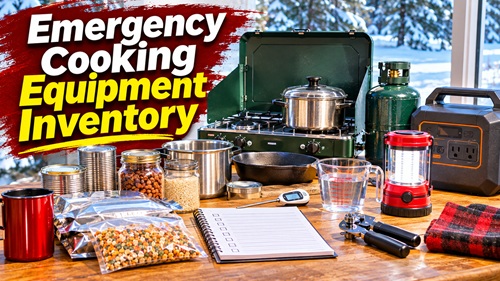
Could Your Household Prepare Meals for 14 Days Without Electricity?
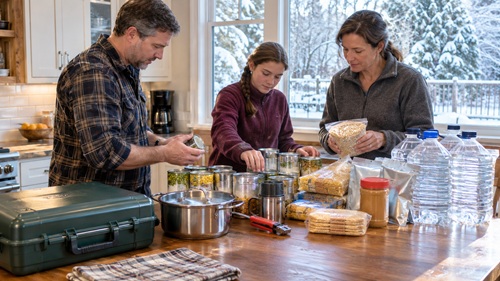
A winter power outage can change the way a household prepares meals almost immediately. The refrigerator stops running, the electric stove becomes unusable, and the microwave no longer works. At first, the situation may seem manageable. There is bread in the cupboard, canned food in the pantry, and perhaps enough leftovers to get through the day. Most families assume the electricity will return before cooking becomes a serious problem.
But what happens when the outage continues into the next morning, then the next several days? The food in the refrigerator may no longer be safe to eat, frozen supplies begin to thaw, and meals that normally take minutes to prepare become much more difficult. If the household relies on an electric stove, induction cooktop, microwave, or other powered appliances, even something as simple as boiling water may no longer be possible.
During winter, the challenges can become more complicated. Cooking outdoors may require dealing with snow, freezing temperatures, strong winds, and limited daylight. Fuel consumption may increase when water and food start at lower temperatures, while some portable cooking systems perform poorly in extreme cold. Families may also be tempted to bring outdoor cooking equipment inside to escape the weather, creating serious risks of carbon monoxide poisoning and fire.
Preparing for 14 days without electricity requires more than keeping a camping stove in the garage. Households need to understand which cooking equipment will remain operational, how much fuel it requires, whether it can be used safely in their environment, and how their emergency food supplies can be prepared without normal kitchen appliances. This posting is part of the Prepping Communities — Complete Emergency Preparedness Checklist Series and is designed to help households evaluate their existing cooking equipment, identify weaknesses in their emergency food preparation arrangements, calculate realistic fuel and water requirements, and develop safe alternatives for preparing meals during an extended power outage.
Why Emergency Cooking Requires Its Own Preparedness Plan
Emergency food storage and emergency cooking are closely connected, but they are not the same thing. A household may have several weeks of rice, pasta, dried beans, oatmeal, canned goods, and freeze-dried meals stored away. That inventory may look impressive until the electricity fails and the family discovers that much of the food requires boiling water or prolonged cooking.
Consider a household that has stored several kilograms of dried beans. Those beans can provide valuable nutrition, but many varieties require soaking and substantial cooking time before they are safe to eat. Red kidney beans deserve particular attention because they contain naturally occurring lectins that can cause illness when the beans are raw or inadequately cooked. Proper preparation includes boiling them thoroughly according to established food safety guidance. A slow cooker operating at insufficient temperatures may not destroy these toxins, making it an unsuitable substitute for the required boiling process. Without dependable cooking equipment, sufficient water, and adequate fuel, a household may struggle to use an otherwise valuable food supply safely.
The same problem applies to foods that require refrigeration, baking, or specific preparation temperatures. A pantry filled with ingredients is not necessarily equivalent to a pantry filled with meals that can be prepared under emergency conditions. A practical emergency cooking plan begins by examining how the household normally prepares food. Electric ranges, induction cooktops, microwaves, slow cookers, pressure cookers, and electric kettles all depend on electricity. Even some gas cooking appliances require electrical controls or ignition systems, and manufacturers may prohibit manual ignition during outages. The objective is to determine which equipment will actually work when normal utilities are unavailable and whether the household has the resources to operate it safely for the intended emergency period.
Understanding Your Household’s Cooking Dependencies
Most households have developed cooking routines around appliances that are available at the touch of a button. Water boils in an electric kettle, frozen food is reheated in a microwave, and meals are prepared using a stove or oven with reliable temperature controls. During an extended outage, those conveniences disappear unless an appropriate backup power system is available. A gas stove may continue operating in some circumstances, but this depends on the appliance’s design, manufacturer instructions, and local safety requirements. Households should never assume that a gas burner can be manually lit or that a gas oven will operate without electricity.
Cooking equipment may also depend on water supplies, ventilation, refrigeration, or other household systems. A pressure cooker requires sufficient water and a suitable heat source. A conventional oven may be impractical to operate from a portable battery because of its substantial electrical demand. A freezer full of meat creates additional food safety and cooking requirements if its contents begin to thaw. These dependencies become more important during winter when outdoor cooking conditions may be difficult and the household may already be conserving fuel for heating.
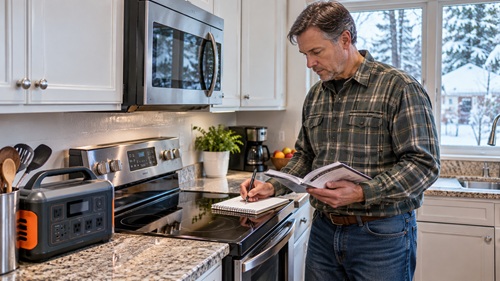
Before purchasing emergency cooking equipment, review the appliances currently available and identify which ones can function independently of grid electricity. Consult manufacturer instructions and record any restrictions involving fuel, ventilation, electrical power, or safe operating conditions. This information provides the foundation for choosing backup cooking arrangements that complement the household’s existing food supplies.
Choosing Safe Emergency Cooking Equipment
There is no single emergency cooking appliance that is appropriate for every household. A rural family with an outdoor cooking shelter may have options that are unavailable to someone living in an apartment. A household with a properly installed wood cookstove may be able to prepare meals without electricity, while another may need to rely primarily on ready-to-eat foods and access to a safe alternative cooking location.
Portable propane and butane camping stoves are commonly used for outdoor cooking. They can provide a practical way to boil water and prepare simple meals, but their suitability depends on fuel availability, weather conditions, and the manufacturer’s operating requirements. Outdoor camping stoves, charcoal grills, barbecues, and similar equipment must never be brought inside a home, garage, tent, enclosed porch, or other enclosed or partially enclosed space. Burning fuel can produce carbon monoxide, and dangerous concentrations may develop even when a door or window is open.
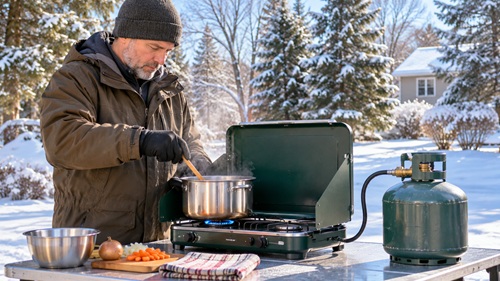
Some cooking appliances are specifically designed and certified for particular indoor applications, but this does not make all portable fuel-burning stoves safe indoors. Any indoor appliance must be approved for its intended use, installed or operated according to its instructions, and permitted under applicable building and fire regulations. Adequate ventilation and working carbon monoxide alarms remain essential wherever combustion hazards exist.
Wood-burning cookstoves can provide useful cooking capability in homes equipped with properly installed and maintained systems. However, an ordinary wood stove should not automatically be treated as a cooking appliance. Cooking surfaces, temperature control, clearances, and manufacturer restrictions vary considerably. Electric cooking appliances may also be useful when sufficient backup electricity is available. Their practicality depends on power consumption, battery capacity, inverter capability, and the ability to recharge the backup system. The best equipment is not necessarily the most powerful or expensive. It is the equipment that can safely prepare the household’s planned meals using resources that are realistically available during an emergency.
Understanding the Difference Between Cooking and Reheating
Not every emergency meal requires the same amount of heat, fuel, or preparation time. This distinction can make a substantial difference over a 14-day outage. Heating a can of prepared soup generally requires less energy than cooking dried beans from scratch. Rehydrating a freeze-dried meal with hot water may be simpler than preparing a meal involving several ingredients and multiple cooking stages. Ready-to-eat canned foods, crackers, nut butters, and other shelf-stable products may require no cooking at all.
Households should evaluate their emergency food inventory according to preparation requirements rather than simply counting meals or calories. For example, instant oatmeal generally requires less cooking time than traditional steel-cut oats. Canned beans are already cooked, while dried beans require appropriate preparation and substantially more heat. Some packaged rice products can be reheated quickly, whereas ordinary dry rice requires a measured amount of water and sustained heating.
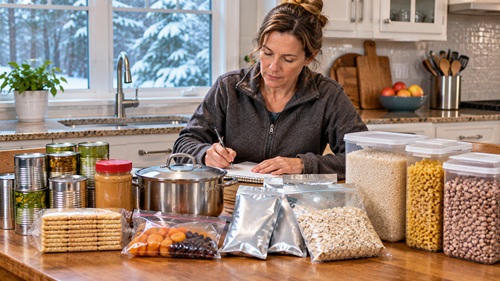
These differences affect fuel consumption, water requirements, cleanup, and the amount of time household members must spend preparing food in difficult conditions. A well-designed emergency food supply includes a practical balance of ready-to-eat meals, foods requiring only limited heating, and ingredients that need more substantial preparation. This gives the household flexibility when fuel is limited or outdoor conditions make cooking difficult. It also reduces pressure to operate cooking equipment during dangerous weather simply because every available meal requires heat.
A Realistic Emergency Cooking Scenario for a Family of Four
Consider a family with two adults and two children preparing for a winter power outage that could last two weeks. Their pantry contains canned soup, oatmeal, rice, dried beans, crackers, peanut butter, canned vegetables, and several freeze-dried meals. They also have a portable propane camping stove approved for outdoor use and a limited supply of fuel.
At first glance, the household appears reasonably prepared. There is enough food to assemble a variety of meals, and the family has a way to heat water. But when they begin examining how each food would be prepared, they discover that some choices are much more practical than others.
Breakfast might consist of instant oatmeal prepared with hot water, while lunch could include crackers, peanut butter, canned fruit, and other foods that require no cooking. Dinner might involve heating canned soup or preparing a simple meal using quick-cooking rice and canned vegetables.
The family could reserve dried beans for a time when adequate cooking fuel and water are available rather than relying on them as a primary emergency meal. They might also discover that their freeze-dried meals require more water than expected, even though the cooking time is relatively short.
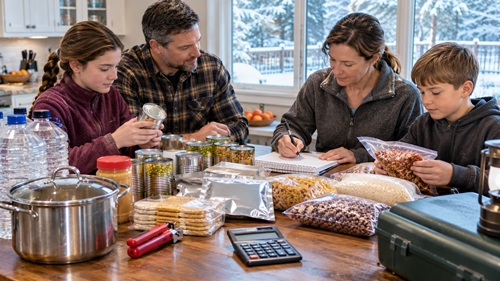
Suppose the household estimates that its stove will operate for approximately 45 minutes each day. Over 14 days, that represents 10.5 hours of burner operation. If the stove consumes fuel at an input rate of 10,000 BTU per hour throughout that period, the theoretical fuel-energy requirement would be 105,000 BTU.
Using approximately 91,500 BTU per US gallon of propane, that would represent about 1.15 US gallons, or approximately 4.35 litres. The family would still need to account for actual burner settings, cooking conditions, usable fuel capacity, and an appropriate reserve.
Water requirements would need similar attention. If the household uses three litres each day for meal preparation, the 14-day cooking requirement would be 42 litres, separate from drinking water and essential cleaning needs.
This exercise reveals something important. The household’s ability to prepare meals depends on the relationship between its food, cooking equipment, fuel, water, and operating conditions. A large food supply cannot compensate for inadequate cooking resources when most of that food requires heating. The family can improve its readiness by testing its planned meals, measuring actual consumption, and adjusting the menu to reduce unnecessary fuel and water requirements.
Calculating Emergency Cooking Fuel Requirements
One of the most common weaknesses in emergency cooking plans is having a stove without knowing how much fuel it will consume. A household may store several propane cylinders or a collection of small camping fuel canisters and assume that the supply will last for weeks. Actual operating duration depends on the appliance’s fuel consumption, burner setting, cooking time, outdoor temperature, wind exposure, and the types of meals being prepared.
Consider an illustrative propane stove with a fuel input rating of 10,000 BTU per hour. If it operates at that input rate for one hour each day, the estimated daily fuel-energy consumption would be 10,000 BTU. Over 14 days, the calculation becomes 10,000 BTU/hour × 1 hour/day × 14 days = 140,000 BTU.
Using a typical propane energy content of approximately 91,500 BTU per US gallon, this represents about 1.53 US gallons, or approximately 5.8 litres of propane.
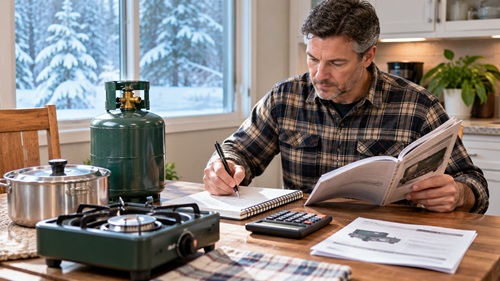
This is a theoretical fuel-consumption estimate, not a guarantee that 5.8 litres will provide 14 days of cooking. Actual requirements depend on burner settings, cooking duration, equipment efficiency, environmental conditions, and usable fuel capacity. If the household operates two burners simultaneously, prepares several hot meals each day, or regularly boils large quantities of water, fuel consumption may be substantially higher.
Cooking equipment specifications should be used whenever possible, and households can improve their estimates by conducting safe practice sessions under normal conditions. Recording the amount of fuel consumed while preparing familiar meals provides a more useful planning basis than relying solely on advertised burner ratings. Fuel storage must also comply with manufacturer instructions and applicable safety regulations. Propane cylinders and other fuel containers should never be stored in locations where leaks could accumulate dangerously, and households should not stockpile more fuel than can be stored safely and legally.
Calculating Backup Electricity for Emergency Cooking
Portable power stations and home battery systems have made electric cooking possible during some outages, but the energy requirements of cooking appliances should not be underestimated.
Consider a small electric cooking appliance rated at 1,000 watts. If it operates continuously for 30 minutes, its theoretical electricity consumption is 1,000 watts × 0.5 hours = 500 watt-hours, or 0.5 kilowatt-hours. If the household uses that appliance twice daily for the same duration, the estimated daily consumption becomes 1 kilowatt-hour. Over 14 days, that would require approximately 14 kilowatt-hours before accounting for conversion losses, equipment cycling, or other electrical loads.
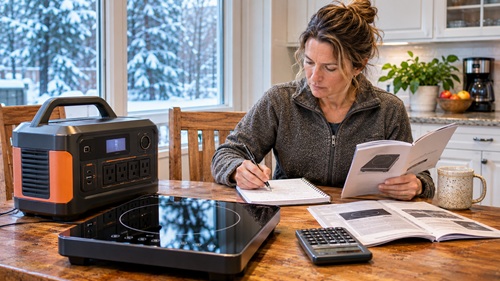
A portable battery advertised as having 2,000 watt-hours of storage cannot be assumed to provide four full 500-watt-hour cooking sessions. Some energy is lost during conversion, and the usable capacity may be lower than the advertised figure. The inverter must also be capable of supporting the appliances operating and startup requirements.
Electric pressure cookers, induction cooktops, and other efficient appliances may reduce cooking time for certain foods, but their actual energy consumption depends on the meal, cooking method, and appliance design. Households should measure or verify the electrical demand of the equipment they intend to use and compare it with their available backup energy.
The calculation becomes especially important when the same battery system is also needed for lighting, communication, refrigeration, medical equipment, or heating controls. Cooking may consume a large portion of the energy that other essential systems require.
Preparing Meals During Winter Weather
Outdoor cooking can become significantly more difficult during winter. Snow, ice, strong winds, freezing temperatures, and limited daylight can affect both equipment performance and the safety of the person preparing food. Wind can carry heat away from cooking vessels, increasing fuel consumption and extending cooking times. Cold cookware and water require additional energy to reach cooking temperatures. Some fuel systems also perform poorly in low temperatures, depending on fuel composition, container design, and appliance specifications.
Butane, for example, has limitations in freezing conditions because it may not vaporize adequately to supply a burner. Propane generally performs better in cold weather, although its performance can still be affected by temperature, cylinder size, and fuel withdrawal rate. Fuel mixtures containing propane, isobutane, and other gases may behave differently depending on their composition and container design. The performance of a particular stove cannot be determined solely from the general name of its fuel.
Households should understand the cold-weather limitations of their actual cooking equipment before an emergency occurs. Fuel containers must never be heated with open flames, placed against heaters, immersed in excessively hot water, or warmed using improvised methods that are not expressly approved by the manufacturer. These practices can cause dangerous pressure increases, equipment damage, leaks, or fires.
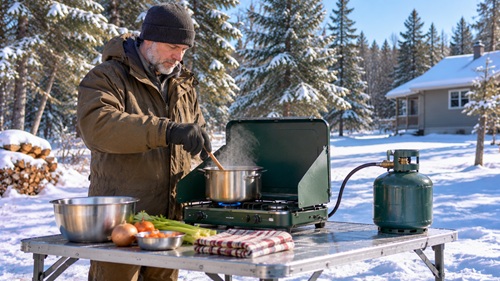
An outdoor cooking location should provide stable footing, appropriate clearance from combustible materials, and protection from weather without enclosing the appliance or restricting ventilation. Wind protection should only be used when compatible with the manufacturer’s instructions because improper windshields can cause equipment overheating or unsafe fuel-container temperatures.
Cooking on icy surfaces or in deep snow introduces additional hazards. A stable, level, noncombustible surface is important, and the cooking area should remain safely accessible during poor weather. Families should also consider whether outdoor cooking is realistic for household members with limited mobility or other physical restrictions. An emergency cooking arrangement that requires someone to repeatedly carry heavy pots through snow may not be suitable for every household. Winter cooking preparedness should account for the people operating the equipment, not simply the equipment itself.
Planning for Water Used in Emergency Cooking
Emergency cooking requires water, and that water must be included in the household’s broader emergency supply calculations. Dry rice, pasta, oatmeal, beans, and dehydrated meals all require varying quantities of water for preparation. Some cooking methods also produce wastewater that cannot be recovered for drinking. A household that has stored enough drinking water for 14 days may still discover that its supply is inadequate if cooking requirements were never included.
Consider a family preparing two meals each day that require one litre of water per meal. Over 14 days, that represents 2 litres per day × 14 days = 28 litres of cooking water. This is only an illustrative example. Actual requirements depend on household size, recipes, food choices, and preparation methods. Water used for washing dishes, cleaning utensils, and maintaining food hygiene must also be considered.
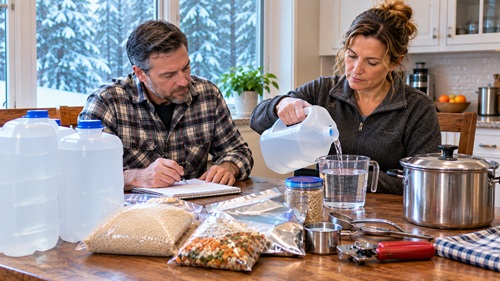
Cooking with contaminated water introduces additional risks. When a water supply is unsafe, households should follow applicable public health instructions for treatment. Boiling can inactivate many disease-causing microorganisms, but it does not remove chemical contaminants and may concentrate some of them. Boiling water also consumes fuel, which means water treatment and meal preparation may compete for the same limited energy resources.
Households can reduce these demands by selecting foods that require little added water, preparing meals in one pot when appropriate, and using safe cleaning methods that conserve water without compromising food hygiene. The important lesson is that cooking water should never be treated as an afterthought. It is part of the household’s total emergency water requirement.
Maintaining Food Safety Without Refrigeration
During a prolonged power outage, food safety can become a greater concern than the ability to cook. Refrigerators and freezers gradually warm when electricity is unavailable. Under typical conditions, an unopened refrigerator may keep food cold for approximately four hours, while a full freezer may maintain safe temperatures for about 48 hours and a half-full freezer for approximately 24 hours. These estimates assume the doors remain closed and are not guarantees that every food will remain safe.
A useful general food safety threshold is 40°F (4°C). Perishable refrigerated foods held above that temperature for more than two hours should generally be discarded. Some frozen foods that still contain ice crystals or have remained at or below 40°F (4°C) may be safe to cook or refreeze, depending on the food. When the temperature history is uncertain, follow applicable public health guidance and discard potentially unsafe perishables rather than relying on smell, appearance, or taste.
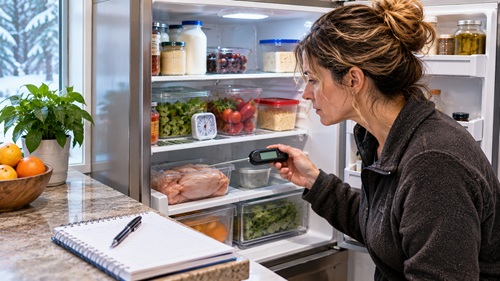
A refrigerator or freezer thermometer provides more reliable information than guessing based on how cold food feels. Food safety should be assessed using measured temperatures and applicable public health guidance rather than taste, appearance, or guesswork. Perishable foods that have been held above safe refrigeration temperatures for too long may become unsafe even if they look and smell normal. Cooking spoiled food does not necessarily make it safe because some harmful toxins can remain after heating.
When preparing meat, poultry, fish, and other potentially hazardous foods, households should use a food thermometer and follow established safe internal cooking temperature guidance. Visual appearance alone is not a reliable indicator that food has reached a safe temperature. A useful emergency food strategy is to prioritize perishable foods while they remain safe, then transition to shelf-stable supplies that do not depend on refrigeration.
Families should never attempt to save questionable food simply because supplies are limited. Foodborne illness during an extended emergency can create serious additional problems when medical services and clean water may already be difficult to access.
Reducing Cooking Fuel Through Better Meal Planning
Fuel conservation begins with choosing meals that are practical for the available equipment. A household relying on a small propane stove may find it inefficient to prepare elaborate meals involving several pots, long simmering periods, and multiple heating stages. Simpler meals can reduce fuel consumption while making cleanup easier.
One-pot meals are particularly useful because several ingredients can be prepared together. Pre-cooked canned foods, quick-cooking grains, and dehydrated ingredients can also reduce preparation time when compared with foods requiring prolonged boiling. Using a correctly fitted lid can help reduce heat loss during cooking. However, cookware must remain compatible with the appliance, and pressure cooking equipment should only be used according to its manufacturer instructions.
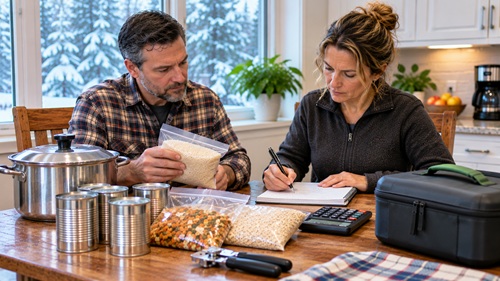
Households may also benefit from preparing larger portions when safe food storage is available. But batch cooking becomes problematic if leftovers cannot be cooled and refrigerated safely. During an outage without reliable refrigeration, preparing only what can be eaten promptly may be the safer approach. Fuel efficiency should never come at the expense of proper cooking temperatures. Undercooking food to save propane or electricity can create avoidable illness.
A practical meal plan balances nutrition, cooking time, water consumption, fuel availability, and food safety. The best emergency recipes are often familiar meals that the household has already practiced preparing with its backup equipment.
Cooking Equipment Maintenance and Safe Fuel Storage
Emergency cooking equipment should be inspected and maintained before it is needed. Portable stoves may have damaged hoses, deteriorated seals, blocked burners, or other defects that affect safe operation. Fuel connections should be checked according to manufacturer instructions, and damaged components should be replaced with approved parts rather than improvised substitutes.
Households should also confirm that their equipment is compatible with the fuel containers they intend to use. Similar-looking cylinders and connectors are not necessarily interchangeable, and incorrect connections can create dangerous leaks. Propane, butane, gasoline, and other fuels have different storage requirements. Cylinders should be kept in approved locations and protected from damage, excessive heat, and unauthorized access. Storage restrictions may be particularly important in apartment buildings, attached garages, and shared residential properties.
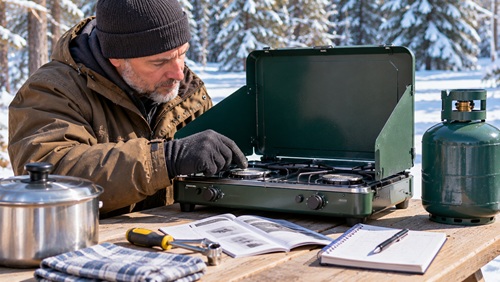
Fire extinguishers appropriate for the household’s cooking environment should be available and maintained. Smoke alarms and carbon monoxide alarms should also be tested according to manufacturer instructions. Cooking equipment must never be operated while unattended, and children should be kept away from hot surfaces, fuel containers, and cooking areas.
A household should know how to shut off its cooking equipment safely and what to do if a fuel leak, fire, or equipment malfunction occurs. If gas is suspected to be leaking, people should leave the area, avoid creating ignition sources, and contact the appropriate emergency service or fuel supplier from a safe location. Maintenance is not simply about keeping equipment operational. It is about ensuring that equipment remains safe to use when normal emergency services may already be under pressure.
Emergency Cooking for Apartments and Other Restricted Living Environments
Apartment residents and people living in condominiums or other shared buildings may face additional restrictions on fuel storage and cooking equipment. Balconies are not automatically safe locations for camping stoves or barbecues. Building regulations, fire codes, combustible construction materials, overhead balconies, and ventilation conditions may prohibit or make their use dangerous.
For households that cannot safely operate fuel-burning equipment, emergency food planning should emphasize shelf-stable products that can be eaten without cooking. Ready-to-eat canned meals, nut butters, crackers, shelf-stable packaged foods, and other suitable products can provide nutrition without requiring an emergency heat source.
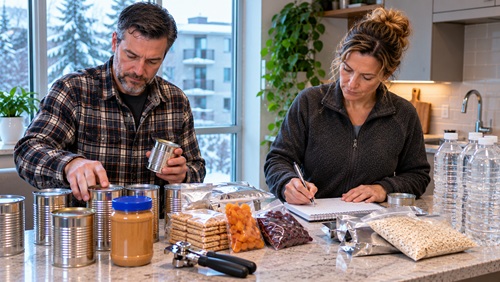
Where adequate backup electricity is available, a small electric appliance may offer limited cooking capability, but its energy requirements must be considered alongside other household needs. Residents should also identify safe alternative locations where hot meals may be available during extended emergencies. Community shelters, emergency feeding programs, and assistance from relatives or trusted neighbors may become important when household cooking is not possible.
The objective is not to force every household to operate a stove during an outage. It is to ensure that people can obtain adequate food safely, whether through cooking, ready-to-eat supplies, or alternative arrangements.
Protecting Vulnerable Household Members
Emergency cooking plans should account for the needs of people who may have difficulty preparing food independently. Older adults, individuals with limited mobility, people with disabilities, and household members with medical conditions may require additional assistance with food preparation, meal timing, or dietary restrictions.
Some people depend on specialized diets, medically necessary nutrition products, or equipment that requires electricity. Others may be unable to lift heavy pots, operate portable stoves safely, or prepare meals outdoors during freezing weather. Children also require appropriate supervision. A teenager may be capable of helping prepare simple meals, but younger children should not be expected to operate fuel-burning equipment or handle hot cookware independently.
Households should identify which foods can be prepared safely by the people who may need to use them. Written instructions can help, particularly when equipment is unfamiliar or household members have different levels of cooking experience. For people with medically prescribed diets, emergency food supplies should be reviewed with an appropriate healthcare professional when necessary. An emergency is not the time to discover that most stored foods are unsuitable for someone’s health requirements.
A well-prepared household considers who will prepare meals, who may need assistance, and what happens if the person normally responsible for cooking becomes unavailable.
How Cooking Priorities Change During a 14-Day Power Outage
The challenges of emergency cooking change as an outage continues. During the first day, households may still have access to safely stored refrigerated foods. After several days, they may be relying almost entirely on shelf-stable supplies and backup cooking equipment. By the second week, fuel consumption, water availability, equipment condition, and dietary variety can become increasingly important.
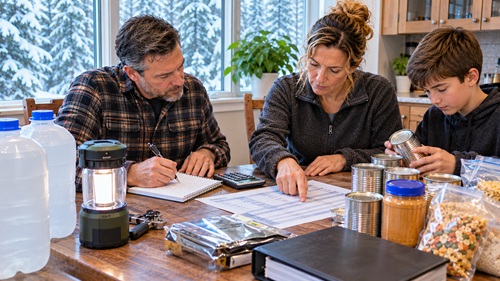
The First 24 Hours: Assessing Equipment and Food Safety
During the first day, the household should determine which cooking appliances remain operational and whether backup equipment can be used safely. Refrigerator and freezer doors should remain closed as much as possible to preserve cold temperatures. Families should identify foods that may need to be used first, while following food safety guidance and avoiding unnecessary opening of cold-storage appliances.
Days 2–3: Transitioning to Emergency Meals
As the outage continues, households may need to shift from normal meals to foods that can be prepared with limited equipment and fuel. Fuel supplies should be checked against actual consumption, and cooking water should be included in daily resource planning. If outdoor cooking is required, weather conditions and safe operating arrangements should be reassessed before each use.
Days 4–7: Conserving Fuel and Maintaining Equipment
By the middle of the first week, cooking routines should be adjusted to reduce unnecessary fuel and water consumption without compromising nutrition or food safety. Equipment should be inspected according to manufacturer instructions, and remaining fuel should be compared with the estimated requirements for the rest of the emergency. Households may also need to reconsider meal choices if certain ingredients require more cooking time than expected.
Days 8–14: Evaluating Long-Term Cooking Sustainability
During the second week, the household should reassess its remaining food, fuel, cooking water, and equipment reliability. If fuel supplies are becoming inadequate, the family may need to rely more heavily on ready-to-eat foods or seek alternative meal preparation arrangements. The purpose of the 14-day plan is not to continue cooking under unsafe conditions. It is to maintain access to safe, adequate food throughout the emergency.
Testing Emergency Cooking Arrangements Before an Outage
An emergency cooking system should be tested before the household depends on it. A stove that has been stored for years may not operate as expected. Fuel containers may be empty, accessories may be missing, and cookware may not fit the appliance properly. Even when everything functions correctly, the household may discover that preparing familiar meals requires more fuel, water, or time than anticipated.
A practical test involves preparing an ordinary meal using the intended backup equipment in a safe, approved location. Household members can record cooking time, fuel consumption, water usage, and any difficulties encountered. The test should also consider winter conditions without exposing anyone to unnecessary hazards. Families can evaluate how equipment performs in appropriate outdoor temperatures and determine whether wind, snow, or cold affects its operation.
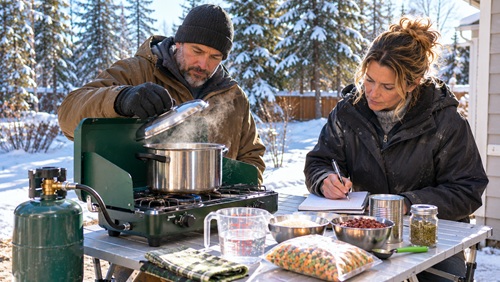
A second useful exercise is to prepare a full day’s emergency meals using only foods from the household’s stored supplies. This can reveal whether the menu provides enough variety, whether meals are practical to prepare, and whether the equipment can handle the planned workload. Testing should never involve operating outdoor cooking equipment indoors or deliberately creating unsafe conditions. The purpose is to identify weaknesses while normal utilities, replacement supplies, and professional assistance are readily available.
Building an Emergency Cooking Equipment Inventory
An emergency cooking inventory should document more than the number of stoves or fuel containers stored in the household. It should identify the primary cooking appliances, available backup equipment, fuel types, fuel quantities, operating restrictions, and estimated cooking duration. The condition of each appliance should be recorded, along with any maintenance, inspection, or replacement requirements.
The inventory should also include essential cooking accessories such as compatible cookware, utensils, pot lids, manual can openers, food thermometers, ignition equipment where appropriate, and cleaning supplies. Water requirements should be considered alongside cooking fuel because many emergency meals depend on both resources. Households should also identify which stored foods require prolonged cooking, which need only limited heating, and which can be eaten safely without cooking.
Equipment safety must remain part of the assessment. Fuel storage arrangements, ventilation requirements, fire protection, and manufacturer restrictions should be documented so that household members understand where and how each appliance may be used.
Finally, the inventory should identify alternative arrangements if backup cooking becomes impossible. Ready-to-eat meals, safe community resources, and assistance from trusted contacts can provide important options when weather, equipment failure, or fuel shortages prevent normal meal preparation. A complete emergency cooking inventory helps households determine whether their food supplies can actually be prepared under the conditions they are planning for.
A Practical 14-Day Emergency Meal Preparation Assessment
Before considering the household’s cooking arrangements complete, it is worth examining whether the stored food, available fuel, and cooking water can support a full two-week meal plan.
Begin by reviewing the foods already stored and imagining how breakfast, lunch, and dinner would be prepared on an ordinary day without electricity. Consider which meals can be eaten without heating, which require only boiling water, and which involve longer cooking times.
Continue the exercise across the full 14-day period. The objective is not to create an elaborate menu but to identify whether the household can prepare enough suitable meals without exhausting its cooking resources.
For example, a family may discover that its planned breakfasts require very little fuel, while dinners involving dried beans, rice, and other ingredients consume most of the daily cooking energy. Adjusting the menu to include more ready-to-eat or quick-cooking foods could reduce fuel consumption without sacrificing nutritional variety.
Once the meals are identified, estimate how long the stove or other cooking appliance would operate each day. Use manufacturer specifications or measured fuel consumption to calculate the approximate total requirement, then compare that figure with the household’s available supply.
Cooking water should be assessed separately from drinking water. The plan should also account for food hygiene, cookware cleaning, and any water treatment requirements that could consume additional fuel.
Finally, consider what would happen if the primary backup stove failed halfway through the outage. Could the household continue eating safely using ready-to-eat foods? Is another approved cooking method available? Would alternative meal arrangements be necessary?
This exercise provides a realistic measure of cooking readiness because it connects the food inventory to the equipment and resources required to prepare it.
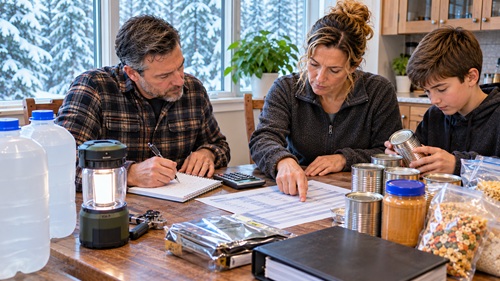
Download Your Free 14-Day Emergency Cooking Equipment Inventory & Readiness Assessment
Having emergency food stored away is only part of being prepared. The next step is determining whether your household has the equipment, fuel, water, and practical cooking arrangements needed to prepare those meals safely during an extended power outage.
To help you put what you’ve learned into practice, Prepping Communities has created a free, printable 14-Day Emergency Cooking Equipment Inventory & Readiness Assessment.
This 21-page Preparedness Planning Tool helps you document your cooking equipment, calculate fuel and backup electricity requirements, assess cooking water needs, and plan meals for a 14-day emergency. It also includes food safety checks, daily resource tracking, and space to identify equipment shortages and record corrective actions.
Download the Free 14-Day Emergency Cooking Equipment Inventory & Readiness Assessment (PDF)
Print the assessment and complete it using your household’s actual equipment, food supplies, and available resources. Keep the completed copy with your emergency preparedness records and review it whenever your cooking equipment, fuel supplies, or household circumstances change.
Preparedness Action Plan
Begin by reviewing the cooking appliances currently used in your household and identifying which ones depend on electricity. Check manufacturer instructions to determine whether any gas appliances can operate safely during an outage and whether special restrictions apply. Record the equipment that will remain available when normal utilities are interrupted, and identify any gaps that could prevent meal preparation.
Next, examine your emergency food inventory and consider how each food would be prepared without normal kitchen appliances. Identify products that can be eaten without cooking, those requiring only hot water, and those needing prolonged heating. Compare these requirements with the cooking equipment and fuel supplies currently available. If most of your stored food requires substantial cooking, consider gradually adding suitable ready-to-eat alternatives.
Evaluate the safety and practicality of your backup cooking equipment. Confirm that each appliance is approved for its intended location, that compatible fuel is available, and that storage arrangements comply with manufacturer instructions and applicable regulations. Never plan to use outdoor camping stoves, charcoal grills, or barbecues inside the home, garage, or another enclosed or partially enclosed area.
Calculate your estimated cooking fuel requirements using equipment specifications and realistic daily operating times. If you intend to use electric appliances, calculate their expected energy consumption and compare it with the usable capacity of your backup power system. Remember that cooking may compete with refrigeration, communication, lighting, heating controls, and medical equipment for limited electricity.
Review your emergency water supplies to ensure that drinking, cooking, and essential food hygiene requirements have all been considered. Check that your household has appropriate cookware, utensils, manual can openers, food thermometers, and cleaning supplies. Pay particular attention to the needs of children, older adults, people with disabilities, and anyone requiring specialized diets or assistance with meal preparation.
Finally, conduct a safe emergency cooking exercise using the equipment and foods you intend to rely on during an outage. Prepare several familiar meals, record actual fuel and water consumption, and identify any difficulties. Update your inventory and meal plan based on the results. Repeat the assessment whenever equipment, fuel supplies, household requirements, or stored foods change.
Key Takeaways
Emergency cooking preparedness begins with understanding that having enough food does not necessarily mean having the ability to prepare it. Many common emergency foods require heat, water, cookware, and time, making cooking equipment an important part of household food security.
Backup cooking equipment should be selected according to the household’s living environment, available fuel, and safety requirements. Outdoor camping stoves, charcoal grills, and barbecues must never be operated indoors or in enclosed or partially enclosed spaces because of the risks of carbon monoxide poisoning and fire.
Fuel and electricity requirements should be calculated before an emergency occurs. A household that understands how much energy its cooking equipment consumes can make better decisions about fuel storage, battery capacity, meal selection, and resource conservation.
Food safety remains essential during prolonged outages. Refrigerated and frozen foods must be evaluated according to safe storage temperatures, while meat and other potentially hazardous foods require proper cooking. Food that has become unsafe should not be consumed simply because emergency supplies are limited.
Water is another important dependency. Cooking, food preparation, and essential cleaning may require additional water beyond the household’s drinking supply. Meal planning should account for these needs while avoiding unnecessary waste.
Winter conditions can make outdoor cooking more difficult and increase the importance of equipment testing. Fuel performance, wind exposure, snow, ice, and limited daylight should all be considered when selecting and operating emergency cooking systems.
Most importantly, a 14-day emergency cooking plan should provide flexibility. Ready-to-eat foods, safe backup cooking equipment, adequate fuel, sufficient water, and alternative meal arrangements can help households maintain nutrition when normal kitchen facilities are unavailable.
Emergency cooking preparedness is not simply about having food stored away. It is about knowing whether that food can be prepared safely, how much fuel and water preparation will require, and what alternatives are available when normal cooking equipment no longer works.
© Prepping Communities. This content is for informational purposes only and not professional advice. Use at your own risk.
Terms | Privacy | Guidelines