
Could Your Household Stay Warm for 14 Days Without Electricity?
A winter power outage can seem manageable during the first few hours. The house is still warm, there are blankets in the closets, and everyone assumes the electricity will return before the indoor temperature becomes uncomfortable. Even when the heating system stops working, the warmth already stored in the walls, floors, furniture, and air can make the situation feel less urgent than it really is. But what happens when the power doesn’t return that evening? By the next morning, some rooms may be noticeably colder. After several days of freezing weather, the temperature inside an inadequately insulated home may fall far enough to threaten the health of its occupants and damage household plumbing.
If the outage continues into a second week, keeping everyone warm can become a serious challenge, particularly when backup fuel is limited or alternative heating equipment has never been tested. Many households are surprised to discover how dependent their heating systems are on electricity. A natural gas furnace may have an uninterrupted fuel supply but still require electricity for its blower, ignition system, and electronic controls. A boiler may depend on electric circulation pumps, while a pellet stove may require powered fans and an automated fuel-feeding mechanism. Even homes that use wood or propane for heating may have electrical dependencies that are not obvious until the power goes out.
Preparing for 14 days without normal heating requires more than buying a portable heater or storing extra blankets. Households need to understand how their homes lose heat, which heating systems can operate without grid electricity, how much fuel or backup power will be required, and what conditions would make remaining at home unsafe. This posting is part of the Prepping Communities — Complete Emergency Preparedness Checklist Series and is designed to help readers evaluate their existing heating equipment, identify vulnerabilities, estimate resource requirements, and develop practical arrangements for maintaining safe living conditions during an extended winter power outage.
Why Emergency Heating Requires Its Own Preparedness Plan
Cold-weather preparedness is often included in general emergency planning, but heating presents challenges that deserve separate attention. Food and drinking water can be stored in advance, while maintaining safe indoor temperatures requires an ongoing source of warmth, sufficient protection against heat loss, or access to an alternative heated location. The amount of heating required varies considerably between households. A well-insulated apartment surrounded by occupied units may retain warmth longer than an older detached home exposed to winter winds. A small rural cabin with a properly installed wood stove may remain comfortable without electricity, while a larger home with a modern gas furnace could lose its primary heating capability as soon as electrical service is interrupted.
These differences make it difficult to recommend a single emergency heating solution. Equipment suitable for a mild winter climate may be inadequate during prolonged freezing temperatures, and a heating arrangement that is appropriate for a rural home may be prohibited or unsafe in an apartment building. The first step is therefore to examine the household’s actual circumstances. Building construction, insulation, local winter temperatures, available fuel, household size, medical requirements, and transportation options all influence what an effective emergency heating plan should include. A good plan also considers what happens when the preferred backup system fails. If a generator stops operating, a wood stove becomes unusable, or fuel supplies are exhausted, the household needs another safe option rather than being forced to improvise under dangerous conditions.
Understanding How Your Home Loses Heat
Every heated building gradually loses warmth to its surroundings. Heat moves through walls, roofs, floors, windows, and doors, while drafts allow warmer indoor air to escape and colder outdoor air to enter. The rate of heat loss depends on insulation, air leakage, wind exposure, outdoor temperature, building size, and construction characteristics. During a power outage, this process continues even when the heating system is no longer operating. Indoor temperatures begin to decline, although the rate of cooling can vary enormously.
A well-insulated home with good air sealing may remain relatively comfortable for an extended period, especially when outdoor temperatures are moderate. An older building with poorly insulated walls, significant drafts, and large windows may lose heat much more quickly. This is why households should avoid assuming that their home will remain warm for a particular number of hours simply because another household experienced that result. A practical preparedness assessment begins by identifying where heat is most likely to escape. Drafty exterior doors, poorly sealed windows, uninsulated attic spaces, and gaps around plumbing or electrical penetrations can increase heating requirements.
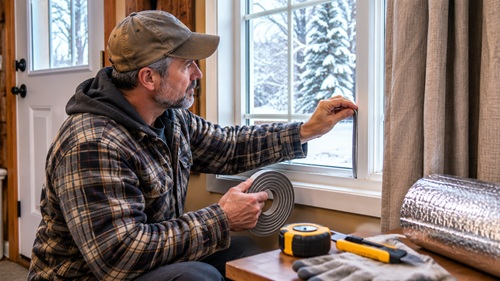
Weatherstripping, appropriate window coverings, insulation improvements, and other building maintenance can reduce heat loss before an emergency occurs. These improvements are valuable because they reduce the energy required from both normal heating equipment and emergency backup systems. However, attempts to conserve warmth must never interfere with required ventilation, combustion-air supplies, or appliance exhaust systems. Sealing uncontrolled drafts is useful; blocking essential airflow can create dangerous conditions.
Identifying Heating Systems That Depend on Electricity
One of the most important tasks in an emergency heating assessment is determining whether the household’s primary heating system can operate without grid electricity. A natural gas furnace may continue receiving fuel during an outage, but its electronic controls, ignition system, and blower generally require electrical power. A boiler may depend on circulation pumps to distribute heated water throughout the building, while heat pumps and electric baseboard heaters normally stop operating when their electrical supply is interrupted.
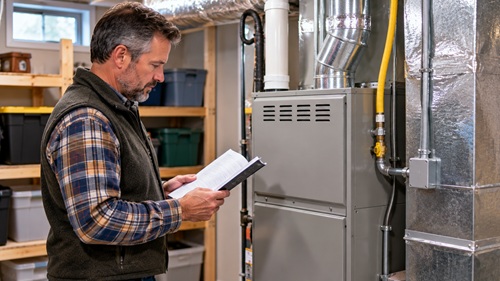
Wood-burning equipment can provide an alternative in some homes, but not all wood heating systems operate independently. Pellet stoves commonly require electricity for ignition, fuel feeding, and combustion or circulation fans. Some wood furnaces and fireplace inserts also depend on powered components for effective heat distribution. Households should consult equipment manuals or qualified heating professionals to identify which components require electricity and whether approved backup power arrangements are available.
The electrical demand of a heating system should include both normal operating consumption and startup requirements. A blower motor may consume relatively little electricity while running but require a substantially higher amount of power when starting. This distinction matters when selecting generators, inverters, or battery systems because equipment that appears adequate based on continuous wattage may be unable to start a motor or operate the complete heating system reliably. Hardwired heating equipment should only be connected to backup electrical systems through properly designed and installed arrangements that comply with applicable electrical codes. Improvised connections can create electrical hazards and endanger utility workers. The purpose of this assessment is to establish which heating systems will continue functioning, which will stop, and what professionally approved arrangements may be necessary to maintain safe operation.
Calculating the Backup Electricity Needed to Run a Furnace
A household with a gas furnace may be able to maintain heating during a power outage by supplying electricity to its blower and controls, provided the equipment and electrical installation support an approved backup power arrangement. However, the amount of electricity required should be calculated before purchasing a generator or battery system.
Consider an illustrative furnace that consumes an average of 500 watts while its blower and controls are operating. If the equipment runs for eight hours during a 24-hour period, its estimated daily electricity consumption would be 500 watts × 8 hours = 4,000 watt-hours, or 4 kilowatt-hours per day. Over 14 days, that operating pattern would require approximately 56 kilowatt-hours of electrical energy before accounting for inverter losses, battery limitations, changing heating demand, or other connected equipment.
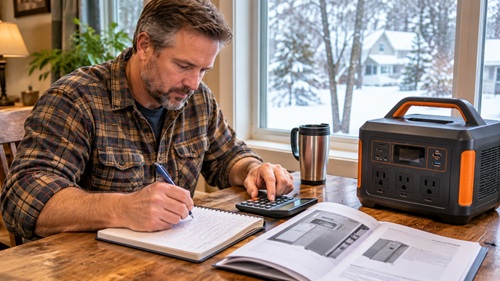
The 500-watt figure is an illustrative operating load, not a typical value guaranteed for every furnace. Actual electrical consumption depends on the blower motor, fan speed, controls, and heating equipment. Startup power requirements must also be evaluated separately. This calculation illustrates an important limitation of small portable power stations. A battery advertised as having a capacity of 2,000 watt-hours cannot be assumed to operate the furnace for an entire day. Its usable energy may be lower than its advertised capacity, and actual runtime depends on equipment demand and conversion losses.
The calculation also assumes that the furnace operates for eight hours each day. During severe cold, heating demand may increase substantially, particularly in a poorly insulated home. Households should use manufacturer specifications, professional guidance, and safe measurements to determine actual electrical requirements. The goal is to understand whether the backup power system can operate the heating equipment reliably and for how long.
Choosing a Safe Backup Heating Method
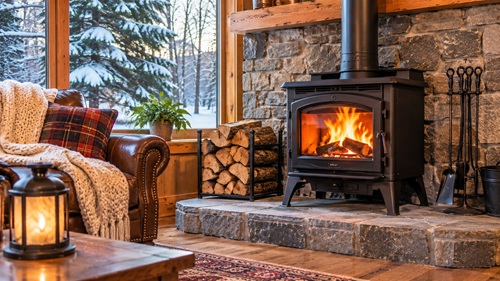
Backup heating equipment should be selected according to the household’s actual environment rather than simply its advertised heating capacity. A properly installed wood stove can provide substantial heat without relying on grid electricity, provided it is designed for that purpose and operated according to manufacturer instructions. However, it requires a suitable chimney, adequate clearances, regular maintenance, and a dependable supply of properly seasoned firewood.
Portable electric heaters may be useful when sufficient backup electricity is available, but their energy requirements are substantial. A 1,500-watt electric heater operating continuously consumes 1.5 kilowatt-hours every hour. Over eight hours, that represents 12 kilowatt-hours of electricity, far beyond the usable capacity of many small portable power stations. A thermostatically controlled heater may consume less energy if it cycles off during that period, but actual consumption must be measured or estimated from its operating pattern.
Fuel-burning portable heaters introduce additional safety concerns. Only equipment specifically approved for the intended indoor environment should ever be considered for indoor use, and manufacturer instructions and local regulations must be followed. Combustion appliances can produce carbon monoxide, consume oxygen, and create fire hazards. Built-in safety features do not eliminate these risks. Outdoor patio heaters, camping stoves, charcoal grills, and generators must never be used indoors as substitutes for household heating because their combustion products can accumulate and cause fatal carbon monoxide poisoning.
Portable generators must be operated outdoors, at least 20 feet (approximately 6 metres) from the home, with exhaust directed away from buildings. Manufacturer instructions and applicable local requirements must also be followed. Generators should never be operated inside garages, basements, sheds, or other enclosed or partially enclosed spaces. For many households, the safest emergency heating strategy combines an appropriately approved backup heating system with better insulation, warm clothing, suitable bedding, and a clear plan for relocating when safe temperatures cannot be maintained.
Emergency Heating Options for Apartments and Homes Without Fuel-Burning Heaters
Not every household can install a wood stove, store propane, or operate a generator. Apartment residents, condominium owners, and people living in buildings with strict fire regulations may have limited options for alternative heating equipment. In these circumstances, preparedness should place greater emphasis on reducing heat loss, protecting body warmth, monitoring indoor conditions, and identifying accessible heated locations before an emergency occurs.
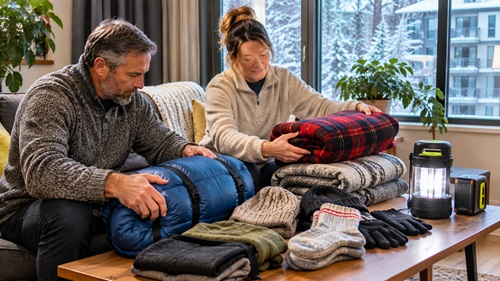
Weatherstripping, suitable curtains, insulated clothing, warm bedding, and properly fitted sleeping pads can reduce heat loss. Families may also benefit from spending time in a smaller room that retains warmth more effectively than a large open living area, although concentrating activities in one room must not interfere with required ventilation or create unsafe sleeping conditions. Battery-powered heated clothing or blankets may provide limited personal warmth when used according to manufacturer instructions, but their operating duration depends on battery capacity and power consumption. They should not be treated as substitutes for maintaining safe environmental conditions, particularly for infants or medically vulnerable individuals.
Households should also determine whether their community has designated warming centers, emergency shelters, or other facilities that may operate during severe winter outages. The availability of these services can change during a disaster, so alternative destinations should be considered. For residents who cannot safely heat their homes without electricity, early relocation may be more realistic than attempting to remain indoors for the full 14 days. Preparedness does not always mean staying home. Sometimes it means recognizing the limitations of the building and having a safe alternative before conditions become dangerous.
Creating a Smaller Warm Living Area
Heating an entire home during an extended power outage may be impractical, particularly when backup fuel or electricity is limited. One approach is to concentrate household activities in a smaller area that retains warmth more effectively. A room with fewer exterior walls, limited drafts, and suitable insulation may require less heating energy than a large open living space. Closing doors to unused rooms and using appropriate window coverings may help reduce unnecessary heat loss, provided these measures do not interfere with heating-system operation or required airflow.
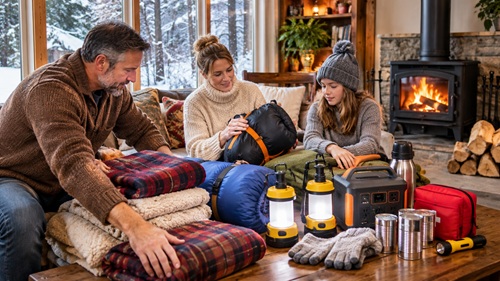
Sleeping arrangements deserve particular attention because people remain relatively inactive for long periods. Insulated sleeping bags, layered bedding, warm clothing, and suitable sleeping pads can reduce heat loss from the body. Sleeping directly on a cold floor may increase heat loss when bedding provides little insulation underneath. Families should also consider the needs of infants and young children. Safe infant sleep requirements remain essential during emergencies. Loose blankets, ordinary sleeping bags, and improvised bedding arrangements can create suffocation hazards, while excessive wrapping can lead to overheating.
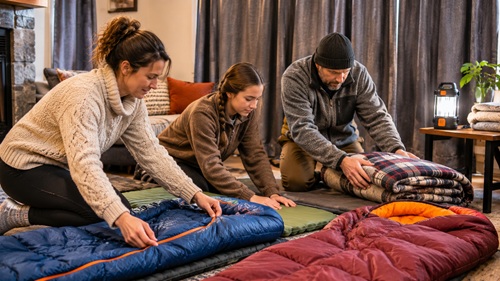
A smaller living area can improve comfort and reduce heating demand, but it cannot guarantee safety during severe cold. Indoor temperatures still need to be monitored, and households must be prepared to relocate if conditions become unsafe.
Monitoring Indoor Temperatures During an Extended Outage
One of the simplest and most useful emergency heating tools is a reliable battery-powered thermometer. Without temperature monitoring, households may rely on how warm or cold they feel, which can be misleading because physical activity, clothing, age, medical conditions, and individual tolerance all affect how people perceive temperature. A thermometer provides objective information about changing indoor conditions, particularly in sleeping areas and spaces occupied by infants, older adults, or individuals with medical conditions.
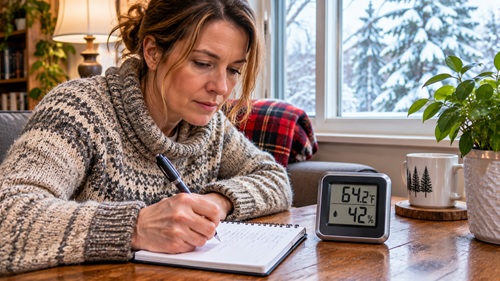
Temperature monitoring can also help identify parts of the home that are cooling more quickly than expected. Rooms near poorly insulated exterior walls, unheated garages, or exposed plumbing may experience different conditions from the main living area. The World Health Organization identifies 18°C (approximately 64°F) as a widely accepted minimum indoor temperature for the general population during cold seasons in temperate and colder climates. This is a general health benchmark, not a guarantee of safety for every individual. Infants, older adults, and people with certain medical conditions may require warmer environments.
Households should establish temperature-monitoring procedures appropriate to their circumstances and seek professional medical guidance when individual health requirements are involved. A thermometer is most valuable when its readings lead to decisions. If indoor temperatures are steadily declining and no reliable heating method is available, the household should consider relocating before conditions become dangerous.
Calculating Emergency Heating Fuel Requirements
Knowing that fuel is stored on the property is not the same as knowing how long it will last. A household with a wood stove may have a substantial supply of firewood, but its actual duration depends on wood species, moisture content, stove efficiency, outdoor temperatures, and the amount of heat required. Propane consumption depends on appliance input rating, operating settings, and daily runtime, while generator fuel consumption depends on electrical load, engine efficiency, and operating conditions.
Consider a propane heater with a fuel input rating of 10,000 BTU per hour. If it operates at that input rate for eight hours each day, its estimated daily fuel-energy consumption would be 80,000 BTU. Over 14 days, the total fuel-energy requirement would be 10,000 BTU/hour × 8 hours/day × 14 days = 1,120,000 BTU. Using a typical propane energy content of approximately 91,500 BTU per US gallon, the illustrative fuel requirement would be about 12.2 US gallons, or approximately 46 litres.
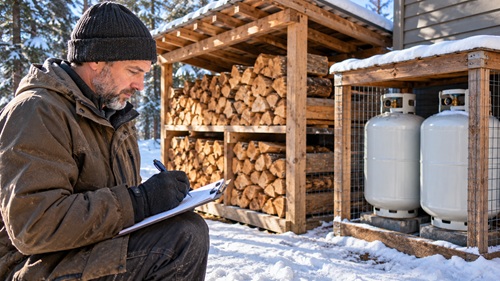
This is a theoretical fuel-consumption estimate, not a guarantee that 46 litres will provide 14 days of heating. Actual requirements depend on appliance operation, heating demand, usable fuel capacity, and temperature conditions. The calculation estimates fuel consumption based on the appliance’s input rating, which is not necessarily the same as its useful heat output. Heating efficiency determines how much of the fuel’s energy becomes useful heat. For example, a heater operating at 80% efficiency would deliver approximately 8,000 BTU per hour of useful heat when consuming fuel at an input rate of 10,000 BTU per hour.
Actual fuel consumption must be based on manufacturer specifications, usable fuel capacity, and realistic operating conditions. Cold temperatures can also affect fuel-system performance, particularly when propane vaporization becomes limited. The same general principle applies to other fuels. For wood heating, households can record how much properly seasoned firewood is consumed during normal operation and use those measurements to estimate how long their stored supply might last under comparable conditions. A household that knows its fuel consumption can make more informed decisions about storage, conservation, and alternative heating arrangements.
Carbon Monoxide, Fire Safety, and Equipment Maintenance
Emergency heating introduces hazards that may be less familiar to households accustomed to central heating systems. Carbon monoxide is a colorless, odorless gas that can be produced by fuel-burning equipment. Exposure can cause headache, dizziness, nausea, confusion, unconsciousness, and death. Symptoms may initially resemble illness or fatigue, making the danger difficult to recognize without appropriate alarms.
Working carbon monoxide alarms are essential wherever combustion hazards may exist. Households should install and maintain alarms according to applicable safety standards and manufacturer instructions, with particular attention to sleeping areas and fuel-burning equipment. Smoke alarms are equally important because portable heaters, overloaded electrical circuits, candles, and improperly installed heating equipment can increase fire risks during emergencies.
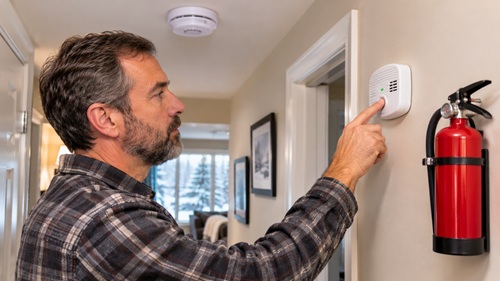
Heating appliances require suitable clearances from bedding, curtains, furniture, clothing, and other combustible materials. Portable electric heaters should generally be connected directly to suitable outlets rather than extension cords or power strips, following manufacturer instructions. Wood stoves and fireplaces require appropriate chimney inspection and maintenance because accumulated creosote, damaged chimney components, and improper installation can create serious fire hazards.
Families should also know how to respond if a carbon monoxide alarm sounds. Everyone should move immediately to fresh air, contact emergency services from a safe location, and avoid re-entering until qualified personnel have determined that the building is safe. A fire extinguisher and basic fire safety training can provide additional protection, but they do not replace proper installation, maintenance, and safe operation.
Protecting Household Members Who Are More Vulnerable to Cold
Cold exposure does not affect everyone equally. Infants, older adults, people with certain medical conditions, and individuals with limited mobility may have greater difficulty maintaining safe body temperatures or recognizing early signs of cold-related illness. Some medications and medical conditions affect temperature regulation, circulation, or the body’s ability to respond to cold. These factors should influence emergency heating arrangements and decisions about when to seek alternative accommodation.
A person who cannot move independently may be unable to relocate to a warmer room or leave the building without assistance. Someone who depends on electrically powered medical equipment may face both a heating problem and a medical continuity problem during the same outage. These circumstances should be considered when planning backup power, accessible sleeping arrangements, transportation, and support from caregivers or trusted contacts.
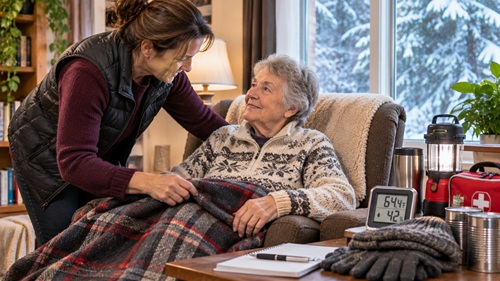
Hypothermia can develop when the body loses heat faster than it can produce it. Warning signs may include shivering, unusual fatigue, confusion, slurred speech, and impaired coordination. Severe hypothermia is a medical emergency, and shivering may diminish as the condition worsens. Families should not wait for serious symptoms before acting. If indoor temperatures are declining and safe heating cannot be maintained, moving to an adequately heated location may be the most appropriate decision.
Preventing Frozen Pipes and Household Water Damage
A prolonged winter power outage can damage a home even when its occupants have found another way to stay warm. Water inside exposed plumbing can freeze as indoor temperatures decline. Frozen pipes may rupture, and the resulting damage can become apparent when temperatures rise or the water supply is restored. Pipes located in exterior walls, unheated crawl spaces, garages, and poorly insulated areas are particularly vulnerable.
Preventive measures may include insulating exposed pipes, sealing drafts around plumbing penetrations, maintaining appropriate heating in vulnerable areas, and following local guidance for protecting plumbing during freezing conditions. Households should know where the main water shutoff valve is located and how to operate it safely. If a home must be left unheated for an extended period, a qualified plumber may recommend appropriate winterization procedures.
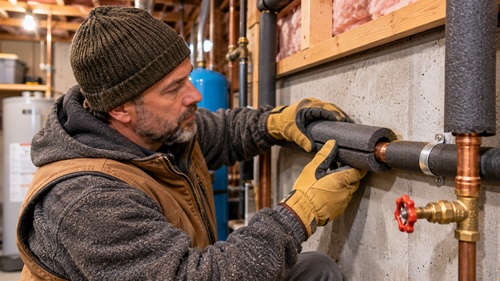
Draining plumbing systems is not always straightforward, particularly in buildings with boilers, fire-suppression systems, or specialized water equipment. Improper winterization can create additional damage or safety problems, so households should avoid unfamiliar procedures without appropriate guidance. Emergency heating preparedness should therefore include both occupant safety and protection of essential household infrastructure.
How Heating Priorities Change During a 14-Day Power Outage
The challenges of a winter heating emergency change as time passes. A household that remains comfortable during the first day may face much more difficult conditions later, especially when outdoor temperatures remain below freezing. Understanding these changes helps families recognize when conserving heat, maintaining equipment, protecting plumbing, and preparing to relocate should become priorities.
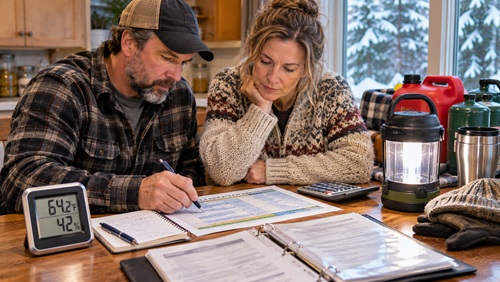
The First 24 Hours: Preserving Existing Warmth
During the first day, the household should determine which heating systems remain functional and whether the outage is likely to continue. Closing unnecessary exterior doors, reducing drafts, and concentrating activities in suitable occupied rooms may help preserve existing warmth. Indoor temperatures should be monitored, particularly in sleeping areas and rooms used by vulnerable household members. Backup heating equipment should only be operated when it is approved for the intended use and can be used safely.
Days 2–3: Evaluating Heat Loss and Backup Resources
After the first day, declining indoor temperatures and resource consumption become more important. The household should review fuel supplies, backup electricity, and actual heating-system performance. If the home is cooling faster than expected, additional conservation measures or alternative accommodation may be necessary. This is also an appropriate time to monitor vulnerable plumbing areas and determine whether conditions could lead to freezing.
Days 4–7: Maintaining Equipment and Conserving Fuel
During the middle of the first week, backup heating arrangements may require maintenance, fuel replenishment, or changes in operating schedules. A generator may need servicing according to manufacturer instructions, while wood heating equipment may require ash removal and appropriate chimney maintenance. Fuel consumption should be compared against the original plan. If supplies are being used faster than expected, the household should reassess whether it can safely continue operating through the remaining outage.
Days 8–14: Reassessing Long-Term Safety
By the second week, maintaining safe indoor conditions may become increasingly difficult if fuel is limited or equipment has been operating continuously. Households should reassess indoor temperatures, equipment reliability, fuel reserves, medical requirements, and the availability of alternative accommodation. The objective is not to remain at home for 14 days regardless of circumstances. It is to maintain safety throughout the emergency, even when that requires relocating before the planned period has ended.
Knowing When It Is Safer to Leave
A reliable emergency heating plan includes a clear understanding of when remaining at home is no longer the safest option. The decision to relocate should not depend solely on whether a household has exhausted its fuel supply. Indoor temperatures may become unsafe before fuel is completely depleted, particularly for vulnerable household members. Equipment malfunction, carbon monoxide concerns, fire hazards, loss of essential medical support, and rapidly deteriorating weather conditions may also require immediate action.
Households should identify suitable heated destinations before winter arrives. These might include the home of a trusted relative, an emergency warming center, or another location that can safely accommodate household members. Transportation arrangements should account for road conditions, fuel availability, mobility requirements, and the possibility that normal communication systems may be unreliable. Leaving home during severe winter conditions can introduce its own risks, so decisions should be made using available official guidance and current local conditions.
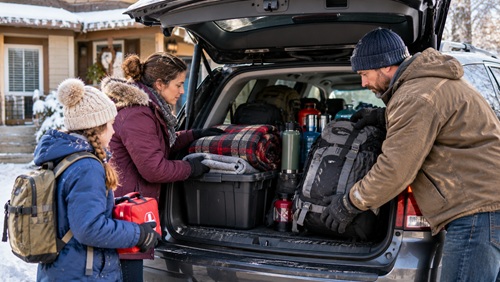
Families should also consider how to protect their property if they must leave. Water shutoff arrangements, plumbing protection, and other winterization measures may reduce damage, but these procedures should only be undertaken when safe and appropriate. The most important lesson is that emergency heating preparedness is not measured by how long a household refuses to leave. It is measured by how effectively the household maintains safety and recognizes when its existing arrangements are no longer adequate.
Testing Emergency Heating Arrangements Before Winter
A backup heating system that has never been tested may contain limitations that only become apparent when it is needed. A generator may not provide sufficient startup power for a furnace. A wood stove may have poor draft because its chimney requires maintenance. A portable battery may support heating-system controls for much less time than expected.
Testing should begin with equipment instructions and any required professional inspections. Fuel-burning appliances, chimneys, electrical transfer equipment, and other safety-critical systems should be installed and maintained by qualified professionals where required. Households can then evaluate approved operating arrangements under controlled conditions.
For example, a family might measure the electricity consumed by its heating controls and circulation equipment, record how much backup fuel is used during a normal operating period, or observe how indoor temperatures change when heating demand is reduced. These tests should never involve deliberately exposing vulnerable people to unsafe cold conditions or operating unsuitable combustion equipment indoors. The purpose is to obtain useful information while normal services and professional assistance remain available.
Results should be recorded and compared against the intended 14-day operating period. If the backup system cannot support the required duration, the plan should be revised before winter arrives.
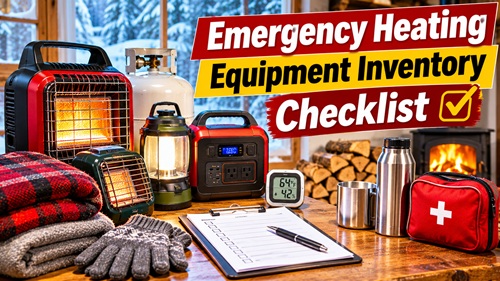
Building an Emergency Heating Equipment Inventory
An emergency heating inventory should document more than the presence of heaters and fuel. It should identify the primary heating system, backup heating equipment, the fuel or electricity each system requires, and the estimated operating duration under realistic conditions. Equipment condition is also important because a heater that has not been inspected in several years should not be treated as equivalent to a properly maintained system ready for use.
The inventory should record essential accessories, including approved fuel connections, manufacturer-required components, batteries, safety alarms, and maintenance supplies. Equipment requiring professional installation or servicing should be clearly identified, while fuel supplies should be documented separately with quantities, storage conditions, and applicable safety restrictions.
The household should also record non-powered cold-weather supplies such as appropriate bedding, insulated clothing, sleeping pads, and materials used to reduce drafts without obstructing required ventilation. Finally, the inventory should identify alternative accommodation and transportation arrangements if the home can no longer be maintained at a safe temperature. A complete inventory provides a clearer picture of what the household can actually do rather than simply what equipment it owns.
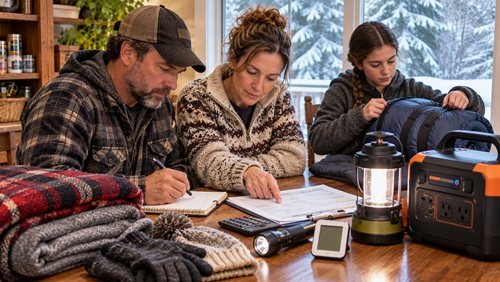
Download Your Free 14-Day Emergency Heating Inventory & Readiness Assessment
Knowing what emergency heating equipment you have is only part of being prepared. The next step is determining whether that equipment can safely keep your household warm during an extended power outage.
To help you put this information into practice, Prepping Communities has created a free, printable 14-Day Emergency Heating Equipment Inventory & Readiness Assessment.
This 18-page Preparedness Planning Tool helps you document your heating equipment, calculate backup electricity and fuel requirements, monitor indoor temperatures, evaluate carbon monoxide and fire safety, and track your household’s heating readiness over a 14-day emergency.
The assessment also provides space to identify equipment shortages, record corrective actions, and establish alternative heating or relocation arrangements if remaining at home becomes unsafe.
Download the Free 14-Day Emergency Heating Equipment Inventory & Readiness Assessment (PDF)
Print the assessment, work through each section, and keep the completed copy with your household emergency preparedness records. Review it before each winter season and whenever your heating equipment or household circumstances change.
Preparedness Action Plan
Begin by identifying every heating system used in the home and determining which components require electricity. Review manufacturer instructions and consult qualified professionals where necessary to understand whether the system can operate during an outage and what approved backup arrangements are available. Pay particular attention to furnaces, boilers, heat pumps, pellet stoves, and equipment that depends on powered fans, pumps, or controls.
Next, assess how effectively the building retains heat. Examine insulation, drafts, windows, exterior doors, and areas where plumbing may be exposed to freezing conditions. Identify improvements that could reduce heat loss without interfering with ventilation or appliance safety. Consider whether a smaller living area could be used safely if heating the entire home becomes impractical.
Review the backup heating equipment currently available and document its condition, operating requirements, and limitations. Calculate estimated fuel or electricity consumption using equipment specifications and measured results wherever possible. Compare those requirements with the resources available for a 14-day outage, recognizing that actual consumption may increase during severe weather.
Establish a method for monitoring indoor temperatures in occupied rooms and areas where vulnerable household members sleep. Battery-powered thermometers can provide useful information when normal heating controls are unavailable. Determine which conditions would require additional heating, changes in household arrangements, or relocation to a safer location.
Confirm that smoke alarms and carbon monoxide alarms are properly installed, functional, and maintained. Review heating equipment clearances, fuel storage arrangements, and emergency response procedures. Household members should understand that outdoor cooking equipment, charcoal grills, patio heaters, and generators are never safe substitutes for approved indoor heating systems.
Consider the needs of children, older adults, people with medical conditions, and anyone who may require assistance relocating. Identify the indoor conditions or equipment failures that would make remaining at home unsafe, and establish alternative accommodation and transportation arrangements before an emergency occurs.
Finally, conduct a safe preparedness review before the cold season. Test approved equipment under appropriate conditions, record operating results, and identify weaknesses that need correction. Update the inventory whenever heating equipment, fuel supplies, household requirements, or building conditions change. The completed assessment should provide a realistic understanding of how long the household can maintain safe living conditions without normal heating.
Key Takeaways
Emergency heating preparedness begins with understanding that many household heating systems depend on electricity even when they use gas, oil, propane, or wood as their primary fuel. Knowing which components require electrical power helps households determine whether existing equipment will remain functional during an outage and whether approved backup arrangements are necessary.
The ability to retain heat is just as important as the ability to produce it. Insulation, draft reduction, suitable bedding, and the careful use of smaller living areas can reduce heating demand, although these measures cannot guarantee safety during prolonged severe cold.
Backup heating equipment must be appropriate for its intended environment, properly maintained, and operated according to manufacturer instructions and applicable regulations. Carbon monoxide poisoning, fire, and inadequate ventilation can create greater dangers than the original power outage when unsuitable equipment is used.
Fuel and electricity supplies should be evaluated against actual consumption rather than estimated by storage quantities alone. A household that understands its heating demand and backup system runtime can make better decisions about conservation, maintenance, and when alternative accommodation may become necessary.
Monitoring indoor temperatures provides useful information about changing conditions, particularly for households with infants, older adults, or people with medical requirements. There is no single indoor temperature that guarantees safety for everyone, making individual needs and the duration of cold exposure important considerations.
The challenges of a 14-day heating outage change over time. Preserving existing warmth may be sufficient during the first hours, but fuel conservation, equipment maintenance, plumbing protection, and relocation decisions become increasingly important as the disruption continues.
Most importantly, a reliable emergency heating plan establishes clear limits. If safe indoor temperatures cannot be maintained, backup equipment fails, or fuel becomes insufficient, relocating to a suitable heated location may be the safest and most responsible decision.
Emergency heating preparedness is not simply about having another way to produce heat. It is about knowing whether that heat can be produced safely, how long it can be maintained, and when the household needs a different plan.
© Prepping Communities. This content is for informational purposes only and not professional advice. Use at your own risk.
Terms | Privacy | Guidelines