
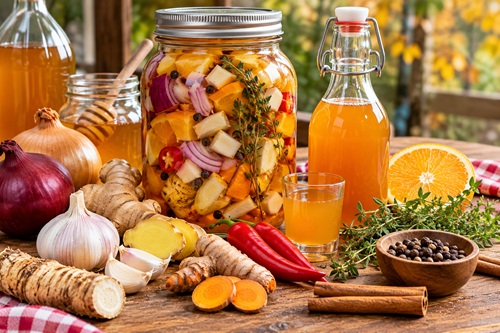
Prepare Your Herbal Tonic Before Cold and Flu Season
Cold and flu season is a good reminder to prepare a few traditional home remedies before you need them. One popular herbal preparation is fire cider, a strong, tangy infusion made with apple cider vinegar, warming spices, herbs, and honey.
Fire cider has roots in traditional herbal practices and is often prepared several weeks before colder weather arrives. Its combination of ginger, horseradish, garlic, turmeric, citrus, and hot peppers creates a bold, spicy tonic that can also be used as a flavorful addition to food.
Although fire cider is often promoted as an immune booster or natural infection fighter, there isn’t reliable clinical evidence that the finished mixture prevents colds, treats influenza, or strengthens immunity. Some individual ingredients have been studied for potential health benefits, but that doesn’t mean combining them produces a proven medicine.
For preparedness-minded households, making fire cider is still a useful skill. It teaches basic herbal infusion techniques, encourages the use of familiar pantry ingredients, and provides a traditional preparation that can be made ahead of time rather than when someone is already feeling unwell.
Homemade Fire Cider Oxymel Recipe
Traditional Fire Cider Oxymel
Spicy apple cider vinegar and honey infusion
Preparation
20–30 minutes
Infusion
2–4 weeks
Difficulty
Easy
Storage
Refrigerated
Ingredients
-
10 cm (4 inches) fresh horseradish root
-
1 medium red onion
-
1 medium white onion
-
10 cm (4 inches) fresh ginger root
-
1 orange
-
2 fresh chili peppers
-
5 garlic cloves
-
A few sprigs of fresh thyme
-
1 teaspoon whole black peppercorns
-
1 small fresh turmeric root
-
1 Ceylon cinnamon stick
-
Raw or pasteurized apple cider vinegar, enough to cover the ingredients
-
Honey, added to taste after straining
Preparation instructions
-
Thoroughly wash the fresh produce. Peel the horseradish, ginger, turmeric, onions, and garlic as needed. Scrub the orange and slice it, removing any seeds.
-
Chop the onions, horseradish, ginger, turmeric, garlic, and chili peppers into small pieces. Wear gloves when handling hot peppers.
-
Place the prepared ingredients in a clean glass jar. Add the thyme, peppercorns, cinnamon stick, and orange slices.
-
Pour apple cider vinegar over the ingredients until everything is completely submerged. Use a food-safe glass weight if needed to keep the solids beneath the vinegar.
-
Cover with a nonreactive lid, or use a suitable barrier between the vinegar and a metal lid to prevent corrosion.
-
Refrigerate the mixture and allow it to infuse for approximately two to four weeks, checking periodically that the ingredients remain submerged.
-
Strain the liquid through a clean fine-mesh strainer into a clean container. Discard the solids.
-
Stir in honey a little at a time until the flavor reaches your preferred balance of sweet, sour, and spicy.
-
Transfer the finished fire cider to a clean glass bottle, label it with the preparation date, and keep refrigerated.
How to use it
Fire cider can be used in small amounts as a culinary condiment, diluted into a beverage, or added to salad dressings and marinades. Start with a small amount to assess tolerance. There is no medically established daily dose, and taking one tablespoon daily has not been shown to prevent infections.
Storage and safety
This is an untested homemade infusion, so a reliable storage life cannot be guaranteed. Keep it refrigerated, prepare manageable batches, and discard it if mold, gas formation, unusual odors, or other signs of spoilage develop. Do not assume it is safe for shelf-stable storage or home canning.
Why These Ingredients Are Traditionally Used
Ginger and horseradish give fire cider much of its characteristic heat. Ginger has been studied for nausea relief and certain digestive symptoms, while horseradish contributes a sharp flavor that can create a temporary sensation of clearer nasal passages.
Garlic and onions contain sulfur-containing compounds that have attracted scientific interest, although consuming them in fire cider has not been proven to prevent respiratory infections. Turmeric contains curcumin, which has been studied for anti-inflammatory effects, but the amount extracted into a homemade vinegar infusion is uncertain.
Thyme, cinnamon, peppercorns, and citrus contribute additional flavor and aromatic compounds. Honey balances the acidity and heat and may soothe coughing in adults and children over one year old, although fire cider itself has not been established as a cough treatment.
The combination produces a strongly flavored traditional infusion, not a substitute for antiviral medication, vaccination, or appropriate medical treatment.
Why Make Fire Cider Before Cold and Flu Season?
The practical advantage of preparing fire cider ahead of time is that the infusion requires several weeks to develop its flavor. Making it before winter means it will be ready for culinary use during the colder months.
It also provides an opportunity to practice working with vinegar infusions, fresh herbs, spices, and homemade condiments. These are useful food preparation skills for households interested in self-sufficiency.
Unlike commercially manufactured medicines, however, homemade herbal preparations are not standardized. Their strength, acidity, and composition can vary significantly depending on the ingredients and preparation method.
Fire cider should therefore be viewed as an optional traditional kitchen preparation rather than an essential medical supply. A well-stocked emergency medicine kit, appropriate healthcare supplies, and a plan for accessing medical assistance remain important.
Important Precautions
Fire cider is highly acidic and can be irritating, especially when combined with hot peppers and horseradish. People with acid reflux, gastritis, ulcers, or sensitive digestive systems may find it uncomfortable. Diluting it or using it as part of food may reduce irritation, but it will not eliminate every risk.
Garlic, ginger, and turmeric supplements can interact with certain medications, including blood thinners. The risks from culinary quantities may be different, but anyone with relevant medical conditions or medication concerns should consult a healthcare professional before regularly consuming concentrated preparations.
Honey should never be given to children younger than twelve months. Fire cider is also not recommended as a home treatment for infants or young children because of its acidity, strong spices, and uncertain composition.
Anyone experiencing difficulty breathing, chest pain, dehydration, persistent high fever, or worsening illness should seek medical attention rather than relying on a homemade tonic.
Preparedness Action Plan
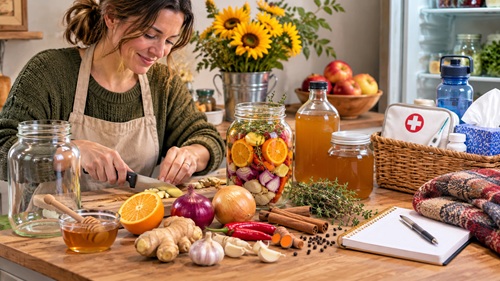
Choose a time several weeks before the colder season to prepare a small batch of fire cider. Gather fresh ingredients, inspect your jars, and make sure you have sufficient refrigerator space for the infusion.
Follow clean food-handling practices, label the jar with its preparation date, and monitor the ingredients throughout the infusion period. When the mixture is ready, strain it, add honey to taste, and experiment with using small amounts in ordinary meals.
Consider making a note of which ingredients you used and whether you preferred a stronger or milder flavor. This makes future batches easier to adjust without relying on memory.
Most importantly, keep traditional herbal preparations separate from essential medical planning. Maintain appropriate medications, thermometers, hydration supplies, and other healthcare essentials as part of the household’s cold and flu season preparedness.
Key Takeaways
Fire cider is a traditional vinegar-and-honey herbal infusion made with ingredients such as horseradish, ginger, garlic, turmeric, citrus, and hot peppers. It can be prepared several weeks in advance and used as a spicy condiment or diluted beverage.
Although individual ingredients have been studied for various potential benefits, there is insufficient evidence that homemade fire cider prevents colds, treats influenza, or strengthens immunity.
Preparing it at home offers an opportunity to develop practical food preparation skills and greater familiarity with traditional herbal ingredients. Proper hygiene, refrigeration, and sensible precautions remain important.
Disclaimer: This recipe is provided for educational and traditional food preparation purposes only. Fire cider is not a proven treatment or preventive measure for colds, influenza, or other infections. It may cause digestive irritation or interact with certain medications. It should not replace professional medical advice, prescribed treatments, or appropriate medical care.
© Prepping Communities. This content is for informational purposes only and not professional advice. Use at your own risk.
Terms | Privacy | Guidelines