
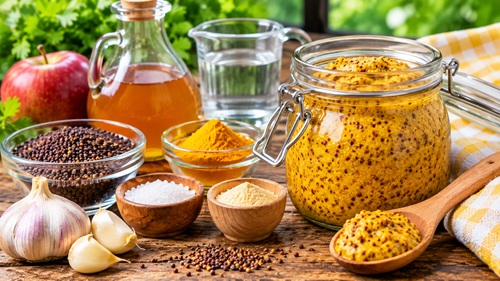
Simple Ingredients, Better Control Over What You Eat
Making your own mustard is surprisingly easy, and it’s a useful food preparation skill to have. With just three basic ingredients, you can make a flavorful condiment without relying on store-bought varieties.
One of the advantages of homemade mustard is knowing exactly what goes into it. You can adjust the flavor, experiment with different seasonings, and make small batches whenever you need them. It’s also a practical way to learn how everyday pantry ingredients can be turned into foods your family regularly uses.
Homemade Whole-Seed Mustard Recipe
Ingredients
-
½ cup black mustard seeds
-
¾ cup distilled water
-
¾ cup apple cider vinegar
Optional seasonings
-
1 teaspoon turmeric
-
½ teaspoon garlic powder
-
½ teaspoon salt
Instructions
-
Place the mustard seeds, distilled water, and apple cider vinegar in a clean glass jar.
-
Cover and refrigerate for approximately 48 hours, gently tilting or swirling the jar occasionally to distribute the liquid.
-
Transfer the soaked seeds and liquid to a blender. Blend until the mustard reaches your preferred consistency. Leave it slightly coarse for whole-grain mustard or blend longer for a smoother texture.
-
Add the optional turmeric, garlic powder, and salt. Blend briefly to combine.
-
Spoon the finished mustard into a clean glass jar, cover tightly, and refrigerate.
Storage: Keep refrigerated at 4°C (40°F) or colder. Use within a conservative two-week period unless you have a tested recipe establishing a longer refrigerated shelf life. The original recipe suggests three weeks, but that duration has not been validated for this preparation. Discard if mold, unusual odors, or other signs of spoilage appear.
Helpful tip: Black mustard seeds produce a stronger, sharper flavor than yellow mustard seeds. If you prefer a milder mustard, try a mixture of yellow and brown mustard seeds. The mustard’s flavor may also mellow after a few days in the refrigerator.
Why Making Your Own Condiments Is a Useful Preparedness Skill
Homemade mustard is a good example of how basic food preparation skills can reduce dependence on ready-made products. Mustard seeds and vinegar are versatile pantry ingredients, and learning to use them gives you more control over your food.
Store-bought condiments aren’t necessarily unhealthy or full of dangerous chemicals. Many contain familiar ingredients and are produced under established food safety standards. The benefit of making your own is choosing the ingredients, avoiding additives you personally don’t want, and adjusting the recipe to suit your taste.
For emergency preparedness, remember that homemade mustard is not automatically shelf-stable. This recipe requires refrigeration and should not be stored at room temperature or canned without a scientifically tested preservation procedure.
You don’t need to make everything from scratch to become more self-sufficient. Learning one simple recipe at a time builds practical kitchen skills that can serve you well during everyday life and unexpected disruptions.
A little food preparation knowledge goes a long way, and homemade mustard is an easy place to start.
Disclaimer: This recipe is intended for general home food preparation. Mustard is a recognized food allergen, and individuals with mustard allergies should avoid it. Follow safe food-handling practices, keep the finished product refrigerated, and do not assume homemade condiments are safe for long-term unrefrigerated storage.
© Prepping Communities. This content is for informational purposes only and not professional advice. Use at your own risk.
Terms | Privacy | Guidelines