
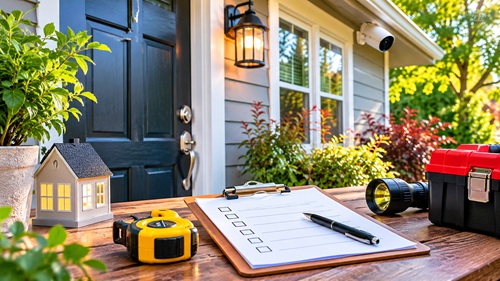
Practical Ways to Strengthen Your Home and Protect Your Family
Most people think of home security in terms of locks, alarm systems, and surveillance cameras. These are useful tools, but they are only part of what makes a home secure. A locked door offers little protection if its frame can be forced open easily, and a security camera cannot physically prevent someone from entering a building.
Home fortification takes a broader approach. It involves examining how a home is constructed, identifying vulnerable entry points, improving physical barriers, and making sure occupants have enough warning and time to respond safely when something goes wrong. This doesn’t mean turning an ordinary house into a fortress. For most households, the objective is much more practical: make unauthorized entry more difficult, reduce opportunities for crime, and give everyone inside enough time to move to safety or contact emergency services.
These improvements can become particularly valuable during emergencies. Extended power outages, natural disasters, and disruptions to communications or emergency services may temporarily reduce the effectiveness of normal security arrangements. Electronic systems can fail, exterior lighting may stop working, and police or other responders may take longer to arrive. A well-prepared household should therefore consider both everyday security and the additional challenges that can arise when normal services are unavailable.
The good news is that meaningful improvements don’t always require expensive equipment or major renovations. Some of the most useful changes involve strengthening existing doors, improving window security, maintaining visibility around the property, and establishing clear household emergency procedures.
Understanding What Home Fortification Should Accomplish
The purpose of home fortification is not to make a building impossible to enter. Given enough time, specialized equipment, or destructive force, almost any ordinary residential structure can be breached. A more realistic goal is to make unauthorized entry difficult, noticeable, and time-consuming while preserving safe escape routes for the people inside.
This distinction matters because security measures that delay an intruder can also create problems if they prevent occupants from escaping a fire or other emergency. A heavily reinforced door may resist forced entry, but if it cannot be opened quickly from the inside, it could become a serious hazard during an evacuation. Similarly, permanent window bars may discourage unauthorized access while trapping occupants in a bedroom if the bars do not have an appropriate emergency release mechanism. Good home fortification must balance security with life safety.
Consider a household where the front door has a strong lock but the strike plate is attached to a weak door frame using short screws. Someone attempting forced entry may be able to damage the frame without defeating the lock itself. Strengthening the strike plate and surrounding frame can improve resistance to forced entry, while appropriate lighting and an alarm may help occupants recognize a problem sooner.
Each improvement addresses a different part of the situation. The physical barrier makes entry more difficult, while detection equipment provides warning. Together, these measures create a more dependable security arrangement than relying on one device. The same principle applies throughout the home. A strong door, properly secured windows, functional lighting, and a household that understands its emergency procedures are more effective together than any one improvement would be on its own.
Assessing Your Home and Prioritizing Improvements
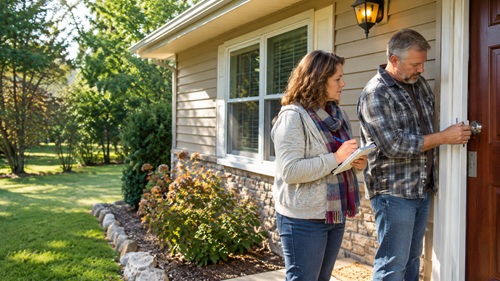
Before purchasing security equipment, take time to examine the property and identify areas where existing protection may be inadequate. This assessment should focus on ordinary household security rather than assuming that every unfamiliar person represents a threat.
Begin with the entrances used every day. Examine the front door, rear door, patio doors, garage access, basement entrances, and any secondary doors that receive less attention. Look for damaged frames, loose hinges, deteriorating locks, poor exterior lighting, or doors that no longer close properly. A door that sticks, shifts within its frame, or requires unusual force to latch may have an alignment problem that affects both security and safe operation.
Windows deserve similar attention, particularly those accessible from ground level, decks, balconies, or adjoining structures. Check whether locks function correctly and whether windows close completely. The surrounding property can also influence security. Overgrown vegetation may obstruct views of entrances, while poorly maintained fences or gates may make it difficult to recognize when someone has entered a private area.
At the same time, privacy is a legitimate concern. Not every window needs to be visible from the street, and not every hedge needs to be removed. The objective is to avoid creating unnecessary concealment around vulnerable entrances while maintaining a comfortable living environment.
Households should also consider their location and building type. A detached rural home may have different security concerns from an urban apartment, townhouse, or condominium. In some areas, emergency responders may be relatively close, while remote properties may require more independent planning because assistance can take longer to arrive.
Once potential weaknesses have been identified, the next step is deciding which ones deserve attention first. A damaged exterior door that doesn’t latch properly should generally take priority over purchasing an additional security camera. A bedroom window that cannot open during an emergency may represent a more immediate safety concern than installing decorative security hardware.
Consider a homeowner with a limited budget who discovers three problems during a routine inspection: a loose front-door strike plate, a broken lock on a ground-floor window, and inadequate lighting near the rear entrance. Purchasing a sophisticated camera system might seem appealing, but it wouldn’t correct any of those physical weaknesses. Repairing the door hardware and replacing the damaged window lock would address immediate security concerns, while an affordable motion-activated light could improve visibility around the rear entrance.
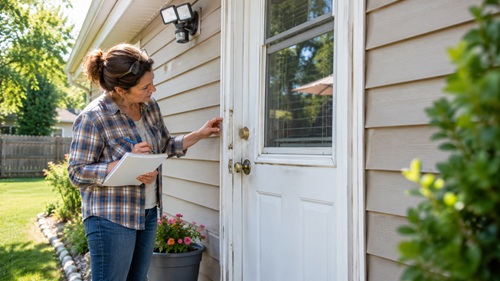
This illustrates why improvements should be prioritized according to actual vulnerabilities rather than the price or popularity of security products. An inexpensive repair that corrects a serious weakness may provide greater practical value than a costly electronic system installed without addressing basic physical security.
A useful approach is to identify the three most important concerns affecting the property, determine which can be corrected immediately, and develop a realistic plan for improvements requiring professional assistance or additional funding.
Strengthening Exterior Doors and Windows
Exterior doors are among the most important components of residential security because they provide convenient access to the building. A good door should be strong, properly installed, and fitted with reliable locking hardware. However, the strength of the door itself is only part of the equation. The surrounding frame, hinges, strike plate, and supporting wall structure all influence how well the entrance resists forced entry.
Many residential doors use wooden frames that can split or become damaged around the locking hardware. A strong deadbolt may offer limited additional protection if the surrounding material is weak or deteriorated. One practical improvement is to install suitable reinforced strike plates using fasteners that engage solid structural framing rather than relying only on thin decorative trim. The correct fastener length and type depend on the door assembly and wall construction, so installation should follow the hardware manufacturer’s instructions.
Hinges should also be inspected. Loose screws, damaged hinge leaves, and poorly aligned doors can affect both security and normal operation. Where appropriate, reinforced hinge hardware can improve the overall strength of the assembly.
The door slab itself matters as well. Solid-core doors and properly constructed exterior steel or fiberglass doors generally provide better resistance to physical damage than lightweight hollow-core interior doors. However, materials alone do not determine performance. A properly rated and installed door assembly is more important than assuming that any door described as steel is automatically secure.
Doors containing large glass panels may introduce additional vulnerabilities, particularly when glazing is located close to locking hardware. In these situations, suitable glazing products, reinforced frames, or professionally installed security improvements may be worth considering.
Some households choose supplementary reinforcement devices, such as reinforced jamb plates, hinge-side reinforcement hardware, or additional locking mechanisms. These products can be useful, but their effectiveness depends on installation quality and compatibility with the existing door. A reinforcement product attached to weak or damaged framing may provide less protection than expected, and adding multiple locks doesn’t necessarily improve security if the door and frame remain poorly constructed.
Interior barricade devices require particular caution because products designed to prevent a door from opening may delay unauthorized entry while also interfering with emergency evacuation or access by firefighters and other responders. For this reason, improvised barricades and permanently installed devices that obstruct required exits should not be treated as routine household security improvements.
Windows present a different challenge because they must often provide ventilation, natural light, and emergency escape in addition to resisting unauthorized entry. Begin by inspecting existing window hardware, replacing broken locks, repairing damaged frames, and ensuring that windows close completely. Where compatible, manufacturer-approved secondary security devices may provide additional protection.
Security window film is another option sometimes considered by homeowners. Certain films are designed to help hold broken glass together, potentially making it more difficult to create an opening quickly. However, ordinary decorative or solar-control window film should not be confused with security-rated glazing products.
The performance of security film depends on the film, glass type, installation method, and whether the glazing is properly anchored to its frame. A film applied only to the glass may not provide the same resistance as a professionally designed glazing system. Claims that a particular product will delay entry for a specific number of minutes should be treated cautiously unless supported by relevant testing under comparable conditions.
Window bars, grilles, and shutters can provide additional physical protection, but they introduce important safety considerations. Bedrooms and other rooms requiring emergency escape openings must retain compliant means of escape. Where security bars are permitted, appropriate quick-release mechanisms may be necessary so occupants can open them from inside without special tools or complicated procedures. These requirements vary by jurisdiction and building type.
For most households, maintaining functional window locks, repairing damaged components, improving lighting, and considering professionally assessed security glazing are sensible starting points.
Exterior Lighting, Security Cameras, and Early Warning
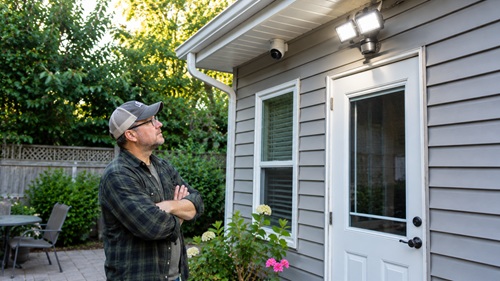
Physical barriers become more useful when occupants can recognize suspicious activity before someone reaches an entrance. Exterior lighting can help by improving visibility around doors, walkways, garages, and other frequently used areas. Motion-activated lighting is particularly convenient because it can illuminate an area when movement is detected without requiring continuous operation.
However, motion lights should not be treated as a guaranteed deterrent. Animals, vegetation, weather conditions, and ordinary pedestrian activity can trigger sensors, while someone approaching a property may not necessarily be discouraged by the light.
Placement is important because lighting should illuminate entrances and walking surfaces without creating excessive glare or shining unnecessarily into neighboring properties. Poorly positioned lights can make it harder to see beyond the illuminated area or interfere with security camera images.
For homes in regions where electricity disruptions are common, solar-powered or battery-backed exterior lighting may provide additional resilience. These systems still require maintenance, and their performance depends on battery condition, available sunlight, and environmental conditions. Households should also consider the effect of exterior lighting on wildlife, neighboring properties, and local dark-sky requirements. The objective is useful visibility rather than maximum brightness.
Security cameras and alarm systems can improve awareness, but they serve different purposes from physical barriers. A camera may record activity, allow occupants to check an entrance remotely, or provide useful information after an incident. An alarm may notify occupants when a door or window is opened or when a sensor detects an event. Neither system physically prevents entry.
This distinction becomes especially important during emergencies involving power or communications failures. Many modern security systems depend on household electricity, Wi-Fi networks, internet connections, cloud services, or mobile communications. If one or more of those dependencies fail, certain features may stop working.
Some systems include local recording, cellular backup, battery-powered sensors, or backup power supplies. Others may become largely ineffective when their network connection is lost. Before relying on electronic security equipment, households should understand what continues to function when the power or internet is unavailable.
For example, a camera that records locally to a properly configured storage device may continue operating without internet access if both the camera and recording equipment have suitable backup power. Remote notifications, however, may still be unavailable. An alarm system with a backup battery may continue detecting certain events, but its ability to contact a monitoring service depends on the communication methods available.
These limitations should be tested rather than assumed. For households preparing for extended outages, a modest backup power supply for essential security equipment may be useful. However, available battery capacity should be evaluated against actual power consumption and expected outage duration. Electronic systems are most dependable when they complement strong physical security rather than replace it.
Home Security During Extended Power Outages and Disasters
Natural disasters and prolonged infrastructure disruptions can change the conditions under which a household normally operates. Streetlights may be unavailable, electronic security systems may lose power, and damaged communications networks can make it difficult to contact others. At the same time, the household may be dealing with additional challenges such as limited heating, water interruptions, damaged property, or evacuation warnings.
Consider a family experiencing a prolonged winter power outage. Their exterior security lights no longer operate, the internet connection is unavailable, and their automatic garage door opener has stopped working. If the household relies entirely on electronic security equipment, these failures may leave them with fewer ways to monitor the property.
However, properly installed mechanical locks, reinforced door frames, and functioning window locks can continue providing protection without electricity. Battery-powered lighting may help illuminate entrances, while a backup power supply could maintain selected cameras or alarm equipment for a limited period. This illustrates why home fortification should not depend entirely on electronic systems.
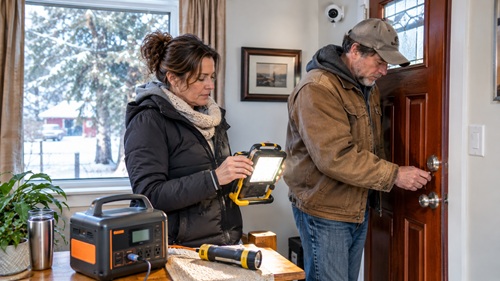
A household should understand which security measures continue functioning independently and which require electricity or communications networks. Automatic garage door openers deserve particular attention because many include emergency release mechanisms that allow manual operation during power failures. Homeowners should understand how these systems work and ensure that emergency access remains available without creating unnecessary security weaknesses.
Attached garages are especially important because they may provide access to an interior door leading directly into the home. The garage-to-house door should be treated as a significant security and fire-safety component, with appropriate locking hardware and compliance with applicable building requirements.
Outbuildings containing tools, generators, fuel, or other valuable supplies should also be considered. A shed containing expensive equipment may attract theft even when the main residence is well secured. Appropriate locks, lighting, and routine inspections can reduce opportunities for unauthorized access, although security measures should remain proportionate to the value of the contents and the actual risks involved.
Disasters do not automatically mean that widespread criminal activity will occur. During many emergencies, neighbors and community members provide valuable assistance to one another. Maintaining communication and cooperative relationships can improve safety and resilience, so a household preparing for extended disruptions should consider both physical security and community support.
Backup lighting can help occupants move safely around the property, while battery-powered radios and alternative communication methods may provide access to emergency information when normal networks are unavailable. If evacuation becomes necessary, security procedures should never delay departure. Protecting property is important, but personal safety takes priority when authorities issue evacuation instructions or when remaining inside becomes dangerous.
Developing a Family Safety and Emergency Response Plan
Physical security improvements are only part of household preparedness. Occupants also need to understand what to do if someone attempts unauthorized entry or if an unfamiliar situation develops outside the home. The safest response depends on the circumstances, but avoiding unnecessary confrontation should remain a priority.
Household members should know how to contact emergency services, where to find essential communication devices, and how to move away from immediate danger. A designated secure room may provide temporary protection in some situations, particularly if it has a solid door, a reliable communication method, and a way to receive instructions or contact responders.
If someone attempts to force their way into the home, occupants should avoid approaching the person or attempting to investigate the disturbance unnecessarily. Where a safe exit is available, leaving the immediate danger area may be the best option. If evacuation isn’t possible, moving to a safer location inside the building, securing the door where appropriate, and contacting emergency services can provide time for assistance to arrive.
Families should discuss these possibilities beforehand so that everyone understands the basic response. Children should know where to go, how to contact a trusted adult or emergency services when appropriate, and why they should not approach an unfamiliar person attempting to enter the home.
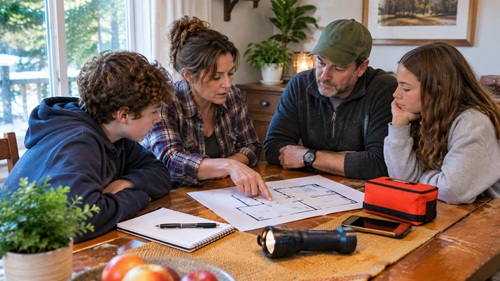
A designated secure room should not be confused with a guaranteed safe location. Its suitability depends on the building layout, available exits, and the nature of the emergency. A room that provides temporary protection from an intruder may be unsuitable during a fire or other emergency requiring immediate evacuation.
Families should also establish procedures for situations in which someone knocks unexpectedly, claims to require assistance, or requests access to the home. There is usually no need to open a door simply because someone is standing outside. Occupants can communicate through a closed door, use a door viewer or camera where available, and contact appropriate services when assistance is genuinely required.
Children should understand age-appropriate safety procedures without being encouraged to view every unfamiliar person as dangerous. For households with older adults or people with disabilities, emergency plans should account for mobility, communication needs, and any assistance required to leave the building safely.
Regular practice can reveal problems that are difficult to anticipate on paper. A household might discover that a secondary exit is obstructed by stored belongings, that an emergency flashlight is missing, or that a family member cannot operate a particular lock quickly. Correcting these problems before an emergency is far more useful than discovering them during one.
Balancing Home Security With Fire Safety and Emergency Evacuation
One of the most important principles of home fortification is that security measures must not create greater dangers for the people they are intended to protect. A home faces many possible emergencies, including fires, medical incidents, severe weather, and structural damage. Unauthorized entry is only one of those risks.
Doors that require keys to unlock from the inside, permanently obstructed windows, and complicated barricade systems may create serious problems during evacuation. Emergency exits should remain accessible and operable according to applicable building and fire codes.
Smoke alarms, carbon monoxide alarms where required, and suitable fire extinguishers should remain part of the household’s broader safety planning. Security improvements should also avoid interfering with firefighters, emergency medical personnel, or other responders who may need access during an emergency.
This is particularly important when considering reinforced doors, security grilles, window bars, or electronically controlled locking systems. Professional advice may be appropriate when modifying structural components or installing equipment that affects required exits.
A secure home is not simply one that is difficult to enter. It is one that allows occupants to remain safe, recognize danger, and leave quickly when necessary.
Important Safety Consideration: Home security improvements should always comply with applicable local building and fire-safety regulations. Before installing reinforced doors, window bars, additional locking mechanisms, or other security devices, confirm that emergency exits remain accessible and can be opened quickly from inside without special tools or keys.
Download Your Free Home Security & Fortification Inspection Checklist
A secure home starts with understanding where your vulnerabilities are. Your doors, windows, exterior lighting, security systems, and emergency exits all play a role in protecting your household, but even small maintenance problems can weaken your overall security.
The Home Security & Fortification Inspection Checklist is a free, two-page printable Preparedness Planning Tool from Prepping Communities designed to help you evaluate your home’s existing security measures and identify improvements before an emergency occurs.
Use this checklist to inspect exterior doors and windows, evaluate locks and reinforcement hardware, check outdoor lighting and security equipment, and assess garages and other access points. It also helps you determine which security measures will continue functioning during an extended power outage and whether your household has appropriate emergency communication and evacuation procedures.
As you complete the inspection, record areas that need attention and identify your three highest-priority security improvements. This practical approach helps you focus on meaningful repairs and upgrades rather than spending money on equipment you may not need.
Download the free checklist, print a copy, and walk through your property to begin building a safer, better-prepared home.
Preparedness Action Plan
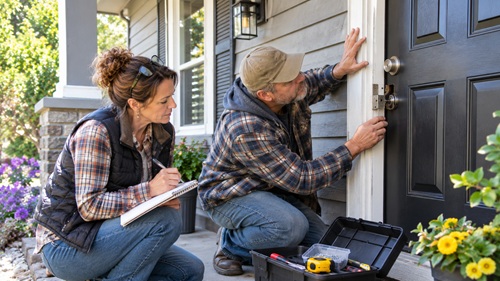
Begin by conducting a careful assessment of your home. Walk around the exterior during daylight and examine the doors, windows, garage entrances, and other access points. Look for damaged frames, loose hardware, broken locks, inadequate lighting, or areas where vegetation obstructs visibility. Record any concerns so they can be addressed systematically rather than relying on memory.
Next, identify the three most important vulnerabilities affecting your property. Consider which problems create immediate safety concerns, which could make unauthorized entry easier, and which improvements would provide the greatest practical benefit. A damaged door frame or malfunctioning lock may deserve attention before purchasing additional electronic security equipment.
Inspect the main exterior doors and confirm that they close properly, that deadbolts and other locks operate smoothly, and that hinges and strike plates are securely attached. If the surrounding frame is damaged or weak, consider having it repaired or reinforced using suitable hardware and professional installation guidance.
Examine accessible windows and verify that their locking mechanisms work correctly. Pay particular attention to windows that are difficult to close or that have damaged frames. If additional security film, grilles, or other protective measures are being considered, ensure that the installation will not interfere with required emergency escape routes.
Review exterior lighting and determine whether entrances, walkways, and frequently used areas are adequately illuminated. Test motion sensors and replace damaged fixtures. Where electricity interruptions are a concern, consider whether battery-backed or solar-powered lighting could provide useful additional coverage.
Evaluate any security cameras or alarm systems already installed. Determine which features continue working during a power outage and whether the system depends on internet or cellular connectivity. Test backup batteries and local recording capabilities where available.
Inspect garages, workshops, sheds, and other secondary structures. Make sure their doors and locks function correctly and that valuable tools or emergency supplies are not unnecessarily exposed.
Finally, review the household’s emergency response and evacuation procedures. Make sure everyone understands how to contact emergency services, how to leave the building safely, and where to find essential emergency equipment. Practice opening designated exits and identify any security devices that could interfere with evacuation.
Home security should be reviewed periodically, particularly after renovations, severe weather, changes in household circumstances, or the installation of new equipment.
Key Takeaways
Home fortification is most effective when it is treated as a combination of physical security, early warning, household planning, and life safety. Strong doors and properly installed locking hardware can make unauthorized entry more difficult, but their effectiveness depends on the surrounding frames, hinges, and supporting structure. Windows require similar attention, particularly when considering security products that could affect emergency escape.
Exterior lighting, cameras, and alarm systems can improve awareness, but they should not be mistaken for physical barriers. Electronic equipment may also depend on electricity and communications networks that become unavailable during an emergency.
Secondary entrances, garages, and outbuildings deserve attention because they are part of the overall property security arrangement. Maintaining these areas can reduce avoidable vulnerabilities without requiring extensive renovations.
Perhaps most importantly, security measures must never compromise the ability of occupants to escape a fire, medical emergency, or other dangerous situation. The objective is not to create an intimidating or inaccessible property. It is to make the home more resistant to unauthorized entry while preserving the comfort, accessibility, and safety of the people who live there.
A well-maintained home, supported by sensible security improvements and a practiced family emergency plan, provides a stronger foundation for preparedness than relying on any single lock, camera, or defensive device.
Additional Preparedness Planning Tools
Strengthening your home’s physical security is an important part of emergency preparedness, but protecting your household involves more than reinforcing doors and windows. A complete preparedness plan should also address how your family will communicate, maintain essential services, and remain safe during extended disruptions. For your reference, you can also access How to Build a Basic Emergency Preparedness Plan for Your Household, the Emergency Heating Equipment Inventory Checklist, and the 90-Day Grid-Down Preparedness Checklist. These resources complement the Home Security & Fortification Inspection Checklist by helping you prepare for heating failures, prolonged power outages, supply shortages, and other situations that could affect your household’s safety. Using these preparedness planning tools together can help you identify gaps, prioritize improvements, and develop a more complete plan for keeping your family safe and prepared.
© Prepping Communities. This content is for informational purposes only and not professional advice. Use at your own risk.
Terms | Privacy | Guidelines