
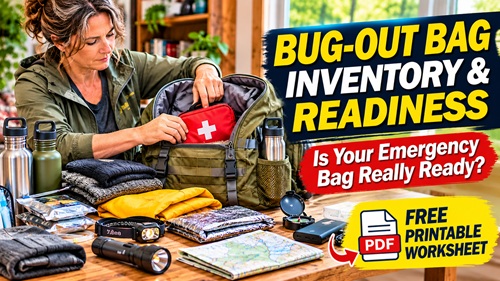
Is Your Emergency Bag Really Ready?
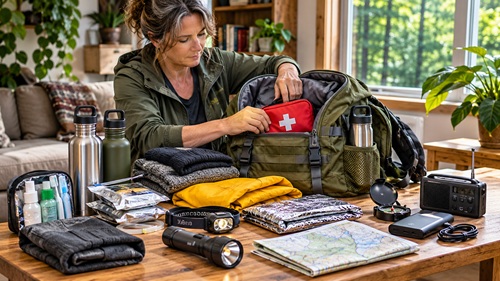
Having a bug-out bag packed and ready to go is an important part of emergency preparedness. However, a backpack filled with survival equipment does not necessarily mean someone is prepared to evacuate. The supplies need to be appropriate for the individual, the conditions they may encounter, and the distance they might need to travel.
A well-prepared bug-out bag should account for more than food, water, shelter, and first aid. Its contents should reflect the person’s physical capabilities, medical requirements, local environment, and evacuation arrangements. Equipment also needs to be inspected and tested periodically. A bag that was carefully packed several years ago may contain expired supplies, depleted batteries, clothing that no longer fits, or equipment that has never been used.
Prepping Communities has developed a free, printable 15-page Bug-Out Bag Inventory & Readiness Worksheet to help individuals and households examine their emergency evacuation supplies and determine whether their equipment and plans are suitable for their needs.
The worksheet provides detailed equipment inventories covering water, food, shelter, clothing, first aid, hygiene, lighting, tools, and emergency communications. It allows readers to record required quantities, identify missing supplies, and document equipment that needs attention.
Beyond the equipment inventory, the worksheet includes a 72-hour food and water planning assessment, evacuation destinations and alternate routes, emergency contacts, and backup communication arrangements. It also considers personal requirements involving medications, children, pets, mobility limitations, and other circumstances that may affect evacuation preparedness.
One particularly useful part of the assessment involves backpack weight and carrying ability. A bag may contain everything someone expects to need but still be too heavy or uncomfortable to carry over the intended route. The worksheet encourages readers to test their equipment under safe, realistic conditions and record any limitations they discover.
When assembling a bug-out bag, consider not only what you need to carry but how far you may have to carry it. A backpack that feels manageable for a few minutes around the house may become exhausting after several hours of walking, particularly over uneven terrain or in poor weather. Each household member’s bag should be suited to their physical abilities. Children, for example, should have smaller, lighter backpacks containing age-appropriate essentials rather than being expected to carry the same equipment as an adult. Older adults and people with mobility limitations may also need different arrangements. Before relying on any bug-out bag, take it on a realistic practice walk to evaluate its weight, comfort, and whether you can manage it safely over the distance you might need to travel. For young children, adults should plan to carry essential supplies rather than depend on the child carrying their own bag.
The final sections provide space for equipment maintenance, corrective actions, and readiness verification. These assessments help distinguish between supplies that are simply packed and equipment or arrangements that have actually been tested.
Get Your Free Printable Worksheet
The Bug-Out Bag Inventory & Readiness Worksheet can be printed and completed for each household member. It is suitable for someone assembling their first emergency bag as well as experienced preppers reviewing equipment they already own.
Download the Free 15-Page Bug-Out Bag Inventory & Readiness Worksheet
Once completed, keep the worksheet with your emergency preparedness records and review it periodically, particularly when household circumstances, equipment, or evacuation arrangements change.
A bug-out bag is most useful when you know what it contains, understand its limitations, and have confidence that you can use it when an emergency requires you to leave home.
© Prepping Communities. This content is for informational purposes only and not professional advice. Use at your own risk.
Terms | Privacy | Guidelines