
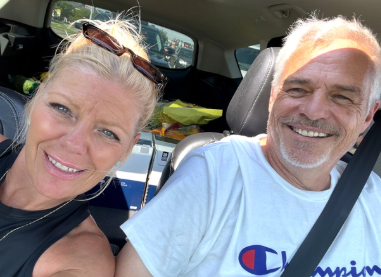

We were recently approached by The Epoch Times – Epoch Bright to share our personal preparedness journey, how our lifestyle has changed over the years, and what inspired us to create Prepping Communities.
It was a wonderful opportunity to talk about what preparedness really means to us, challenge some of the common misconceptions surrounding preppers, and explain why more ordinary families are embracing self-reliance in an increasingly uncertain world.
Our goal has always been to help others prepare through education, practical skills, shared knowledge, and community support. Preparedness isn’t about living in fear; it’s about having the confidence and peace of mind that come from knowing you have a plan when life takes an unexpected turn.
We would like to thank Michael Wing and The Epoch Times for taking an interest in our story and helping bring a more balanced perspective to the preparedness lifestyle.
We’re excited to share the following article with our Prepping Communities members and hope you enjoy reading it!
Planning for Uncertainty: Why Some Ordinary Canadians Are Embracing the Prepper Lifestyle
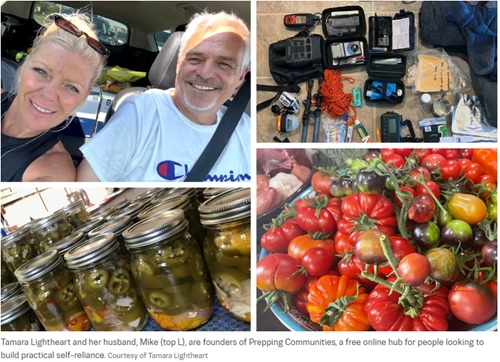

On a recent Sunday afternoon, Tamara Lightheart gathered with her husband and youngest son for a leisurely review of their family plan in the case of an emergency. One by one, they checked each other’s “bug-out bag” – the strategically packed accessory designed to see its owners through a societal collapse.
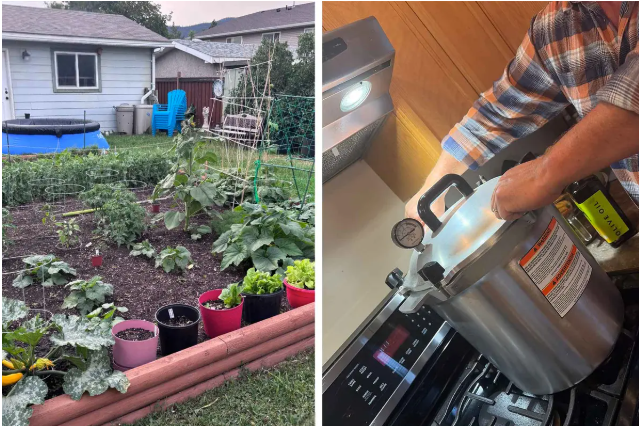
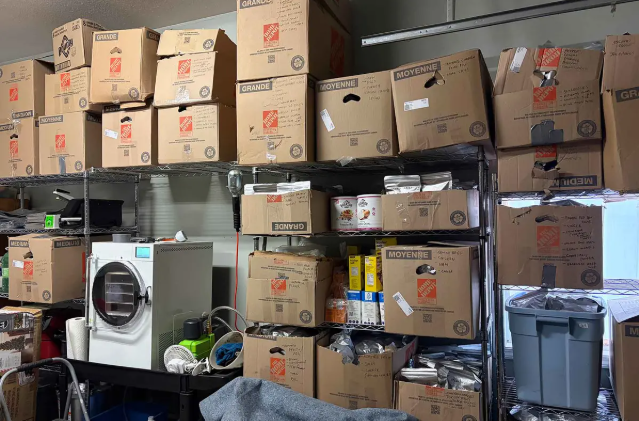
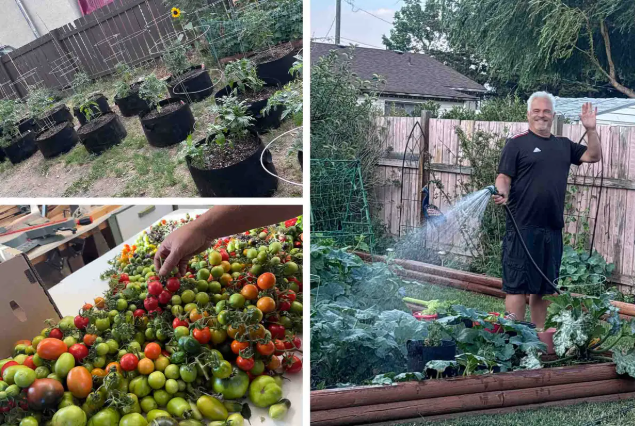
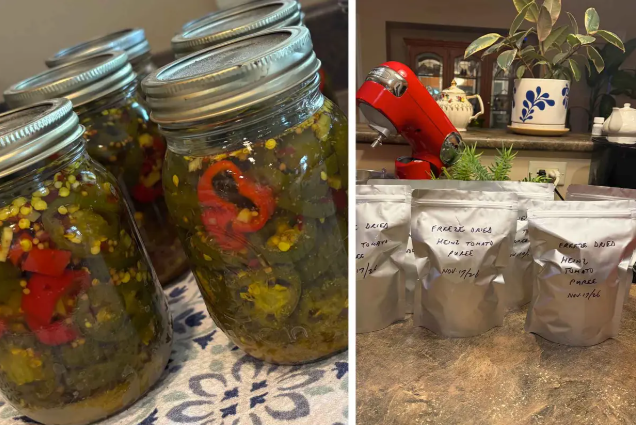
Looking at the Lighthearts’ home in small-town British Columbia, one could easily overlook the fact that they are middle-ground, or perhaps “stealth,” preppers. They run their home on the municipal power grid; there is no barbed wire or camouflage. But this year, they planted an entire backyard full of 50 heirloom tomato plants and other food crops. In the kitchen, the freeze dryer and pressure canner run constantly.
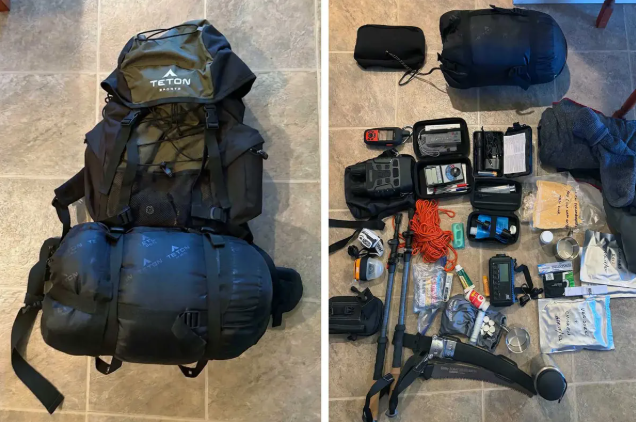
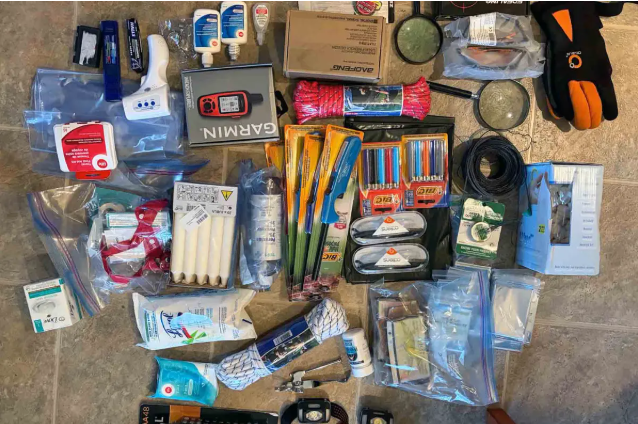
If a disaster ever struck their town, the Lighthearts’ home is where you would want to be. Inside, one finds stored drinking water, filtration systems, and medical supplies. Mike stocked firearms and ammunition, while adding equipment to protect from electromagnetic pulse (EMP) attacks that could short-circuit devices. The pantry brims with canned foods, as well as items like balsamic vinegar and pesto from their favourite Italian supermarket.
Lightheart, 56, loves cooking from scratch for her family, noting that familiar flavours comfort the home when times get tough.
“If things are difficult, I still want to make meals we enjoy,” she told The Epoch Times.
“Things I had always taken for granted were no longer available to us,” she said, speaking of the year 2020.
“It made me think much more seriously about how dependent we were on systems we had no control over. … I wanted us to have a plan instead of just hoping we’d be okay.”
Like Lightheart, many in the mainstream of society during the pandemic watched video recordings of bare grocery store shelves and widespread hoarding. Reports emerged of food shortages and depleted stocks of toilet paper and baby formula. Suddenly, people like Lightheart living integrated city lives became interested to learn survival skills.
Those like Lightheart became middle-of-the-road preppers, reshaping the bunker-dwelling, doomsday caricature of past decades.
And the drumbeat of infrastructure shocks after COVID only entrenched the mindset of Lightheart and preppers like her. One by one, emergencies reared their heads: from the Rogers telecom blackout in 2022, to the CrowdStrike Global IT crash in 2024 that wiped the systems of 8.5 million computers. Last month, hackers attacked grocery store freezers across France and eight other European nations, spoiling tons of food.
Power Outage
For Lightheart, it was a power outage one sweltering summer day in 2022 that sold her on survivalism.
Not long before that, she had been shaking off her pre-COVID, city-girl mindset. For years she had been “living the life” as the co-owner of an agency in Vancouver, representing actors in film and television.
“My days were about work, meetings, coffees, dinners, and networking,” she says, recalling her former self. “I wasn’t questioning where my food came from or what would happen if I couldn’t use my bank card or turn on the power. Why would I? Those things had always worked.”
After she and Mike married in 1999, she sometimes joked about his own survivalist ideals stemming from his youth. For years he led a double life, working as a chief technical officer in a corporation by day while maintaining his alter ego—hunting, fishing, camping, and prepping—outdoors and at home. During COVID, she watched in amusement as he geared up with generators and gas masks.
“I honestly thought he was off his rocker,” Lightheart says.
Something like that appealingly ironic conversion has echoed across the country.
Bug-Out RV
In other words, the Lighthearts are a lot like Dean Nobes, a production coordinator and seasoned survivalist in rural Quebec. His journey toward self-sufficiency began during the big ice storm that hit Ontario and Quebec in January 1998, he says, which “made me think about how many ordinary things I took for granted.” He began thinking seriously about how people could get by if the services they count on every day went down for an extended period.
“I usually describe myself as a prepper who became a publisher and event organizer,” he told The Epoch Times.
Similar to the Lighthearts, Nobes has also been building a system to cope with emergencies—from hackers shutting down grocery store refrigerators to telecom blackouts. His includes not only bug-out bags but a whole bug-out RV, ready and stocked with food, water, bedding, and basic supplies.
“I’ve already decided what belongs in the RV, so there’s no last-minute debate in the garage about whether one more piece of gear will fit,” he says. The generator and basement stockpile stay home.
On an ordinary Saturday, Nobes and his family run through exercises.
“I’d run the 10-minute drill with the RV exactly as it’s normally parked. How long does it take to get everyone aboard and the rig ready to pull out?” he says. “Once everyone is accounted for, including the pets, the three things I’d grab are essential medication, boots, and warm clothing, and a small grab bag.”
That bag holds the core essentials: a headlamp, light rations, and paper documents.
“If there’s immediate danger,“ he says, ”we get clear on foot if we have to.”
At home, Nobes runs his generator in shifts to power the freezer while charging batteries at the same time. He always writes down important numbers and addresses and keeps a battery-powered AM/FM radio and off-grid ham radio on standby.
His philosophy when purchasing new gear is “buy for the system—not the gadget.”
Nobes is also handing down skills to rookies in the prepping community. At meetings, one of the biggest tips he offers is to start sleeping in the backyard.
“Try an overnight close to home with what you already own,” he says. “Pack for supper through breakfast and see how you get on. Every time you have to go back into the house for something, you’ve found a gap worth fixing.”
‘Breathing Room’
Back in her kitchen in British Columbia, Lightheart contemplates how far they’ve come. The couple makes coffee before heading to their offices, where Mike sits at his computer to ensure their website is operating smoothly. She reviews member reports, postings, and emails, knowing that teaching others to prepare for a glitch in the fragile system is their calling.
“Helping people has always been our goal with Prepping Communities,” she says.
New members or curious individuals sometimes question her lifestyle. She shares a middle-of-the-road reply.
“I don’t think of our lifestyle as extreme. We grow food, preserve it, keep supplies, and have backup plans. A lot of that is what our grandparents did,” she says.
“It doesn’t have to mean nuclear fallout,” she adds. “It could be losing your job. Suddenly, you still have a family to feed, but your income is gone. Having food and necessities put aside could give you some breathing room. That’s preparedness, too.”
© Prepping Communities. This content is for informational purposes only and not professional advice. Use at your own risk.
Terms | Privacy | Guidelines