
Introduction
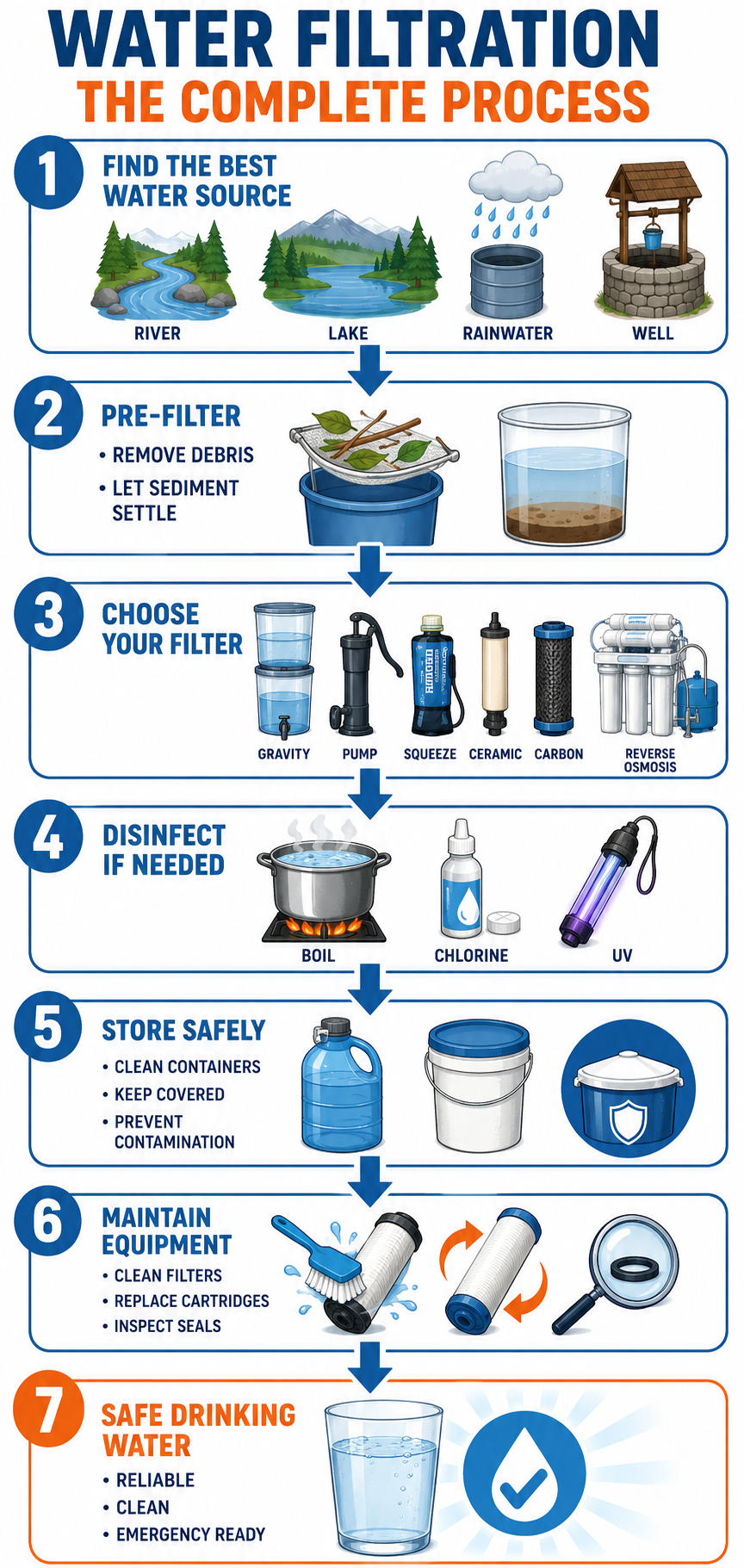
Having access to water during an emergency does not automatically mean you have access to safe drinking water. Rivers, lakes, ponds, rainwater collection systems, and even stored water can contain contaminants that make people sick. Some contaminants are easy to see, such as mud or floating debris, while others are microscopic and completely invisible. Learning how to filter water is one of the most valuable preparedness skills because it allows you to turn questionable water into a much safer resource.
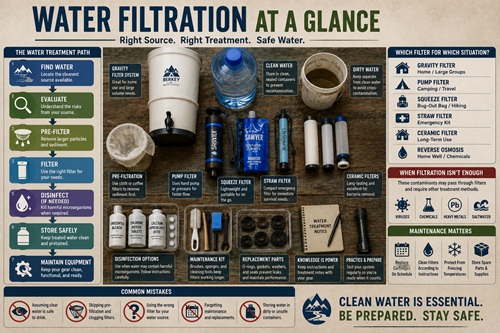
Water filtration is the process of removing unwanted material from water before it is used. Depending on the type of filter, this may include sediment, bacteria, protozoa, parasites, unpleasant tastes, odors, and certain chemicals. Every filtration method has strengths and limitations, and no single filter is designed to solve every water problem. Choosing the correct filtration system begins with understanding what needs to be removed and how different filters accomplish that task.
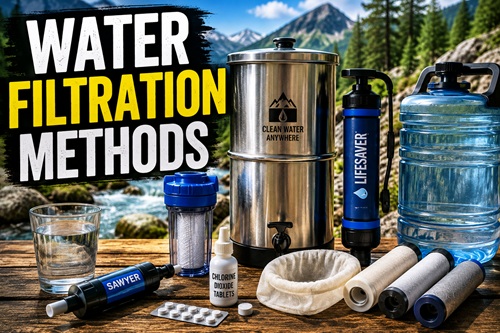
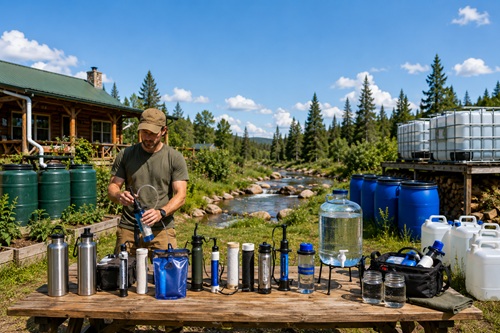
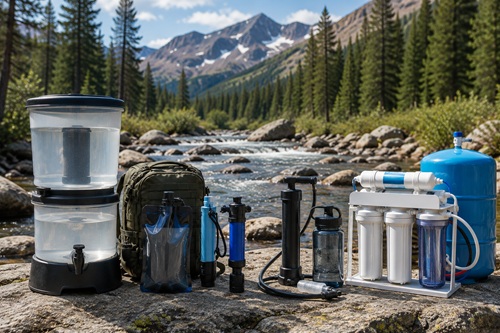
Modern filtration equipment ranges from simple cloth filters and inexpensive gravity systems to advanced portable filters capable of producing thousands of gallons of drinking water. Some systems require no electricity and operate entirely by gravity, while others use hand pumps or household water pressure. Regardless of the design, filtration should be viewed as one layer of a complete water treatment strategy rather than the only solution.
This lesson explains how the most common water filtration methods work, what they remove, when they should be used, and how to select the right filtration system for your preparedness plan.
Why Water Filtration Matters
Many people judge water by its appearance. If it looks clean, they assume it is safe to drink. Unfortunately, this is one of the most dangerous assumptions a person can make during an emergency. Disease-causing bacteria, viruses, and parasites are microscopic and cannot be seen without specialized equipment. A mountain stream that appears crystal clear may still contain harmful microorganisms introduced by wildlife upstream, while water from a flooded neighborhood may contain sewage, chemicals, fuel, and other hazardous contaminants despite looking relatively clear.
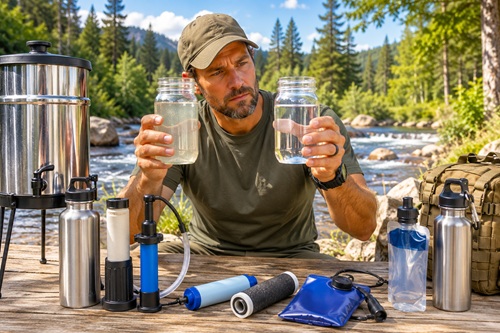
Filtration improves water quality by removing contaminants before they enter your body. It also protects other treatment methods. Chemical disinfectants work more effectively in clear water because microorganisms are less likely to be hidden inside suspended particles. Ultraviolet purification systems also perform better when light can pass through the water without being blocked by sediment or organic matter. In many situations, filtration is the first step that allows every treatment method that follows to perform more effectively.
It is also important to understand that filtration and purification are not the same thing. A filter may remove dirt and bacteria while allowing viruses or dissolved chemicals to pass through. Likewise, a purification method may kill microorganisms but leave sediment, unpleasant tastes, or chemical contaminants behind. Understanding these differences allows you to build a treatment process that addresses the specific risks presented by your water source.
Evaluate Your Water Source
Before choosing any filtration system, identify where your water will come from. Every water source presents different challenges, and understanding those differences is one of the most important parts of selecting the right equipment. A filter that performs exceptionally well on clear mountain streams may clog quickly when used in muddy pond water, while a filter designed for sediment removal alone may offer little protection against harmful microorganisms.
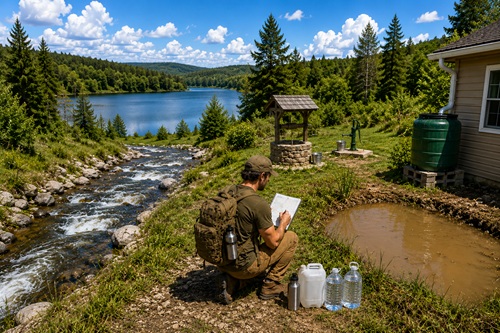
Rainwater collected from a properly maintained roof is generally one of the cleaner emergency water sources, although it may still contain dust, pollen, bird droppings, insects, and other debris that accumulated between storms. Rivers and streams often contain suspended sediment and microorganisms introduced by wildlife, agriculture, or upstream human activity. Lakes and ponds usually contain higher concentrations of algae, organic material, and microscopic organisms, while floodwater should always be treated as highly contaminated because it may contain sewage, fuel, industrial chemicals, and countless other hazards.
Taking a few moments to evaluate the source before filtering the water allows you to choose the most effective treatment method while reducing unnecessary wear on your equipment.
| Water Source | Common Concerns |
|---|---|
| Rainwater | Dust, pollen, bird droppings, insects |
| Rivers | Sediment, bacteria, parasites |
| Lakes | Algae, sediment, bacteria |
| Ponds | Organic matter, algae, parasites |
| Wells | Minerals, bacteria if contaminated |
| Floodwater | Sewage, chemicals, fuel, heavy contamination |
Understand What Different Filters Remove
Not every filter performs the same job. Some are designed to remove only large particles, while others capture microscopic organisms capable of causing serious illness. Before purchasing any filtration system, it is important to understand exactly what it is designed to remove and what contaminants may still require additional treatment.
Most filtration systems are rated using microns, which measure the size of particles the filter can capture. Smaller micron ratings generally remove smaller contaminants, but micron size alone does not determine overall performance. The construction of the filter, the filter media being used, and the way water flows through the system all influence how effectively contaminants are removed.
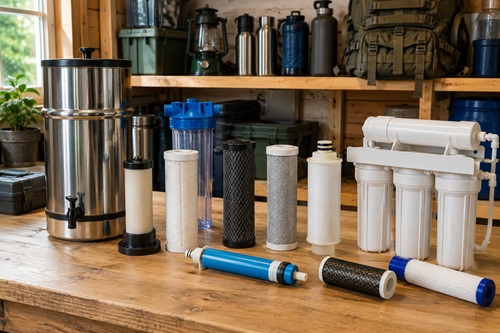
For most preparedness situations, the primary goal is removing sediment, bacteria, and protozoa before disinfecting the water if necessary. Viruses are significantly smaller than bacteria and often require additional treatment methods such as boiling, chemical disinfection, ultraviolet light, or specialized purification systems. Likewise, dissolved chemicals, heavy metals, and salts usually require completely different technologies than those used for biological contaminants.
Understanding these differences helps prevent one of the most common preparedness mistakes—assuming every water filter produces safe drinking water regardless of the source.
| Filtration Method | Removes |
|---|---|
| Cloth or Mesh | Leaves, insects, large debris |
| Sediment Filter | Sand, rust, silt |
| Ceramic Filter | Bacteria, protozoa, sediment |
| Hollow Fiber Filter | Bacteria, protozoa, microplastics |
| Activated Carbon | Chlorine, odors, bad taste, some chemicals |
| Reverse Osmosis | Most dissolved contaminants and microorganisms |
Pre-Filter Dirty Water
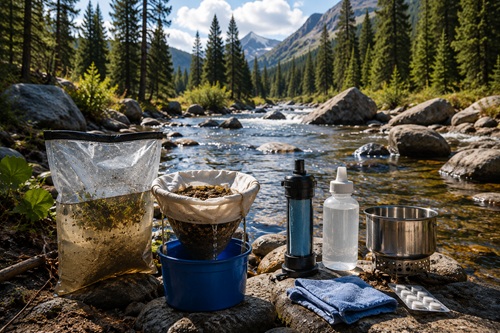
One of the easiest ways to improve the performance of any water filtration system is to remove as much large debris as possible before the water reaches the primary filter. This process, known as pre-filtration, does not make water safe to drink by itself, but it significantly improves the efficiency and lifespan of nearly every filtration method. Mud, leaves, algae, insects, and organic material quickly clog filter elements, slowing water flow and increasing the amount of cleaning required.
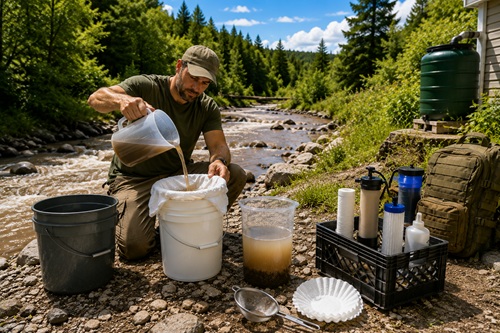
The simplest pre-filter can be made from materials found in almost any home. A clean cotton cloth, bandana, coffee filter, fine mesh screen, or several layers of cheesecloth can remove many larger particles before finer filtration begins. These inexpensive materials are especially useful when collecting water from ponds, rivers, or other sources containing visible debris.
If the water is extremely muddy, allow it to sit undisturbed for several hours before filtering it. As the heavier sediment settles to the bottom, the clearer water near the top can be carefully poured into another container for filtration. This simple step greatly reduces the workload placed on the primary filter and can dramatically extend the life of filter cartridges in long-term emergencies.
Pre-filtration should always be viewed as preparation rather than treatment. While it improves water clarity and protects filtration equipment, it does not remove harmful microorganisms or dissolved contaminants. Additional filtration and, when appropriate, disinfection are still necessary before drinking the water.
| Pre-Filter Method | Best For |
|---|---|
| Cotton Cloth | Leaves, insects, large debris |
| Coffee Filter | Fine sediment |
| Cheesecloth | Organic material |
| Fine Mesh Screen | Twigs, insects, floating debris |
| Settling Container | Heavy sediment before filtration |
Gravity Water Filters
Gravity water filters are among the most popular filtration systems for emergency preparedness because they require no electricity, no fuel, and very little physical effort. Water is poured into an upper chamber and slowly passes through specialized filter elements under the force of gravity before collecting in a clean lower chamber. This simple design makes gravity filters an excellent choice for households that need to produce drinking water continuously during extended emergencies.
One of the greatest advantages of gravity filtration is its ability to process relatively large amounts of water with minimal supervision. Once the upper chamber is filled, the system operates on its own while other preparedness tasks can be completed. Many high-quality gravity filters are capable of removing bacteria, protozoa, sediment, microplastics, and unpleasant tastes while producing several gallons of drinking water each day.

Gravity filters are especially useful at home, cabins, RVs, or long-term shelters where portability is less important than producing reliable drinking water for multiple people. Because they rely only on gravity, they continue operating during power outages and can often be cleaned and reused many times before replacement elements are needed.
Although gravity filtration removes many biological contaminants, users should always understand the limitations of their specific filter. Some systems require additional disinfection if viruses or certain chemical contaminants are a concern.
| Advantages | Limitations |
|---|---|
| No electricity required | Slower than pump filters |
| Produces large quantities | Less portable |
| Easy to operate | Requires periodic cleaning |
| Excellent for families | Some models do not remove viruses |
Pump Water Filters
Pump filters are designed for situations where water must be collected directly from natural sources such as streams, lakes, ponds, or rivers. Instead of relying on gravity, the user manually pumps water through the filter cartridge, allowing clean water to flow into a bottle or storage container. This makes pump filters popular with backpackers, campers, hunters, and emergency responders who need immediate access to drinking water while away from home.
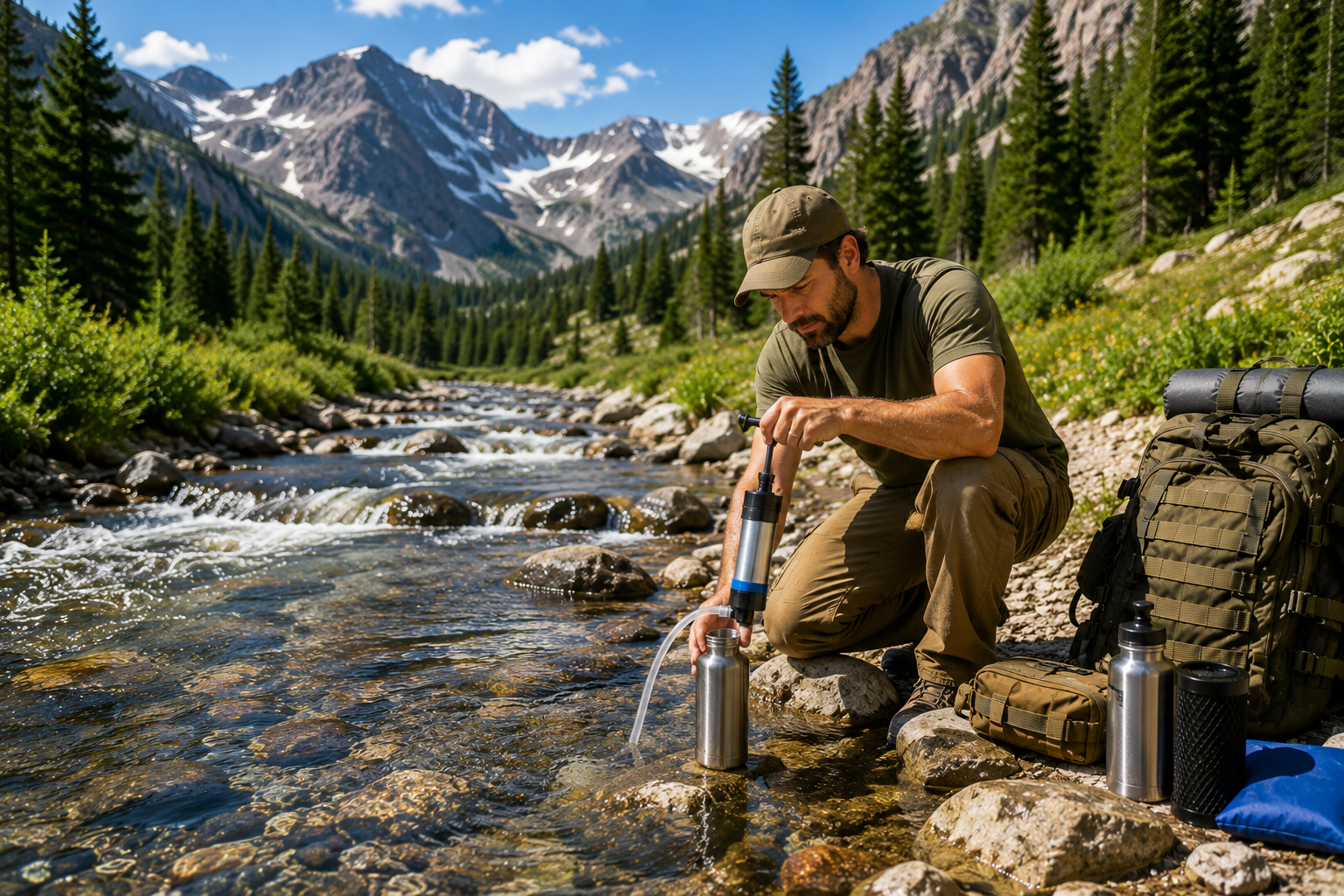
Pump filters generally process water much faster than gravity systems, making them useful when time is limited or when only small amounts of drinking water are needed. Many models include ceramic, hollow-fiber, or carbon filter elements that effectively remove bacteria, protozoa, and sediment while improving taste and odor.
Because pump filters draw water directly from natural sources, selecting the clearest water available will always improve performance. Muddy or algae-filled water quickly clogs filter elements, reducing flow rates and increasing maintenance. Whenever possible, pre-filter the water with a cloth or allow sediment to settle before pumping.
Like all filtration systems, pump filters require regular maintenance. Filter cartridges eventually become clogged or worn and must be cleaned or replaced according to the manufacturer’s recommendations. Carrying spare filter elements during extended trips can prevent an unexpected equipment failure from becoming a serious emergency.
| Advantages | Limitations |
|---|---|
| Fast water production | Requires physical effort |
| Portable | Filter cartridges wear out |
| Ideal for outdoor use | Less practical for large groups |
| Good for streams and lakes | Slower with muddy water |
Straw and Squeeze Filters
Straw filters and squeeze filters have become extremely popular because they combine excellent filtration performance with lightweight, compact designs. Both systems commonly use hollow-fiber membrane technology capable of removing bacteria, protozoa, and microscopic sediment while remaining small enough to fit inside a pocket or backpack.
A straw filter allows the user to drink directly from the water source through the filter. This makes it ideal for hiking, emergency kits, bug-out bags, and situations where immediate hydration is the primary goal. However, because water is consumed directly through the filter, it is not well suited for filling large containers or supplying water for cooking.
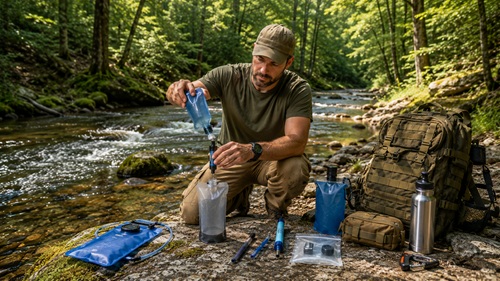
Squeeze filters provide greater flexibility. Water is collected in a collapsible pouch or bottle and then squeezed through the filter into another clean container. This allows filtered water to be shared with others or stored for later use. Many squeeze filters can also be connected to hydration systems or used as part of simple gravity-fed filtration setups, making them extremely versatile.
These compact systems are excellent emergency tools, but they should be protected from freezing temperatures. Water trapped inside hollow-fiber membranes can freeze and expand, permanently damaging the filter even if no visible cracks appear. Manufacturers often recommend replacing a filter that has frozen after use because its effectiveness can no longer be guaranteed.
| Filter Type | Best Use |
|---|---|
| Straw Filter | Individual emergency drinking |
| Squeeze Filter | Backpacking and bug-out bags |
| Gravity Bag System | Campsites and small groups |
| Hydration Integration | Hiking and long-distance travel |
Ceramic Water Filters
Ceramic filters have been trusted for decades because they are durable, reliable, and capable of producing high-quality drinking water. The ceramic element contains millions of microscopic pores that allow water to pass while trapping bacteria, protozoa, and suspended particles. Unlike disposable paper filters, ceramic elements can often be cleaned repeatedly, extending their service life for thousands of gallons.
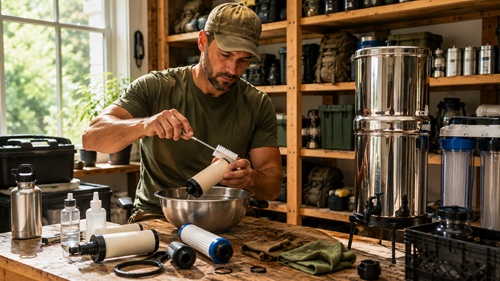
One of the greatest advantages of ceramic filtration is longevity. As sediment accumulates on the outer surface, water flow gradually slows rather than stopping suddenly. Cleaning usually involves gently scrubbing the exterior surface with a soft brush or abrasive cleaning pad to remove accumulated contaminants and restore normal flow.
Many ceramic filtration systems also include activated carbon elements that improve taste and reduce certain chemicals while the ceramic portion removes microorganisms. This combination provides excellent all-around performance for most emergency water sources.
Although ceramic filters are highly effective against bacteria and protozoa, they generally do not remove viruses. Additional treatment may still be required depending on the source of the water and the level of contamination expected.
| Advantages | Limitations |
|---|---|
| Long service life | Can break if dropped |
| Reusable after cleaning | Slower flow rate |
| Excellent biological filtration | Does not remove all viruses |
| Reliable for long-term preparedness | Requires careful handling |
Activated Carbon Filters
Activated carbon filters are designed to improve the quality of water by removing contaminants that affect taste, odor, and certain chemical properties. Unlike ceramic or hollow-fiber filters, which primarily remove microorganisms and sediment, activated carbon works by attracting and trapping contaminants on the surface of specially treated carbon. This process, known as adsorption, allows the filter to remove chlorine, pesticides, volatile organic compounds (VOCs), and many unpleasant tastes and odors that make water less desirable to drink.
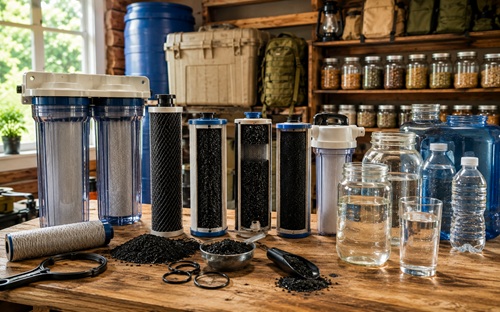
Many preparedness water filters include activated carbon as a second stage following mechanical filtration. After sediment, bacteria, and protozoa have been removed, the water passes through the carbon element where additional impurities are reduced. The result is cleaner-tasting water that is generally more pleasant to consume, especially when treating municipal water supplies or rainwater stored for long periods.
Activated carbon has limitations that should be understood before relying on it during an emergency. It does not reliably remove bacteria, viruses, or parasites by itself and should never be considered a complete water treatment solution. Instead, it works best when combined with other filtration or purification methods that address biological contaminants first.
Like all filter media, activated carbon eventually becomes saturated and loses its effectiveness. Once this occurs, it must be replaced because cleaning does not restore its ability to adsorb contaminants. Following the manufacturer’s replacement schedule helps ensure the filter continues performing as intended.
| Advantages | Limitations |
|---|---|
| Improves taste and odor | Does not remove microorganisms by itself |
| Reduces chlorine | Requires regular replacement |
| Removes many chemicals | Limited effectiveness against dissolved minerals |
| Often combined with other filters | Cannot be cleaned and reused |
Reverse Osmosis Systems
Reverse osmosis, commonly called RO, is one of the most effective water filtration technologies available for residential use. Unlike conventional filters that trap particles as water passes through, reverse osmosis forces water under pressure through an extremely fine semi-permeable membrane. The membrane allows water molecules to pass while rejecting most dissolved salts, heavy metals, chemicals, bacteria, viruses, and many other contaminants.
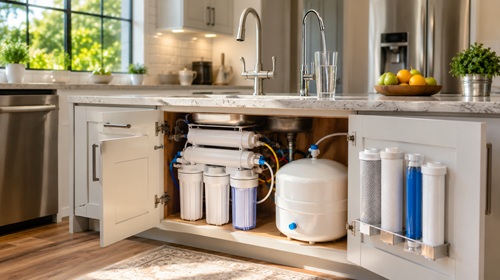
Because of its exceptional performance, reverse osmosis is commonly used where water quality is poor or dissolved contaminants are a primary concern. Homes with high mineral content, agricultural runoff, or questionable groundwater often use reverse osmosis systems to improve drinking water quality. Some off-grid households also incorporate RO systems when treating brackish water or other challenging water sources.
Reverse osmosis systems do have several disadvantages that preparedness planners should consider. They require water pressure to operate, produce wastewater during filtration, and generally process water more slowly than many other filtration methods. Most residential systems also depend on replacement cartridges and membranes that must be maintained regularly to continue producing high-quality water.
Despite these limitations, reverse osmosis remains one of the most comprehensive household water treatment technologies available. When combined with proper maintenance and adequate storage, it can provide exceptionally clean drinking water for many years.
| Advantages | Limitations |
|---|---|
| Removes most contaminants | Requires water pressure |
| Reduces heavy metals and salts | Produces wastewater |
| Excellent drinking water quality | Slower production rate |
| Removes many microorganisms | More expensive than portable filters |
When Filtration Is Not Enough
Although filtration removes many contaminants, there are situations where filtration alone cannot make water safe to drink. Understanding these limitations is just as important as understanding the capabilities of your equipment. Assuming that every filter produces completely safe drinking water can create a false sense of security during an emergency.
Viruses are one example. Many portable filters effectively remove bacteria and protozoa but allow viruses to pass because viruses are significantly smaller than the filter pores. In areas where viral contamination is possible, additional treatment such as boiling, chemical disinfection, ultraviolet purification, or a certified purifier may be necessary.
Chemical contamination presents another challenge. Agricultural chemicals, fuel, industrial waste, and certain heavy metals often require specialized treatment methods beyond conventional portable filters. Activated carbon may reduce some chemical contaminants, while reverse osmosis removes many dissolved substances, but no single portable filter addresses every possible hazard.
Saltwater also cannot be made drinkable using ordinary camping or backpacking filters. Removing dissolved salt requires desalination technologies such as reverse osmosis specifically designed for seawater or distillation. Attempting to drink filtered seawater without proper desalination can quickly lead to dehydration.
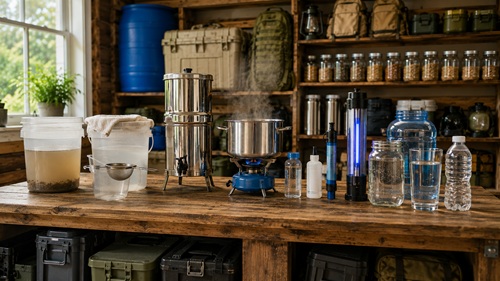
Whenever the quality of a water source is uncertain, combining multiple treatment methods provides the greatest level of protection. Pre-filtration, fine filtration, and appropriate disinfection work together to produce safer drinking water than any single method alone.
| Water Hazard | Additional Treatment May Be Needed |
|---|---|
| Viruses | Boiling, UV, chemical disinfection |
| Chemicals | Activated carbon, reverse osmosis |
| Heavy Metals | Reverse osmosis or specialized filtration |
| Saltwater | Desalination or distillation |
| Unknown Contamination | Multiple treatment methods |
Maintain Your Water Filters
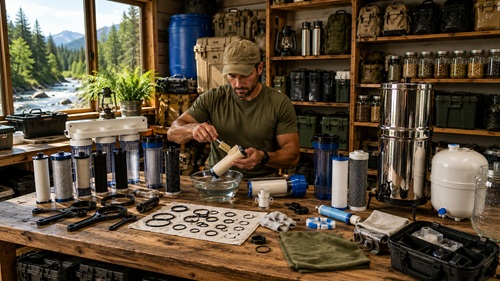
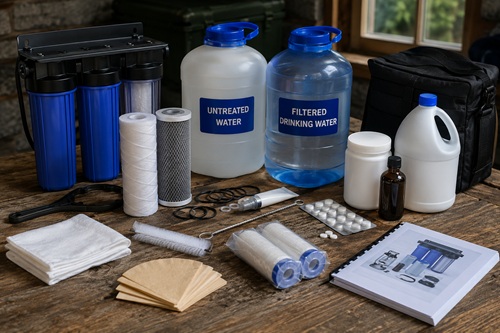
Even the best water filter eventually loses effectiveness if it is not maintained properly. Dirt, sediment, organic matter, and normal wear gradually reduce water flow and filtration performance. Routine maintenance not only extends the life of the equipment but also helps ensure that the filter continues providing the level of protection it was designed to deliver.
The most important maintenance task is cleaning or replacing filter elements according to the manufacturer’s recommendations. Some ceramic filters can be scrubbed clean and reused many times, while activated carbon cartridges and certain membrane filters must eventually be replaced. Waiting until water flow nearly stops often means the filter has been working under excessive strain for some time.
Portable filters should also be protected from freezing temperatures after they have been used. Water trapped inside hollow-fiber membranes can freeze and expand, damaging the filter internally without leaving visible signs of failure. If a filter freezes after use, many manufacturers recommend replacing it because its ability to remove microorganisms can no longer be guaranteed.
Proper storage is equally important. Filters should be cleaned, thoroughly dried when appropriate, and stored according to the manufacturer’s instructions. Spare cartridges, O-rings, hoses, and replacement seals should also be kept on hand for long-term preparedness. During an extended emergency, replacement parts may be impossible to obtain.
Regular inspection helps identify cracked housings, damaged seals, clogged elements, or worn fittings before they become serious problems. A filter that is maintained consistently is far more dependable than one that has been forgotten until the day it is needed.
| Maintenance Task | Recommended Frequency |
|---|---|
| Inspect filter housing | Before each use |
| Clean reusable elements | As flow decreases |
| Replace disposable cartridges | Per manufacturer recommendations |
| Inspect hoses and seals | Every 6 months |
| Store properly after use | After every use |
| Replace frozen hollow-fiber filters | Immediately if frozen after use |
Common Mistakes to Avoid
Many filtration problems occur not because the equipment failed, but because it was used incorrectly. Fortunately, most of these mistakes are easy to prevent with a little planning and regular maintenance.
One of the most common mistakes is assuming that clear water is automatically safe to drink. Clear water may still contain harmful bacteria, viruses, or parasites that cannot be seen with the naked eye. Likewise, many people believe every water filter removes all contaminants, when in reality each filter is designed to address specific hazards.
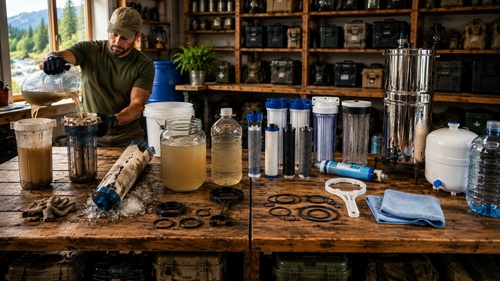
Skipping pre-filtration is another frequent error. Pumping muddy water directly into a fine filter quickly clogs the filter element and greatly reduces its lifespan. Taking a few minutes to remove larger debris beforehand often doubles or even triples the service life of expensive cartridges.
Many people also forget to maintain their equipment. Allowing filter cartridges to exceed their service life, failing to clean ceramic elements, or storing filters improperly can reduce performance when clean water is needed most. Hollow-fiber filters that freeze after use are another commonly overlooked problem because internal damage may not be visible.
Finally, remember that filtration is only one part of a complete water treatment strategy. Depending on the water source, additional disinfection or purification may still be required before the water is considered safe to drink.
| Common Mistake | Better Practice |
|---|---|
| Assuming clear water is safe | Always treat questionable water |
| Skipping pre-filtration | Remove large debris first |
| Using the wrong filter | Match the filter to the water source |
| Ignoring maintenance | Clean and replace filters regularly |
| Allowing filters to freeze | Protect hollow-fiber filters after use |
| Relying on filtration alone | Combine filtration with disinfection when needed |
© Prepping Communities. This content is for informational purposes only and not professional advice. Use at your own risk.
Terms | Privacy | Guidelines