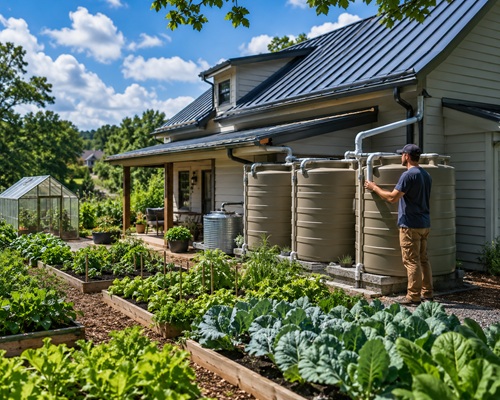
Rainwater Collection Systems

General Information

10781801-ea26-43e9-8738-455fc2694d04-1

Introduction

A reliable water supply is one of the foundations of preparedness. While storing emergency water is essential, every stored supply eventually runs out. Rainwater collection offers something different – a renewable source of water that can be replenished naturally every time it rains. Whether used for watering a garden, supplying livestock, cleaning equipment, or building an emergency reserve, a well-designed rainwater collection system can reduce dependence on municipal water while increasing your household’s resilience.

Rainwater harvesting has been practiced for thousands of years because the concept is simple and effective. Capture rain when it falls, keep it as clean as possible during collection, store it safely, and treat it appropriately before drinking. Modern gutters, storage tanks, filters, and plumbing have made the process easier than ever, allowing almost any homeowner to build a system that fits their property, budget, and preparedness goals.

One of the greatest advantages of rainwater collection is that it can grow over time. You don’t need to install a massive system all at once. Many people begin with a single rain barrel connected to one downspout, then gradually add additional tanks, filtration, pumps, or treatment systems as their needs change. Like many preparedness projects, the best system is often the one that improves steadily over the years.

Back To Top


Why Collect Rainwater?

Collecting rainwater provides benefits long before an emergency ever occurs. It can reduce municipal water consumption, lower utility costs, provide water during seasonal restrictions, and help maintain gardens during dry weather. For homesteads and rural properties, harvested rainwater can also supply livestock, orchards, greenhouses, and other agricultural needs without relying entirely on wells or public water systems.

From a preparedness perspective, rainwater harvesting creates another independent source of water. If a storm damages infrastructure, a prolonged power outage affects pumping stations, or drought restrictions limit water use, a properly maintained rainwater collection system can continue providing water for many household activities. While collected rainwater should always be properly treated before drinking, it is immediately useful for irrigation, sanitation, cleaning, and many other non-potable uses.

Perhaps the greatest benefit is flexibility. Every gallon collected during a storm is another gallon available when conditions become less predictable. Combined with stored water, filtration equipment, and knowledge of local natural water sources, rainwater harvesting becomes an important part of a layered preparedness strategy.


Determine How Much Water You Need

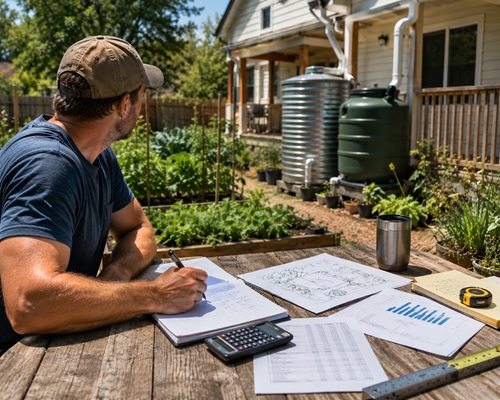
Before purchasing storage tanks or designing a collection system, decide how the water will actually be used. This is one of the most important planning steps because it influences every decision that follows. A system designed to water a small vegetable garden will look very different from one intended to support livestock or provide an emergency household water supply.
7c1e7874-fc70-4065-ae4f-efb2a3b09600

Think about your household’s daily needs rather than simply choosing the largest storage tank you can afford. Consider how much water you would like available for drinking, cooking, hygiene, sanitation, gardening, livestock, and general household use during an emergency. Estimating these needs first allows you to design a practical system instead of spending money on unnecessary storage or discovering later that your tanks are too small.

The following table provides reasonable planning estimates for common household water needs during an emergency.

Water Use Typical Daily Requirement
Drinking 1 gallon per person
Cooking 0.5–1 gallon per person
Basic Hygiene 2–3 gallons per person
Toilet Flushing 2–5 gallons per person
Garden Irrigation Varies
Livestock Depends on species

These values are intended as planning guidelines. Actual water consumption depends on climate, activity level, household size, conservation practices, and the type of emergency being experienced.


Estimate Your Collection Potential

Once you know how much water you want to store, the next step is estimating how much rain your property can actually collect. Many people are surprised to discover that an average home can collect hundreds of gallons of water from a single rainfall because every square foot of roof becomes a collection surface.

A simple calculation provides a reliable estimate for nearly every residential system:

Roof Area (square feet) × Rainfall (inches) × 0.62 = Gallons Collected

For example, a home with a 1,500-square-foot roof receiving one inch of rain can collect approximately 930 gallons of water before small system losses are considered. Most well-designed residential systems capture between 80 and 95 percent of this amount after accounting for first-flush diversion, splash loss, and minor inefficiencies.

Roof Area Water Collected from 1 Inch of Rain
500 sq ft 310 gallons
1,000 sq ft 620 gallons
1,500 sq ft 930 gallons
2,000 sq ft 1,240 gallons
2,500 sq ft 1,550 gallons

Don’t overlook other structures on your property. Garages, barns, workshops, sheds, and greenhouses can all contribute valuable collection area and significantly increase the amount of water your system can produce throughout the year.
Choose the Right Roof

Every rainwater collection system begins with the roof. Before water reaches a gutter, storage tank, or filter, it first flows across the roofing material. For that reason, the roof has a direct impact on both the quantity and quality of the water you collect. While almost any roof can be used to harvest rainwater, some materials produce cleaner water, require less maintenance, and are better suited for long-term collection.

Smooth, non-porous roofing materials generally perform best because they allow water to flow quickly into the gutter system while leaving less opportunity for dirt, pollen, leaves, and organic debris to accumulate. Metal roofing is often considered the preferred choice for rainwater harvesting because it sheds water efficiently, dries quickly after rainfall, and discourages the growth of moss and algae. It is also one of the easiest roofing materials to keep clean.

4a5ccb73-db62-4ab8-9dd3-9730c3b108fd

Many homes, however, have asphalt shingles, and there is usually no reason to replace a perfectly good roof solely for rainwater collection. Asphalt roofs can produce excellent results when paired with routine maintenance, a properly functioning first-flush diverter, and appropriate water treatment before the water is used for drinking. Clay and concrete tile roofs also perform well but often require more frequent cleaning because their textured surfaces tend to collect more dust and organic material.

Some roofing materials should be avoided when collecting water for human consumption. Older roofs containing lead flashing, asbestos products, or unknown chemical coatings may introduce contaminants that are difficult to remove. If you are unsure what materials were used on an older building, it is worth investigating before relying on the collected water as part of your emergency supply.

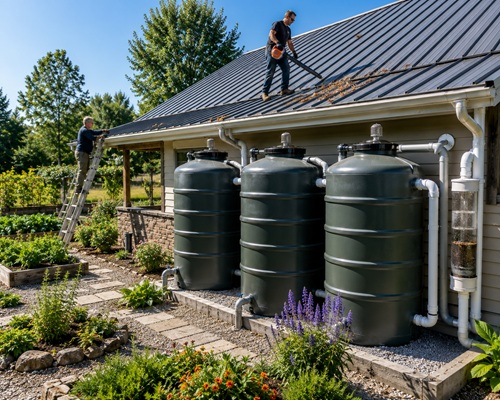
Regardless of the roofing material, regular maintenance is one of the simplest ways to improve water quality. Inspect the roof several times each year, remove leaves and branches, trim overhanging trees when practical, and repair damaged areas before they become larger problems. Cleaner roofs produce cleaner water and reduce the amount of maintenance required throughout the rest of the collection system.

Roofing Material Suitability for Rainwater Collection Notes
Painted Metal Excellent Best overall choice for clean water and low maintenance.
Galvanized Metal Very Good Durable and widely used on homes, barns, and workshops.
Clay Tile Very Good Long-lasting but requires more frequent cleaning.
Concrete Tile Very Good Performs well with regular maintenance.
Asphalt Shingles Good Suitable when paired with filtration and treatment.
Slate Excellent Durable and produces high-quality runoff.
Wood Shake Fair Better suited for irrigation or sanitation than drinking water.

Back To Top


Install Gutters and Downspouts

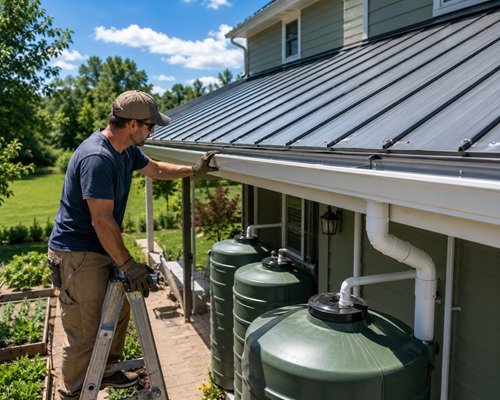
A roof can only collect rainwater if there is an efficient way to move it into storage. Gutters and downspouts form the transportation system that carries every gallon of harvested water from the roof to the storage tank. If they are undersized, clogged, poorly sloped, or improperly maintained, valuable water is lost before it ever reaches your storage system.

Most residential homes already have gutters installed, but they are often designed only to move water away from the foundation rather than maximize water collection. Before connecting them to a storage tank, inspect the entire system. Look for sagging sections, leaking joints, loose brackets, standing water, or damaged downspouts. Even small problems can reduce collection efficiency during heavy rain.

f1cf0ce6-356d-4548-b094-fcbf83434a76

The gutters should slope slightly toward each downspout so water flows freely under the force of gravity. If water remains standing after a storm, adjust the supports before connecting the system to storage. Standing water encourages algae growth, attracts mosquitoes, and accelerates corrosion.

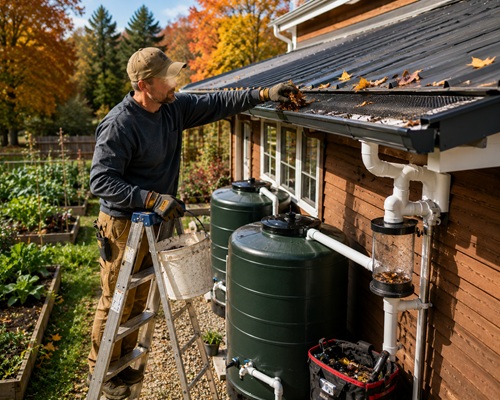
Leaves and organic debris are among the biggest challenges in any rainwater harvesting system. Installing gutter guards or leaf screens greatly reduces the amount of debris entering the system and decreases the frequency of cleaning. While no guard eliminates maintenance completely, they make routine upkeep much easier and improve the quality of the water entering storage.

Downspouts should direct water as efficiently as possible toward the storage tank. Long runs with multiple sharp bends slow the flow and create places where debris can accumulate. Whenever practical, keep the plumbing simple and direct.

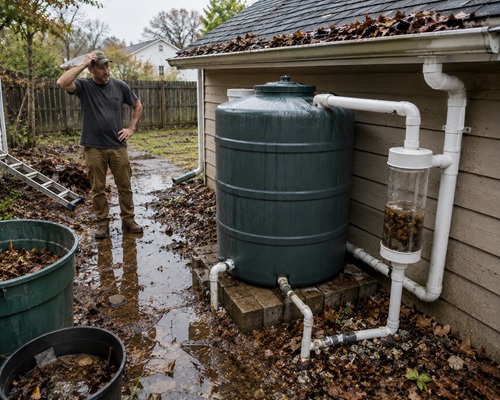
One of the best ways to evaluate your gutter system is to watch it during a heavy rainstorm. Overflowing gutters, leaking joints, clogged downspouts, or areas where water pools become immediately obvious. Making these corrections before an emergency ensures the system performs when you need it most.

Inspection Item What to Look For
Gutters Clean, securely attached, and properly sloped
Downspouts Free of blockages with direct flow to storage
Joints No visible leaks or separated connections
Gutter Guards Free of accumulated leaves and debris
Supports No sagging or standing water after rainfall

Back To Top


Install a First-Flush Diverter

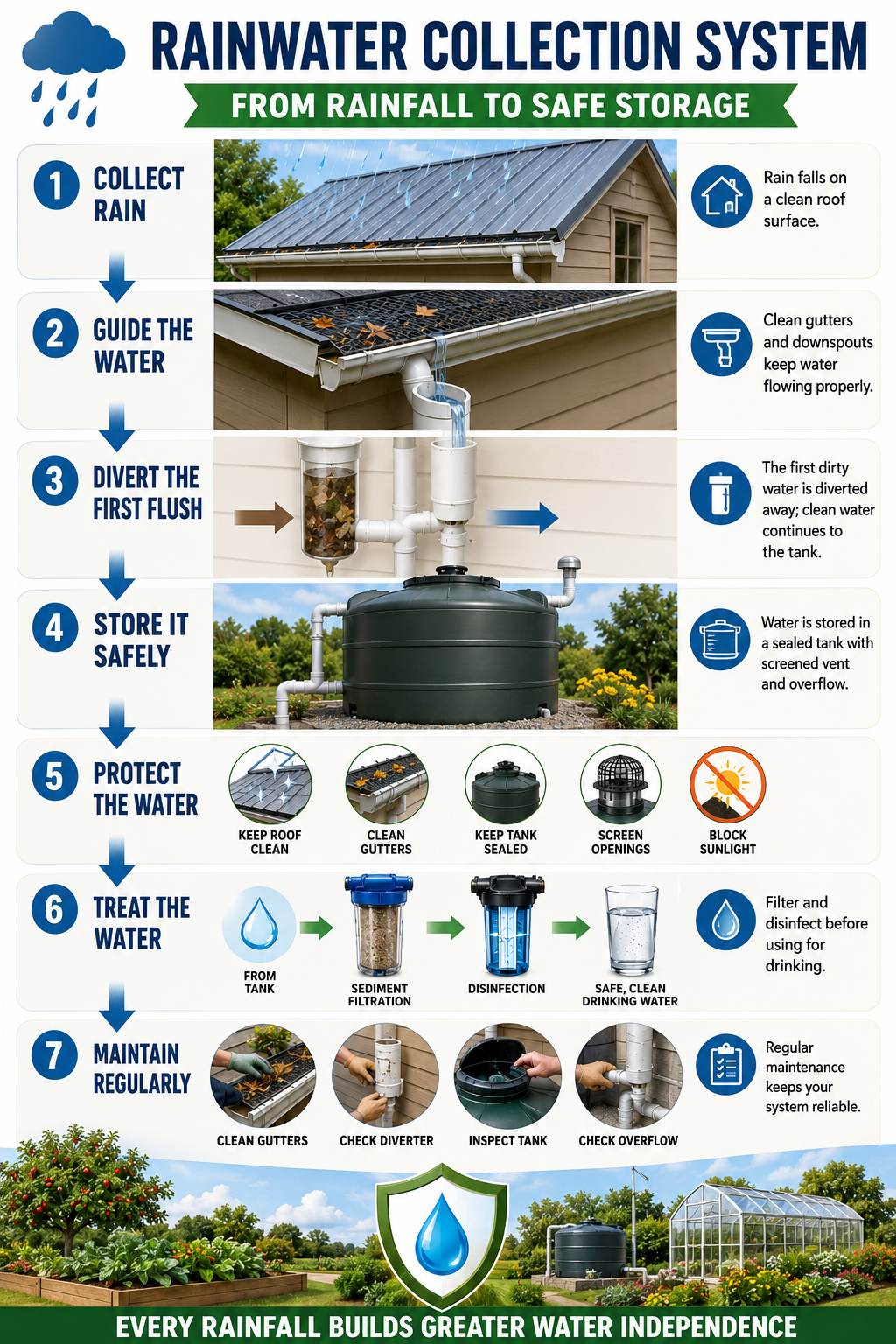
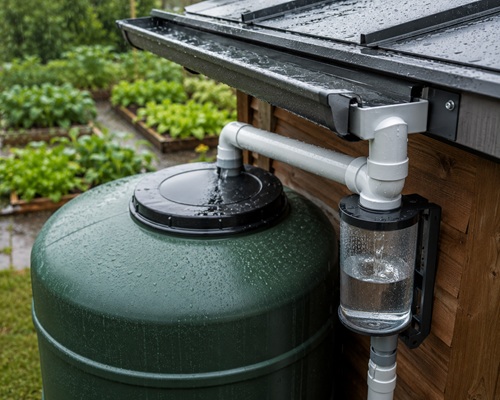
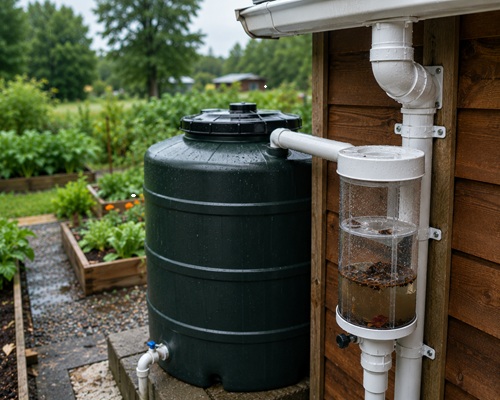
One of the simplest improvements you can make to a rainwater collection system is adding a first-flush diverter. Although it is often overlooked, this inexpensive device significantly improves water quality by preventing the dirtiest portion of each rainfall from entering the storage tank.

Between storms, the roof naturally collects dust, pollen, leaves, bird droppings, insects, smoke particles, and other airborne debris. When it begins to rain, the first water flowing across the roof washes this material toward the gutters. Rather than storing this contaminated runoff, a first-flush diverter automatically captures and discards it before allowing cleaner water to enter the storage tank.

06ce5b3c-ce4d-4dff-b114-03969b332b20

The system operates without electricity or complicated controls. As rainwater enters the downspout, the diverter temporarily fills with the initial runoff. Once it reaches capacity, the remaining water is redirected into the storage tank. After the storm ends, the diverter slowly drains itself, preparing for the next rainfall.

The amount of water that should be diverted depends on the size of the roof, nearby trees, local air quality, and the amount of debris that typically accumulates between storms. Larger roofs generally require larger first-flush chambers, while roofs in heavily wooded areas may benefit from diverting a slightly greater volume.

Although a first-flush diverter greatly improves water quality, it should never be considered a substitute for filtration or disinfection. It removes much of the visible contamination before storage, but water intended for drinking should always receive appropriate treatment before consumption.

Roof Area Typical First-Flush Volume
Up to 500 sq ft 5–10 gallons
500–1,000 sq ft 10–20 gallons
1,000–2,000 sq ft 20–40 gallons
2,000–3,000 sq ft 40–60 gallons

Continue observing the system after installation. If you notice excessive debris entering the storage tank during certain seasons, such as autumn or heavy pollen periods, adjusting the diverter capacity may further improve water quality. A few minutes of maintenance every few months can significantly reduce sediment buildup inside the storage tank and extend the life of your filtration equipment.

Back To Top


Choose the Right Storage Tank

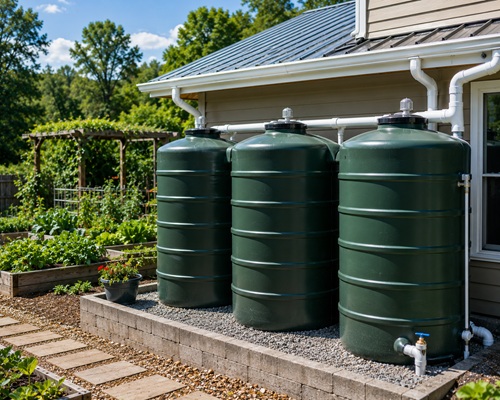
Once rainwater has passed through the roof, gutters, and first-flush diverter, it needs to be stored in a way that keeps it clean and readily available. The storage tank is the heart of the entire rainwater collection system. Choosing the right tank involves more than simply selecting the largest one that fits your budget. The best tank is one that matches your water needs, available space, local climate, and long-term preparedness goals.

Begin by estimating how much water you expect to collect and how long you want that supply to last between rainfalls. A small garden may only require a few hundred gallons of storage, while a household preparing for extended emergencies may benefit from several thousand gallons. Rather than trying to build the perfect system immediately, many people start with one tank and expand the system over time as experience and budgets allow.

f1228b60-0ba4-4e40-a055-38ee6b5abbbb

Several types of storage tanks are available, each with advantages. Food-grade polyethylene tanks are the most popular because they are affordable, durable, and available in many sizes. Fiberglass and steel tanks offer excellent durability but generally cost more. Concrete cisterns provide outstanding long-term storage, especially when installed underground, but require a larger investment and more extensive site preparation.

Regardless of the material you choose, always purchase tanks that are designed for potable water if there is any possibility the water will eventually be treated for drinking. Tanks that have previously stored chemicals or industrial products should never be repurposed for drinking water storage.

Sunlight is one of the biggest enemies of stored water. Even clean rainwater can develop algae if enough light reaches the inside of the tank. Dark-colored, opaque tanks block sunlight and greatly reduce algae growth. If you already own a light-colored tank, placing it beneath a shade structure or building a simple enclosure can significantly improve long-term water quality.

The foundation beneath the tank deserves just as much attention as the tank itself. Water weighs approximately 8.34 pounds per gallon, meaning a 1,000-gallon tank weighs well over four tons when full. A stable, level base prevents the tank from shifting, settling, or developing stress cracks over time. Concrete pads, compacted gravel, or engineered foundations all work well when properly constructed.

Common Rainwater Storage Tank Materials

Tank Material Advantages Best Use
Food-Grade Polyethylene Affordable, lightweight, low maintenance Most residential systems
Fiberglass Strong, corrosion resistant Large residential systems
Galvanized Steel Durable, long lifespan Farms and rural properties
Stainless Steel Extremely durable, corrosion resistant Premium long-term systems
Concrete Cistern Excellent temperature stability Underground storage

Recommended Storage Tank Sizes

Storage Capacity Typical Application
50–300 gallons Garden watering and emergency reserve
300–1,000 gallons Household backup and sanitation
1,000–3,000 gallons Gardens, livestock, emergency preparedness
3,000–10,000 gallons Homesteads and larger properties
10,000+ gallons Long-term off-grid systems

Back To Top


Protect Water Quality

Collecting rainwater is only the first step. Keeping that water clean while it is in storage is equally important. The cleaner the water enters the storage tank, the less maintenance and treatment it will require later. Most water quality problems begin because contaminants were allowed into the system rather than because the storage tank itself failed.

8eebd67e-e8a3-4423-9ef2-75b4d3324a7c

Keeping the roof and gutters clean is the first line of defense. Leaves, twigs, bird droppings, insects, and other organic material eventually break down inside the tank, creating sediment and encouraging bacterial growth. Regular inspections before and after storm seasons help prevent these materials from entering the collection system.

The storage tank should remain completely enclosed except for screened vents and overflow outlets. Open tanks invite insects, rodents, small animals, and airborne debris into the water supply. Mosquitoes are particularly attracted to standing water, making screened openings essential in many areas.

Sunlight should also be kept to a minimum. Even a small amount of light entering through an open lid or translucent tank can encourage algae growth over time. Once algae become established, they are far more difficult to remove than they are to prevent.

Sediment naturally accumulates in nearly every storage tank. Small particles that pass through the gutter system gradually settle to the bottom over time. This is normal and usually not a cause for concern, but excessive sediment indicates that roof maintenance, gutter cleaning, or the first-flush diverter may need attention.

Good water quality is achieved through prevention rather than correction. Every effort made to keep contaminants out of the system reduces the amount of filtration, cleaning, and treatment required later.

Water Quality Practice Why It Matters
Clean the roof regularly Reduces contamination at the source
Clean gutters Prevents leaves and debris entering storage
Install leaf screens Removes large debris
Use a first-flush diverter Discards the dirtiest runoff
Keep tanks sealed Prevents insects, rodents, and debris
Block sunlight Reduces algae growth
Inspect the system regularly Identifies problems before they become serious

Back To Top


Treat Rainwater Before Drinking

Rainwater collected from a roof should never be assumed safe to drink without treatment. Although rain itself begins relatively clean, it quickly picks up dust, pollen, bird droppings, insects, and other contaminants as it flows across the roof and through the collection system. Proper treatment is essential whenever harvested rainwater will be used for drinking or food preparation.

The first step is usually filtration. Sediment filters remove suspended particles that affect the appearance and clarity of the water while also improving the effectiveness of the disinfection process. Depending on the quality of the water and the intended use, additional filtration such as activated carbon or ceramic filters may also be beneficial.

After filtration, the water should be disinfected to destroy harmful microorganisms. Several methods are commonly used, including boiling, chlorination, ultraviolet light, and specialized water purification systems. Each has advantages and limitations, and the best choice depends on the equipment available, the quantity of water being treated, and the emergency situation.

Remember that treatment methods work best when the water is already as clean as possible. A properly maintained roof, effective first-flush diverter, clean storage tank, and regular maintenance all improve the effectiveness of whatever treatment method you choose.

Treatment Method Advantages Considerations
Boiling Highly effective Requires fuel and time
Household Bleach Inexpensive and widely available Must use correct dosage
UV Purifier Fast and effective Requires electricity or batteries
Ceramic Filter Removes many microorganisms Requires periodic cleaning
Gravity Water Filter Good for larger quantities Filter elements require maintenance

For detailed instructions on disinfecting water, refer to the Treating Stored Water, Water Filtration Systems, and Emergency Water Disinfection lessons within Prepper Offline.

Back To Top


Maintain Your Rainwater Collection System

A rainwater collection system is not something that can be installed and forgotten. Like any other piece of preparedness equipment, it requires occasional maintenance to remain reliable. Fortunately, most maintenance tasks are simple, inexpensive, and only need to be performed a few times each year. A well-maintained system not only produces cleaner water but also lasts significantly longer and performs more efficiently during heavy rainfall.

The roof should be inspected regularly, especially after storms or during seasons when leaves and branches accumulate. Removing debris before it reaches the gutters helps prevent clogs and reduces the amount of organic material entering the storage tank. Overhanging tree branches should also be trimmed when practical. Besides reducing falling leaves, trimming branches discourages birds and small animals from spending time directly above the collection area.

b2d25950-ce3a-4ed4-b0b1-16575a870b59

Gutters and downspouts deserve routine attention as well. Even with quality gutter guards installed, small twigs, seeds, and leaves will eventually build up. A blocked downspout can cause valuable rainwater to overflow onto the ground instead of flowing into storage. Walking around the system during or immediately after a heavy rainfall is one of the easiest ways to identify leaks, overflowing gutters, or poor drainage.

The first-flush diverter should be inspected periodically to ensure it is draining properly between storms. If the chamber remains full or becomes clogged with debris, it cannot perform its intended function during the next rainfall. Most diverters require only a quick rinse and visual inspection every few months.

Storage tanks should also be inspected several times each year. Check for cracks, loose fittings, damaged screens, leaking valves, or signs that sunlight is entering the tank. Overflow pipes should remain clear so excess water can safely leave the tank during heavy rain without causing erosion around the foundation.

Every year or two, depending on how much sediment has accumulated, consider draining the tank and cleaning the bottom. Most tanks collect a small layer of fine sediment over time, which is perfectly normal. Removing excessive buildup helps maintain water quality and reduces the workload on your filtration system.

Maintenance Task Recommended Frequency
Inspect roof Spring and Fall
Clean gutters As needed or at least twice per year
Inspect gutter guards Every 3–6 months
Check first-flush diverter Every 3–6 months
Inspect storage tank Every 3–6 months
Test valves and plumbing Twice per year
Remove sediment from tank Every 1–2 years or as needed

Preventive maintenance takes very little time compared to repairing a neglected system. A few hours of inspection and cleaning each year can provide decades of dependable service and ensure your rainwater collection system is ready whenever it is needed.

Back To Top


Common Mistakes to Avoid

Most problems with rainwater collection systems can be traced back to a handful of common mistakes. Fortunately, they are also some of the easiest to prevent.

One of the most frequent mistakes is installing a storage tank before calculating actual water needs. While a large tank may seem appealing, it represents a significant investment and may never reach its full potential if the roof cannot supply enough water. Likewise, a tank that is too small may overflow repeatedly during rainy seasons while providing little reserve during dry periods. Planning first almost always produces a more efficient and economical system.

86347e93-5f7c-424f-b0ae-ebd700e6606a

Another common mistake is overlooking local rainfall patterns. Annual rainfall totals can be misleading if most precipitation occurs during only a few months of the year. Understanding seasonal weather patterns helps determine whether additional storage capacity is needed to bridge extended dry periods.

Many first-time builders also underestimate the importance of water quality. Skipping a first-flush diverter, neglecting gutter maintenance, or leaving storage tanks uncovered allows contaminants to enter the system unnecessarily. Preventing contamination at the beginning of the collection process is far easier than trying to remove it later.

Overflow management is another area that is often forgotten. Every storage tank should have an overflow outlet capable of safely directing excess water away from buildings and foundations. Without proper drainage, heavy rainfall can cause erosion, flooding, or damage around the base of the tank.

Some people also assume that because rainwater appears clean, it is automatically safe to drink. In reality, collected rainwater should always be properly filtered and disinfected before being used for drinking or food preparation. Visible clarity is not an indication that harmful microorganisms are absent.

Finally, avoid viewing your rainwater collection system as a one-time project. Like emergency generators, water filters, or food storage, it should be inspected and maintained regularly. A system that receives routine care is far more dependable than one that sits unattended for years.

Common Mistake Better Approach
Buying a tank before planning Calculate water needs first
Ignoring seasonal rainfall Size storage for local climate
Skipping the first-flush diverter Improve water quality from the start
Leaving tanks exposed to sunlight Use opaque tanks or provide shade
Neglecting maintenance Perform regular inspections and cleaning
Drinking untreated rainwater Always filter and disinfect potable water
Forgetting overflow drainage Direct overflow safely away from structures

Back To Top


68cdc143-652d-47c0-9db9-d1e667fa3d73

Final Thoughts

Rainwater collection is one of the most practical preparedness projects a homeowner can undertake. Unlike stored supplies that gradually diminish over time, a properly designed rainwater harvesting system provides a renewable source of water that can be replenished whenever conditions allow. Whether your goal is reducing water bills, supporting a garden, preparing for emergencies, or becoming more self-reliant, harvesting rainwater is an investment that continues paying dividends year after year.

The most successful systems are rarely built all at once. They often begin with a simple rain barrel or a single storage tank and gradually expand as experience grows. Each improvement increases storage capacity, improves water quality, or makes the system easier to maintain. Over time, these small upgrades create a dependable water resource that becomes an important part of a comprehensive preparedness plan.

No rainwater collection system should be viewed as a complete replacement for every other water source. Instead, it should complement stored emergency water, water filtration equipment, and knowledge of alternative water sources in your area. Building multiple layers of water security provides far greater resilience than relying on any single solution.

Preparedness is about reducing uncertainty before emergencies occur. A well-maintained rainwater collection system provides peace of mind by ensuring that every rainfall contributes to your long-term water security. Even if you begin with only a single barrel, you are taking a practical step toward greater independence and self-sufficiency.

Back To Top


Preparedness Action Plan

Before purchasing any equipment, calculate your household’s daily water requirements and identify how you intend to use collected rainwater. Knowing your goals will help you design a system that meets your needs without unnecessary expense.

Inspect your roof, gutters, and downspouts to determine whether they are suitable for rainwater harvesting. Repair leaks, remove debris, and identify the best location for a storage tank based on available space, drainage, and future expansion.

6781c6d2-6b4d-40d8-a711-f07ef7f29a7f

Estimate how much water your roof can collect using local rainfall data. This simple calculation will help you choose an appropriate storage capacity and set realistic expectations for your system’s performance throughout the year.

If you are new to rainwater harvesting, consider starting with a modest system rather than waiting until you can afford a large installation. A single rain barrel or small storage tank provides valuable experience and can be expanded later as your preparedness goals evolve.

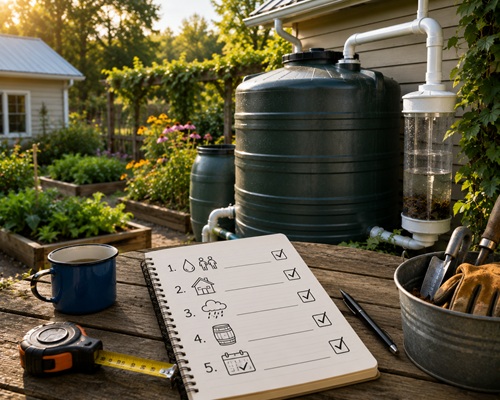
Finally, establish a maintenance schedule for your collection system. Regular inspections, gutter cleaning, and tank maintenance will help ensure your system remains dependable for years to come.

Back To Top


Skills Learned

After completing this lesson, you should understand how to plan, design, install, and maintain a practical rainwater collection system for preparedness. You have learned how to estimate household water needs, calculate the amount of rainwater your roof can collect, evaluate roofing materials, select appropriate gutters and storage tanks, improve water quality with first-flush diverters, and protect stored water from contamination.

You should also understand the importance of regular maintenance, proper filtration, and water disinfection before using harvested rainwater for drinking. Most importantly, you now recognize that rainwater collection is not simply about storing water – it is about creating a renewable and dependable resource that strengthens your household’s resilience and provides greater independence during both everyday use and emergency situations.

5549f7c3-bb3e-4c01-86cf-b376b6732602-1

Back To Top

© Prepping Communities. This content is for informational purposes only and not professional advice. Use at your own risk.
Terms | Privacy | Guidelines

Leave a Reply

top