
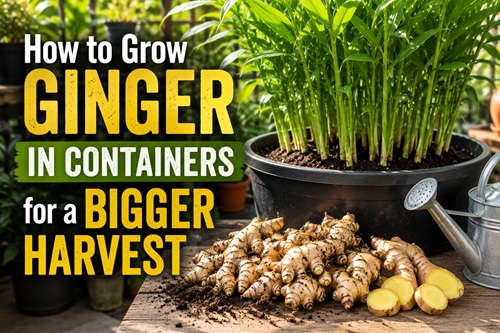
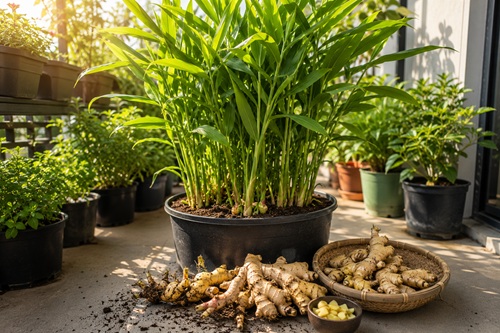
Growing ginger in containers is an excellent way to produce a reliable harvest without needing a large garden. Whether you have a patio, balcony, greenhouse, or sunny indoor space, ginger adapts well to container growing and requires relatively little maintenance. Fresh ginger offers superior flavor compared to store-bought varieties, and growing your own gives you complete control over how it is produced. Because ginger grows from underground rhizomes, a single harvest can also provide enough planting material for future crops, making it a practical addition to any home garden.
Start with Healthy Ginger
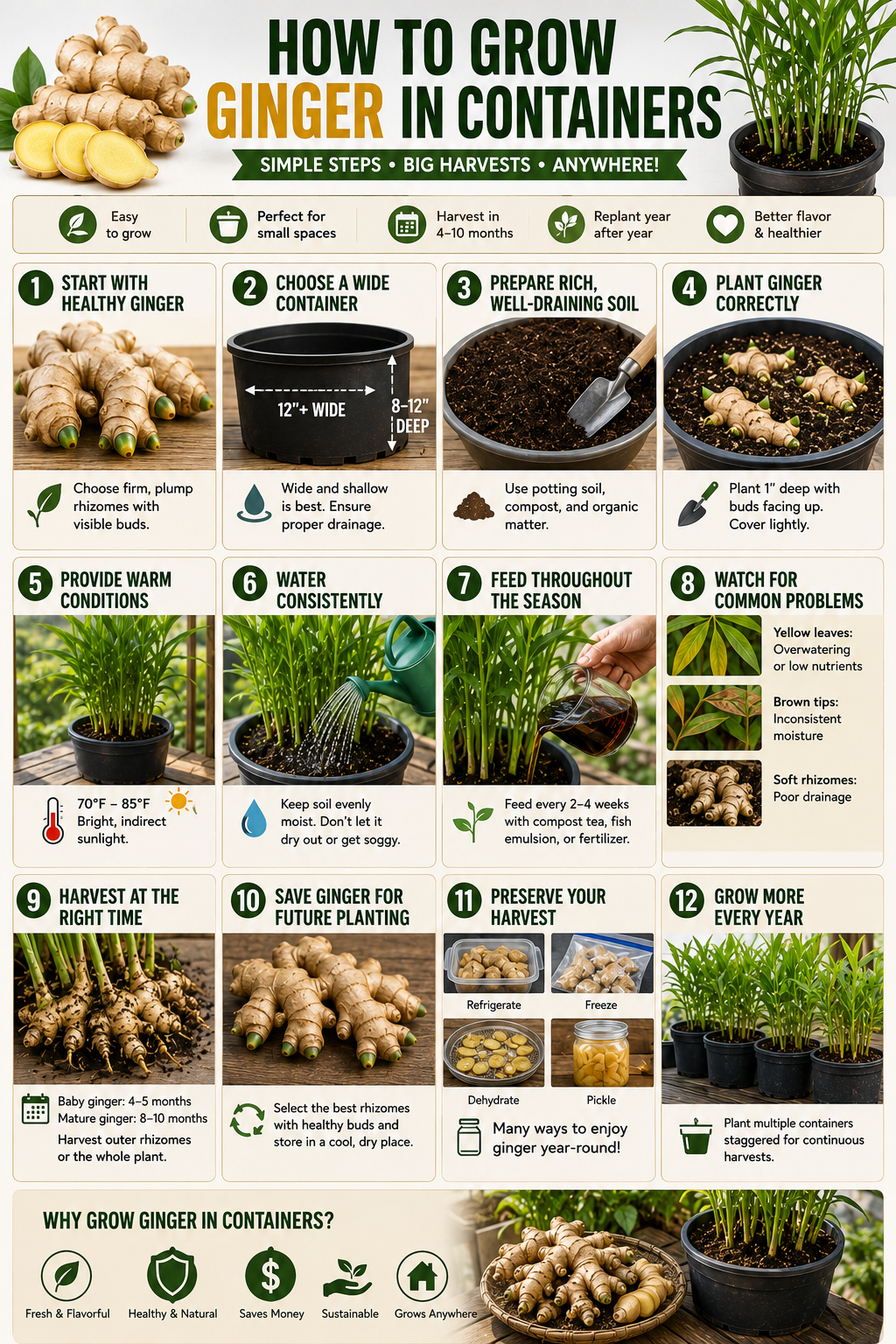
A productive ginger harvest begins with selecting healthy rhizomes. Choose pieces that are firm, plump, and free of mold, soft spots, or excessive wrinkles. Look for visible buds, often called “eyes,” since these will produce new shoots. Larger pieces generally establish more quickly because they contain more stored energy to fuel early growth. Organic ginger is often the best choice because it is less likely to have been treated with sprout inhibitors.
Choose a Wide Container
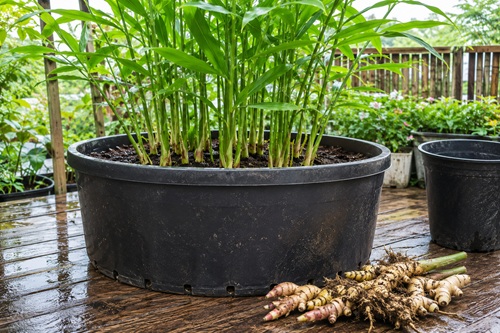
Unlike many root crops, ginger spreads horizontally just below the soil surface. A wide container provides much more room for the rhizomes to expand than a narrow, deep pot. Containers at least 12 inches wide and 8 to 12 inches deep are ideal for producing larger harvests. Whatever container you choose, make sure it has several drainage holes to prevent water from collecting around the rhizomes.
Prepare Rich, Well-Draining Soil
Healthy soil is one of the most important factors in successful ginger production. Ginger prefers loose, fertile soil that retains moisture without becoming waterlogged. A mixture of quality potting soil and compost provides both nutrients and good drainage. Adding materials such as coconut coir, peat moss, or perlite helps improve moisture retention while keeping the soil loose enough for the rhizomes to expand easily.
Plant Ginger Correctly
If your rhizome is large, you can divide it into smaller pieces as long as each section has at least one healthy bud. Allow freshly cut pieces to dry for a day or two before planting to reduce the chance of rot. Plant each rhizome about one inch below the soil surface with the buds facing upward. Cover lightly with soil and water enough to settle the growing medium without saturating it.
Provide Warm Growing Conditions
Ginger thrives in warm temperatures between 70°F and 85°F (21°C to 29°C). Growth slows considerably when temperatures drop below this range. In cooler climates, start containers indoors before moving them outside once warm weather has arrived. Ginger also prefers bright, indirect sunlight. Morning sun combined with afternoon shade often produces the healthiest plants while preventing leaf scorch during hot summer afternoons.
Water Consistently
Ginger likes evenly moist soil but does not tolerate standing water. Water thoroughly whenever the top inch of soil begins to dry, allowing excess moisture to drain completely from the container. Applying a layer of mulch helps retain soil moisture, regulate temperature, and reduce watering frequency during hot weather.
Feed Throughout the Season
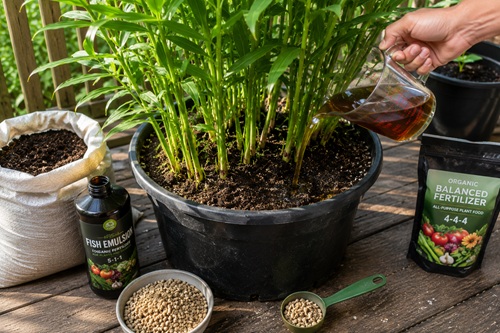
As ginger develops its underground rhizomes, it benefits from regular feeding. Compost tea, fish emulsion, balanced organic fertilizer, or additional compost every few weeks helps maintain steady growth throughout the growing season. Consistent nutrition encourages larger rhizomes and healthier foliage while producing a more productive harvest.
Watch for Common Problems
Ginger is generally a hardy plant, but poor growing conditions can reduce yields. Yellow leaves often indicate excessive watering or nutrient deficiencies, while brown leaf tips may suggest inconsistent moisture. Soft rhizomes usually result from poor drainage, and slow growth is commonly caused by cool temperatures or insufficient light. Correcting these issues early allows the plants to recover before harvest is affected.
Harvest at the Right Time
One of the advantages of growing ginger is that you do not need to harvest the entire plant at once. Young “baby ginger” can often be harvested after four to five months and is prized for its tender texture and mild flavor. For larger, fully mature rhizomes, allow the plants to grow for eight to ten months before harvesting. If desired, carefully remove only the outer rhizomes while leaving the center of the plant intact so it can continue growing.
Save Ginger for Future Planting
Always reserve several of your healthiest rhizomes for the next growing season. Store them in a cool, dry location until planting time. Over successive seasons, your ginger supply becomes self-sustaining, eliminating the need to continually purchase new planting stock.
Preserve Your Harvest
Fresh ginger stores well for several weeks in the refrigerator and even longer in the freezer. It can also be dehydrated, ground into powder, pickled, or candied for long-term storage. Having multiple preservation options allows you to enjoy your harvest throughout the year while reducing waste.
Grow More Every Year
Once you become comfortable growing ginger, expanding production is easy. Plant several containers a few weeks apart to create staggered harvests throughout the growing season. Even a small patio or balcony can produce several pounds of fresh ginger each year, providing a dependable supply for cooking, food preservation, herbal preparations, and future planting.
Final Thoughts
Growing ginger in containers is a practical way to produce a flavorful, versatile crop in a surprisingly small space. With healthy rhizomes, rich soil, warm temperatures, and consistent care, even beginner gardeners can enjoy abundant harvests year after year. By saving a portion of each harvest for replanting, your ginger patch can become a renewable source of fresh food that continues producing season after season.
© Prepping Communities. This content is for informational purposes only and not professional advice. Use at your own risk.
Terms | Privacy | Guidelines