
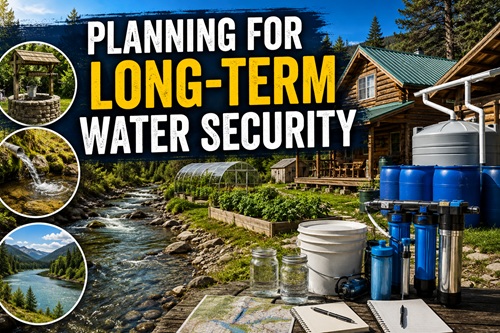
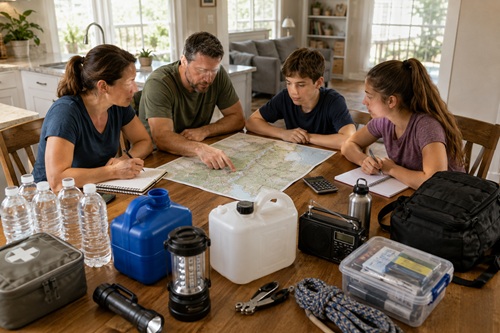
Water is one of the few resources that every household depends upon every single day. It is required for drinking, preparing food, maintaining personal hygiene, sanitation, cleaning, medical care, caring for pets and livestock, growing food, and supporting countless other daily activities. Unlike many emergency supplies that can be rationed, substituted, or postponed, water is a continuous necessity. Without a dependable supply of safe water, even the best-prepared household will quickly face serious challenges.
For most people, emergency water planning begins with storage, and that is exactly where it should begin. Cases of bottled water, food-grade storage containers, water barrels, jerry cans, and cisterns provide an immediate reserve that can sustain a household through the first hours or days of an emergency. Stored water removes one of the most immediate survival concerns and gives you valuable time to assess the situation, protect your family, and begin implementing the rest of your emergency plan.
Stored water, however, is only the first stage of long-term preparedness. Every container eventually becomes empty. Whether your household stores enough water for one week or several months, every liter that is consumed must eventually be replaced. The longer an emergency continues, the less important your original storage becomes and the more important your ability to obtain additional water becomes. This transition from storage to sustainability is where many preparedness plans begin to fail.
Long-term water planning is the process of ensuring that your household can continue obtaining safe water regardless of how long normal infrastructure remains unavailable. It is not built around a single piece of equipment or one dependable water source. Instead, it combines planning, practical skills, reliable equipment, and multiple independent systems that work together. A resilient household understands where water can be found, how it can be collected safely, how it can be purified, how it can be transported efficiently, and how it can be stored and conserved for future use.
Every water source has limitations. A private well may depend upon electrical power. A creek may dry up during a prolonged drought. A river may become contaminated after flooding. Rainwater harvesting depends entirely upon weather conditions, while portable filters eventually require maintenance or replacement. Because no single solution is perfect, successful preparedness depends upon redundancy. Each water system should support the others so that if one becomes unavailable, another can immediately take its place.
It is also important to recognize that long-term water planning is not the same for every household. Families living in cities face different challenges than those living on rural properties. Mountain communities often have access to streams and springs, while prairie communities may depend more heavily on wells, reservoirs, or rainwater collection. Climate, geography, local infrastructure, population density, household size, and available resources all influence the decisions that should be made. For this reason, this guide focuses on practical planning principles rather than promoting one universal solution.
Preparedness should never be measured simply by the amount of water stored in a basement or garage. A household with thousands of liters in storage but no method of replacing that water remains vulnerable during a prolonged emergency. Conversely, a household with moderate storage and several dependable renewable water systems may be capable of sustaining itself indefinitely. The objective is not merely to survive the first few days of an emergency but to develop the capability to provide safe water for as long as the emergency continues.
Throughout this guide you will develop that capability step by step. You will begin by determining how much water your household actually requires. From there, you will learn how to identify renewable water sources, evaluate their reliability throughout the year, compare collection and purification methods, improve transportation and storage practices, conserve available supplies, and integrate everything into a complete long-term water strategy. By the end of this handbook, you should have both the knowledge and the practical framework needed to build a dependable water system that can continue supporting your household through extended emergencies.
Understanding Your Household’s Water Requirements
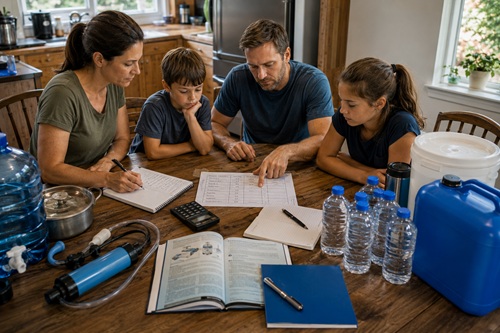
Before identifying water sources or purchasing additional equipment, you must first understand how much water your household actually uses. This is the foundation of every long-term water plan. Without knowing your daily requirements, it is impossible to determine how much water should be stored, how often additional water must be collected, or whether your planned water sources can realistically support your household during an extended emergency.
Many preparedness organizations recommend storing a minimum quantity of water per person each day. These recommendations provide useful starting points, but they should not replace a household-specific assessment. Every family has different needs. A retired couple living in a small home will consume water differently than a family with several children, multiple pets, livestock, and a large vegetable garden. Environmental conditions also play an important role. Hot weather, physically demanding work, illness, pregnancy, and certain medical conditions all increase daily water requirements.
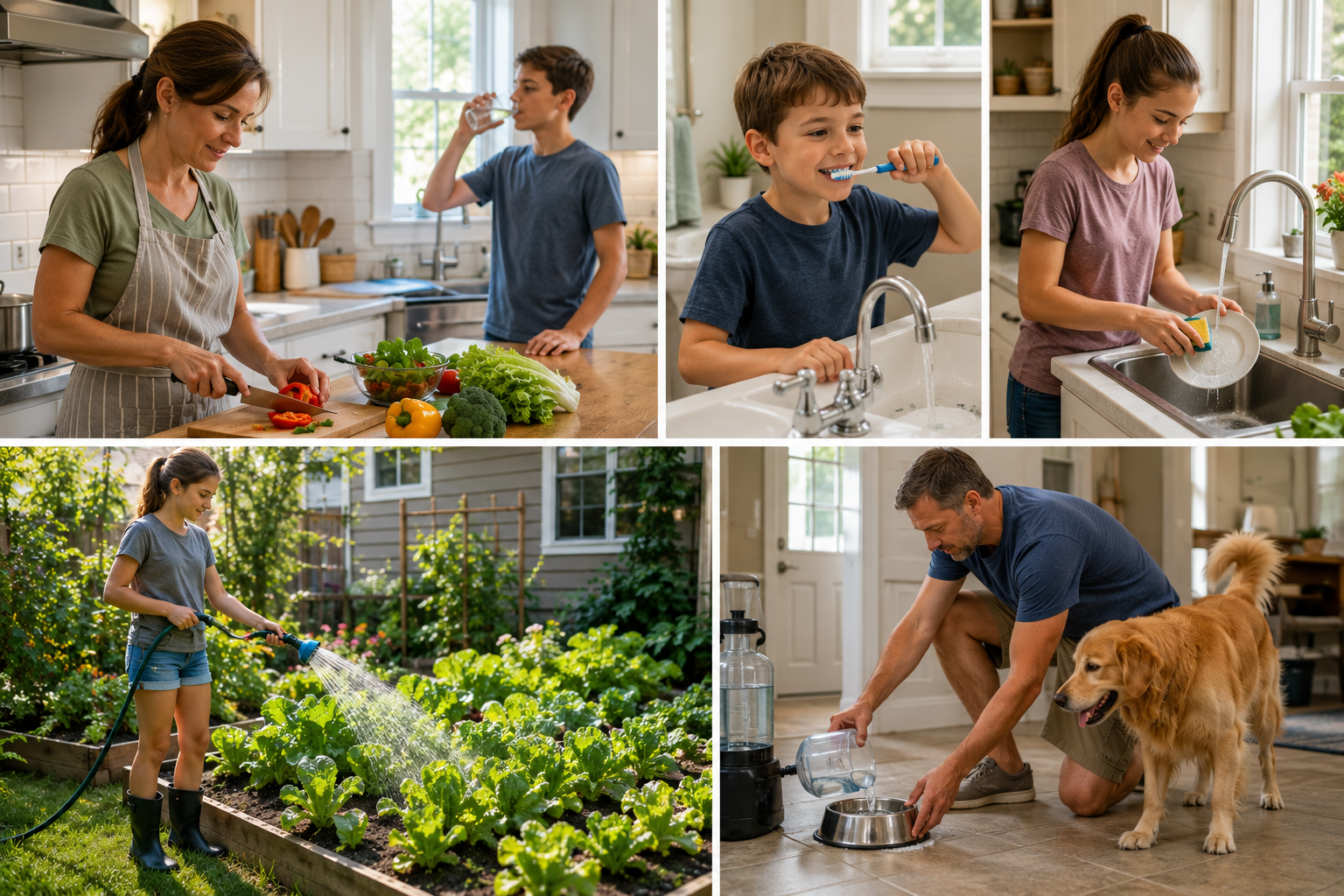
When most people think about water consumption, they immediately think about drinking water. In reality, drinking represents only one part of total household use. Water is also required for cooking, preparing food, washing dishes, maintaining personal hygiene, brushing teeth, laundry, household cleaning, medical care, caring for infants, supporting pets and livestock, and irrigating food-producing gardens. During a prolonged emergency, some of these activities can be reduced through conservation, but many remain essential for maintaining health and sanitation.
The purpose of calculating your household’s water requirements is not to produce an exact scientific value. Instead, it is intended to create a realistic planning estimate based on the way your household actually lives. These calculations become the foundation for every decision that follows, including water storage capacity, purification capability, transportation planning, and the selection of renewable water sources.
Table 1 – Household Water Requirements Worksheet
| Daily Water Use | Estimated Daily Requirement | Your Household |
|---|---|---|
| Drinking | ||
| Cooking | ||
| Food Preparation | ||
| Personal Hygiene | ||
| Dishwashing | ||
| Laundry | ||
| Household Cleaning | ||
| Medical Needs | ||
| Pets | ||
| Livestock | ||
| Gardening | ||
| Other | ||
| Total Daily Requirement |
Once your daily requirements have been estimated, extend those figures into longer planning periods. This simple exercise often changes the way people think about preparedness because it demonstrates how quickly even substantial water reserves can be consumed during a prolonged emergency.
Table 2 – Long-Term Water Planning Calculator
| Planning Period | Estimated Water Requirement |
| One Day | |
| One Week | |
| Two Weeks | |
| One Month | |
| Three Months | |
| Six Months | |
| One Year |
After completing these calculations, compare them with your current emergency water storage. The difference between the two represents the amount of water that must eventually be obtained from renewable sources. For many households, this comparison becomes the point where they realize that long-term preparedness depends far more on sustainable water systems than on storage alone.
Before continuing to the next chapter, record these calculations in your preparedness records. They will serve as the planning foundation for every decision made throughout the remainder of this guide, from selecting water sources and sizing storage systems to choosing purification equipment and developing realistic collection schedules.
Surveying and Evaluating Local Water Sources
Once you understand how much water your household requires, the next step is determining where that water will come from after your stored reserves begin to decline. This process should never be based on assumptions or casual observations. Knowing that there is a creek somewhere nearby or remembering a small pond from years ago is not the same as having a dependable long-term water plan. Preparedness begins by replacing assumptions with verified information gathered before an emergency occurs.
Start by identifying every potential water source within a practical distance of your home. Include both natural and man-made sources. Rivers, creeks, streams, lakes, ponds, springs, wetlands, reservoirs, irrigation canals, community wells, rainwater collection systems, and even seasonal runoff areas may all contribute to your overall preparedness strategy. At this stage, do not eliminate a source simply because it appears small or inconvenient. The objective is to create a complete inventory before deciding which sources deserve a place in your long-term plan.
After creating your list, visit each location in person. Online maps, satellite imagery, and local knowledge provide an excellent starting point, but they cannot replace firsthand observation. A stream that appears accessible on a map may require crossing private property. A spring may be hidden by dense vegetation. A pond may be much smaller than expected during late summer. Visiting each location allows you to evaluate conditions that cannot be seen from photographs or digital maps.
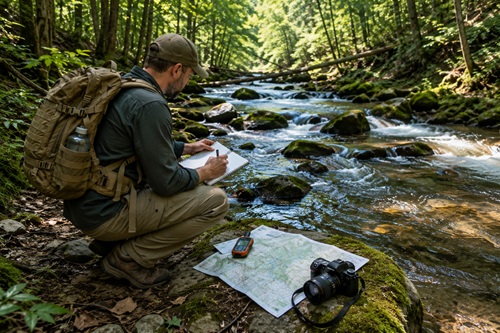
During each visit, observe the surrounding environment as carefully as you observe the water itself. Water quality is often influenced by activities occurring nearby rather than by the appearance of the water. Agricultural fields may contribute fertilizers and pesticides. Livestock can introduce bacteria and parasites. Roads increase the possibility of fuel and chemical runoff. Industrial facilities, campgrounds, septic systems, and recreational areas all present potential contamination risks. Although visual inspection cannot determine whether water is safe to drink, it provides valuable information about the treatment methods that may be required before the water can be used safely.
Accessibility is another important consideration. Ask yourself how you would reach the water source if fuel were unavailable or roads became impassable. Could you comfortably walk the route while carrying full water containers? Would steep hills, creek crossings, deep snow, or heavy mud significantly increase the difficulty of repeated collection trips? A water source that is practical under normal conditions may become much less attractive during a prolonged emergency if reaching it requires excessive time or physical effort.
Reliability should also be evaluated throughout the year. Some water sources remain productive regardless of the season, while others change dramatically with weather conditions. A creek flowing strongly during spring snowmelt may become nearly dry during late summer. A rainwater collection system performs exceptionally well during wet periods but contributes very little during prolonged drought. Springs often provide more consistent flow than surface water, while reservoirs and lakes may experience significant seasonal fluctuations. Understanding these patterns allows you to prioritize the sources most likely to remain dependable over the long term.
Security deserves careful consideration as well. During a widespread emergency, obvious water sources may attract large numbers of people. Increased traffic may lead to congestion, conflict, contamination, or resource depletion. Less obvious sources, although smaller, may offer greater privacy and reduced competition. Consider visibility, available cover, alternate travel routes, and whether you can collect water efficiently without unnecessarily exposing yourself or your household.
Legal access should not be ignored simply because you are planning for emergencies. Many water sources are located on private property or within protected areas where access may normally be restricted. Understanding property boundaries and public access rules ahead of time helps prevent unnecessary complications. Whenever possible, establish permission or identify alternative sources before an emergency develops.
As you evaluate each location, take photographs, make written notes, and mark the exact position on both digital and printed maps. Record seasonal observations, estimated travel times, nearby hazards, and any equipment that may improve collection. These records become increasingly valuable over time because they are based on firsthand experience rather than memory.
The objective of this survey is not to identify one perfect water source. Instead, it is to build a network of dependable options. Every additional source that has been evaluated and documented increases your household’s flexibility and reduces the likelihood that one unexpected problem will leave you without access to safe water.
Table 3 — Water Source Evaluation Worksheet
| Water Source | Distance from Home | Year-Round Availability | Ease of Access | Nearby Contamination Risks | Treatment Expected | Overall Rating |
|---|---|---|---|---|---|---|
| Spring | ||||||
| Creek | ||||||
| River | ||||||
| Lake | ||||||
| Pond | ||||||
| Private Well | ||||||
| Rainwater Collection | ||||||
| Community Water Source | ||||||
| Other |
Once this worksheet has been completed, compare the strengths and weaknesses of each source rather than focusing on only one characteristic. A spring may provide excellent water quality but require a longer walk. A nearby creek may be easy to reach but require more extensive treatment after heavy rainfall. A private well may produce abundant water but depend upon electrical power. Looking at the complete picture helps you make better decisions than evaluating water quality alone.
Keep this worksheet with your emergency planning records and update it whenever conditions change. A new subdivision, a wildfire, agricultural development, road construction, or several years of drought can all affect the long-term suitability of a water source. Reviewing your survey periodically ensures that your preparedness plan continues to reflect current conditions rather than outdated information.
Before moving to the next chapter, identify one primary water source, one secondary source, and at least two emergency backup sources based on your evaluation. These choices are not permanent, but they provide a practical starting point for developing the layered water system that will be built throughout the remainder of this guide.
Understanding Seasonal Water Availability
Identifying several potential water sources is an important milestone, but a successful long-term water plan requires more than knowing where water is located. It also requires understanding how those sources change throughout the year. Water is constantly influenced by weather, temperature, rainfall, snowpack, drought, vegetation, and human activity. A source that appears dependable during one season may become unreliable or even unusable during another. Long-term preparedness depends upon recognizing these changes before they affect your ability to obtain safe water.
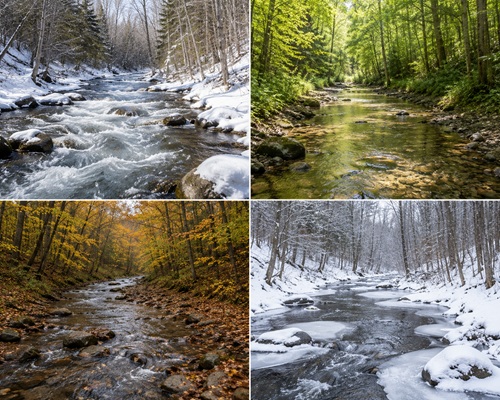
Many people evaluate a water source only once and assume it will remain the same indefinitely. In reality, rivers rise and fall, creeks dry up, ponds shrink, springs change their flow, and lakes fluctuate with seasonal precipitation. Agricultural activity, nearby construction, wildfires, flooding, and extended drought can all alter both the quantity and quality of available water. For this reason, every important water source should be observed several times throughout the year rather than during a single visit.
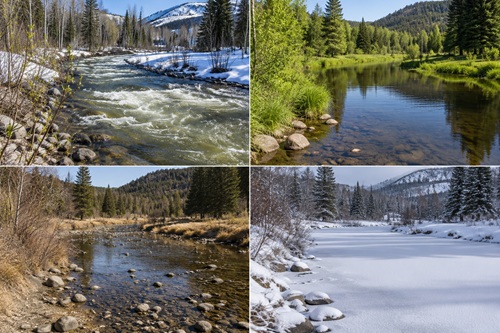
Spring is often the season of greatest water abundance. Snowmelt and seasonal rainfall increase the flow of rivers and streams while replenishing ponds and wetlands. At first glance, these conditions appear ideal for water collection, but they also introduce new challenges. Fast-moving runoff frequently carries sediment, organic debris, fertilizers, animal waste, and other contaminants into surface water. Although water is plentiful during this period, it often requires more filtration and treatment before it can be safely consumed.
Summer presents a different set of conditions. Higher temperatures increase evaporation while reducing water levels in many rivers, creeks, ponds, and small lakes. Extended dry periods may cause seasonal streams to disappear entirely, forcing households to depend upon alternative water sources. Warm temperatures also encourage algae growth and increased bacterial activity, making proper purification even more important. Ironically, household water consumption often increases during the hottest months because of greater physical activity, gardening, and higher drinking requirements.
Autumn generally brings more stable conditions in many regions, although seasonal storms can still affect water quality. Falling leaves, decaying vegetation, and heavy rainfall introduce additional organic material into ponds and lakes, while strong winds may stir sediment along shorelines. Cooler temperatures usually reduce algae growth, but every water source should continue to be monitored because local conditions vary considerably from one location to another.
Winter often presents the greatest logistical challenges rather than the greatest shortage of water. Streams and ponds may freeze, access roads become impassable, and snow-covered terrain increases the effort required to transport water. Households that depend upon private wells should consider how water will be pumped during extended power outages. Those planning to melt snow should remember that snow contains far less water than many people expect. Collecting enough snow to meet daily household needs requires significant time, fuel, and effort.
Weather is only one factor affecting seasonal water availability. Human activity also changes throughout the year. Agricultural irrigation may reduce stream flow during summer. Recreational use of lakes and rivers may increase contamination risks. Construction projects can alter drainage patterns, while wildfires may introduce ash and sediment into nearby waterways for months after the fire has been extinguished. A water source that performed well in previous years should never be assumed to remain unchanged indefinitely.
The most effective way to understand seasonal conditions is through regular observation. Visit your primary and backup water sources several times each year and compare their condition. Record water levels, flow rates, clarity, accessibility, nearby activity, and any changes that might influence collection or treatment. Over time, these observations become one of the most valuable parts of your preparedness plan because they are based on direct experience rather than assumptions.
Table 4 – Seasonal Water Source Assessment
| Season | Typical Conditions | Common Challenges | Planning Considerations |
|---|---|---|---|
| Spring | High water levels, snowmelt, runoff | Sediment, flooding, contamination | Increase filtration and monitor water clarity |
| Summer | Reduced water levels, high temperatures | Drought, algae growth, evaporation | Identify alternate sources and conserve water |
| Autumn | Moderate water levels, cooler temperatures | Storm debris, organic matter | Reassess accessibility and treatment needs |
| Winter | Ice, snow, freezing temperatures | Frozen access, increased fuel requirements | Prepare alternate collection and transportation methods |
Seasonal planning should also include your equipment. Water collection containers, pumps, hoses, rainwater systems, and purification equipment may all require different maintenance depending on the time of year. Protecting equipment from freezing temperatures, inspecting rainwater systems before seasonal storms, and ensuring that backup pumps remain operational are just as important as monitoring the water sources themselves.
By understanding how your local water sources behave throughout the year, you greatly improve your ability to make informed decisions during an emergency. Instead of reacting to changing conditions, you will already know which sources become more dependable, which become less reliable, and when it is appropriate to transition from one water system to another.
The next step is selecting the water sources that will form the foundation of your long-term water strategy. Rather than depending upon one convenient location, you will learn how to build a layered system consisting of primary, secondary, and emergency backup sources that continue supporting your household even when conditions change unexpectedly.
Choosing Reliable Water Sources
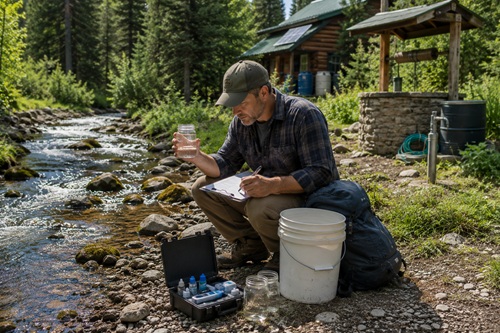
After identifying potential water sources and observing how they change throughout the year, the next step is deciding which ones should become part of your long-term water plan. This decision should be based on careful evaluation rather than convenience alone. The closest water source is not always the best choice, and the cleanest-looking source is not always the most dependable. Effective planning considers reliability, accessibility, water quality, seasonal consistency, treatment requirements, and the effort needed to collect and transport water on a regular basis.
Begin by selecting a primary water source. This is the source you expect to depend upon most often if your stored emergency water begins to run low. Ideally, it should provide sufficient water throughout the year, remain reasonably accessible during different weather conditions, and require a level of treatment that your household can consistently perform. A productive spring, a private well with reliable backup pumping capability, or a consistently flowing creek may all serve as excellent primary sources depending on your location.
Once a primary source has been selected, identify a secondary source that operates independently of the first. This is an important principle because many events that affect one water source have little effect on another. A prolonged drought may reduce the flow of a creek while a deep well continues producing water. A power outage may disable an electric well pump while rainwater collection remains fully functional. If one system becomes unavailable, another should already be prepared to take its place.
Emergency backup sources should also be included in your planning. These are the locations you hope never to depend upon but are prepared to use if circumstances require it. They may involve longer travel distances, greater physical effort, or more extensive purification, but they provide valuable insurance against unexpected events. During prolonged emergencies, flexibility often becomes one of the greatest advantages a prepared household possesses.
As you compare different water sources, avoid concentrating on a single characteristic. Water quality is obviously important, but it should never be evaluated in isolation. A mountain spring producing exceptionally clean water may require a two-hour round trip over difficult terrain. A nearby creek may require more treatment but can be reached in ten minutes. Depending on your household’s physical abilities, available equipment, and overall situation, the easier source may ultimately prove more practical.
The amount of water available should also be considered. Some springs produce only a few liters each minute, while rivers and large lakes can provide enormous quantities of water. Smaller sources may be perfectly adequate for one or two people but insufficient for larger households, livestock operations, or food production. Estimating the long-term capacity of each source helps prevent unrealistic planning.
Consider the level of treatment each source requires. Surface water collected from rivers, lakes, and ponds generally requires more filtration and purification than groundwater obtained from protected springs or wells. Water containing heavy sediment increases filter maintenance and may require settling before treatment. The cleaner the source, the less time, equipment, and fuel are generally required to produce safe drinking water.
Transportation requirements should also influence your decision. A source located several kilometers away may consume hours of labor each week simply moving water from one location to another. If multiple sources provide similar water quality, selecting the one requiring less travel often results in a more practical and sustainable long-term plan.
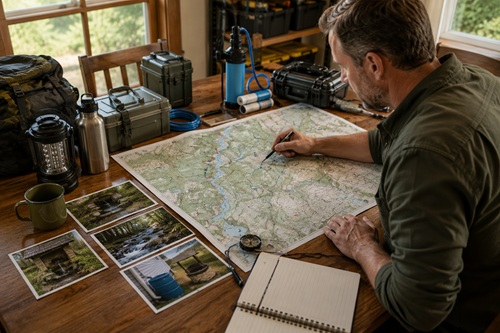
Do not overlook security. During widespread emergencies, highly visible water sources may attract larger numbers of people, increasing the possibility of conflict or contamination. Less obvious locations may offer greater privacy while still providing adequate water for household use. Although every emergency is different, considering these possibilities during the planning stage improves your ability to adapt if circumstances become more difficult.
The objective is not to identify one perfect water source but to build a collection of dependable options that complement one another. Every additional reliable source increases resilience while reducing dependence upon any single system.
Table 5 – Comparing Potential Water Sources
| Water Source | Reliability | Accessibility | Water Quality | Treatment Required | Collection Effort | Recommended Role |
|---|---|---|---|---|---|---|
| Private Well | Excellent | Excellent | High | Low | Very Low | Primary |
| Natural Spring | Excellent | Good | High | Low to Moderate | Moderate | Primary |
| Creek | Good | Good | Variable | Moderate | Moderate | Secondary |
| River | Good | Fair | Variable | Moderate to High | Moderate | Secondary |
| Lake | Good | Good | Variable | Moderate to High | Moderate | Secondary or Backup |
| Rainwater Collection | Variable | Excellent | Good | Low to Moderate | Very Low | Primary or Secondary |
| Community Emergency Supply | Variable | Variable | Usually Treated | Low | Low | Emergency Backup |
Once your primary, secondary, and emergency backup water sources have been selected, record them in your preparedness plan. Include maps, estimated travel times, seasonal observations, collection notes, and any equipment required for each location. The more information you document before an emergency, the fewer decisions you will need to make under stressful conditions.
Developing a Layered Water Strategy
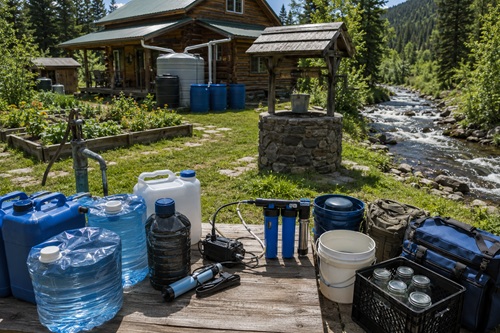
Preparedness is strongest when individual systems support one another rather than operating independently. Instead of thinking about water storage, rainwater collection, wells, springs, and filtration as separate subjects, think of them as components of one integrated water strategy. Each system has strengths, each has limitations, and together they create a level of resilience that none of them could provide alone.
Your first layer is your emergency water reserve. This is the water already stored inside your home and immediately available when normal service is interrupted. Because it has already been collected, purified, and stored, it requires no additional effort beyond routine maintenance and rotation. Its primary purpose is to provide safe drinking water while you evaluate the emergency and begin activating your renewable water systems.
The second layer consists of renewable sources located on or near your property. Rainwater harvesting systems, private wells, springs, and nearby streams all fall into this category. These systems reduce dependence on stored reserves by providing a continuous means of replacing the water that has been consumed. Depending on local conditions, one or more of these sources may become your primary supplier during a prolonged emergency.
The third layer consists of distant or emergency water sources. Larger rivers, lakes, reservoirs, community distribution points, and other locations that require greater travel or effort become valuable if your preferred sources become unavailable. Although these sources may not be your first choice, they provide important redundancy during changing conditions.
Supporting all three layers are your collection equipment, transportation methods, purification systems, and storage containers. Without these supporting components, even an excellent water source may be difficult to use. A productive spring provides little benefit if you have no containers to transport the water, no means of purification, or no clean storage available once you return home.
Thinking in terms of layered systems rather than individual pieces of equipment changes the way preparedness is approached. Instead of asking, “Do I own a water filter?” the better question becomes, “If my primary water system fails tomorrow, what system takes its place?” Every preparedness improvement should strengthen one of these layers or eliminate a potential point of failure.
As your preparedness develops, continue improving each layer rather than replacing existing systems. Additional storage, better transportation equipment, improved rainwater collection, backup purification methods, and more accurate seasonal observations all contribute to a stronger overall water strategy. Over time, these gradual improvements create a household that is far better prepared to adapt to changing conditions than one relying on a single solution.
Collecting Water Safely
Once reliable water sources have been selected, the next step is learning how to collect water without introducing unnecessary contamination. Many people assume that the quality of the water depends entirely on the source itself, but the collection process plays an equally important role. Clean water can easily become contaminated through poor handling, dirty containers, or careless collection practices. Developing proper collection techniques helps preserve water quality while making the purification process more effective.
Before approaching any water source, take a few moments to observe the surrounding area. Look beyond the water itself and examine what is happening upstream or nearby. Agricultural fields, grazing livestock, wildlife activity, septic systems, industrial operations, roadways, campgrounds, and recent flooding can all influence water quality. Water flowing through a pristine forest may require a very different treatment approach than water collected downstream from farmland or urban development.
Whenever possible, collect water from the cleanest location available. In flowing streams and rivers, moving water is generally preferable to stagnant pools because continuous movement helps reduce the accumulation of sediment and organic debris. Even so, flowing water should never be assumed safe without proper treatment. In lakes and ponds, avoid collecting water directly from muddy shorelines where sediment is easily disturbed. Instead, collect from deeper, clearer water whenever practical and safe to do so.
Take care not to disturb the bottom while filling containers. Mud, sand, and organic material suspended in the water increase the workload placed on filters and may reduce the effectiveness of chemical disinfection or ultraviolet treatment. A few extra moments spent collecting cleaner water often saves considerably more time during purification.
The containers used during collection deserve just as much attention as the water source itself. Use only clean, food-grade containers dedicated exclusively to water collection. Containers previously used for fuel, pesticides, automotive fluids, cleaning products, or other chemicals should never be used for drinking water, regardless of how thoroughly they appear to have been cleaned. Chemical residues may remain trapped within the container and contaminate every future batch of water.
Many households find it useful to maintain separate containers for untreated water and treated drinking water. This simple practice greatly reduces the possibility of accidentally contaminating water that has already been purified. Clearly labeling each container further reduces confusion, particularly when several people are involved in collecting and processing water.
If the collected water contains visible debris such as leaves, insects, algae, or floating particles, remove as much material as possible before purification. Allowing the water to settle naturally or pouring it through a clean cloth, coffee filter, or fine mesh screen removes larger particles and improves the efficiency of most purification methods. Although this preliminary filtering does not make the water safe to drink, it significantly improves the quality of the water entering your primary treatment system.
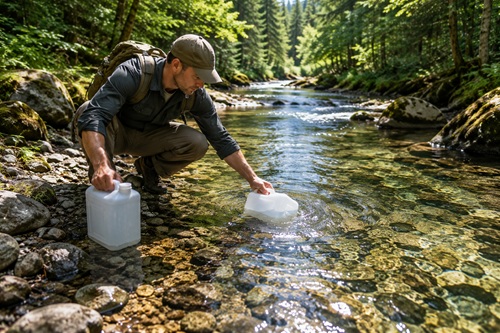
Personal safety should never be overlooked during water collection. Slippery rocks, steep riverbanks, fast-moving currents, unstable shorelines, deep mud, thin ice, and rapidly changing weather conditions all present hazards that deserve careful attention. No amount of water is worth risking serious injury. Choose collection points that provide stable footing and avoid unnecessary risks, particularly when working alone.
Consider the time of day as well. Collecting water during daylight generally provides better visibility and reduces the likelihood of accidents. If operational security is a concern during a prolonged emergency, balance visibility with safety while selecting the most appropriate collection schedule for your situation.
Finally, protect the water source itself. Avoid washing dishes, bathing, cleaning equipment, or disposing of waste immediately beside areas used for collecting drinking water. Even small amounts of contamination introduced near the collection point can affect everyone who depends upon that source. Responsible collection practices help preserve water quality for both your household and your community.
Table 6 – Water Collection Equipment
| Equipment | Primary Purpose | Recommended Notes |
|---|---|---|
| Food-grade water containers | Collect untreated water | Use containers dedicated to water only |
| Collapsible water containers | Increase carrying capacity | Store compactly when not in use |
| Buckets with lids | General collection | Useful for larger volumes |
| Fine mesh screen | Remove large debris | First stage of pre-filtering |
| Clean cloth or coffee filters | Remove sediment | Improves filtration efficiency |
| Waterproof gloves | Personal protection | Helpful in cold weather and contaminated environments |
| Waterproof notebook | Record observations | Track seasonal conditions and changes |
Good collection habits reduce contamination before purification even begins. By consistently collecting the cleanest water available and using properly maintained equipment, you improve the effectiveness of every treatment method that follows while reducing wear on filters and other purification equipment.
Transporting Water Efficiently
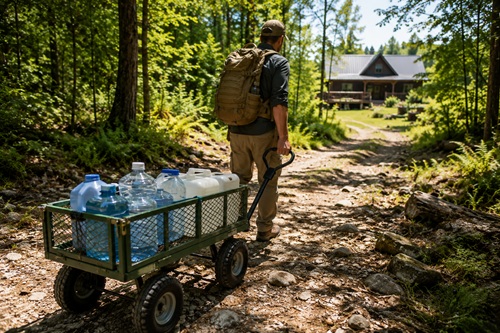
Collecting water is only half of the task. Once containers have been filled, they must be transported safely back to your home or storage location. During a prolonged emergency this process may become part of your daily routine, making transportation one of the most physically demanding aspects of long-term water security. A dependable water source provides little value if moving the water requires more time and effort than your household can realistically sustain.
Water is much heavier than many people realize. One liter weighs approximately one kilogram, and a single U.S. gallon weighs about 8.3 pounds (3.8 kilograms). A standard five-gallon container can easily exceed 40 pounds (18 kilograms) before accounting for the weight of the container itself. Carrying several full containers over rough terrain quickly becomes exhausting, particularly if the journey includes hills, snow, mud, or uneven ground.
Distance has a direct impact on the practicality of every water source. A spring located only a few hundred meters from your home may require only a few minutes to collect water, while a river several kilometers away may consume several hours for every trip. Over the course of weeks or months, these differences become significant. Time spent transporting water cannot be spent maintaining equipment, growing food, preparing meals, caring for livestock, or performing other essential preparedness tasks.
Selecting the appropriate transportation equipment greatly improves efficiency. Large containers reduce the number of collection trips but become difficult to lift and maneuver when full. Smaller containers are easier to handle but require more trips to transport the same amount of water. Many households discover that a combination of container sizes provides the greatest flexibility for different situations and different family members.
Whenever possible, allow equipment rather than physical strength to perform the heavy work. Garden carts, utility wagons, wheelbarrows, bicycle trailers, sleds during winter, and other mechanical aids can dramatically reduce fatigue while increasing the amount of water transported during each trip. Investing in practical transportation equipment often provides greater long-term benefit than simply purchasing additional storage containers.
Planning should also include alternate transportation methods. A vehicle may be available during the early stages of an emergency but become unusable later because of fuel shortages, mechanical failure, blocked roads, or changing conditions. Every household should know how water will be transported if walking becomes the only available option.
Before relying on any transportation method, practice using it under realistic conditions. Fill your containers with water and travel the actual route you expect to use during an emergency. Observe how long the journey requires, identify obstacles, evaluate the physical effort involved, and consider whether different equipment would improve efficiency. Practical experience almost always reveals opportunities for improvement that are not obvious during planning alone.
Efficient transportation is not simply about moving more water. It is about conserving energy, reducing unnecessary labor, minimizing wear on equipment, and creating a collection process that your household can realistically maintain for weeks or months if necessary. Sustainable systems are almost always more valuable than systems that appear impressive but prove difficult to operate over time.
Purifying Water for Safe Drinking
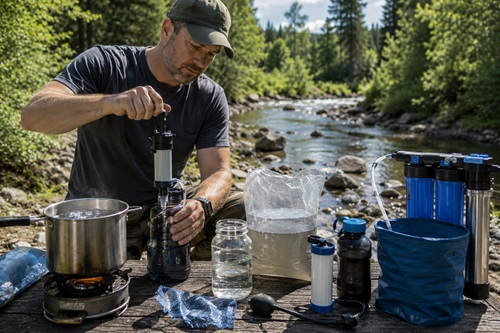
Collecting water from a dependable source does not make it safe to drink. Regardless of how clean water appears, untreated surface water should always be considered potentially contaminated until it has been properly purified. Bacteria, viruses, parasites, and many other harmful microorganisms are invisible to the naked eye. Water that looks clear, smells fresh, and tastes normal may still contain organisms capable of causing serious illness. For this reason, purification should become a routine part of every long-term water collection process rather than a decision made only when contamination is suspected.
Before selecting a purification method, it is helpful to understand the difference between filtration and purification. Filtration removes suspended particles and, depending on the filter being used, may also remove bacteria, parasites, and some chemical contaminants. Purification is the process of making water safe to drink by eliminating or neutralizing harmful microorganisms. Many treatment systems perform both functions, but not all do. Understanding the capabilities of your equipment allows you to choose the most appropriate method for the conditions you encounter.
The condition of the collected water greatly influences the treatment process. Water containing large amounts of mud, leaves, algae, or organic material should be allowed to settle whenever practical before purification begins. Removing larger particles first reduces wear on filters, improves the effectiveness of chemical disinfectants, and allows ultraviolet treatment systems to perform more efficiently. Although settling and pre-filtering do not make water safe to drink, they improve the overall quality of the water entering the purification process.
Boiling remains one of the most dependable methods of destroying disease-causing microorganisms. Properly boiled water is effective against most bacteria, viruses, and parasites that may be present in untreated water. The primary limitation of boiling is the fuel required. During a prolonged emergency, fuel becomes another valuable resource that must be managed carefully. Even so, every preparedness plan should include the ability to boil water because it provides an effective treatment method that does not depend upon specialized equipment.
Portable water filters have become one of the most common purification tools used by preparedness-minded households. Modern filters vary considerably in capability. Some are designed primarily to remove bacteria and protozoa, while others also reduce sediment, unpleasant tastes, odors, and certain chemical contaminants. No filter removes every possible contaminant, so it is important to understand exactly what your equipment is designed to accomplish. Reading the manufacturer’s specifications before an emergency allows you to use the equipment with confidence when it is actually needed.
Chemical disinfection provides another valuable treatment option. Water purification tablets and unscented household bleach are lightweight, inexpensive, and easy to store for emergency use. When used according to established guidelines, they effectively destroy many harmful microorganisms. Chemical treatment is particularly useful as a backup because it requires very little equipment and can be carried almost anywhere. However, heavily contaminated or very cloudy water should be clarified before chemical disinfection is attempted, since suspended particles may reduce effectiveness.
Ultraviolet purification systems have become increasingly popular because they are fast, compact, and easy to operate. These devices use ultraviolet light to damage the genetic material of microorganisms, preventing them from reproducing. They work best when used with clear water and require a dependable source of electrical power, making them an excellent supplement to other purification methods rather than a complete replacement.
Distillation is one of the most comprehensive treatment methods available. By converting water into steam and collecting the condensed vapor, distillation removes many microorganisms, salts, heavy metals, and numerous other contaminants. The process is extremely effective but also requires significant amounts of time and energy. For most households it serves as a specialized treatment method rather than the primary means of producing drinking water.
Many experienced preppers prefer using multiple purification methods together rather than depending upon a single technique. Water may first be allowed to settle, then passed through a sediment filter, followed by a portable water filter, and finally disinfected by boiling or chemical treatment if contamination is suspected. This layered approach provides a greater margin of safety while reducing the workload placed on individual pieces of equipment.
Just as important as knowing how to purify water is knowing when to reject it entirely. Water contaminated with petroleum products, industrial chemicals, pesticides, or other hazardous substances may require specialized treatment beyond the capability of most household equipment. If chemical contamination is suspected and no reliable treatment method is available, locating another water source is usually the safer decision.
Table 7 – Comparison of Common Water Purification Methods
| Treatment Method | Bacteria | Viruses | Parasites | Sediment Removal | Chemical Removal | Primary Limitation |
|---|---|---|---|---|---|---|
| Boiling | Excellent | Excellent | Excellent | No | No | Requires fuel |
| Portable Water Filter | Excellent* | Varies by model | Excellent | Yes | Some models | Filter maintenance |
| Chemical Disinfection | Excellent | Excellent | Limited for some parasites | No | No | Requires clear water |
| Ultraviolet Purifier | Excellent | Excellent | Excellent | No | No | Requires power and clear water |
| Distillation | Excellent | Excellent | Excellent | Yes | Excellent for many contaminants | Slow and energy intensive |
*Always verify the capabilities of your specific filter model.
No single purification method is ideal for every situation. The strongest long-term water plans include several treatment options that complement one another. If one method becomes unavailable because of equipment failure, limited fuel, depleted supplies, or changing environmental conditions, another method should already be available. Building this redundancy into your purification strategy greatly improves your ability to continue producing safe drinking water throughout a prolonged emergency.
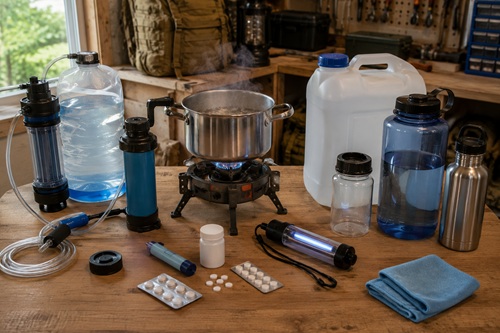
The next step in the water planning process is ensuring that the water you have worked so hard to collect and purify remains safe until it is actually needed. Proper storage practices prevent recontamination, reduce waste, and preserve one of your household’s most valuable resources.
Storing Treated Water Safely
Purifying water is only one part of producing a dependable drinking water supply. Once treatment has been completed, the water must be stored in a way that protects it from contamination until it is needed. Improper storage can introduce bacteria, dirt, insects, or chemicals into water that was previously safe to drink. For this reason, proper storage should be viewed as the final step in the purification process rather than a separate activity.
The first consideration is selecting appropriate storage containers. Drinking water should always be stored in clean, food-grade containers designed for potable water. These containers are manufactured using materials that will not leach harmful substances into the water when used correctly. Commercially manufactured water storage containers, food-grade barrels, stackable water bricks, and heavy-duty food-grade jerry cans are all suitable choices for long-term preparedness.
Containers that previously held chemicals, fuels, pesticides, cleaning products, or automotive fluids should never be used for drinking water, even if they appear clean. Many chemicals penetrate plastic surfaces and cannot be completely removed through ordinary washing. Using improper containers creates an unnecessary health risk that can easily be avoided by selecting containers designed specifically for water storage.
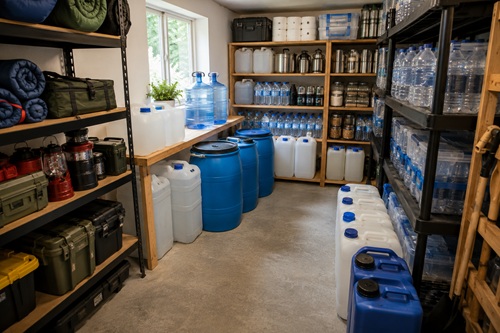
Every container should be inspected before use. Examine the interior and exterior for cracks, punctures, damaged threads, worn seals, or other signs of deterioration. Even a small defect can allow contaminants to enter the container or cause slow leaks that gradually reduce your emergency water supply. Replace damaged containers rather than attempting temporary repairs that may fail when they are needed most.
Before filling any container, wash it thoroughly using warm water and a mild detergent. Rinse it completely to remove all soap residue. If the container has been stored for a long period or its previous contents are uncertain, sanitize it before filling it with treated drinking water. Starting with a clean container greatly reduces the possibility of bacterial growth during storage.
Once the container has been filled, seal it immediately using a clean, properly fitted lid. Avoid repeatedly opening containers unless necessary. Every time a storage container is opened, the possibility of introducing contamination increases. For this reason, many households prefer storing water in several smaller containers rather than one very large container. If one container becomes contaminated, the remaining supply remains protected.
Every container should also be clearly labeled. Record the date the water was stored, whether it has already been purified, and, if applicable, the purification method that was used. A simple labeling system eliminates confusion when multiple containers are stored together and allows older water to be used before newer supplies. This rotation process helps maintain water quality while reducing unnecessary waste.
Where water is stored is just as important as how it is stored. Choose a cool, dry location away from direct sunlight whenever possible. Heat accelerates the deterioration of many plastics, while prolonged sunlight encourages algae growth in translucent containers. Water should also be protected from freezing temperatures that may damage containers and from excessive heat that may shorten their service life.
Avoid storing drinking water near fuels, paints, solvents, pesticides, fertilizers, or other chemicals. Although sealed containers provide excellent protection, accidental leaks, spills, or fumes may still affect water quality over long periods of storage. Keeping water supplies in a dedicated storage area reduces these risks while making inventory management much easier.
Separate treated water from untreated water at all times. Untreated water awaiting purification should never be stored beside ready-to-drink water without clear identification. Using separate storage areas or clearly marked containers helps prevent accidental cross-contamination, particularly when several people are involved in collecting and processing water.
Long-term storage also requires regular inspection. Containers should be checked periodically for leaks, damaged lids, discoloration, unusual odors, or signs of contamination. Establishing a routine inspection schedule allows small problems to be corrected before they affect your emergency water supply.
Table 8 – Comparing Water Storage Containers
| Container Type | Capacity | Durability | Portability | Best Application |
|---|---|---|---|---|
| Commercial Bottled Water | Small | Good | Excellent | Immediate use and short-term emergencies |
| Water Bricks | Small to Medium | Excellent | Good | Organized household storage |
| Food-Grade Jerry Cans | Medium | Excellent | Excellent | Collection and transportation |
| Food-Grade Water Barrels | Large | Excellent | Poor when full | Long-term stationary storage |
| Stainless Steel Containers | Medium | Excellent | Good | Long-term specialty storage |
| Glass Containers | Small | Good | Fair | Small emergency reserves |
Proper storage protects the investment you have already made in collecting and purifying water. Every container that remains clean, properly sealed, and well maintained reduces the amount of additional water your household must collect during an emergency.
Conserving Water During Extended Emergencies
The easiest water to obtain is the water you never have to replace. Every liter that is conserved extends your stored reserves, reduces collection trips, decreases purification requirements, and saves valuable time and energy. During prolonged emergencies, thoughtful conservation often becomes just as important as locating additional water sources.
Effective conservation begins by recognizing that not every household activity requires drinking-quality water. Water used for drinking, preparing food, mixing medications, and treating injuries should always receive the highest priority because these activities directly affect health. Other tasks, such as flushing toilets, washing tools, cleaning floors, or controlling dust, may often use untreated or lower-quality water without creating unnecessary risk. Reserving your cleanest water for essential uses significantly improves the efficiency of your overall water management plan.
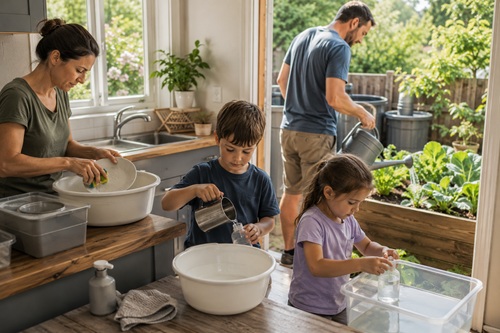
Many conservation techniques require only small changes in daily habits. Turning off the tap while brushing your teeth, washing dishes in a basin instead of under running water, repairing leaks immediately, and taking sponge baths instead of long showers all reduce unnecessary water consumption. Individually these savings appear small, but over weeks or months they can preserve hundreds of liters of water that would otherwise need to be collected and purified.
Meal preparation also offers numerous opportunities for conservation. One-pot meals generally require less cooking water and produce fewer dishes to wash. Vegetables can often be steamed instead of boiled, reducing water consumption while preserving nutrients. Water used for cooking vegetables may later be incorporated into soups, sauces, or stews rather than being discarded.
Greywater – the relatively clean wastewater produced by activities such as bathing, hand washing, or laundry – can often be reused for appropriate non-drinking purposes. Flushing toilets, watering ornamental plants, and cleaning outdoor surfaces are common examples. However, greywater should never be used for drinking, preparing food, or irrigating edible crops unless it has been properly treated for those specific purposes.
Outdoor water use should receive careful attention during extended emergencies. Watering gardens during the early morning or late evening reduces evaporation. Applying mulch around plants helps retain soil moisture, reducing the frequency of watering. During severe shortages, priority should always be given to food-producing plants rather than decorative landscaping.
Water conservation should never compromise sanitation. Safe food preparation, proper hand washing, wound care, and personal hygiene remain essential for preventing disease during prolonged emergencies. The objective is not to eliminate water use but to eliminate unnecessary water use while continuing to protect the health of every member of the household.
Table 9 – Practical Water Conservation Techniques
| Activity | Conservation Method | Benefit |
| Personal Hygiene | Sponge baths instead of showers | Reduces daily water consumption |
| Dishwashing | Wash in basins | Uses significantly less water |
| Cooking | Prepare one-pot meals | Reduces cooking and cleanup water |
| Gardening | Water during cooler hours | Minimizes evaporation |
| Laundry | Wash full loads only | Improves water efficiency |
| Household Cleaning | Reuse appropriate greywater | Preserves treated drinking water |
Water conservation is not simply about using less water. It is about using the right water for the right purpose. Households that understand this principle often find that their available supplies last considerably longer than expected while maintaining a safe and healthy living environment.
The next chapter brings everything together by showing how storage, renewable water sources, transportation, purification, and conservation work as one integrated long-term water system capable of supporting a household through extended emergencies.
Building Multiple Independent Water Systems
One of the defining characteristics of a resilient household is that it never depends upon a single solution. Every component of a water system has strengths, but every component also has limitations. A well may produce abundant water but require electricity to operate the pump. A creek may flow reliably for years before an extended drought reduces it to a trickle. Rainwater harvesting performs exceptionally well during wet seasons but contributes very little during prolonged dry periods. Even the best water filter eventually reaches the end of its service life. Long-term water security is achieved by recognizing these limitations and building several independent systems that support one another.
Many people approach preparedness by purchasing individual pieces of equipment. They buy a water filter, install a rain barrel, purchase several storage containers, and perhaps add a portable pump or a few purification tablets. While each of these items is valuable, preparedness is far more effective when viewed as a complete system rather than a collection of unrelated equipment. Every water system consists of five essential components: a reliable source, a method of collection, a means of transportation, an effective purification process, and safe storage. If any one of these components fails, the entire system may become difficult or impossible to operate.
For most households, the first layer of this system is stored emergency water. This reserve requires no collection or purification because the work has already been completed. Its purpose is to provide immediate access to safe drinking water while the household evaluates the emergency and prepares renewable water sources for long-term use. Stored water should never be viewed as the final solution. Instead, it serves as the bridge between normal municipal service and long-term self-sufficiency.
The second layer often consists of renewable water available on or near the property. Rainwater harvesting systems, private wells, natural springs, or nearby creeks all reduce dependence on stored supplies by providing a continuous means of replacing the water that has already been consumed. The specific combination of systems will vary from one household to another, but every additional source increases flexibility and reduces dependence on any single method.
A third layer should consist of emergency or contingency sources. These are locations that may require additional travel, more extensive treatment, or greater physical effort but remain available if your preferred systems become unusable. Large rivers, lakes, reservoirs, community emergency water distribution points, or distant springs all provide valuable redundancy. They may not be the most convenient choices, but they greatly improve your ability to adapt when unexpected conditions develop.
Purification should also be viewed as a layered system. Relying entirely on one portable filter creates a single point of failure. Instead, combine several treatment methods that complement one another. A household capable of filtering, boiling, chemically disinfecting, and, when appropriate, using ultraviolet purification possesses far greater resilience than one depending upon only a single device. If one method becomes unavailable because of damaged equipment, limited fuel, or depleted supplies, another can immediately take its place.
Storage follows the same principle. Rather than storing all emergency water in one large container, divide it among several containers of different sizes. Smaller containers are easier to transport and reduce the impact of accidental contamination or damage. If one container develops a leak or becomes unusable, the remainder of the supply remains protected.
Transportation should likewise include multiple options. A vehicle may be available during the early stages of an emergency but become unusable because of blocked roads, mechanical failure, or fuel shortages. A bicycle trailer, garden cart, wheelbarrow, sled, or even backpack water carriers provide alternative methods of moving water when motor vehicles are no longer practical. Planning several transportation options before they are needed greatly improves your household’s ability to adapt.
The greatest advantage of layered planning is flexibility. Emergencies are unpredictable, and circumstances often change rapidly. A household that has prepared several independent water systems can shift from one method to another with relatively little disruption. Instead of searching for new solutions under pressure, they simply begin using another system that has already been planned, tested, and maintained.
Table 10 – Example of a Layered Household Water System
| System Layer | Primary Method | Backup Method | Emergency Alternative |
|---|---|---|---|
| Immediate Supply | Stored drinking water | Additional storage containers | Commercial bottled water |
| Renewable Source | Private well | Rainwater collection | Creek or spring |
| Water Collection | Food-grade containers | Collapsible containers | Buckets with lids |
| Transportation | Vehicle | Garden cart or wagon | Backpack or hand carry |
| Purification | Water filter | Boiling | Chemical disinfection |
| Storage | Water barrels | Jerry cans | Bottled water containers |
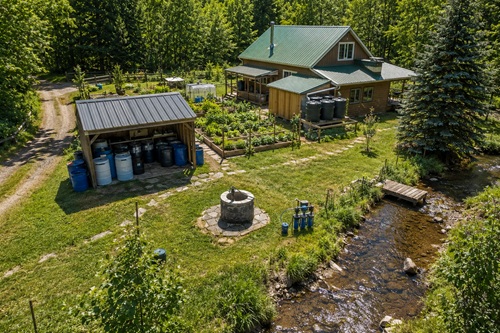
Every household’s layered system will look different because every location presents different opportunities and challenges. The important principle is not the specific equipment chosen but the elimination of single points of failure. If one component stops working tomorrow, another should already be available.
Common Mistakes in Long-Term Water Planning
Many preparedness plans appear complete until they are tested under realistic conditions. Most failures occur not because people lack equipment, but because important details were overlooked during planning. Recognizing these common mistakes allows you to strengthen your own preparedness before an emergency exposes those weaknesses.
One of the most common mistakes is assuming that stored water alone provides long-term security. Storage is essential, but every reserve eventually becomes depleted. Without renewable water sources, even a household with substantial storage capacity will eventually face shortages if the emergency continues long enough.
Another frequent mistake is relying on only one water source. Families often become comfortable depending on a nearby creek, private well, or rainwater collection system because it has always been available. Unfortunately, drought, contamination, equipment failure, wildfire, flooding, or severe weather can quickly change those conditions. Maintaining several independent sources dramatically improves resilience.
Many households also underestimate the importance of transportation. A water source may appear ideal until the reality of carrying heavy containers several kilometers each day becomes apparent. Practicing transportation before an emergency often reveals that a more distant but larger source is actually less practical than a smaller source located much closer to home.
Equipment maintenance is another area that receives too little attention. Water filters remain unopened for years, replacement cartridges expire, purification tablets exceed their shelf life, pumps seize from lack of use, and storage containers develop cracks without anyone noticing. Preparedness equipment should be inspected and tested regularly so that problems are discovered before an emergency occurs.
Another common mistake is failing to understand the limitations of purification equipment. No single filter or treatment method removes every possible contaminant. Assuming that one device solves every water problem may create a false sense of security. Learning what your equipment can and cannot do is just as important as owning the equipment itself.
Many people also overlook seasonal changes. A spring inspected during spring runoff may appear dependable, only to produce very little water during late summer. Collection routes that are easy to travel in dry weather may become hazardous during winter or after heavy rainfall. Revisiting water sources throughout the year provides a much more accurate understanding of their long-term reliability.
Perhaps the most significant mistake is never practicing. Reading about preparedness is valuable, but practical experience reveals challenges that books and articles cannot. Walking collection routes, transporting full containers, operating purification equipment, and rotating stored water all build confidence while exposing weaknesses that can still be corrected.
Table 11 – Common Planning Mistakes
| Mistake | Potential Consequence | Recommended Improvement |
| Relying only on stored water | Supplies eventually exhausted | Develop renewable water systems |
| One water source | Single point of failure | Identify several independent sources |
| One purification method | Equipment failure | Maintain multiple treatment options |
| Poor equipment maintenance | Unexpected failures | Establish routine inspections |
| Ignoring transportation | Excessive time and effort | Practice realistic collection trips |
| Failing to practice | Problems discovered during emergencies | Conduct regular preparedness exercises |
Every weakness identified during planning is an opportunity to improve your preparedness before it becomes a problem. The strongest water plans are not necessarily the most expensive. They are the ones that have been carefully developed, regularly maintained, and repeatedly tested under realistic conditions.
The final step in developing a dependable long-term water strategy is putting the entire plan into practice. A water plan that has been tested under realistic conditions provides far greater confidence than one that exists only on paper.
Testing and Maintaining Your Water Plan
A written water plan provides direction, but only practical experience confirms whether it will actually work. Every emergency is different, and no amount of planning can anticipate every challenge. The purpose of testing is not to prove that your plan is perfect. It is to identify weaknesses while conditions are still safe, equipment is readily available, and improvements can be made without the pressure of a real emergency.
Many households purchase excellent preparedness equipment but never use it until it is urgently needed. Water filters remain unopened in their original packaging, rainwater collection systems are never tested, pumps sit unused for years, and storage containers remain uninspected until an emergency occurs. Unfortunately, this is often when problems are first discovered. A damaged seal, clogged filter, cracked container, or missing component can quickly turn a well-designed plan into a frustrating experience.
Begin by testing individual components of your water system. Inspect every storage container and verify that it remains clean, properly labeled, and free from leaks or damage. Assemble your purification equipment exactly as you would during an emergency and confirm that every member of the household understands how it operates. Check replacement filters, fuel supplies, purification tablets, batteries, hoses, pumps, and any other equipment that supports your water system.
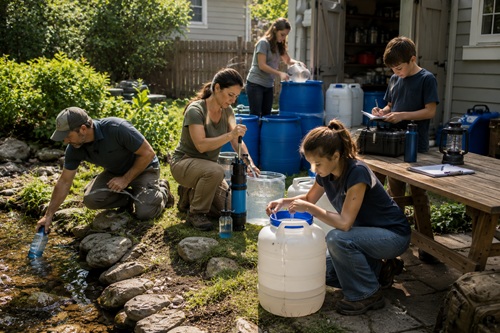
Once individual components have been inspected, test the complete process from beginning to end. Visit one of your planned water sources and collect enough water to simulate normal household use. Transport the water using your planned equipment, purify it using your preferred treatment method, store it in clean containers, and use it for appropriate household activities. Pay attention to every step of the process. How long did collection require? Were the containers comfortable to carry? Did the purification method consume more fuel than expected? Was additional equipment needed? Small observations made during practice often lead to significant improvements.
As your experience grows, consider conducting a full water exercise. For a day or an entire weekend, operate your household using only the water available through your preparedness systems. Avoid using municipal water except for safety if absolutely necessary. Prepare meals, perform normal household activities, maintain hygiene, and monitor your overall water consumption. This type of realistic exercise provides valuable experience while highlighting weaknesses that are difficult to identify through planning alone.
Every member of the household should participate whenever practical. Emergencies rarely occur when everyone is together, and responsibilities may need to be shared. Each person should know where emergency water is stored, understand the household’s collection procedures, recognize treated and untreated water containers, and know how to operate basic purification equipment. Sharing knowledge throughout the household increases resilience while reducing dependence on one individual.
Keep written records of every practice exercise. Record the date, weather conditions, equipment used, water source selected, purification method, transportation time, and any problems encountered. These notes become increasingly valuable because they document actual experience rather than assumptions. Reviewing them before future exercises often reveals patterns that help guide future improvements.
Preparedness is not a one-time project. Household needs change, equipment ages, children grow older, pets are added, gardens expand, and local conditions evolve. Reviewing and updating your water plan on a regular basis ensures that it continues to reflect your current situation rather than the circumstances that existed when it was originally written.
Table 12 – Recommended Water System Maintenance Schedule
| Activity | Recommended Frequency | Purpose |
|---|---|---|
| Inspect stored water containers | Every 6 months | Check for leaks, damage, and proper labeling |
| Rotate stored water | Follow your established schedule | Maintain water quality |
| Inspect purification equipment | Every 6 months | Verify readiness and replace worn components |
| Check replacement supplies | Every 6 months | Replace expired filters, tablets, or chemicals |
| Visit primary water sources | Every season | Monitor changes in availability and accessibility |
| Practice water collection | Annually | Improve efficiency and identify problems |
| Complete a full household water exercise | Every 1–2 years | Evaluate the entire water plan |
Regular maintenance prevents small problems from becoming major failures. A household that routinely inspects, practices, and updates its preparedness systems is far more likely to respond confidently during an actual emergency than one relying solely on equipment that has never been tested.
In Summary
Long-term water security is built through planning, preparation, and continuous improvement rather than through storage alone. While emergency water reserves provide an essential foundation, they represent only the beginning of a complete preparedness strategy. Every litre that is consumed must eventually be replaced, making renewable water sources and practical collection skills just as important as the water already stored inside your home.
Throughout this guide you have developed a systematic approach to long-term water planning. You began by determining your household’s actual water requirements and comparing those needs with your available storage. You then learned how to identify, evaluate, and prioritize renewable water sources while considering seasonal changes, accessibility, treatment requirements, and transportation challenges.
You also explored the importance of safe water collection, effective purification, proper storage, practical conservation techniques, and the development of multiple independent water systems. Together, these individual elements create a resilient strategy that continues functioning even when one component becomes unavailable.
Perhaps the most important lesson is that preparedness is never static. Equipment should be maintained, water sources should be revisited, household needs should be reviewed, and plans should be tested regularly. Every inspection, practice exercise, and improvement strengthens your ability to provide safe drinking water regardless of how long an emergency continues.
A household that understands its water requirements, maintains several dependable water sources, and regularly practices its procedures possesses a significant advantage over one that relies solely on stored supplies. Knowledge, preparation, and practical experience transform water planning from a collection of equipment into a dependable long-term capability.
Preparedness Action Plan
Before considering your long-term water plan complete, take time to review the work you have accomplished throughout this guide and identify the next improvements for your household.
Complete your household water inventory and verify that your daily, monthly, and long-term water requirements have been accurately calculated. Inspect every storage container, establish a rotation schedule, and ensure that treated and untreated water are stored separately.
Review your primary, secondary, and emergency water sources. Visit each location regularly, update your notes whenever conditions change, and confirm that alternate collection routes remain practical throughout the year.
Inspect every piece of water-related equipment, including filters, pumps, hoses, containers, transportation equipment, and purification supplies. Replace worn or expired components before they become a problem.
Schedule a realistic water collection exercise within the next year. Practice collecting, transporting, purifying, storing, and using water exactly as you would during an extended emergency. Record the results, identify weaknesses, and revise your written plan accordingly.
Preparedness improves through continual refinement. Every improvement, no matter how small, strengthens your household’s ability to remain healthy, adaptable, and self-reliant during prolonged emergencies.
Skills Learned
After completing this guide, you should now be able to calculate your household’s long-term water requirements, identify and evaluate renewable water sources, understand seasonal changes that affect water availability, and develop a practical collection strategy based on your local environment.
You should also understand how to safely collect, transport, purify, store, and conserve water while avoiding many of the common mistakes that reduce the effectiveness of emergency water planning. Most importantly, you should be able to integrate these individual skills into a layered water system that continues functioning even when individual components fail.
Long-term water preparedness is not measured by the amount of water currently stored in your home. It is measured by your ability to continue producing safe water day after day, week after week, and month after month, regardless of changing conditions. By applying the principles presented throughout this guide and reviewing your plan regularly, you will continue strengthening one of the most important capabilities any prepared household can possess.
Appendices
The following appendices are designed to support the information presented throughout this guide. Unlike the main chapters, which explain the principles of long-term water planning, these reference materials are intended to be used repeatedly while developing, maintaining, and reviewing your household’s preparedness plan.
Appendix A — Household Water Planning Worksheet
Complete this worksheet after finishing the guide. Review it at least once each year or whenever your household, property, or preparedness equipment changes.
Household Information
| Item | Information |
|---|---|
| Number of Adults | |
| Number of Children | |
| Pets | |
| Livestock | |
| Medical Water Requirements | |
| Garden Size |
Daily Water Requirements
| Category | Daily Requirement |
| Drinking | |
| Cooking | |
| Food Preparation | |
| Personal Hygiene | |
| Cleaning | |
| Laundry | |
| Medical Needs | |
| Pets | |
| Livestock | |
| Gardening | |
| Other | |
| Total Daily Requirement |
Long-Term Planning
| Time Period | Water Required |
| One Week | |
| Two Weeks | |
| One Month | |
| Three Months | |
| Six Months | |
| One Year |
Appendix B — Water Source Inventory
Document every renewable water source available to your household.
| Water Source | Distance | Year-Round | Treatment Required | Primary / Secondary / Backup |
Record additional notes describing seasonal changes, nearby contamination risks, property ownership, alternate access routes, and any special equipment required to collect water from each location.
Appendix C — Water Equipment Inventory
Maintaining an accurate equipment inventory makes annual inspections much easier and helps identify missing supplies before they become critical.
Storage Equipment
| Equipment | Quantity | Condition |
| Water Barrels | ||
| Jerry Cans | ||
| Water Bricks | ||
| Bottled Water | ||
| Other Containers |
Purification Equipment
| Equipment | Quantity | Replacement Due |
| Water Filters | ||
| Replacement Cartridges | ||
| Purification Tablets | ||
| Unscented Bleach | ||
| UV Purifier | ||
| Boiling Equipment | ||
| Fuel Supply |
Transportation Equipment
| Equipment | Condition |
| Buckets | |
| Garden Cart | |
| Wagon | |
| Wheelbarrow | |
| Bicycle Trailer | |
| Winter Sled |
Appendix D — Annual Water Preparedness Review
Review your entire water plan at least once each year.
| Annual Review Item | Complete |
| Household water requirements updated | ☐ |
| Water inventory completed | ☐ |
| Storage containers inspected | ☐ |
| Water rotated as required | ☐ |
| Primary water source inspected | ☐ |
| Secondary water source inspected | ☐ |
| Backup water sources inspected | ☐ |
| Purification equipment tested | ☐ |
| Replacement supplies stocked | ☐ |
| Transportation equipment inspected | ☐ |
| Household water exercise completed | ☐ |
| Written plan updated | ☐ |
Appendix E — Quick Reference Tables
Approximate Weight of Water
| Volume | Approximate Weight |
| 1 Liter | 1 kg |
| 4 Liters | 4 kg |
| 10 Liters | 10 kg |
| 20 Liters | 20 kg |
| 1 U.S. Gallon | 8.3 lb (3.8 kg) |
| 5 U.S. Gallons | 41.5 lb (18.9 kg) |
Water Priority During Emergencies
| Highest Priority | Lower Priority |
| Drinking | Washing vehicles |
| Food Preparation | Decorative landscaping |
| Medications | Cleaning outdoor surfaces |
| Medical Care | Non-essential household cleaning |
| Basic Hygiene | Recreational uses |
Preferred Order for Water Sources
| Priority | Water Source |
| 1 | Stored Drinking Water |
| 2 | Protected Well or Spring |
| 3 | Rainwater Collection |
| 4 | Creek or River |
| 5 | Lake or Pond |
| 6 | Community Emergency Supply |
Final Notes
Long-term water preparedness is not a project that is completed once and forgotten. It is an ongoing process of observation, maintenance, and improvement. Equipment changes, weather patterns change, households change, and local conditions evolve over time. A water plan should evolve as well.
Review your plan regularly, practice your skills whenever possible, and continue learning about the water resources available in your area. Every improvement strengthens your household’s ability to remain healthy, adaptable, and self-reliant during prolonged emergencies.
Safe water is more than a stored resource – it is a capability. The more thoroughly you develop that capability before it is needed, the better prepared your household will be to face whatever challenges lie ahead.
© Prepping Communities. This content is for informational purposes only and not professional advice. Use at your own risk.
Terms | Privacy | Guidelines