
Introduction
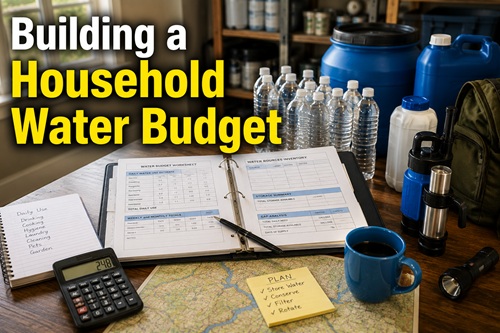
Every preparedness plan depends upon one simple question: How much water will your household actually need? Without a realistic answer, it is impossible to determine how much water should be stored, how frequently additional water must be collected, or whether your long-term water strategy can realistically support your family during an extended emergency. A household water budget answers these questions by replacing estimates and assumptions with practical calculations based on your own circumstances.
Many families purchase water storage containers or install rainwater collection systems before determining their actual requirements. While these preparations are valuable, they often lead to one of two problems. Some households store far less water than they will actually require, while others invest significant time and money storing more water than they can reasonably manage. Neither approach provides an accurate picture of long-term preparedness. A well-developed water budget allows every preparedness decision to be based on measurable information rather than guesswork.
A household water budget is simply a written estimate of how much water your household expects to consume over a specific period of time. It accounts for drinking water, cooking, food preparation, personal hygiene, sanitation, household cleaning, medical requirements, pets, livestock, gardening, and any other recurring activities that depend upon water. Once these requirements have been calculated, they become the foundation for every other aspect of your water preparedness plan.
Creating a water budget also helps identify priorities. During a prolonged emergency, not every activity requires the same amount or quality of water. Drinking and food preparation remain essential regardless of the situation, while other activities may be reduced, postponed, or modified to conserve valuable supplies. Understanding these priorities before an emergency allows households to make thoughtful decisions rather than reacting under pressure.
Every household is different. A single individual living in an apartment has very different water requirements than a family with several children, multiple pets, livestock, or a productive vegetable garden. Climate also plays an important role. Hot weather, strenuous physical activity, illness, pregnancy, and certain medical conditions all increase water consumption. Because of these differences, no universal water budget exists. The purpose of this guide is to help you develop a realistic budget based on the unique needs of your own household.
Throughout this handbook, you will calculate your household’s daily water requirements, expand those calculations into weekly and long-term planning periods, compare your expected consumption with your available storage, and identify areas where additional preparation may be required. By the time you complete this guide, you should have a practical planning document that can be reviewed, updated, and used to support every future decision involving emergency water preparedness.
Understanding What a Household Water Budget Is
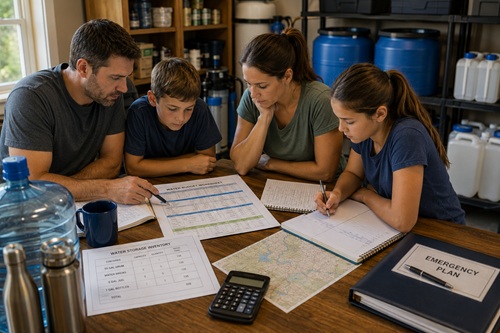
A household water budget is a planning tool that estimates the amount of water required to support normal household activities over a defined period of time. Unlike financial budgets, which track money entering and leaving a household, a water budget tracks expected water consumption and compares it with available supplies. This allows you to determine whether your current storage and renewable water sources are capable of meeting your needs during an extended emergency.
The purpose of a water budget is not to produce an exact scientific measurement. Water use naturally varies from one day to the next. Instead, the goal is to develop a realistic planning estimate that reflects the way your household actually lives. Even though daily consumption will fluctuate, a carefully prepared budget provides an accurate foundation for long-term preparedness planning.
A written budget also reveals relationships that are often overlooked. Increasing water storage may solve a short-term shortage, but it also increases the amount of water that must eventually be rotated and maintained. Reducing unnecessary consumption through conservation lowers the amount of water that must be collected, purified, transported, and stored. Every change affects the overall preparedness plan, and a written budget allows those effects to be measured rather than guessed.
One of the greatest advantages of creating a household water budget is that it transforms preparedness into a measurable process. Instead of saying, “We think we have enough water,” you can confidently state how much water your household requires each day, how long your current reserves will last, and how much additional water must be obtained from renewable sources if the emergency continues.
A water budget should never be considered permanent. Families grow, children become adults, pets are added, gardens expand, and medical needs change over time. Seasonal weather also affects water consumption. Reviewing and updating your budget regularly ensures that it continues to reflect your household’s current situation rather than assumptions made years earlier.
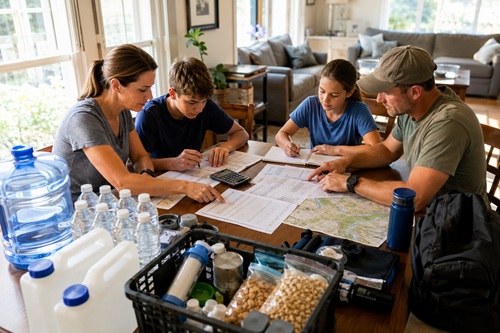
Before beginning any calculations, gather information about everyone who depends on your household’s water supply. Include family members, regular visitors who may remain with you during an emergency, pets, livestock, and any activities that require water on a routine basis. Starting with a complete picture of household demand produces a far more accurate budget than focusing only on drinking water.
Table 1 — Household Water Budget Planning Worksheet
| Household Information | Details |
|---|---|
| Number of Adults | |
| Number of Children | |
| Infants | |
| Seniors | |
| Pets | |
| Livestock | |
| Garden Size | |
| Medical Water Requirements | |
| Other Water Users |
Completing this worksheet establishes the foundation for every calculation that follows. Rather than relying on generalized recommendations, the remainder of this handbook will build a water budget specifically tailored to the people, animals, and activities that make up your household.
Identifying Everyone Who Depends on Your Water Supply
Before calculating litres or gallons, it is important to identify every person, animal, and activity that depends upon your household’s water supply. One of the most common mistakes in emergency planning is focusing only on the people living in the home while overlooking the many other demands placed on available water. A complete household water budget begins by identifying every user before estimating how much water each one requires.
Start by listing every person who normally lives in the household. Record each individual separately rather than simply writing the total number of occupants. This allows the budget to reflect differences in age, health, and daily activity. Young children generally require less drinking water than active adults, while elderly family members or individuals with certain medical conditions may have unique hydration requirements. Recording each person individually also makes future updates much easier as the household changes over time.
Next, consider whether additional people may become part of your household during an emergency. Family members who live nearby, elderly parents, close friends, or neighbors may temporarily relocate if their own homes become unsafe or uninhabitable. While it is impossible to predict every circumstance, including these possibilities in your planning provides a more realistic estimate of potential water demand. Even one additional person can significantly increase long-term water requirements when calculations are extended over several months.
Pets should also be included in your budget. Dogs, cats, birds, rabbits, reptiles, and other household animals all require a dependable supply of clean water. Consumption varies depending on species, size, age, activity level, and weather conditions. During hot weather or periods of increased physical activity, animals often require substantially more water than they do under normal conditions.
Households with livestock face even greater planning requirements. Chickens, goats, sheep, cattle, horses, pigs, and other farm animals consume considerable amounts of water every day. Unlike many household activities that can be reduced during emergencies, providing adequate drinking water for livestock remains essential for maintaining animal health and productivity. Failure to account for these needs can quickly create shortages that affect both the animals and the household depending upon them.

Gardens and food production systems should also be evaluated. While decorative landscaping may receive little or no water during an emergency, vegetable gardens, orchards, greenhouses, and small food-producing plots often represent valuable long-term food sources. Watering requirements vary considerably depending on climate, soil conditions, plant varieties, and seasonal weather. Including these needs in your overall planning helps determine whether stored water alone can support food production or whether renewable water sources will be necessary.
Medical requirements deserve careful attention as well. Certain medications require increased fluid intake, while recovering from illness, managing fever, treating wounds, or caring for infants may significantly increase water consumption. Some medical devices also require distilled or purified water for safe operation. These specialized requirements should be identified before an emergency rather than discovered when supplies are already limited.
Finally, consider recurring household activities that consume water but are easily overlooked. Mixing powdered foods or infant formula, preparing coffee or tea, washing reusable food containers, cleaning cooking equipment, maintaining personal hygiene, and basic housekeeping all contribute to daily water use. Individually these activities may seem minor, but together they often account for a substantial portion of total household consumption.
The objective of this exercise is to create a complete inventory of everyone and everything that depends upon your available water supply. Once these demands have been identified, realistic consumption estimates can be assigned to each one, creating the foundation for an accurate household water budget.
Table 2 — Household Water Users Inventory
| Water User | Quantity | Special Considerations |
|---|---|---|
| Adults | ||
| Children | ||
| Infants | ||
| Seniors | ||
| Temporary Household Members | ||
| Dogs | ||
| Cats | ||
| Other Pets | ||
| Livestock | ||
| Vegetable Garden | ||
| Orchard or Fruit Trees | ||
| Medical Requirements | ||
| Other Water Needs |
After completing this inventory, review it carefully before moving to the next step. It is much easier to include additional water users now than to discover them later after your budget has already been completed.
Calculating Daily Drinking Water Requirements
With every water user identified, the next step is estimating daily drinking water requirements. Drinking water forms the foundation of every household water budget because it represents the one category that cannot be postponed or eliminated. While many other uses can be reduced during an emergency, maintaining proper hydration remains essential for health, physical performance, and clear decision-making.
Daily drinking water requirements vary considerably from one individual to another. Age, body size, physical activity, environmental conditions, occupation, and overall health all influence how much water a person requires. Someone performing physically demanding work outdoors during hot summer weather will generally consume far more water than an individual resting indoors in a cool environment. Likewise, illness, fever, pregnancy, and breastfeeding often increase normal hydration requirements.
Rather than selecting a single number for every member of the household, estimate realistic daily consumption for each individual based on typical conditions and expected emergency activities. This approach produces a much more accurate water budget than simply multiplying a standard recommendation by the number of people living in the home.
Pets and livestock should also have their drinking water estimated separately. Animal requirements vary significantly depending on species, breed, body weight, activity level, and weather conditions. Because these values fluctuate throughout the year, many households choose to calculate average daily consumption while making seasonal adjustments when necessary.
Once daily drinking requirements have been estimated for every household member and animal, add the values together to determine your total daily drinking water requirement. This number becomes the starting point for the remainder of your household water budget and will later be combined with cooking, hygiene, sanitation, cleaning, and other routine water uses.
Table 3 — Daily Drinking Water Calculator
| Household Member | Estimated Daily Drinking Water |
| Adult 1 | |
| Adult 2 | |
| Child 1 | |
| Child 2 | |
| Infant | |
| Senior | |
| Dogs | |
| Cats | |
| Livestock | |
| Total Daily Drinking Water |
Many people are surprised to discover how quickly drinking water requirements accumulate when every household member is included. Although drinking water represents only one category of your overall water budget, it remains the highest priority because every other activity depends upon maintaining adequate hydration.
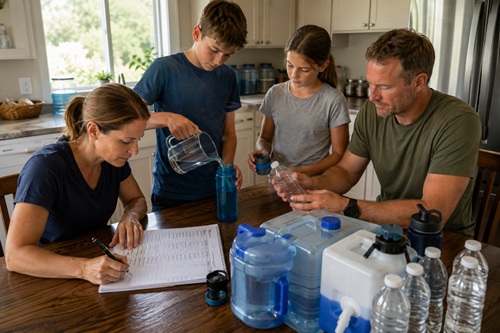
The next step is calculating the additional water required for cooking, food preparation, and everyday meal preparation. These activities often consume far more water than people initially expect and play an important role in developing a realistic long-term household water budget.
Estimating Water for Cooking and Food Preparation
After calculating daily drinking water requirements, the next step is estimating the water needed to prepare meals safely. Many households focus almost entirely on drinking water and overlook the amount required for cooking and food preparation. During a prolonged emergency, however, preparing safe, nutritious meals often becomes one of the largest daily consumers of clean water.
Cooking water requirements vary considerably depending on the foods being prepared. Dehydrated meals, rice, pasta, beans, oatmeal, soups, powdered beverages, baking ingredients, and freeze-dried emergency foods all require water before they can be consumed. Fresh fruits and vegetables may also need to be washed before use, while cookware, utensils, cutting boards, and food preparation surfaces require cleaning after every meal.
The type of emergency food stored by your household directly affects your water budget. Freeze-dried foods often have long shelf lives and excellent nutritional value, but many require significant amounts of water for rehydration. Canned foods generally require much less preparation water because they already contain moisture, while dry staples such as rice and beans require both cooking water and additional fuel. Understanding these differences allows you to estimate water requirements more accurately while balancing food storage with available water supplies.
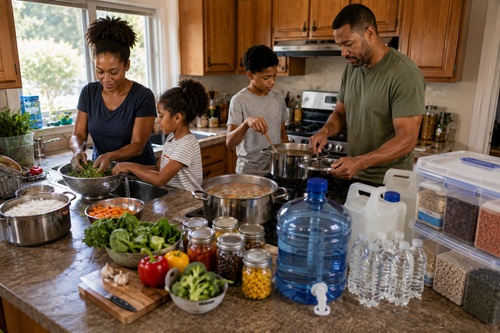
Meal preparation methods also influence water consumption. One-pot meals generally require less water than preparing several separate dishes because fewer pots, pans, and utensils must be washed afterward. Pressure cookers often reduce both cooking time and water consumption, while steaming vegetables usually requires less water than boiling them. Small adjustments in cooking methods can significantly reduce daily water use without sacrificing nutrition.
Water used during food preparation should always be of drinking-water quality. Any water that comes into direct contact with food must be properly purified before use. Although lower-quality water may be suitable for certain cleaning tasks after appropriate precautions, preparing meals with untreated water introduces unnecessary health risks that can quickly become serious during an emergency.
When estimating cooking requirements, think about your family’s typical eating habits rather than ideal conditions. Consider how many meals are prepared each day, the types of food most commonly eaten, and whether additional water will be needed for baking, preserving food, making beverages, or preparing infant formula. A realistic estimate is far more valuable than an optimistic one.
As your calculations become more detailed, remember that consistency is more important than perfection. The objective is to develop a practical planning estimate that can be refined over time as you gain additional experience. A written budget can always be adjusted, but beginning with realistic numbers provides a much stronger planning foundation than relying on rough guesses.
Table 4 — Daily Cooking and Food Preparation Worksheet
| Activity | Estimated Daily Water Requirement |
|---|---|
| Breakfast Preparation | |
| Lunch Preparation | |
| Dinner Preparation | |
| Food Washing | |
| Beverage Preparation | |
| Baking | |
| Infant Formula | |
| Other Food Preparation | |
| Total Daily Cooking Water |
After completing this worksheet, add the total to your household’s daily drinking water requirement. You now have a much clearer understanding of the minimum quantity of purified water required simply to keep everyone properly hydrated and fed.
Planning for Personal Hygiene and Sanitation
Maintaining personal hygiene during an extended emergency is about much more than comfort. Good hygiene reduces the spread of illness, prevents infections, protects wounds, and helps maintain overall health when medical care may be limited or unavailable. A household water budget that ignores hygiene often underestimates actual water requirements while increasing the risk of preventable disease.
Personal hygiene includes a wide variety of daily activities. Hand washing before preparing food, brushing teeth, bathing, washing hair, shaving, cleaning minor injuries, and maintaining general cleanliness all require water. Although many of these activities can be modified during emergencies to reduce consumption, they should never be eliminated entirely. Even small amounts of clean water used consistently for hygiene can significantly improve health outcomes during prolonged disruptions.
Sanitation is closely connected to hygiene but should be considered separately when building your water budget. Water used for flushing toilets, cleaning portable toilets, maintaining composting toilet systems, washing reusable hygiene products, disinfecting high-touch surfaces, and safely managing waste all contribute to household water consumption. During long-term emergencies, sanitation often becomes one of the most important factors affecting household health.
The amount of water allocated to hygiene and sanitation depends upon the type of facilities available. Homes connected to municipal sewer systems generally use more water than households relying on composting toilets or alternative sanitation systems designed to conserve water. Understanding your household’s existing systems allows you to develop a more realistic budget while identifying opportunities to reduce unnecessary consumption if conditions require conservation.
Many preparedness-minded households develop two hygiene plans: one for short-term emergencies when water supplies remain relatively abundant and another for prolonged emergencies when conservation becomes essential. This approach allows households to reduce water use gradually while continuing to maintain safe hygiene practices.
Small conservation techniques often provide meaningful savings without significantly affecting cleanliness. Sponge baths instead of full showers, washing hands using a small basin rather than running water continuously, collecting rinse water for appropriate secondary uses, and cleaning only heavily soiled clothing all reduce daily consumption while maintaining acceptable sanitation standards.
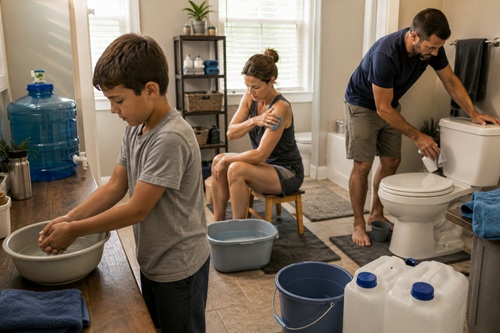
Water used for hygiene should still meet appropriate quality standards. Hand washing, brushing teeth, wound care, and bathing infants all require clean water to avoid introducing harmful microorganisms. Although not every hygiene task requires the same quality of water as drinking, careful attention should always be given to activities involving direct contact with the body.
Table 5 — Daily Hygiene and Sanitation Calculator
| Activity | Estimated Daily Water Requirement |
| Hand Washing | |
| Brushing Teeth | |
| Bathing or Sponge Bath | |
| Hair Washing | |
| Wound Care | |
| Toilet and Sanitation | |
| Cleaning Hygiene Equipment | |
| Other Hygiene Activities | |
| Total Daily Hygiene Water |
Once these calculations have been completed, combine them with your previous drinking and cooking estimates. You are now beginning to see a much more complete picture of your household’s daily water requirements. As additional categories are added in the following chapters, your water budget will continue evolving into a practical planning document that accurately reflects your household’s long-term needs.
Estimating Water for Laundry and Household Cleaning
A complete household water budget must also account for the water required to keep clothing, bedding, cookware, food preparation areas, and living spaces reasonably clean. During an extended emergency, these activities become increasingly important because dirt, food residue, and poor sanitation contribute to the spread of bacteria, mold, insects, and disease. Although cleaning routines may be modified to conserve water, they should never be eliminated entirely.
Laundry is often one of the largest consumers of household water under normal conditions. Modern washing machines use significant quantities of water for each load, while hand washing clothing generally requires less water but considerably more time and physical effort. During an emergency, many households reduce laundry frequency by wearing clothing longer when appropriate, washing only heavily soiled items, or concentrating on essential garments such as underwear, socks, towels, and bedding. These adjustments reduce water consumption while maintaining acceptable hygiene.
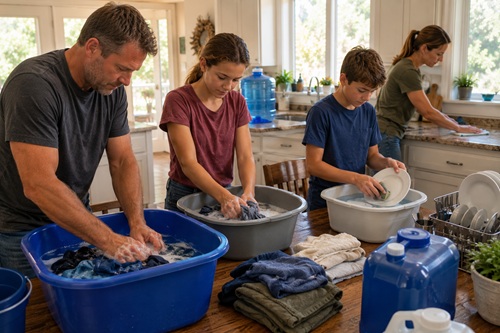
Kitchen cleaning deserves particular attention because food preparation surfaces, cutting boards, utensils, pots, and dishes come into direct contact with food. Failing to clean these items properly increases the risk of foodborne illness, especially when refrigeration may be unavailable. Washing dishes in a basin rather than under continuously running water, scraping food residue before washing, and cleaning immediately after meals all reduce water use while maintaining sanitation.
General household cleaning also requires planning. Floors, countertops, bathroom fixtures, frequently touched surfaces, and waste containers all require periodic cleaning to prevent the accumulation of dirt and bacteria. During prolonged emergencies, cleaning efforts should focus on areas that directly affect health and food safety rather than cosmetic appearance. This targeted approach conserves water while maintaining a healthy living environment.
Greywater can often play an important role in household cleaning. Water previously used for bathing, laundry, or other appropriate purposes may be suitable for cleaning floors, flushing toilets, or washing outdoor equipment. However, greywater should only be reused where appropriate and should never come into contact with food preparation surfaces, drinking water supplies, or activities requiring potable water unless it has been properly treated.
Cleaning schedules should also be adjusted according to available water supplies. During the early stages of an emergency, households may continue many normal routines. As the emergency continues and water becomes more difficult to replace, cleaning efforts should shift toward essential sanitation while postponing less important tasks until additional water becomes available.
The purpose of including cleaning in your water budget is not to maintain normal household routines regardless of conditions. Instead, it is to estimate the minimum amount of water required to preserve health, reduce disease transmission, and maintain a safe living environment over an extended period.
Table 6 — Laundry and Household Cleaning Worksheet
| Activity | Estimated Daily Water Requirement |
|---|---|
| Laundry | |
| Dishwashing | |
| Kitchen Cleaning | |
| Bathroom Cleaning | |
| Floor Cleaning | |
| General Household Cleaning | |
| Toilet Maintenance | |
| Other Cleaning Tasks | |
| Total Daily Cleaning Water |
After adding these values to your previous calculations, your household water budget should now include the essential activities required to support daily living rather than simply meeting basic survival needs.
Planning for Medical Water Requirements
Medical needs are frequently overlooked when developing emergency water plans, yet they can significantly increase household water consumption. Individuals recovering from illness, managing chronic health conditions, caring for infants, or supporting elderly family members often require additional clean water beyond routine household use. Identifying these requirements before an emergency ensures they are included in your planning rather than becoming unexpected demands on limited supplies.
Hydration is one of the most important medical uses of water. Fever, vomiting, diarrhea, heat exhaustion, dehydration, and many common illnesses increase fluid requirements. During periods of illness, maintaining adequate hydration often becomes a critical part of treatment. Households should consider the possibility that one or more family members may require additional drinking water during an emergency and include a reasonable safety margin within their budget.
Water is also required for many forms of basic medical care. Cleaning wounds, irrigating cuts, treating burns, washing reusable medical equipment, preparing oral rehydration solutions, and maintaining personal hygiene during recovery all depend upon clean water. Because these activities involve direct contact with the body, only properly purified water should be used.
Some medications require additional water for safe administration, while certain medical conditions encourage increased fluid intake as part of ongoing treatment. Households caring for individuals with kidney disease, diabetes, urinary tract conditions, or other chronic illnesses should consult healthcare professionals during normal times to understand any specialized water requirements that should be incorporated into emergency planning.
Medical equipment may also influence your water budget. CPAP humidifiers, certain oxygen concentrators, home distillation equipment, and other medical devices often require distilled or purified water for proper operation. Including these specialized needs in your calculations helps ensure adequate supplies are available if normal services are interrupted for an extended period.
Infants deserve special consideration. Formula preparation requires clean drinking water, while bottles, feeding equipment, and related supplies require regular cleaning and sanitation. These recurring requirements can substantially increase household water consumption and should be calculated separately rather than included within general cooking or cleaning estimates.
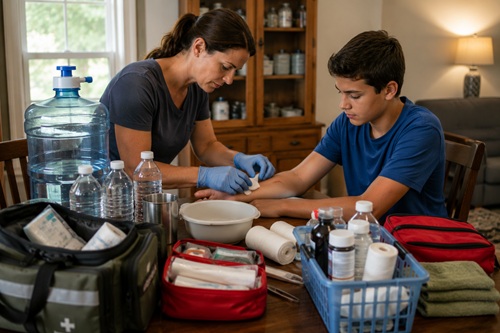
The objective is not to predict every possible medical situation but to recognize the recurring water needs already present within your household. Identifying these requirements ahead of time allows you to build realistic safety margins into your water budget while ensuring that health-related activities receive appropriate priority.
Table 7 — Medical Water Planning Worksheet
| Medical Requirement | Estimated Daily Water Requirement |
| Medication Administration | |
| Increased Hydration | |
| Wound Care | |
| Medical Equipment | |
| Infant Formula Preparation | |
| Cleaning Medical Equipment | |
| Personal Recovery Hygiene | |
| Other Medical Needs | |
| Total Daily Medical Water |
Once these values have been added to your household calculations, your water budget should now reflect not only normal daily living but also the specialized needs that often become more important during emergencies. The next step is accounting for pets, livestock, gardens, and other outdoor water requirements so your household water budget reflects every significant demand placed on your available water supply.
Calculating Water for Pets, Livestock, and Food Production
Water planning should never end at the front door of the house. Many households depend upon animals for companionship, security, transportation, food production, or income, while others rely on vegetable gardens, orchards, or greenhouses to supplement their food supply. These activities place additional demands on available water and should be included in every household water budget.
Pets are often overlooked during emergency planning because their daily water consumption appears relatively small. However, when calculated over weeks or months, these requirements become significant. Dogs, cats, birds, rabbits, reptiles, and other companion animals all require a dependable supply of clean water every day. Larger animals generally consume considerably more water than smaller ones, and consumption increases during periods of hot weather, illness, pregnancy, or increased physical activity.
Livestock requires even greater attention. Chickens, ducks, goats, sheep, pigs, cattle, horses, and other farm animals cannot simply have their water reduced during an emergency without affecting their health, productivity, and welfare. Water shortages can quickly reduce egg production, milk production, weight gain, and overall animal health. If livestock forms part of your long-term preparedness strategy, its water requirements must be treated as an essential component of your overall household budget.
Food production systems also deserve careful consideration. Vegetable gardens, fruit trees, berry bushes, greenhouses, and small orchards all require water to remain productive. Fortunately, gardening water requirements can often be reduced through practical conservation techniques such as mulching, drip irrigation, watering during cooler parts of the day, improving soil quality, and selecting drought-tolerant crops. These methods should be incorporated into your planning before an emergency rather than after water supplies become limited.
Not every outdoor activity deserves the same priority. Decorative lawns, ornamental flower beds, and non-essential landscaping may receive little or no water during prolonged emergencies. By clearly distinguishing between essential food production and non-essential outdoor watering, households can conserve substantial quantities of water while continuing to support the resources that contribute directly to long-term self-sufficiency.
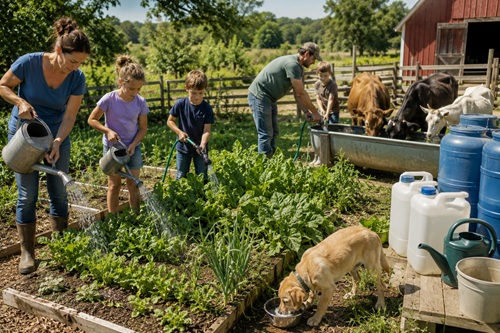
Seasonal weather also influences outdoor water demand. Gardens often require additional watering during hot, dry periods, while cooler temperatures or periods of regular rainfall significantly reduce consumption. Livestock water requirements likewise increase during summer and decline during cooler weather. Rather than creating separate water budgets for every season, many households develop an average annual budget while noting seasonal adjustments that may temporarily increase or decrease overall consumption.
When estimating outdoor water requirements, focus on realistic long-term needs rather than ideal growing conditions. During emergencies, the objective is often to maintain food production and animal health rather than maximizing yields. This practical approach produces a more sustainable water budget while reducing unnecessary consumption.
Table 8 — Pets, Livestock, and Food Production Calculator
| Water User | Estimated Daily Water Requirement |
|---|---|
| Dogs | |
| Cats | |
| Other Pets | |
| Chickens | |
| Goats | |
| Sheep | |
| Cattle | |
| Horses | |
| Vegetable Garden | |
| Orchard | |
| Greenhouse | |
| Other Outdoor Needs | |
| Total Daily Outdoor Water |
Once this worksheet has been completed, add these values to your previous calculations. You should now have a comprehensive estimate that includes nearly every significant daily demand placed on your household’s water supply.
Building Your Complete Household Water Budget
At this point, every major category of household water use has been identified and estimated. The next step is bringing those individual calculations together into one complete water budget. This combined total becomes one of the most valuable planning tools in your preparedness program because it provides a realistic picture of your household’s overall water requirements.
Many people are surprised by the final total. Drinking water alone often represents only a portion of daily household consumption. When cooking, hygiene, sanitation, cleaning, medical care, pets, livestock, and food production are added together, overall water requirements frequently become much larger than originally expected. This realization is one of the primary reasons for creating a written water budget before making decisions about storage or renewable water systems.
Combining all categories into a single daily total also allows you to identify which activities consume the greatest amount of water. Some households discover that laundry represents a significant percentage of their overall budget, while others find that livestock, gardening, or sanitation accounts for much of their daily consumption. Once these high-demand activities have been identified, conservation efforts can be focused where they will produce the greatest benefit.
A written budget also makes it easier to compare normal household consumption with emergency conservation plans. Many activities can be modified during prolonged emergencies to reduce water use while maintaining acceptable standards of health and sanitation. By comparing normal and emergency consumption side by side, households gain a much better understanding of how conservation measures extend available supplies.
The completed daily budget now becomes the foundation for long-term planning. Rather than thinking only in terms of today’s needs, you can begin projecting your household’s requirements over weeks and months. These longer planning periods are where the true value of a household water budget becomes apparent.
Table 9 — Complete Daily Household Water Budget
| Water Use Category | Estimated Daily Water Requirement |
| Drinking | |
| Cooking and Food Preparation | |
| Personal Hygiene | |
| Sanitation | |
| Laundry and Cleaning | |
| Medical Requirements | |
| Pets | |
| Livestock | |
| Gardening | |
| Other Uses | |
| Total Daily Household Water Requirement |
With your daily total now established, extend these figures into longer planning periods. Multiply your daily requirement by seven days, thirty days, ninety days, six months, and one year. These calculations provide a realistic estimate of the amount of water your household would require if normal water service remained unavailable for an extended period.
Table 10 — Long-Term Household Water Budget
| Planning Period | Estimated Water Requirement |
| One Day | |
| One Week | |
| Two Weeks | |
| One Month | |
| Three Months | |
| Six Months | |
| One Year |
For many households, this table becomes the turning point in their preparedness planning. It often demonstrates that long-term resilience depends not only on stored water but also on renewable water sources, practical conservation, and efficient water management. Instead of relying on assumptions, your household now has measurable planning targets that can guide future improvements and help identify weaknesses before an emergency occurs.
Comparing Your Water Budget with Your Available Water Supply
Creating a household water budget is only half of the planning process. The next step is comparing your calculated water requirements with the amount of water your household can actually access during an emergency. This comparison reveals whether your current level of preparedness is sufficient or whether additional storage, renewable water sources, or conservation measures are needed.
Begin by calculating the amount of potable water currently available in your home. Include commercially bottled water, food-grade storage containers, water barrels, water bricks, emergency water pouches, and any other stored drinking water that is immediately available for use. If you maintain several storage locations, combine them into one total so you have an accurate picture of your household’s overall reserve.
Next, estimate how long your stored water will last based on your completed household water budget rather than on generalized preparedness recommendations. Divide your total stored water by your estimated daily household requirement. The result provides a realistic estimate of how many days your household can continue operating before additional water must be collected from renewable sources.
Many people are surprised by this calculation. A water reserve that initially appears substantial may provide only a few weeks of support once every household activity has been included. This is not a failure of preparedness. Instead, it demonstrates why long-term planning depends upon renewable water systems rather than storage alone.
Once your stored water has been evaluated, consider the additional water available through renewable sources such as wells, rainwater harvesting systems, springs, rivers, lakes, ponds, and nearby streams. Unlike stored water, these sources cannot simply be measured in containers because their availability changes with weather, season, and environmental conditions. Instead, evaluate whether they can realistically replace the amount of water your household expects to consume each day.
This comparison often identifies weaknesses that would otherwise remain unnoticed. A household may possess several months of stored water but lack a dependable method for replacing it. Another household may have abundant renewable water nearby but insufficient storage capacity to maintain a reserve during periods of drought or equipment failure. Identifying these gaps before an emergency provides an opportunity to strengthen your overall preparedness plan.
Do not become discouraged if your calculations reveal a shortfall. One of the primary purposes of creating a household water budget is to identify areas that require improvement. Every preparedness plan evolves over time. Additional storage, improved rainwater collection, better conservation practices, upgraded purification equipment, and more efficient transportation methods all contribute to closing the gap between available water and expected consumption.
Table 11 — Water Supply Comparison Worksheet
| Water Source | Quantity Available | Estimated Days of Supply |
|---|---|---|
| Bottled Water | ||
| Water Barrels | ||
| Jerry Cans | ||
| Water Bricks | ||
| Emergency Pouches | ||
| Other Stored Water | ||
| Total Stored Water |
Below this worksheet, calculate:
Total Stored Water ÷ Daily Household Water Requirement = Estimated Days of Supply
This simple calculation provides one of the clearest indicators of your household’s current level of preparedness.
Identifying Opportunities to Reduce Water Consumption
A household water budget should not be viewed only as a measurement of consumption. It is also a valuable tool for identifying opportunities to reduce unnecessary water use while continuing to meet essential household needs. Every litre that is conserved extends stored reserves, reduces collection requirements, decreases purification workload, and improves long-term resilience.
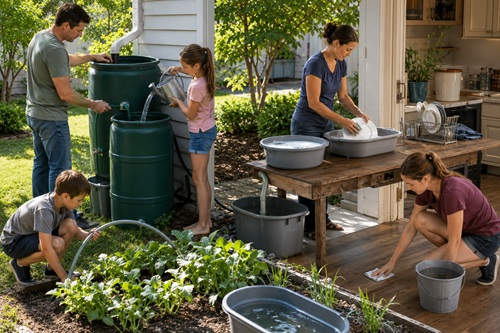
Review each category of your completed budget and ask whether the estimated water requirement represents an essential need or simply a normal habit. Many activities can be modified during prolonged emergencies without affecting health or safety. Washing dishes in a basin instead of under continuously running water, taking sponge baths rather than full showers, wearing clothing longer before laundering, and preparing one-pot meals are all examples of practical adjustments that reduce water use while maintaining acceptable living conditions.
Some categories should receive greater protection than others. Drinking water, food preparation, medications, wound care, and basic hygiene should remain the highest priorities because they directly affect health. Decorative landscaping, recreational water use, vehicle washing, and other non-essential activities should generally be reduced or eliminated if water becomes limited.
Conservation should also focus on efficiency rather than sacrifice. Repairing leaking faucets, improving irrigation methods, collecting rainwater, using mulch around food-producing plants, and selecting water-efficient equipment often produce larger long-term savings than attempting to reduce essential household activities. Small improvements made before an emergency frequently have a greater impact than drastic reductions attempted afterward.
Your completed water budget now becomes a decision-making tool. Whenever you consider adding new preparedness equipment or making changes to your property, compare those decisions against your budget. Will the improvement increase available water? Reduce daily consumption? Improve storage capacity? Strengthen renewable water sources? If so, it contributes directly to your long-term preparedness.
Table 12 — Water Conservation Opportunities
| Activity | Current Estimate | Emergency Estimate | Daily Savings |
| Drinking | |||
| Cooking | |||
| Hygiene | |||
| Laundry | |||
| Cleaning | |||
| Gardening | |||
| Other Uses | |||
| Total Daily Savings |
Completing this worksheet provides a second version of your household water budget based on emergency conservation measures. Comparing the two budgets demonstrates how thoughtful planning can significantly extend available water supplies without compromising essential household needs.
Keeping Your Water Budget Current
A household water budget should never be considered a document that is completed once and then forgotten. Households change over time, and every change influences overall water requirements. Family members are born, children grow older, pets are added, gardens expand, medical needs evolve, and preparedness equipment improves. Reviewing your budget regularly ensures that it continues to reflect your current situation rather than assumptions made years earlier.
Seasonal conditions should also be considered during routine reviews. Summer often increases drinking water requirements and garden irrigation, while winter may reduce outdoor water use but increase the effort required to collect water from renewable sources. Revisiting your calculations at different times of the year helps identify temporary adjustments that may be necessary during changing conditions.
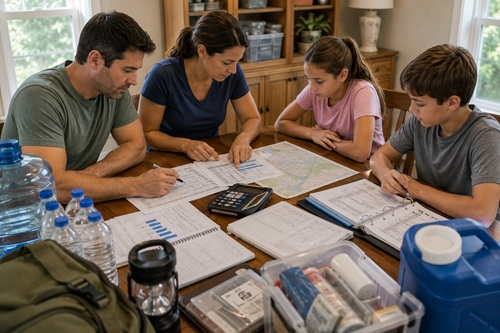
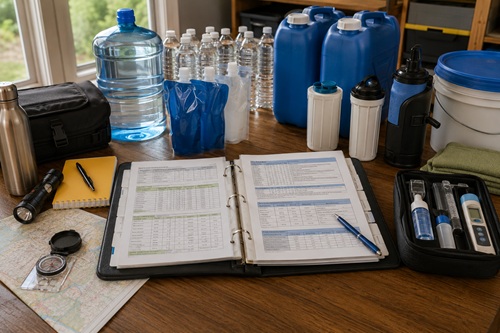
Many households find it helpful to review their water budget once each year as part of a broader emergency preparedness inspection. This annual review provides an opportunity to inspect storage containers, rotate stored water, verify purification equipment, evaluate renewable water sources, and update household consumption estimates. Combining these activities into one scheduled preparedness review simplifies long-term maintenance while keeping the entire water plan current.
Testing your budget is equally important. Try operating your household for a day or a weekend using only the amount of water allocated by your emergency budget. Practical experience often identifies opportunities for improvement that are difficult to recognize on paper. It also builds confidence by demonstrating that your calculations can realistically support everyday activities.
Preparedness is an ongoing process of observation, adjustment, and improvement. A household water budget provides the measurements needed to guide those improvements while ensuring that future decisions are based on practical information rather than assumptions.
In Summary
A household water budget transforms emergency water planning from estimates into measurable preparation. By identifying every person, animal, and activity that depends upon your available water supply, you gain a realistic understanding of your household’s true requirements. These calculations become the foundation for decisions involving water storage, purification, conservation, renewable water sources, and long-term preparedness.
The process of developing a water budget often reveals important information that would otherwise remain hidden. It identifies the activities consuming the greatest amount of water, highlights opportunities for conservation, and demonstrates how quickly even substantial water reserves may be depleted during a prolonged emergency. Most importantly, it provides measurable planning goals that allow preparedness improvements to be evaluated objectively.
A written water budget should remain a living document. Reviewing it regularly, updating it as your household changes, and testing it under realistic conditions ensures that it continues supporting your preparedness efforts for years to come.
Preparedness Action Plan
Complete your household water budget using the worksheets provided in this guide. Record every person, pet, livestock animal, and recurring activity that depends upon your available water supply. Calculate your total daily water requirement and extend those figures into weekly, monthly, ninety-day, and six-month planning periods.
Compare your completed budget with your current emergency water storage and determine how many days your existing reserves will realistically support your household. Identify any shortfalls and develop practical plans to address them through additional storage, renewable water sources, improved purification systems, or conservation measures.
Schedule an annual review of your household water budget and update it whenever significant changes occur within your household or preparedness plan. Continue refining your calculations as you gain additional experience so that your water budget remains an accurate reflection of your long-term preparedness needs.
Skills Learned
After completing this handbook, you should be able to identify every significant demand placed upon your household’s water supply, calculate realistic daily water requirements, develop long-term water budgets for extended emergencies, compare expected consumption with available supplies, and identify opportunities to improve preparedness through storage, conservation, and renewable water systems.
You should also understand how a written household water budget supports every other aspect of emergency water planning by providing measurable information that guides future preparedness decisions. Rather than relying on assumptions, you now possess a practical planning tool that can be reviewed, updated, and applied to strengthen your household’s long-term water security.
Appendices
The following appendices are designed to help you apply the concepts presented throughout this handbook. Rather than serving as additional reading, these worksheets, calculators, and reference tables are intended to become working documents that you update as your household, equipment, and preparedness plans evolve.
Appendix A — Complete Household Water Budget Worksheet
Use this worksheet to record your household’s estimated daily water requirements.
| Water Use Category | Estimated Daily Water Requirement |
|---|---|
| Drinking | |
| Cooking and Food Preparation | |
| Personal Hygiene | |
| Sanitation | |
| Laundry | |
| Household Cleaning | |
| Medical Requirements | |
| Pets | |
| Livestock | |
| Gardening | |
| Other Uses | |
| Total Daily Household Water Requirement |
Review this worksheet annually or whenever significant household changes occur.
Appendix B — Long-Term Water Budget Calculator
After calculating your daily household water requirement, extend those figures into longer planning periods.
| Planning Period | Total Water Required |
| One Day | |
| Three Days | |
| One Week | |
| Two Weeks | |
| One Month | |
| Three Months | |
| Six Months | |
| One Year |
These calculations provide realistic planning targets for emergency water storage and renewable water production.
Appendix C — Household Water User Inventory
Record everyone and everything that depends upon your available water supply.
| Water User | Quantity | Notes |
| Adults | ||
| Children | ||
| Infants | ||
| Seniors | ||
| Guests (Potential) | ||
| Dogs | ||
| Cats | ||
| Other Pets | ||
| Livestock | ||
| Gardens | ||
| Orchard | ||
| Medical Requirements | ||
| Other |
Update this inventory whenever your household changes.
Appendix D — Water Storage Inventory
Maintaining an accurate inventory makes it easier to determine how long your emergency reserves will last.
| Storage Type | Quantity | Capacity | Total Water |
| Bottled Water | |||
| Water Barrels | |||
| Water Bricks | |||
| Jerry Cans | |||
| Emergency Water Pouches | |||
| Other Containers | |||
| Total Stored Water |
Below the table, calculate:
Total Stored Water ÷ Daily Household Water Requirement = Estimated Days of Supply
Appendix E — Renewable Water Sources
List every renewable water source available to your household.
| Water Source | Distance | Seasonal Reliability | Treatment Required | Primary / Backup |
| Private Well | ||||
| Spring | ||||
| Creek | ||||
| River | ||||
| Lake | ||||
| Rainwater Collection | ||||
| Other |
Revisit these sources regularly and update your observations as conditions change.
Appendix F — Water Conservation Planner
Identify opportunities to reduce water consumption during prolonged emergencies.
| Activity | Current Use | Emergency Use | Daily Savings |
| Drinking | |||
| Cooking | |||
| Hygiene | |||
| Laundry | |||
| Cleaning | |||
| Gardening | |||
| Other | |||
| Estimated Daily Savings |
This worksheet helps determine how conservation extends available water supplies.
Appendix G — Annual Household Water Review
Complete this review once each year to ensure your water budget remains accurate.
| Annual Review Item | Complete |
| Household water budget updated | ☐ |
| Water storage inventory verified | ☐ |
| Stored water inspected | ☐ |
| Water rotated as scheduled | ☐ |
| Renewable water sources inspected | ☐ |
| Purification equipment tested | ☐ |
| Replacement filters stocked | ☐ |
| Purification chemicals within shelf life | ☐ |
| Transportation equipment inspected | ☐ |
| Water conservation plan reviewed | ☐ |
| Household emergency water exercise completed | ☐ |
| Household water budget revised if necessary | ☐ |
Appendix H — Quick Reference Tables
Typical Household Water Planning Periods
| Planning Goal | Recommended Calculation |
| Short-Term Emergency | Daily × 7 Days |
| Extended Emergency | Daily × 30 Days |
| Seasonal Emergency | Daily × 90 Days |
| Long-Term Emergency | Daily × 180 Days |
| Annual Planning | Daily × 365 Days |
Water Budget Priorities
| Highest Priority | Moderate Priority | Lowest Priority |
| Drinking | Laundry | Decorative Landscaping |
| Food Preparation | Household Cleaning | Vehicle Washing |
| Medications | Gardening | Recreational Water Use |
| Hygiene | Livestock | Non-Essential Cleaning |
| Infant Care | Pets | Other Non-Essential Uses |
Household Water Budget Formula
| Formula | Purpose |
| Daily Requirement × Number of Days | Total Water Needed |
| Total Stored Water ÷ Daily Requirement | Days of Available Supply |
| Daily Requirement − Daily Conservation Savings | Emergency Daily Requirement |
Final Notes
A household water budget is much more than a collection of numbers. It is a practical planning tool that allows preparedness decisions to be based on measurable information rather than assumptions. As your household changes, your water budget should change with it.
Review it regularly, compare it with your available water supplies, and use it to guide future improvements in storage, purification, conservation, and renewable water collection. Every revision strengthens your preparedness and increases your confidence that your household can continue meeting its water needs during both short-term disruptions and prolonged emergencies.
© Prepping Communities. This content is for informational purposes only and not professional advice. Use at your own risk.
Terms | Privacy | Guidelines