

Could You Stay Connected During a 14-Day Emergency?
Prepping Communities | Emergency Preparedness Checklists
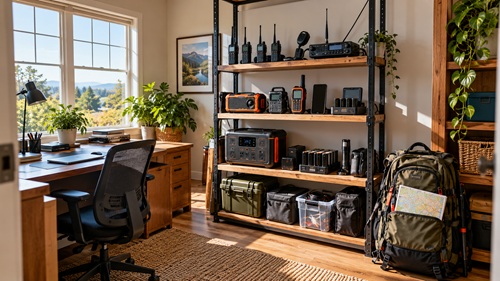
Most households have several ways to communicate. Mobile phones, internet connections, messaging applications, and home telephone services make it easy to contact family members, receive information, and request assistance. These services have become so familiar that many people rarely consider how dependent they are on the infrastructure supporting them.
A widespread emergency can change that quickly. Cellular towers may lose power, networks can become congested, internet connections may fail, and damaged infrastructure can prevent calls or messages from reaching their destinations. A household might have several fully charged phones but no reliable way to contact anyone outside the immediate area.
Imagine a severe storm that damages electrical and communication infrastructure across an entire region. One parent is at work, another is travelling home, and a child is still at school. Calls fail, messages remain undelivered, and nobody knows exactly when normal service will return. The problem isn’t necessarily that the family lacks communication devices. It’s that the devices they normally depend on may all rely on infrastructure affected by the same disruption.
Some households own emergency radios, handheld two-way radios, satellite communication devices, or portable charging equipment. These resources can improve preparedness, but their usefulness depends on coverage, compatibility, operating knowledge, power availability, and the circumstances in which they are needed.
An Emergency Communication Equipment Inventory helps households examine the communication equipment they already own, understand how each device operates, identify shared dependencies, and determine whether suitable alternatives are available when normal services fail.
The accompanying downloadable color checklist is designed to support equipment inspections, battery and charging assessments, communication coverage testing, emergency contact planning, and a Day 1, Day 7, and Day 14 assessment. It also helps households establish a practical communication fallback plan and document improvements before an emergency occurs.
The objective isn’t to own every type of communication equipment available. It’s to establish dependable ways to receive emergency information, maintain contact with important people, and request assistance when ordinary communication services become unreliable or unavailable.
Why an Emergency Communication Inventory Matters
Communication equipment is often scattered throughout a household. Mobile phones are carried throughout the day, portable chargers may be stored in backpacks, emergency radios might remain in cupboards, and handheld two-way radios may only be used during camping trips or outdoor activities.
Because these devices are rarely examined together, households may not recognize that several apparently independent communication methods depend on the same infrastructure.
For example, mobile phone calls, messaging applications, and internet-based telephone services may all become unavailable if local cellular and broadband infrastructure fail. Having three different applications or devices does not necessarily provide three independent communication methods.
An emergency inventory helps reveal these shared dependencies. It identifies which devices require cellular networks, internet access, radio repeaters, satellite services, or other external systems. It also establishes whether equipment can communicate directly with another device without relying on infrastructure that may be unavailable.
Condition and compatibility matter as well. Rechargeable batteries deteriorate, charging cables disappear, antennas become damaged, and software or subscription requirements may change. Equipment that worked several years ago should not automatically be considered dependable today.
The inventory provides an opportunity to inspect these resources before they are needed. More importantly, it encourages households to consider what would happen if their preferred communication method failed and whether another practical method would remain available.
Begin With Your Household’s Communication Requirements
Before examining equipment, consider who needs to communicate, where those people are likely to be, and what information they may need during an emergency.
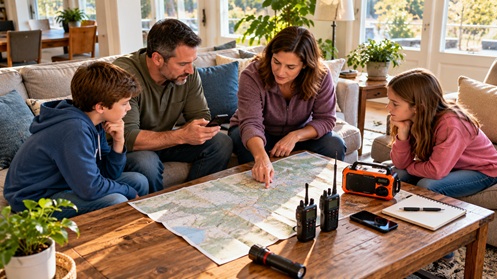
A household in which everyone normally remains close to home may have different requirements from one where family members regularly travel long distances for work, school, or other responsibilities. People living alone may need reliable ways to contact relatives, neighbours, caregivers, or emergency services. Households with children, older adults, or people requiring ongoing assistance may have additional communication needs.
Location is another important consideration. Urban households may have several cellular networks available but experience congestion during major emergencies. Rural households may have limited coverage even under normal conditions. Mountainous terrain, dense forests, large buildings, and remote travel routes can further restrict communication options.
The first step is identifying the communication tasks that matter most. These may include receiving official emergency warnings, contacting emergency services, confirming the safety of household members, coordinating a meeting location, and obtaining information about road closures, evacuation instructions, or available assistance.
Not every task requires the same equipment. A broadcast radio may be useful for receiving information but cannot transmit a request for help. A handheld two-way radio may allow communication between nearby household members but be unable to reach someone in another city. A satellite messenger may provide wider geographic reach but depend on satellite visibility, service availability, and a functioning subscription.
The inventory should therefore examine communication capabilities rather than simply counting devices. A household with several mobile phones may still have no dependable alternative if cellular service becomes unavailable.
Understanding Communication Methods and Their Limitations
Emergency communication equipment can be divided into systems that depend on external infrastructure and those capable of operating more independently.
Mobile phones and internet-based communication generally depend on networks operated by service providers. These networks can be highly reliable, but their availability during an emergency depends on infrastructure, electrical power, network capacity, and the extent of the disruption.
Some radio equipment allows direct communication between devices without cellular towers or internet access. This can be useful when household members are relatively close together, although effective range depends on terrain, buildings, antenna characteristics, equipment power, and applicable operating restrictions.
Other communication systems use repeaters, satellite networks, or specialized infrastructure to extend coverage. These arrangements may provide important capabilities, but they introduce additional dependencies that should be understood before an emergency occurs.
A useful inventory distinguishes between receiving information, transmitting information, and maintaining two-way communication. A household may have a radio capable of receiving official broadcasts but no equipment capable of sending a message if telephone networks fail.
Understanding these differences helps readers avoid purchasing equipment that does not address their actual communication requirements.
Mobile Phones and Cellular Communication
Mobile phones are likely to remain the primary communication devices for many households during the early stages of an emergency. They provide voice calling, messaging, internet access, location services, and access to official emergency information when supporting networks remain available.
Their usefulness, however, depends on more than battery charge. Cellular towers and associated network infrastructure require electrical power, communication links, and functioning equipment. Backup power arrangements may keep some infrastructure operating during outages, but their duration and availability vary.

Network congestion can create additional problems. During a major emergency, large numbers of people may attempt to contact relatives or obtain information at the same time. Calls may fail even when a phone displays a network connection. Text messages may sometimes succeed when voice calls are congested, but delivery is not guaranteed.
During the inventory, examine each household phone’s battery condition, charging requirements, service provider, and available emergency features. Confirm that suitable charging cables, power banks, and compatible adapters are available.
Some modern phones support emergency satellite messaging or other specialized functions in certain regions. These capabilities depend on the device, software, service availability, geographic coverage, and operating conditions. Households should verify the features actually supported by their equipment rather than assuming all phones offer the same emergency capabilities.
It is also worth checking whether emergency contact information remains accessible when internet services are unavailable. A phone that relies entirely on cloud-based contacts may be less useful if the information has not been stored locally.
The inventory should establish how long each phone could remain powered and what alternative communication arrangements would be available if cellular service stopped working.
Emergency Broadcast Radios and Public Warning Information
Receiving reliable information is one of the most important communication requirements during a prolonged disruption. Emergency broadcasts may provide warnings, evacuation instructions, weather updates, public safety announcements, and information about available services.
Battery-powered AM/FM radios can provide access to broadcast information without requiring cellular or internet connectivity, provided suitable stations remain operational and reception is available.

Some regions also operate dedicated weather radio services or public warning systems. Their availability, frequencies, alerting capabilities, and equipment requirements vary internationally. A radio designed for one country’s emergency broadcasting system may not provide the same functions elsewhere.
Hand-crank and solar-assisted radios may offer additional charging options, but their capabilities should be tested realistically. A hand-crank mechanism may provide limited operating time for the effort required, while small integrated solar panels may charge slowly or produce little energy under poor lighting conditions.
Examine the radio’s reception, antenna condition, speaker, controls, battery compartment, and available charging methods. Test whether useful local broadcasts can actually be received from the locations where the radio is likely to be used.
A radio that works perfectly but cannot receive relevant stations in the household’s area may provide limited emergency value. Similarly, a receiver that depends on disposable batteries requires a suitable replacement supply.
The inventory should identify which broadcasts are available, which devices can receive them, and how long those devices could operate without normal electrical service.
Handheld Two-Way Radios and Local Communication
Handheld two-way radios can provide a practical method of communication between household members who are relatively close together. Depending on the equipment and applicable regulations, they may allow direct communication without cellular networks or internet access.
These devices can be useful when family members are working around a property, travelling in separate vehicles, or coordinating activities within an area where direct radio coverage is available.
Their limitations are often misunderstood. Manufacturers may advertise substantial communication ranges under ideal conditions, but actual performance can be much shorter in residential neighbourhoods, forests, valleys, or mountainous terrain.

Buildings, hills, vegetation, antenna placement, and interference can all affect reception. Two radios that communicate clearly across an open field may struggle to maintain contact between opposite sides of a developed community.
Radio services and licensing rules also vary internationally. Equipment sold for FRS or GMRS use in North America may not be appropriate or legally authorized for use in other countries. PMR446 equipment is common in parts of Europe, while other regions have their own permitted frequencies, power limits, and equipment requirements.
Households should confirm which radio services are legally available in their location before purchasing or operating transmitting equipment.
The inventory should establish each radio’s condition, battery requirements, charging arrangements, antenna condition, and compatibility with other household radios. More importantly, it should determine whether the devices can communicate across the distances and terrain that matter to the household.
Amateur Radio Equipment and Emergency Communication
Amateur radio can provide communication capabilities beyond those of ordinary short-range consumer radios. Depending on the equipment, frequencies, operating conditions, and available infrastructure, licensed operators may be able to communicate locally, regionally, or over much greater distances.
However, amateur radio is not simply a matter of purchasing a handheld transceiver and expecting it to work during an emergency. Effective operation requires understanding frequencies, antennas, propagation, equipment limitations, and applicable licensing requirements.

Some amateur radio communications depend on repeaters, which may themselves require electricity and supporting infrastructure. Direct radio communication can reduce certain dependencies, but range and reliability remain influenced by terrain, antenna systems, frequency selection, and atmospheric conditions.
For households interested in amateur radio, training and licensing should be considered part of the preparedness investment. Learning how to operate equipment before an emergency is considerably more useful than attempting to understand an unfamiliar radio during a crisis.
The inventory should identify whether household members hold the required authorizations, whether equipment is operational, which communication methods are available, and whether the household has tested its ability to contact suitable stations.
Amateur radio may strengthen a broader communication plan, but it should not be presented as a guaranteed replacement for emergency services or official public warning systems.
Advanced Communication Considerations for Experienced Preppers
Households that already own emergency communication equipment may benefit from examining how effectively their devices work together rather than simply adding more radios or accessories. An experienced prepper may have handheld radios, an amateur radio station, satellite communication equipment, and several backup power sources, yet still encounter difficulties if the equipment is incompatible, operating procedures are unclear, or communication arrangements have never been tested under realistic conditions.
One important consideration is establishing consistent radio operating procedures. Two people may own compatible radios but fail to communicate because they are using different channels, incompatible settings, or equipment configurations. Household members should understand how to select the appropriate legally authorized channel or frequency, adjust basic controls, and recognize when another person is attempting contact. Where permitted, agreed monitoring periods can help conserve battery power while providing opportunities to exchange information.
Clear communication procedures can also reduce misunderstandings. During an emergency, radio messages should be brief, understandable, and focused on information that matters. A person reporting their location, safety status, or a change in plans should communicate those details clearly enough that the receiving person can confirm what was understood. Repeating critical information back to the sender can help prevent mistakes, particularly when reception is weak or intermittent.
Antenna performance deserves attention because radio coverage depends on more than transmitter power. Antenna design, placement, height, orientation, surrounding terrain, and nearby obstructions can all influence communication range. A handheld radio operating from inside a building may have difficulty reaching another location, while moving to a safe outdoor position with fewer obstructions may improve reception. For equipment designed to use external antennas, an appropriately installed and compatible antenna system may provide a meaningful improvement without requiring a more powerful radio.
Communication interoperability is another consideration. Radios that look similar may operate on different frequency bands, use different modulation methods, or require settings that prevent direct communication. Equipment intended for one radio service may not be compatible with another, even when both devices are functioning correctly. Before relying on multiple radios as part of a household communication plan, confirm that the intended devices can communicate legally and successfully under the conditions in which they will be used.
Privacy and communication security should also be understood. Many ordinary consumer two-way radios do not provide confidential communication, and transmissions may be received by other people using compatible equipment. Features sometimes described as privacy codes generally reduce unwanted audio from other users; they do not encrypt transmissions or prevent others from listening. Households should avoid transmitting sensitive personal information, detailed security arrangements, or unnecessary information about their location and movements over communication channels that may be monitored.
More advanced communication equipment may offer additional capabilities, but these should not be confused with guaranteed privacy or reliability. Encryption rules differ between radio services and jurisdictions, and encryption is generally prohibited on amateur radio communications. Equipment should always be operated in accordance with applicable laws and licensing requirements.
Experienced preppers may also benefit from examining how their communication arrangements respond to individual equipment failures. A radio station that depends on one antenna, one battery, or one charging method may become unusable if that component fails. Similarly, a household with several radios but only one compatible charger may discover that its apparent equipment redundancy is less dependable than expected.
A practical assessment should therefore consider whether essential communication capabilities depend on a single component and whether suitable alternatives are available. This does not necessarily mean purchasing duplicate equipment. Maintaining compatible charging accessories, understanding alternative operating arrangements, protecting existing equipment, and learning how to use available resources effectively can improve reliability without significant additional expense.
These considerations become particularly valuable during an extended disruption, when equipment may need to operate under changing conditions and replacement parts or technical assistance may be difficult to obtain. A household that has already established operating procedures, tested equipment compatibility, understood its coverage limitations, and identified important dependencies is better positioned to adapt when one communication method becomes unavailable.
The objective is not to build the most sophisticated communication system possible. It is to ensure that the equipment already available can be operated effectively, legally, and safely by the people who may need to depend on it.
Evaluate Your Advanced Communication Readiness
An experienced prepper may already own several communication devices, but the more important consideration is whether those devices can operate together under realistic emergency conditions. A useful assessment should examine operating procedures, equipment compatibility, antenna performance, communication privacy, and the ability to continue communicating when an important component becomes unavailable.
Begin by confirming that household members understand the operating procedures for their communication equipment. Compatible radios should be configured appropriately, and users should know which legally authorized channels or frequencies are intended for routine communication. Agreed monitoring periods and simple message confirmation procedures can help reduce confusion when reception is unreliable.
Next, consider antenna performance and actual coverage. Determine whether communication has been tested from the locations where equipment is likely to be used, whether terrain or buildings create significant limitations, and whether safe changes in antenna placement could improve reception.
Equipment interoperability should also be verified. Radios operating on different services, frequencies, or incompatible settings may not communicate directly. Charging arrangements, batteries, antennas, and other accessories should be checked for compatibility rather than assumed to be interchangeable.
Communication privacy deserves attention as well. Household members should understand that ordinary consumer radio transmissions may be heard by others and that privacy codes do not provide encryption. Sensitive information should not be transmitted over channels that cannot provide appropriate confidentiality.
Finally, examine whether essential communication capabilities depend on a single component. A damaged antenna, failed charger, depleted battery, or unavailable repeater could make otherwise functional equipment unusable. Identifying these dependencies helps determine which maintenance tasks, alternative arrangements, or replacement components deserve priority.
The findings should be recorded in the Emergency Communication Equipment Inventory Checklist, along with any equipment limitations, unsuccessful tests, and corrective actions requiring attention.
The purpose of this assessment is to establish whether the household’s communication arrangements have been tested and understood, not simply whether the necessary equipment is present.
For households interested in developing more advanced communication capabilities, the Advanced Off-Grid Communication Techniques guide provides an opportunity to explore the subject beyond a basic equipment inventory.
Understanding how communication systems operate without conventional infrastructure can help experienced preppers evaluate additional methods, improve their technical knowledge, and recognize limitations in their existing arrangements. These skills become particularly valuable when cellular networks, internet services, or other supporting infrastructure are unavailable.
Readers who want to continue developing their knowledge can explore Advanced Off-Grid Communication Techniques as a companion resource to this inventory. The two guides serve different purposes: this posting helps households determine whether their communication arrangements are dependable, while the advanced guide offers an opportunity for further learning about off-grid communications.
Satellite Communication Devices
Satellite communication equipment may provide an alternative when terrestrial communication networks are unavailable. Depending on the device and service, satellite messengers and satellite telephones can support text messaging, location sharing, voice communication, or emergency assistance requests.
These capabilities can be particularly useful for households in remote areas or people travelling where cellular coverage is unreliable. However, satellite equipment introduces its own limitations.
Many devices require an active subscription or service arrangement. Some depend on a paired mobile phone or application, while others operate independently. Coverage varies by provider and geographic region, and reliable operation may require a sufficiently clear view of the sky.

Buildings, dense tree cover, steep terrain, and other obstructions can interfere with satellite connectivity. A device that works well in an open field may perform poorly inside a building or deep valley.
During the inventory, confirm that the equipment is activated, the subscription remains valid, the battery is serviceable, and any required software or paired devices are available. Familiarity with the equipment’s emergency functions is particularly important because procedures differ between manufacturers.
Where the provider offers a permitted test function, households should use it according to the manufacturer’s instructions. Actual emergency distress functions should never be activated merely to test equipment unless the provider explicitly supplies an approved testing procedure.
Satellite communication can provide valuable redundancy, but it should be assessed as one component of a broader communication plan rather than assumed to work under every circumstance.
Internet Connections and Home Networking Equipment
Many households rely on internet connections for messaging, voice calls, news, security systems, and access to emergency information. During a power outage, these services may stop working because household networking equipment loses electricity, even when the external network remains operational.
A modem, router, fibre terminal, or other network device may require continuous power. A compatible backup battery or power station could keep this equipment operating for a limited period, but doing so will not restore service if the provider’s external infrastructure has failed.

This distinction is important because households may spend money powering networking equipment without confirming whether the connection itself can remain available during a regional disruption.
The inventory should identify the equipment required for the household’s internet connection, its power consumption, and any backup arrangements already available. Consider whether internet-based telephone services, security equipment, or other important functions depend on the same connection.
Where practical, households can test whether their networking equipment operates from an appropriate backup source without disrupting essential services. The results should be documented alongside the equipment’s estimated energy requirements.
A dependable communication plan should not assume that maintaining electricity to a router guarantees internet access.
Emergency Charging Equipment and Battery Management
Communication devices are only useful while they have sufficient electrical power to operate. Mobile phones, handheld radios, satellite messengers, and other equipment may have different charging requirements, making compatibility an important part of the inventory.
A household might own several portable power banks but discover that none supports the charging connector or output required by a particular radio. Another household may have a solar charger but lack the correct adapter for its satellite communication device.
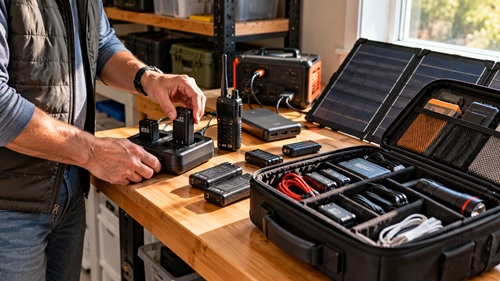
Examine rechargeable batteries, spare battery packs, charging cables, adapters, and portable charging equipment. Confirm that batteries remain serviceable and that the charging arrangements are compatible with the devices they are intended to support.
Battery capacity should also be considered alongside expected operating demand. A radio that remains powered for several days in standby mode may consume energy much faster during frequent transmissions. Mobile phones may also use additional energy when searching for weak cellular signals.
For equipment with predictable power consumption, estimated operating duration can be calculated using usable battery energy and average device demand. However, manufacturer specifications and practical testing are generally more dependable than assuming a fixed consumption rate.
The inventory should establish which devices can be recharged, how often charging may be required, and whether the available power reserve can support those needs throughout the intended emergency period.
Test Communication Range and Coverage Before an Emergency
A communication inventory becomes considerably more valuable when households test whether their equipment works across the locations where it may actually be needed.
A pair of handheld radios may communicate clearly inside a house but fail when one person travels several kilometres away. A satellite messenger may connect reliably from an open yard but struggle beneath dense trees. A broadcast radio may receive strong signals near a window while performing poorly in a basement.
These differences cannot always be predicted from manufacturer specifications. A radio advertised as having a long communication range may perform poorly in the exact location where a household expects to use it.
Begin by identifying realistic communication locations, such as the home, workplace, school, nearby meeting point, or another location included in the household emergency plan. Select suitable equipment and arrange a controlled test with participating household members.
For two-way radios, confirm that the devices operate on compatible, legally authorized channels and that both users understand the basic controls. Test communication from safe, accessible locations while respecting applicable operating rules.
Record the locations tested, approximate distance between users, terrain or buildings affecting the signal, equipment used, and whether communication succeeded. Note whether messages were clear, intermittent, or impossible to understand.
For example, two handheld radios might communicate reliably between a house and a nearby park but lose contact when one person moves behind a hill. That result identifies a specific coverage limitation. The household should not assume those radios will work across other locations simply because their advertised range appears sufficient.

Broadcast receivers can be tested by checking reception of relevant local stations. Satellite equipment should be assessed using approved non-emergency test procedures where available.
The purpose is not to establish the maximum possible range under ideal conditions. It is to distinguish tested communication coverage from assumed coverage and identify where alternative arrangements may be necessary.
Establish a Household Emergency Communication Plan
Equipment alone cannot ensure that family members will know what to do when normal communication services fail. A household communication plan establishes how people will attempt to contact one another, what alternatives they will use, and where they should meet if communication becomes impossible.
Consider a family whose members are separated when a regional power outage disrupts cellular and internet services. One adult remains at work, another is travelling, and a child is at school. Repeated calls fail, and messages are not delivered. Without an agreed plan, family members may make conflicting decisions about where to go or whom to contact.
A household that has discussed these circumstances beforehand can make more informed decisions. Family members may already know the school’s emergency procedures, the designated meeting location, and which trusted person can help coordinate information if ordinary communication becomes unavailable. These arrangements should account for official emergency instructions and avoid unnecessary travel into hazardous conditions.
Begin by identifying important contacts, including household members, relatives, caregivers, schools, workplaces, and other people who may need to exchange information during an emergency.
Contact information should be available in more than one form. Mobile phones are convenient, but a printed contact record can remain useful when devices are damaged, discharged, or inaccessible. Sensitive personal information should be stored securely and shared only with people who have a legitimate need for it.
The plan should identify a primary communication method and practical alternatives. A designated meeting location may become important when communication cannot be restored, but the location should be appropriate for the hazards the household may face and should not override evacuation instructions.
An out-of-area contact can sometimes help family members exchange information when local networks are disrupted, although this arrangement also depends on communication services remaining available.
Household members should understand the plan before an emergency occurs. Children and people requiring assistance may need age-appropriate instructions, accessible equipment, or support from a designated caregiver.
Develop a PACE Emergency Communication Plan
A household may own several communication devices and have a general understanding of what to do when normal services fail, but that doesn’t necessarily mean its backup arrangements are organized. During an emergency, family members may be separated, communication networks may become unreliable, and people may have limited time to decide which method to use next.
One established approach to organizing communication alternatives is known as PACE, which stands for Primary, Alternate, Contingency, and Emergency. The framework is used in military and emergency management environments and can be adapted to household preparedness.
The principle is straightforward. Rather than depending on one communication method, a household identifies several options in advance and establishes when each should be used. Ideally, those options rely on different equipment or supporting infrastructure so that a single failure is less likely to disable every available method.
Primary is the communication method normally used when services are functioning. For many households, this will be mobile phone calls or another familiar service.
Alternate provides a practical replacement when the primary method becomes unreliable. Text messaging, for example, may sometimes succeed when voice calls are congested, although both methods can depend on the same cellular infrastructure.
Contingency provides another option when the first two methods are unavailable. Suitable handheld two-way radios may allow direct communication between household members within tested coverage areas without relying on cellular networks.
Emergency is the final planned option when the other methods cannot meet the communication requirement. Depending on the household’s circumstances, this might involve a satellite communication device, an established contact arrangement, or another method capable of supporting the required communication task.
Example: A Household PACE Communication Plan
| PACE level | Communication method | When it may be used |
|---|---|---|
| Primary | Mobile phone calls | Normal communication |
| Alternate | Text messaging | Voice calls fail but messaging remains available |
| Contingency | Compatible two-way radios | Cellular services fail and users are within tested radio range |
| Emergency | Satellite messenger | Terrestrial networks are unavailable and satellite service is accessible |
This example illustrates how PACE can organize communication alternatives, but it also reveals an important limitation. Mobile calls and text messages may depend on the same cellular infrastructure, while handheld radios and satellite messengers have different coverage requirements. A method that works for communicating across a property may not work for contacting someone in another city.
A household should therefore develop its PACE arrangements around specific communication requirements rather than assume that the same four methods will work for every situation.
Consider a severe storm that damages electrical and cellular infrastructure. Family members initially attempt mobile calls, but the calls fail. Text messages may still be delivered if sufficient network service remains available. If cellular communication becomes unavailable, compatible two-way radios could provide local communication within their tested range. A satellite messenger might offer another way to contact someone outside the affected area, provided the device, service, and operating conditions support that function.
The important consideration is not simply moving through four devices. Each alternative must be capable of reaching the intended person or providing the required information under the conditions being considered.
Avoid Communication Methods That Share the Same Dependencies
One weakness in a poorly developed PACE plan is assuming that different applications represent independent communication methods. Mobile calls, text messages, internet messaging, and email may appear to provide several alternatives, but some or all may depend on the same cellular or broadband infrastructure.
If that infrastructure fails, multiple communication methods could become unavailable simultaneously. A dependable PACE plan should therefore examine the underlying dependencies of each option, including network availability, electrical power, compatible equipment, service subscriptions, and communication coverage.
Complete independence may not always be practical or affordable. The objective is to recognize shared dependencies and reduce the likelihood that one disruption will eliminate every method needed for an essential communication task.
Make Your PACE Plan Practical
A useful household PACE plan should identify who needs to communicate, which method will be attempted first, when an alternative should be used, and what equipment is required. Where radios are involved, household members should understand the agreed legally authorized channels, compatible settings, and monitoring arrangements.
Check-in schedules, out-of-area contacts, and predetermined meeting locations may also support the plan. These arrangements become particularly important when family members are separated or when electronic communication cannot be restored.
PACE should not delay urgent action. If someone requires immediate emergency assistance, they should use any available appropriate method to contact emergency services rather than waiting to work through every level in sequence. Official evacuation instructions and immediate safety requirements also take precedence over routine communication arrangements.
The plan should be tested under realistic, safe conditions. Household members can verify equipment compatibility, test communication coverage, confirm charging arrangements, and practice moving between their planned methods without activating emergency distress services or creating unnecessary risks.
Record the results in the Emergency Communication Equipment Inventory Checklist, including methods that worked, limitations discovered, and improvements required.
A PACE plan is only as dependable as the communication methods behind it. Its value comes from identifying alternatives before an emergency, understanding their limitations, and ensuring that household members know how to use them.
Establish a Communication Fallback Plan
A household communication plan becomes more dependable when it establishes what people should do if their preferred method of contact stops working. A plan that relies entirely on mobile phones may be difficult to follow when cellular networks become unavailable, particularly if family members are separated across different locations.
The fallback plan should reflect the equipment actually available, the locations where household members may be separated, and the communication methods that have been tested successfully. It should also account for people who may not have access to the same devices or who require assistance following emergency arrangements.
For example, a household might normally begin with mobile calls or messaging. If those methods fail, family members could attempt another available service, use suitable two-way radios within their verified coverage area, or contact an agreed out-of-area person when possible. If electronic communication remains unavailable, predetermined meeting arrangements may become the next practical option.
These alternatives should not be treated as guaranteed solutions. Two-way radios may have insufficient range, satellite equipment may be unavailable, and alternative networks may be affected by the same disruption.
A useful fallback plan identifies what household members should do when one communication method fails and when they should move to another arrangement. Repeatedly attempting the same unsuccessful connection can waste battery power, create confusion, and delay other necessary decisions. Having a previously agreed sequence helps people respond more consistently, even when they cannot communicate directly.
Consider a family whose members are separated between home, work, and school when a regional power outage disrupts cellular and internet services. One parent may be unable to contact the school, while another is travelling through an area with limited reception. Without an agreed plan, family members may make conflicting decisions about where to go or whom to contact.
If the family has already established suitable meeting arrangements, identified a trusted out-of-area contact, and reviewed the school’s emergency procedures, they have a clearer basis for deciding what to do. Those arrangements must remain flexible, however, because road closures, evacuation instructions, or other hazards may make a previously selected meeting location unsafe.
The plan should also consider people who cannot travel independently. Children at school, older adults receiving care, and household members with mobility limitations may depend on established school reunification procedures, caregivers, or other designated assistance. These arrangements should be coordinated beforehand rather than improvised during a disruption.
An unsuccessful communication attempt does not necessarily indicate that someone is in danger. Networks may be unavailable, batteries may be depleted, or circumstances may prevent a person from responding. The fallback plan should distinguish between an inability to establish contact and reliable information indicating that immediate assistance is required.
When someone faces an immediate threat to life or safety, available emergency services should be contacted without waiting to complete a routine communication sequence. Official evacuation instructions and immediate protective actions should always take precedence over informal household meeting arrangements.
The purpose of a communication fallback plan is to reduce uncertainty. When household members understand what to try next and what arrangements apply if communication remains unavailable, they are less likely to depend on repeated unsuccessful calls or make conflicting decisions.
Establish Household Communication Check-In Arrangements
Communication equipment may remain functional during an emergency while battery capacity, network availability, or opportunities to transmit messages become limited. Establishing reasonable check-in arrangements can help household members exchange important information without requiring continuous communication.
A household might agree to attempt contact at certain times during an extended disruption. These arrangements should reflect work schedules, school responsibilities, travel conditions, caregiving needs, and the availability of communication equipment. A person who is travelling or assisting others may not be able to respond at precisely the agreed time, so the plan should allow for reasonable delays.
Check-ins should communicate useful information rather than require lengthy conversations. Confirming that someone is safe, identifying their general location, and communicating an important change in plans may be more valuable than repeatedly discussing conditions that have not changed.
For example, family members using battery-powered two-way radios within a tested coverage area might agree on specific periods when they will attempt contact. This can reduce unnecessary transmissions and conserve power. However, the arrangement must account for the possibility that someone may need to communicate an urgent message outside the scheduled period.
Devices intended to receive emergency warnings or urgent assistance requests should not be switched off simply to conserve electricity without considering the consequences. The appropriate balance between battery conservation and communication availability depends on the household’s circumstances and the equipment involved.
The plan should identify what happens when a scheduled check-in is missed. Family members may attempt an alternative communication method, contact a designated trusted person, or follow previously established arrangements. A missed check-in alone should not automatically trigger unnecessary emergency calls or travel into hazardous conditions.
Written contact information and check-in arrangements should remain accessible if mobile phones or internet services become unavailable. Household members should understand the procedures before an emergency, particularly when children or people requiring assistance are involved.
These arrangements do not guarantee that everyone will remain in contact. They provide a practical method for reducing confusion and conserving limited communication resources when normal services are disrupted.
Conduct a Practical Household Communication Exercise
An equipment inventory becomes more valuable when the household tests whether its communication plan can actually be carried out. A device may function correctly during a basic inspection but fail to support the communication task assigned to it.
Begin with a controlled exercise involving two household members in safe, accessible locations. Attempt contact using the normal communication method, then test a designated alternative. The exercise should reflect realistic circumstances without deliberately interfering with essential communication services.
For example, one person might remain at home while another travels to a nearby location included in the household’s emergency plan. The participants could test whether their handheld radios provide dependable communication across that distance. If the signal becomes weak or communication fails, record the location and any apparent obstructions rather than assuming the radios will perform better during an actual emergency.
The exercise should also examine whether emergency contact information can be accessed without internet service. Household members can verify that important telephone numbers, meeting arrangements, and relevant instructions are available in an appropriate offline format.
Charging arrangements deserve attention as well. Confirm that the equipment can operate from its intended battery supply and that compatible charging cables, adapters, and replacement batteries are available. Where practical, compare observed operating duration with manufacturer information or previous test results.
The fallback plan can be tested through discussion or a planned simulation. Ask household members what they would do if their primary communication method became unavailable, how they would attempt an alternative, and what arrangements would apply if contact could not be restored.
Do not make unnecessary calls to emergency services, activate genuine distress alerts, transmit on unauthorized radio frequencies, or create unsafe situations to test the plan. Satellite devices should only be tested through manufacturer-approved non-emergency procedures.
Record the communication method, locations tested, approximate distance where relevant, equipment condition, whether communication succeeded, and any limitations discovered. The results should identify which arrangements have been verified and which remain untested.
A successful exercise does not guarantee that the same equipment will work under every emergency condition. It does, however, provide a more dependable basis for planning than relying entirely on advertised range or assumed network availability.
Assess Your Communication Capability on Day 1, Day 7, and Day 14
Communication preparedness should be evaluated over time because equipment batteries, charging resources, subscriptions, and external infrastructure may not remain dependable throughout an extended disruption.
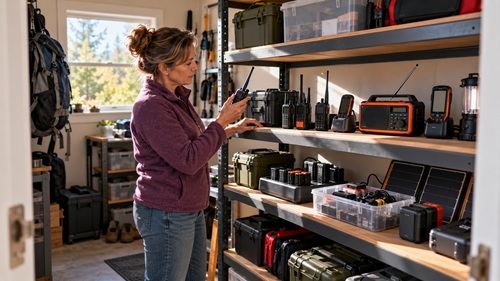
The assessment should consider three distinct capabilities: receiving official emergency information, contacting household members or other important people, and requesting assistance. These functions are related, but the equipment needed to support them may differ considerably.
A household may retain the ability to receive radio broadcasts while losing its ability to transmit messages. Another may have working two-way radios for local communication but no dependable method of contacting someone outside the area. These differences become important when evaluating how long communication arrangements could remain useful.
On Day 1, mobile phones may be charged, cellular networks may still be operating, and internet connections could remain available. The household should establish which communication methods are functioning, whether important contacts can be reached, and whether official emergency information can be received. This is also an opportunity to confirm that backup devices and charging equipment are ready for use.
By Day 7, circumstances may have changed considerably. Portable batteries could be depleted, cellular infrastructure may remain unavailable, and communication equipment requiring regular charging could become increasingly difficult to operate. Some satellite services or radio systems may remain functional, but their usefulness will depend on equipment condition, coverage, power availability, and supporting infrastructure.
Consider a household with two handheld radios that can communicate reliably across its property but not between home and a workplace several kilometres away. Those radios may remain useful for local coordination throughout the disruption, yet they cannot replace the household’s normal long-distance communication arrangements. The inventory should recognize that limitation rather than treating the radios as a complete backup solution.
On Day 14, the assessment should examine which communication capabilities remain dependable. A household may still receive emergency broadcasts through a battery-powered radio while having no reliable method of contacting separated family members. Another may retain satellite messaging capability but have limited battery capacity or an approaching subscription renewal requirement.
The most important finding is often the first essential communication capability that becomes unavailable, rather than the day every communication device stops functioning.
For each planning period, determine whether the household can still receive emergency information, contact important people, and request assistance through an appropriate available method. Identify any capability that depends on a single device, network, power source, or subscription.
The assessment should also consider what happens when equipment remains powered but external communication infrastructure fails. Additional batteries cannot restore a damaged cellular network, and a functioning radio cannot necessarily reach someone beyond its tested coverage area.
Record the earliest expected limitation, what causes it, and which alternative arrangements could address it. Where no dependable alternative exists, the household may need to strengthen its communication plan, establish additional trusted contacts, or reconsider how separated family members would coordinate during an extended disruption.
The purpose is not to predict exactly when communication networks will fail. It is to understand which capabilities depend on resources outside the household’s control and prepare realistic alternatives where possible.
Download Your Free Emergency Communication Equipment Inventory Checklist
The Emergency Communication Equipment Inventory Checklist is designed to help households examine existing communication devices, identify equipment and service dependencies, evaluate actual coverage, and establish practical alternatives when normal communication methods become unavailable.
The printable color PDF will provide organized inventory worksheets for mobile phones, emergency broadcast radios, handheld two-way radios, amateur radio equipment, satellite communication devices, networking equipment, batteries, and charging accessories. Each inventory category will allow readers to record equipment condition, quantity, storage location, power requirements, compatibility, and maintenance needs.
Dedicated communication-testing worksheets will support the practical exercises described in this posting. Readers will be able to document locations tested, approximate distances, terrain or building obstructions, equipment used, whether contact succeeded, and any limitations discovered.
The household communication planning worksheets will provide space for important contacts, primary communication methods, fallback arrangements, designated meeting locations, and agreed check-in procedures. These records will help family members understand what to do when their preferred communication method is unavailable.
A Day 1, Day 7, and Day 14 assessment will distinguish between the ability to receive official emergency information, contact important people, and request assistance. This will help identify which essential communication capability could become inadequate first.
The corrective-action section will allow readers to document missing equipment, unsuccessful communication tests, charging problems, expired subscriptions, training needs, and other weaknesses requiring attention.
Print the checklist and complete it while examining the equipment your household actually owns. Test communication methods where safe and legally permitted, document the results, and keep the completed inventory with your emergency preparedness records.
Download your free printable color PDF:
Preparedness Action Plan
Begin by identifying the communication tasks your household considers essential during an emergency. Consider how family members would receive official warnings, contact one another, communicate with caregivers or other important people, and request assistance if normal telephone and internet services became unavailable.
Examine the communication equipment already available, including mobile phones, emergency radios, handheld two-way radios, satellite devices, power banks, batteries, and charging accessories. Check operating condition, compatibility, coverage requirements, subscriptions, and maintenance needs. Equipment that has not been tested should be identified as unverified rather than assumed to be dependable.
Review the infrastructure supporting each communication method. Several devices may depend on the same cellular or internet network, while other equipment may require repeaters, satellite services, or external electrical power. Identify where a single failure could affect multiple communication options.
Conduct practical coverage tests using safe, accessible locations relevant to the household’s emergency plan. Record whether communication succeeded, which limitations were encountered, and whether the equipment can support its intended purpose. Compare actual results with manufacturer claims rather than assuming advertised maximum range will be available under ordinary conditions.
Establish primary and alternative communication arrangements that reflect the equipment and services available. Include important contacts, appropriate meeting locations, and realistic check-in procedures. Household members should understand these arrangements before an emergency, particularly when children, older adults, or people requiring assistance are involved.
Once the inventory is complete, prioritize improvements according to their consequences. Maintaining access to official emergency information, emergency assistance, and important household contacts should generally take precedence over purchasing additional communication accessories that do not address a demonstrated need.
Some improvements may require little expense. Replacing damaged charging cables, printing important contact information, testing existing radios, renewing necessary subscriptions, or agreeing on a meeting location can strengthen preparedness without purchasing entirely new equipment.
Use the Day 1, Day 7, and Day 14 assessment to identify the first essential communication capability that could become inadequate. Consider both equipment limitations and the possibility that external networks or supporting infrastructure may remain unavailable.
Record each significant deficiency, the communication capability affected, proposed correction, priority, responsible household member, and target completion date. Verify that improvements have been completed and that the original problem has been addressed.
Review the communication inventory at least every six months, before significant travel, after equipment changes, and whenever household circumstances or communication service arrangements change.
Key Takeaways
Emergency communication preparedness involves more than owning mobile phones, radios, or satellite devices. A dependable communication arrangement must account for equipment condition, power availability, actual coverage, supporting infrastructure, and the ability of household members to use the available methods appropriately.
Several devices may depend on the same communication network, meaning that owning multiple devices does not necessarily provide independent alternatives. Understanding these shared dependencies helps households identify weaknesses that might otherwise remain unnoticed until normal services fail.
Practical coverage testing provides a more dependable assessment than advertised equipment range. Recording where communication succeeds, where it becomes unreliable, and which conditions affect performance helps households establish realistic expectations and improve their fallback arrangements.
Household communication plans are equally important. Agreed contacts, check-in procedures, alternative communication methods, and safe meeting arrangements can reduce confusion when family members are separated and ordinary communication becomes unavailable.
The Day 1, Day 7, and Day 14 assessment helps identify which essential communication capability could become inadequate first. A household may retain the ability to receive emergency broadcasts while losing its ability to contact others or request assistance. Recognizing these differences supports more practical preparedness decisions.
The value of emergency communication equipment isn’t measured by how many devices a household owns. It’s measured by whether people can receive reliable information, maintain important contact, and obtain assistance when normal communication methods fail.
Explore More Emergency Preparedness Checklists
Emergency communication is closely connected to other areas of household preparedness. Communication devices depend on electricity, emergency warnings influence evacuation decisions, and access to medical assistance may depend on the ability to contact someone outside the household. Evaluating these resources together helps reveal dependencies that individual equipment inventories may overlook.
Prepping Communities offers additional emergency preparedness checklists to help households examine existing supplies, identify shortages, and maintain the resources they may depend on during an extended disruption.
The 72-Hour Emergency Kit Inventory helps readers assess essential supplies for the first three days of an emergency, while the Two-Week Emergency Supplies Inventory examines whether household resources could support a longer interruption to normal services.
The Emergency Food Storage Inventory helps households evaluate stored food, plan meals, and estimate supply duration. The Emergency Drinking Water Inventory provides calculations and inspection guidance for maintaining safe drinking water supplies.
The Home First-Aid Kit Inventory examines medical supplies, personal healthcare requirements, equipment condition, and first-aid training. The Emergency Power Equipment Inventory complements this communication assessment by helping readers calculate electrical requirements, evaluate backup power sources, and determine how long essential equipment could operate without grid electricity.
Each posting provides practical preparedness guidance and an accompanying inventory checklist. Explore the complete Prepping Communities Emergency Preparedness Checklist series to continue evaluating and improving your household’s readiness.
© Prepping Communities. This content is for informational purposes only and not professional advice. Use at your own risk.
Terms | Privacy | Guidelines