
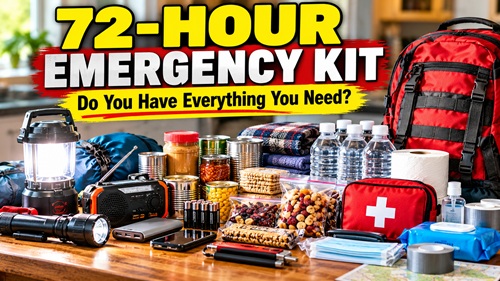
Do You Really Have Everything You Need?
Prepping Communities | Emergency Preparedness Checklist
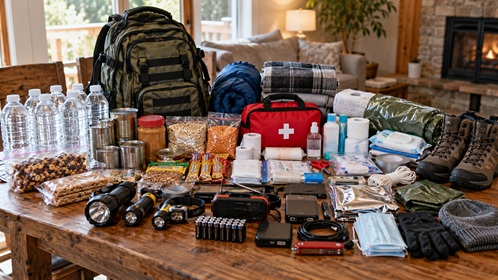
Most households have emergency supplies tucked away somewhere. A few flashlights in a drawer, extra canned food in the pantry, a first-aid kit in the bathroom, and perhaps an emergency backpack that hasn’t been opened in a couple of years. It’s easy to assume those supplies will be enough when something happens.
But when was the last time anyone actually checked?
A family might have enough canned food to last several days, but that doesn’t necessarily mean they’re prepared for a three-day power outage. Some of that food may require cooking. The electric stove won’t work, refrigerated food may spoil, and there may not be enough drinking water stored for everyone. Even something as simple as a missing manual can opener can become a problem.
That’s the difference between having emergency supplies and knowing whether those supplies will actually meet your needs.
A 72-hour emergency kit inventory helps you find out. It provides a practical way to examine what you already own, identify missing supplies, and determine whether your household could manage for at least three days without depending on normal services.
The downloadable color-coded checklist accompanying this lesson makes that process easier. Rather than treating it as another shopping list, use it to record what you have, identify shortages, and keep track of supplies that need replacing. You can complete it as you work through the lesson and keep it for future inspections.
Why an Emergency Kit Inventory Matters
Emergency supplies have a way of becoming forgotten supplies. A backpack gets packed, placed in a closet, and left there until someone needs the space or decides to reorganize. Meanwhile, batteries lose their charge, food approaches its expiration date, medications change, and children outgrow the clothing packed for them.
The bag may look exactly the same as it did when it was first assembled, but its usefulness can change considerably.
There’s also the question of quantity. Having emergency water doesn’t necessarily mean having enough emergency water. A few bottles may be sufficient for a short interruption, but they won’t support an entire household through three days without running water.
An inventory forces you to look beyond whether an item is present. How much do you have? How long will it last? Does it work? Can everyone in the household use it?
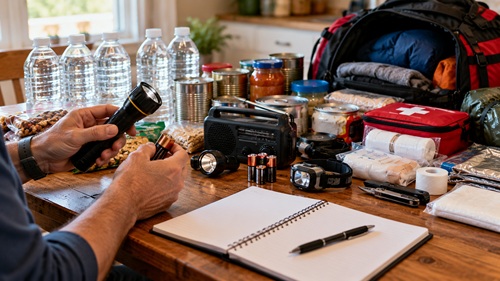
It can save money, too. People sometimes purchase additional emergency equipment because they can’t remember what they already own. Once everything is organized, it’s easier to see where additional spending is necessary and where existing supplies are already adequate.
Household needs change over time. A new family member, a different medication, a move to a colder climate, or even a new phone can affect what belongs in an emergency kit. Regular inspections help keep your preparations relevant without having to rebuild your kit every year.
Start With the People, Not the Supplies
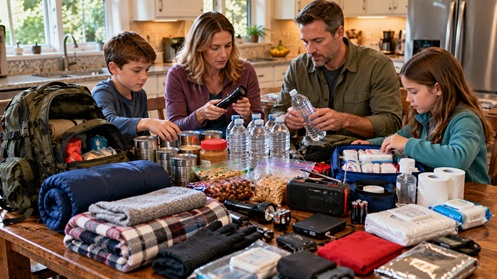
Before opening your emergency containers, consider who will depend on them.
A household of two adults has different requirements from one with young children, older relatives, or someone who relies on medical equipment. Pets also need food, water, medications, and a way to travel safely during an evacuation.
Think about what an ordinary day looks like for everyone in your household. Who takes medication? Who needs assistance moving around? Are there food allergies or special dietary requirements? Does anyone depend on equipment that requires electricity?
These details matter more than having the latest emergency gadget.
Someone who uses an electrically powered medical device, for example, may need backup power and a separate evacuation arrangement. A few extra batteries and a flashlight won’t address that dependency.
It’s also worth deciding whether your supplies are intended for staying at home, evacuating, or both. A household sheltering at home can rely on larger storage containers and heavier equipment. Someone leaving on foot may have to carry everything they need.
When filling out your checklist, record the number of people your kit must support and note any special requirements. These details will help you decide whether the quantities you’ve stored are adequate.
Water: Know Exactly How Much You Have
Water deserves early attention because losing access to safe drinking water can quickly become a serious problem.
A commonly recommended starting point is one US gallon, approximately 3.8 litres, per person per day for drinking and basic sanitation. Over 72 hours, that works out to approximately 11.4 litres per person.
For a family of four, the starting requirement is about 45.6 litres. That’s roughly 46 kilograms of water before accounting for the containers.
This amount may not be enough in hot weather, during illness, or for households with additional medical or sanitation needs. Pets require their own supply as well.
Rather than estimating how much water you have, count it. Check the size of each container and calculate the total volume. You may discover that the case of bottled water you considered your emergency supply covers only a fraction of your household’s needs.
For example, a family of four with 24 half-litre bottles has only 12 litres of stored water. That sounds like a reasonable supply until it’s compared with the approximately 45.6 litres needed for the basic three-day planning target. The shortage is more than 33 litres.
Storage conditions deserve attention as well. Water containers should be suitable for drinking water, protected from contamination, and kept where they can be accessed when needed. Commercially bottled water should be stored according to the manufacturer’s instructions. Water stored in containers filled at home needs appropriate cleaning, treatment where necessary, and rotation.
If your home relies on an electric well pump, consider what happens when the power fails. Having a well doesn’t necessarily mean having access to water during an outage.
Water filters and purification supplies can provide useful backup options, but they shouldn’t automatically be treated as replacements for stored drinking water. Some contamination cannot be made safe through ordinary portable filtration or boiling.
Record your total water supply on the checklist, along with any additional amount your household needs. You’ll then have a clear quantity to maintain rather than a rough estimate.
Food: Can You Actually Eat What You’ve Stored?
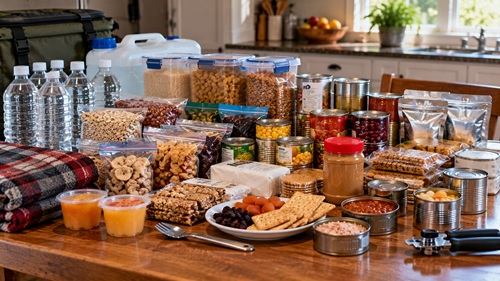
Food inventories often reveal a problem that isn’t obvious when looking at a full pantry.
A household may have plenty of rice, dried beans, pasta, canned soup, and other shelf-stable foods. On paper, that looks reassuring. But if the power is out and there’s no safe alternative cooking method, some of those foods become difficult to prepare.
Dried foods may also require substantial amounts of water. If that water hasn’t been included in your calculations, the food supply and water supply may not work together as expected.
For a 72-hour emergency kit, include foods that can be eaten without cooking or refrigeration. Canned meals, nut butter, crackers, dried fruit, ready-to-eat products, and other shelf-stable foods can help meet this need. Choose foods your household already enjoys and can safely eat.
Try planning three complete days of meals using only your emergency supplies. Account for everyone, including children and anyone with special dietary needs. Don’t just count cans or packages. Consider the number of servings, the nutritional needs of your household, and whether the meals are practical under emergency conditions.
A family of four planning three meals per day would need to account for 36 individual meal servings over 72 hours, plus appropriate snacks and additional food where needed. That doesn’t mean purchasing 36 separate products. One larger package may provide several servings, while a small can may provide only one.
Check that you have a manual can opener and any utensils needed to serve the food.
If you plan to cook during a power outage, your cooking equipment must be appropriate for emergency use. Never operate charcoal grills, camp stoves, or outdoor fuel-burning equipment indoors or in enclosed spaces where carbon monoxide can accumulate.
A small supply of familiar, ready-to-eat meals that you regularly rotate may be more dependable during a short emergency than a large collection of unfamiliar products requiring special preparation.
Medical Supplies and First Aid
First-aid kits tend to lose supplies gradually. Someone takes a bandage, uses the antiseptic wipes, or borrows a pair of scissors. Nobody thinks much about replacing those items until the kit is opened again.
Take everything out and inspect it.
Look for damaged packaging, missing supplies, and products that are past their recommended dates. Make sure the kit contains appropriate materials for minor cuts, scrapes, burns, and other injuries that can reasonably be managed with basic first aid.
A first-aid kit is only as useful as the knowledge of the person using it. If nobody in the household has recent first-aid training, consider taking a recognized course.
Prescription medications require more planning. Some pharmacies and insurance plans limit how much medication can be supplied at once, so maintaining an emergency reserve may require a conversation with a pharmacist or healthcare provider. Never change prescribed doses to build a reserve.
Keep an updated list of medications, dosages, allergies, and relevant medical contacts. If medication requires refrigeration, discuss a safe emergency storage plan with a healthcare professional.
Don’t overlook everyday medical items such as prescription glasses, hearing-aid batteries, mobility equipment, or supplies needed to manage chronic conditions. These may be more important to a household member than many of the standard items found in commercial survival kits.
Consider whether each person’s essential medical needs could be supported for 72 hours if pharmacies were closed and routine medical services were temporarily unavailable. Some medical needs require a separate contingency plan rather than simply additional supplies.
Lighting, Communication, Documents, and Important Information
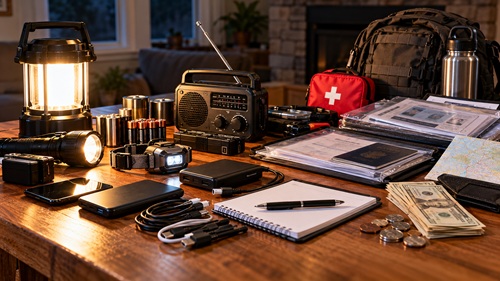
A power outage is a good reminder of how much modern life depends on electricity.
Phones eventually need charging. Home internet equipment stops working without backup power. Cellular networks may be overloaded or damaged during a widespread emergency.
Start by testing your flashlights and headlamps. Check spare batteries and make sure rechargeable equipment can still hold a useful charge. A flashlight that worked when it was packed two years ago may not work today.
A battery-powered or hand-crank radio can provide access to emergency information when internet service is unavailable. Check that it receives the stations or broadcasts relevant to your area.
Power banks are useful, but only if they’re charged and you have the correct cables. Modern households often have several different charging connectors, so make sure your emergency equipment is compatible with the devices you actually use.
Try disconnecting your phone from Wi-Fi and household charging equipment for a short test. Can you still obtain emergency information? Could you charge your phone using stored power? Does your radio receive a reliable signal?
Communication planning also involves knowing whom to contact and where to meet if household members become separated.
Keep important phone numbers written on paper. Copies of identification, insurance information, emergency contacts, and relevant medical records can also help during evacuation and recovery. Store sensitive information securely and protect paper copies from moisture.
A modest amount of cash in smaller denominations may be useful if electronic payment systems become unavailable. The appropriate amount depends on your household’s circumstances.
Digital backups can provide additional protection for important records, provided they’re stored securely and remain accessible when your usual devices or internet connection are unavailable.
Sanitation, Clothing, and Everyday Necessities
Most people don’t give much thought to sanitation until water or wastewater services stop working.
If toilets can’t be flushed, sinks aren’t running, or garbage collection is interrupted, basic hygiene becomes more difficult. This is particularly concerning in households with infants, older adults, or people requiring additional personal care.
Check your supplies of toilet paper, hand sanitizer, soap, hygiene wipes, menstrual products, diapers, and waste bags. Consider how you would manage human waste if your household plumbing became unusable. Follow local public-health guidance for safe temporary sanitation and disposal.
Clothing is another area where emergency kits become outdated. Children grow, seasons change, and a spare outfit packed in summer may be inadequate during a winter evacuation.
Make sure appropriate clothing, socks, sturdy footwear, rain protection, and blankets are available. Cold-weather preparedness may require additional insulation and sleeping arrangements, particularly if your home loses heat.
Personal necessities are easy to forget because they’re used every day. Spare eyeglasses, infant supplies, pet equipment, and mobility aids may not look like traditional survival gear, but they can make an enormous difference during an emergency.
Think about the routines your household normally depends on. Bathing, using the toilet, getting dressed, caring for children, and managing pets all require resources that may not be readily available during a disruption.
Home Emergency Supplies and Evacuation Bags Serve Different Purposes
One mistake people make is trying to fit every emergency supply into a single backpack.
For a household sheltering at home, large containers of drinking water, additional food, sanitation equipment, blankets, and backup supplies make sense. There’s no reason everything must fit into something you can carry.
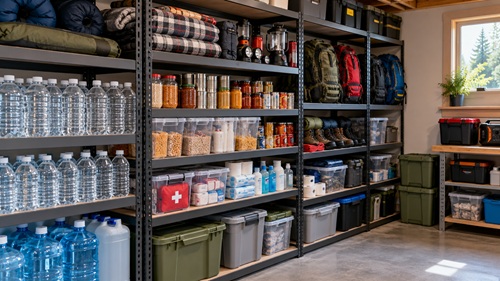
Evacuation bags are different. They need to be manageable and ready to move quickly. Essential medications, identification, communication equipment, clothing, food, and some drinking water should be prioritized according to individual needs and the evacuation plan.
Remember the earlier water calculation. A three-day supply for four people weighs approximately 46 kilograms. Carrying that much water on foot would be impractical for many families.
Maintaining both home emergency storage and portable evacuation supplies allows you to prepare for different circumstances. You should also have a realistic plan for obtaining additional water and necessities at your evacuation destination.
When completing your inventory, distinguish between supplies that stay at home and those that must be immediately available if you need to leave.
An evacuation bag that’s too heavy to carry or buried behind boxes in the basement may be of little use when departure becomes urgent.
Put Your Emergency Supplies to the Test
Once you’ve inspected your supplies, try a simple household exercise.
Imagine the electricity and running water have just stopped. It’s late in the evening, stores are closed, and you don’t know when services will return.
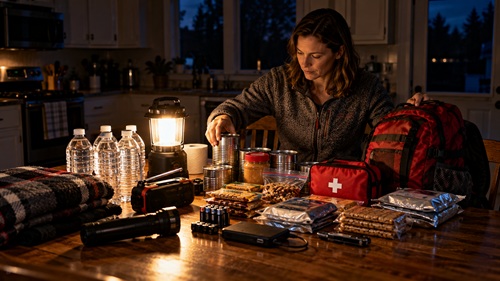
Find your emergency lighting without using your phone. Locate your stored water and calculate how long it would last. Choose a meal you could prepare without household electricity. Check how you would receive emergency information and whether everyone has access to necessary medications.
You don’t need to create an uncomfortable or unsafe situation to test your preparations. The exercise is simply a way to discover whether your supplies are organized and accessible.
You may find that you have enough food but no practical way to prepare some of it. Perhaps your emergency radio works, but its batteries are stored in another room. Or maybe you have plenty of bottled water but no clear plan for sanitation.
These discoveries are useful. They’re much easier to address during an ordinary weekend than during an actual emergency.
Record the problems you encounter on your inventory checklist. That gives you a practical starting point for deciding what to improve.
Download Your Free 72-Hour Emergency Kit Inventory Checklist
The free, color-coded checklist is designed to help you work through the inventory process without relying on memory.
It organizes essential supplies into categories covering water, food, medical needs, communication, sanitation, clothing, documents, and household-specific requirements.
There is space to record quantities, expiration dates, and notes about missing or inadequate supplies. The checklist also includes an area for identifying priority deficiencies, recording the kit’s storage location, and scheduling the next inspection.
Use it while physically examining your emergency supplies rather than marking items based on what you believe you have stored.
A completed inventory becomes a reference for future inspections. You’ll know what was available during your last review, what needed replacement, and which improvements still need attention.
Keep one copy with your emergency supplies and another with your household emergency plan. Review it every six months, after using supplies, or whenever your household’s needs change.
Download the Updated 72-Hour Emergency Kit Inventory Checklist (Color PDF)
Four printable pages, including an additional inventory follow-up sheet for shortages, replacement dates, priorities, and household-specific needs.
Preparedness Action Plan
Set aside an hour this week to inspect your household’s emergency supplies. Download the checklist, gather what you already own, and record the actual quantities and condition of your supplies. Include everyone who depends on your preparations, including pets.
When you’ve finished, compare your inventory against what your household would need for three days without electricity, running water, or access to stores. Pay attention to supplies that depend on something else to be useful. Emergency food that requires cooking, a flashlight without working batteries, or a medical device without backup power may leave you less prepared than your inventory initially suggests.
If your budget is limited, concentrate on the supplies that protect health and safety first. Safe drinking water, essential medications, sufficient ready-to-eat food, protection from dangerous temperatures, and basic sanitation deserve attention before comfort items or specialized equipment. A reliable flashlight and a way to receive emergency information are also practical early priorities. Extra gadgets and convenience products can wait until the essentials are covered.
You don’t have to purchase everything at once. Use the checklist to identify your three most serious shortages, record how much you need, and decide when you can address each one. Some improvements may cost nothing more than reorganizing existing supplies, charging equipment, or moving important items somewhere accessible.
Once everything is organized, make sure other household members know where the supplies are stored and how to use them. Review the inventory at least twice a year, preferably when checking smoke alarms and other household safety equipment.
As your three-day preparations become more dependable, consider expanding your home emergency supplies to cover longer disruptions. Depending on the hazards where you live, seven days or more may be a sensible next goal.
Key Takeaways
A 72-hour emergency kit provides a starting point for household preparedness, but its contents need to reflect the people who will use them and the conditions they may face.
An inventory helps uncover shortages, damaged equipment, outdated supplies, and practical problems that might otherwise go unnoticed. It also makes future inspections easier and helps prevent unnecessary spending.
You don’t need to purchase expensive survival equipment or prepare for every possible disaster at once. Begin with the essentials, understand what your household actually needs, and build from there.
Most emergency kits don’t fail because people never bought supplies. They fail because something was missing, no longer worked, or wasn’t where it needed to be.
An hour spent checking your kit today could prevent a much bigger problem when you actually need it.
© Prepping Communities. This content is for informational purposes only and not professional advice. Use at your own risk.
Terms | Privacy | Guidelines