
After SHTF – Your Survival Handbook
by Natural Born Prepper (2026-05-15)
TABLE OF CONTENTS |
|
PART VII — COMMUNITY & LONG-TERM RESILIENCE (Chapters 37-40) |
|
37. The Role of Community During Crisis
One of the biggest preparedness realizations many people eventually reach is that long-term resilience is rarely built entirely alone.
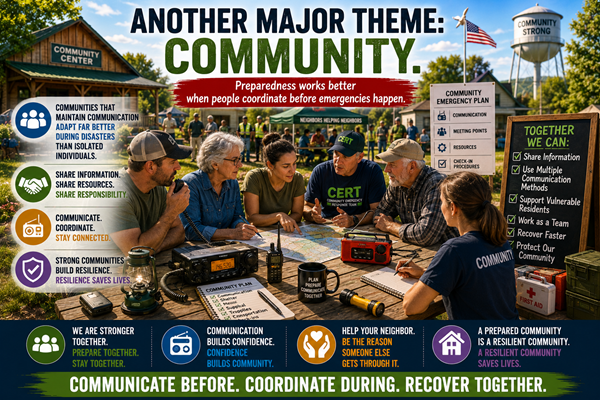 Modern culture often emphasizes independence, self-sufficiency, and individual survival, but history repeatedly demonstrates that communities surviving difficult conditions most effectively were usually the ones capable of cooperation, coordination, and shared responsibility.
Prepared individuals frequently recognize that emergencies place enormous pressure on individuals over time.
During short-term disruptions, people may manage independently for a while using stored supplies and personal preparedness systems. As crises continue, however, the importance of community often grows dramatically.
Food production, medical care, communication, transportation, security, emotional support, repairs, childcare, sanitation, and resource management all become increasingly difficult when handled entirely alone for extended periods.
Historically, communities survived wars, disasters, economic collapse, severe weather, and infrastructure failures partly because people worked together.
Skills, labor, information, transportation, caregiving, food production, and security were often shared responsibilities rather than isolated individual burdens.
Modern civilization became highly specialized and individualized, but emergencies repeatedly expose how interconnected people still are.
One important preparedness lesson is that isolation creates vulnerability over time.
Prepared individuals frequently focus not only on gathering supplies, but also on building trusted local relationships before emergencies occur.
Preparedness increasingly means strengthening social resilience alongside physical preparedness.
Another important reality is that crises often create psychological strain as much as physical hardship.
Fear, uncertainty, isolation, exhaustion, and stress may gradually wear people down during prolonged instability.
Communities often provide emotional stability, shared problem-solving, practical assistance, and a sense of purpose during difficult conditions.
Prepared individuals frequently recognize that strong relationships may become just as valuable as stored resources during long-term emergencies.
One important preparedness lesson is that resilient communities are usually built before crises occur — not during them.
Trust, communication, cooperation, and organization require time to develop.
Preparedness ultimately improves resilience by strengthening both individuals and local communities before systems become unstable.
This is another reason platforms focused on preparedness and communication may become increasingly valuable.
A platform like Prepping Communities may help preparedness-minded individuals connect with local groups discussing emergency planning, communication systems, homesteading, food resilience, medical preparedness, local coordination, and mutual assistance before emergencies occur.
Likewise, systems like Prepper Offline may help preserve preparedness knowledge independently from internet access during prolonged outages or communication failures. Individuals may continue accessing survival references, emergency planning guides, communication resources, medical information, food preparedness systems, and practical resilience knowledge even if internet systems become unavailable.
Preparedness ultimately means strengthening awareness, adaptability, practical knowledge, and community resilience before modern infrastructure becomes unstable.
37.1 Why Lone Wolf Survival Is Limited
The idea of surviving completely alone has become popular in movies, fiction, and some survival culture, but history often tells a very different story.
Prepared individuals frequently recognize that long-term survival becomes extremely difficult when one person must manage every responsibility alone.
Historically, human survival depended heavily on cooperation. Communities divided labor, shared responsibilities, exchanged knowledge, protected resources, raised children, cared for the sick, produced food, repaired infrastructure, and maintained security together.
Modern civilization allowed many people to live more independently during ordinary life because large infrastructure systems quietly handled much of society’s complexity in the background.
Emergencies remove many of those support systems.
One important preparedness lesson is that no individual can realistically excel at every survival category indefinitely.
Medical care, food production, transportation, communications, repairs, sanitation, security, and emotional resilience all require time, energy, and specialized knowledge.
Prepared individuals frequently recognize that cooperation increases efficiency and adaptability during prolonged emergencies.
Preparedness increasingly means balancing self-reliance with community resilience rather than depending entirely on isolation.
37.2 Building Local Networks
One of the most valuable preparedness investments is building trusted local relationships before emergencies occur.
Prepared individuals frequently recognize that local networks improve resilience because nearby people often become the most immediate sources of:
- information
- communication
- transportation
- assistance
- coordination
- practical support
during crises.
Historically, communities naturally relied on neighbors, local trade, shared labor, and regional cooperation because centralized systems were slower and less dependable than they are today.
Modern populations often became disconnected from nearby communities because digital communication and convenience systems reduced local dependence.
Emergencies frequently reverse that pattern very quickly.
One important preparedness lesson is that trust cannot be created instantly during a crisis.
Prepared individuals frequently focus on:
- communication
- cooperation
- local awareness
- practical relationships
- skill sharing
before emergencies occur because strong networks require time to develop.
Preparedness ultimately strengthens resilience through local coordination and human connection.
37.3 Shared Skills and Resources
Historically, resilient communities survived difficult conditions partly because knowledge and responsibilities were distributed across many people.
Some individuals specialized in:
- farming
- medicine
- transportation
- repair work
- communications
- security
- food preservation
- construction
Modern civilization became highly specialized, but many people also became heavily dependent on centralized systems rather than local cooperation.
Prepared individuals frequently recognize that shared skills become extremely valuable during prolonged emergencies.
No single person can realistically master every preparedness category perfectly.
One important preparedness lesson is that communities become more resilient when knowledge and resources are distributed rather than concentrated.
Prepared individuals frequently focus on learning practical skills while also building relationships with others possessing complementary knowledge and experience.
Preparedness increasingly means building cooperative capability rather than relying solely on individual preparation.
37.4 Community Security
Security becomes one of the most sensitive and important issues during prolonged instability.
Prepared individuals frequently recognize that strong communities often improve security naturally because awareness, communication, observation, and coordination become shared responsibilities.
Historically, communities surviving difficult periods frequently relied on collective awareness and cooperation to protect:
- food supplies
- transportation routes
- vulnerable individuals
- medical resources
- infrastructure
- communication systems
Modern populations often assume professional emergency systems will always remain fully operational.
Emergencies may overwhelm those systems very quickly.
One important preparedness lesson is that calm organization and communication often improve safety more effectively than fear or aggression.
Prepared individuals frequently focus on:
- situational awareness
- communication
- planning
- observation
- coordination
- de-escalation
because panic and confusion frequently worsen instability.
Preparedness ultimately strengthens resilience by improving awareness and cooperation before emergencies occur.
37.5 Mutual Assistance Groups
One of the most important preparedness concepts is mutual assistance.
Prepared individuals frequently recognize that communities become more resilient when people intentionally cooperate, share information, coordinate resources, and support one another during difficult conditions.
Historically, mutual aid existed naturally within many communities because survival often depended on cooperation during harvests, disasters, illness, transportation challenges, and periods of instability.
Modern society became more individualized, but emergencies repeatedly demonstrate the continuing importance of coordinated local support systems.
One important preparedness lesson is that preparedness is not simply about supplies.
It is also about relationships, trust, communication, and cooperation.
Prepared individuals frequently focus on building small trusted networks capable of sharing:
- information
- labor
- transportation
- communication
- food production
- caregiving
- emergency support
because resilient communities often adapt more effectively during prolonged crises.
Preparedness increasingly means strengthening local resilience before systems become unstable.
This is one reason platforms like Prepping Communities may become increasingly valuable. The platform may help preparedness-minded individuals build local groups, emergency coordination systems, communication networks, homesteading communities, and mutual assistance structures before emergencies occur.
Likewise, Prepper Offline may help preserve preparedness knowledge independently from internet access during prolonged outages or communication failures. Individuals may continue accessing emergency planning guides, survival references, communication information, medical resources, food preparedness systems, and practical resilience knowledge even if internet systems become unavailable.
Preparedness ultimately means strengthening awareness, cooperation, adaptability, and community resilience before modern infrastructure becomes unstable.
38. Common Preparedness Mistakes
One of the most important preparedness lessons is that resilience is rarely built perfectly.
Most prepared individuals eventually recognize that preparedness is an ongoing process of learning, adapting, improving systems, and correcting mistakes over time.
Modern society often encourages people to think about preparedness in extremes. Some individuals ignore preparedness completely, while others focus heavily on equipment, fear, or unrealistic scenarios without developing balanced practical systems.
Historically, communities surviving difficult conditions usually relied on a combination of practical knowledge, planning, adaptability, cooperation, resource management, communication, and local awareness rather than any single solution.
Prepared individuals frequently recognize that many preparedness mistakes come from misunderstanding what emergencies actually look like in the real world.
Most disruptions involve confusion, uncertainty, infrastructure strain, communication problems, transportation issues, shortages, emotional stress, and gradual system degradation rather than dramatic cinematic collapse.
One important preparedness lesson is that realistic planning often matters far more than fear-driven accumulation.
Prepared individuals frequently focus on building layered systems involving food, water, medical preparedness, communication, transportation, information resilience, practical skills, and community relationships because resilience usually depends on balance rather than obsession with one category.
Another important reality is that preparedness mistakes are often psychological as much as logistical.
People may delay preparation because emergencies feel unlikely, uncomfortable, or overwhelming to think about.
Others may become so focused on collecting equipment that they neglect knowledge, planning, organization, or skill development.
Prepared individuals frequently recognize that preparedness ultimately involves mindset, adaptability, and realistic awareness more than fear.
One important preparedness lesson is that resilience improves gradually over time.
Preparedness is rarely about perfection.
It is about reducing vulnerability step by step before systems become unstable.
This is another reason preparedness communities and offline knowledge systems may become increasingly valuable.
A platform like Prepping Communities may help preparedness-minded individuals connect with local groups discussing emergency planning, communication systems, food preparedness, medical resilience, homesteading, and practical skill development before emergencies occur.
Likewise, systems like Prepper Offline may help preserve preparedness knowledge independently from internet access during prolonged outages or communication failures. Individuals may continue accessing survival references, emergency planning guides, offline maps, communication resources, medical information, and practical resilience knowledge even if internet systems become unavailable.
Preparedness ultimately means strengthening awareness, adaptability, practical knowledge, and long-term resilience before modern infrastructure becomes unstable.
38.1 Over-Reliance on the Internet
One of the most common modern preparedness mistakes is assuming internet access will always remain available.
Most people became deeply dependent on online systems for communication, navigation, banking, medical information, emergency updates, transportation, shopping, and social coordination.
During ordinary life, these systems feel permanent because they operate so consistently in the background.
Emergencies reveal how fragile that dependency may become.
Prepared individuals frequently recognize that internet access depends heavily on electrical infrastructure, fiber networks, cellular towers, data centers, satellites, cloud systems, and communication routing infrastructure all functioning together continuously.
One important preparedness lesson is that online information is only useful if it remains accessible during crises.
Prepared individuals frequently focus on preserving offline maps, printed references, emergency communication methods, locally stored knowledge, and backup systems because communication failures may create information failures very quickly.
Preparedness increasingly means reducing dependence on continuous connectivity.
38.2 Waiting Too Long
Another extremely common preparedness mistake is delaying action until emergencies already begin unfolding.
Historically, populations frequently underestimated risk until shortages, disasters, or instability became impossible to ignore.
Modern populations often assume systems will continue functioning normally because long periods of stability create psychological comfort and dependency.
Prepared individuals frequently recognize that preparation becomes far more difficult once panic buying, transportation disruption, communication failures, or shortages already begin.
One important preparedness lesson is that emergencies compress decision-making time very quickly.
People attempting to prepare at the last moment often encounter empty shelves, fuel shortages, overwhelmed systems, delayed deliveries, rising prices, confusion, and emotional stress.
Prepared individuals frequently focus on gradual long-term preparation because calm planning improves resilience far more effectively than panic-driven reaction.
Preparedness ultimately strengthens stability by reducing urgency and vulnerability during crises.
38.3 Focusing Only on Gear
Modern preparedness culture sometimes encourages the belief that survival depends primarily on owning equipment.
Prepared individuals frequently recognize that gear certainly matters, but equipment alone does not create capability.
Historically, communities survived difficult conditions because people possessed practical knowledge, adaptability, organization, communication systems, food production skills, and local cooperation — not simply because they owned tools.
Modern consumer culture often encourages accumulation rather than skill development.
One important preparedness lesson is that expensive equipment may become far less useful without training, maintenance, organization, practical understanding, and realistic planning.
Prepared individuals frequently focus on balancing supplies with knowledge, communication, planning, adaptability, local awareness, and practical experience because resilience depends heavily on the ability to solve problems under difficult conditions.
Preparedness increasingly means building capability rather than simply collecting equipment.
38.4 Ignoring Skills and Knowledge
One of the biggest preparedness weaknesses is assuming supplies alone are enough.
Prepared individuals frequently recognize that practical skills remain useful long after equipment fails, batteries die, systems collapse, or supplies become depleted.
Historically, survival depended heavily on food preservation, sanitation, communication, navigation, medicine, farming, repair work, and local cooperation.
Modern civilization outsourced many of these capabilities to centralized systems and specialists.
Emergencies reveal how valuable practical knowledge may still become.
One important preparedness lesson is that information and skills often provide more long-term resilience than supplies alone.
Prepared individuals frequently focus on learning, training, practicing, organizing information, and improving adaptability because emergencies rarely unfold exactly as expected.
Preparedness increasingly means strengthening practical capability before infrastructure becomes unstable.
This is one reason offline systems like Prepper Offline may become extremely valuable during prolonged outages or communication disruption.
38.5 Lack of Redundancy
One of the core principles of preparedness is redundancy.
Prepared individuals frequently recognize that systems fail unexpectedly.
Power systems break.
Communication networks collapse.
Vehicles fail.
Supplies become damaged.
Infrastructure becomes unstable.
Historically, resilient communities survived difficult conditions partly because they avoided dependence on single points of failure.
Modern civilization optimized heavily for efficiency and convenience, but emergencies repeatedly demonstrate that highly optimized systems are often less resilient when disruption occurs.
One important preparedness lesson is that redundancy improves flexibility and adaptability during unstable conditions.
Prepared individuals frequently apply redundancy to communication systems, food storage, medical supplies, transportation, information storage, water treatment, and power systems because layered systems reduce vulnerability when one component fails.
Preparedness increasingly means building backups before emergencies occur rather than improvising during crisis conditions.
This is one reason platforms like Prepping Communities and systems like Prepper Offline may become increasingly valuable. Together they help preparedness-minded individuals strengthen communication, preserve knowledge, improve planning, build local coordination, and reduce dependency on fragile centralized infrastructure.
Preparedness ultimately means strengthening awareness, redundancy, adaptability, practical capability, and long-term resilience before modern systems become unstable.
39. The Future of Preparedness
Preparedness is changing.
Historically, preparedness focused heavily on physical survival needs such as food storage, water, shelter, fuel, tools, and medical supplies. Those categories remain critically important, but modern civilization introduced new forms of dependency that previous generations rarely faced at the same scale.
Today, enormous portions of daily life depend on:
- internet connectivity
- cloud infrastructure
- digital banking
- online communication
- automated logistics
- data systems
- digital identification
- real-time transportation systems
- centralized information platforms
Most people rarely think about these systems during ordinary life because they operate quietly and efficiently in the background.
Emergencies reveal how fragile this digital dependency may become.
Prepared individuals frequently recognize that modern preparedness increasingly involves protecting access to:
- information
- communication
- knowledge
- coordination
- digital independence
alongside traditional physical preparedness.
Historically, communities survived instability partly because practical knowledge remained locally accessible and many systems were less centralized.
Modern civilization dramatically increased efficiency and convenience, but also concentrated enormous amounts of dependency into interconnected infrastructure systems.
One important preparedness lesson is that resilience now includes both physical and informational survival.
Food, water, and shelter remain essential, but communication failures, cloud outages, digital dependency, and information loss may also create serious vulnerability during prolonged emergencies.
Prepared individuals frequently recognize that future preparedness will likely require balancing technology with independence from fragile infrastructure.
Another important reality is that preparedness is becoming less about reacting to one catastrophic event and more about adapting to ongoing instability.
Modern populations increasingly face:
- supply chain disruption
- cyber incidents
- infrastructure failures
- communication outages
- inflation
- severe weather
- energy instability
- information overload
Prepared individuals frequently focus on long-term resilience rather than short-term panic because modern risks often develop gradually rather than all at once.
One important preparedness lesson is that adaptability may become one of the most important survival skills of the future.
Preparedness increasingly means building systems that remain functional even when convenience infrastructure becomes unreliable.
This is another reason offline preparedness and community resilience may become increasingly valuable.
A platform like Prepping Communities may help preparedness-minded individuals connect with local groups discussing emergency planning, communication systems, homesteading, medical preparedness, food resilience, local coordination, and mutual assistance before emergencies occur.
Likewise, systems like Prepper Offline may help preserve preparedness knowledge independently from internet access during prolonged outages or communication failures. Individuals may continue accessing survival references, emergency planning guides, offline maps, communication resources, medical information, and practical resilience knowledge even if internet systems become unavailable.
Preparedness ultimately means strengthening awareness, adaptability, practical knowledge, and long-term resilience before modern infrastructure becomes unstable.
39.1 Increasing Digital Dependence
Modern society became deeply dependent on digital systems in ways most people barely notice during ordinary life.
Communication, banking, transportation, shopping, navigation, healthcare, employment, education, entertainment, and even emergency information increasingly rely on internet-connected systems functioning continuously in the background.
Prepared individuals frequently recognize that this dependency creates new forms of vulnerability.
Historically, many systems operated locally or physically. Paper maps existed independently from internet access. Financial transactions often relied on cash. Records were frequently stored physically rather than remotely through cloud infrastructure.
Modern convenience dramatically improved speed and accessibility, but also increased systemic dependency on fragile infrastructure.
One important preparedness lesson is that digital convenience may create hidden weakness when systems fail.
Prepared individuals frequently focus on maintaining:
- offline backups
- physical references
- local storage
- alternative communication systems
- practical non-digital skills
because resilience increasingly requires independence from continuous connectivity.
Preparedness ultimately means balancing technology with redundancy and adaptability.
39.2 AI and Cloud Vulnerabilities
Artificial intelligence and cloud systems are becoming deeply integrated into modern infrastructure.
Prepared individuals frequently recognize that many people now depend on AI-driven systems and cloud platforms without fully understanding how centralized and infrastructure-dependent these technologies really are.
Modern systems increasingly rely on:
- remote servers
- data centers
- automated algorithms
- cloud storage
- real-time connectivity
- centralized computing infrastructure
Historically, knowledge and decision-making were often more decentralized and local.
Modern technology dramatically improved automation and information access, but also concentrated dependency into increasingly complex systems.
One important preparedness lesson is that highly centralized systems may become vulnerable during:
- power outages
- cyber incidents
- infrastructure failures
- communication disruption
- server outages
- supply chain instability
Prepared individuals frequently recognize that technology itself is not the problem.
Overdependence without redundancy is the problem.
Preparedness increasingly means preserving the ability to function independently if advanced digital systems become unreliable or unavailable.
39.3 Information Access as a Survival Issue
One of the most important modern preparedness concepts is that access to information may become a survival issue during emergencies.
Prepared individuals frequently recognize that practical knowledge directly affects:
- medical care
- communication
- navigation
- food preservation
- transportation
- sanitation
- emergency decision-making
Historically, communities preserved survival knowledge through books, local education, manuals, oral traditions, and practical experience because information needed to remain accessible independently from centralized systems.
Modern populations became highly dependent on search engines and online platforms for nearly all practical information.
Emergencies reveal how vulnerable this dependency may become.
One important preparedness lesson is that knowledge stored only online may effectively disappear during communication outages or infrastructure disruption.
Prepared individuals frequently focus on preserving offline access to critical information because practical knowledge improves resilience, confidence, and adaptability during unstable conditions.
Preparedness increasingly means protecting both physical supplies and informational independence.
This is one reason systems like Prepper Offline may become increasingly valuable during prolonged outages or communication failures.
39.4 Preparedness Beyond Supplies
One of the most important shifts occurring within preparedness thinking is the realization that survival involves far more than simply stockpiling supplies.
Prepared individuals frequently recognize that resilience depends heavily on:
- mindset
- adaptability
- communication
- organization
- planning
- practical skills
- emotional stability
- community relationships
Historically, resilient communities survived difficult periods because they possessed systems of cooperation and practical knowledge rather than simply large quantities of stored equipment.
Modern preparedness culture sometimes overemphasizes gear while underestimating the importance of capability and adaptability.
One important preparedness lesson is that supplies eventually become depleted.
Knowledge, skills, communication systems, and local cooperation often continue providing value long after stored resources begin running low.
Prepared individuals frequently focus on:
- learning
- training
- local networking
- food production
- communication resilience
- medical preparedness
- information preservation
because long-term resilience requires more than physical storage alone.
Preparedness increasingly means building sustainable systems rather than temporary emergency stockpiles.
39.5 Building Long-Term Resilience
One of the most important preparedness concepts for the future is resilience rather than fear.
Prepared individuals frequently recognize that modern instability may involve gradual long-term pressures rather than one sudden catastrophic event.
Infrastructure strain, economic instability, communication disruption, supply chain problems, severe weather, cyber threats, inflation, and social stress may all affect modern populations over time.
Historically, resilient communities adapted successfully because they remained flexible, cooperative, knowledgeable, and locally connected during changing conditions.
Modern civilization optimized heavily for convenience and efficiency, but future resilience may depend more heavily on:
- adaptability
- redundancy
- local capability
- communication resilience
- practical skills
- food security
- community coordination
- information independence
One important preparedness lesson is that resilience is built gradually.
Prepared individuals frequently focus on improving systems step by step rather than attempting perfection overnight.
Preparedness increasingly means strengthening the ability to adapt to uncertainty rather than attempting to predict every possible crisis perfectly.
This is one reason platforms like Prepping Communities and systems like Prepper Offline may become increasingly valuable in the future. Together they help preparedness-minded individuals strengthen communication, preserve knowledge, improve local coordination, develop practical skills, and reduce dependency on fragile centralized infrastructure.
Preparedness ultimately means strengthening awareness, adaptability, local resilience, practical capability, and long-term independence before modern systems become unstable.
39.6 Using AI in Your Preparedness
Another major shift happening in preparedness is the growing role of artificial intelligence.
For many people, AI still feels like something tied mostly to business, entertainment, or technology companies. Prepared individuals increasingly recognize that AI may also become an important preparedness tool because modern crises are becoming more complex, faster-moving, and more information-driven than at any other point in history.
Supply chains, financial systems, communication platforms, infrastructure networks, media systems, logistics, surveillance systems, and even public opinion are increasingly influenced by advanced data systems and artificial intelligence.
Prepared individuals frequently recognize that large governments, corporations, and global organizations have already been using AI, predictive analytics, automation, behavioral algorithms, and data-driven systems for years to shape markets, influence behavior, manage infrastructure, and guide long-term planning.
Many preparedness-minded people believe this trend will continue accelerating.
Whether people describe these global changes as centralization, digital control systems, technocracy, or “the great reset,” one important preparedness lesson remains the same:
ignoring advanced technology does not make it disappear.
Prepared individuals frequently recognize that the best defense against growing technological complexity is understanding how to use technology intelligently rather than remaining completely dependent on systems controlled entirely by others.
In many ways, preparedness is becoming a balance between technology and independence.
AI may help preppers and homesteaders:
- organize preparedness plans
- analyze risks
- create food production strategies
- build medical checklists
- improve communication planning
- study weather patterns
- design homesteading systems
- manage inventories
- learn survival skills faster
- generate contingency plans
- summarize complex information
- identify weak points in preparedness systems
Prepared individuals frequently recognize that AI can dramatically speed up learning and planning when used carefully and critically.
At the same time, preparedness-minded individuals also recognize that AI systems themselves remain dependent on:
- internet access
- cloud infrastructure
- centralized servers
- electrical systems
- communication networks
This is why many preppers increasingly focus on combining AI-assisted preparedness with offline resilience and local knowledge preservation.
One important preparedness lesson is that future resilience may depend on using modern tools without becoming completely dependent on them.
Prepared individuals frequently focus on:
- saving AI-generated preparedness plans offline
- preserving important information locally
- printing critical references
- building independent communication systems
- maintaining practical real-world skills
because long-term resilience still depends on maintaining capability even if centralized systems fail.
This is another reason systems like Prepper Offline may become increasingly valuable. Preparedness knowledge, AI-assisted planning documents, survival references, medical information, communication guides, and homesteading resources may all be stored locally across offline devices rather than depending entirely on cloud access during emergencies.
Likewise, Prepping Communities may help preparedness-minded individuals share ideas, discuss emerging technologies, exchange preparedness strategies, build local resilience networks, and coordinate practical preparedness efforts before emergencies occur.
Preparedness ultimately means understanding both the opportunities and risks of modern technology while strengthening independence, adaptability, local capability, and long-term resilience before modern infrastructure becomes unstable.
40. Final Thoughts
Preparedness is often misunderstood.
Many people assume preparedness is only about stockpiling supplies, preparing for extreme disasters, or living in constant fear of collapse. In reality, preparedness is far more practical and far more human than that.
Preparedness is ultimately about reducing vulnerability.
It is about recognizing that modern life depends heavily on systems most people rarely think about until those systems stop functioning normally.
Electricity, transportation, internet access, banking networks, food distribution, communication systems, water infrastructure, healthcare, and supply chains all operate quietly in the background every day.
Most people assume these systems will always remain available because they usually do.
Prepared individuals simply recognize that history repeatedly shows systems can fail, become disrupted, or grow unstable for many different reasons.
Storms happen.
Blackouts happen.
Cyber incidents happen.
Supply chain disruptions happen.
Economic instability happens.
Communication failures happen.
Preparedness is not about predicting every possible event perfectly.
It is about building flexibility, resilience, and adaptability before difficult situations occur.
Historically, resilient communities survived difficult periods because they possessed:
- practical knowledge
- communication systems
- local relationships
- food resilience
- transportation flexibility
- medical capability
- emotional stability
- adaptability
Modern civilization dramatically increased convenience, but also increased dependency on interconnected infrastructure systems.
Prepared individuals frequently recognize that future resilience may depend less on convenience and more on maintaining the ability to adapt when convenience systems become unreliable.
One important preparedness lesson is that resilience is built gradually.
Preparedness is rarely achieved all at once.
It grows step by step through:
- learning
- planning
- practicing
- organizing
- improving systems
- building relationships
- preserving knowledge
Preparedness ultimately improves confidence because people become less dependent on fragile systems they cannot control.
Another important reality is that knowledge itself may become one of the most valuable survival resources of the future.
Food, water, shelter, and medical supplies remain critically important, but access to reliable information increasingly affects every preparedness category.
People who can still communicate, learn, organize, navigate, repair systems, preserve food, purify water, and adapt during uncertainty often remain far more resilient than those completely dependent on fragile infrastructure.
Preparedness increasingly means preserving both capability and knowledge.
This is one reason offline preparedness systems and preparedness communities may become increasingly valuable in the years ahead.
A platform like Prepping Communities may help preparedness-minded individuals connect with local groups, build resilience networks, share information, coordinate emergency planning, discuss homesteading, improve communication systems, and strengthen local preparedness before emergencies occur.
Likewise, systems like Prepper Offline may help preserve preparedness knowledge independently from internet access during prolonged outages or communication failures. Individuals may continue accessing survival references, emergency planning guides, medical information, offline maps, communication resources, food preparedness systems, and practical resilience knowledge even if internet systems become unavailable.
Preparedness ultimately means strengthening awareness, adaptability, knowledge, communication, local resilience, and long-term independence before modern systems become unstable.
40.1 Access = Control
One of the most important preparedness realities is that access often determines survival.
Modern society depends heavily on access to:
- information
- communication
- food systems
- transportation
- banking
- healthcare
- energy
- digital infrastructure
Most people rarely think about these systems until access becomes disrupted.
Prepared individuals frequently recognize that losing access may create vulnerability very quickly.
Historically, communities surviving difficult periods often focused heavily on preserving independent access to:
- food
- water
- communication
- knowledge
- transportation
- local resources
because dependence on unstable systems created major risk.
Modern civilization centralized enormous amounts of daily life into interconnected digital and infrastructure systems.
One important preparedness lesson is that independence improves resilience.
Prepared individuals frequently focus on preserving offline knowledge, backup communication systems, local relationships, emergency resources, and practical skills because access itself increasingly affects survival during instability.
Preparedness ultimately means reducing unnecessary dependency on systems outside personal control.
40.2 Preparedness Is More Than Gear
Preparedness is often marketed as equipment.
While tools and supplies certainly matter, experienced prepared individuals frequently recognize that survival depends on far more than simply owning gear.
Historically, communities survived difficult conditions because they possessed:
- practical knowledge
- communication systems
- cooperation
- organization
- adaptability
- emotional resilience
- local skills
Modern consumer culture often encourages people to purchase products while neglecting training, planning, and skill development.
One important preparedness lesson is that gear alone does not create capability.
Prepared individuals frequently focus on:
- learning
- practicing
- planning
- organizing
- improving systems
- building relationships
because resilience depends heavily on problem-solving ability during uncertainty.
Preparedness increasingly means building capability rather than simply accumulating equipment.
40.3 Knowledge as a Survival Tool
Knowledge may become one of the most important preparedness resources of the future.
Prepared individuals frequently recognize that practical information directly affects:
- medical care
- communication
- transportation
- water purification
- food preservation
- navigation
- repair work
- long-term adaptation
Historically, survival depended heavily on preserving knowledge through books, manuals, maps, local education, oral traditions, and practical experience.
Modern populations became highly dependent on internet-connected systems for information access.
Emergencies reveal how vulnerable that dependency may become.
One important preparedness lesson is that information stored only online may effectively disappear during outages or communication failures.
Prepared individuals frequently focus on preserving offline access to practical knowledge because information resilience improves confidence, adaptability, and long-term survival capability.
This is one reason systems like Prepper Offline may become increasingly valuable during prolonged emergencies or infrastructure disruption.
40.4 Building Resilience Before It’s Needed
One of the most important preparedness principles is timing.
Prepared individuals frequently recognize that resilience must usually be built before emergencies occur.
Historically, populations attempting to react only after disasters began often faced:
- shortages
- confusion
- transportation problems
- overwhelmed systems
- communication failures
- rising prices
- panic
Modern systems operate efficiently during ordinary conditions, but emergencies may rapidly overwhelm infrastructure when large populations react simultaneously.
One important preparedness lesson is that gradual preparation reduces vulnerability.
Prepared individuals frequently focus on improving:
- food resilience
- communication systems
- medical preparedness
- local relationships
- practical knowledge
- transportation flexibility
- information storage
step by step over time rather than waiting for perfect conditions or dramatic warning signs.
Preparedness ultimately improves stability by reducing panic and improving adaptability before systems become unstable.
40.5 The Importance of Adaptability
One of the most important survival traits throughout history has been adaptability.
Prepared individuals frequently recognize that emergencies rarely unfold exactly as expected.
Plans change.
Infrastructure fails unexpectedly.
Communication systems become unreliable.
Transportation routes close.
Resources become limited.
Conditions evolve continuously.
Historically, resilient communities survived difficult periods not because they predicted everything perfectly, but because they adapted effectively to changing conditions.
Modern civilization optimized heavily for convenience and efficiency, but emergencies often reward flexibility instead.
One important preparedness lesson is that adaptability matters more than perfection.
Prepared individuals frequently focus on:
- learning continuously
- improving systems
- building redundancy
- preserving knowledge
- strengthening communication
- developing practical skills
- building local relationships
because flexible systems often survive instability more effectively than rigid ones.
Preparedness increasingly means strengthening the ability to respond calmly and intelligently when systems become uncertain.
This is one reason platforms like Prepping Communities and systems like Prepper Offline may become increasingly valuable in the future. Together they help preparedness-minded individuals preserve knowledge, strengthen communication, improve local coordination, develop practical capability, and reduce dependency on fragile centralized infrastructure.
Preparedness ultimately means strengthening awareness, adaptability, knowledge resilience, local capability, and long-term independence before modern systems become unstable.
© Prepping Communities. This content is for informational purposes only and not professional advice. Use at your own risk.
Terms | Privacy | Guidelines