
After SHTF – Your Survival Handbook
by Natural Born Prepper (2026-05-15)
TABLE OF CONTENTS |
|
PART III — FOOD & WATER (Chapters 22-25) |
|
22. Food Storage During Power Failure
One of the first practical problems people face during a prolonged outage is the realization that modern food systems depend heavily on electricity. Refrigerators, freezers, grocery distribution systems, transportation networks, payment systems, and supply chains all rely on stable power infrastructure functioning continuously.
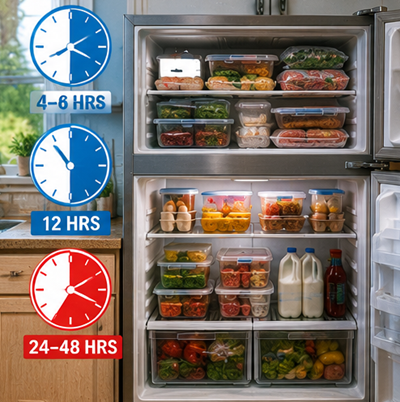 During ordinary life, most people rarely think about this dependency because food storage became almost completely automated and invisible.
The moment power fails, however, uncertainty begins immediately.
People suddenly start asking:
- How long will refrigerated food remain safe?
- What should be eaten first?
- How quickly will frozen food thaw?
- What happens if stores cannot restock?
- How can food be preserved without electricity?
Prepared individuals frequently recognize that food preservation becomes critically important very quickly during outages because food loss may create both financial stress and survival concerns during prolonged emergencies.
Historically, families preserved food without refrigeration through:
- smoking
- drying
- salting
- root cellars
- fermentation
- canning
- cold storage techniques
Modern civilization largely replaced these methods with electric refrigeration systems, dramatically increasing convenience while also increasing dependence on continuous power.
Preparedness increasingly means rebuilding some degree of food resilience outside purely electrical systems.
One important preparedness lesson is that panic and poor decision-making often waste food faster than the outage itself.
People frequently open refrigerators repeatedly, move food unnecessarily, or discard items too quickly because they lack clear understanding of food safety timelines during emergencies.
Prepared individuals often focus heavily on:
- organization
- planning
- temperature awareness
- food rotation
- conservation
- practical safety knowledge
because calm resource management improves long-term resilience.
Another important reality is that food problems often extend beyond the home during large-scale outages. Grocery stores may lose refrigeration, transportation systems may weaken, fuel shortages may affect deliveries, and supply chains may become unstable very quickly.
Preparedness increasingly means understanding that modern food systems are deeply interconnected with power infrastructure.
This is another reason offline preparedness matters so much.
A system like Prepper Offline may help preserve preparedness knowledge independently from internet access during prolonged outages or infrastructure instability. Individuals may still retain access to food preservation guides, emergency planning resources, survival references, offline preparedness information, and practical resilience knowledge stored locally across offline devices.
Likewise, preparedness communities may become increasingly valuable during food shortages or infrastructure disruption.
A platform like Prepping Communities may help preparedness-minded individuals connect with local groups discussing food storage, emergency preparedness, homesteading, preservation techniques, local resilience, and mutual assistance before emergencies occur.
Preparedness ultimately means reducing vulnerability by increasing practical knowledge, resource awareness, and adaptability before systems become unstable.
22.1 Refrigerator and Freezer Timelines
One of the most important pieces of knowledge during a power outage is understanding how long refrigerated and frozen food may remain safe.
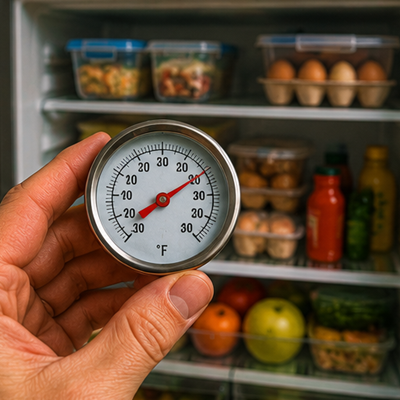 Prepared individuals frequently recognize that refrigeration timelines depend heavily on:
- outside temperatures
- how often doors are opened
- how full the refrigerator or freezer is
- insulation quality
- duration of the outage
During ordinary life, refrigeration feels permanent and reliable. Emergencies reveal how quickly food preservation becomes uncertain when electricity disappears.
Historically, people developed extensive preservation systems because refrigeration technology did not exist. Modern populations often lost much of this practical knowledge because electrical refrigeration became so dependable.
One important preparedness lesson is that minimizing unnecessary refrigerator and freezer access may dramatically extend food preservation time.
Prepared individuals frequently focus on planning before opening storage units because temperature stability matters enormously during outages.
Preparedness increasingly means understanding food management rather than reacting emotionally during uncertainty.
22.2 Food Safety Rules
Food safety becomes critically important during prolonged outages because spoiled food may create serious health risks precisely when medical systems and healthcare access may already be strained.
 Prepared individuals frequently recognize that hunger, stress, and uncertainty sometimes cause people to ignore safe food handling practices during emergencies.
One important preparedness lesson is that foodborne illness during a crisis may become far more dangerous than people realize.
Historically, food preservation and food safety knowledge were essential survival skills because communities lacked modern refrigeration, transportation systems, and industrial food processing.
Modern populations became highly dependent on centralized food systems and refrigeration infrastructure, reducing direct familiarity with spoilage risks and preservation techniques.
Prepared individuals often focus heavily on:
- temperature awareness
- contamination prevention
- safe preparation methods
- water cleanliness
- sanitation
because maintaining health during emergencies becomes critically important.
Preparedness ultimately improves resilience by reducing preventable illness during already stressful conditions.
22.3 Extending Cold Storage
One of the oldest preparedness principles is conserving resources through careful management rather than unnecessary waste.
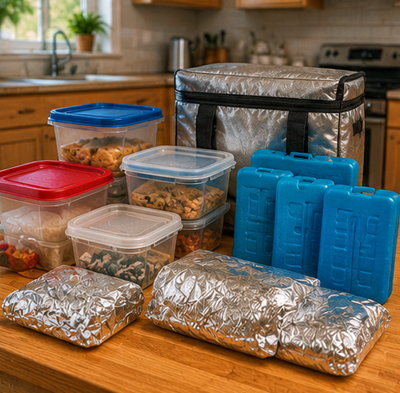 Prepared individuals frequently recognize that cold storage capability may often be extended longer than people initially assume through practical planning and temperature management.
Historically, families preserved food using:
- underground storage
- ice houses
- cold rooms
- root cellars
- shaded environments
- insulated storage methods
long before electrical refrigeration existed.
Modern refrigeration replaced many traditional preservation techniques, but emergencies may require rediscovering some of these practical concepts.
One important preparedness lesson is that preserving cold temperatures matters more than constant access convenience during outages.
Prepared individuals frequently focus on:
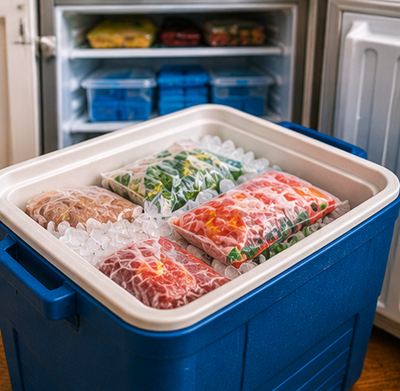
- limiting door openings
- consolidating food
- using cool outdoor temperatures when safe
- improving insulation
- prioritizing perishable foods first
because practical organization significantly improves food survival timelines.
Preparedness increasingly means adapting intelligently rather than relying entirely on automated systems.
22.4 Printed Food Safety Charts
Modern populations became deeply dependent on internet searches and smartphones for nearly all information access.
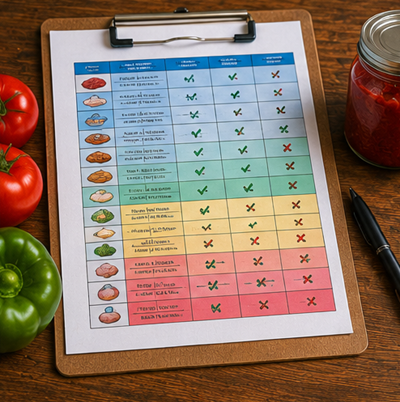 During ordinary life, people rarely memorize food safety guidelines because answers remain instantly available online.
Emergencies reveal how vulnerable this dependency may become.
Prepared individuals frequently recognize that practical information is only valuable if it remains accessible during infrastructure disruption.
Historically, households commonly maintained printed references involving:
- food preservation
- cooking temperatures
- sanitation
- storage timelines
- emergency preparation
- home preservation techniques
because information needed to remain available independently from outside infrastructure.
One important preparedness lesson is that printed references may become extremely valuable during prolonged outages when internet access becomes unreliable or unavailable.
Prepared individuals often maintain printed food safety charts, preservation references, emergency cooking information, and sanitation guides because confusion and stress may impair memory during emergencies.
Preparedness increasingly means preserving knowledge resilience as well as physical supplies.
22.5 USDA Emergency Guidelines
Government emergency food safety guidelines exist because large-scale outages and disasters repeatedly demonstrated how quickly food safety problems may develop during infrastructure disruption.
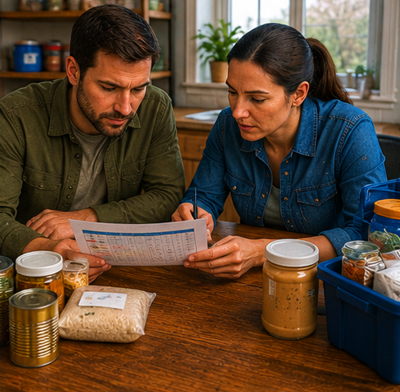 Prepared individuals frequently recognize that emergency food guidance may provide valuable baseline information involving:
- refrigeration timelines
- freezer safety
- contamination prevention
- emergency cooking
- sanitation
- food handling
One important preparedness lesson is that practical food safety matters enormously during emergencies because medical systems may already be overwhelmed or difficult to access.
Historically, communities surviving disasters often faced secondary health problems involving contaminated food and water because infrastructure systems supporting sanitation and refrigeration became unstable.
Modern populations became highly dependent on continuous refrigeration and centralized food systems, reducing familiarity with practical preservation knowledge.
Prepared individuals frequently focus on combining modern safety guidance with practical preparedness planning rather than relying entirely on improvisation during emergencies.
This is one reason systems like Prepper Offline may become extremely valuable during prolonged outages or communication disruption. By storing preparedness knowledge locally across offline devices, individuals may continue accessing food preservation guides, emergency planning resources, sanitation information, survival references, and practical resilience knowledge even if internet systems become unavailable.
Likewise, Prepping Communities may help preparedness-minded individuals build local preparedness groups, homesteading communities, food preservation networks, emergency planning discussions, and mutual assistance systems before emergencies occur.
Preparedness ultimately means strengthening practical knowledge, adaptability, and local resilience so families remain capable even when modern food infrastructure becomes unstable.
23. Water Purification and Emergency Water
Water is one of the most important and immediate survival priorities during any emergency. People may survive weeks without food under certain conditions, but only a short time without safe drinking water. Modern society became so accustomed to instant access to clean running water that most people rarely think about the enormous infrastructure required to deliver it safely every single day.
Emergencies expose how fragile that system may become.
Modern municipal water systems depend heavily on:
- electrical infrastructure
- chemical treatment systems
- pumping stations
- transportation networks
- communication systems
- maintenance crews
- fuel availability
When these systems weaken, water quality and availability may become uncertain very quickly.
Prepared individuals frequently recognize that water problems often create cascading effects across nearly every other survival category. Safe water affects:
- drinking
- cooking
- sanitation
- hygiene
- medical care
- food preparation
- disease prevention
One important preparedness lesson is that people often underestimate how quickly clean water becomes critically important during outages or disasters.
Historically, communities relied heavily on local water knowledge involving:
- wells
- rivers
- springs
- rain collection
- boiling
- filtration
- storage
- purification methods
Modern populations became highly dependent on centralized water infrastructure and often lost familiarity with basic water purification skills.
Preparedness increasingly means rebuilding practical water resilience before emergencies occur.
Another important reality is that clear water is not always safe water.
Contamination involving bacteria, parasites, chemicals, sewage, industrial runoff, or infrastructure damage may create serious health risks even when water appears visually clean.
Prepared individuals frequently focus heavily on:
- purification knowledge
- storage planning
- sanitation awareness
- filtration systems
- backup water capability
because water safety directly affects long-term survival and health during emergencies.
This is another reason offline preparedness matters so much.
A system like Prepper Offline may help preserve preparedness knowledge independently from internet access during prolonged outages or infrastructure instability. Individuals may still retain access to water purification guides, emergency planning resources, sanitation information, survival references, and practical resilience knowledge stored locally across offline devices.
Likewise, preparedness communities may become increasingly valuable during infrastructure disruption or water emergencies.
A platform like Prepping Communities may help preparedness-minded individuals connect with local groups discussing water storage, purification systems, homesteading, emergency planning, local resilience, and mutual assistance before emergencies occur.
Preparedness ultimately means reducing vulnerability by increasing practical knowledge, resource awareness, and adaptability before systems become unstable.
23.1 Boiling Water Safely
Boiling water remains one of the oldest and most reliable purification methods in human history.
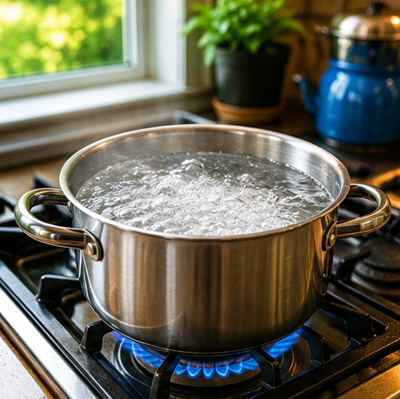 Prepared individuals frequently recognize that boiling may help reduce many biological risks involving contaminated water because heat destroys numerous bacteria, parasites, and microorganisms that may otherwise cause severe illness.
Historically, communities relied heavily on boiling because advanced filtration and treatment systems did not exist. Even before people fully understood microbiology, generations learned through experience that heat often improved water safety significantly.
Modern municipal systems largely automated purification processes, causing many people to lose familiarity with basic water treatment methods.
One important preparedness lesson is that fuel availability becomes critically important when boiling water during prolonged emergencies.
Prepared individuals frequently focus not only on purification itself, but also on:
- fuel conservation
- cooking capability
- backup heating methods
- fire safety
- sanitation planning
because water treatment may become an ongoing requirement during infrastructure disruption.
Preparedness increasingly means understanding practical systems rather than assuming clean water will always remain instantly available.
23.2 Filtration Systems
Water filtration systems became increasingly popular within preparedness communities because they provide portable and scalable ways to improve water safety during emergencies.
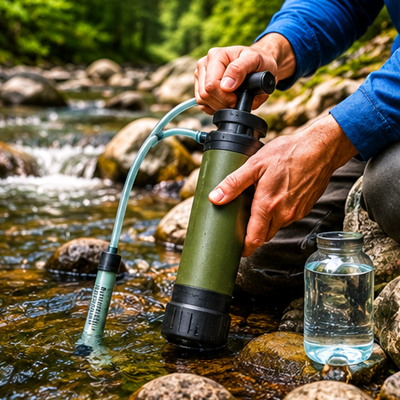 Prepared individuals frequently recognize that filtration may become critically important during:
- natural disasters
- infrastructure failures
- evacuation scenarios
- wilderness emergencies
- long-term outages
- water contamination events
Historically, people relied heavily on natural filtration methods involving sand, charcoal, cloth, and settling techniques before modern filtration technology existed.
Modern filtration systems dramatically improved portability and effectiveness, allowing individuals to treat water more efficiently during uncertain conditions.
One important preparedness lesson is that different filtration systems address different threats.
Prepared individuals frequently study:
- biological filtration
- sediment removal
- chemical treatment
- maintenance requirements
- filter lifespan
- flow limitations
because understanding capability matters just as much as owning equipment.
Preparedness increasingly means realistic planning and practical familiarity rather than simply accumulating supplies without understanding how they function.
23.3 Chlorine and Iodine Treatment
Chemical water treatment methods have played major roles throughout modern emergency preparedness because they allow water purification without requiring electricity or advanced infrastructure.
 Prepared individuals frequently recognize that chlorine and iodine treatments may provide important backup capability during emergencies involving contaminated or uncertain water sources.
Historically, chemical disinfection became critically important during wars, disasters, infrastructure failures, and public health emergencies because contaminated water often caused devastating disease outbreaks.
Modern municipal systems now disinfect enormous water supplies continuously behind the scenes, causing many people to underestimate how essential purification processes really are.
One important preparedness lesson is that sanitation and disease prevention become critically important during prolonged emergencies.
Prepared individuals often focus heavily on practical hygiene and contamination prevention because illness may become far more dangerous during infrastructure disruption when healthcare systems are strained or inaccessible.
Preparedness ultimately improves resilience by reducing preventable health risks during uncertain conditions.
23.4 UV Water Purification
UV purification systems became increasingly popular because they provide another method of reducing biological contamination within water supplies.
 Prepared individuals frequently recognize that modern technology may improve emergency water treatment capability, particularly when portability and speed matter during travel, evacuation, or infrastructure instability.
Historically, sunlight itself was sometimes used indirectly for water treatment and sanitation because people observed the relationship between sunlight, drying, and reduced contamination.
Modern UV systems refined these concepts into portable treatment technologies.
One important preparedness lesson is that technology still depends heavily on supporting systems involving:
- batteries
- charging capability
- power generation
- maintenance
- equipment protection
Prepared individuals frequently recognize that all purification systems have strengths and limitations.
Preparedness increasingly means maintaining layered water treatment capability rather than relying entirely on one device or technology.
23.5 Emergency Water Storage
One of the most important preparedness realities is that water access problems may develop extremely quickly during emergencies.
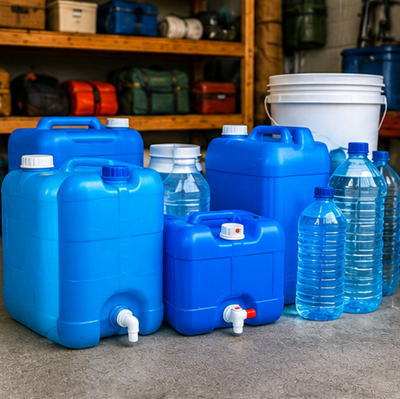 Prepared individuals frequently recognize that municipal systems may become unreliable because of:
- power outages
- contamination
- infrastructure damage
- pump failure
- frozen systems
- transportation disruption
- chemical shortages
Historically, communities commonly maintained stored water because reliable running water infrastructure did not exist universally.
Modern populations became highly dependent on instant water access and often maintain very little reserve capability.
One important preparedness lesson is that emergency water storage provides valuable time during unstable conditions.
Prepared individuals frequently focus on:
- safe storage methods
- container sanitation
- rotation schedules
- storage locations
- accessibility
- temperature protection
because long-term water quality depends heavily on proper storage practices.
Preparedness increasingly means creating practical resource buffers before emergencies occur rather than waiting until systems fail.
23.6 Municipal Water Risks
Modern municipal water systems are among the most complex and infrastructure-dependent systems supporting daily life.
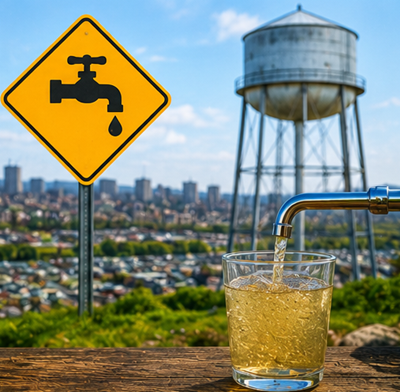 Most people rarely think about the enormous coordination required to deliver safe water continuously across cities and regions.
Prepared individuals frequently recognize that municipal systems depend heavily on:
- electrical power
- chemical treatment
- pumps
- transportation systems
- communication infrastructure
- maintenance crews
- cybersecurity systems
When these systems weaken, water reliability and safety may become uncertain very quickly.
One important preparedness lesson is that water infrastructure failures may create secondary health crises during emergencies.
Historically, contaminated water caused devastating outbreaks of disease because sanitation and purification systems were limited or nonexistent.
Modern populations became highly dependent on centralized purification systems, reducing familiarity with independent water safety practices.
Prepared individuals often focus heavily on understanding local water systems, backup treatment methods, and emergency purification capability because safe water directly affects long-term survival, sanitation, and health.
This is one reason systems like Prepper Offline may become extremely valuable during prolonged outages or infrastructure disruption. By storing preparedness knowledge locally across offline devices, individuals may continue accessing water purification guides, sanitation information, emergency planning resources, survival references, and practical resilience knowledge even if internet systems become unavailable.
Likewise, Prepping Communities may help preparedness-minded individuals build local preparedness groups, homesteading communities, emergency planning networks, and mutual assistance systems before emergencies occur.
Preparedness ultimately means strengthening practical knowledge, adaptability, sanitation awareness, and resource resilience before modern infrastructure becomes unstable.
24. Food Shortages and Supply Chain Collapse
Modern society became extraordinarily efficient at moving food across enormous distances. Grocery stores are continuously restocked through highly coordinated transportation systems involving trucking networks, fuel infrastructure, warehouses, ports, rail systems, communication networks, and computerized logistics systems operating almost constantly in the background.
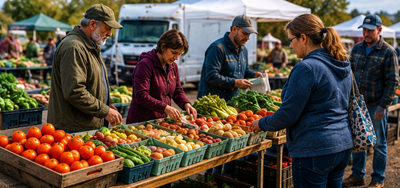 Most people rarely think about this complexity because modern supply chains normally function so efficiently that shelves appear permanently stocked.
Emergencies expose how fragile this system may become.
Prepared individuals frequently recognize that modern food systems depend heavily on continuous infrastructure stability. Even relatively small disruptions involving fuel shortages, transportation delays, severe weather, cyber incidents, labor disruptions, communication failures, or infrastructure damage may quickly ripple across entire regions.
One important preparedness lesson is that grocery stores often carry far less reserve inventory than most people assume.
Modern retail systems became highly optimized around “just-in-time” logistics where products arrive continuously rather than remaining stored locally in large quantities.
Historically, communities maintained far greater local food resilience through:
- home preservation
- farming
- local markets
- root cellars
- community storage
- regional production
Modern populations became deeply dependent on centralized transportation and large-scale logistics systems.
Preparedness increasingly means understanding how interconnected modern food infrastructure really became.
Another important reality is that public behavior itself may worsen shortages very quickly.
The moment people fear scarcity, panic buying often begins. Shelves empty rapidly not only because of actual shortage, but because fear changes consumer behavior dramatically.
Prepared individuals frequently recognize that calm planning and gradual preparation matter far more than emotional reaction during uncertain conditions.
Preparedness ultimately improves resilience by reducing dependency on constant resupply.
This is another reason offline preparedness matters so much.
A system like Prepper Offline may help preserve preparedness knowledge independently from internet access during prolonged shortages or infrastructure instability. Individuals may still retain access to food storage guides, emergency planning resources, homesteading information, survival references, and practical resilience knowledge stored locally across offline devices.
Likewise, preparedness communities may become increasingly valuable during food shortages or supply chain disruption.
A platform like Prepping Communities may help preparedness-minded individuals connect with local groups discussing food storage, gardening, homesteading, emergency planning, local resilience, and mutual assistance before emergencies occur.
Preparedness ultimately means strengthening local capability, practical knowledge, and adaptability before modern supply systems become unstable.
24.1 Early Warning Signs
One important preparedness reality is that supply chain problems often begin gradually before becoming fully visible to the public.
 Prepared individuals frequently recognize that shortages rarely appear without warning signs.
People may first notice:
- delayed deliveries
- inconsistent inventory
- rising prices
- transportation slowdowns
- fuel instability
- reduced product variety
- purchasing limits
before shelves become completely empty.
Historically, communities surviving wars, disasters, economic crises, or infrastructure disruption often experienced gradual strain before severe shortages fully developed.
Modern populations became accustomed to abundance and constant availability, making even small disruptions feel alarming very quickly.
One important preparedness lesson is that awareness and observation matter enormously during uncertain conditions.
Prepared individuals often focus on recognizing patterns rather than reacting emotionally to isolated events.
Preparedness increasingly means paying attention to systems rather than assuming normal conditions will continue indefinitely without interruption.
24.2 Empty Shelves and Panic Buying
One of the most visible signs of public fear during emergencies is the rapid appearance of empty shelves.
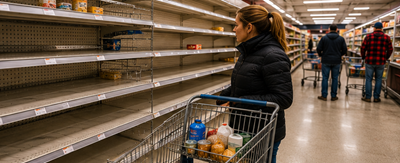 Prepared individuals frequently recognize that panic buying may spread far faster than actual shortages because human behavior changes dramatically during uncertainty.
The moment people believe supplies may become unavailable, many individuals begin purchasing:
- large quantities of food
- bottled water
- fuel
- batteries
- medical supplies
- household necessities
Modern retail systems are not designed to handle sudden surges in demand across entire populations simultaneously.
Historically, populations experiencing instability often responded emotionally to scarcity fears because access to food directly affects survival and security.
Modern just-in-time inventory systems increased efficiency, but also reduced local reserve capacity within many communities.
One important preparedness lesson is that emotional behavior itself may intensify shortages.
Prepared individuals frequently focus on gradual preparation before emergencies occur because last-minute panic buying often creates stress, conflict, financial strain, and poor decision-making.
Preparedness ultimately strengthens resilience by reducing emotional dependence on unstable retail systems during crises.
24.3 Fuel and Transportation Disruptions
Modern food systems depend heavily on transportation infrastructure functioning continuously.
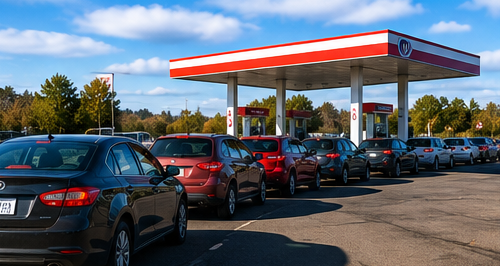 Prepared individuals frequently recognize that grocery shelves are directly connected to:
- fuel availability
- trucking networks
- highways
- warehouses
- ports
- rail systems
- communication infrastructure
When transportation systems weaken, food distribution may slow rapidly.
Historically, communities relied far more heavily on local production because long-distance transportation remained slower and less centralized.
Modern civilization dramatically increased efficiency through global logistics systems, but also increased vulnerability to transportation disruption.
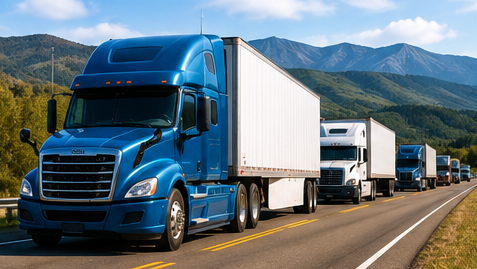 One important preparedness lesson is that fuel shortages often create cascading effects across nearly every survival category.
Without fuel:
- trucks stop moving
- deliveries slow
- refrigeration systems fail
- repair crews struggle to respond
- food distribution weakens
Prepared individuals frequently focus heavily on understanding infrastructure interdependence because modern systems rarely fail in isolation.
Preparedness increasingly means understanding systems thinking rather than viewing shortages as isolated events.
24.4 Trucker CB Intelligence
Truck drivers often become aware of changing supply conditions long before the general public because they operate directly within transportation and logistics systems every day.
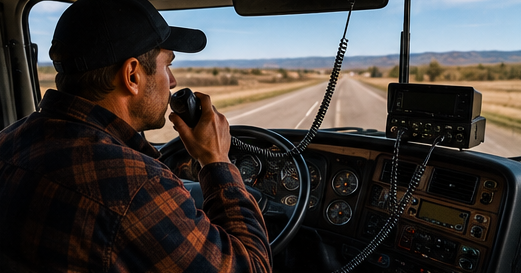 Prepared individuals frequently recognize that truckers may observe:
- warehouse slowdowns
- fuel shortages
- transportation congestion
- regional delivery problems
- weather disruption
- road closures
- inventory issues
very early during developing supply chain instability.
Historically, transportation workers frequently served as informal information networks because they observed changing regional conditions firsthand.
Modern digital systems reduced reliance on decentralized communication somewhat, but emergencies repeatedly demonstrate the value of real-time local observation and transportation awareness.
One important preparedness lesson is that practical situational awareness often matters more than distant commentary during crises.
Prepared individuals frequently appreciate CB communication and transportation monitoring because they may reveal early indicators of broader infrastructure strain.
Preparedness ultimately improves resilience by increasing awareness before conditions worsen significantly.
24.5 Monitoring Local Supply Systems
One of the most valuable preparedness skills is learning how to monitor local conditions calmly and realistically.
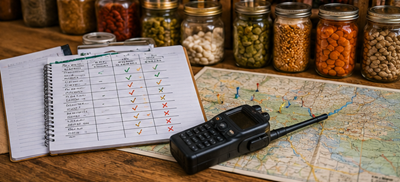 Prepared individuals frequently recognize that local supply systems may provide early warning signs involving:
- reduced inventory
- delivery delays
- rationing
- fuel shortages
- transportation disruption
- changing public behavior
Historically, resilient communities survived instability more effectively because people maintained strong local awareness and adapted gradually as conditions changed.
Modern populations often rely heavily on national headlines or social media narratives while overlooking practical local indicators.
One important preparedness lesson is that local conditions often matter far more than distant commentary during emergencies.
Prepared individuals frequently focus on:
- observing patterns
- maintaining realistic awareness
- reducing dependency
- strengthening local resilience
- building practical redundancy
rather than reacting emotionally to every alarming headline.
This is one reason systems like Prepper Offline may become extremely valuable during shortages or infrastructure disruption. By storing preparedness knowledge locally across offline devices, individuals may continue accessing food storage guides, gardening information, emergency planning resources, survival references, and practical resilience knowledge even if internet systems become unavailable.
Likewise, Prepping Communities may help preparedness-minded individuals build local preparedness groups, food resilience communities, homesteading networks, emergency planning discussions, and mutual assistance systems before emergencies occur.
Preparedness ultimately means strengthening awareness, adaptability, local capability, and practical knowledge before modern supply systems become unstable.
25. Preserving Food Without Electricity
Modern society became deeply dependent on refrigeration and continuous electrical infrastructure for food preservation.
Refrigerators, freezers, transportation systems, grocery distribution networks, and industrial food storage all work together so efficiently that most people rarely think about how quickly food becomes vulnerable when power disappears.
Emergencies expose how fragile that system may become.
Prepared individuals frequently recognize that food preservation is not simply about convenience. It is about long-term resilience, resource conservation, and reducing dependence on unstable infrastructure during uncertain conditions.
Historically, nearly every civilization developed methods of preserving food without electricity because survival depended on maintaining food supplies through changing seasons, crop failures, transportation disruption, harsh weather, and long periods without fresh harvests.
Before refrigeration existed, families relied on smoking, salting, curing, drying, fermentation, root cellars, cold storage, and canning to preserve food safely for extended periods.
Modern refrigeration dramatically improved convenience, but also caused many traditional preservation skills to fade from everyday life.
Preparedness increasingly means rediscovering some of these practical systems.
One important preparedness lesson is that food preservation does more than extend shelf life. It also increases self-reliance and flexibility during emergencies.
Prepared individuals frequently recognize that preserving food allows families and communities to reduce waste, manage shortages, preserve harvests, improve long-term storage, stabilize food supplies, and reduce dependence on constant resupply.
Another important reality is that food preservation requires knowledge, patience, and practice.
Historically, preservation skills were passed from generation to generation because mistakes could result in spoilage, disease, or wasted resources.
Modern populations often assume food will always remain available through centralized supply systems. Emergencies reveal how valuable practical preservation knowledge may become.
Preparedness ultimately improves resilience by strengthening local capability rather than depending entirely on industrial systems.
This is another reason offline preparedness matters so much.
A system like Prepper Offline may help preserve preparedness knowledge independently from internet access during prolonged outages or infrastructure instability. Individuals may still retain access to food preservation guides, homesteading resources, emergency planning information, survival references, and practical resilience knowledge stored locally across offline devices.
Likewise, preparedness communities may become increasingly valuable during shortages or infrastructure disruption.
A platform like Prepping Communities may help preparedness-minded individuals connect with local groups discussing food preservation, homesteading, gardening, emergency preparedness, local resilience, and mutual assistance before emergencies occur.
Preparedness ultimately means rebuilding practical skills, local knowledge, and adaptability before modern infrastructure becomes unstable.
25.1 Smoking Meat
Smoking meat remains one of the oldest food preservation methods in human history.
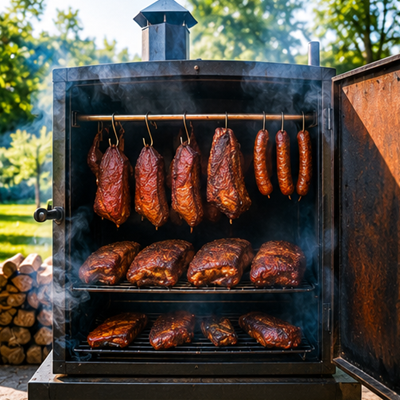 Prepared individuals frequently recognize that smoking not only improves flavor, but also helps preserve food by reducing moisture and exposing meat to protective compounds created during the smoking process.
Historically, smoking played an essential role in survival because communities needed ways to preserve meat during hunting seasons, harvest periods, transportation delays, and winter shortages.
Long before refrigeration existed, smokehouses allowed families to preserve valuable protein supplies for extended periods.
Modern refrigeration replaced much of this necessity, but emergencies reveal how valuable traditional preservation methods may still be.
One important preparedness lesson is that smoking requires patience, temperature awareness, airflow management, and understanding of food safety.
Prepared individuals often recognize that preservation is a practical skillset rather than simply a piece of equipment.
Preparedness increasingly means rebuilding hands-on knowledge that modern convenience systems gradually replaced.
25.2 Salting and Curing
Salting and curing have been used for centuries because salt helps reduce moisture and create conditions that slow spoilage and bacterial growth.
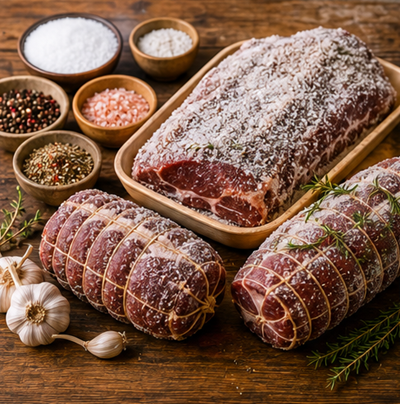 Prepared individuals frequently recognize that salt historically represented one of the most important preservation resources in human civilization.
Before refrigeration existed, communities preserved meats, fish, hides, and vegetables through curing methods that allowed food to remain usable for much longer periods.
Historically, trade routes, economies, and even military logistics often depended heavily on preserved foods because armies, travelers, and isolated communities required stable food supplies.
Modern refrigeration reduced dependence on curing methods, but emergencies may once again highlight the value of low-energy preservation systems.
One important preparedness lesson is that traditional preservation methods require proper knowledge and careful attention to sanitation and technique.
Prepared individuals frequently focus on learning practical food handling skills because preservation mistakes may create serious food safety risks.
Preparedness increasingly means understanding not only how to store food, but how to preserve it safely and sustainably over long periods.
25.3 Pressure Canning
Pressure canning remains one of the most important long-term food preservation methods for many preparedness-minded individuals and homesteaders.
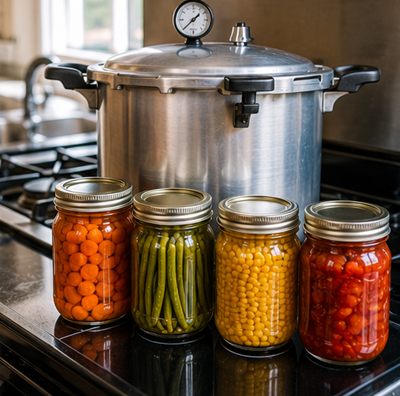 Prepared individuals frequently recognize that canning allows food to remain shelf stable for extended periods without refrigeration when performed properly.
Historically, home canning dramatically improved household resilience because families could preserve meats, vegetables, soups, sauces, and harvests for use during winter months, shortages, transportation delays, or economic hardship.
Modern grocery systems reduced the need for home preservation in many regions, but emergencies repeatedly demonstrate the value of maintaining independent food storage capability.
One important preparedness lesson is that pressure canning requires careful attention to temperature, pressure, sanitation, timing, and safe processing methods.
Prepared individuals often focus heavily on learning proper techniques because food preservation safety matters enormously during long-term storage.
Preparedness ultimately strengthens resilience by improving local food security and reducing waste during uncertain conditions.
25.4 Dehydration
Drying food is one of humanity’s oldest preservation techniques because removing moisture dramatically slows spoilage.
 Prepared individuals frequently recognize that dehydration provides practical long-term storage benefits while reducing weight and storage space.
Historically, communities dried fruits, vegetables, herbs, meats, and grains because dehydration allowed food to remain usable during travel, winter storage, drought, transportation disruption, and seasonal scarcity.
Modern food industries still rely heavily on dehydration because it remains highly effective even with advanced preservation technology.
One important preparedness lesson is that preservation systems often work best when they combine simplicity with reliability.
Prepared individuals frequently appreciate dehydration because it may require relatively little infrastructure compared to refrigeration systems.
Preparedness increasingly means understanding practical low-energy preservation methods rather than depending entirely on electricity-based storage systems.
25.5 Cold Storage Methods
Long before modern refrigeration existed, communities developed creative ways to use natural temperatures for food preservation.
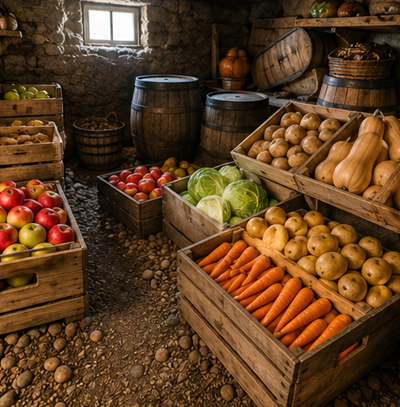 Prepared individuals frequently recognize that cold storage methods such as root cellars, underground storage, insulated chambers, ice houses, and shaded environments historically played major roles in preserving food safely.
Historically, families carefully managed seasonal temperatures to preserve root vegetables, fruits, dairy, meats, and canned goods throughout changing weather conditions.
Modern refrigeration largely replaced these systems, but emergencies reveal how valuable low-energy storage methods may still become during prolonged outages or infrastructure instability.
One important preparedness lesson is that environmental awareness matters enormously during food preservation.
Prepared individuals frequently focus on temperature stability, humidity control, airflow, insulation, and seasonal conditions because food preservation often depends more on environmental management than advanced technology alone.
Preparedness increasingly means adapting intelligently to local conditions rather than depending entirely on centralized systems.
25.6 Food Preservation as a Skillset
One of the most important preparedness realities is that food preservation is ultimately a practical skillset rather than simply a collection of equipment or supplies.
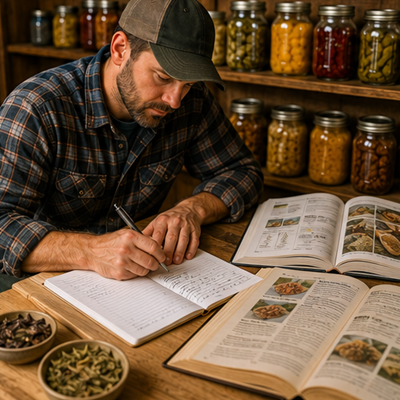 Prepared individuals frequently recognize that knowledge, experience, patience, and repetition matter enormously during emergencies.
Historically, food preservation skills were considered ordinary household knowledge because survival often depended on the ability to preserve harvests, manage resources, and reduce waste.
Modern civilization outsourced much of this responsibility to industrial food systems and refrigeration infrastructure.
Emergencies reveal how vulnerable that dependency may become.
One important preparedness lesson is that skills often provide more long-term resilience than supplies alone.
Prepared individuals frequently focus on learning preservation techniques, sanitation practices, storage management, food safety, seasonal planning, and local food systems because practical capability improves adaptability during uncertainty.
Preparedness increasingly means rebuilding hands-on knowledge and local resilience before infrastructure becomes unstable.
This is one reason systems like Prepper Offline may become extremely valuable during prolonged outages or infrastructure disruption. By storing preparedness knowledge locally across offline devices, individuals may continue accessing food preservation guides, homesteading information, emergency planning resources, survival references, and practical resilience knowledge even if internet systems become unavailable.
Likewise, Prepping Communities may help preparedness-minded individuals build local preparedness groups, food preservation communities, homesteading networks, emergency planning discussions, and mutual assistance systems before emergencies occur.
Preparedness ultimately means strengthening practical skills, adaptability, local capability, and long-term resilience before modern infrastructure becomes unstable.
© Prepping Communities. This content is for informational purposes only and not professional advice. Use at your own risk.
Terms | Privacy | Guidelines