
How Preparedness Is Evolving in a Changing World
by Natural Born Prepper (2026-04-28)
1. Introduction: A New Era of Preparedness
Preparedness in 2026 looks very different from what it did even five or ten years ago. The image of the prepper as someone focused solely on stockpiling food, gear, and ammunition is being replaced by a more nuanced, practical, and systems-oriented approach. Today’s prepper is just as likely to be thinking about supply chains, digital dependency, and local resilience as they are about traditional survival scenarios.
This shift is being driven by real-world pressures: rising costs of living, increasing reliance on centralized systems, global instability, and the growing awareness that many of the systems we depend on are fragile. Instead of preparing for a single catastrophic event, more people are preparing for a range of disruptions—from short-term outages to long-term systemic changes.
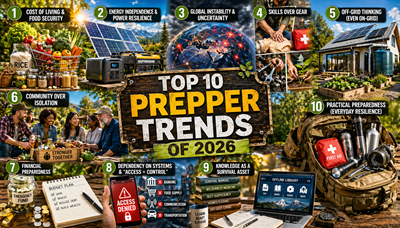
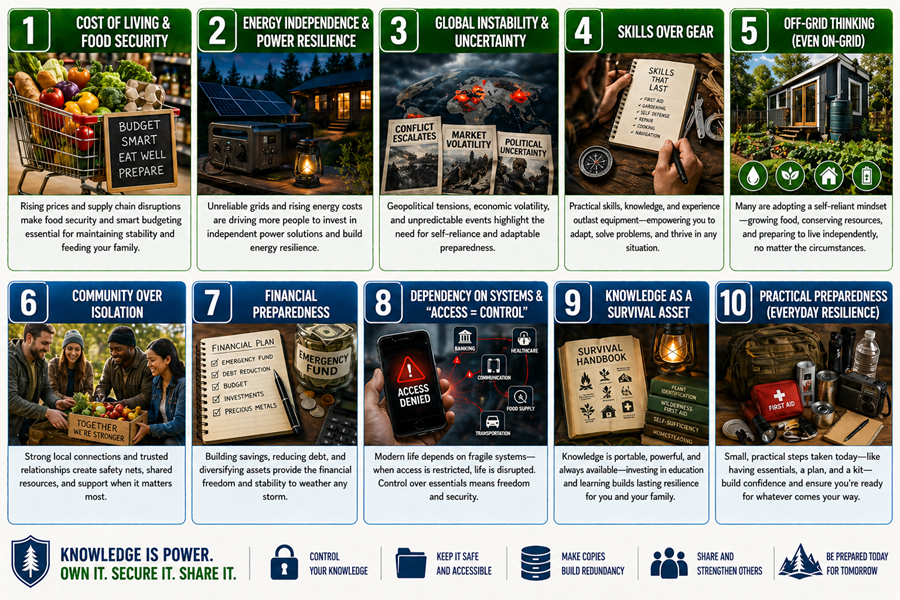
What follows are the Top 10 Prepper Trends of 2026—not based on hype, but on observable shifts in behavior, priorities, and thinking within the preparedness community.
Trend #1: Cost of Living & Food Security
The Pressure Is Real
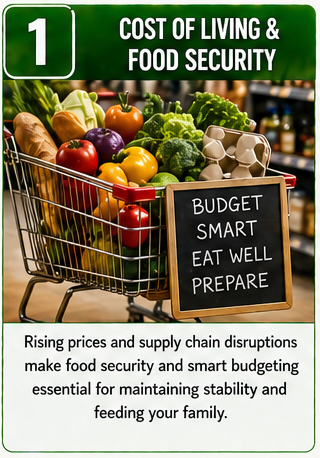 The rising cost of living—particularly the cost of food—has become one of the most immediate and tangible drivers of preparedness in 2026. Unlike many traditional prepper concerns that revolve around hypothetical or low-probability events, this trend is rooted in everyday reality. People are not preparing for food shortages “someday”—they are actively responding to price increases, reduced purchasing power, and uncertainty in supply chains right now. This makes food security one of the most practical and widely adopted entry points into preparedness.
At its core, this trend is about more than just saving money. It reflects a growing awareness that modern food systems are highly centralized and dependent on complex logistics. From production and processing to transportation and retail distribution, the system works efficiently—but only under stable conditions. When disruptions occur—whether from economic pressure, weather events, fuel costs, or geopolitical instability—the effects are felt quickly at the consumer level. Empty shelves, limited availability, and price spikes are not theoretical risks; they are observable patterns that reinforce the need for personal resilience.
As a result, preppers are shifting from passive consumption to active control. This includes building well-organized food storage systems that go beyond short-term stockpiling. Instead of simply accumulating supplies, individuals are focusing on rotation, usability, and nutritional balance. Staples like rice, beans, oats, and flour are being stored in bulk, while canned goods and preserved foods provide variety and convenience. The emphasis is on creating a system that can sustain a household over time, not just serve as a temporary buffer.
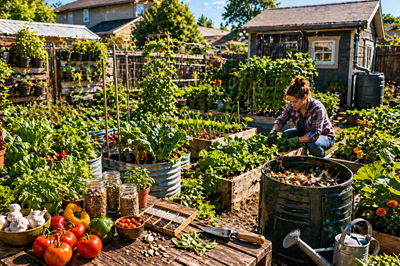 Another major component of this trend is the resurgence of food production at the household level. Backyard gardens, container gardening, and even small-scale urban farming are becoming increasingly common. People are rediscovering the value of growing at least a portion of their own food—not necessarily to become fully self-sufficient, but to reduce dependency and increase flexibility. This also extends to skills like seed saving, composting, and soil management, which further strengthen long-term resilience.
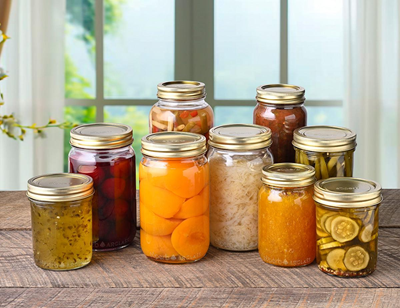 Food preservation is also playing a critical role. Techniques such as canning, dehydrating, and freeze-drying are seeing renewed interest as people look for ways to extend the life of perishable foods and build a more stable supply. These methods allow individuals to take advantage of seasonal abundance or bulk purchases and convert them into long-term assets. In this sense, food is no longer just something you consume—it becomes something you manage, store, and protect strategically.
Financially, food preparedness acts as a form of inflation hedging. When prices rise, those with stocked pantries are less exposed to immediate cost increases. This creates a buffer not only against shortages but also against economic volatility. In a world where currency value and purchasing power can fluctuate, tangible goods—especially food—retain consistent utility and value.
Perhaps most importantly, this trend reflects a broader shift in mindset. People are beginning to understand that food security is not guaranteed by default. It is a system—one that can be influenced, disrupted, or restricted. By taking ownership of part of that system, even at a small scale, individuals regain a measure of control.
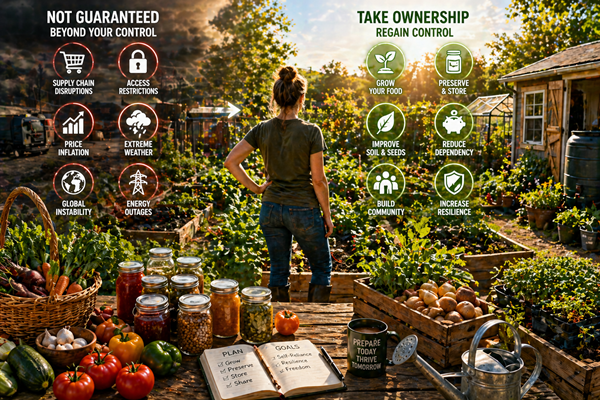
Ultimately, Cost of Living & Food Security is not just a trend—it is a foundational pillar of modern preparedness. It bridges the gap between everyday life and long-term resilience, making preparedness both practical and accessible. It’s not about fear or extreme scenarios; it’s about ensuring that no matter what happens in the broader system, you still have reliable access to one of the most basic and essential needs: food.
What This Looks Like
- Bulk purchasing of staple foods
- Increased use of food preservation (canning, dehydrating, freeze-drying)
- Backyard gardening and small-scale farming
- Strategic stockpiling based on rotation and usage
The Shift
Preppers are no longer just asking:
“Do I have enough food for an emergency?”
They’re asking:
“Can I sustain myself if prices double, supply drops, or access becomes restricted?”
Why It Matters
Food is no longer just a survival item—it’s becoming a financial and strategic asset.
Trend #2: Energy Independence & Power Resilience
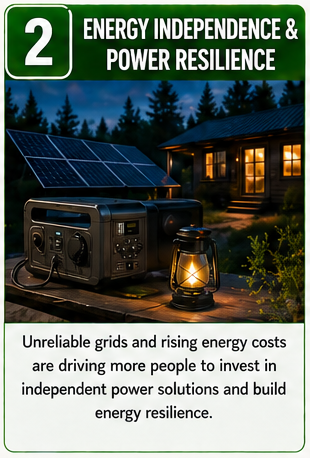 Energy has quietly become one of the most critical dependencies in modern life, and in 2026, more people are starting to recognize just how fragile that dependency can be. Unlike food, which people can physically see and store, energy is often invisible—flowing through wires, controlled by grids, and taken for granted until it’s gone. When the power goes out, however, the impact is immediate and cascading. Lights, refrigeration, communication, water systems, heating, and even access to information can fail within minutes. This growing awareness is driving a major shift toward energy independence and resilience.
At the heart of this trend is a simple realization:
If you don’t control your power, you don’t control your systems.
Electricity is the backbone of nearly every modern convenience and survival system. Without it, even well-prepared households can quickly find themselves in difficult situations. Refrigerated food spoils, water pumps stop working, communication devices lose charge, and heating or cooling systems shut down. In urban environments, outages can lead to widespread disruption, while in rural areas, the isolation makes recovery even more challenging. Energy is not just a utility—it is a force multiplier that enables all other systems to function.
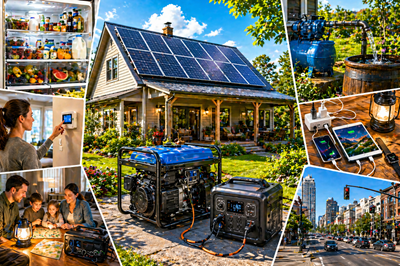 As a result, preppers are no longer treating backup power as an optional add-on. Instead, they are building layered energy systems designed to provide redundancy and flexibility. This layered approach typically includes:
- Primary Grid Power – still used for everyday convenience
- Backup Generators – providing short-term, high-output power during outages
- Solar Systems – offering renewable, long-term energy generation
- Battery Storage – allowing power to be stored and used when needed
Each layer serves a different purpose. Generators are effective for immediate needs but rely on fuel, which introduces another dependency. Solar systems reduce reliance on external fuel sources but require initial investment and planning. Batteries bridge the gap by storing energy and smoothing out fluctuations. Together, these systems create a resilient energy framework where the failure of one component does not lead to total system collapse.
Another important aspect of this trend is the move toward energy efficiency and consumption awareness. Preppers are not just generating more power—they are also using less of it. This includes switching to LED lighting, using energy-efficient appliances, and prioritizing essential loads during outages. By reducing overall demand, smaller and more manageable backup systems become viable. In many cases, the goal is not to maintain full modern convenience, but to sustain critical functions during disruptions.
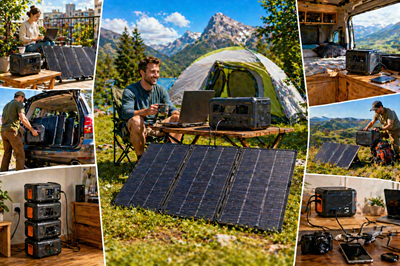 Portability and scalability are also becoming key considerations. Not everyone has the ability to install a full home solar system, especially in urban or rental environments. As a result, smaller-scale solutions—such as portable power stations, foldable solar panels, and modular battery systems—are gaining popularity. These systems allow individuals to start small and expand over time, building resilience incrementally rather than all at once.
There is also a growing awareness of how energy ties into other critical systems. Water, for example, often depends on electrically powered pumps. Communication devices require charging. Even knowledge systems—such as laptops or offline libraries—are only useful if they can be powered. This interconnectedness reinforces the importance of energy as a foundational layer in any preparedness strategy.
From a strategic perspective, energy independence is not about completely disconnecting from the grid. Instead, it’s about reducing vulnerability to grid failure. Most people will continue to use centralized energy systems, but they are building the capability to operate independently when necessary. This hybrid approach allows for both convenience and resilience.
Financially, investing in energy systems can also provide long-term benefits. While the upfront costs can be significant, they can offset ongoing utility expenses and provide protection against rising energy prices. In this sense, energy infrastructure becomes both a preparedness asset and a financial hedge.
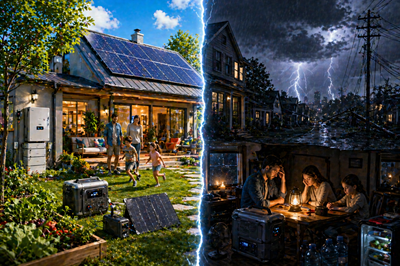 Ultimately, Energy Independence & Power Resilience is about maintaining control in a system that is increasingly centralized and complex. When the grid is stable, backup systems remain in the background. But when disruptions occur—whether from weather events, infrastructure issues, or broader systemic failures—those systems become the difference between inconvenience and crisis.
In the broader context of preparedness, energy resilience reinforces a key principle:
The more systems you can keep running independently, the more options you retain.
And in a world where so much depends on electricity, ensuring reliable access to power is one of the most practical and impactful steps a prepper can take.
The Fragility of the Grid
Power outages, energy cost volatility, and concerns about grid stability have pushed energy independence to the forefront.
What Preppers Are Doing
- Installing solar systems (even small-scale setups)
- Investing in battery storage solutions
- Using generators as backup systems
- Reducing overall energy consumption
The Layered Approach
Instead of relying on one solution, preppers are building layered energy systems:
- Grid power
- Backup generator
- Solar + battery
Why It Matters
Energy is a foundational system. Without it:
- Communication fails
- Water systems fail
- Information access disappears
Energy resilience = system resilience.
Trend #3: Global Instability & Uncertainty
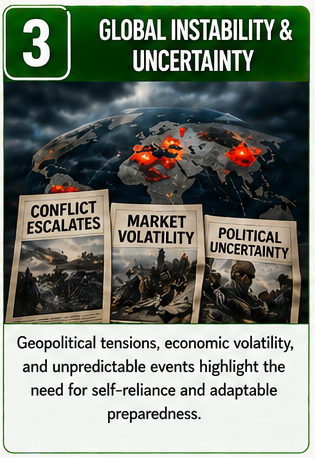 Global instability is no longer an abstract concept discussed in headlines—it is a persistent backdrop that increasingly shapes everyday life. In 2026, preppers are paying closer attention to how geopolitical tensions, economic shifts, and regional conflicts ripple outward and affect local systems. What once felt distant—wars in other regions, trade disputes, political upheaval—now has direct consequences on supply chains, prices, availability of goods, and even domestic policy. The result is a growing recognition that stability cannot be assumed, and that preparedness must account for a world that is constantly shifting.
One of the most important realizations driving this trend is that modern systems are globally interconnected. Food, fuel, technology, medicine, and raw materials all depend on complex international networks. A disruption in one part of the world—whether due to conflict, sanctions, natural disasters, or economic breakdown—can create cascading effects elsewhere. Shipping delays, shortages, and price volatility are often the first visible signs, but the underlying issue is deeper: the systems that support daily life are not as resilient as they appear.
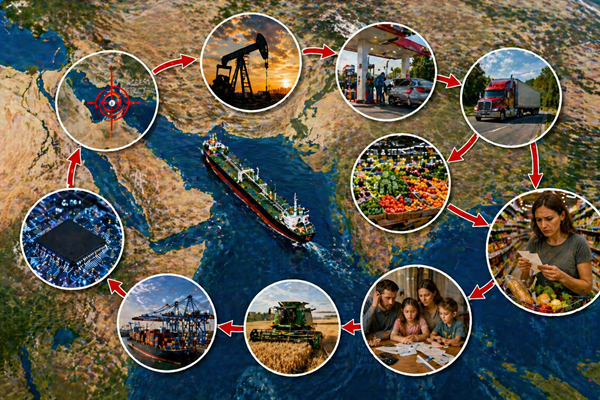 Preppers are increasingly thinking in terms of second- and third-order effects. For example, a geopolitical conflict may not directly impact a local community, but it can drive up fuel costs, which increases transportation expenses, which then raises food prices and reduces availability. Similarly, trade restrictions can limit access to critical components, affecting everything from electronics to agricultural equipment. These indirect effects are often more disruptive than the initial event itself, and they are harder to predict and manage.
This uncertainty is also influencing how people approach time horizons in preparedness. Instead of focusing only on short-term emergencies or long-term collapse scenarios, there is a growing emphasis on extended periods of instability—months or even years where conditions fluctuate unpredictably. In these environments, the challenge is not surviving a single event, but adapting continuously as conditions change. This requires flexibility, redundancy, and the ability to operate under a range of scenarios rather than relying on a single plan.
Another key aspect of this trend is the erosion of assumed reliability in institutions and systems. Governments, financial systems, supply chains, and infrastructure networks are all under increasing strain. While they continue to function, there is a growing awareness that they may not always respond quickly or effectively during crises. This does not necessarily mean failure, but it does mean that individuals cannot rely solely on external systems for stability. Preparedness becomes a way of reducing exposure to systemic risk, rather than reacting after the fact.
Information flow also plays a significant role in how global instability is perceived and managed. In a highly connected world, people are exposed to a constant stream of news, analysis, and commentary. While this can increase awareness, it can also create confusion and uncertainty. Preppers are learning to use prepper websites like PrepperWatch.com to filter information, focus on actionable insights, and avoid overreacting to short-term noise. The goal is not to predict every event, but to understand patterns and prepare for likely outcomes.
In practical terms, this trend is leading to a more diversified approach to preparedness. Instead of concentrating resources in one area, individuals are spreading risk across multiple systems. This might include maintaining a mix of food sources, diversifying financial assets, building multiple communication methods, and establishing both local and regional contingency plans. The idea is to avoid single points of failure—not just in physical systems, but in strategic thinking.
Global instability also reinforces the importance of mobility and adaptability. Conditions can change quickly, and the ability to respond—whether by relocating, adjusting plans, or shifting resources—becomes a critical advantage. This does not necessarily mean constant movement, but it does require awareness of options and the ability to act when necessary.
At a deeper level, this trend is changing how people think about preparedness itself. It is no longer about preparing for a specific event, such as a natural disaster or economic crash. Instead, it is about preparing for ongoing uncertainty. The question shifts from:
“What will happen?”
to:
“Am I ready to handle a range of possible outcomes?”
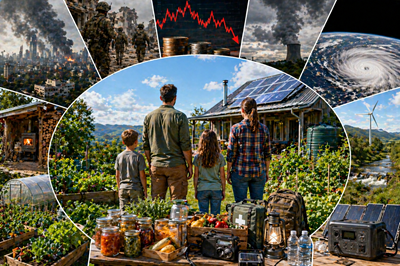 Ultimately, Global Instability & Uncertainty is not just a backdrop—it is a driving force behind many other trends in preparedness. It influences food security, energy resilience, financial planning, and system design. It highlights the importance of reducing dependency, increasing redundancy, and maintaining control where possible.
In a world where conditions are increasingly unpredictable, the most resilient individuals are not those who try to anticipate every event, but those who build systems that remain functional regardless of what happens.
Preparedness, in this context, becomes less about prediction—and more about adaptability.
The New Normal
Geopolitical tensions, economic uncertainty, and regional conflicts are no longer distant concerns—they influence everyday life through supply chains, pricing, and policy changes.
How This Impacts Preppers
- Increased interest in long-term preparedness
- Renewed focus on evacuation planning
- Greater awareness of cascading system failures
The Reality
Preparedness is no longer about “if something happens.”
It’s about:
“When disruptions occur, how prepared am I?”
Trend #4: Skills Over Gear
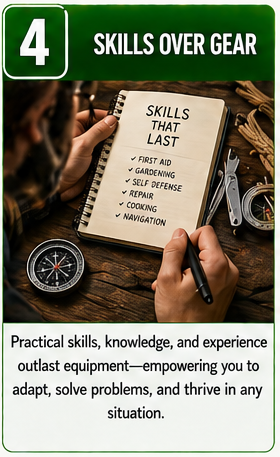 One of the most important and defining shifts in preparedness today is the move from gear-focused prepping to skill-based resilience. For years, preparedness was often associated with accumulating equipment—bug-out bags, tools, weapons, and supplies. While gear still plays an important role, 2026 marks a clear transition in thinking: preppers are realizing that what you know and can do is far more valuable than what you own.
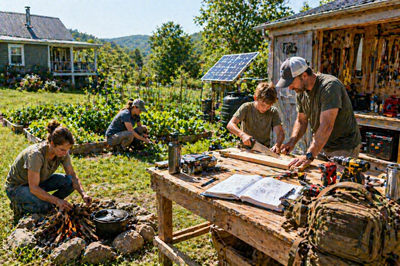 This shift is driven by experience and practicality. Gear can be lost, broken, stolen, or rendered useless by circumstances. Batteries die, tools fail, and specialized equipment can become a liability if you don’t fully understand how to use or maintain it. In contrast, skills are portable, adaptable, and resilient. They do not rely on external systems, and they can be applied in a wide range of situations. A person with strong skills can often compensate for limited resources, while someone with extensive gear but limited knowledge may struggle when conditions deviate from expectations.
At its core, this trend reflects a deeper understanding of self-reliance. Skills transform passive preparedness into active capability. Instead of relying on pre-packaged solutions, individuals develop the ability to assess situations, improvise, and solve problems in real time. This is particularly important in unpredictable environments, where no plan survives unchanged and adaptability becomes the key to success.
The types of skills gaining attention are broad and practical. These include:
- Food-related skills such as gardening, foraging, hunting, and food preservation
- Medical skills including first aid, trauma care, and long-term health management
- Water skills like sourcing, filtering, and purification
- Mechanical and repair skills for maintaining tools, vehicles, and infrastructure
- Communication skills involving radios and alternative methods
- Navigation and situational awareness
Each of these areas contributes to a larger system of resilience. The goal is not to master everything at once, but to build a diverse skill set that reduces dependency on external services.
Another key element of this trend is the recognition that skills compound over time. Unlike gear, which can degrade or become obsolete, skills improve with practice and experience. They also tend to overlap and reinforce each other. For example, someone who learns gardening may also develop an understanding of soil, weather patterns, and seasonal cycles, which can inform other aspects of preparedness. Similarly, mechanical skills can apply to everything from vehicle repair to maintaining energy systems.
This trend also changes how preppers approach training and learning. Instead of focusing primarily on acquiring items, there is a growing emphasis on hands-on experience. People are practicing skills in real-world conditions—growing food, preserving it, building things, repairing equipment, and testing systems. This practical approach reveals gaps in knowledge and builds confidence, both of which are critical during actual disruptions.
Importantly, the shift toward skills does not eliminate the need for gear—it redefines the relationship between the two. Gear becomes a tool that enhances skills, rather than a substitute for them. A well-equipped individual who lacks training is far less effective than someone with moderate equipment and strong capabilities. The ideal approach is to pair reliable tools with the knowledge to use them effectively, creating a balanced and resilient system.
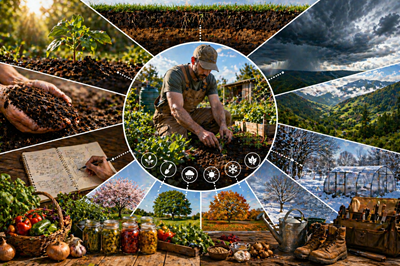 There is also a strong connection between this trend and the broader move toward community-based preparedness. Skills are often distributed across groups rather than concentrated in individuals. By sharing knowledge and learning from others, communities can develop a collective skill base that is far more robust than any one person’s abilities. This reinforces the idea that preparedness is not just about individual readiness, but about networked capability.
From a strategic perspective, focusing on skills reduces risk in several ways. It minimizes reliance on supply chains, decreases vulnerability to equipment failure, and increases flexibility in changing conditions. It also provides a foundation for long-term sustainability, as skills can be passed down, adapted, and expanded over time.
Ultimately, Skills Over Gear is about shifting from consumption to capability. It encourages people to move beyond simply acquiring resources and toward developing the ability to use, maintain, and replace those resources when needed.
Gear can support you—but skills sustain you.
In a world where conditions are uncertain and systems can fail, the most valuable asset a prepper can have is not what they carry, but what they know and can do.
The Big Shift
Perhaps the most important trend of 2026 is the move away from gear-centric prepping toward skill-based preparedness.
High-Value Skills
- Food production and preservation
- First aid and medical response
- Water purification
- Mechanical and repair skills
- Communication systems
The Insight
Gear can be lost, broken, or unavailable.
Skills:
- Stay with you
- Scale with experience
- Increase in value over time
Why It Matters
The most resilient preppers are not the ones with the most equipment—
They’re the ones who know how to use what they have, adapt, and improvise.
Trend #5: Off-Grid Thinking (Even On-Grid)
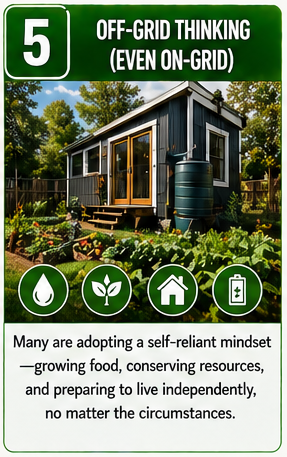 One of the most important evolutions in modern preparedness is the shift toward off-grid thinking without necessarily going fully off-grid. In 2026, most people are not abandoning cities, disconnecting from utilities, or attempting to live entirely independent lifestyles. Instead, they are adopting a more practical and strategic mindset: use existing systems for convenience, but build the capability to function without them when needed.
This distinction is critical. Traditional “off-grid living” often implies a complete separation from modern infrastructure—something that requires significant resources, land, and lifestyle changes. Off-grid thinking, on the other hand, is about reducing dependency while maintaining flexibility. It allows individuals to benefit from modern systems when they are stable, while also preparing for times when those systems are disrupted, unreliable, or inaccessible.
At the core of this trend is an understanding that modern infrastructure is efficient, but not invulnerable. Power grids, water systems, supply chains, and communication networks are all interconnected. When one system fails, it often impacts others. A power outage, for example, can affect water distribution, internet access, payment systems, and even food availability. Off-grid thinking addresses this by creating parallel systems—backup options that can take over when primary systems fail.
In practical terms, this approach shows up in a wide range of small but meaningful decisions. People are storing water even though they have running taps. They are keeping backup power sources while still connected to the grid. They are maintaining physical copies of important documents despite relying on digital storage. They are growing some of their own food while still shopping at grocery stores. None of these actions represent a complete break from modern systems, but together they form a layer of independence that reduces vulnerability.
This layered approach is one of the defining characteristics of off-grid thinking. Instead of relying on a single solution, preppers are building redundancy into everyday life. A household might have:
- Grid power for daily use
- A generator for short-term outages
- Solar panels for longer disruptions
- Battery storage for continuity
Similarly, water systems might include municipal supply, stored reserves, filtration systems, and alternative sources like rainwater collection. Each layer adds resilience, ensuring that no single failure leads to total loss of capability.
Another important aspect of this trend is scalability. Off-grid thinking does not require a large upfront investment or a complete lifestyle change. It can be implemented gradually, starting with simple steps and expanding over time. This makes it accessible to a wide range of people, including those in urban environments or rental situations. Portable solar panels, compact water storage, and modular systems allow individuals to build resilience incrementally, adapting to their circumstances and resources.
There is also a strong connection between off-grid thinking and control over access. Many modern systems are not just centralized—they are also controlled by external entities. Access to electricity, water, financial systems, and even information can be influenced by policies, pricing, and infrastructure decisions that individuals do not control. By developing independent capabilities, preppers reduce their exposure to these external controls. They are not rejecting the system, but they are ensuring that they are not entirely dependent on it.
From a psychological perspective, this approach provides a sense of confidence and stability. Knowing that you have backup systems in place reduces anxiety and increases your ability to respond calmly during disruptions. Instead of reacting in panic when something fails, you transition smoothly to an alternative. This shift from reactive to proactive behavior is a key element of effective preparedness.
Off-grid thinking also aligns closely with the broader trend toward system design. Rather than focusing on isolated items or solutions, individuals are considering how different systems interact and support each other. Energy supports water, water supports food production, and all of these systems rely on access to knowledge and tools. By viewing preparedness as an interconnected system, preppers can identify weaknesses, build redundancy, and optimize their overall resilience.
It is important to note that off-grid thinking does not mean rejecting technology or modern conveniences. In fact, many of the tools used to build resilience—such as solar panels, battery systems, and advanced filtration devices—are products of modern innovation. The goal is not to go backward, but to use technology in a way that increases independence rather than dependency.
Ultimately, Off-Grid Thinking (Even On-Grid) represents a balanced and realistic approach to preparedness. It acknowledges the benefits of modern systems while recognizing their limitations. It allows individuals to maintain their current lifestyle while quietly building the capability to operate outside of it if necessary.
Use the system when it works. Be ready when it doesn’t.
In a world where disruptions are becoming more common and systems are increasingly interconnected, this mindset provides a practical path to resilience—one that is both achievable and effective.
Not About Going Fully Off-Grid
Most people are not abandoning modern systems entirely. Instead, they are building parallel capabilities.
Examples
- Storing water even with municipal supply
- Keeping backup power while still on-grid
- Growing food while still using grocery stores
The Philosophy
“Use the system—but don’t depend on it.”
Why It Matters
This approach allows people to:
- Maintain comfort
- Reduce vulnerability
- Transition smoothly during disruptions
Trend #6: Community Over Isolation
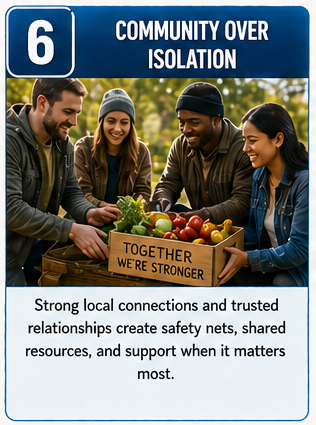 One of the most significant shifts in preparedness thinking is the move away from the “lone wolf” mindset toward a more collaborative, community-based approach. For years, popular culture often portrayed survival as an individual pursuit—one person or one family relying solely on their own resources and capabilities. While self-reliance remains important, 2026 has made it increasingly clear that isolation is a vulnerability, not a strength.
Modern challenges are complex and multi-dimensional. No single person can realistically master every skill, maintain every system, and secure every resource indefinitely. Food production, medical care, security, communication, and infrastructure all require time, knowledge, and effort. Attempting to manage all of these alone leads to gaps—gaps that become critical during times of stress or disruption. Community-based preparedness addresses this by distributing responsibility and capability across a network of people.
At its core, this trend is about recognizing that:
Resilience scales with cooperation.
A well-connected group can achieve far more than any individual. Skills can be shared, resources can be pooled, and responsibilities can be divided. One person may specialize in gardening, another in mechanical repair, another in medical care, and another in communication systems. Together, they form a system that is more robust, adaptable, and sustainable than any single member could create alone.
This website PreppingCommunities.com tries to fulfill the need to preppers connect, to come together, to share information and resources with other like minded people into communities that will scale with cooperation.
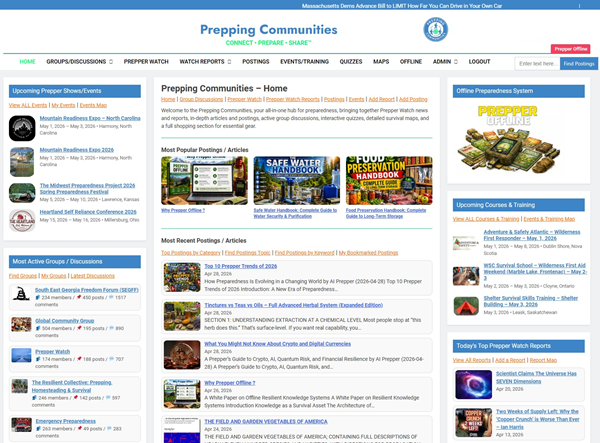
This does not mean abandoning personal preparedness. In fact, strong individuals are the foundation of strong communities. Each person contributes their own level of readiness, which strengthens the overall network. The goal is not dependence on others, but interdependence—a balanced system where people support each other while maintaining their own capabilities.
In practical terms, community preparedness can take many forms. It may involve informal relationships with neighbors, participation in local groups, or more structured mutual aid networks. The key is building trust and familiarity before a crisis occurs. Waiting until an emergency to establish connections is far less effective than developing those relationships in advance.
Communication plays a critical role in this process. Knowing who is nearby, what skills they have, and how to reach them creates a foundation for coordinated action. This can be as simple as exchanging contact information or as advanced as setting up local communication systems such as radios. The objective is to ensure that when systems fail or become unreliable, people themselves become the network.
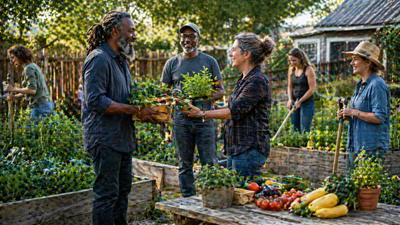 Another important aspect of this trend is resource sharing. Not every household needs to own every tool or piece of equipment. By coordinating within a community, resources can be distributed more efficiently. This reduces redundancy in some areas while increasing overall capability. For example, one household might maintain a generator, another a water filtration system, and another a well-stocked medical kit. Together, they create a collective system that is stronger than any individual setup.
Security is also enhanced through community. A single household is limited in its ability to monitor and respond to threats. A group, however, can establish layers of awareness and defense, increasing both deterrence and response capability. This does not necessarily imply confrontation; often, the presence of an organized and aware community is enough to reduce risk.
From a psychological perspective, community provides stability and support during stressful situations. Isolation can amplify fear, uncertainty, and decision fatigue. Being part of a group allows for shared decision-making, emotional support, and a sense of purpose. This can be just as important as physical resources in maintaining resilience over time.
This trend also aligns with the broader movement toward localization. As global systems become more complex and less predictable, local networks offer a level of reliability that is easier to understand and maintain. People who know each other, live near each other, and share common interests can respond more quickly and effectively than distant, centralized systems.
It is important to recognize that building community requires effort. Trust is not automatic, and not every group will function effectively. Differences in priorities, communication styles, and levels of preparedness can create challenges. However, these challenges are part of the process. The goal is not perfection, but progress toward stronger, more connected systems.
Ultimately, Community Over Isolation reflects a fundamental principle of resilience:
No one is as strong alone as they are together.
In a world where systems can fail and conditions can change rapidly, having a network of capable, trusted individuals provides a level of security and adaptability that cannot be achieved in isolation. Preparedness is no longer just about what you have—it’s about who you know, what you can do together, and how well you can work as a system.
The End of the Lone Wolf
The idea of surviving alone is being replaced by the understanding that:
Community = resilience
What This Looks Like
- Local prepper groups
- Skill-sharing networks
- Neighborhood-level planning
- Mutual aid systems
The Advantage
Communities provide:
- Redundancy
- Diverse skills
- Security
- Emotional support
Why It Matters
No one can do everything alone.
But together, people can build systems that are far more resilient.
Trend #7: Financial Preparedness
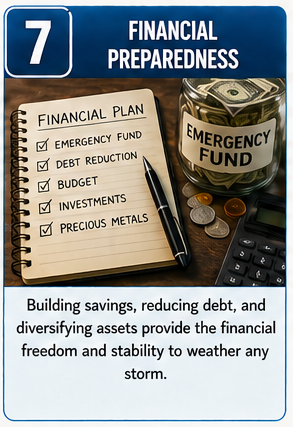 Financial preparedness has emerged as one of the most practical—and often overlooked—pillars of modern resilience. While traditional prepping tends to focus on physical supplies like food, water, and gear, many of the most common emergencies people face are financial in nature. Job loss, unexpected medical expenses, inflation, debt pressure, and economic downturns can destabilize a household far more quickly than many physical threats. In 2026, preppers are increasingly recognizing that financial instability is often the first and most likely crisis they will encounter.
At its core, financial preparedness is about maintaining stability and flexibility under economic stress. It provides the ability to absorb shocks without immediately compromising other areas of preparedness. Without a financial buffer, even well-stocked households can be forced to make difficult decisions—selling assets, reducing food quality, or delaying critical repairs. In this sense, financial resilience supports and protects all other preparedness efforts.
One of the foundational elements of this trend is the development of emergency savings. These funds act as a buffer against short-term disruptions, allowing individuals to cover essential expenses without relying on credit or external assistance. The goal is not necessarily to accumulate large amounts of wealth, but to create a liquid reserve that can be accessed quickly when needed. This reserve provides time—time to adapt, to make decisions, and to avoid reactive choices that can create long-term consequences.
Closely related to savings is the effort to reduce debt and financial obligations. Debt represents a form of dependency, tying individuals to ongoing payments and reducing flexibility. In times of economic stress, high levels of debt can quickly become unmanageable. As a result, many preppers are prioritizing debt reduction as a form of preparedness. By lowering fixed expenses, they increase their ability to withstand income disruptions and maintain control over their financial situation.
Another important aspect of financial preparedness is diversification. Just as preppers avoid relying on a single source of food or energy, they are also moving away from relying on a single financial system or asset class. This can include maintaining a mix of cash, digital funds, and physical assets such as precious metals. The objective is not to predict which system will fail, but to ensure that if one form of access is restricted or compromised, others remain available.
This ties directly into the broader concept of access versus ownership. In modern financial systems, most wealth exists in digital form—numbers on a screen, dependent on access to banking systems, payment networks, and infrastructure. While convenient, this also introduces a layer of vulnerability. Accounts can be frozen, transactions delayed, or systems disrupted. As a result, many preppers are choosing to maintain a portion of their resources in forms that are immediately accessible and not entirely dependent on centralized systems, such as physical cash or tangible goods.
Financial preparedness also includes a focus on income resilience. Rather than relying solely on a single job or income stream, individuals are exploring ways to diversify how they earn. This might include side businesses, skill-based services, or alternative forms of income that can continue even if primary employment is disrupted. The goal is to reduce reliance on any single source and increase the ability to adapt to changing economic conditions.
Spending habits and budgeting are another critical component. Preparedness is not just about accumulating resources—it is about managing them effectively over time. By understanding where money is going and prioritizing essential expenses, individuals can allocate resources more efficiently. This often involves shifting spending away from non-essential items and toward investments in resilience, such as food storage, tools, and skill development.
There is also a growing awareness of how inflation impacts preparedness. Rising costs reduce purchasing power, making it more difficult to acquire and maintain supplies. By building reserves early and investing in durable goods, preppers can mitigate some of these effects. In this sense, preparedness itself becomes a form of financial strategy—converting currency into assets that retain value through their utility.
From a psychological perspective, financial preparedness provides a sense of control and confidence. Economic uncertainty can create stress and limit decision-making ability. Having a clear financial plan and a buffer in place reduces this pressure, allowing individuals to respond more thoughtfully to challenges rather than reacting out of urgency.
Ultimately, Financial Preparedness is about more than money—it is about maintaining options. It ensures that when disruptions occur, individuals are not forced into immediate crisis mode. Instead, they have the resources and flexibility to navigate uncertainty, protect their other preparedness systems, and make decisions that align with their long-term goals.
The first emergency most people face is financial—and how they respond to it often determines everything that follows.
In a world where economic conditions can change rapidly, building financial resilience is one of the most practical and impactful steps a prepper can take.
The First Emergency Is Financial
Many preppers now recognize that:
- Job loss
- Inflation
- Debt
- Unexpected expenses
…are more likely than extreme survival scenarios.
Key Actions
- Building emergency funds
- Reducing debt
- Diversifying assets
- Holding some physical cash
Why It Matters
Financial instability is often the trigger event that forces people into crisis situations.
Trend #8: Dependency on Systems & “Access = Control”
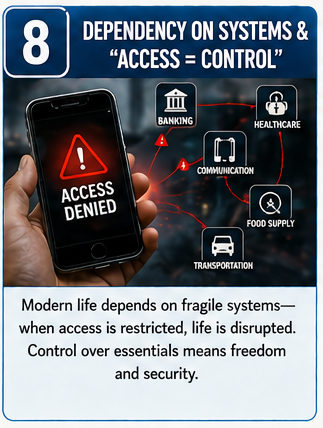 One of the most profound—and often least understood—shifts in modern preparedness is the growing awareness that we are increasingly dependent on systems we do not control. In 2026, this realization is becoming central to how preppers think about resilience. It is no longer just about what you own, store, or build. It is about whether you can access and use those things when you need them.
At the heart of this trend is a simple but powerful idea:
Access = Control
In a highly digitized and centralized world, ownership has become abstract. Your money exists as a balance on a screen. Your medical records are stored in digital systems. Your communication happens through platforms you do not own. Your food is sourced through supply chains you do not control. Even your identity is increasingly tied to digital credentials. In each of these cases, the asset or service may exist—but your ability to use it depends entirely on access granted through a system.
This distinction between ownership and access is critical. A resource that exists but cannot be accessed is effectively unavailable. If a bank account is frozen, the money still exists, but it is not usable. If a digital platform restricts content or access, the information still exists, but it cannot be retrieved. If a supply chain is disrupted, food may exist somewhere, but not where or when it is needed. In practical terms, access determines value.
The systems that control access are becoming increasingly centralized. Financial systems, healthcare platforms, communication networks, energy grids, and even government services are often tied together through shared infrastructure and digital identity frameworks. This creates efficiency and convenience, but it also concentrates control. When multiple systems rely on a single point of access—such as a login, account, or identity verification process—that point becomes a gateway. And whoever controls the gateway controls the flow of access.
This is where the concept of digital identity as a master key becomes particularly important. As more services are integrated into unified platforms, a single identity can unlock—or restrict—access to multiple areas of life. Banking, travel, healthcare, employment, and communication can all become interconnected through one system. While this simplifies access under normal conditions, it also introduces a significant vulnerability: if access is restricted at that point, the impact is widespread.
For preppers, this trend shifts the focus from simply acquiring resources to understanding and managing dependency. The key question becomes:
“What do I rely on that someone else controls access to?”
Answering this question often reveals dependencies that are not immediately obvious. It highlights how many essential functions—food, water, energy, communication, and information—are mediated by systems outside individual control. Recognizing these dependencies is the first step toward reducing them.
The response to this challenge is not to abandon modern systems entirely. Instead, it is to build parallel and redundant systems that provide alternative paths to access. This can include:
- Maintaining physical copies of important documents
- Holding some assets outside digital systems
- Building offline communication capabilities
- Storing knowledge locally rather than relying solely on online access
- Developing local sources of food and water
Each of these actions reduces reliance on centralized systems and increases direct control over access.
Another important aspect of this trend is the role of infrastructure dependency. Access is not just controlled by policies or permissions—it is also dependent on physical systems such as power, networks, and devices. A loss of electricity or internet connectivity can effectively remove access to digital systems, even if permissions remain intact. This reinforces the importance of energy resilience and offline capabilities as part of a broader strategy.
This trend also has significant implications for information and knowledge. In a world where most information is accessed through search engines, platforms, and cloud-based systems, there is a risk of confusing access with ownership. People often assume they “have” knowledge because they can look it up. But if access is lost—due to outages, restrictions, or infrastructure failure—that knowledge is no longer available. This has led to a growing emphasis on offline knowledge systems, where information is stored, organized, and accessible without external dependencies.
From a strategic perspective, understanding “Access = Control” changes how preppers evaluate risk. It shifts attention from visible assets to invisible dependencies. It encourages a deeper analysis of how systems function, where control points exist, and how those points can be mitigated or bypassed. This systems-level thinking is a key component of modern preparedness.
There is also a broader philosophical dimension to this trend. It challenges assumptions about autonomy and independence in a highly interconnected world. It raises questions about how much control individuals truly have over the systems they rely on, and what steps can be taken to reclaim some of that control. Preparedness, in this context, becomes a way of rebalancing that relationship—not by rejecting systems, but by ensuring that they are not the sole means of access.
Ultimately, Dependency on Systems & “Access = Control” is a foundational concept that underpins many other trends in preparedness. It connects to energy resilience, financial preparedness, knowledge systems, and community building. It provides a framework for understanding risk in a modern context and for developing strategies that increase independence and flexibility.
In a world where access is controlled, resilience comes from creating your own paths to that access.
By recognizing where control resides and building alternatives, preppers can move from passive dependence to active capability—ensuring that when access is needed most, it is not contingent on external permission.
The Hidden Risk
Modern life depends on systems we do not control:
- Banking
- Food distribution
- Energy
- Healthcare
- Information
The Core Idea
If you don’t control access… you don’t control the system.
What Preppers Are Doing
- Reducing reliance on digital-only systems
- Keeping physical backups (documents, cash, maps)
- Building offline capabilities
Why It Matters
Ownership is becoming less important than access.
And access can be:
- Restricted
- Delayed
- Removed
Trend #9: Knowledge as a Survival Asset
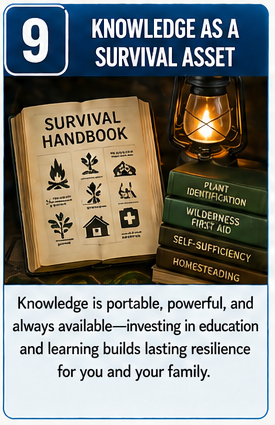 In 2026, one of the most important—and often underestimated—shifts in preparedness is the recognition that knowledge itself is a critical survival asset. While food, water, and energy are essential for sustaining life, knowledge determines how effectively those resources are acquired, managed, and used. Without the right information, even well-stocked supplies can be misused, wasted, or rendered ineffective. As a result, preppers are increasingly treating knowledge not as something abstract or secondary, but as a core component of resilience.
A key insight driving this trend is the distinction between accessing knowledge and actually possessing it. In today’s digital world, most people rely on search engines, online platforms, and cloud-based systems to find information when they need it. This creates the impression that knowledge is always available. However, this availability is conditional. It depends on electricity, internet connectivity, platform access, and the stability of external systems. If any of these elements fail, the ability to retrieve information can disappear at the exact moment it is needed most.
This realization is leading to a shift from passive reliance on online resources to active ownership and control of information. Preppers are beginning to build personal knowledge systems—collections of guides, manuals, and reference materials that are stored locally and can be accessed without external dependencies. These systems are designed to cover a wide range of topics, including food production, water purification, medical care, shelter construction, communication, and more. The goal is to ensure that critical information remains available under any conditions.
Another important aspect of this trend is organization and usability. Simply having large amounts of information is not enough. In a high-stress situation, the ability to quickly find and apply relevant knowledge is essential. This has led to a focus on structuring information in a way that is searchable, categorized, and easy to navigate. Whether in digital or physical form, knowledge systems are being designed with the user in mind—prioritizing clarity, accessibility, and speed of retrieval.
The concept of knowledge as an asset also introduces the idea of redundancy and replication. Just as preppers store multiple sources of food or energy, they are also creating multiple copies of important information. This might include storing data on different devices, maintaining printed copies of critical documents, or distributing information across multiple locations. By doing so, they reduce the risk of losing access due to device failure, data corruption, or physical damage.
There is also a strong connection between knowledge and skills development. Information alone is valuable, but it becomes significantly more powerful when combined with practical experience. Preppers are increasingly using their knowledge systems as a foundation for learning and practicing skills. For example, a guide on food preservation becomes far more useful when the techniques are tested and refined in real-world conditions. This integration of knowledge and practice creates a feedback loop where understanding deepens over time.
Another dimension of this trend is the recognition that knowledge can be shared and multiplied within communities. When individuals contribute their expertise and insights, the collective knowledge base becomes more robust and diverse. This reinforces the importance of community networks, where information can be exchanged, validated, and improved. In this context, knowledge is not just a personal asset—it is a shared resource that strengthens the entire group.
From a strategic perspective, treating knowledge as a survival asset changes how preppers allocate time and resources. Instead of focusing exclusively on acquiring physical goods, they invest in learning, documentation, and system design. This might involve curating high-quality information, organizing it into usable formats, and ensuring it is accessible under a range of conditions. The emphasis shifts from “having everything” to knowing how to do anything that might be required.
There is also an important link between knowledge and adaptability. In unpredictable environments, no single plan or resource will cover every scenario. The ability to understand principles, apply them in new contexts, and improvise solutions becomes critical. Knowledge provides the foundation for this adaptability. It allows individuals to move beyond fixed responses and develop flexible strategies that can evolve as conditions change.
Ultimately, Knowledge as a Survival Asset reflects a deeper understanding of what it means to be prepared. It recognizes that survival is not just about resources, but about the ability to use those resources effectively and creatively. It acknowledges that in many situations, the limiting factor is not what you have, but what you know.
If you cannot access the knowledge you need, you do not truly possess it.
In a world where information is increasingly centralized and dependent on external systems, building independent, accessible, and well-organized knowledge systems is one of the most powerful steps a prepper can take. It ensures that when challenges arise, the information required to respond is not just available—but immediately within reach.
PREPPER OFFLINE™
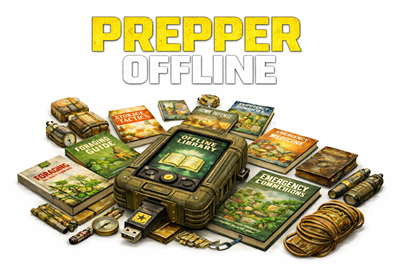 Prepper Offline fits directly into what this trend is really about—turning knowledge from something you “access” into something you actually own and control. As highlighted in your content, most people assume they have knowledge because they can search for it, but that access is conditional on systems like power, internet, and platforms being available . Prepper Offline removes that dependency entirely by giving you a fully self-contained knowledge system that works anytime, anywhere—even when those systems fail.
In practical terms, Prepper Offline becomes your personal survival library. Instead of relying on a connection to find information on water purification, food preservation, medical care, or shelter building, everything is already stored locally and organized for quick access. That means when you’re under stress, dealing with a power outage, or facing a real-world disruption, you’re not scrambling to “find” answers—you already have them. This aligns perfectly with the idea that knowledge is only valuable if it’s accessible in the moment you need it most .
It also supports the shift toward organization and usability, not just storage. Prepper Offline isn’t just a collection of random files—it’s structured, searchable, and designed to function like a system. This matters because in real scenarios, speed and clarity are critical. Being able to quickly navigate to the exact information you need—without relying on memory or external tools—can make a significant difference in how effectively you respond.
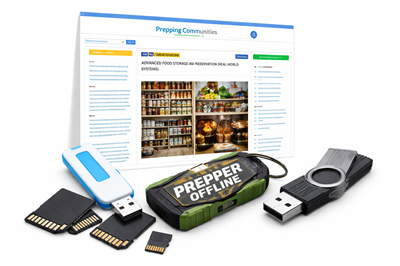 Another major advantage is redundancy and replication. Prepper Offline can be copied, backed up, and distributed across multiple devices or locations. Just like food or energy systems, your knowledge base becomes something you can duplicate and protect. This ensures that even if one device fails, the information isn’t lost—reinforcing the broader preparedness principle of eliminating single points of failure.
Ultimately, Prepper Offline transforms knowledge into a true preparedness asset. It bridges the gap between having resources and knowing how to use them. In a world where access can be restricted, systems can fail, and information can disappear, it gives you something far more valuable than convenience—it gives you certainty, control, and independence.
The Biggest Blind Spot
Most people think they “have knowledge” because they can search for it.
But in reality:
- They have access to knowledge
- Not ownership of knowledge
The Risk
If:
- The internet is down
- Platforms restrict access
- Power is unavailable
That knowledge disappears.
The Shift
Preppers are beginning to:
- Store offline knowledge
- Build personal libraries
- Organize information for quick access
Why It Matters
Knowledge is only valuable if you can access it when you need it.
Trend #10: Practical Preparedness (Everyday Resilience)
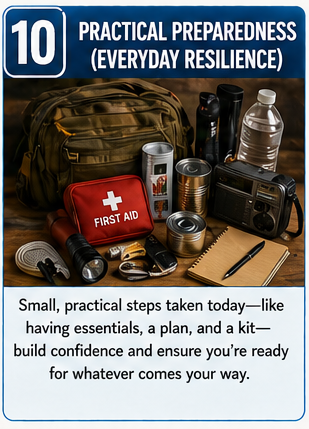 One of the most defining shifts in preparedness today is the move toward practical, everyday resilience. In 2026, preppers are increasingly focusing on the disruptions that are most likely to occur—power outages, job loss, supply shortages, extreme weather, and temporary service interruptions—rather than exclusively preparing for rare or extreme scenarios. This does not mean ignoring larger risks, but it reflects a more grounded approach: preparing for what actually happens in real life.
At the core of this trend is a change in perspective. Preparedness is no longer seen as something reserved for catastrophic events. Instead, it is being integrated into daily life as a way to reduce friction, increase stability, and maintain control during routine disruptions. The goal is not to survive the end of the world, but to navigate the kinds of challenges that occur regularly, often without warning.
This shift is driven by experience. Many people have encountered situations where systems temporarily failed—whether due to storms, infrastructure issues, or economic pressure. These events may not have been extreme, but they revealed vulnerabilities. A short-term power outage can disrupt food storage and communication. A supply chain delay can limit access to essential items. A sudden expense can strain finances. These experiences reinforce the idea that preparedness is most valuable when it addresses immediate, practical needs.
In response, preppers are building systems that are designed to function under normal conditions while also providing support during disruptions. This includes maintaining a well-organized pantry that supports everyday cooking but can also sustain the household during shortages. It includes keeping water stored not just for emergencies, but as a buffer against temporary outages. It includes having backup power solutions that can keep essential devices running without requiring a full off-grid setup.
Another important aspect of practical preparedness is ease of use. Systems that are too complex or difficult to access are less likely to be used effectively during a disruption. As a result, there is a focus on simplicity, organization, and accessibility. Supplies are stored in ways that are easy to rotate and retrieve. Tools are selected for reliability and ease of maintenance. Plans are designed to be clear and actionable, even under stress. The objective is to ensure that when something goes wrong, the response is straightforward and efficient.
This trend also emphasizes integration rather than separation. Preparedness is not treated as a separate activity or a collection of isolated items. Instead, it is woven into everyday routines. Food storage becomes part of regular grocery planning. Skill development is incorporated into hobbies and daily tasks. Financial preparedness is reflected in budgeting and spending habits. By integrating preparedness into normal life, it becomes sustainable and consistent, rather than something that is only addressed occasionally.
There is also a strong focus on adaptability. Practical preparedness recognizes that disruptions rarely unfold exactly as expected. Plans need to be flexible, and systems need to be able to adjust to changing conditions. This might involve shifting from one food source to another, adapting energy usage based on availability, or adjusting communication methods depending on what is working. The ability to adapt quickly is often more important than having a perfect plan.
Another key element is the reduction of decision fatigue during crises. When systems are in place and routines are established, individuals do not need to make complex decisions under pressure. They can rely on pre-established processes, which reduces stress and increases effectiveness. For example, knowing exactly where supplies are stored, how long they will last, and how to use them allows for a calm and controlled response.
From a broader perspective, practical preparedness aligns with the concept of resilience as a lifestyle. It is not about reacting to fear or preparing for unlikely scenarios, but about building a stable foundation that supports everyday life. This includes maintaining physical health, managing resources effectively, and developing habits that contribute to long-term stability.
Financial considerations also play a role. Practical preparedness often involves making incremental improvements rather than large, one-time investments. This makes it more accessible and sustainable. By gradually building supplies, improving systems, and developing skills, individuals can enhance their resilience without significant financial strain.
Ultimately, Practical Preparedness (Everyday Resilience) is about closing the gap between normal life and emergency response. It ensures that when disruptions occur, they are managed as extensions of everyday systems rather than entirely new challenges.
Preparedness is most effective when it is part of how you live, not something you only think about in a crisis.
In a world where disruptions are becoming more frequent and less predictable, this approach provides a realistic and effective path to resilience. It allows individuals to maintain stability, reduce stress, and retain control—regardless of the scale of the challenge.
Moving Away from Extremes
Preparedness is becoming more practical and grounded in reality.
Focus Areas
- Short-term outages
- Local disruptions
- Weather events
- Infrastructure failures
The New Question
Instead of:
“How do I survive the apocalypse?”
People are asking:
“How do I handle what actually happens in real life?”
The Big Meta Trend: From Stockpiling to System Design
Perhaps the most important evolution in preparedness—one that ties together all other trends—is the shift from stockpiling resources to designing resilient systems. This represents a fundamental change in how preparedness is understood and practiced. It is no longer just about what you have, but about how everything works together.
For many years, preparedness was largely defined by accumulation. The focus was on acquiring food, water, gear, and supplies—often in large quantities. While this approach still has value, it is increasingly being recognized as incomplete on its own. Stockpiling assumes that resources will remain usable, accessible, and sufficient under all conditions. In reality, without proper structure, access, and integration, even well-stocked supplies can fail to deliver when they are needed most.
This is where system design comes in. Instead of viewing preparedness as a collection of items, preppers are beginning to see it as an interconnected set of systems—each with inputs, outputs, dependencies, and failure points. Food systems depend on storage, rotation, and preparation. Water systems depend on sourcing, filtration, and distribution. Energy systems support communication, knowledge access, and infrastructure. When these systems are designed intentionally, they reinforce each other and create a layered, resilient framework.
At its core, this meta trend is about asking better questions. Instead of:
“Do I have enough?”
Preppers are asking:
“How does this system work if something fails?”
This shift leads to deeper analysis. It requires identifying single points of failure, understanding dependencies, and building redundancy. For example, having food is one thing—but can you prepare it without power? Can you store it safely long-term? Can you access the knowledge required to use it effectively? Each of these considerations transforms a simple resource into part of a larger system.
One of the key principles of system design is redundancy through layering. Rather than relying on a single solution, multiple overlapping solutions are created. This ensures that if one component fails, others can take over. This concept appears across all areas of preparedness:
- Multiple sources of food (stored, grown, traded)
- Multiple sources of energy (grid, generator, solar, battery)
- Multiple communication methods (internet, radio, local networks)
- Multiple knowledge access points (online, offline, printed)
Each layer reduces risk and increases flexibility. The goal is not perfection, but resilience through diversity.
Another critical aspect of system design is control over access. As highlighted in earlier trends, many modern systems are centralized and controlled externally. By designing personal systems that operate independently—or at least partially independently—preppers regain control. This might include offline knowledge libraries, local food production, independent power systems, and physical backups of critical assets. These systems do not replace modern infrastructure, but they provide alternative pathways when access is restricted or disrupted.
System design also emphasizes usability under stress. A system that works in theory but is difficult to use in practice is not truly resilient. Preppers are focusing on simplicity, clarity, and accessibility—ensuring that systems can be operated quickly and effectively even in high-pressure situations. This includes organizing supplies logically, standardizing processes, and practicing real-world scenarios to identify weaknesses.
Another important dimension is adaptability. Unlike static stockpiles, well-designed systems can evolve over time. They can scale up or down, incorporate new technologies, and adjust to changing conditions. This makes them more sustainable in the long term. Instead of building a fixed solution, preppers are creating frameworks that can grow and adapt as their needs and environments change.
There is also a strong connection between system design and efficiency. By understanding how systems interact, preppers can optimize resource use and reduce waste. For example, energy systems can be designed to prioritize critical loads, water systems can be integrated with food production, and knowledge systems can support all other areas. This holistic approach ensures that resources are used effectively and that each component contributes to the overall system.
From a strategic perspective, this shift represents a move toward thinking like an architect rather than a consumer. Instead of simply acquiring items, preppers are designing solutions. They are considering structure, flow, dependencies, and resilience. This mindset leads to more thoughtful, intentional preparedness—one that is better suited to handle complex and unpredictable challenges.
Ultimately, From Stockpiling to System Design is about elevating preparedness to a higher level of understanding. It integrates all other trends—food security, energy resilience, community, financial preparedness, and knowledge systems—into a cohesive whole.
Preparedness is no longer about what you have—it’s about how your systems work when everything else doesn’t.
In a world where disruptions are increasingly interconnected and systems are more complex, this approach provides a powerful framework for resilience. It ensures that preparedness is not just reactive, but proactive—built on design, not just accumulation.
All of these trends point to a larger shift:
Old Prepping
- Buy gear
- Store supplies
New Prepping
- Build systems
- Reduce dependency
- Control access
- Increase resilience
Final Thoughts: Where This Is All Going
Preparedness in 2026 is no longer about fear.
It’s about awareness, adaptability, and control.
The people who will be best prepared are not the ones with the most supplies—
They are the ones who:
- Understand systems
- Reduce dependency
- Build redundancy
- Control access to critical resources
- Invest in skills and knowledge
Preparedness is not about predicting the future.
It’s about being ready for multiple possible futures.
And in a world where more systems are becoming centralized, digital, and controlled by others…
The goal is simple:
Build systems that still work when other systems don’t.
© Prepping Communities. This content is for informational purposes only and not professional advice. Use at your own risk.
Terms | Privacy | Guidelines