
SECTION 1: UNDERSTANDING EXTRACTION AT A CHEMICAL LEVEL
Most people stop at “this herb does this.”
That’s surface-level.
If you want real capability, you need to understand:
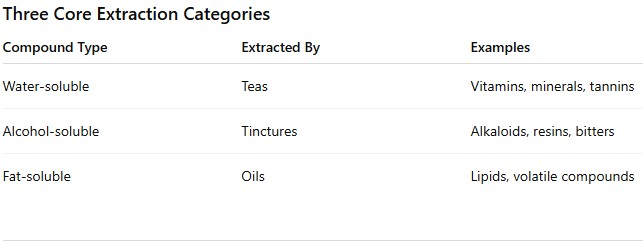
– why different methods extract different compounds
Why This Matters
If you:
- Make everything into tea → you miss key compounds
- Only use tinctures → you miss hydration + minerals
- Only use oils → you limit internal support
Each method fills a gap the others cannot
SECTION 2: BUILDING A COMPLETE HERBAL SYSTEM
Think in layers:
Layer 1 – Daily Support
- Teas
- Nutrient herbs
- Gentle regulation
Layer 2 – Targeted Support
- Tinctures
- Concentrated intervention
Layer 3 – External Treatment
- Oils & salves
- Injury, skin, inflammation
SECTION 3: TINCTURES — MASTER LEVEL
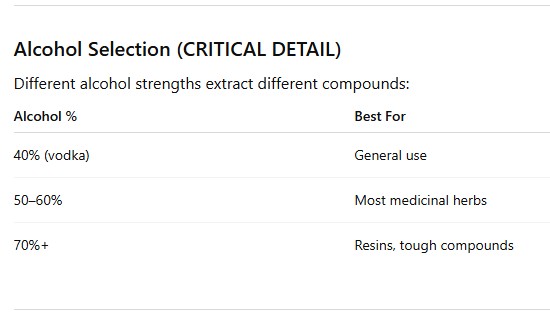
Fresh vs Dried Herb Ratios
Fresh Herb:
- 1:2 ratio (1 part herb, 2 parts alcohol)
Dried Herb:
- 1:5 ratio
Advanced Extraction Techniques
Double Extraction
Used for mushrooms (like reishi)
Step 1:
- Alcohol extraction
Step 2:
- Water decoction
Step 3:
- Combine both
This pulls BOTH water + alcohol compounds
Glycerites (Alcohol-Free Option)
- Use vegetable glycerin instead of alcohol
- Good for:
- Children
- Alcohol-sensitive individuals
Field Use Scenario
Grid-down:
- No pharmacy
- No supply chain
A tincture kit gives:
- Antimicrobial support
- Pain support
- Sleep support
All in pocket-sized form
SECTION 4: TEAS — MASTER LEVEL
Cold Infusions (Often Ignored)
Best for delicate herbs:
- Nettles
- Marshmallow root
Method:
- Soak in cold water 8–12 hours
Preserves nutrients that heat destroys
Strong Infusions
Used for:
- Mineral loading
- Long-term support
Example:
- 1 oz herb per quart water
- Steep 4–8 hours
Decoction Enhancements
Add:
- Lid (prevents volatile loss)
- Long simmer (up to 1 hour)
Field Use Scenario
If you only have:
- Water
- Fire
- Plants
You can still produce:
Medicine + hydration
SECTION 5: OILS — MASTER LEVEL
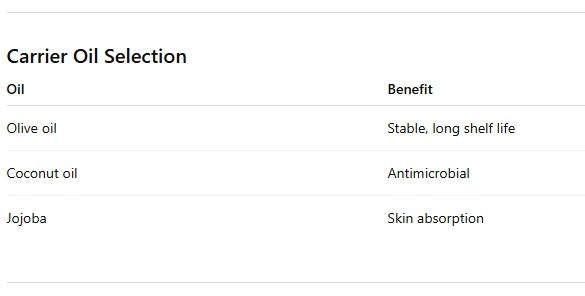
Solar Infusion Method
- Place jar in sunlight
- Rotate daily
- 2–4 weeks
Advanced Salve Formulas
Basic:
- Oil + beeswax
Advanced:
- Add essential oils (small %)
- Add vitamin E (preservation)
Topical Use Cases
- Wound healing
- Anti-inflammatory
- Joint pain
- Burns
SECTION 6: BUILDING A PREPPER HERBAL KIT
Tier 1 (Basic Kit)
- 3 tinctures
- 3 dried herbs
- 1 salve
Tier 2 (Intermediate)
- 10 tinctures
- 10 herbs
- Multiple oils
Tier 3 (Advanced System)
- Full herb library
- Extraction station
- Rotation system
- Storage + redundancy
SECTION 7: LOCAL SOURCING & FORAGING
Key Skills
- Plant ID (non-negotiable)
- Seasonal awareness
- Ethical harvesting
Rule of Thumb
Never harvest more than 30% of a plant population
SECTION 8: STORAGE, ROTATION, AND LONGEVITY
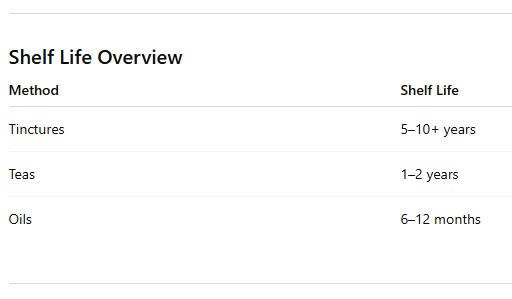
Rotation Strategy
- Label everything
- Track dates
- Use oldest first
SECTION 9: SAFETY & REALITY CHECK
Important Points
- Not all herbs are safe
- Dosage matters
- Some interact with medications
Golden Rule
When in doubt, don’t use it
SECTION 10: REAL-WORLD APPLICATION
Example: Cold & Flu
- Tea → hydration + comfort
- Tincture → immune support
- Oil → chest rub
Example: Injury
- Clean wound
- Apply herbal oil
- Support internally with tincture
ADVANCED HERBAL REFERENCE — 50+ HERBS WITH EXACT RECIPES
IMMUNE & ANTIMICROBIAL HERBS
1. Echinacea (Echinacea spp.)
Best Form: Tincture
Tincture Recipe:
- Dried root: 1:5 ratio (1 part herb, 5 parts 50–60% alcohol)
- Steep 4–6 weeks
Use: Immune activation, infection support
Dose: 20–30 drops every 2–3 hours (short term)
2. Elderberry (Sambucus nigra)
Best Form: Tea or Syrup
Tea Recipe:
- 1 tbsp dried berries
- Simmer 20 minutes (decoction)
Use: Viral support, cold/flu
3. Garlic (Allium sativum)
Best Form: Tincture or raw
Tincture Recipe:
- Fresh chopped garlic
- 1:2 ratio in 40% alcohol
- Steep 2–4 weeks
Use: Antibacterial, antifungal
4. Oregano (Origanum vulgare)
Best Form: Oil or tincture
Oil Infusion:
- Dried leaves
- Olive oil, infuse 4 weeks
Use: Antimicrobial
5. Thyme (Thymus vulgaris)
Best Form: Tea
Tea Recipe:
- 1–2 tsp dried leaves
- Steep 10–15 minutes
Use: Respiratory infections
6. Ginger (Zingiber officinale)
Best Form: Decoction
Recipe:
- Fresh sliced root
- Simmer 20–30 minutes
Use: Circulation, nausea, colds
7. Turmeric (Curcuma longa)
Best Form: Decoction or tincture
Recipe:
- Simmer root 30 minutes
- Add black pepper (critical for absorption)
8. Goldenseal (Hydrastis canadensis)
Best Form: Tincture
Recipe:
- Dried root 1:5 (60% alcohol)
Use: Strong antimicrobial (short-term only)
9. Yarrow (Achillea millefolium)
Best Form: Tea
Recipe:
- 1–2 tsp dried herb
- Steep 15 minutes
Use: Fever, wound support
10. Usnea (Usnea spp.)
Best Form: Double extraction tincture
Recipe:
- Alcohol extract 2 weeks
- Water decoction 30 min
- Combine
Use: Natural antibiotic
DIGESTIVE & GUT SUPPORT
11. Peppermint (Mentha piperita)
Tea:
- 1–2 tsp leaves
- Steep 10 min
Use: Digestion, cramping
12. Chamomile (Matricaria chamomilla)
Tea:
- 1 tbsp flowers
- Steep 10–15 min
Use: Calm stomach, sleep
13. Fennel (Foeniculum vulgare)
Tea:
- Crush seeds
- Steep 10–15 min
Use: Gas, bloating
14. Dandelion Root (Taraxacum officinale)
Decoction:
- Simmer 20–30 min
Use: Liver support
15. Burdock Root (Arctium lappa)
Decoction:
- Simmer 30 min
Use: Detox, blood support
16. Licorice Root (Glycyrrhiza glabra)
Tea:
- Simmer 10–15 min
Avoid long-term use
17. Plantain (Plantago major)
Tea or Poultice
Use: Gut + wound healing
RESPIRATORY SUPPORT
18. Mullein (Verbascum thapsus)
Tea:
- 1 tbsp leaves
- Steep 15 min
- STRAIN WELL (hairy leaves)
19. Lobelia (Lobelia inflata)
Tincture only (potent)
- 1:5 ratio
Strong herb—small doses
20. Coltsfoot (Tussilago farfara)
Tea:
- Steep 10 min
21. Elecampane (Inula helenium)
Decoction:
- Simmer 20–30 min
STRESS / SLEEP / NERVOUS SYSTEM
22. Valerian (Valeriana officinalis)
Tincture:
- 1:5 dried root
23. Ashwagandha (Withania somnifera)
Tincture or decoction
24. Lemon Balm (Melissa officinalis)
Tea:
- Steep 10–15 min
25. Passionflower (Passiflora incarnata)
Tea or tincture
26. Lavender (Lavandula angustifolia)
Tea or oil
27. Skullcap (Scutellaria lateriflora)
Tincture preferred
PAIN / INFLAMMATION
28. Willow Bark (Salix spp.)
Decoction:
- Simmer 20 min
29. Cayenne (Capsicum spp.)
Tincture or topical oil
30. Arnica (Arnica montana)
EXTERNAL ONLY
Oil infusion
31. Comfrey (Symphytum officinale)
Oil/salve
External only
SKIN / WOUND CARE
32. Calendula (Calendula officinalis)
Oil infusion (4 weeks)
33. Aloe Vera
Fresh gel
34. St. John’s Wort
Oil infusion (sunlight method)
35. Tea Tree
Diluted oil use
CIRCULATION / HEART
36. Hawthorn (Crataegus spp.)
Tea or tincture
37. Ginkgo (Ginkgo biloba)
Tincture
ENERGY / ADAPTOGENS
38. Rhodiola (Rhodiola rosea)
Tincture
39. Ginseng (Panax spp.)
Tincture or decoction
URINARY / KIDNEY
40. Uva Ursi
Tea (short-term only)
41. Nettle (Urtica dioica)
Strong infusion (4–8 hrs)
ADDITIONAL CORE HERBS
42. Rosehips
- Tea (vitamin C)
43. Clover
- Tea
44. Horsetail
- Tea (silica)
45. Chickweed
- Fresh or tea
46. Kelp
- Powder or broth
47. Alfalfa
- Tea
48. Sage
- Tea (antimicrobial)
49. Basil
- Tea
50. Rosemary
- Oil or tea
51. Oatstraw
- Strong infusion
52. Slippery Elm
- Powder (mucilage)
FINAL SYSTEM INSIGHT
If you build this out:
You now have:
- Internal medicine (teas + tinctures)
- External medicine (oils + salves)
- Daily nutrition support
- Emergency treatment capability
That’s not “natural remedies”
That’s a parallel medical system
IMPORTANT DISCLAIMER (KEEP THIS IN YOUR GUIDE)
- This is for educational use
- Herbs can interact with medications
- When in doubt, start low and go slow
- Avoid using new herbs during pregnancy, for infants, or with serious conditions unless you’ve researched deeply
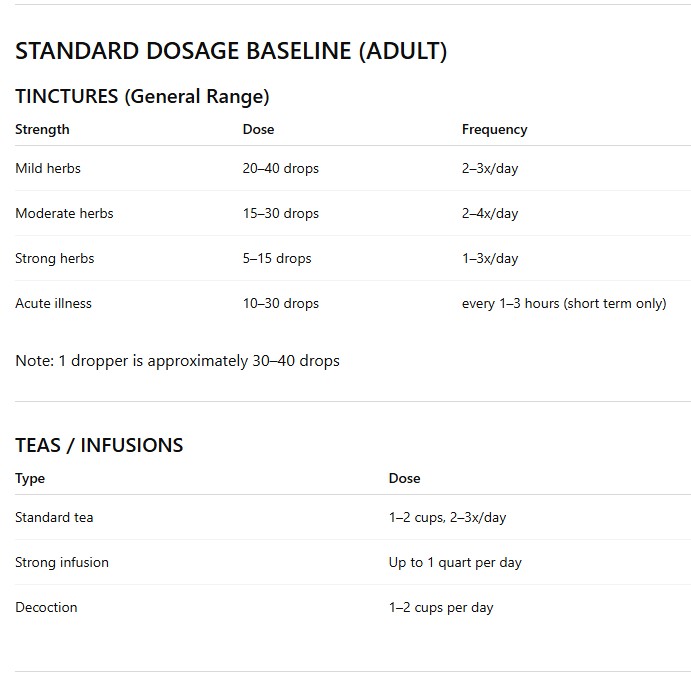
OILS / SALVES
- Apply 2–3 times daily
- For injury or acute use: apply every few hours as needed
CHILD DOSAGE GUIDE
Clark’s Rule (Simple Method):
Child dose = (weight ÷ 150) × adult dose
Example:
50 lb child ≈ one-third adult dose
CORE CONTRAINDICATION RULES
Avoid or use extreme caution if:
- Pregnant or breastfeeding
- Taking prescription medications (especially heart, blood pressure, antidepressants)
- Chronic illness
- Liver or kidney conditions
HERB-SPECIFIC DOSAGE AND CONTRAINDICATIONS
Echinacea
Dose: 20–30 drops, 3–5x/day (short term)
Avoid: Long-term use with autoimmune conditions
Elderberry
Dose: 1 cup tea, 2–3x/day
Avoid: Raw berries must not be consumed
Garlic
Dose: 1–2 cloves daily or 20 drops tincture
Avoid: Use caution with blood thinners
Oregano
Dose: 1 cup tea 2x/day or diluted oil
Avoid: High doses during pregnancy
Thyme
Dose: 1 cup tea 2–3x/day
Avoid: Large amounts during pregnancy
Ginger
Dose: 1–3 cups tea daily
Avoid: High doses with bleeding disorders
Turmeric
Dose: 1–2 teaspoons daily with black pepper
Avoid: Gallbladder issues without guidance
Goldenseal
Dose: 10–15 drops, 2–3x/day (short term only)
Avoid: Pregnancy and long-term use
Yarrow
Dose: 1–2 cups tea daily
Avoid: Pregnancy
Usnea
Dose: 10–20 drops tincture
Avoid: Long-term heavy use
Peppermint
Dose: 1–3 cups tea daily
Avoid: Severe acid reflux
Chamomile
Dose: 1–3 cups tea daily
Avoid: Ragweed allergies
Fennel
Dose: 1–2 cups tea daily
Avoid: Large amounts with hormone-sensitive conditions
Dandelion Root
Dose: 1–2 cups decoction daily
Avoid: Use caution with gallstones
Burdock Root
Dose: 1–2 cups decoction daily
Avoid: Monitor with blood sugar medications
Licorice Root
Dose: Short-term use only (max 2 weeks)
Avoid: High blood pressure and heart conditions
Plantain
Dose: Tea or topical use
Generally safe
Mullein
Dose: 1–2 cups tea daily
Note: Strain thoroughly
Lobelia
Dose: 1–5 drops only
Avoid: Overuse can cause nausea
Valerian
Dose: 20–40 drops before bed
Avoid: Combining with sedatives
Ashwagandha
Dose: 20–40 drops or tea daily
Avoid: Hyperthyroid conditions
Lemon Balm
Dose: 1–3 cups tea daily
Generally safe
Passionflower
Dose: Tea or tincture
Avoid: With sedative medications
Lavender
Dose: Tea or oil
Safe in moderate use
Skullcap
Dose: Tincture preferred
Avoid: Combining with sedatives
Willow Bark
Dose: Decoction as needed
Avoid: Children and blood thinners
Cayenne
Dose: Small amounts internal or topical
Avoid: Sensitive stomach
Arnica
External use only
Comfrey
External use only
Avoid internal use
Calendula
Safe for topical and tea use
St. John’s Wort
Dose: Oil or tincture
Avoid: Many medication interactions
Hawthorn
Dose: Tea or tincture
Avoid: Monitor with heart medications
Ginkgo
Dose: Tincture
Avoid: Blood thinners
Rhodiola
Dose: 10–20 drops
Avoid: High doses may increase anxiety
Ginseng
Dose: Tincture or decoction
Avoid: High blood pressure
Uva Ursi
Dose: Short-term use only (5–7 days max)
Nettle
Dose: Strong infusion
Safe and highly nutritious
CRITICAL RED FLAGS
Stop use immediately if:
- Rash
- Nausea or vomiting
- Dizziness
- Heart irregularities
FINAL SYSTEM RULE
Start low
Observe response
Increase slowly
© Prepping Communities. This content is for informational purposes only and not professional advice. Use at your own risk.
Terms | Privacy | Guidelines