
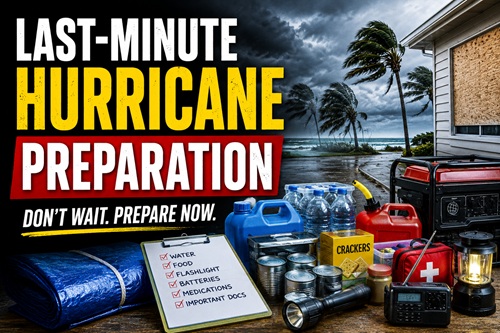
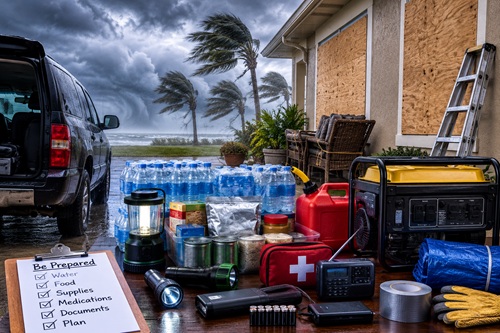
When a hurricane is forecast to impact your area, the final 24 to 48 hours are critical. Most major preparations should already be complete, allowing you to focus on securing your home, organizing emergency supplies, and preparing your family for possible power outages, flooding, or evacuation. A systematic approach helps reduce stress, minimizes forgotten tasks, and improves your ability to respond as conditions change.
Prepare for Power Outages
Power outages are one of the most common impacts of hurricanes and can last from a few hours to several weeks. Before the storm arrives, charge every electronic device that may be needed, including cell phones, laptops, rechargeable flashlights, radios, power banks, and portable power stations. If you own a generator, test it while the weather is still good, verify that you have adequate fuel, and review safe operating procedures. Gather extension cords, lanterns, batteries, and charging cables in one location so they are immediately available if the power fails.
Power Preparation Checklist
☐ Charge all cell phones and tablets.
☐ Charge power banks and portable power stations.
☐ Test your generator.
☐ Verify generator fuel supply.
☐ Gather extension cords.
☐ Check flashlights and lanterns.
☐ Replace weak batteries.
☐ Locate your emergency weather radio.
Store Drinking Water
Storm damage can interrupt or contaminate public water systems. Fill clean containers with drinking water before the storm arrives. Fill bathtubs or other large containers with water that can be used for flushing toilets, cleaning, or washing if necessary. If you own water filters or purification tablets, inspect them to ensure they are ready for use.
Water Checklist
☐ Fill drinking water containers.
☐ Fill bathtubs with sanitation water.
☐ Check water filters.
☐ Verify purification tablets are available.
☐ Store extra bottled water.
☐ Label treated water containers.
Prepare Food
Use the remaining time before landfall to prepare meals while your kitchen is fully operational. Cook meals that can be refrigerated, frozen, or eaten with minimal preparation. Freeze containers of water to help refrigerators and freezers stay cold longer if electricity is lost. Organize frequently used foods so refrigerator doors remain open for the shortest possible time during an outage.
Food Checklist
☐ Prepare several meals.
☐ Freeze containers of water.
☐ Organize refrigerator contents.
☐ Stock ready-to-eat foods.
☐ Verify manual can opener.
☐ Prepare alternative cooking equipment.
Fuel Vehicles Early
Fuel shortages commonly occur before hurricanes. Fill every vehicle before long lines develop. Refill approved fuel containers for generators or other equipment if you safely store gasoline. If evacuation becomes necessary, having full fuel tanks gives you more options and reduces dependence on crowded service stations.
Vehicle Checklist
☐ Fill all vehicles.
☐ Refill approved fuel cans.
☐ Check tire pressure.
☐ Inspect windshield wipers.
☐ Load vehicle emergency kit.
☐ Review evacuation routes.
Secure Your Home
Strong winds can turn ordinary outdoor items into dangerous projectiles. Walk around your property and secure anything that could be blown away. Bring patio furniture, grills, garbage bins, tools, decorations, and potted plants indoors whenever possible. Clear gutters and drains to improve water runoff and reduce the risk of water damage. Keep tarps, ropes, and basic repair supplies readily available for emergency repairs after the storm.
Home Preparation Checklist
☐ Bring outdoor furniture inside.
☐ Secure garbage bins.
☐ Store garden tools.
☐ Clean gutters.
☐ Clear storm drains.
☐ Trim loose branches if safe.
☐ Close shutters if installed.
☐ Place tarps and repair supplies nearby.
Protect Important Documents
Important documents can be difficult or impossible to replace after a disaster. Store identification, insurance policies, passports, medical records, banking information, emergency contacts, and other valuable paperwork inside waterproof containers or sealed plastic bags. Whenever possible, maintain digital backup copies stored on secure media.
Document Checklist
☐ Identification.
☐ Insurance policies.
☐ Medical records.
☐ Property documents.
☐ Banking information.
☐ Emergency contacts.
☐ Cash.
☐ Digital backups.
Prepare Medical Supplies
Review your medical supplies before the storm arrives. Refill prescription medications, inspect your first aid kit, and verify that any medical devices requiring electricity have backup power available. If medications require refrigeration, have a plan to keep them cold during extended power outages.
Medical Checklist
☐ Prescription medications.
☐ First aid kit.
☐ Pain relievers.
☐ Bandages.
☐ Medical equipment.
☐ Backup batteries.
☐ Personal hygiene supplies.
Prepare for Pets
Pets should be included in every emergency plan. Gather enough food, water, medications, bedding, leashes, carriers, and waste supplies for several days. Keep everything together so it can be loaded quickly if evacuation becomes necessary.
Pet Checklist
☐ Food.
☐ Water.
☐ Medications.
☐ Leash.
☐ Carrier.
☐ Bedding.
☐ Waste bags.
☐ Vaccination records.
Review Your Emergency Plan
Before weather conditions deteriorate, review your family’s emergency plan together. Confirm evacuation routes, emergency shelters, communication procedures, and meeting locations. Make sure every family member understands what to do if you lose power, communications, or must leave home quickly.
Family Planning Checklist
☐ Review emergency contacts.
☐ Confirm evacuation routes.
☐ Identify meeting locations.
☐ Charge communication devices.
☐ Discuss responsibilities.
☐ Monitor official weather alerts.
Common Mistakes
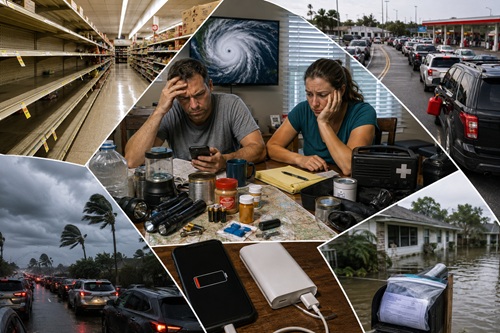
Many people underestimate how quickly conditions change before a hurricane. Waiting until the final hours often means empty store shelves, fuel shortages, and heavy traffic. Others assume utilities will return quickly or fail to prepare enough drinking water. Small tasks such as charging electronics, filling fuel tanks, or protecting important documents are easy to overlook but can make a significant difference after the storm.
Final Hurricane Readiness Checklist
Before the first rain bands arrive, complete one final walkthrough of your home.
☐ All electronics charged.
☐ Water stored.
☐ Food prepared.
☐ Vehicles fueled.
☐ Outdoor items secured.
☐ Generator tested.
☐ Documents protected.
☐ Medications packed.
☐ Pet supplies ready.
☐ Emergency plan reviewed.
☐ Weather monitored.
☐ Family accounted for.
Key Takeaways
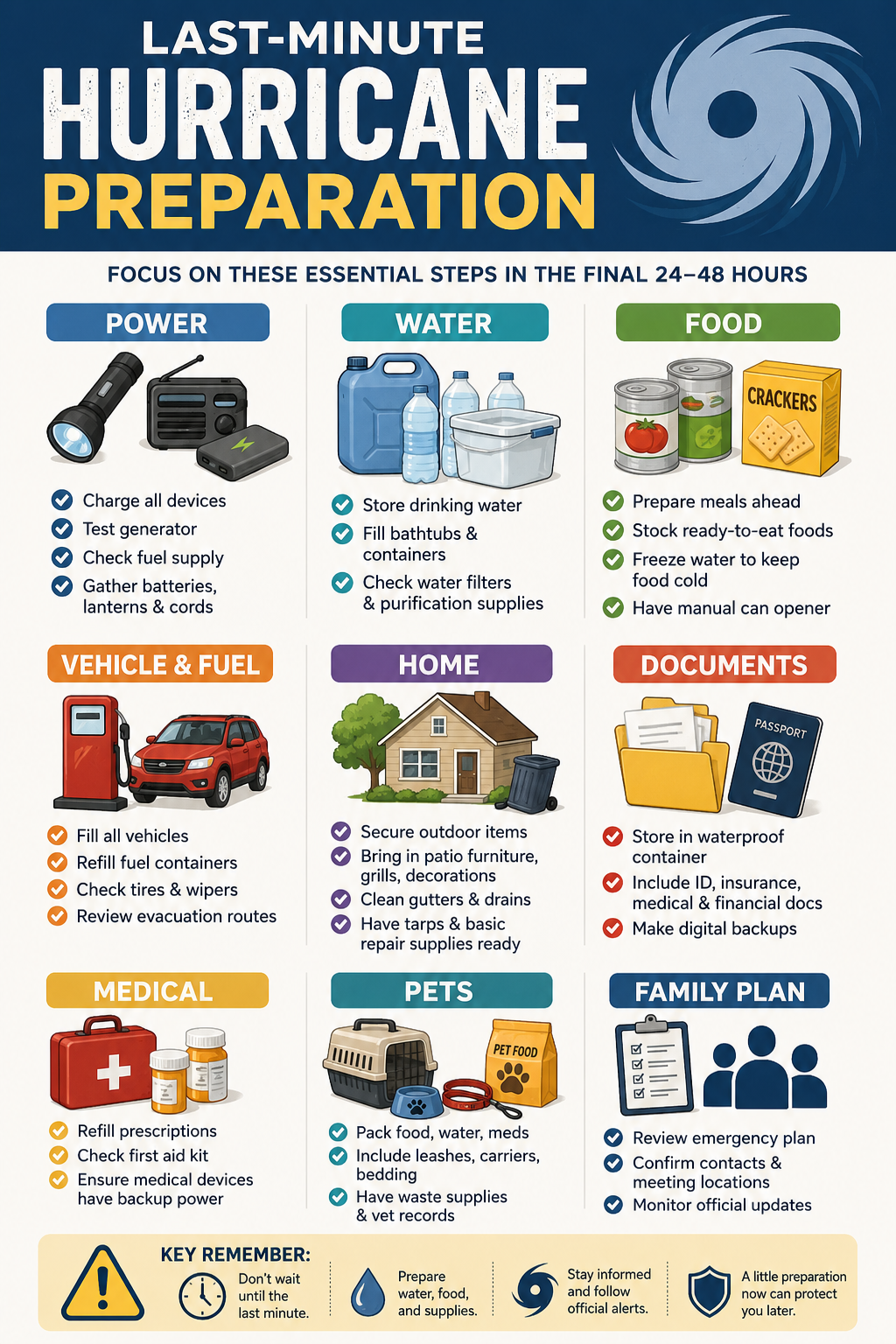
Preparing during the final 48 hours before a hurricane can significantly reduce stress and improve your family’s safety. Focus first on power, water, food, fuel, medical supplies, and home security while conditions remain safe. Complete your checklists early rather than waiting until the storm is overhead. Finally, continue monitoring official forecasts and emergency instructions, and be prepared to evacuate immediately if local authorities issue an evacuation order.
© Prepping Communities. This content is for informational purposes only and not professional advice. Use at your own risk.
Terms | Privacy | Guidelines