
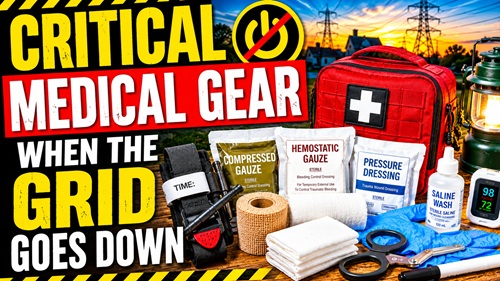
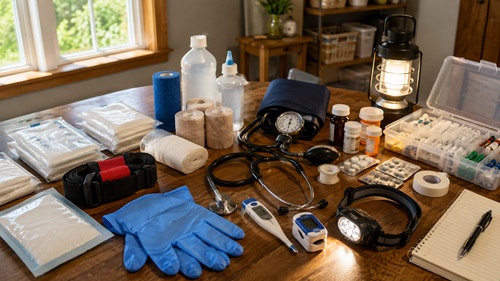
When the power goes out for a few hours, medical care usually continues to function. When an outage becomes widespread or lasts for days, the situation can change quickly. Pharmacies may close, ambulance response may slow, hospitals can become overwhelmed, refrigeration for medications can fail, and even basic supplies may become difficult to replace. A cut, burn, infection, broken bone, or stomach illness that would normally be manageable can become much more serious when professional care is delayed.
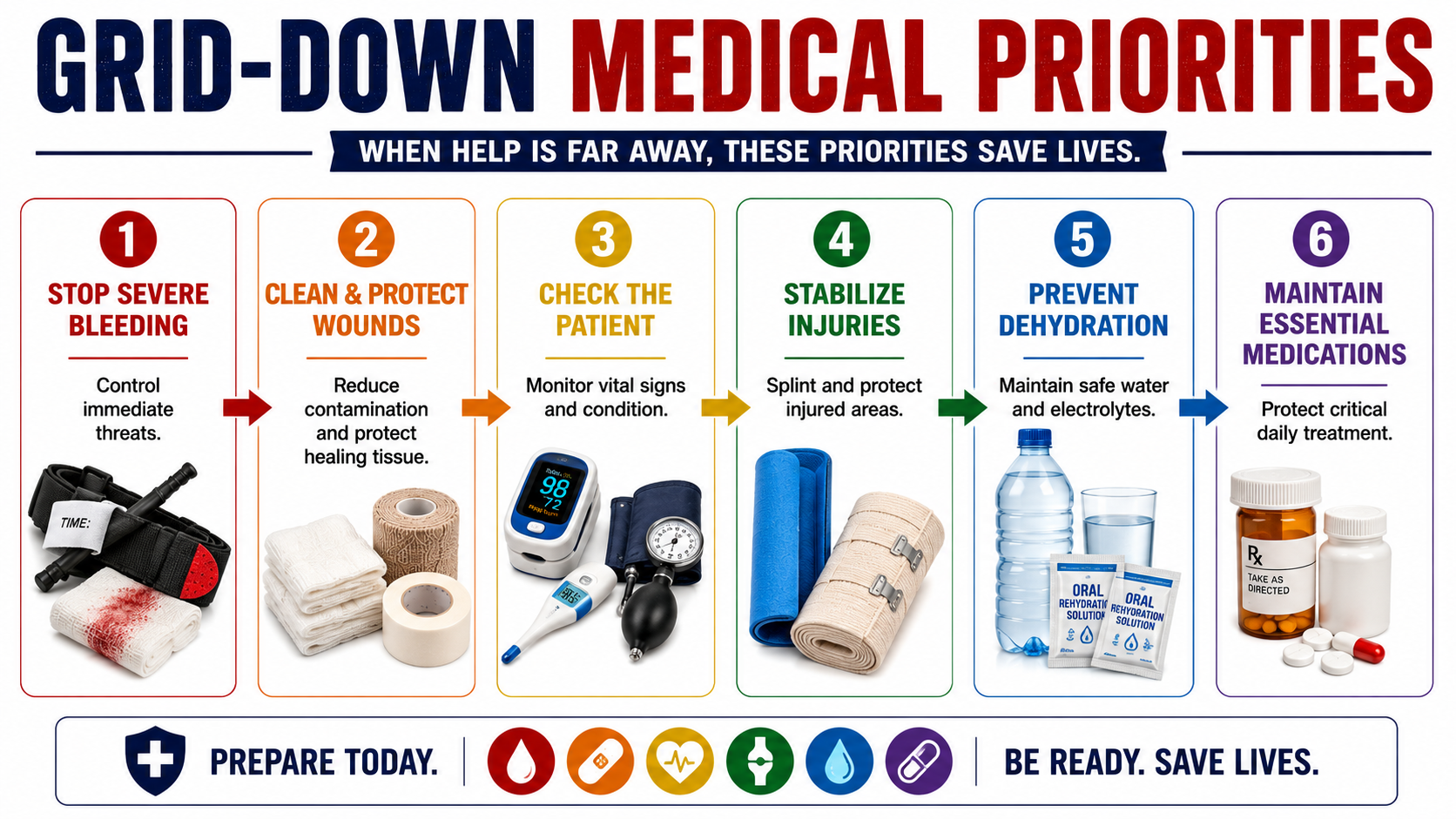
That changes what a preparedness medical kit needs to do. A small first-aid kit filled with adhesive bandages and antiseptic wipes is useful for everyday injuries, but it is not enough for a prolonged disruption. You need supplies that allow you to control serious bleeding, clean and protect wounds, examine a sick or injured person, stabilize injuries, manage dehydration and common illness, and continue essential medications.
You do not need to build a miniature hospital. You need to be able to handle the problems most likely to occur until professional medical care becomes available.
Start With Bleeding Control
Severe bleeding is one of the first problems to prepare for because there may be very little time to react. If someone suffers a serious cut while clearing storm debris, using a chainsaw, repairing a building, or working around broken metal or glass, waiting an hour for an ambulance may not be an option.
Keep your bleeding-control equipment together and somewhere it can be reached immediately. At minimum, this should include:
- Quality commercial tourniquets
- Compressed gauze
- Hemostatic gauze
- Pressure dressings
- Sterile gauze
- Trauma shears
- Nitrile gloves
- Permanent marker
For serious external bleeding, firm direct pressure is the starting point. Some deep wounds may require packing with gauze followed by sustained pressure.
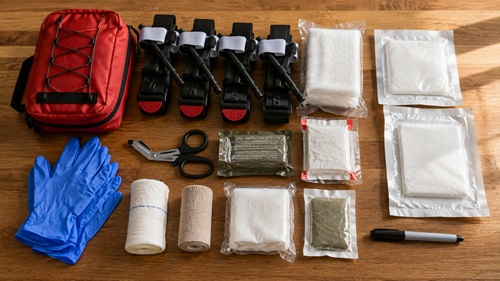
Life-threatening bleeding from an arm or leg may require a tourniquet when appropriate. If one is applied, record the time so that information can be passed to medical personnel later.
Do not simply buy this equipment and put it away. Open a training tourniquet, learn how it works, and practice with it. During a real bleeding emergency, you should already know where the equipment is and how to use it.
Protect Yourself and the Patient
Infection control becomes more important when medical care is limited. A wound that would normally be cleaned, treated, and checked by a healthcare professional may instead have to be managed at home for several days.
Keep nitrile gloves, soap, hand sanitizer, masks, eye protection, and bags for contaminated waste with your medical supplies. Wash your hands whenever possible before treating someone, use gloves when there may be contact with blood or body fluids, and change contaminated gloves rather than continuing to work with them.
The goal is not to create a hospital operating room in your house. It is to keep your hands, equipment, dressings, and wounds as clean as reasonably possible.
Build a Real Wound-Care Supply
Wounds are likely to be one of the most common medical problems during an extended emergency. People may be working with tools, moving debris, cutting wood, repairing structures, cooking outdoors, or doing physical work they are not accustomed to doing. Small injuries can happen easily.
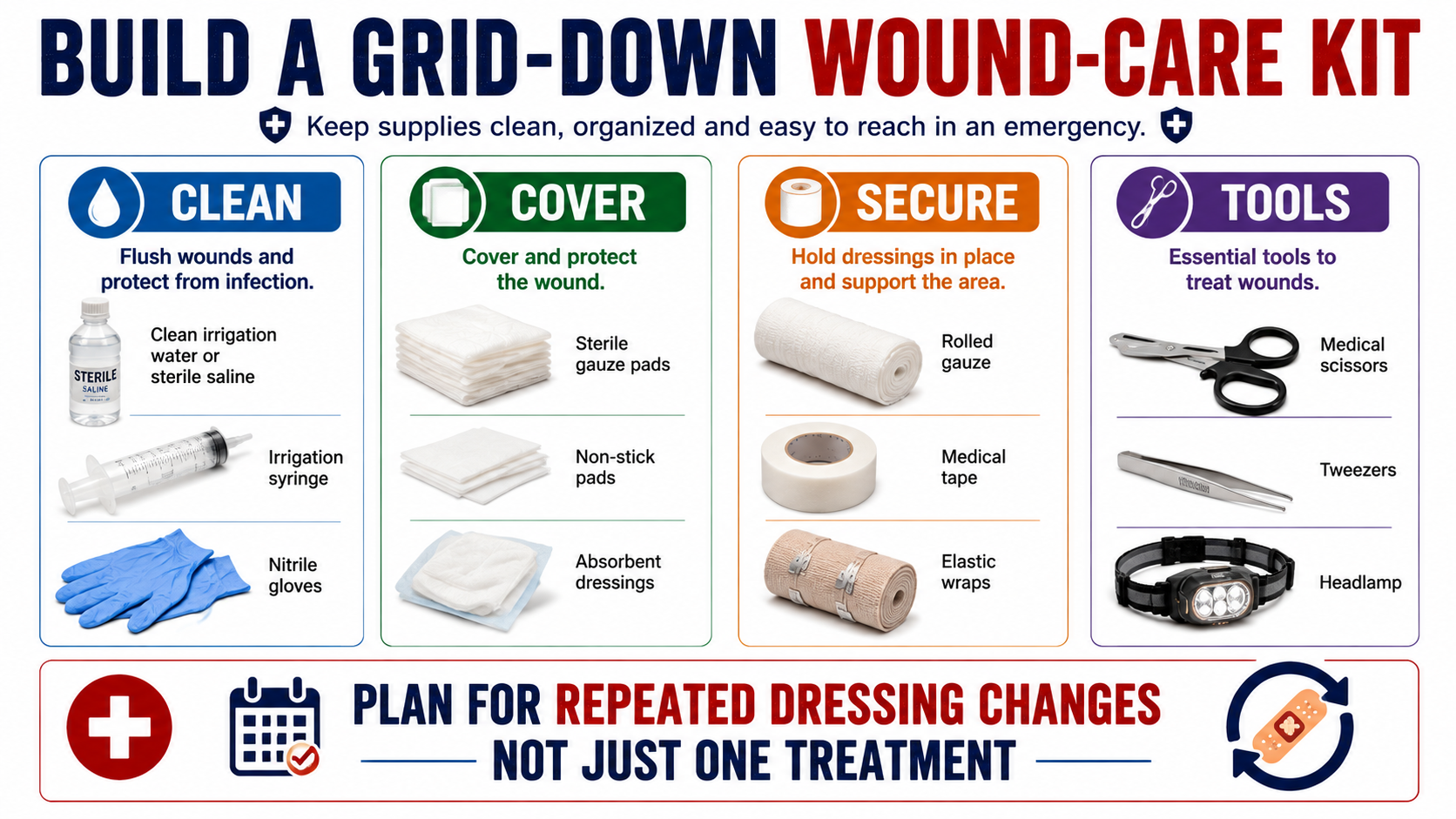
A useful wound-care supply should contain:
- Sterile gauze pads in several sizes
- Large absorbent dressings
- Non-stick wound pads
- Rolled gauze
- Medical tape
- Elastic wraps
- Adhesive bandages
- Sterile saline or clean irrigation water
- Irrigation syringes
- Tweezers
- Medical scissors
- Disposable gloves
The biggest mistake is often not the type of supplies but the quantity. One significant wound may need to be cleaned and redressed every day for an extended period. A box containing ten gauze pads can disappear surprisingly fast.
Think in terms of repeated treatment. If someone needed a dressing changed twice a day for ten days, would you have enough gauze, tape, gloves, irrigation water, and clean dressings to do it?
Cleaning a Wound
For many uncomplicated wounds, one of the most useful things you can do is thoroughly flush away dirt and contamination using clean water or saline. An irrigation syringe makes this much easier because it allows you to direct the water into the wound without touching it.
Do not assume that anything labeled an antiseptic should automatically be poured into an open wound. Products used for disinfecting intact skin, surfaces, or instruments may damage healthy tissue when used incorrectly inside a wound. Know what each product in your kit is intended for before you need it.
After cleaning, protect the wound with an appropriate dressing and monitor it during future dressing changes. Increasing redness, warmth, swelling, drainage, worsening pain, fever, or red streaking away from the wound can indicate a developing infection and should be taken seriously.
Keep Basic Examination Equipment
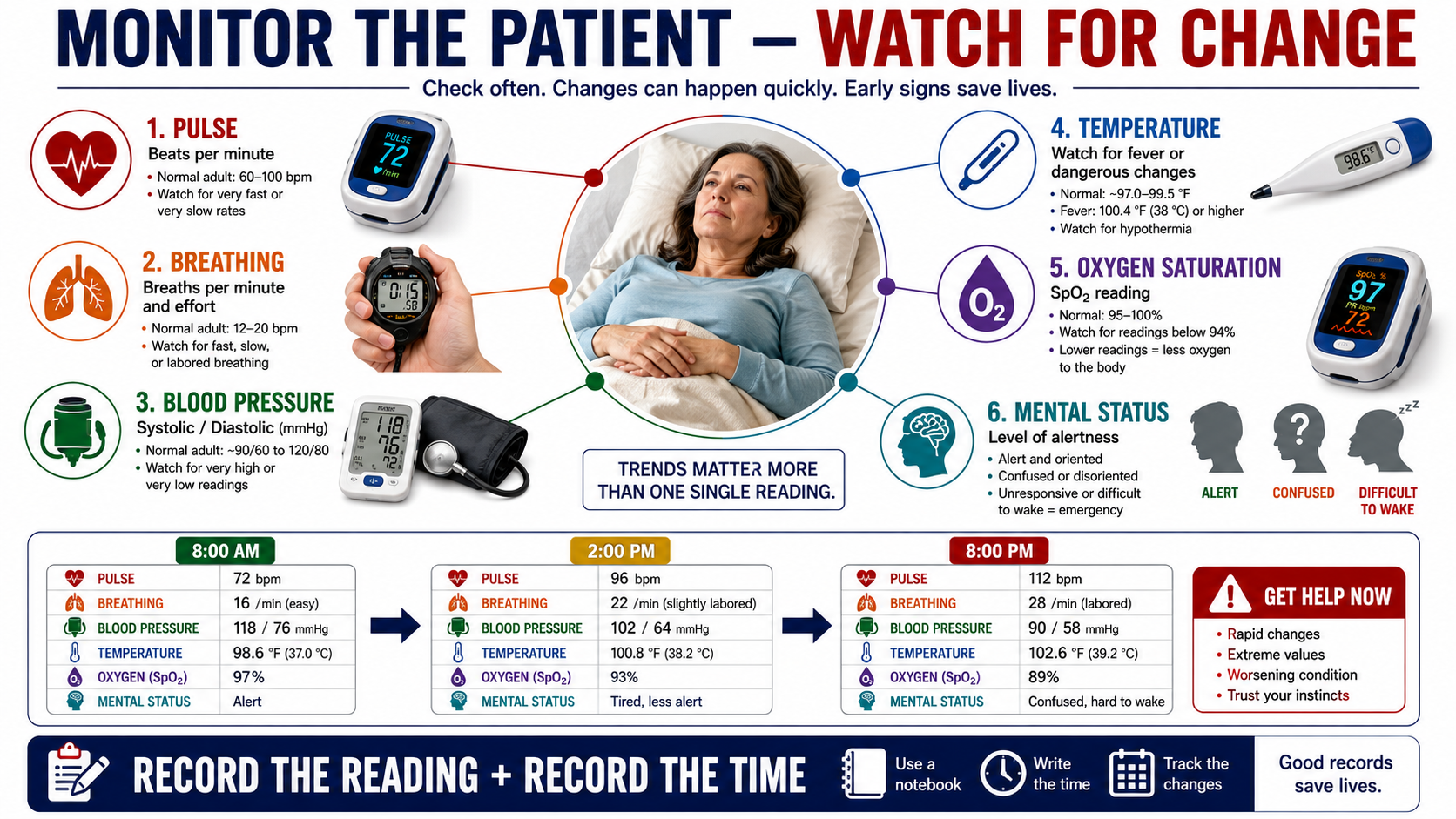
When someone becomes sick or injured, you need more information than “they don’t look good.” A few inexpensive tools can help you determine whether the person’s condition is stable or changing.
Keep:
- Digital thermometer
- Blood-pressure cuff
- Stethoscope if you know how to use one
- Fingertip pulse oximeter
- Flashlight or penlight
- Watch or timer
- Notebook
- Pens
With these tools you can monitor pulse, breathing rate, blood pressure, temperature, oxygen saturation, and changes in mental status.
The trend is often more useful than one isolated number. A person whose pulse, breathing rate, temperature, oxygen level, blood pressure, or mental condition is steadily changing may be deteriorating even if no single measurement initially looked alarming.
Write down the readings and the time. During a stressful medical situation, memory is not reliable enough.
Put a Headlamp in the Medical Kit
A headlamp deserves a place beside the thermometer and blood-pressure cuff. If the grid is down, there is a good chance medical care will eventually have to be performed in poor lighting.
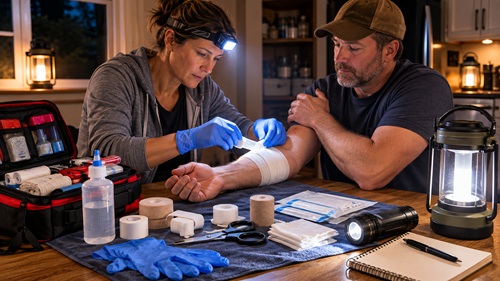
Trying to clean a wound, wrap an injury, examine someone’s eye, or stop bleeding while holding a flashlight in one hand makes everything harder. A headlamp keeps both hands free and directs the light wherever you are looking.
Store spare batteries with it or have a dependable way to recharge it.
Clean Water Is Medical Gear
Water preparedness and medical preparedness are directly connected. Clean water may be needed for drinking, handwashing, wound irrigation, cleaning equipment, preparing food, and replacing fluids lost through fever, vomiting, or diarrhea.
Your medical planning should therefore include stored potable water and a dependable way to produce additional safe water if those reserves run low. A filter, boiling capability, appropriate water-disinfection method, and clean storage containers all support medical care.
Also keep commercial oral rehydration solution packets. Vomiting and diarrhea can cause significant losses of water and electrolytes, especially in children, older adults, and people who are already sick.
Keep reliable offline instructions for preparing oral rehydration solution from common ingredients in case your commercial supply runs out.
Prepare for Sprains, Strains and Broken Bones
A grid-down situation often creates more physical work. People may be carrying water, cutting firewood, clearing fallen trees, climbing ladders, moving supplies, repairing roofs, or walking longer distances. That means sprains, strains, falls, and fractures become realistic problems.
Keep several basic orthopedic supplies:
- Moldable splints
- Triangular bandages
- Elastic wraps
- Medical tape
- Padding material
- Cold packs
- Moleskin or blister supplies
A splint is meant to limit movement and protect an injured area until proper medical evaluation becomes available. It should not be wrapped so tightly that circulation is restricted.
After splinting, check the skin beyond the injury for normal color and warmth and check sensation when appropriate. Repeat those checks because swelling may increase over time and make a previously comfortable wrap too tight.
Be Ready for Burns
Burn injuries may also increase when normal utilities fail. Households may begin using fireplaces, wood stoves, propane appliances, camp stoves, candles, grills, generators, and improvised heating or cooking equipment.
Keep clean water, non-stick sterile dressings, gauze, gloves, and appropriate first-aid burn dressings available.
For a fresh thermal burn, get the person away from the heat source and cool the burn with cool running water when available. Do not apply ice directly to the burn.
Large or deep burns, electrical burns, chemical burns, suspected airway burns, or significant burns involving the face, hands, feet, genitals, or major joints require professional medical attention whenever it can be obtained.
Keep Basic Eye Supplies
Dust, smoke, sawdust, shattered glass, metal fragments, chemicals, and debris can all cause eye injuries during emergency work.
A basic eye section should contain sterile saline or eyewash, an eye shield, gauze, a small flashlight, and a magnifying glass.
Loose surface material may sometimes be removed through gentle irrigation. Chemical exposures generally require immediate and prolonged flushing with clean water.
If an object is embedded in the eye, do not pull it out and do not apply pressure to the injured eye. Protect it from additional contact and seek professional medical care as quickly as possible.
Don’t Ignore Dental Problems
A severe toothache can make it difficult to sleep, eat, work, or concentrate, and dental offices may be unavailable during a prolonged disruption.
Keep toothbrushes, toothpaste, dental floss, dental wax, gauze, cold packs, oral pain-relief products, and commercially manufactured temporary dental repair material.
These supplies are intended to help manage minor problems temporarily. Owning extraction tools does not make removing a tooth safe. Dental extraction can cause bleeding, infection, broken roots, nerve damage, and other complications.
During a prolonged emergency, prevention becomes particularly important. Brushing, flossing, and dealing with minor dental problems early may prevent a much larger problem later.
Stock Medications for Your Household
A useful medication supply should be based on the people who will actually use it.
Depending on individual needs, this may include appropriate over-the-counter medications for pain and fever, allergies, diarrhea, constipation, heartburn, cough and cold symptoms, skin irritation, and minor fungal infections. Preventive supplies such as sunscreen, insect repellent, lip protection, and skin protectants can also prevent small problems from becoming medical problems.
Check medication expiration dates periodically and rotate supplies. Read the labels and understand the contraindications. Familiar over-the-counter medications can still cause harm when given to the wrong person, combined with certain medications, or taken in excessive amounts.
Prescription Medication May Matter More Than Anything Else
If someone in the household depends on daily prescription medication, maintaining access to that medication may be one of your highest medical priorities.
Where legally and medically possible, maintain a practical reserve and rotate it so older medication is used first. Keep a printed medication record containing the medication name, strength, dose, schedule, reason it is taken, prescribing physician, pharmacy, and known medication allergies.
If an essential medication requires refrigeration, your grid-down plan must also include a way to maintain the required storage temperature during an outage. That problem needs to be solved before the electricity fails.
Stock Consumables Deep
Reusable medical equipment is easy to focus on because it looks important. Consumables are what actually disappear during prolonged care.
Gauze gets used. Gloves get used. Tape gets used. Saline gets used. Bandages get used. Medication gets used.
A blood-pressure cuff might serve your household for years, while one significant wound could consume a large portion of your gauze supply in a week.
Once you have the essential equipment, build depth in the things that will be consumed.
Organize by Problem, Not by Product
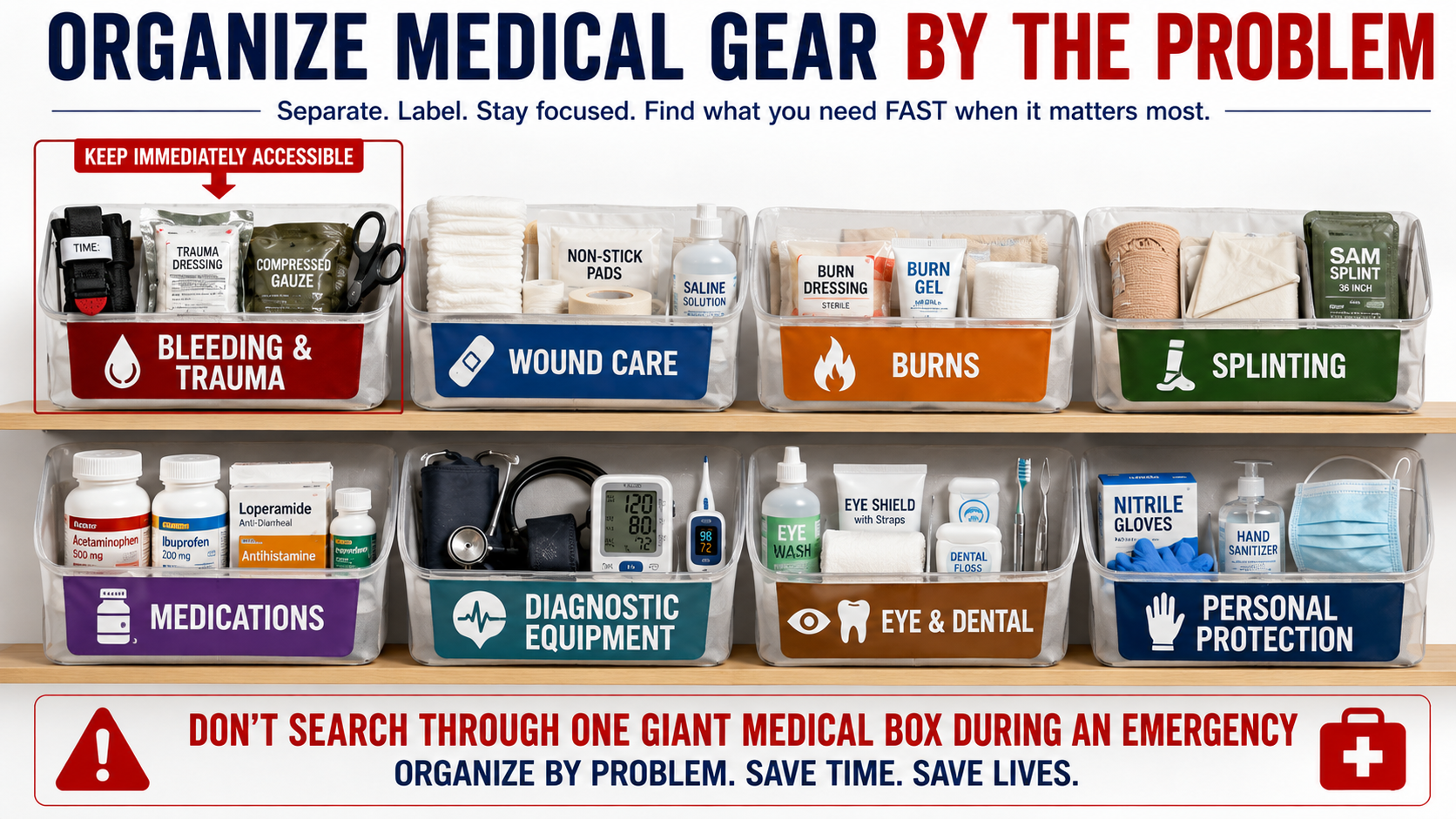
Do not dump hundreds of medical items into one giant container.
Separate them into clearly marked sections:
BLEEDING & TRAUMA
WOUND CARE
BURNS
SPLINTING
MEDICATIONS
DIAGNOSTIC EQUIPMENT
EYE & DENTAL
PERSONAL PROTECTION
This makes the kit much easier to use when someone is actually injured. A person dealing with serious bleeding should be able to open the trauma section immediately rather than digging through thermometers, cold medicine, and adhesive bandages looking for a tourniquet.
Make sure other adults in the household understand the organization as well.
Keep Medical Information on Paper
If electricity, cellular networks, or internet access is unavailable, electronic medical information may be difficult or impossible to retrieve.
Prepare a simple printed medical information sheet for every household member. Include:
Name — Date of birth — Medical conditions — Allergies — Medications — Medication doses — Important previous procedures — Emergency contacts — Physician information
Keep blank paper and pens with the medical supplies as well.
When treating someone over time, record the date and time, symptoms, vital signs, medications given, doses, fluids, wound care, and important changes in condition. Those notes can help you recognize deterioration and can later provide valuable information to professional medical personnel.
Don’t Buy Advanced Equipment You Cannot Use
A large medical kit can easily become filled with sutures, staples, scalpels, advanced airway devices, dental extraction tools, and other specialized equipment.
The question isn’t whether you can buy it.
The question is whether someone in your household actually knows how and when to use it safely.
Build your medical capability from the basics upward. Learn bleeding control, wound care, vital signs, CPR, basic life support, splinting, dehydration management, and how to recognize serious illness first.
Advanced equipment should follow advanced training.
If You Are Starting From Scratch
You do not need to purchase everything at once. Build the capability in order of importance.
Start with bleeding control and gloves. Add wound-cleaning and dressing supplies. Then add basic examination equipment, followed by splinting supplies, oral rehydration, common medications, eye and dental supplies, and whatever specialized items are required for your household’s existing medical conditions.
After you have the basics, increase your quantities of gauze, gloves, tape, dressings, irrigation supplies, medications, and other consumables.
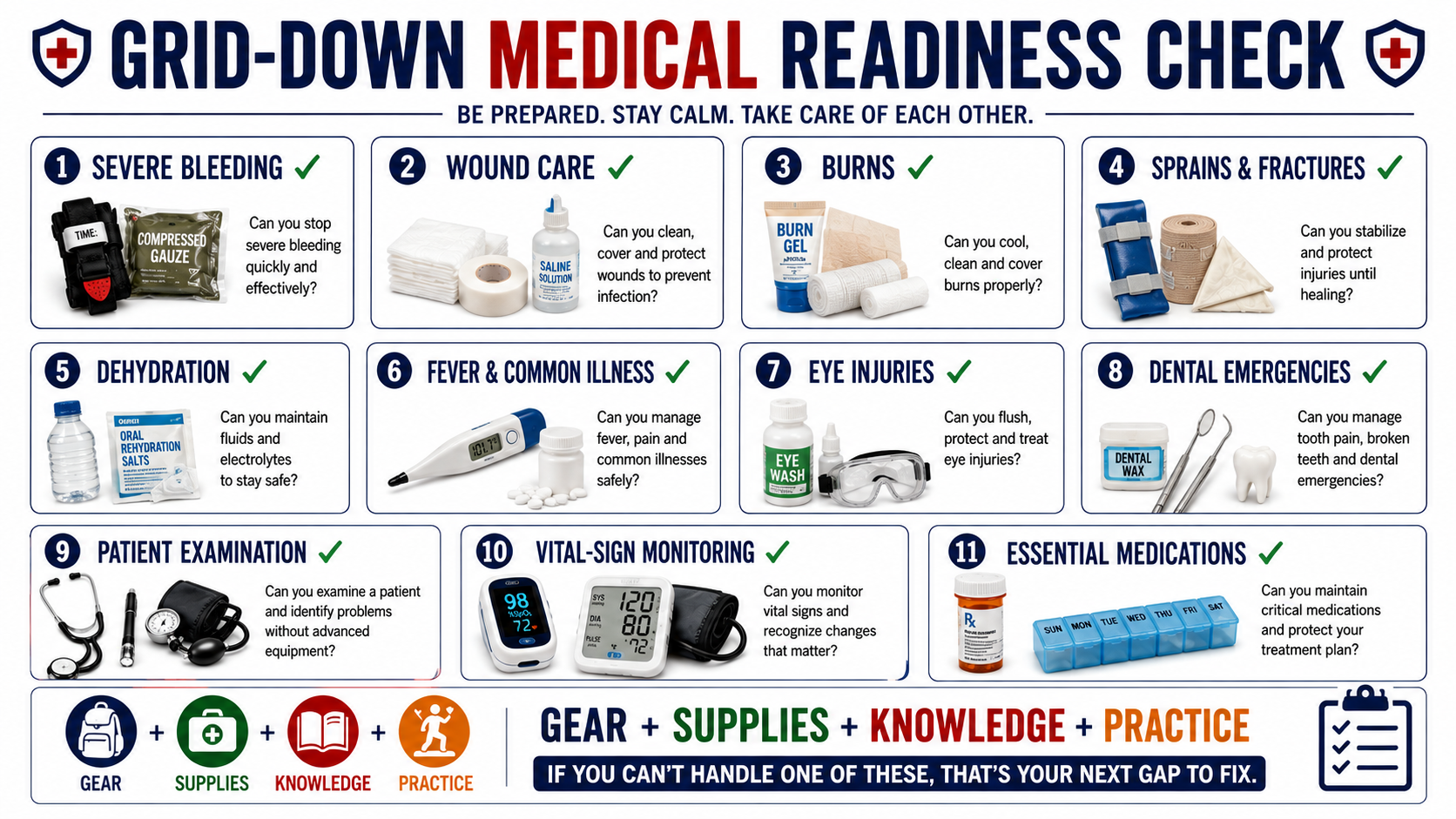
Quick Grid-Down Medical Check
Before considering your medical supplies ready, make sure your household has the equipment and knowledge to deal with:
- Severe bleeding
- Cuts and contaminated wounds
- Burns
- Sprains and suspected fractures
- Dehydration
- Fever and common illness
- Eye injuries
- Minor dental emergencies
- Basic patient examinations
- Vital-sign monitoring
- Essential prescription medications
If you find an area where you have neither the supplies nor the knowledge to deal with the problem, that is where to concentrate next.
Keep the Knowledge With the Gear
Medical supplies are only half of medical preparedness. The other half is knowing what to do with them.
Keep dependable medical information available offline covering bleeding control, wound care, burns, fractures and splinting, vital signs, patient examination, dehydration, fever, common illness, eye injuries, dental emergencies, medication safety, CPR, and basic life support.
Do not assume you will simply look it up online when something happens. If the grid is down, the information may be unavailable at exactly the moment you need it.
More importantly, practice the basic skills now. Learn how to take a blood pressure, count respirations, use a pulse oximeter, apply a splint, dress a wound, and operate the bleeding-control equipment you own.
Preparedness Action Plan
Take your medical supplies out and spread them on a table. Separate everything by purpose and identify the gaps. Check expiration dates, batteries, damaged packaging, prescription quantities, and sterile supplies. Count the consumables rather than assuming you have enough because the container looks full.
Then test the equipment. Turn on the headlamp. Check the thermometer. Take a blood pressure. Use the pulse oximeter. Practice applying a splint and wrapping a wound. Make sure the tourniquets are immediately accessible and that the adults in the household know where they are.
Finally, put your printed medical records and offline medical instructions with the supplies.
The goal is not to own the biggest medical kit.
The goal is to be able to open it when someone is hurt or sick and know exactly where the equipment is, what it is for, and how to use it.
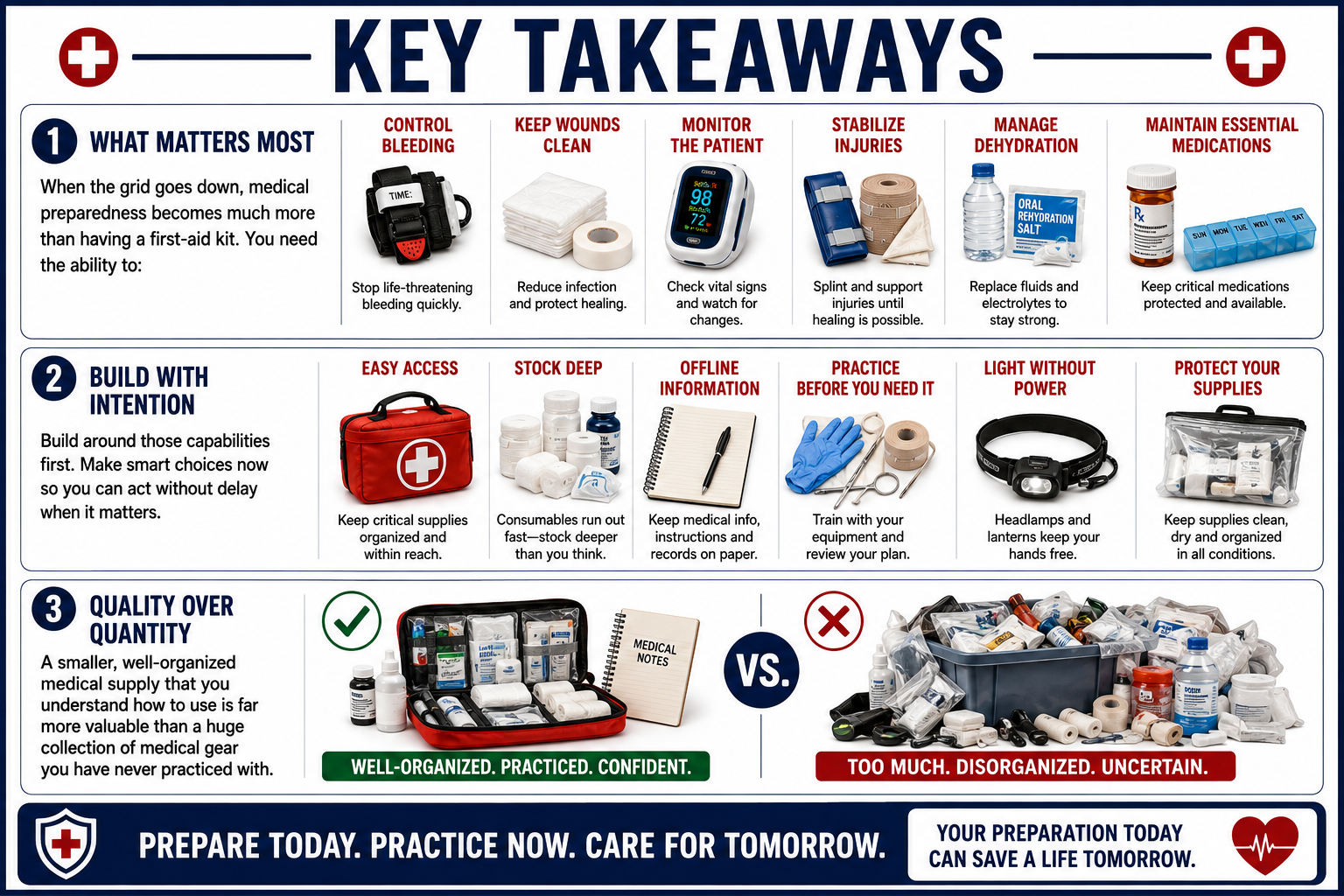
Key Takeaways
When the grid goes down, medical preparedness becomes much more than having a first-aid kit. You need the ability to control bleeding, keep wounds clean, monitor a patient’s condition, stabilize injuries, manage dehydration and common illness, and maintain essential medications.
Build around those capabilities first. Keep critical supplies easy to reach, stock consumables deeper than you think you need, maintain medical information offline, and practice with the equipment before an emergency.
A smaller, well-organized medical supply that you understand how to use is far more valuable than a huge collection of medical gear you have never practiced with.
© Prepping Communities. This content is for informational purposes only and not professional advice. Use at your own risk.
Terms | Privacy | Guidelines