
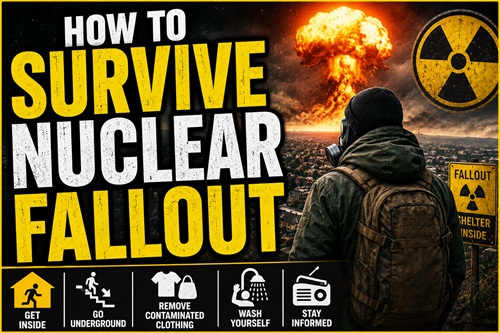
If a nuclear explosion occurs and you survive the initial blast, your next priority is getting protected from radioactive fallout. Do not stand outside watching what is happening. Do not automatically get into your vehicle and try to outrun it. Get inside, get behind as much dense material as possible, and stay there.
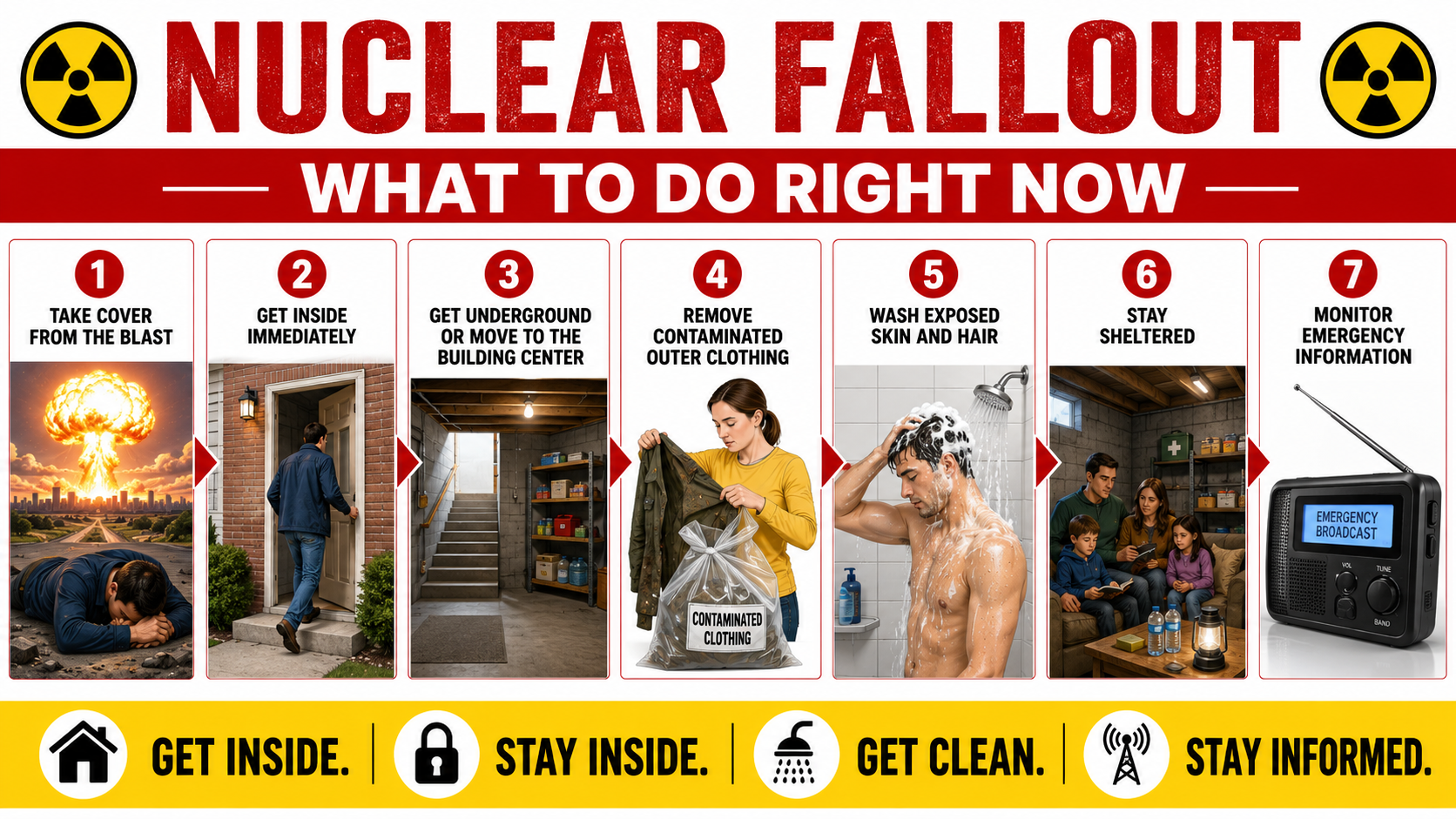
What to Do Right Now
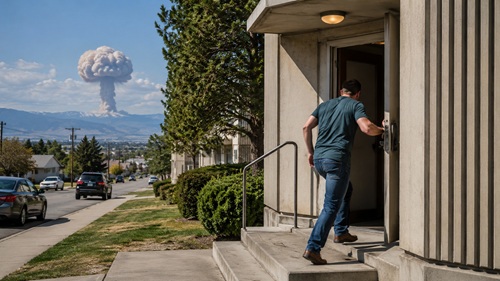
Get inside immediately. Enter the nearest substantial building. A basement or underground area is best. If there is no basement, move toward the center of the building on a lower floor. Stay away from windows, exterior walls and the roof.
If you are outside when the explosion occurs, get down and protect yourself from the blast. After the shock wave passes, move quickly to shelter. Fallout can begin arriving after the explosion, so the time immediately following the blast is extremely important.
Do not immediately evacuate unless your shelter is unsafe. A vehicle provides relatively little protection from radiation, and leaving could put you directly in the path of fallout. Shelter first. Figure out what happened later.
If You Were Outside
Assume that your clothing may have radioactive particles on it.
Once you are safely inside, carefully remove your outer layer of clothing and shoes. Do not shake the clothing. Place it in a plastic bag or other container, seal it if possible, and move it away from people and animals. Simply removing contaminated outer clothing can remove a large amount of radioactive material from your body.
Shower with soap and water as soon as practical. Wash your hair with shampoo or soap, but do not use hair conditioner, because it can cause radioactive particles to remain attached to the hair. Wash gently rather than aggressively scrubbing your skin.
If you cannot shower, use clean wet cloths, wipes or damp paper towels to clean exposed skin. Pay attention to your face, eyelids, eyelashes, ears and hair. Blow your nose and wash your hands carefully.
Once you are clean, move into the most protected part of the building.
Where to Shelter
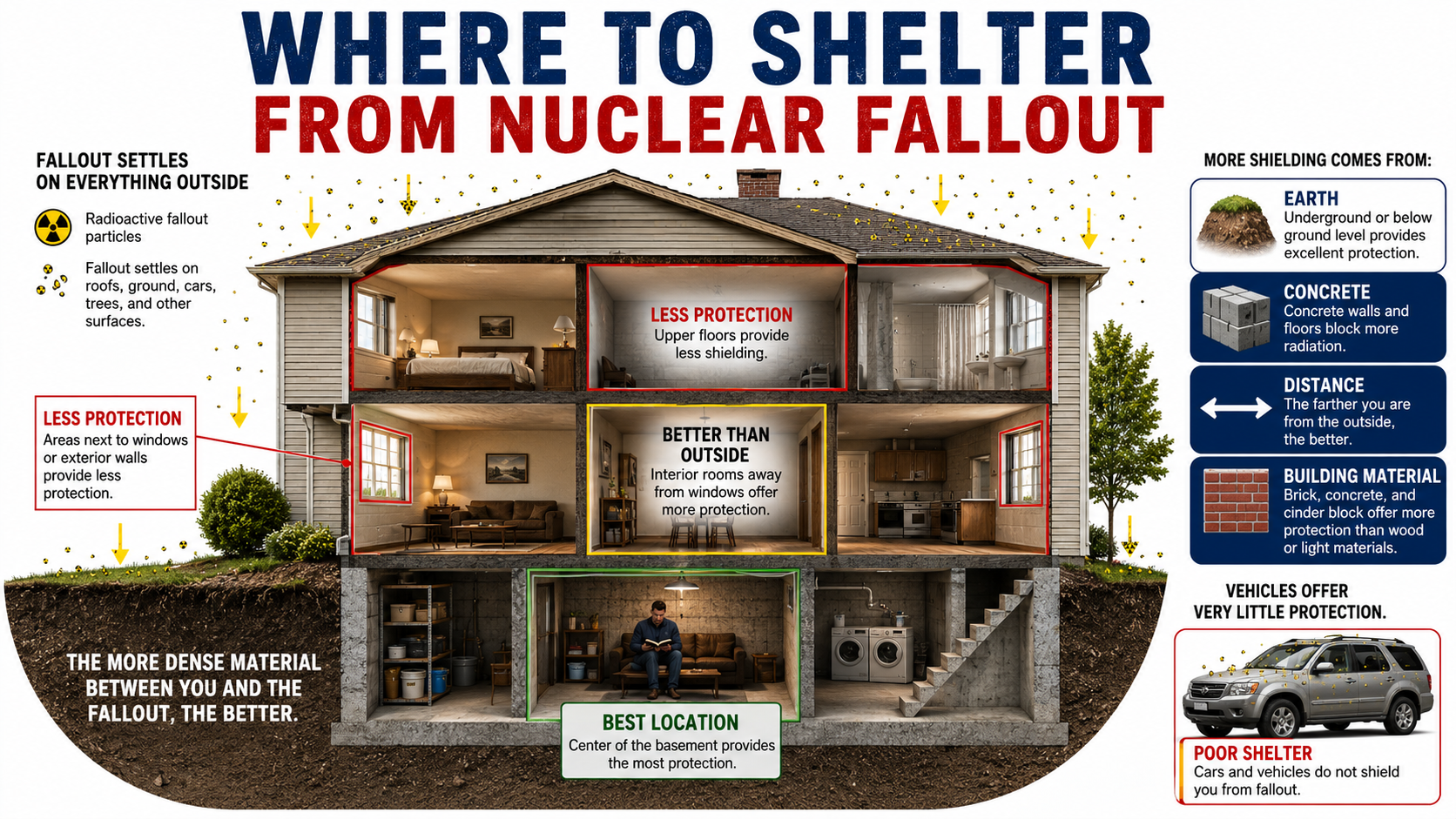
A basement is usually your best option in a typical home. Underground parking structures and the interior portions of large concrete buildings can also provide substantial protection.
If you cannot get underground, put as many walls as possible between yourself and the outdoors. Move toward the center of the building and stay away from exterior walls, windows and the roof.
Think in terms of mass between you and the radiation. Earth, concrete, brick and other dense materials provide shielding. The more material between you and radioactive fallout outside, the better your protection.
Do not shelter in a vehicle if a substantial building is available. Your vehicle may get you to shelter, but it should not be considered your shelter.
The First 24 Hours Matter
The early period following fallout is particularly dangerous because radiation levels from fresh fallout are initially much higher and then decrease with time.
That means time spent sheltered matters.
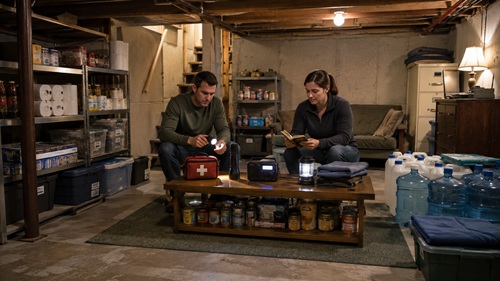
Unless the building is burning, collapsing or otherwise unsafe, resist the urge to leave immediately. Remaining protected during the first 24 hours can greatly reduce your exposure compared with spending that time outdoors.
If authorities tell you to remain sheltered longer, stay sheltered.
Keep Fallout Outside
Close exterior doors and windows. Turn off fans and ventilation systems that bring outside air into the building when practical. Close fireplace dampers and other obvious openings.
Do not waste critical sheltering time trying to make the entire building perfectly airtight. Fallout protection depends heavily on keeping radioactive material away from you and placing shielding between your body and contamination outside.
If people arrive after fallout has begun, establish an area near the entrance where they can remove contaminated outer clothing before entering the main shelter area.
Keep contaminated clothing, shoes and cleaning materials away from your living space.
Do Not Go Outside to Look Around
Radioactive fallout may look like ordinary dust, dirt or ash—or you may not notice it at all.
You cannot determine whether an area is safe by looking at it.
Fallout can accumulate on roofs, roads, vehicles, decks, gutters, soil and other exposed surfaces. Wind can move contaminated particles again after they have settled.
If you are safely sheltered, stay there.
Going outside simply to investigate what happened creates unnecessary exposure.
Food
Food stored inside your home and protected from fallout is preferable to anything that was sitting outside.
Canned food, sealed containers and packaged foods can generally remain usable if the contents were protected from contamination. If fallout dust may have landed on the container, wipe the outside carefully with a damp cloth before opening it. Bag the contaminated cloth afterward and keep it away from your shelter area.
Avoid eating food that was exposed outdoors until authorities or reliable radiation measurements indicate it is safe.
That includes produce from exposed gardens.
Your emergency food storage becomes especially valuable in this situation because it allows you to remain sheltered instead of searching for food.
Water
Use stored water whenever possible until reliable information about the local water supply becomes available.
Do not assume rainwater, ponds, streams, open tanks or other exposed water sources are safe simply because the water looks clean. Radioactive contamination cannot be identified by sight, smell or taste.
Keep your stored water inside the protected portion of your shelter whenever practical.
This is one of the reasons storing water before an emergency matters. After fallout arrives, obtaining uncontaminated water becomes considerably more difficult.
Listen for Information
A battery-powered or hand-crank emergency radio should be kept with your emergency supplies.
Listen for information about the location of the explosion, fallout patterns, radiation measurements, additional detonations, evacuation orders, safe shelters and usable evacuation routes.
Do not depend entirely on your phone or the internet remaining available.
Most importantly, do not evacuate based on rumors.
A road leading away from the explosion is not necessarily leading away from the fallout.
Wind direction matters.
Should You Evacuate?
Immediately after the explosion, sheltering will often be safer than traveling unless your building is unsafe.
Later, evacuation may become necessary.
The decision should depend on reliable information about radiation conditions, fallout direction, weather, damage and the availability of a safer destination.
Do not leave one dangerous location only to travel into another contaminated area.
If authorities provide a safe evacuation route, follow it. If reliable radiation information is available, use it rather than guessing based on what the sky or ground looks like.
The longer you can safely remain behind good shielding while radiation levels decline, the less exposure you may receive when eventually moving.
If You Absolutely Must Go Outside
Sometimes staying inside may become impossible because of fire, structural damage, a medical emergency or another immediate threat.
If you must leave, keep your time outside as short as possible.
Cover exposed skin and avoid disturbing dust. A properly fitted particulate respirator can help reduce inhalation of contaminated particles, but a mask does not protect your body from penetrating gamma radiation.
Move directly from one protected location to another rather than remaining outside.
When you reach shelter, remove your outer clothing and decontaminate again.
Potassium Iodide
Potassium iodide, usually called KI, is sometimes included in nuclear preparedness supplies, but it is important to understand what it actually does.
KI is not a general radiation antidote.
It can help protect the thyroid from radioactive iodine by filling the thyroid with stable iodine. It does not protect the rest of your body from radiation and does not protect you against most radioactive materials.
Take potassium iodide only when public-health or emergency authorities recommend it and follow the correct instructions for the person taking it.
Never use KI as a reason to leave shelter.
Sheltering remains your primary protection.
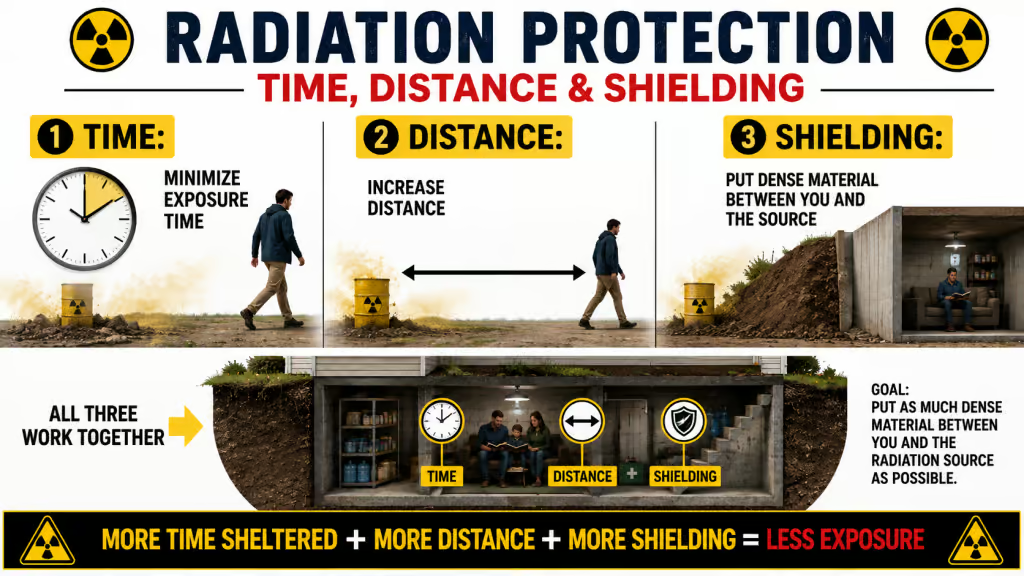
Remember: Time, Distance and Shielding
If you remember nothing else about radiation protection, remember these three things.
Time: Reduce the amount of time you spend exposed to radioactive material.
Distance: Increase the distance between yourself and radioactive contamination whenever possible.
Shielding: Put dense material between yourself and the radiation.
A basement accomplishes two of these extremely well. It increases your distance from fallout collecting on the roof and places walls, floors, concrete and earth between you and contamination outside.
What Not to Do
Do not run outside to see what happened.
Do not stand near windows.
Do not automatically jump into your vehicle and evacuate.
Do not bring contaminated clothing into your main shelter area.
Do not eat exposed outdoor food simply because it looks normal.
Do not assume outdoor water is safe.
Do not leave shelter because everything appears quiet.
Do not assume a dust mask or respirator makes it safe to walk through a radioactive fallout area.
Do not treat potassium iodide as protection against all radiation.
If You Only Remember One Thing
After surviving the initial blast:
GET INSIDE.
Get underground or into the center of a substantial building.
STAY INSIDE.
Do not unnecessarily expose yourself to fallout, particularly during the critical early period.
GET CLEAN.
If you were outside, remove contaminated outer clothing and wash exposed skin and hair.
USE STORED SUPPLIES.
Use protected food and water rather than going outside looking for supplies.
STAY INFORMED.
Use an emergency radio or other available communication source to determine where the fallout is going and when it is safer to move.
You cannot control where a nuclear weapon detonates or which direction the wind carries radioactive fallout. You can control how quickly you get under cover, how much shielding you put around yourself and how much unnecessary exposure you receive.
When nuclear fallout is involved, those decisions can mean the difference between receiving a dangerous radiation dose and surviving the event.
© Prepping Communities. This content is for informational purposes only and not professional advice. Use at your own risk.
Terms | Privacy | Guidelines