
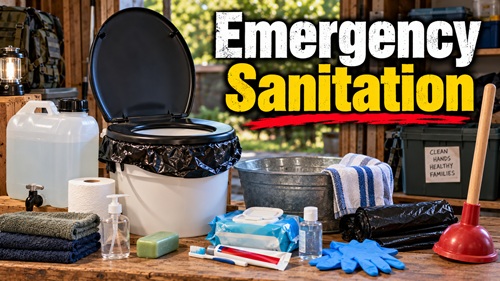
A Practical Guide for When Water, Toilets and Waste Systems Stop Working
Sanitation probably isn’t the first thing most people think about when preparing for an emergency. Food, water, heat, backup power and security tend to get most of the attention. Yet it may only take a few days without running water, working toilets or garbage collection before sanitation becomes one of the biggest problems in the house.
Imagine being three days into a major water outage. You have drinking water stored, plenty of food and flashlights ready to go, so in one sense you’re reasonably well prepared. But the toilet can no longer be used normally. Dishes are accumulating. Everyone is trying to conserve water. Dirty clothes are beginning to pile up, and the garbage contains food scraps that are starting to smell. Someone used far more water washing dishes than expected, and now you’re wondering whether the stored supply is going to last nearly as long as you thought. At that point, keeping the lights on may be the easy part. Keeping the house livable has become the bigger challenge.
Emergency sanitation comes down to a fairly simple principle: keep clean things clean and dirty things contained. Drinking water needs protection from wastewater. Food needs protection from human waste, insects and rodents. Garbage needs to remain under control. Hands that handle waste need to be cleaned before touching food. Dirty laundry needs somewhere to go without contaminating clean clothing and living areas. Once those barriers begin breaking down, an uncomfortable emergency can turn into a health problem.
Modern plumbing does such a good job of managing all of this that most of us rarely think about what is happening behind the walls or underneath the street. Turn the faucet and clean water appears. Flush the toilet and waste disappears. Put garbage at the curb and somebody takes it away. A washing machine cleans the clothes and a hot shower is available whenever we want one. Take those systems away and the household suddenly inherits jobs that are normally handled by an enormous amount of infrastructure.
That is why emergency sanitation needs to be treated as a system rather than a collection of supplies. Toilet paper is useful, but toilet paper isn’t a sanitation plan. Neither is a five-gallon bucket, a case of bottled water or a bottle of disinfectant. The real plan is how safe water, handwashing, toilets, human waste, garbage, cleaning, laundry and pest control continue working together when the normal infrastructure doesn’t.
*Additional Resource*
Sanitation
Why Emergency Sanitation Matters
One of the more dangerous parts of a major disaster can develop after the original event has passed. Flooding can contaminate water. Damaged infrastructure can affect both water and sewer systems. Garbage collection may stop. Large numbers of people may be displaced into crowded conditions where normal hygiene becomes difficult. Illness can then create problems that weren’t present during the original emergency.
Water deserves particular attention because there are really two separate preparedness problems hiding inside the phrase “water storage.” The first is quantity. Do you have enough? The second is quality. Is the water you have actually safe?
Those aren’t the same question.
A household might have fifty gallons stored and still have a serious water problem if the containers become contaminated or nobody knows whether a replacement water source is safe. Water doesn’t have to look dirty to make someone sick. This becomes particularly important during floods, sewer failures and infrastructure damage, when systems that normally keep human waste and drinking water separated may no longer be functioning as intended.
Diarrhea and vomiting are especially troublesome during an emergency because they make the sanitation problem worse in several directions at once. A sick person loses fluids and needs more safe water while creating contaminated toilets, clothing, bedding and surfaces that require additional cleaning. If another person becomes sick, the household needs even more water and sanitation capacity. In a situation where the water supply is already limited, that cycle can become serious surprisingly quickly.
For preparedness purposes, a useful rule is that water quantity keeps you supplied; water quality helps keep you safe. Storing water matters, but so does protecting it, keeping waste away from it and understanding that different water advisories require different responses. A boil-water advisory isn’t the same as being told not to use the water at all. During an actual emergency, follow the specific instructions provided by local authorities rather than assuming that boiling or filtering automatically solves every contamination problem.
Sanitation also begins much sooner than many other long-term preparedness concerns. You can postpone laundry. You can eat simple food for a while. You can live without electricity. The need to use a toilet doesn’t wait for a convenient time, and neither does the need to wash your hands afterward. Sanitation starts on day one.
*Additional Resources*
Safe Water Handbook: Complete Guide to Water Security & Purification
Building a Household Water Budget
How Sanitation Changes as an Emergency Continues
During the first 24 hours, the most useful thing you can do is establish control before everyone begins inventing their own solutions. Start by determining what has actually failed. A municipal water outage doesn’t automatically mean the sewer has failed, and a sewer problem doesn’t necessarily mean drinking water is contaminated. Find out what authorities are saying and don’t make the entire plumbing system off-limits—or assume it is safe – without knowing what has happened.
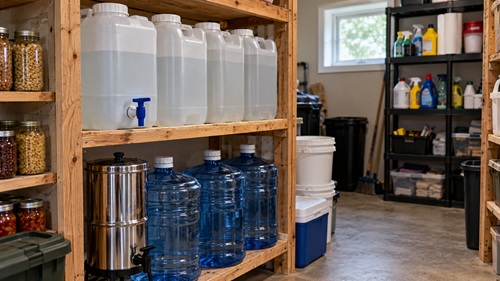
Protect stored drinking water right away. Keep containers closed and away from toilets, wastewater, garbage and chemicals. A container with a spigot or pump is particularly useful because people can take the amount they need without repeatedly opening the supply or dipping cups and hands into it. It seems like a small detail until several people are using the same water container all day.
Handwashing should also be established early. A container with a controlled spigot, soap, clean drying material and a basin underneath can make a perfectly workable emergency handwashing station. Put it somewhere people will actually use it. If everyone has to walk through half the house after using the emergency toilet before reaching the soap, the arrangement could be better.
The toilet question also needs an answer during the first day. If the sewer is functioning and authorities say normal use can continue, there may be no reason to abandon it. If sewer service is compromised or flushing is discouraged, move to the backup arrangement before the bathroom becomes a problem. Waiting until a toilet backs up is not a sanitation strategy.
Water conservation should begin early, but this is where people can overreact. Conserving water doesn’t mean eliminating hygiene. Nonessential laundry can wait, meals can be simplified so fewer pots need washing, and a sponge bath can replace a full shower. Handwashing, on the other hand, is not where you want to make dramatic cuts. Saving a little water isn’t much of a victory if poor hygiene makes several people sick.
By the second and third day, weaknesses in the original plan usually begin showing themselves. This is a good time to look at the stored water and compare what remains with what you started with. Families often discover that they planned carefully for drinking but didn’t really account for cooking, handwashing, dishes, dental hygiene and basic cleaning. If the supply is dropping much faster than expected, find out why before another three days pass.
The emergency toilet also needs another look. Something that worked for one night may be awkward after repeated use. Make sure the setup is stable, supplies are still available and human waste can be contained without creating a new problem. Think about where several days of waste will go, not merely where the next bag goes.
Garbage begins making itself known around this time too. Food waste smells, and insects and animals have a remarkable ability to find it. Wet food waste deserves more attention than a pile of clean cardboard, so there is no reason everything has to be handled exactly the same way. Keep the materials most likely to attract pests contained before the pests arrive.
At roughly the 72-hour point, take a few minutes and assess the whole system. Don’t just count bottles of water and rolls of toilet paper. Ask whether the sanitation arrangement could realistically operate for another week. There needs to be enough safe water, a workable toilet, somewhere for waste to go, basic hygiene supplies and a way to keep food and drinking water protected from contamination.
If the emergency continues into days four through seven, temporary arrangements need to become routines. Essential laundry starts to matter. Towels get dirty. Underwear needs washing. Garbage takes up more space. Water continues disappearing. By now you should have a reasonable idea of how much water the household actually consumes each day, which is far more useful than the estimate you made before the outage.
This is also when people get tired of emergency procedures. Someone leaves a garbage bag where it shouldn’t be. A cleaning cloth gets picked up for another job. Food-storage containers stay open. Handwashing becomes a little quicker because everyone has done it fifty times already. Sanitation rarely falls apart because of one dramatic mistake. More often, standards gradually slip as people get tired.
Beyond the first week, the problem changes again. Stored supplies alone are no longer enough. Water eventually needs replenishment. Human waste and garbage cannot accumulate forever. Clothes and bedding have to be washed repeatedly. Whatever toilet arrangement you created needs to work day after day, not merely get everyone through a long weekend.
Longer emergencies need routines. Someone needs to keep track of water. Toilet and waste areas need regular attention. Food storage needs to be checked for pests. Laundry has to be prioritized. The house doesn’t need to look normal, and nobody needs perfectly folded towels, but the basic sanitation barriers have to keep working.
The question eventually becomes less about comfort and more about sustainability: Can this home remain safe enough to live in if the emergency continues?
*Additional Resources*
Build Your Emergency Sanitation Plan Before You Need It
Unit Field Sanitation Team (FM 4-25.12)
Safe Water, Hygiene and Keeping the Household Clean
Protecting safe water starts with how it is stored and handled, but it doesn’t end there. Water also has to be budgeted for sanitation. Drinking and food preparation deserve the best-quality supply, yet the household still needs some water for handwashing, dental care, cookware, basic bathing and cleaning contaminated surfaces. Someone who calculated stored water only around glasses of water per person per day may be surprised by how quickly the total drops once those other uses are included.
Low-water habits help. Scrape cookware before washing instead of using water to remove food that could have been scraped away. Use controlled flow for handwashing rather than pouring from an open jug. A damp washcloth can handle some cleaning jobs without filling an entire basin. Depending on the source and circumstances, water that is unsuitable for drinking may sometimes be useful for certain non-potable jobs, but questionable water should never be assumed safe merely because it looks clear.
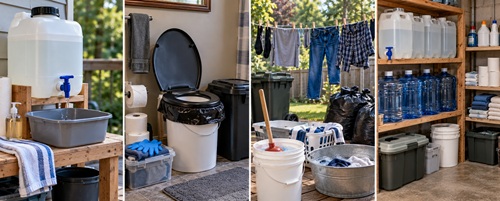
A simple handwashing station deserves a permanent place in the emergency setup. It doesn’t need to be fancy. What matters is that people can dispense water without contaminating the supply, use soap and deal with the wastewater afterward. Hand sanitizer is useful when appropriate, but dirty or visibly contaminated hands still need proper cleaning.
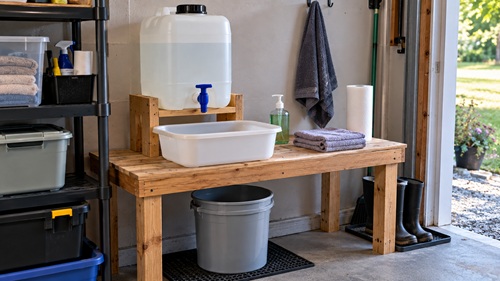
It also helps to think of the home as having cleaner and dirtier working areas. This doesn’t mean taping lines across the floor. The kitchen, clean dishes, food and drinking-water storage should simply remain separated from emergency toilets, human waste, garbage and heavily contaminated laundry as much as possible.
Cleaning equipment needs the same separation. A cloth used around the emergency toilet doesn’t later wipe down the kitchen counter. A basin used for sanitation shouldn’t become tomorrow’s salad bowl. Gloves used while handling waste come off before somebody starts opening cupboard doors.
Contamination travels in ordinary ways. Someone changes a waste bag, touches a doorknob and then opens a kitchen cupboard. Another person touches the same handle and starts making lunch. Nobody deliberately carried waste into the kitchen, yet the barrier between dirty and clean has been weakened. Thinking about those pathways is much more useful than trying to make the entire house sterile.
Bathing becomes simpler during an outage. A washcloth and basin can provide a surprisingly effective sponge bath with little water. Unscented wipes help when water is especially tight. Gravity-fed camp showers and pressure sprayers are useful when more water is available. If a camp shower is part of the plan, try it before the emergency. Figure out where it hangs, where the wastewater goes and how privacy works. Five gallons of water is heavy, something that is easier to appreciate before the bag is hanging over someone’s head.
Dental hygiene deserves to continue as well. Toothbrushes, toothpaste and floss take almost no room in storage, and a serious dental problem is the last thing anyone needs when routine services are already disrupted.
Dishwashing requires a little more thought because it can quietly consume a lot of water. Scrape dishes thoroughly first and wash them systematically rather than one at a time under a stream of water. Not every item presents the same risk. A plate that held crackers isn’t the same sanitation problem as a cutting board that contacted raw meat, so limited cleaning resources should be directed where they matter most.
Disposable plates and utensils can reduce water use, but they create more garbage. For a two-day outage, that may be a reasonable trade. If garbage collection has stopped for three weeks, the calculation changes. Emergency sanitation often involves tradeoffs like this, and the best choice on day two may not be the best choice on day twelve.
Cleaning and disinfecting also deserve some distinction. Cleaning removes dirt, food residue and contamination from a surface. Disinfecting uses an appropriate product to reduce harmful microorganisms. A visibly dirty surface usually needs cleaning first. There is little benefit in spraying disinfectant over a layer of grime and assuming the job is finished.
Don’t improvise chemical mixtures because stronger sounds better. Some household chemicals can create dangerous gases when mixed. Use cleaning products according to their labels, keep them properly identified and follow current public-health guidance when a specific disinfection method is recommended.
When someone becomes sick, these household routines become more important. Vomiting and diarrhea can create contaminated bedding, clothing, toilets and high-touch surfaces while the sick person may simultaneously need more fluids. Keep contaminated laundry separated, dedicate cleaning materials to the affected area when practical and protect the kitchen and drinking-water supply from anything involved in cleanup.
There is also a point where illness stops being primarily a sanitation issue. Persistent vomiting or diarrhea, signs of dehydration, blood in stool or vomit, altered mental status or serious illness involving a vulnerable person may require medical attention. Good sanitation can reduce the chance of illness spreading through the household, but it cannot replace medical care when someone is seriously ill.
Toilets, Sewage and Human Waste
A toilet can look perfectly normal even when the infrastructure behind it isn’t working. Water outages, damaged sewer lines, flooding, septic problems and failures elsewhere in the system can all interfere with normal waste disposal. That is why a backup toilet deserves to be part of household preparedness rather than something invented after the bathroom stops working.
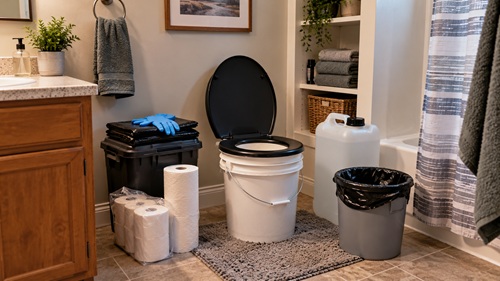
A sturdy five-gallon bucket fitted with an appropriate toilet seat and liner is one possibility. Portable camping toilets are another. A bedside commode may be safer and considerably easier for an older adult or someone with limited mobility. In some circumstances an existing household toilet may be adapted when the sewer itself cannot be used.
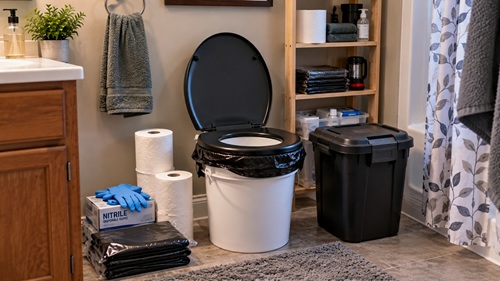
Whatever system you choose, actually try the setup before relying on it. Sit on it. Make sure it is stable. Think about everyone who has to use it. A healthy adult, a small child and someone with mobility problems may have very different requirements. Privacy matters too, especially if the toilet has to be moved somewhere other than the bathroom. A tarp or simple screen can make an improvised sanitation area far more workable.
Keep the necessary toilet supplies together. Liners, toilet paper, gloves and cleaning materials shouldn’t be scattered around the house. A bucket toilet may not be anybody’s idea of comfortable, but at two in the morning it beats trying to invent a toilet while somebody searches the garage for garbage bags.
The toilet itself, however, is only the beginning. Human fecal waste can spread disease and needs to remain separated from people, food and water. Heavy-duty liners and secure containers help control leaks, spills, odors and access by animals or insects, but the household also needs to think about accumulation. A family can produce a surprising amount of waste during a prolonged outage.
This is where some emergency advice becomes too casual. “We’ll just bury it” sounds simple until groundwater, flooding, local regulations, soil conditions and nearby water sources enter the picture. Methods that may be acceptable in one location can contaminate water or create another hazard somewhere else. Final disposal should follow current local public-health and emergency-management guidance rather than a one-size-fits-all survival rule.
Sewer backflow creates a different problem because the waste may come toward the house instead of simply failing to leave it. Flooding, damaged lines, blockages and pumping failures can all contribute. If sewer backup is a known risk in your area, learn how your plumbing connects to the system and whether professionally installed backflow protection is appropriate.
Homes on septic systems have different considerations. A functioning septic system may continue working during some utility interruptions, but flooding, saturated ground or damage can make continued use unsafe. Know where the system is located and learn the warning signs of trouble before an emergency.
Raw sewage inside the house changes the situation quickly. It can contaminate surfaces and belongings and may require professional cleanup. If contamination becomes extensive, remaining in the home may eventually be less sensible than relocating temporarily.
That possibility is worth acknowledging in advance. Preparedness isn’t about staying home at all costs. It is about having enough capability and judgment to recognize when the safer plan has changed.
*Additional Resource*
How a Prepper Would Prepare for Waste Management Failures
Garbage, Laundry and Pest Control
Garbage is easy to overlook during the first day of an emergency because everyone is dealing with more immediate problems. Give it a week without collection and the situation looks very different. Food scraps begin decomposing, bags accumulate, containers take up space and smells develop. Flies and rodents may discover the new food source long before the household realizes it has created one.
It helps to separate waste according to the problems it creates. Wet food waste is generally more troublesome than clean cardboard, cans or other relatively dry materials because it decomposes and attracts pests. Keeping those materials apart makes it easier to concentrate your limited containers and secure storage on the garbage most likely to become a sanitation problem. Boxes can be flattened and other appropriate materials compressed to reduce the amount of space they occupy.
Sturdy garbage containers with secure lids become increasingly valuable as an outage continues. A tied garbage bag sitting beside the house may be enough to discourage nothing more determined than the wind. A raccoon, rat or other animal can turn it into a scattered mess surprisingly quickly. Once animals learn that a property contains accessible food waste, they may continue returning.
Burning garbage can look like an easy solution when collection has stopped, but it can create problems of its own. Plastics and other materials may produce hazardous fumes, and an uncontrolled fire during a disaster is a particularly bad trade for a pile of garbage. Unless local emergency guidance provides otherwise, containment is usually a much better starting point than improvising disposal methods that introduce new hazards.
Laundry develops more slowly as a sanitation problem. Nobody is going to worry much about wearing the same pair of jeans for several days. Underwear, towels, cleaning cloths and bedding are different, particularly when someone is sick or bodily fluids are involved.
A bucket and laundry plunger can provide a simple manual washing system when electricity isn’t available. A washboard or hand-powered washer can do the same job. There is no reason to wash everything according to the normal household schedule. Prioritize underwear, socks, towels, cleaning materials and contaminated bedding while allowing outer garments to go longer between washes.
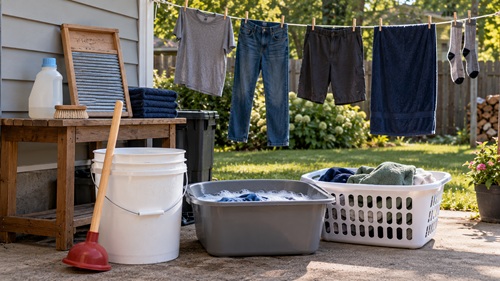
Drying doesn’t require electricity either. A clothesline handles a surprising amount of laundry and takes very little storage space when not in use. Indoor drying racks are useful when the weather is poor, although repeated indoor drying can add considerable moisture to a home. If windows are constantly covered with condensation, the laundry may be solving one problem while contributing to another.
Garbage, food and water also influence pest control. Rodents and insects are looking for the same things people are: food, water and shelter. An emergency can unintentionally make all three easier to find. Food packages are opened more frequently, garbage remains on the property longer and water may be sitting in temporary containers.
Keep food-storage areas organized enough that you can notice a problem early. A few droppings or a chewed package are warnings, not merely annoyances. Flexible food packaging that works perfectly well on a pantry shelf may offer little resistance to a mouse. Buckets, cans and other sturdy outer containers provide another layer of protection around vulnerable food.
Standing water deserves attention too. A bucket, tarp or container that collects rain may become a breeding area for mosquitoes depending on the season and location. Water intended for emergency use should be deliberately stored and protected rather than accidentally accumulating around the property.
The larger lesson is that garbage, laundry and pest control aren’t separate housekeeping chores during an emergency. They affect one another. Poorly managed garbage attracts pests. Pests threaten stored food. Contaminated food can cause illness. Illness creates more laundry and sanitation work. Keeping those small problems under control helps prevent the household from entering that cycle.
Sanitation Beyond the Individual Household
Sanitation doesn’t stop at the property line. One household may carefully contain its garbage and human waste while another begins leaving bags, food scraps or fecal waste exposed outside. Flies don’t recognize fences, and neither do mice, rats or mosquitoes.
This becomes increasingly important during a community-wide outage. Poor waste management at one property can increase pest pressure throughout the surrounding area. Standing water can create mosquito breeding areas. Unsecured garbage attracts animals that then move between properties. Exposed waste gives insects and rodents another opportunity to carry contamination elsewhere.
Helping a neighbor understand basic sanitation may therefore protect your household as well. Sharing information about waste containment, safe water, handwashing or garbage control isn’t simply being helpful. In a prolonged emergency, sanitation gradually becomes a community problem.
That doesn’t mean everybody needs an elaborate neighborhood sanitation program. Sometimes the useful intervention is much simpler. An older neighbor may need help setting up a stable emergency toilet. Someone may not realize the municipal sewer shouldn’t currently be used. Another household may have garbage accumulating because they don’t have secure containers.
The same thinking applies to pets. Dogs and cats continue producing waste whether municipal services are working or not. Feces left around the property can attract flies and can be tracked indoors on shoes or paws, so pet waste needs to be collected and contained along with everything else.
Indoor animals require a little more planning. Cat litter eventually runs out. Households with cats may want additional litter stored or an appropriate backup available. Pets also consume water, and that consumption belongs in the household water calculation. A large dog or several animals can use a meaningful amount over the course of a long outage.
Children, older adults and people with disabilities or mobility limitations change the sanitation plan as well. An infant means diapers, wipes, skin-care supplies and considerably more contaminated waste. Adult incontinence products create similar requirements. Someone who needs assistance with bathing or toileting also means another person will regularly handle contaminated materials.
A bucket toilet that works perfectly well for one healthy adult may be unsafe for somebody who has difficulty standing or balancing. A stable bedside commode may make far more sense. Sanitation equipment should fit the people who will actually use it rather than some imaginary average prepper.
Feminine hygiene supplies belong in the same planning. So do specialized personal-care products that household members depend upon. The point isn’t to stock every hygiene product imaginable. It is to look around the house and consider who will still need what when the store is closed and the water isn’t running.
Building an Emergency Sanitation Kit
An emergency sanitation kit makes much more sense when it is built around the system you intend to use. Otherwise it can become another plastic tote filled with miscellaneous products that seemed useful when they were purchased.
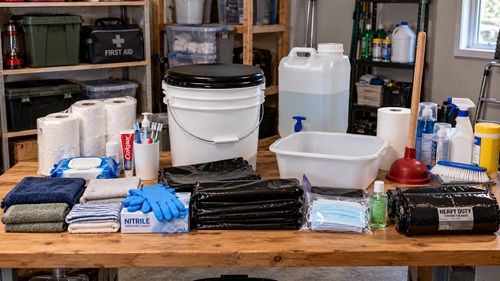
Start with ordinary personal hygiene. Soap, toilet paper, toothbrushes, toothpaste, dental floss, wipes, feminine hygiene supplies, diapers or incontinence products where required, washcloths and other regularly used items form the basic layer. These are easy supplies to rotate because the household already uses them.
The toilet portion depends on the backup system you’ve selected. A household using a bucket toilet may need the bucket, stable seat, heavy-duty liners, appropriate absorbent material, toilet paper, disposable gloves, cleaning supplies and secure temporary waste containers. If privacy could be an issue, a tarp or screen belongs with the plan too.
Cleaning supplies should be familiar rather than exotic. Store products people already know how to use safely. Include dedicated cleaning cloths, brushes and gloves so equipment used around human waste doesn’t migrate into food-preparation areas. Keep chemicals properly labelled and, whenever practical, in their original containers.
Water and washing equipment may include containers with controlled dispensers, wash basins, washcloths, towels and the equipment for whatever low-water bathing method you’ve chosen. Laundry needs can be handled with detergent, a sturdy bucket, a laundry plunger or washboard, a clothesline and clothespins.
Waste management requires more than a few kitchen garbage bags. Heavy-duty bags, smaller bags for particular jobs and sturdy containers with secure lids give the household options as waste accumulates. Pest-control supplies should fit the risks in your area and be stored so they don’t create a hazard for children, pets or food.
It is also worth keeping a little additional capacity for illness. Extra gloves, cleaning materials, waste bags and dedicated cloths can disappear quickly when someone is vomiting or has diarrhea. You don’t need a miniature hospital. You simply don’t want to use the last pair of gloves cleaning up the first mess.
Not everything needs to be stored inside one enormous sanitation tote. In fact, that may be less convenient. Toilet supplies should be accessible where the toilet will be used. Everyday hygiene products can remain in normal household rotation. Laundry equipment may belong in the utility area. What matters is that everyone knows where the supplies are and that the pieces work together.
Emergency Sanitation Kit – Quick Check
□ Soap
□ Hand sanitizer
□ Toilet paper
□ Wet wipes
□ Toothbrushes, toothpaste and dental floss
□ Feminine hygiene supplies
□ Diapers or adult incontinence supplies, if required
□ Washcloths and towels
□ Emergency toilet, bucket or commode
□ Stable toilet seat
□ Heavy-duty toilet liners
□ Appropriate absorbent material
□ Disposable gloves
□ Secure temporary waste containers
□ Heavy-duty garbage bags
□ Smaller waste bags
□ Handwashing container with a spigot
□ Wash basins
□ Household cleaning products
□ Appropriate disinfectant
□ Dedicated cleaning cloths and brushes
□ Laundry detergent
□ Laundry bucket, plunger or washboard
□ Clothesline and clothespins
□ Low-water bathing equipment
□ Pest-control supplies appropriate to the household
□ Pet sanitation supplies
□ Extra illness-cleanup supplies
□ Privacy tarp or screen, if needed
□ Household-specific hygiene and accessibility supplies
Treat that checklist as a starting point, not a shopping command. A couple living in an apartment will need something different from a rural family with three children, two dogs, a septic system and an elderly parent living with them.
There is also value in tracking how quickly ordinary sanitation supplies are actually consumed. Date a package when you open it and see how long it lasts. After a few months, you’ll know far more about your family’s toilet-paper, soap, toothpaste and laundry-detergent needs than a generic online calculator can tell you.
Portable and Off-Grid Sanitation
Home sanitation and evacuation sanitation are different problems. At home you may have buckets, large water containers, cleaning products and plenty of storage space. If you have to leave, almost none of that can travel with you.
A compact sanitation kit belongs in vehicle and evacuation preparations for that reason. It doesn’t need to reproduce the bathroom in a backpack. Compact toilet paper or tissues, soap, hand sanitizer, wipes, a toothbrush, toothpaste, a few waste bags and disposable gloves cover many basic needs without taking much room.
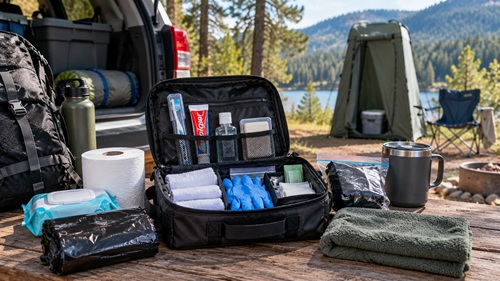
Personal requirements still matter. Menstrual products, diapers, incontinence supplies or other essential hygiene items need to travel with the person who depends on them. A generic hygiene kit sitting in the vehicle isn’t enough if it doesn’t contain what your household actually needs.
Off-grid sanitation introduces another challenge because there may be no toilet or waste system waiting at the destination. Campsites, cabins, remote properties and evacuation locations all have different rules and environmental conditions. Follow the requirements for the land you’re using, including pack-out rules where they apply.
Don’t assume that digging a hole automatically makes human waste safe. Soil, groundwater, nearby water sources, flooding, terrain and the number of people using the location all matter. A method that might be workable for one person in one environment could create contamination when dozens of people repeat it around the same campsite.
Keep toilet and waste activities away from sleeping, cooking and water areas. Protect handwashing supplies. Keep drinking water covered. The surroundings may have changed, but the clean-versus-dirty principle hasn’t.
Portable sanitation also deserves practice. If you’ve never used the toilet system packed in the vehicle, figuring it out beside a highway in the dark isn’t ideal. The same applies to privacy shelters, portable handwashing equipment and camp showers.
Knowing When the Home Is No Longer Safe
A lack of running water doesn’t automatically make a home uninhabitable. People lived without indoor plumbing for most of human history, and a prepared household can manage surprisingly well with stored water, alternative toilets and simple hygiene systems.
The more important question is whether the barriers between people, food, safe water and waste can still be maintained.
Extensive sewage contamination inside the home is a serious warning sign. So is an inability to safely contain human waste. If the drinking-water supply can no longer be protected, that changes the situation again. Several people becoming sick at the same time may overwhelm the household’s water and sanitation capacity even if the original plan looked adequate.
Pests can eventually alter the decision too. One mouse in the garage isn’t a reason to evacuate, but widespread rodent or insect contamination of food and living areas is something else entirely. Floodwater contaminated with sewage or chemicals can create hazards that ordinary household cleaning may not solve.
Extreme heat and cold also matter. A sanitation arrangement that is manageable during mild weather may become much harder when wastewater freezes, the house is dangerously hot or people cannot safely wash without becoming chilled.
Preparedness shouldn’t become stubbornness. Shelter-in-place plans need limits. Think about those limits before the emergency rather than waiting until everyone is tired and conditions have already deteriorated.
The decision will depend on the event, household members, available alternatives and instructions from authorities. There is no universal line where every family should leave.
But there is a useful principle: a home is only useful as a shelter while it remains reasonably safe to occupy.
Practice Before You Need It
Sanitation is one of those preparedness areas where practice may be worth more than buying another piece of equipment.
Set up the emergency handwashing station and use it for a day. You may discover that the container is too small, the spigot is awkward or the wastewater basin fills much faster than expected.
Assemble the emergency toilet. Sit on it. Make sure it doesn’t wobble. Have other household members try it if appropriate. Figure out where toilet paper, liners and gloves will be kept and how privacy will work.
Try washing a small load of essential clothing without the washing machine. Hang it to dry. Give the low-water bathing method a trial run. Cook a meal and wash the dishes while deliberately limiting water use. You’ll learn more from doing that once than from reading ten articles about water conservation.
Look at the food-storage area with pests in mind. Bags of rice, flour or dry goods may be perfectly adequate for normal pantry storage but easy for rodents to damage. Decide which foods need stronger outer protection.
If you have pets, include them in the exercise. If someone in the household has mobility limitations, make sure the backup toilet and washing arrangements actually work for that person.
Then look at how much water you used.
That number is worth knowing.
Preparedness Action Plan
Imagine that tomorrow morning the taps stop running, sewer service becomes questionable, the power is out and garbage collection has stopped. Walk through the first day in your mind from the moment everyone wakes up.
Start with drinking water. Determine where it comes from, how it will be dispensed and how it will remain protected. Establish the handwashing station and decide where its wastewater will go. Determine whether the normal toilet can still be used and, if not, set up the alternative before anyone needs it.
Now move the scenario forward three days. Think about dishes, bathing and the first essential laundry. Look at how much garbage has accumulated. Estimate how much water has been consumed. Decide where toilet waste is being temporarily contained and whether the arrangement could continue for another week.
Push the exercise to seven days. Water needs to last or be replenished. Waste storage needs capacity. Laundry needs a routine. Food needs protection from pests. Include the needs of children, older adults, people with disabilities and pets rather than planning only for healthy adults.
Then imagine someone develops vomiting and diarrhea. Consider where that person would rest, how contaminated bedding would be handled, how much additional water might be required and how the rest of the household would protect the kitchen and drinking-water supply.
Finally, identify the conditions that would make you reconsider staying in the home. Serious sewage contamination, loss of safe water, uncontrolled illness or an inability to contain human waste are very different problems from simply being uncomfortable without a shower.
The exercise will probably expose weaknesses. That’s exactly what you want it to do while the taps still work, the toilet still flushes and the garbage truck is still coming.
Key Takeaways
Emergency sanitation is not primarily about maintaining normal comfort. It is about preventing an already difficult situation from turning into a health problem. The most useful principle to remember is straightforward: keep clean things clean and dirty things contained.
Safe water sits at the center of that system. Store enough, but don’t stop at quantity. Protect water quality, keep human waste and garbage away from it, and maintain handwashing even when every liter matters. A large water supply that becomes contaminated isn’t much of a preparedness advantage.
Think beyond the first 72 hours as well. An emergency toilet that works for one evening isn’t enough if there is nowhere safe for the waste to go after a week. Garbage bags aren’t a complete solution if there is nowhere secure to keep them once they’re full. A case of bottled water doesn’t account for handwashing, dishes, cleaning and basic hygiene.
Build the sanitation system around the people and animals actually living in the household. Store the supplies that support that system, know where they are and practice using the equipment before an emergency.
There is no need to reproduce every convenience of modern plumbing when normal systems fail. What matters is maintaining the basic barriers that modern sanitation normally provides for us.
Food, water, shelter and power may help a household survive an emergency, but good sanitation helps ensure that home remains a safe place to live through it.
© Prepping Communities. This content is for informational purposes only and not professional advice. Use at your own risk.
Terms | Privacy | Guidelines