
Why Sanitation Matters
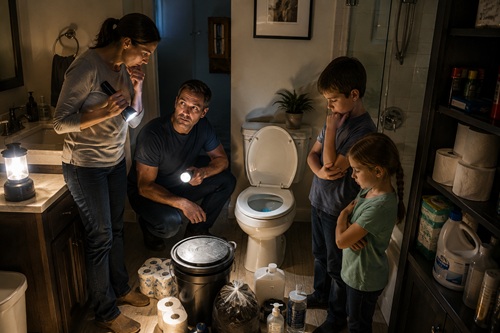
When people think about emergency preparedness, they often focus on food, water, medical supplies, and security. While these are all essential, sanitation is just as important. Throughout history, poor sanitation has caused more illness and death during disasters than many people realize. When clean water becomes scarce, garbage begins to accumulate, and normal waste disposal systems stop functioning, bacteria, viruses, parasites, and insects can spread rapidly. A well-planned sanitation strategy helps protect your family’s health, preserves morale, and reduces the risk of disease during both short-term emergencies and long-term disruptions.
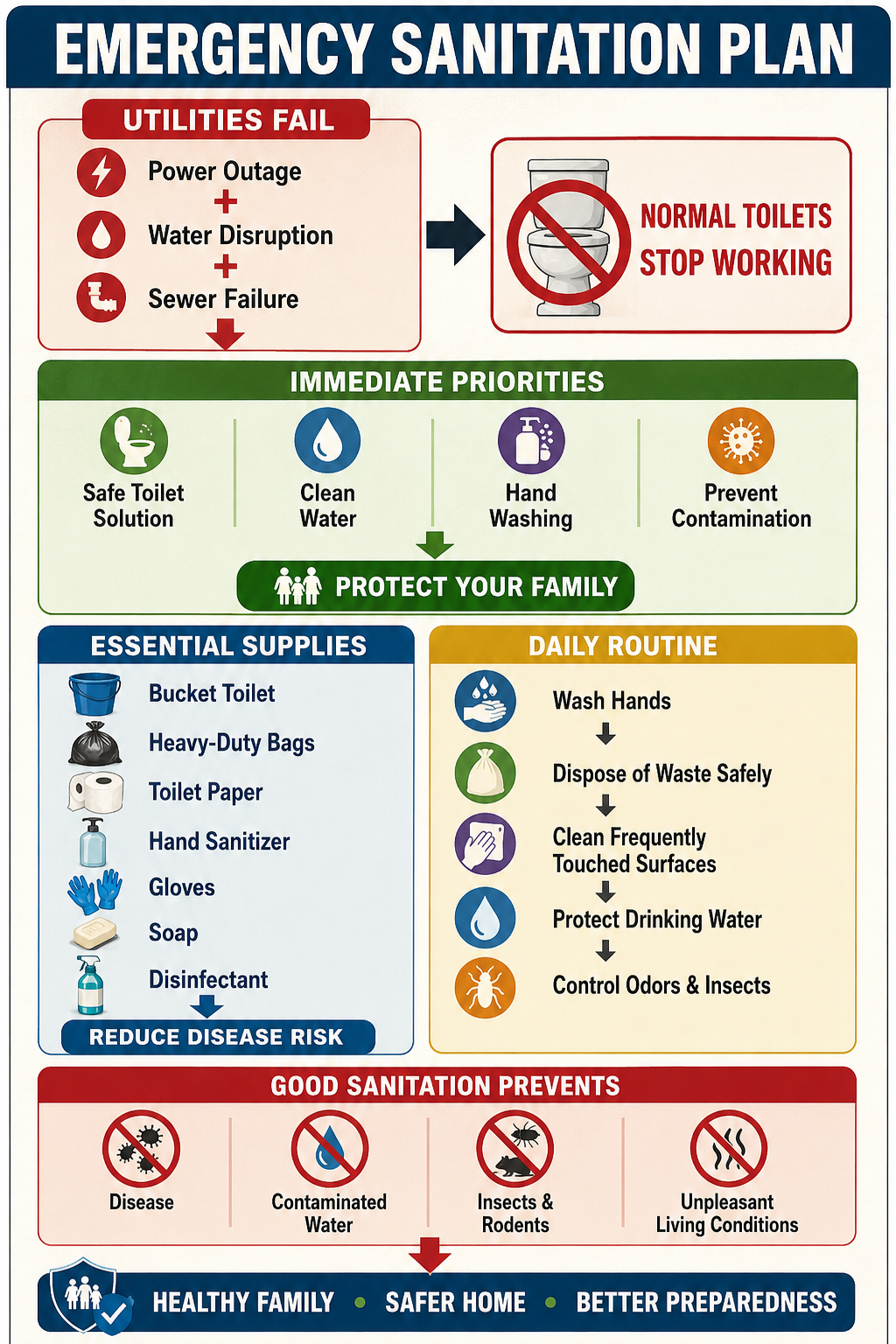
Good sanitation begins with simple daily habits that become even more important during an emergency. Washing hands whenever possible, keeping food preparation areas clean, properly disposing of waste, and preventing contamination between drinking water and wastewater all help reduce the spread of harmful microorganisms. Even if modern utilities are unavailable, maintaining these basic practices can significantly lower the risk of illness.
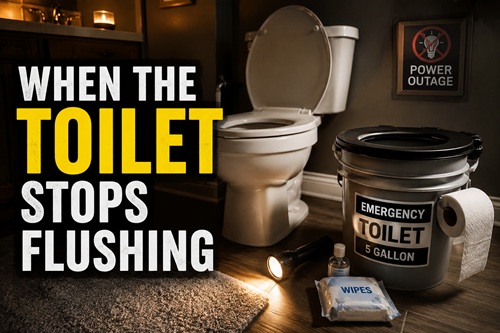
One of the first challenges during a prolonged emergency is managing human waste safely. If municipal sewer systems become unavailable or septic systems fail, families should already have a backup plan. Portable camping toilets, bucket toilet systems, composting toilets, heavy-duty waste bags, absorbent materials, and disinfectants can all provide practical alternatives. Whatever method is used, waste should always be handled carefully and stored or disposed of in a way that minimizes odors, prevents insect activity, and protects nearby water sources from contamination.
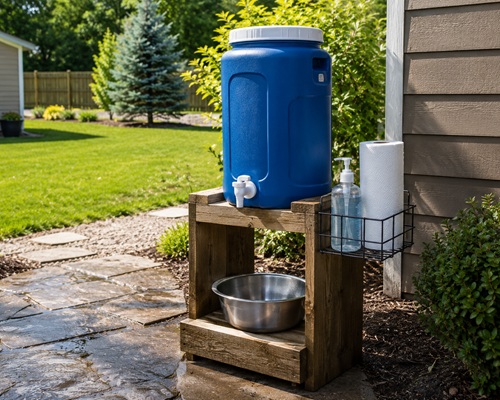
Personal hygiene remains equally important. Limited water supplies may require modified bathing routines, but cleanliness should never be ignored. Soap, hand sanitizer, disposable gloves, paper towels, washcloths, biodegradable soap, toothbrushes, toothpaste, feminine hygiene products, diapers, and disinfecting wipes all become valuable supplies when normal services are interrupted. Establishing routines for cleaning hands before eating, after using the toilet, and while preparing food helps reduce the spread of disease throughout the household.
Waste management extends beyond human sanitation. Household garbage, food scraps, pet waste, and gray water should all be managed carefully. Trash should be collected in durable containers or heavy-duty bags and kept away from living areas whenever possible. Standing water should be avoided because it attracts mosquitoes and other insects, while food waste should be stored securely to discourage rodents and wildlife. Small sanitation problems often become much larger if ignored for several days.
Cleaning and disinfecting living spaces also contributes to a healthier environment. Frequently touched surfaces, food preparation areas, toilets, and waste containers should be cleaned regularly using appropriate disinfectants. Even simple cleaning routines help control odors, improve comfort, and reduce opportunities for harmful bacteria to multiply.
A successful sanitation plan is more than simply buying supplies. Every member of the household should understand how the plan works before an emergency occurs. Decide where waste will be collected, how it will be stored, who will maintain sanitation supplies, and how cleaning tasks will be shared. Practicing these procedures during camping trips, power outages, or preparedness exercises helps identify weaknesses while conditions are still safe and manageable.
Preparedness Perspective
Many emergency plans overlook sanitation because it is rarely exciting to discuss. Yet clean water, proper waste disposal, personal hygiene, and routine cleaning form the foundation of public health.
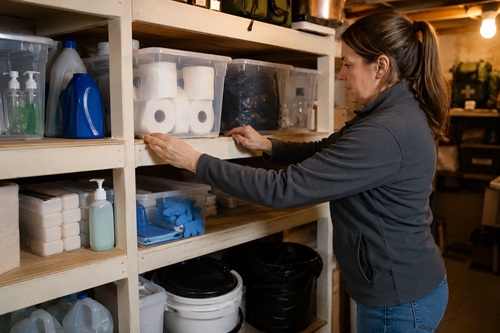
A family that manages sanitation well is far less likely to experience preventable illness during an emergency. By preparing the necessary supplies, developing practical routines, and practicing your plan before it is needed, you greatly improve your ability to remain healthy, comfortable, and self-reliant regardless of the situation.
Key Takeaways
Emergency sanitation is one of the most important but often overlooked aspects of preparedness. Maintaining good hygiene, safely managing human waste, protecting food and water from contamination, and keeping living areas clean all work together to reduce the spread of disease. A well-stocked sanitation kit is only part of the solution; every household should also develop practical procedures, assign responsibilities, and practice their plan regularly. Preparing now allows your family to respond with confidence while protecting both health and quality of life during emergencies.
Emergency Sanitation Plan Worksheet
Household Information
Household Name: _______________________________________________
Address: _______________________________________________________
Date Completed: ________________________________________________
Last Reviewed: _________________________________________________
Next Review Date: ______________________________________________
Water for Hygiene
How will your family maintain personal hygiene if running water becomes unavailable?
Primary water source:
Backup water source:
Water reserved for hygiene (Liters/Gallons):
Water purification method:
Emergency Toilet Plan
What method will your family use if toilets no longer function?
□ Bucket Toilet
□ Portable Camping Toilet
□ Composting Toilet
□ RV Toilet
□ Other:
Where will waste be temporarily stored?
How will waste eventually be disposed of?
Sanitation Supplies Inventory
| Item | Quantity | Stored Location |
|---|---|---|
| Toilet Paper | ||
| Heavy-Duty Garbage Bags | ||
| Bucket Toilet Bags | ||
| Hand Sanitizer | ||
| Soap | ||
| Disinfectant | ||
| Bleach | ||
| Rubber Gloves | ||
| Paper Towels | ||
| Baby Wipes | ||
| Feminine Hygiene Supplies | ||
| Diapers (if needed) | ||
| Absorbent Material (Cat Litter/Sawdust) | ||
| Toilet Bucket | ||
| Portable Toilet | ||
| Cleaning Cloths | ||
| Other Supplies |
Handwashing Plan
How will family members wash or sanitize their hands?
Where will handwashing stations be located?
Gray Water Management
How will dishwashing and bath water be handled?
Garbage Disposal Plan
Where will garbage be stored?
How often will garbage be removed?
How will odors, insects, and rodents be controlled?
Cleaning Schedule
| Area | Frequency |
| Toilet Area | __________ |
| Kitchen | __________ |
| Food Preparation Surfaces | __________ |
| Sleeping Areas | __________ |
| Trash Containers | __________ |
| Handwashing Station | __________ |
Family Responsibilities
| Family Member | Responsibility |
Emergency Hygiene Checklist
☐ Wash hands before eating.
☐ Wash hands after using the toilet.
☐ Keep drinking water separate from wastewater.
☐ Disinfect food preparation surfaces.
☐ Empty waste containers regularly.
☐ Store garbage away from living areas.
☐ Prevent standing water.
☐ Keep flies, rodents, and insects away from waste.
☐ Monitor supplies and replace as needed.
Potential Problems
What sanitation challenges could your family face?
How will you solve them?
Practice Review
Date Practiced: ______________________
What worked well?
What needs improvement?
Supplies that need to be added or replaced:
Preparedness Reminder
Good sanitation protects far more than comfort—it protects your family’s health. Review this plan regularly, replace expired supplies, practice your procedures, and make sure every household member understands their responsibilities. A simple sanitation plan developed today can prevent serious illness when normal utilities are no longer available.
© Prepping Communities. This content is for informational purposes only and not professional advice. Use at your own risk.
Terms | Privacy | Guidelines