
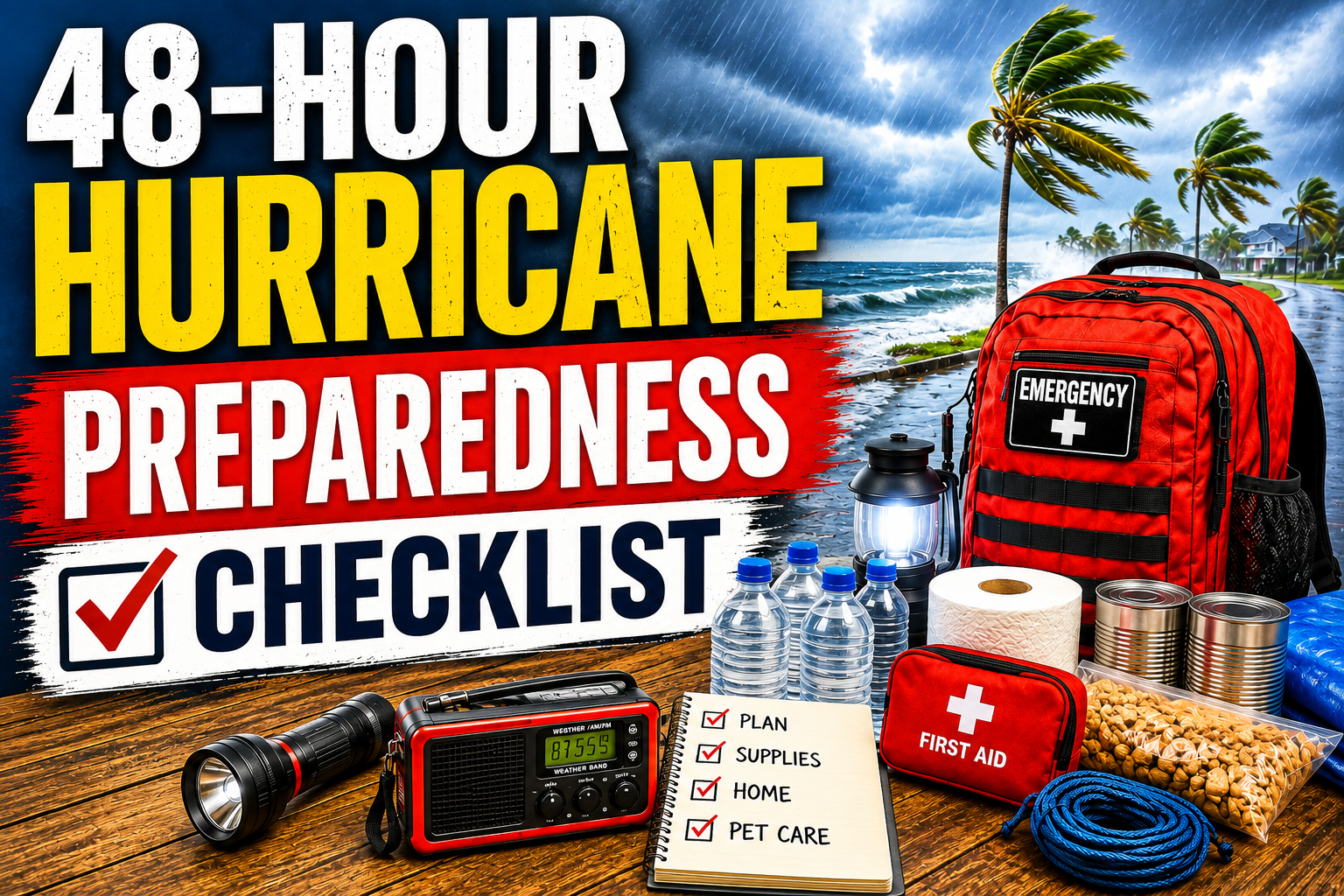
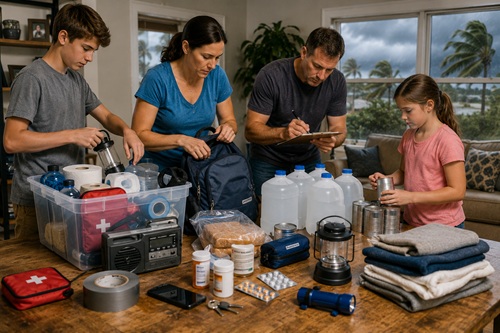
When a hurricane is forecast to affect your area, the final 48 hours become extremely valuable. Most major preparations should already be complete, but this is the time to verify your emergency plans, fill any remaining gaps, and complete the tasks that become difficult once high winds, flooding, and power outages begin.
Rather than rushing from one task to another, work through your preparations methodically. A checklist helps ensure that small but important details are not forgotten while stress levels are rising.
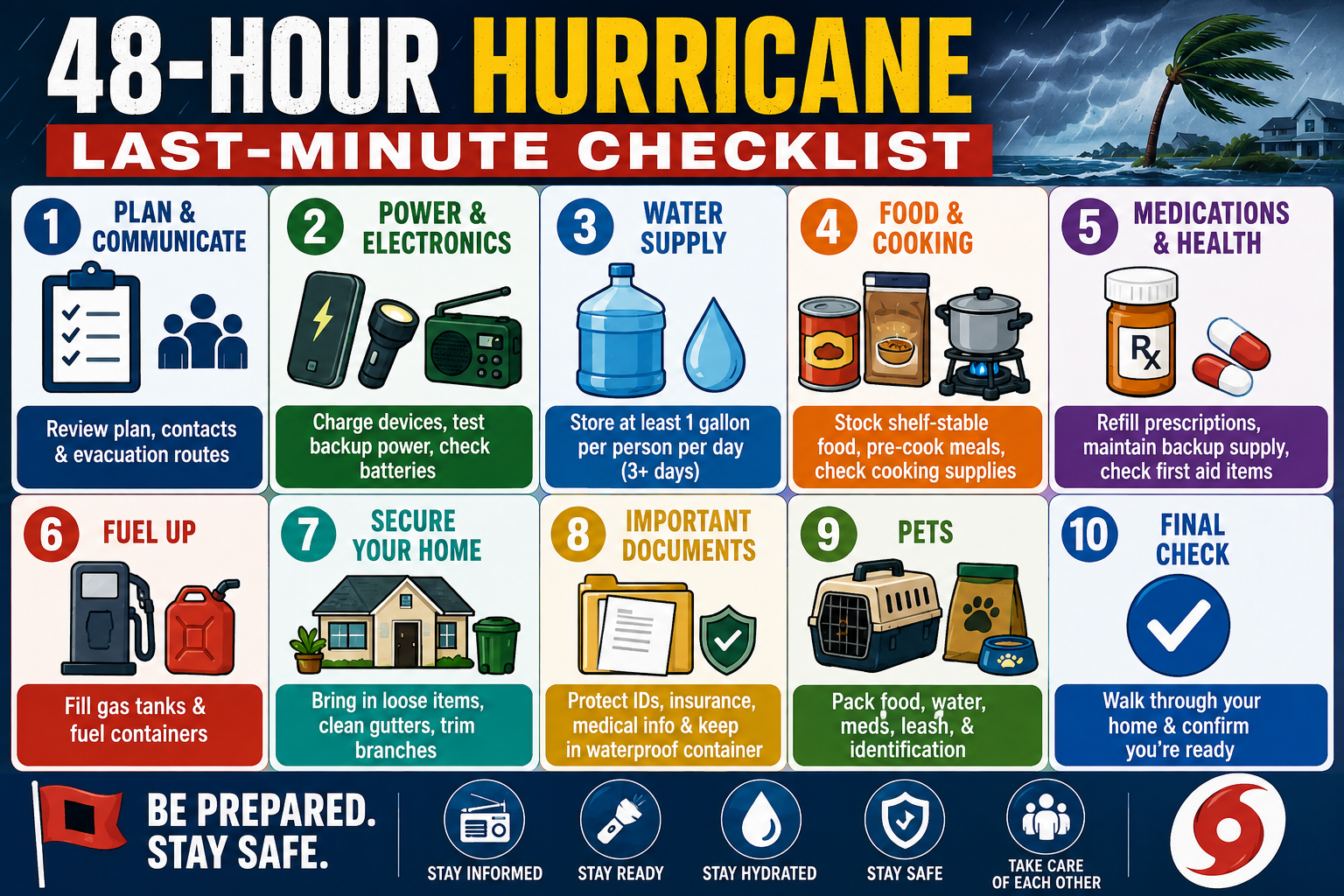
1. Review Your Emergency Plan
Gather everyone in your household and review what each person will do if conditions worsen. Confirm evacuation routes, meeting locations, emergency contacts, and communication plans if cellular service becomes unreliable. Everyone should know where emergency supplies are stored and who is responsible for pets, medications, important documents, and shutting off utilities if necessary.
Checklist
☐ Review evacuation routes.
☐ Confirm family meeting locations.
☐ Charge emergency radios.
☐ Verify emergency contact information.
☐ Review responsibilities with every family member.
2. Prepare for Power Outages
Electricity is commonly interrupted during hurricanes. Even short outages can affect refrigeration, communications, lighting, and medical equipment.
Charge every rechargeable device while utility power is still available. Test flashlights, replace batteries where needed, and verify that generators, solar generators, or battery backup systems are operating correctly. If you own a fuel-powered generator, make sure it is fueled safely and tested before the storm arrives—not afterward.
Checklist
☐ Charge all phones.
☐ Charge laptops and tablets.
☐ Charge power banks.
☐ Test flashlights and lanterns.
☐ Install fresh batteries where needed.
☐ Test generator or backup power system.
☐ Gather extension cords if required.
3. Refill Essential Medications
Prescription medications are often overlooked until pharmacies close or transportation becomes difficult. If possible, maintain a backup supply of medications that will allow your household to continue treatment even if refills become temporarily unavailable.
Review every prescription for every member of the household, including pets. Refill medications before supplies become critically low, and store them in their original labeled containers. Keep a written medication list with dosage information and prescribing physicians inside your emergency documents.
Checklist
☐ Check prescription refill dates.
☐ Refill medications that are running low.
☐ Maintain a one- to two-week emergency supply whenever possible.
☐ Check expiration dates.
☐ Pack medications if evacuation is possible.
☐ Review pet medications.
4. Secure Drinking Water
Water service may become contaminated, interrupted, or unavailable during and after a hurricane. Store enough drinking water for every member of your household and have a secondary method of treating additional water if necessary.
Fill food-grade water containers before the storm arrives. Test your water filters, inspect replacement cartridges, and verify that purification supplies are ready for use.
Checklist
☐ Fill drinking water containers.
☐ Fill additional utility water containers.
☐ Inspect water filters.
☐ Store purification supplies.
☐ Calculate water requirements for your household.
5. Prepare Food
Prepare meals while electricity is still available. Cook refrigerated foods first, freeze containers of water to extend freezer life, and organize foods that require little or no cooking if the power goes out.
Checklist
☐ Cook meals ahead of time.
☐ Freeze bottles or containers of water.
☐ Organize shelf-stable foods.
☐ Verify manual can opener is available.
☐ Check propane or cooking fuel.
6. Fuel Vehicles and Equipment
Fuel shortages frequently occur before hurricanes make landfall. Waiting until the last minute can leave you without transportation if evacuation becomes necessary.
Checklist
☐ Fill vehicle fuel tanks.
☐ Refill approved fuel containers.
☐ Check engine oil if using a generator.
☐ Verify generator fuel is stored safely.
7. Secure Your Home
Outdoor objects can quickly become dangerous projectiles during high winds. Walk around your property and secure anything that could be blown away.
Inspect gutters and drains so heavy rainfall can flow away from your home as efficiently as possible.
Checklist
☐ Bring outdoor furniture inside.
☐ Secure propane tanks.
☐ Store garbage bins.
☐ Remove loose decorations.
☐ Clean gutters.
☐ Trim damaged branches if it can be done safely.
☐ Install storm shutters if available.
8. Protect Important Documents
Important paperwork can be difficult or impossible to replace after a disaster.
Store identification, insurance policies, financial records, medical information, and emergency contacts inside waterproof containers or resealable bags.
Checklist
☐ Protect identification documents.
☐ Store insurance information.
☐ Protect medical records.
☐ Backup important digital files.
9. Prepare Your Pets
Pets rely entirely on their owners during emergencies.
Have enough food, water, medications, carriers, leashes, and vaccination records available before conditions deteriorate.
Checklist
☐ Pack pet food.
☐ Store extra drinking water.
☐ Pack medications.
☐ Locate carriers and leashes.
☐ Verify identification tags.
10. Perform a Final Walk-Through
Before the first heavy rain bands arrive, slowly inspect your home one final time.
Confirm that supplies are organized, vehicles are ready, electronics are charged, water has been stored, medications are packed, and every family member understands the emergency plan.
Final Readiness Checklist
☐ Emergency plans reviewed.
☐ Water stored.
☐ Food prepared.
☐ Medications refilled and packed.
☐ Power backups tested.
☐ Electronics fully charged.
☐ Fuel tanks topped off.
☐ Home secured.
☐ Pets prepared.
☐ Important documents protected.
☐ Family informed.
Preparedness Action Plan
Keep this checklist with your emergency supplies and review it every hurricane season. Completing these tasks before severe weather arrives reduces last-minute stress, helps prevent forgotten items, and gives your household the best chance of remaining safe and self-sufficient during and after the storm.
Key Takeaways
- Complete your hurricane preparations before severe weather arrives rather than waiting until the last minute.
- Review your family emergency plan so everyone knows what to do if conditions change quickly.
- Charge electronic devices and test backup power equipment before the power goes out.
- Store enough food and safe drinking water to remain self-sufficient for several days.
- Refill prescription medications early and maintain a backup supply whenever possible so short-term disruptions do not interrupt essential treatment.
- Fuel vehicles and emergency equipment before shortages develop.
- Secure outdoor items and inspect your home for hazards that could become dangerous in high winds.
- Protect important documents by storing them in waterproof containers.
- Prepare enough food, water, medications, and supplies for pets.
- Perform one final walkthrough of your home to confirm nothing has been overlooked before the storm arrives.
© Prepping Communities. This content is for informational purposes only and not professional advice. Use at your own risk.
Terms | Privacy | Guidelines