
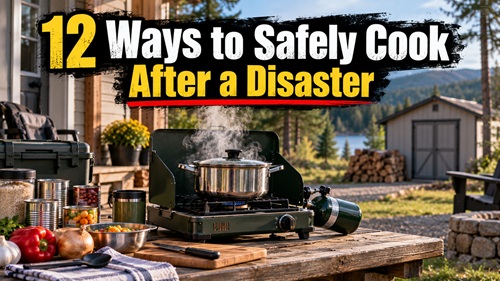
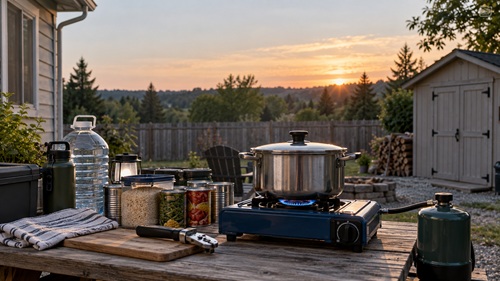
Most preppers have given some thought to how they’re going to cook when the electricity goes out. Maybe you’ve got a propane barbecue, a camp stove, a generator, or a wood stove. Some people have several options, which makes sense because you never really know what you’ll be dealing with after a disaster. But there’s another part of emergency cooking that doesn’t get talked about nearly enough. What happens when you’ve got food, other people are running out, and cooking dinner lets everyone around you know you’ve still got supplies?
Imagine a major earthquake, a widespread power failure, or a disaster that interrupts transportation and food deliveries for several weeks. Grocery stores are closed or struggling to restock. Fuel is becoming difficult to find. Some households have already used up whatever food they had on hand, and nobody knows when things will return to normal. Meanwhile, you’re outside cooking dinner on your barbecue. The smell of meat travels across the neighborhood. Someone walking past notices the smoke, perhaps sees a couple of propane cylinders beside your shed, and remembers that you were cooking yesterday too. Maybe they don’t think anything of it. But if food becomes increasingly difficult to obtain, someone might start wondering how you’re managing to eat so well.
I’m not suggesting that everyone who runs out of food is going to become dangerous. Most people will help one another during an emergency, and having dependable neighbors is one of the best things you can have. But theft, intimidation, and opportunistic crime are possibilities worth considering if a disaster seriously disrupts essential services. If you’re living alone, you’re an older couple, or your home is some distance from the nearest community, you may have additional reasons to think about protecting your supplies.
That’s what this posting is about. Not just finding twelve ways to heat food, but understanding how those methods affect fuel consumption, food safety, privacy, and personal security. You don’t need to hide every meal you prepare, but it makes sense to think about what your cooking arrangements reveal, particularly if a short-term emergency turns into something much longer.
1. Prepare Meals That Don’t Need Cooking
One of the simplest ways to avoid cooking smells is not to cook every meal. That might sound obvious, but have a look at what’s actually in your emergency pantry. If most of your supplies are dried beans, rice, pasta, and dehydrated foods, you’re going to need heat and water to prepare much of it. Those foods are worth storing because they’re affordable, provide useful calories, and can last a long time when packaged properly. The problem is that they also create a dependency on cooking equipment and fuel, and that can become a serious limitation if the disaster lasts longer than expected.
Ready-to-eat foods give you another option. Commercially canned fish, beans, vegetables, fruit, nut butters, crackers, and shelf-stable prepared meals can provide food without lighting a stove. Many canned products are already cooked and safe to eat cold when the container is intact and the food has been stored properly. Always check the instructions, since not every packaged food is ready to eat. Having several days of meals that don’t require cooking could be particularly useful if you’re sheltering indoors, dealing with dangerous weather, or concerned about spending time outside.
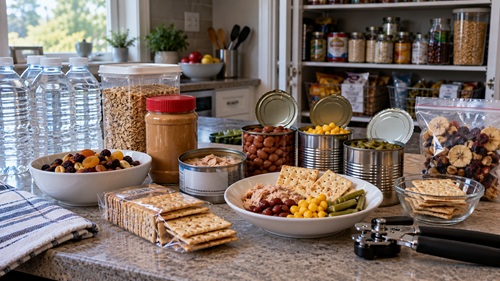
There’s also the fuel-saving aspect. If you’ve only got a couple of propane cylinders, using them every time somebody wants a hot meal will shorten the time those supplies last. I’d suggest looking through your pantry and counting how many complete meals you could prepare without electricity, natural gas, propane, or firewood. Don’t just count the number of cans. Think about calories, protein, dietary requirements, and how much drinking water you’ll need. You might discover that you’ve got months of stored food but only a few days’ worth that can be eaten without cooking.
2. Use Electric Cooking When Backup Power Is Available
If you’ve got a battery power station or a properly designed solar battery system, electric cooking may be one of your better options when you want to avoid visible flames and smoke. A small induction cooktop, electric kettle, or rice cooker can prepare food inside the house without burning fuel at the appliance. There’s no charcoal smoke rising from the backyard, and you don’t need to carry firewood around or set up an outdoor stove. You will still have cooking smells, of course. Frying bacon or cooking onions can produce noticeable odors regardless of whether the heat comes from electricity or propane, but heating water, preparing rice, or warming a mild meal in a covered pot will often be less noticeable than grilling outdoors.
The biggest drawback is electricity consumption. A 1,000-watt cooking appliance operating for thirty minutes uses about 500 watt-hours before accounting for losses. If your portable power station has a usable capacity of around 1,000 watt-hours, that’s a substantial portion of your stored energy. You’ll also need to consider how the battery gets recharged. Solar panels can help when conditions are suitable, but a gasoline or propane generator introduces noise, exhaust, and another fuel dependency. Generators must always be operated outdoors, well away from doors, windows, and ventilation openings. Never move one into a garage or enclosed area because you’re worried about somebody hearing it.
For someone with adequate battery storage, electric cooking can be a useful way to prepare simple meals indoors without operating an outdoor fire. Just make sure your equipment can actually handle the appliance’s power requirements before relying on it. I’d also test how many meals you can prepare from one battery charge rather than depending entirely on the manufacturer’s estimated runtime.
3. Use a Pressure Cooker to Reduce Cooking Time
If you’ve stored large quantities of dried beans, you’ve probably already discovered how much time and energy some of them take to prepare. That isn’t much of a problem when you’ve got a working kitchen and dependable electricity or natural gas. It becomes more important when every minute of burner time consumes fuel you may not be able to replace. A pressure cooker can substantially shorten cooking times for many foods, including dried beans and certain grains. A stovetop model designed for your available heat source may be particularly useful during a prolonged power outage.
Reducing cooking time has another benefit. If you’re using an outdoor stove, you’re spending less time operating equipment that may be visible from neighboring properties or public areas. Pressure cooking won’t eliminate food odors because steam and aromas can escape during pressure regulation and when you open the cooker, but it may allow you to prepare certain meals using considerably less fuel than conventional boiling. That’s worth considering if you’re depending on a limited supply of propane or other stored fuel.
Pressure cookers must be maintained properly, filled within their stated limits, and allowed to depressurize according to the manufacturer’s instructions. Never obstruct a pressure-release valve or force a pressurized lid open. If you’re storing kidney beans, make sure they’re prepared using a method that adequately destroys their naturally occurring toxins. Follow tested preparation instructions rather than assuming any low-temperature cooking method will make them safe. This is equipment I’d learn to use now, not during the first week of a major emergency.
4. Try Thermal Cooking to Make Your Fuel Last Longer
Thermal cooking is another method worth looking into, especially if you’re concerned about conserving propane, firewood, or electricity. The idea is to heat food and then place the cooking pot inside a heavily insulated container that retains much of that heat. Depending on the equipment and recipe, the food continues cooking for a period without a continuously operating burner. Commercial thermal cookers and insulated cooking bags are designed for this purpose, and they can be useful for certain soups, stews, and other meals that respond well to retained-heat cooking.
Consider a situation where you’re relying on a small outdoor stove. Instead of maintaining the flame throughout a lengthy cooking process, a suitable thermal-cooking recipe may allow you to reduce the time the stove is operating. That saves fuel and may reduce how long your cooking activity is visible. For someone living alone, less time spent tending an outdoor burner can also be helpful, although the stove must still be supervised whenever it’s operating.
There is one important caution. Thermal cooking isn’t automatically safe for every food or recipe. If the food doesn’t reach the necessary cooking temperature, or cools into an unsafe range for too long, bacteria can multiply. Use recipes tested for your particular cooker, follow the instructions, and check temperatures with a food thermometer. A thermal cooker isn’t a substitute for refrigeration, and food shouldn’t be left in one for days simply because the container remains warm. Used properly, though, thermal cooking can help stretch a limited fuel supply.
5. Cook With a Propane Barbecue, but Think About Visibility
A propane barbecue will probably be the first alternative cooking method many households use during a power outage. Most people already own one, know how to operate it, and have at least some propane available. It’s a practical option because, with suitable cookware, you can prepare meat, vegetables, soups, and other meals without using your kitchen stove. The trouble is that barbecues can be very noticeable, particularly when you’re grilling meat or cooking foods that produce smoke and strong aromas.
The smell of grilling meat travels, especially when the wind carries it toward neighboring properties. During an ordinary power outage, nobody is likely to think much about it. If a serious food shortage has continued for several weeks, you may feel differently about regularly preparing meals in full view of the street. You don’t necessarily have to stop using your barbecue, but you can reduce unnecessary smoke by keeping it clean, avoiding grease flare-ups, and using covered cookware when appropriate. Heating food in a pot generally produces less grilling aroma than cooking fatty meat directly over the flame.
You should also know how much propane you have. Keep a spare cylinder if you can store it safely, and don’t assume you’ll be able to obtain a refill after a widespread disaster. Propane cylinders belong upright in suitable outdoor storage locations, away from ignition sources and building openings, in accordance with applicable requirements. Never use a barbecue indoors, in a garage, or in an enclosed porch. Carbon monoxide poisoning and fire are far more immediate dangers than somebody noticing the smell of dinner.
6. Keep a Portable Camping Stove Available
A portable propane or butane camping stove can be useful when you need something smaller than a barbecue. A single-burner stove may be enough to heat soup, boil water, or prepare a basic meal for one or two people, while a two-burner model provides more flexibility if you’re feeding a family. These stoves are generally easy to transport and store, and many offer reasonably good heat control. That can help reduce fuel waste compared with operating a larger cooking system for a small meal.
Most camping stoves are intended for outdoor use, and you shouldn’t assume that a clean-looking flame makes one safe on a kitchen counter. Carbon monoxide can be produced even when there is little visible smoke. Butane can also perform poorly in cold conditions, depending on the fuel blend and stove design. Propane is generally more suitable for lower temperatures, although every appliance has its own operating limits.
If you plan to depend on a camping stove, calculate how many meals you can prepare with the fuel cartridges or cylinders you’ve stored. Practice cooking ordinary meals with it rather than just boiling a cup of water once and putting it back in the box. A small stove may be easier to use in a private, fire-safe outdoor location, but it still produces cooking smells, and you shouldn’t move it into an unsafe location just to keep it out of view.
7. Consider a Rocket Stove or Small Biomass Stove
Rocket stoves and other compact biomass-burning stoves are useful because many can operate using small pieces of dry wood rather than commercially manufactured fuel. Depending on the design, you may be able to cook using twigs, small branches, and appropriately sized wood scraps. That’s attractive when propane and other fuels are difficult to replace, especially for people living rurally who have access to suitable wood.
A well-designed rocket stove concentrates combustion in a relatively small chamber. Once operating properly, some models burn efficiently and produce less smoke than a poorly managed open fire. That can be helpful when you don’t want a large visible fire, but don’t mistake a rocket stove for a smokeless appliance. It still burns fuel, produces carbon monoxide, and can create dangerous temperatures around the stove body and cookware. Wood quality matters too. Damp wood tends to smoke more, while painted or chemically treated lumber can release harmful substances. Never burn plastic or questionable household waste to prepare food.
A rocket stove can be a useful backup, but fire restrictions may prohibit its use during certain conditions, and gathering fuel may not be practical during an evacuation or severe weather. I’d want to know how much wood it takes to boil a liter of water and prepare a normal meal before depending on one. It’s also worth practicing in different weather conditions so you understand its limitations.
8. Use a Dutch Oven With an Appropriate Heat Source
A cast-iron Dutch oven is worth considering if you’re preparing to remain at home or on a rural property during a prolonged emergency. It can be used for stews, soups, bread, vegetables, and many other meals. Camp-style Dutch ovens are designed to work with hot coals beneath and on top of the pot, allowing you to bake or slow-cook without a conventional oven. The advantage is durability and versatility. A good Dutch oven doesn’t depend on electronics or complicated components, and it can work with several suitable heat sources.
The disadvantage is that cast iron is heavy and takes energy to heat. If you’re cooking for one person, heating a large Dutch oven may use more fuel than necessary. It also isn’t something most people would want to carry during an evacuation. The pot itself doesn’t make outdoor cooking discreet either. If you’re using charcoal or wood, there will still be combustion emissions and potentially noticeable cooking smells, although a covered Dutch oven can help contain splattering and reduce some cooking vapors compared with an open grill.
If you have one, practice cooking complete meals with it. Learn how to control the heat and how much fuel you need. A Dutch oven is only as useful as your ability to operate it under the conditions you’re preparing for.
9. Use a Small Alcohol or Solid-Fuel Stove for Limited Cooking
Alcohol stoves and solid-fuel tablet stoves are commonly used for backpacking because they’re compact and lightweight. They may be useful as emergency backups when you need to heat a small amount of water or prepare a simple meal without carrying a larger stove. However, they aren’t necessarily the best choice for cooking full family meals, particularly during an extended emergency when you’re preparing food several times a day.
Alcohol flames can be difficult to see in daylight, and spilled fuel can spread a fire quickly. Never refill an alcohol stove while it’s burning or still hot, and use only the fuel specified by the manufacturer. Solid-fuel tablets have their own limitations, including ventilation requirements, odors, and the amount of heat they can produce. Some of these stoves generate relatively little visible smoke, but that doesn’t make them safe indoors. Combustion gases remain a concern, and they must be used only in locations approved by the manufacturer.
For a lone-wolf prepper carrying a compact emergency kit, one might be a reasonable additional option. I wouldn’t rely on it as my only way to prepare food for several weeks, but it could provide a useful backup if another cooking system fails.
10. Use Solar Cooking When Conditions Are Suitable
Solar cooking has one obvious advantage: sunlight doesn’t consume your stored fuel. A properly designed solar cooker can prepare certain foods using energy collected from the sun. Some designs use insulated boxes, while others use reflective panels or parabolic surfaces to concentrate sunlight. This may be useful during a prolonged fuel shortage, particularly if you’re remaining in one location and have dependable access to direct sunlight.
There are disadvantages. Solar cooking can be slow, and its performance changes with the weather, season, and sun angle. In many parts of Canada, winter conditions can make it unreliable for extended periods. There’s also a privacy consideration. Solar cookers often need to be placed in open areas, and reflective equipment can be noticeable from neighboring properties or roads.
If you have a secure location with good sunlight, solar cooking may reduce your dependence on propane or firewood, but I wouldn’t want it to be my only option. You also need to monitor cooking temperatures. Food left warming slowly in a solar cooker may remain in an unsafe temperature range if there isn’t enough sunlight. Practice with one during normal conditions before adding it to your emergency cooking plan.
11. Use a Properly Installed Wood-Burning Cookstove
For someone living rurally, a properly installed wood-burning cookstove may be one of the more practical long-term options. Unlike a temporary outdoor fire, a purpose-built cookstove can provide a stable cooking surface and, depending on the model, an oven. Some households already use these appliances for everyday cooking and heating. If you’ve got a dependable supply of suitable firewood, this can reduce your reliance on electricity and propane.
There are several things to consider. The appliance must be installed correctly, with suitable chimney venting, clearances, and maintenance. A regular wood heater isn’t necessarily designed for cooking, and you shouldn’t improvise cooking arrangements that interfere with safe operation. You’ll also need a substantial amount of dry firewood if you plan to use the stove regularly. Cutting, splitting, stacking, and carrying wood all take time and effort, particularly during winter.
A wood stove produces chimney smoke, especially during startup or poor combustion conditions. That can make its use noticeable beyond your property. If you’re concerned about keeping a low profile, a wood-burning cookstove isn’t necessarily the most discreet option. It may still be extremely useful, particularly in winter when you’re already operating an approved stove for heating. Make sure you have working smoke and carbon monoxide alarms and have the chimney inspected and cleaned as required.
12. Use a Charcoal Grill or Outdoor Fire Only When Conditions Allow
Charcoal grills and open fires are familiar cooking methods, but they deserve a place farther down the list when privacy and fuel conservation are priorities. A charcoal grill can prepare a wide range of foods, and charcoal stores well when kept dry. Certain grills are also designed to use suitable hardwood. An open fire gives you another option if you have appropriate cookware, a safe fire area, and access to fuel.
The problem is that both methods can produce substantial smoke, particularly during startup. They also require supervision, create hot ash, and may consume more fuel than a compact stove. A large fire can be visible from some distance, especially after dark. During a prolonged emergency, it may draw attention simply because people notice light or smoke coming from an otherwise quiet property.
More importantly, outdoor fires can be extremely dangerous during dry conditions. In wildfire-prone regions, fire restrictions may prohibit them altogether. Never use charcoal inside a home, tent, garage, or enclosed shelter. Charcoal produces carbon monoxide even after visible flames have disappeared. I would treat these methods as useful alternatives rather than assuming they’re the best solution for every emergency.
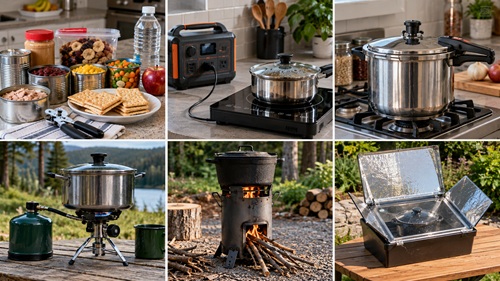
Emergency Cooking Methods – Quick Comparison Guide
Not every cooking method is suitable for every disaster. Some are better for conserving fuel, while others produce less smoke, require less equipment, or are easier to use when you’re trying to avoid unnecessary attention. This comparison can help you decide which methods are worth including in your emergency cooking plan.
|
Cooking method |
Fuel or power | Smoke / cooking odors |
Best use |
|---|---|---|---|
| 1. Ready-to-eat meals | None | None from cooking | Sheltering indoors, conserving fuel |
| 2. Electric cooking | Battery, solar or generator power | No combustion smoke; food odors vary | Indoor cooking with backup electricity |
| 3. Pressure cooker | Compatible stove or electricity | Low smoke from electric heat; some steam and odors | Reducing cooking time and fuel use |
| 4. Thermal cooker | Initial heating source | Little additional odor after heating | Conserving fuel during suitable meals |
| 5. Propane barbecue | Propane | Moderate to high, depending on food | Outdoor cooking and larger meals |
| 6. Portable camp stove | Propane or butane | Little visible combustion smoke; food odors vary | Small outdoor meals and boiling water |
| 7. Rocket / biomass stove | Dry sticks and small wood | Low to moderate with proper combustion | Cooking when commercial fuel is unavailable |
| 8. Dutch oven | Compatible stove, charcoal or wood | Depends on heat source and food | Stews, baking and larger meals |
| 9. Alcohol / solid-fuel stove | Approved alcohol fuel or tablets | Usually little visible smoke; odors vary | Portable backup and small meals |
| 10. Solar cooker | Direct sunlight | No combustion smoke; food odors vary | Fuel-free cooking in sunny conditions |
| 11. Wood-burning cookstove | Dry firewood | Chimney smoke; cooking odors vary | Long-term cooking at a fixed location |
| 12. Charcoal grill / open fire | Charcoal or suitable firewood | Often moderate to high | Outdoor cooking when conditions permit |
These are general comparisons, not measured performance ratings. Smoke and odors depend on the appliance, fuel, food, cooking temperature, and weather. Cookware such as pressure cookers and Dutch ovens requires a separate heat source.
Choosing the Right Method for Your Situation
If keeping cooking activity relatively discreet is important, ready-to-eat foods and electric cooking with stored battery power may be your most practical options. Neither requires an active combustion flame at the cooking location, and both can reduce the need to prepare meals outdoors.
If conserving fuel is your biggest concern, pressure cooking, thermal cooking, and meals requiring minimal heating deserve consideration. For longer emergencies, rocket stoves, properly installed wood-burning cookstoves, and solar cookers may provide additional flexibility, depending on available resources and conditions.
Remember that less smoke doesn’t necessarily mean less danger. Outdoor combustion appliances must never be brought indoors simply to conceal cooking activity. Carbon monoxide, fire hazards, and safe food temperatures remain priorities regardless of which method you choose.
How Do You Reduce Cooking Smells Without Creating Another Danger?
Of all the questions surrounding emergency cooking, this may be one of the most overlooked. You can have a well-secured property, food stored out of sight, and several ways to prepare meals. But if you’re regularly producing strong cooking aromas outdoors, people nearby may notice. The smell of grilling meat is an obvious example. Fat dripping onto hot surfaces produces smoke and aromatic compounds that can travel beyond your yard. Frying onions, bacon, or heavily seasoned foods can also create noticeable odors.
There isn’t a reliable way to guarantee that cooking smells won’t leave your property. Wind direction, temperature, humidity, and surrounding buildings all affect how odors move. Someone standing a few houses away might smell what you’re preparing, while another person much closer might not notice anything. That uncertainty is worth considering if you’re trying to avoid drawing attention during a prolonged food shortage.
One practical approach is to change how you prepare meals. Boiling, steaming, and gently simmering food generally produce fewer strong cooking odors than frying or grilling, particularly when fat is exposed to high temperatures. Cooking rice, oatmeal, pasta, or mild soups in covered pots may be less noticeable than preparing bacon, sausages, or meat over an open flame. Keeping pots covered where appropriate also helps retain heat, reduces evaporation, and may conserve some fuel. It won’t eliminate cooking smells, but it can reduce the amount of steam and cooking vapors released into the surrounding air.
Consider something as simple as preparing dinner for two people. You could fire up the barbecue and cook a few sausages, but the fat dripping onto the hot grill can produce smoke and a fairly strong smell that travels beyond your property. Instead, you could prepare a meal using canned chicken, rice, and canned vegetables in a covered pot. If you’re using quick-cooking rice, you can heat the required water, add the rice according to its instructions, and then stir in the drained chicken and vegetables once the rice is nearly ready. Continue heating until everything is thoroughly hot. The chicken is already commercially cooked, so you’re reheating it rather than cooking raw meat. You also avoid the smoke produced by fat dripping onto a barbecue.
The difference is worth considering. You’re preparing a reasonably filling meal with protein, carbohydrates, and vegetables, but without the smoke and stronger aromas associated with grilling sausages. If you’ve got a battery-powered electric cooker, you can prepare it indoors without lighting an outdoor fire. Using a covered pot may also reduce heat loss and unnecessary evaporation. It won’t eliminate food smells, and actual fuel savings depend on the equipment and cooking time, but it gives you another option when you’re trying to conserve resources and avoid drawing attention.
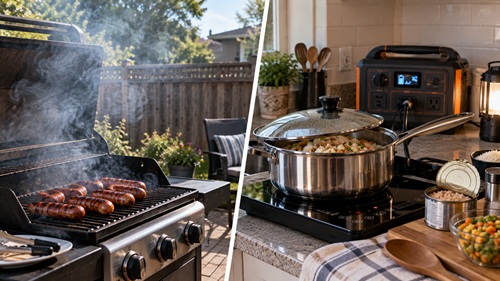
This is also something you can practice before an emergency. Try preparing a few simple meals using only shelf-stable ingredients and compare how much water, fuel, and time each one requires. You may find that some of the easiest meals to prepare are also the ones that create the least noticeable cooking activity.
Another consideration is how often you’re cooking. If you’re operating a barbecue three times a day, you’re creating three separate periods of cooking activity. Having ready-to-eat meals available means you don’t necessarily need to operate a stove every time somebody wants something to eat. You could also plan meals around foods that require shorter cooking times. Couscous, instant oatmeal, certain quick-cooking grains, and commercially prepared shelf-stable foods may need little more than hot water or brief heating. Compare that with dried beans that can require a lengthy cooking process. The difference in fuel consumption alone can be substantial.
Cooking indoors using an electric appliance may reduce visible activity, but you still need proper ventilation. Kitchen exhaust systems can carry food odors outside, and simply turning off ventilation isn’t always appropriate, particularly when cooking produces smoke, moisture, or airborne grease. I would be especially cautious about advice suggesting that preppers should seal their kitchens, cover vents, or cook in enclosed spaces to prevent smells from escaping. That’s dangerous. Any appliance that burns propane, charcoal, wood, alcohol, or another combustible fuel can create serious ventilation and carbon monoxide hazards. Even appliances that produce little visible smoke can be deadly when used incorrectly.
Never use an outdoor camping stove or barbecue indoors just to keep your cooking activity hidden.
There’s also a difference between reducing cooking smells and attempting to disguise them. Burning incense, scented candles, or other materials to cover food aromas may simply create another noticeable smell, while introducing unnecessary fire hazards. I wouldn’t depend on those methods.
For someone living in a subdivision, the practical approach may be to rely more heavily on ready-to-eat foods, electric cooking when backup power is available, and simple meals prepared in covered pots. A person living on a larger rural property may have more flexibility in choosing a suitable outdoor cooking location, although smoke and smells can still travel considerable distances.
If you have an outdoor cooking area, take a look at it from the road or other publicly accessible viewpoints. Can the equipment be seen? Are your food containers or fuel supplies visible? Does the location expose your main storage building whenever you retrieve something? These are things you can often improve without spending much money.
But remember that smoke and cooking odors aren’t the only things people may notice. A generator running every evening, lights coming from an otherwise dark property, repeated trips to an outbuilding, or large quantities of food packaging left beside the road may reveal information about your household too. None of those observations proves that you have a substantial stockpile, and noticing them doesn’t make someone a threat. Still, there’s no particular benefit in unnecessarily advertising the resources you’ve worked hard to accumulate.
I’d suggest testing different meals and cooking methods before an emergency. Prepare the same basic meal using a barbecue, a covered pot on an appropriate stove, and an electric cooker if you have one. Compare the fuel required, preparation time, smoke, and noticeable odors. Have a household member observe from a safe location on your own property, rather than assuming you know how far the smells travel.
You may find that some of your favorite emergency meals are also the ones that consume the most fuel and produce the strongest aromas. That’s useful information to have while you can still adjust your food storage and meal plans.
And if you do find yourself in a prolonged disaster where personal security becomes a concern, remember that reducing cooking smells is only one small part of protecting your supplies. Keeping storage areas secured, avoiding unnecessary public displays of food and equipment, maintaining communication with trusted people, and having a plan for unexpected visitors are just as important.
You may never be able to prevent someone from smelling your dinner, but you can make sensible choices about what you cook, how you prepare it, and how much information your everyday activities reveal about the supplies you’re depending on.
Protecting Your Food Supplies During a Prolonged Disaster
There’s something else worth considering once you’ve figured out how you’re going to prepare your meals. Where are you keeping your food, and how much of it can other people see?
Imagine you’ve spent several years building up a supply of canned goods, rice, beans, dehydrated meals, and other emergency foods. You’ve got everything organized in a basement, storage room, or perhaps a separate building on your property. Then a disaster happens, and you begin using those supplies. Every evening, you’re walking out to the shed, opening the doors, carrying food back to the house, and perhaps leaving the building open while you’re getting things ready.
Someone passing by may not know exactly what’s inside, but repeated activity can draw attention to that location. If they happen to see shelves full of food containers or other supplies, you’ve revealed something you probably would have preferred to keep private.
One practical solution is to maintain a smaller working supply of food in your kitchen or another convenient location inside the house. Instead of visiting your main storage area every time you prepare a meal, you can replenish your working supply periodically. This also makes cooking easier because you’re not constantly searching through boxes or moving between buildings.
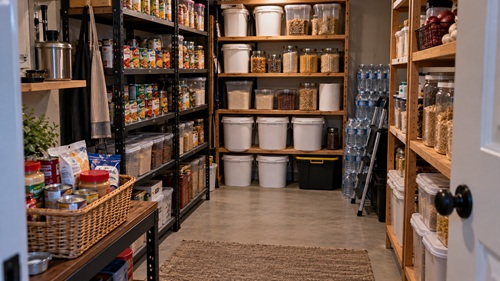
I would also consider how your storage areas look from outside the property. Can someone see your shelves when the garage door is open? Are emergency food buckets stacked beside a window? Do you leave valuable cooking equipment or fuel containers where they’re visible from the road? These are fairly simple things to address, and they don’t require turning your home into a fortress.
Good locks, proper lighting, and keeping storage buildings secured when they’re not being used are sensible precautions. Just remember that food still needs to be stored under suitable conditions. A damp shed, poorly ventilated crawlspace, or location exposed to extreme temperatures may ruin supplies you’ve spent considerable money accumulating.
Fuel storage deserves the same attention. Propane cylinders, gasoline, and other combustible materials have specific storage requirements. Don’t move them into your house or an enclosed building simply because you don’t want people to see them. Protecting your supplies shouldn’t create a fire or explosion hazard.
Your Garbage Can Reveal More Than You Think
Another thing that often gets overlooked is what happens to the packaging after you’ve used your emergency food.
If you’re opening several cans every day, eating commercially packaged survival meals, or using fuel cartridges, that waste has to go somewhere. Under normal circumstances, you put it in the garbage or recycling and don’t give it much thought. But what if garbage collection has stopped, or you’re dealing with a prolonged shortage and would rather not advertise the supplies you’re consuming?
Food packaging, shipping boxes, and discarded fuel containers can sometimes reveal what you’ve purchased or used. A large box identifying a particular emergency food product may tell someone more than an ordinary unmarked container would.
That doesn’t mean people are necessarily going through your garbage looking for food supplies. But removing personal information from shipping labels, breaking down boxes, and keeping waste properly contained are reasonable precautions.
There is also a sanitation problem to consider. If garbage collection stops for several weeks, food waste can attract rodents, insects, and other animals. In rural areas, cooking grease, food scraps, and improperly secured garbage may attract bears or other wildlife.
You don’t want to solve one security problem by creating another.
Keep waste in suitable containers, separate recyclable materials where practical, and follow local guidance for handling garbage during an emergency. Don’t burn plastic packaging, treated cardboard, or other questionable materials to get rid of evidence of your supplies. Burning household waste can release toxic smoke and create an unnecessary fire hazard.
A household that has stored six months of food should also give some thought to managing the waste that comes with consuming it.
What Changes When a Disaster Lasts Longer Than Expected?
A power outage lasting six hours is very different from one lasting six weeks. The cooking equipment might be the same, but the decisions surrounding its use can change considerably.
During the first day or two, many people will continue behaving much as they normally would. They’ll use their barbecues, prepare food from their refrigerators, and check on neighbors. Some may organize shared meals to avoid wasting food that’s beginning to thaw. Under those circumstances, seeing someone cooking outside isn’t unusual.
After several days, fuel and food management become more important. Refrigerated food may no longer be safe, stores may still be closed, and households begin relying more heavily on whatever they’ve stored. People who didn’t prepare may start looking for assistance, while others may be trying to determine when they can obtain more supplies.
If a serious disruption continues for weeks, conditions can become more difficult. Food deliveries may be unreliable, some households may be running low on essential supplies, and emergency services could be dealing with competing demands. Depending on the circumstances, theft or intimidation might become a concern.
But I wouldn’t assume that every disaster follows that pattern. Some communities remain cooperative through very difficult situations, and organized neighborhood assistance can make an enormous difference. A disaster doesn’t automatically turn everyone around you into a threat.
The practical lesson is that your cooking arrangements should be flexible enough to change with conditions.
During an ordinary outage, using your barbecue may be perfectly reasonable. If you’re dealing with prolonged shortages and have concerns about security, you might prefer preparing more meals indoors using backup electricity, relying on ready-to-eat foods, or reducing the amount of time you’re cooking outside.
You may also decide to work with trusted neighbors to share cooking resources or organize meals. That can reduce fuel consumption and help people who have limited equipment.
Preparedness should give you choices rather than force you to depend on one method regardless of what’s happening around you.
What If Someone Notices You Have Food?
This is probably one of the more uncomfortable situations to think about, particularly if you’re preparing alone.
Imagine you’ve been dealing with a prolonged food shortage and someone approaches your property while you’re cooking. They ask whether you’ve got anything to spare. Maybe they’re genuinely hungry. Perhaps they’ve got children at home and don’t know where their next meal is coming from.
There’s nothing inherently threatening about someone asking for assistance, and if you’re in a position to help safely, that’s something you might consider. During real disasters, people often depend on one another, and having a cooperative community can be an important part of everyone’s security.
But what happens if the person becomes persistent? What if they start asking how much food you’ve stored, whether you’ve got more somewhere else, or if they can come inside? What if someone you’ve never met begins returning regularly and asking increasingly personal questions about your supplies?
You don’t have to disclose your food inventory, reveal your storage locations, or invite someone into your home.
If you choose to share food, you can do so without opening your main storage areas or showing someone everything you’ve accumulated. You might also be able to direct people toward a local emergency shelter, food distribution center, or community assistance program if those services are operating.
It’s worth thinking about how you would handle these conversations before an emergency occurs. You don’t need an elaborate script, but household members should understand what information is private and how to respond when they’re uncomfortable.
If someone becomes aggressive, threatens you, or attempts to force their way onto your property, the situation is no longer simply about sharing food. Avoid escalating the confrontation. Move to a secure location when possible, keep your distance, and contact emergency services if they’re available.
If remaining at home becomes unsafe, you should already have considered where you could go and how you would get there.
I’d also encourage people to maintain relationships with a few trusted neighbors or family members. Someone who can check on you, help request assistance, or notice that something is wrong may be more valuable than another piece of survival equipment.
Protecting your food matters, but protecting the people who depend on it matters more.
Additional Considerations for Lone-Wolf Preppers
Someone preparing alone has a different set of problems to manage. There’s nobody else to watch the property while you’re outside gathering firewood, nobody to help carry water, and nobody to take over cooking when you’re exhausted.
Everything falls on one person, and that can become difficult if an emergency lasts for weeks.
For that reason, I’d put considerable emphasis on keeping cooking arrangements simple. Equipment that requires complicated setup, constant adjustments, or frequent trips to retrieve supplies may become frustrating when you’re already dealing with other problems.
A compact stove, a small working supply of food, suitable cookware, and a reliable source of water can make everyday meal preparation much easier. Keeping these items organized also reduces the likelihood of leaving equipment outside or forgetting where you’ve stored something.
Think about your outdoor cooking location before you need it. Can someone approach from the road without you noticing? Are you leaving your house unlocked while carrying food and water outside? Is your main storage area visible whenever you open it? Would you have a safe way to return indoors if an unfamiliar person approached?
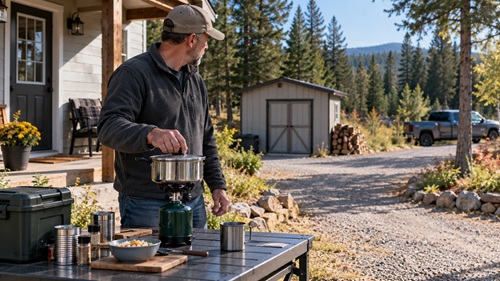
These are practical questions, not reasons to become suspicious of everyone.
I would also consider emergency communications. If cellular service is unreliable, a satellite communicator or an appropriate radio arrangement may be useful. Whatever you choose, make sure you know how it works and who you would contact.
Don’t overlook fatigue either. After several days of poor sleep, physical work, and uncertainty, people make mistakes. They forget to extinguish burners, mishandle hot cookware, leave food sitting too long, or overlook equipment problems.
A simple cooking routine that you’ve practiced repeatedly may be safer than having several complicated systems you barely know how to operate.
And being a lone-wolf prepper doesn’t mean you have to refuse every form of assistance. Having even one dependable person you can contact during an emergency can make a considerable difference.
Emergency Cooking Readiness Check
Before a disaster happens, take a few minutes to see how prepared you really are. Having food stored is one thing. Being able to prepare it safely, without wasting fuel or unnecessarily exposing your supplies, is another.
Rather than using checkbox symbols that may not display correctly on every website, this readiness check uses short, numbered items that readers can easily copy, print, or work through.
Food and Cooking Supplies
1. Ready-to-eat meals: Have at least three to seven days of food that can be eaten without cooking, including enough calories and nutrition for everyone in the household.
2. Backup cooking methods: Maintain at least two reliable cooking options that don’t depend on the same energy source.
3. Cooking fuel: Know how much fuel you’ve stored and approximately how many meals you can prepare with it.
4. Essential equipment: Keep suitable pots, utensils, a manual can opener, and a food thermometer available.
5. Emergency meal planning: Identify simple meals that require relatively little fuel, water, and preparation time.
Cooking Discreetly
6. Lower-odor meals: Identify foods that can be prepared without producing strong cooking smells or excessive smoke.
7. Cooking methods: Use covered pots, boiling, steaming, or gentle simmering instead of frying or grilling when practical.
8. Outdoor cooking location: Choose a safe, properly ventilated outdoor location that isn’t unnecessarily exposed to public view.
9. Visible supplies: Keep food containers, cooking equipment, and fuel supplies out of unnecessary public view while following safe storage requirements.
10. Cooking routines: Consider whether repeated outdoor cooking activity unnecessarily reveals your household’s supplies or routines.
Protecting Food and Fuel Supplies
11. Secure storage: Make sure food storage rooms, sheds, and outbuildings have suitable locks.
12. Working pantry: Keep a smaller supply of frequently used food separate from your main stockpile.
13. Supply inventory: Maintain an inventory of stored food, water, and cooking fuel so you know what you have and what needs replacing.
14. Waste management: Remove personal information from discarded packaging and have a sanitary way to store waste if garbage collection stops.
15. Unexpected visitors: Have a plan for responding safely to people asking about your food supplies or attempting theft.
Personal and Food Safety
16. Carbon monoxide prevention: Never use outdoor barbecues, charcoal grills, or camping stoves inside enclosed spaces. Maintain working smoke and carbon monoxide alarms.
17. Fire protection: Keep an appropriate fire extinguisher available, store fuels safely, and follow local fire restrictions.
18. Safe food preparation: Understand safe cooking temperatures and how to manage perishable food when refrigeration isn’t available.
19. Water supplies: Store sufficient safe water for drinking, preparing meals, washing hands, and cleaning cookware.
20. Emergency communication: Maintain a reliable way to contact family members, trusted neighbors, or emergency services when assistance is needed.
Put Your Emergency Cooking Plan to the Test
One thing I’d recommend is trying to prepare all your meals for an entire day without using your normal stove, oven, or household water supply. Use only the food, fuel, water, and cooking equipment you’ve set aside for emergencies. You don’t need to turn off the electricity to the house or create an actual emergency. Just avoid using those services for the exercise.
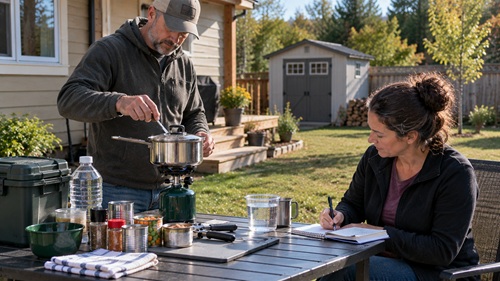
Keep track of how much fuel you consume, how much water you use for cooking and cleaning, and how long everything takes. Pay attention to whether your equipment is easy to operate and whether you have enough cookware to prepare the meals you’ve planned. If you’re using a battery power station, measure how much energy you consume. If you’re using propane, estimate how many similar meals you could prepare before needing another cylinder.
Then look at things from a security standpoint. If you’re cooking outside, can people walking past your property see what you’re doing? Are food containers or fuel supplies visible? Does the cooking produce a lot of smoke or noticeable smells? Are you repeatedly opening your storage building or leaving doors unsecured?
Try the same exercise during different seasons if you can. Cooking outside on a warm summer afternoon is very different from preparing a meal during a cold winter evening. You may discover that equipment you thought was dependable becomes difficult to operate in freezing temperatures, heavy rain, or strong winds.
You might also find that your cooking equipment works perfectly but consumes far more fuel than expected. Or perhaps you’ve stored plenty of food but haven’t considered how much water is required to prepare it. You may even discover that your outdoor cooking location isn’t as private or as safe as you thought.
These are things you can correct now, while replacement supplies are available and you still have other options.
Final Thoughts
I think a lot of us concentrate on how much food we can put away without spending nearly as much time thinking about what happens when we actually need to use it.
Storing six months of food is an accomplishment, but those supplies aren’t going to be nearly as useful if you can’t prepare them, don’t have enough fuel, or end up wasting food because you can’t refrigerate leftovers.
And if a disaster lasts long enough that food becomes difficult to obtain, there’s nothing wrong with being careful about how much information you reveal about your household. You don’t need to advertise your supplies, and you certainly don’t need to tell strangers what you’ve stored or where you keep it.
At the same time, I wouldn’t want people to become so concerned about hiding their cooking activities that they start taking dangerous shortcuts. Burning charcoal inside a garage, blocking ventilation, or using equipment in ways it was never designed for can kill you long before a shortage of food becomes your biggest problem.
For me, the sensible approach is to have several ways to prepare meals, understand how much fuel each requires, keep supplies properly secured, and maintain enough flexibility to change your routine if conditions deteriorate.
You also have to consider the people around you. Good neighbors, trusted friends, and community cooperation can be valuable resources during a disaster. Being discreet about your supplies doesn’t mean abandoning those relationships.
If you’ve already got an emergency cooking plan, it might be worth looking at it again from a slightly different perspective. Not just whether you can prepare a meal without electricity, but whether you can keep doing it safely for several weeks while conserving your fuel, protecting your food, and looking after the people who depend on you.
Something worth discussing: If you had to cook every meal without electricity for the next thirty days, what method would you rely on, and how would you manage cooking smells, fuel consumption, and the security of your food supplies?
Are you a member of Prepping Communities?
Register for free and explore our library of over 10,000 preparedness resources, including guides, postings, checklists, and practical information covering a wide range of prepping topics.
Interested in keeping that knowledge available when the internet isn’t? Check out Prepper Offline, which lets you store preparedness resources in a searchable offline database so the information is available when you need it.
Register for Free with Prepping Communities or Learn More About Prepper Offline
© Prepping Communities. This content is for informational purposes only and not professional advice. Use at your own risk.
Terms | Privacy | Guidelines