
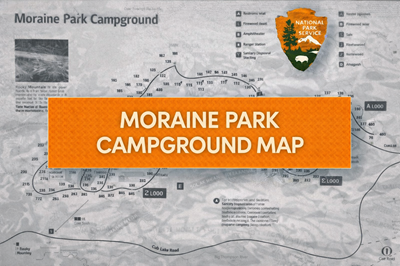
This PDF is a detailed campground map and operational guide for Moraine Park Campground in Rocky Mountain National Park, combining a full site layout with essential safety, rules, and logistical information. It functions not just as a map, but as a practical reference for campers navigating a high-elevation mountain environment.
The campground layout (page 2) shows a large, organized network of loops labeled A through E, with over 200 individual campsites spread across the area. The map clearly marks key features such as restrooms, potable water, trash and recycling stations, amphitheaters, and ranger stations. Roads and trail connections—like access toward Bear Lake Road and Fern Lake Trailhead—are also shown, helping users understand how the campground connects to the broader park. The presence of the Big Thompson River running alongside the campground adds both scenic value and an environmental factor to consider.
The information and rules section (page 1) emphasizes safety and environmental responsibility, starting with a critical note that cell service is unreliable, meaning visitors cannot depend on phones for navigation or emergencies. There is strong focus on wildlife protection, particularly food storage rules, requiring all scented items and food to be secured in designated lockers. The document highlights that improper storage can lead to confiscation or fines, underscoring how seriously wildlife interactions are managed in this area.
Additional details outline campground logistics and restrictions, including occupancy limits (maximum of eight people per site), generator usage hours, and vehicle parking rules. The guide also lists prohibited activities such as drones, fireworks, and feeding wildlife. Environmental restoration efforts are even noted, such as hydroseeding to repair disturbed land, reinforcing the park’s emphasis on preservation.
Overall, this PDF presents Moraine Park Campground as a well-developed but still wilderness-adjacent environment, where structure and amenities exist, but risks remain due to wildlife, elevation, and limited connectivity. For campers and preppers alike, it highlights key considerations: planning without reliance on technology, strict food security, and understanding how to operate safely within a regulated natural setting.
© Prepping Communities. This content is for informational purposes only and not professional advice. Use at your own risk.
Terms | Privacy | Guidelines