
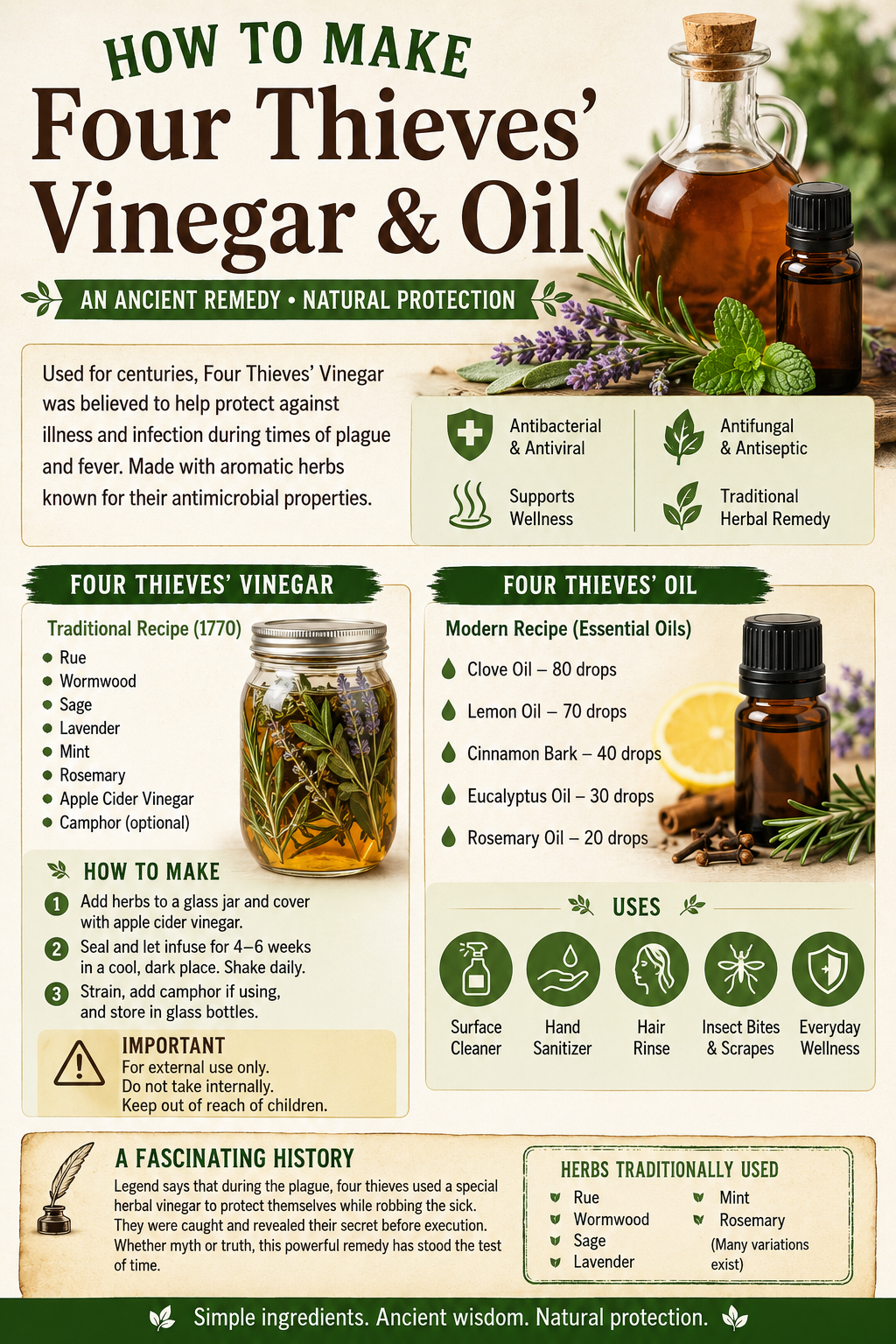
Four Thieves’ Vinegar is one of history’s most fascinating herbal preparations, with documented references dating back to the 1700s and folklore tracing its origins to the plague outbreaks of Europe. Traditionally made by infusing aromatic herbs such as rosemary, sage, lavender, mint, wormwood, and rue in vinegar, the mixture was believed to help protect those caring for the sick and was later adapted into the modern essential oil blend known as Thieves Oil.
This infographic explores the history behind Four Thieves’ Vinegar, compares traditional and modern recipes, and summarizes common herbal ingredients that have demonstrated antimicrobial properties in laboratory research. While these remedies remain popular in herbal traditions and household wellness practices, they should not be considered replacements for modern medical treatment or infection control. Instead, they offer an interesting look at historical herbal medicine and the enduring use of aromatic plants in natural preparedness.
© Prepping Communities. This content is for informational purposes only and not professional advice. Use at your own risk.
Terms | Privacy | Guidelines