
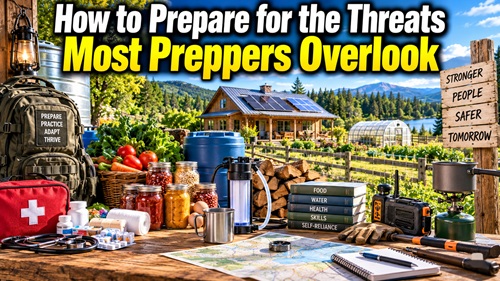
Preparedness has a habit of focusing on the threats that are easiest to picture. Home invasions, looting, civil unrest, armed confrontations, and protecting supplies all deserve consideration. Security matters, especially during a serious disruption when normal law enforcement and emergency services may be stretched thin. The problem begins when those scenarios start to define preparedness itself. Someone can have months of food, excellent security equipment, a carefully packed bug-out bag, and still be poorly prepared for many of the problems that can develop when normal systems remain unavailable for weeks or months.
A prolonged emergency changes ordinary life in ways that are easy to underestimate. Water may have to be carried instead of coming from a faucet. Garbage may stop being collected. Pharmacies and medical offices may become difficult to reach. Food becomes harder to replace. Small injuries become more important. People become tired, sanitation deteriorates, equipment begins wearing out, and relationships are placed under pressure. None of these problems are as dramatic as an armed confrontation, but several happening at the same time can slowly dismantle an otherwise well-prepared household.
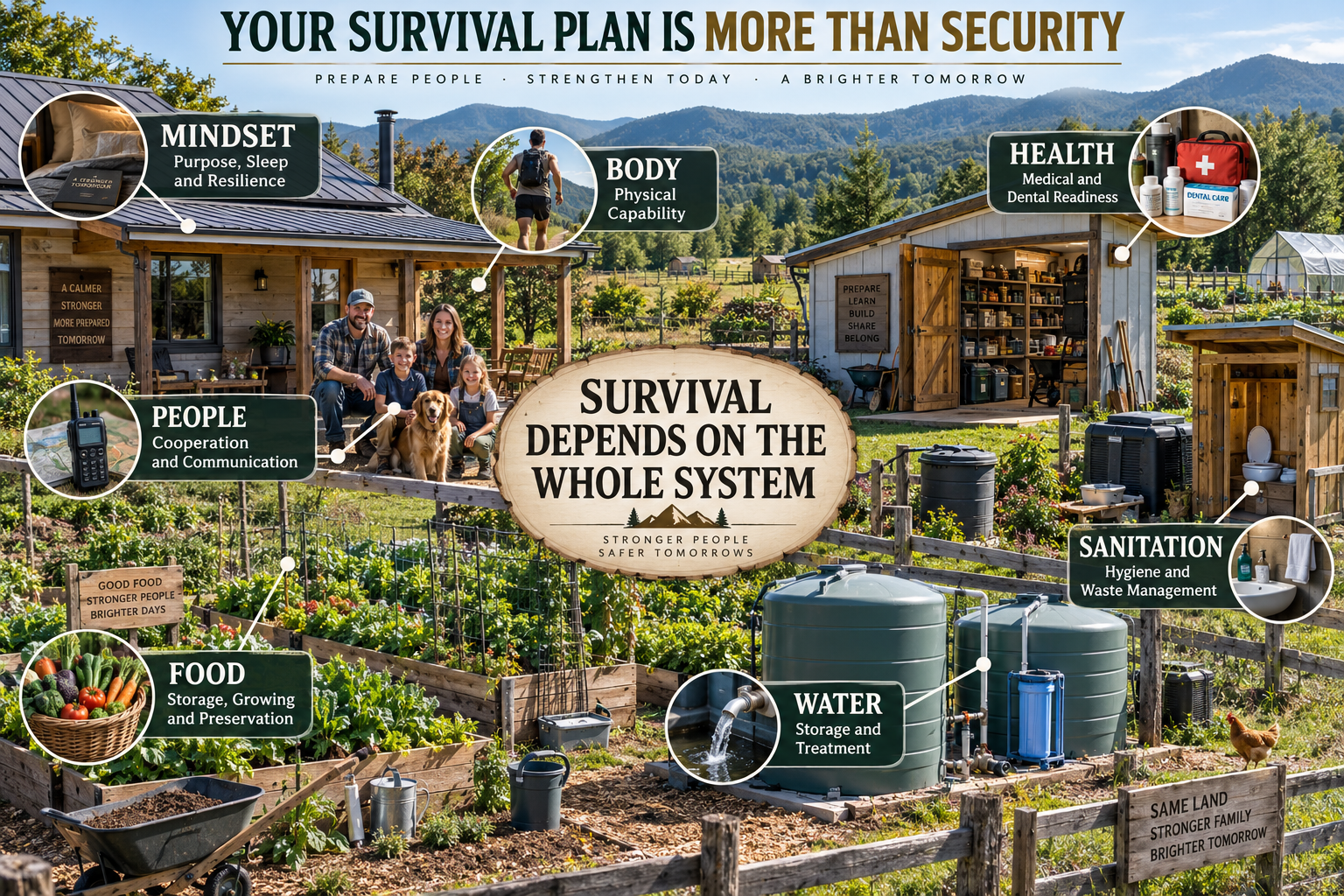
A good survival plan therefore needs to do more than protect supplies. It should help keep the people using those supplies healthy, capable, organized, and able to adapt. Food, water, shelter, sanitation, health, physical capability, practical skills, relationships, communication, and psychological resilience all have to work together. The better question is not simply what disaster you are preparing for. It is what could make your household gradually stop functioning once normal support systems disappear.
Your Body Has to Be Able to Carry Out the Plan
One of the easiest preparedness weaknesses to overlook is physical capability. Most people live in a world where machines perform an enormous amount of everyday work. Water comes from a faucet, vehicles move people and supplies, furnaces provide heat, refrigerators preserve food, and power tools make difficult jobs easier. A long disruption can remove several of those conveniences at the same time, suddenly making ordinary life much more physically demanding.
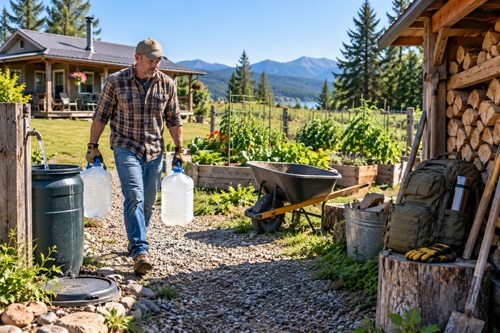
Water might need to be carried repeatedly. Firewood may need to be cut, split, and moved. Supplies could have to be transported by hand. Gardening and food production may require considerably more work. Walking might occasionally replace driving, and repairs normally completed with power tools may have to be performed manually. At the same time, everyone may be sleeping poorly, eating differently, dealing with uncomfortable temperatures, and experiencing considerably more stress than normal.
The safest way to prepare is to test these assumptions before they become necessities. Take your normal emergency pack for a reasonable walk and see how it feels after more than a few minutes. Carry a filled water container a safe distance. Spend an afternoon doing garden or property work. Walk hills, climb stairs, move firewood, and perform the kinds of ordinary physical tasks that could become necessary during an extended disruption. These simple exercises reveal weaknesses that a written preparedness plan cannot.
The objective is not extreme fitness. A prepper does not need to become a marathon runner or competitive weightlifter. The objective is enough strength, mobility, balance, and endurance to perform the work the preparedness plan expects. If carrying your bug-out bag for a mile is exhausting today, that is not a failure. It is valuable information discovered while there is still plenty of time to improve.
Prevent Small Medical Problems Before They Become Survival Problems
Modern healthcare makes many problems seem relatively minor because help is normally close by. A cut becomes infected and medical treatment may be available. A painful tooth can be examined by a dentist. Prescriptions can usually be refilled. An injury can be X-rayed. Even problems that would once have been extremely dangerous are routinely treated because an enormous medical system exists behind us.
During a major disruption, that safety net may become limited. This makes prevention one of the most useful forms of medical preparedness. Known dental problems should not continually be postponed. Routine dental hygiene becomes part of preparedness because an unhealthy tooth that is manageable today could become much more serious when dental care is difficult to obtain. The same principle applies to eyeglasses, routine medical care, prescriptions, minor wounds, skin problems, and other health needs that are much easier to manage while normal services are available.
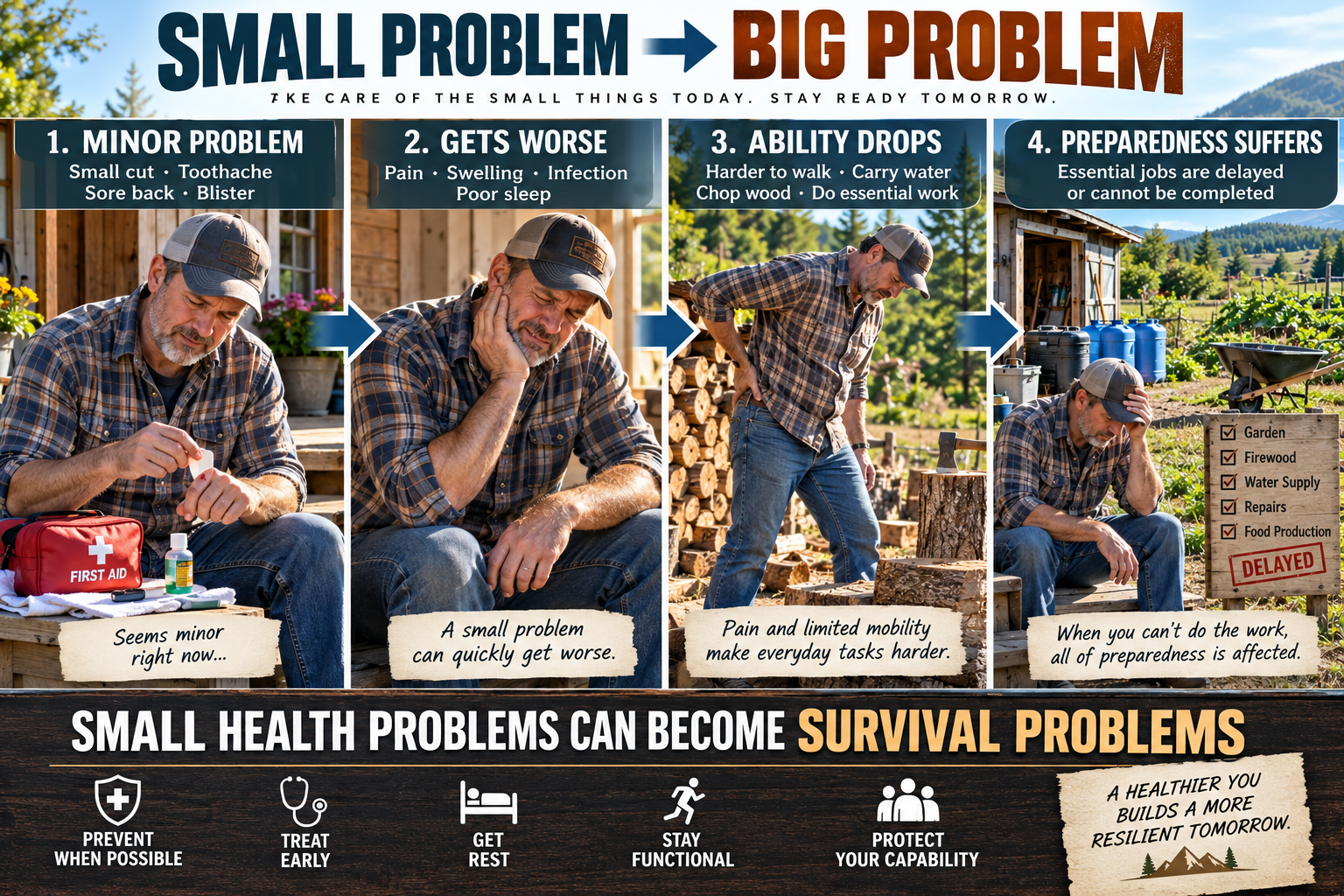
A household first-aid kit should contain supplies people understand how to use rather than simply being a collection of medical products. First-aid and CPR training can be more valuable than adding another piece of equipment nobody understands. Supplies should be periodically inspected, and family members should know where they are stored. Important medical information should also remain accessible if phones, cloud services, or internet connections are unavailable.
Preparedness also means recognizing limitations. Increasing redness around a wound, spreading swelling, difficulty breathing or swallowing, severe dehydration, altered mental status, uncontrolled bleeding, persistent high fever, or rapidly worsening symptoms should not become opportunities to experiment with improvised medicine. Professional medical assistance should be sought whenever it remains available. The goal of preparedness medicine is not to replace doctors. It is to prevent problems where possible, provide reasonable first aid, recognize serious conditions, and keep someone stable until appropriate care can be reached.
Treat Hygiene and Sanitation as Survival Infrastructure
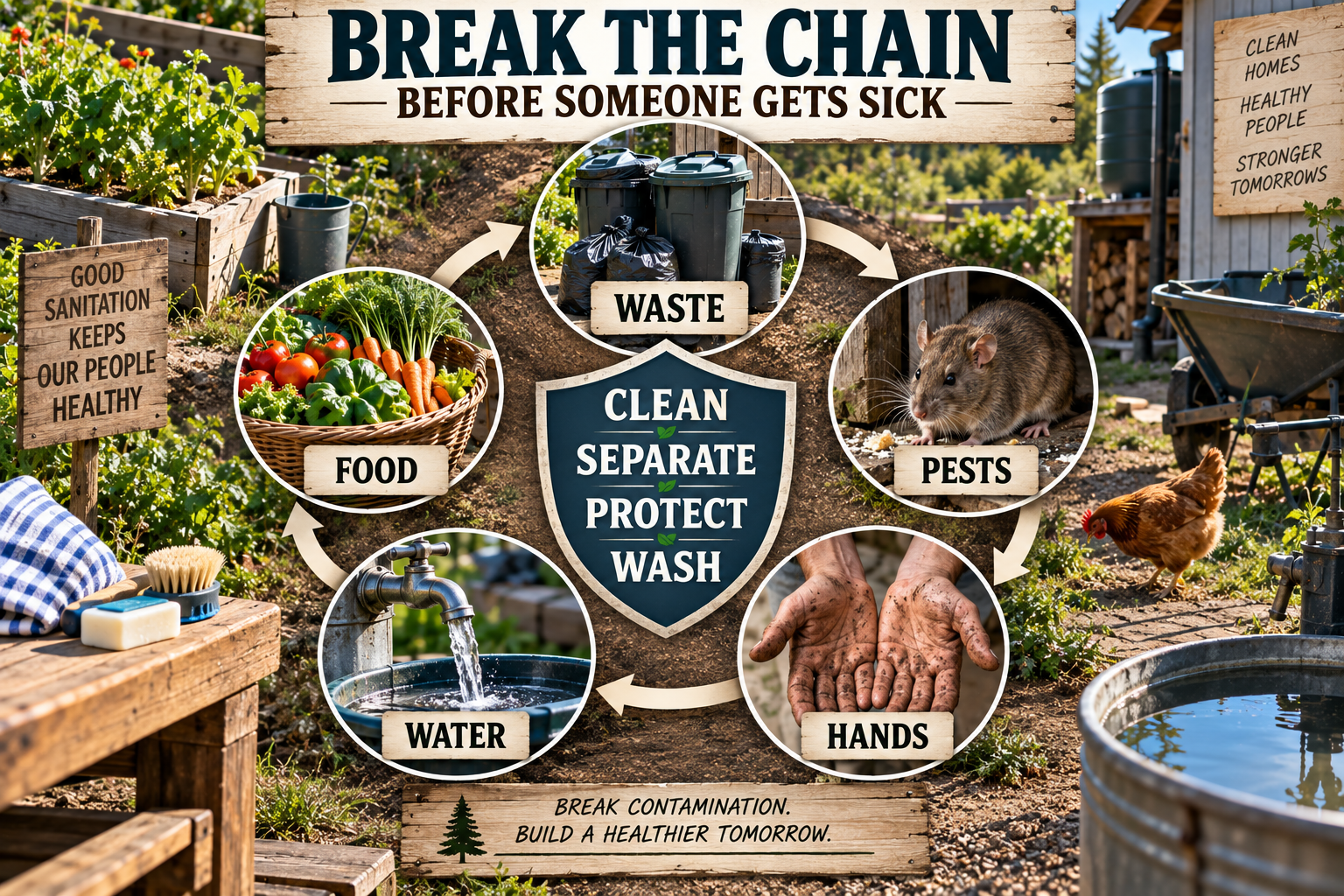
Food and water receive enormous attention in preparedness, while garbage, toilets, wastewater, handwashing, spoiled food, rodents, and insects often receive much less. Yet sanitation can deteriorate surprisingly quickly when normal infrastructure stops functioning. Garbage collection can disappear, refrigeration can fail, toilets may become unusable, and water shortages can make ordinary cleaning more difficult.
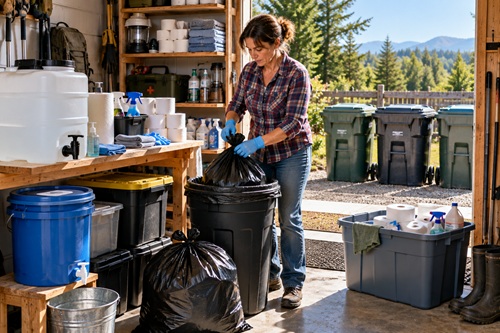
Imagine a neighborhood several weeks into a prolonged disruption. Garbage has accumulated, some refrigerated food has spoiled, animals have discovered new food sources, and people are conserving every gallon of water. Conditions that would normally be corrected by sanitation workers, utility crews, pest-control services, and functioning sewer systems begin becoming household responsibilities.
This is why every household should understand how it would manage sanitation if normal plumbing became unavailable. Basic supplies such as heavy-duty garbage bags, soap, gloves, toilet paper, cleaning materials, and appropriate disinfecting products become surprisingly important. Waste should be kept away from living areas, water sources, and food preparation whenever possible. Stored food needs protection from insects and rodents, while garbage and food scraps need to be managed so they do not continually attract animals.
Handwashing becomes especially important when water is scarce. There can be a temptation to conserve every drop by reducing hygiene, but illness can consume far more resources than reasonable sanitation does. A household should therefore account for hygiene water when calculating emergency water requirements rather than treating every stored gallon as drinking water. Keeping several people healthy is considerably easier than caring for an entire household suffering from gastrointestinal illness.
Do Not Wait Until You Are Hungry to Learn Foraging
Foraging can be a valuable supplemental skill, but it can also create false confidence. Owning a field guide, watching videos, or recognizing a few photographs does not automatically make someone a competent forager. Identification becomes even more difficult when a person is hungry, tired, hurried, or desperate to bring food home.
The safest way to develop this capability is while supermarkets are still open and there is absolutely no need to eat what you find. Start locally and learn a small number of easily recognized foods extremely well. Observe them at different stages of growth and during different seasons. Learn where they grow, which parts are usable, when they are harvested, and what dangerous look-alikes exist. Whenever possible, learn directly from experienced local people rather than relying entirely on photographs.
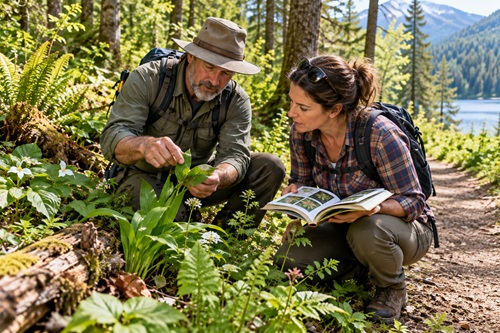
Mushrooms deserve an especially high standard of caution because identification mistakes can have severe consequences. Uncertainty should always mean leaving the mushroom alone. The same caution applies to medicinal plants. Natural does not mean harmless, and some plants contain powerful biologically active compounds. Emergency conditions are a terrible time to begin experimenting with unfamiliar wild foods or improvised herbal treatments.
The environment itself must also be considered. A correctly identified edible plant may still be growing in contaminated soil. Clear water can contain microorganisms or chemical contaminants that cannot be seen, smelled, or tasted. Fish and other foods can accumulate contaminants from their environment. Roadsides, industrial areas, mines, agricultural runoff zones, floodwater, and questionable waterways deserve additional caution. Knowing what something is does not automatically tell you whether it is safe to consume.
Protect the Food You Already Have
Food security is not only about obtaining more food. It is also about preventing the loss of what has already been stored or produced. During prolonged disruptions, insects, rodents, moisture, spoilage, wildlife, and poor storage practices can destroy resources that may be difficult to replace.
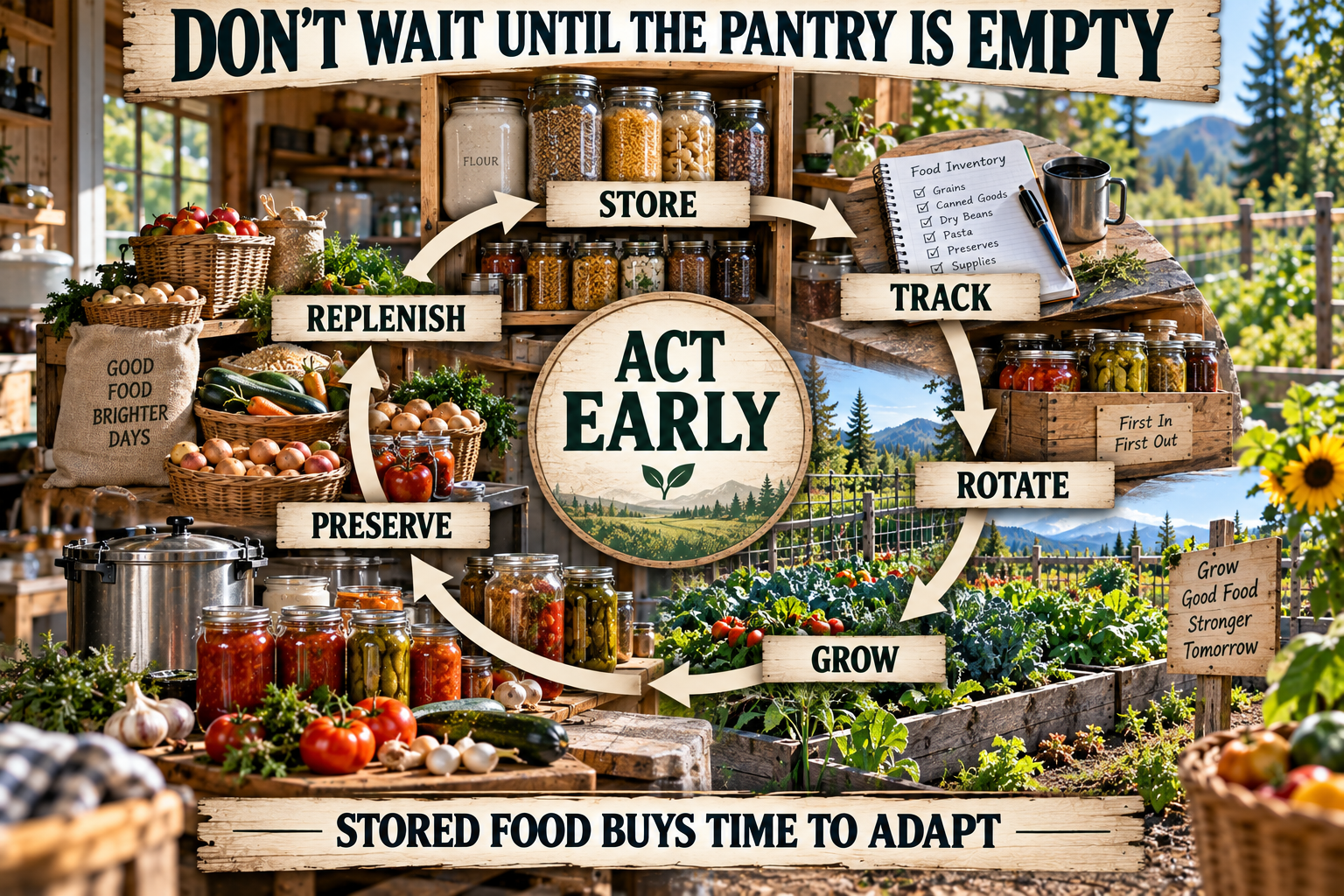
A pantry should therefore be inspected as part of routine preparedness. Dry foods should be stored appropriately for the particular product and protected from pests. Spilled food should be cleaned promptly. Storage areas should be periodically checked for droppings, damaged packaging, insects, moisture, mold, or other warning signs. Food should also be rotated so problems are discovered while replacement is still easy.
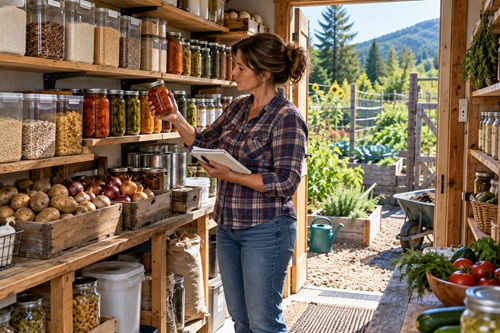
Gardens need the same thinking. Growing a large amount of food does little good if wildlife destroys it just before harvest. Depending on the property and local conditions, fencing, netting, row covers, trellises, secure compost management, or other barriers may become part of the food-production system. The objective is not to wait until animals discover an important resource and then improvise a defense around it.
Food preservation also needs to be considered before harvest. A successful garden can produce more food than a household can immediately eat, sometimes within a very short period. Canning, freezing, dehydrating, fermenting, root-cellar storage, or other appropriate preservation methods allow seasonal abundance to become future food security. Growing food and preserving food should be treated as two parts of the same system.
Prevent Severe Food Shortages Instead of Planning Around Starvation
An emergency pantry should do more than keep people alive for a predetermined number of days. Its real purpose is to create time. Stored food provides a household with time to understand what is happening, reduce consumption where necessary, establish additional food sources, grow crops, coordinate with others, and adapt before hunger becomes desperation.
This begins by understanding normal consumption. Store foods the household actually eats and knows how to prepare. Include a reasonable nutritional variety rather than concentrating entirely on calories or one type of staple. Rotate those foods through normal meals so everyone learns what works and what does not. This also exposes overlooked dependencies such as cooking fuel, water, spices, can openers, or preparation equipment.
The important part is responding early when supplies begin disappearing faster than expected. Food consumption can be adjusted before the pantry becomes critically low. Waste can be reduced, meal plans changed, garden production expanded where practical, and other trusted resources explored. Waiting until only a few days of food remain drastically reduces the number of available choices.
Severe malnutrition can also create medical complications when nutrition becomes available again. Refeeding syndrome is one example in which significant nutritional deprivation followed by renewed nutrition can produce dangerous metabolic and electrolyte changes. Someone suffering severe malnutrition may require professional medical assessment and carefully managed nutritional rehabilitation. From a preparedness standpoint, the larger lesson is that preventing severe starvation is much safer than trying to recover from it afterward.
Build Water Redundancy Before You Need It
Food problems often develop gradually. Water problems can become serious much faster, which is why a water plan should never depend entirely on one filter, one container, or one source. Equipment fails, containers leak, sources become contaminated, and circumstances change.
A stronger system combines stored water with appropriate treatment capabilities and knowledge of potential backup sources. The household should understand what its filtration or treatment methods can and cannot address. A device designed primarily to reduce microorganisms, for example, should not automatically be assumed to make chemically contaminated water safe.
The equipment should also be practiced with before an emergency. Find out how long filtration really takes and how difficult the process becomes when several people need water. Measure how much the household actually uses for drinking, cooking, washing, and sanitation. If a garden or livestock also depends on stored water, those requirements need to be considered separately.
Water resilience comes from layers. Stored water provides immediate security. Treatment provides additional options. Rainwater collection may support certain needs where appropriate and lawful. Conservation extends supplies. Knowledge of nearby resources creates another fallback. None of these options has to be perfect individually when several reliable options support one another.
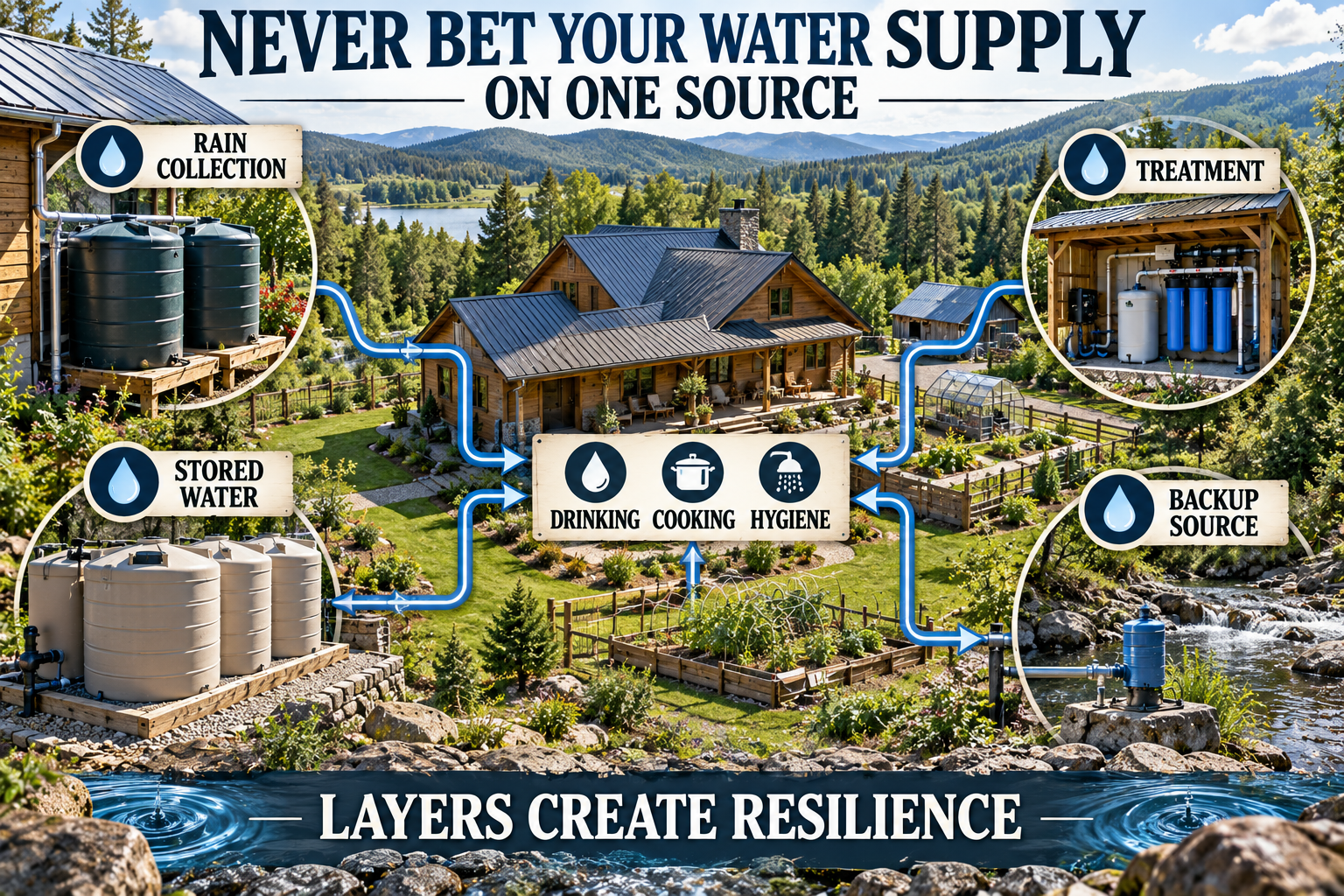
Figure Out How You Will Work Together Before an Emergency
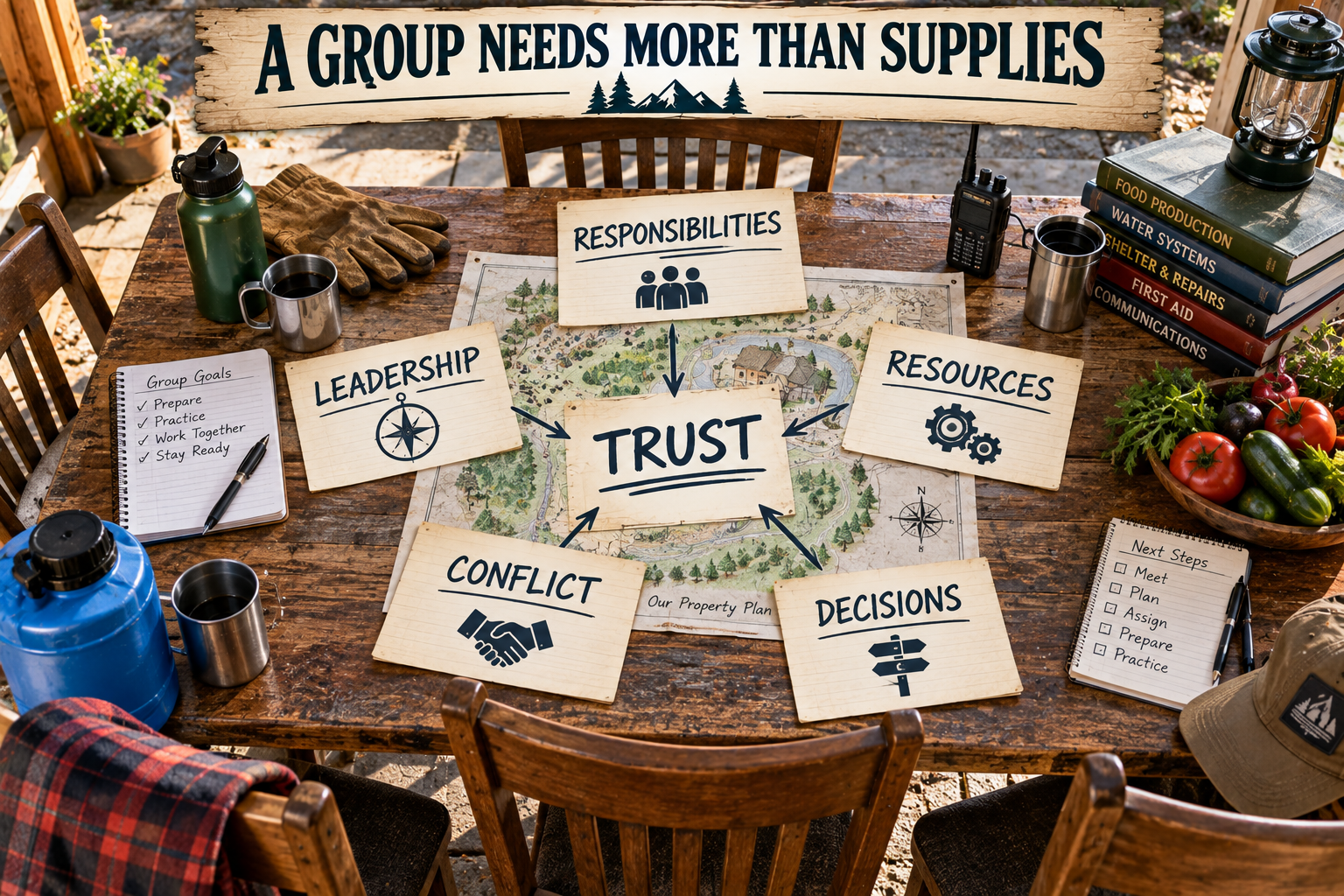
Having a group of capable people around you can be a huge advantage during a long emergency, but simply knowing and trusting each other doesn’t mean everything will go smoothly. People get tired, hungry and stressed. Resources may start running low, workloads may not feel equal, and people who normally get along can start disagreeing pretty quickly.
A lot of this can be worked out ahead of time. Talk about what people expect from each other, what will be shared and what won’t, who is responsible for what, and how important decisions will be made. You don’t need a giant rulebook. You just don’t want to be figuring all of this out for the first time when everyone is already under pressure.
There are also some harder things worth talking about before they actually happen. What happens if food has to be rationed? What if someone gets injured and can’t do their share of the work? What if another family member shows up unexpectedly? How will children or elderly people be cared for? Who handles security, cooking, water, medical needs or other daily jobs? You won’t have an answer for everything, but even having these conversations beforehand can prevent a lot of problems later.
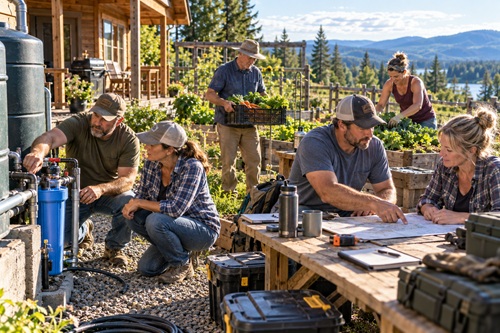
Probably the best way to find out whether a group can actually work together is to do things together now. Plant a garden, work on a property project, practice emergency communications, cook a meal without electricity or run a simple emergency exercise. You learn a lot more about people when something goes wrong, the work gets frustrating or everyone is tired than you ever will sitting around talking about how well you’d work together during an emergency.
Protect Sleep and Decision-Making
Sleep does not receive much attention in preparedness planning, yet exhausted people make mistakes. During emergencies, people may remain awake because they are concerned about security, listening for information, caring for children, managing equipment, or simply struggling with stress. One difficult night is manageable. Several nights of inadequate sleep can begin affecting judgment, concentration, patience, reaction time, and emotional control.
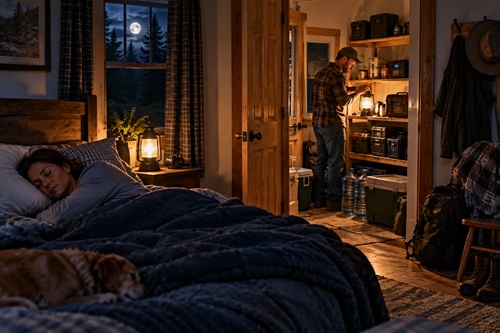
Rest should therefore be treated as a preparedness resource. When circumstances permit, necessary duties can be divided so that everyone does not remain awake simultaneously. Sleeping areas should be kept as dry, quiet, dark, and comfortable as circumstances reasonably allow. Unnecessary nighttime work can be reduced, and household routines can help distinguish periods of activity from periods when people should recover.
This becomes especially important in groups. A tired person making poor decisions can affect everyone. Arguments also become easier to start and harder to resolve when people are exhausted. Protecting sleep is not laziness during an emergency. It is maintenance for one of the most important pieces of survival equipment available: the human brain.
Give Everyone Something Useful to Do
Short emergencies and prolonged disruptions create very different psychological conditions. During the first hours of a crisis, there may be dozens of obvious tasks. People secure the property, locate family members, gather information, organize supplies, and solve immediate problems. After several weeks, that initial urgency may be replaced by uncertainty and repetition.
Normal routines may disappear. Workplaces can close. Communication may become unreliable. Entertainment disappears. Privacy becomes limited. Nobody knows when conditions will improve. This is where psychological resilience becomes an important part of practical preparedness rather than simply an encouraging idea.
Routine helps create structure when the outside world has lost it. People can get up at reasonably consistent times, maintain hygiene, prepare meals, inspect equipment, tend gardens, organize supplies, exercise, teach skills, repair things, and prepare for the following day. These ordinary activities provide something extremely important during prolonged uncertainty: visible progress.
Children benefit from appropriate routines and responsibilities as well. Safe chores, lessons, games, projects, and predictable schedules can help prevent the emergency from becoming an endless period of fear and waiting. Adults need purpose too. People generally function better when they know their work matters and when each day contains achievable objectives.
Psychological preparedness is therefore partly about building a life inside the emergency rather than simply waiting for the emergency to end.
Practice Before the Emergency
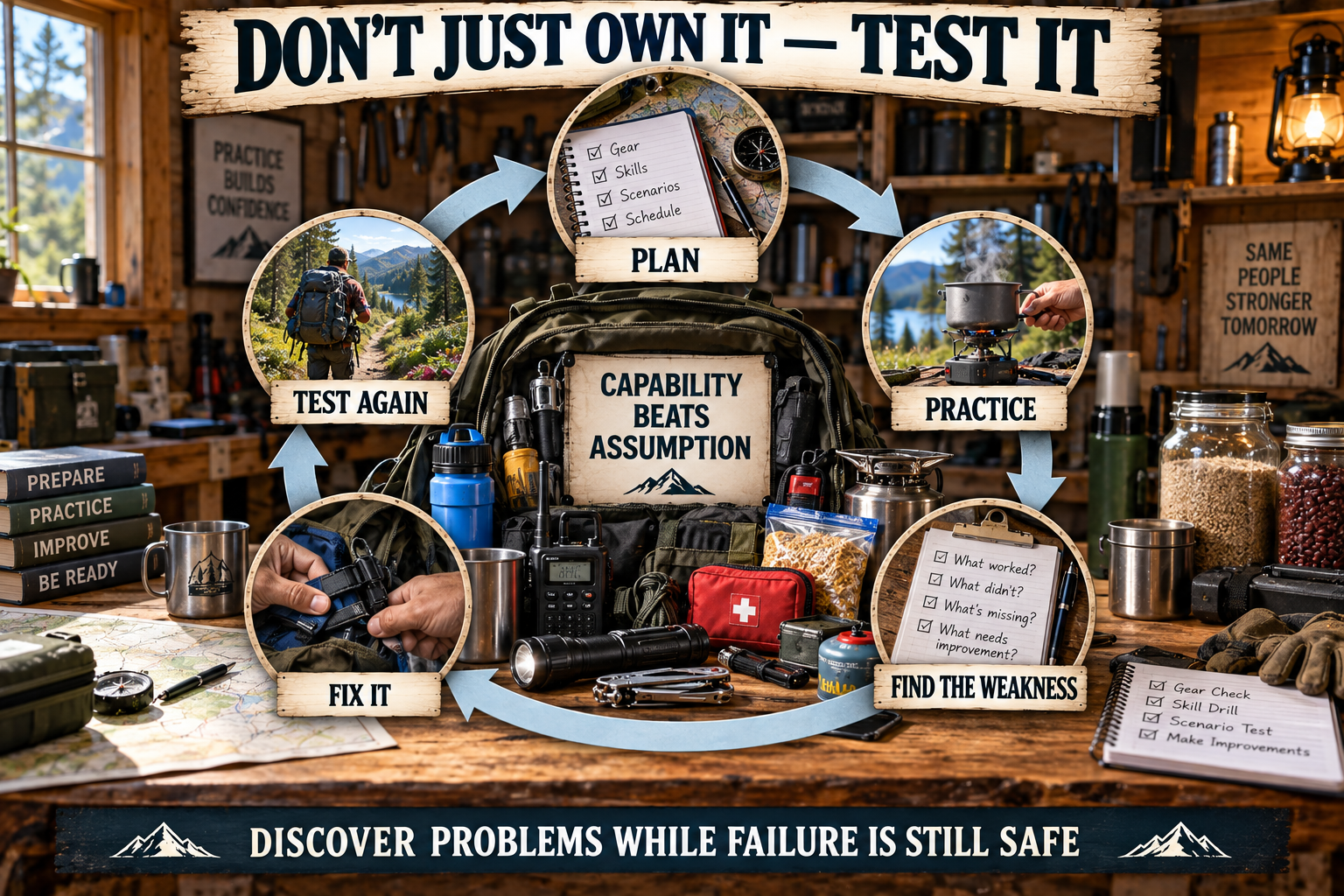
One of the fastest ways to discover weaknesses in a preparedness plan is to use it under controlled conditions. A plan can look excellent on paper because paper does not care how heavy a water container is, how slowly a filter works, how unpleasant emergency food tastes, or whether a radio actually reaches its intended destination.
A simple preparedness weekend can reveal more than months of planning. Prepare meals using stored food and backup cooking equipment. Use some of your stored water instead of immediately reaching for the faucet. Take your emergency pack on a realistic walk. Set up backup lighting. Test radios. Practice using water-treatment equipment. Try sleeping with the equipment that would actually be available during an evacuation or power outage.
Problems discovered during these exercises are useful. The water container may be too heavy. The camping stove may consume more fuel than expected. Nobody may like one of the foods stored in large quantities. Batteries may be dead. The bug-out bag may be unnecessarily heavy. Instructions may exist only on the internet. Someone may discover they have no idea how to operate an important piece of equipment.
That is exactly why preparedness should be practiced. A mistake discovered today becomes an improvement. The same mistake discovered during an emergency becomes another problem that has to be solved when resources and options are already limited.
Build Layers Instead of Betting Everything on One Solution
Resilient systems rarely depend on one answer. A single water source can fail. One cooking method can become unusable. One person with all the technical knowledge can become sick. One generator can break. One food supply can become contaminated. One communication method can disappear.
Preparedness becomes stronger when important capabilities have alternatives. Water can be stored while treatment equipment provides another option. Cooking can have more than one safe method. Important food can be distributed rather than concentrated entirely in one vulnerable location where appropriate. Critical instructions can be kept offline. More than one household member can learn how important equipment works.
This does not mean buying duplicates of everything. Redundancy can come from equipment, skills, knowledge, relationships, or alternative methods. A household might have one primary way to accomplish something, one practical backup, and enough knowledge to improvise safely if both become unavailable.
The objective is to remove obvious single points of failure. If losing one device, one person, one fuel source, or one supply completely destroys an essential part of the preparedness plan, that area deserves another look.
Security Still Matters, but It Is Not the Whole Plan
None of this means security should be ignored. Theft, trespassing, violence, civil disorder, and other security problems are legitimate preparedness concerns. Households should take reasonable precautions appropriate to their circumstances and local laws.
The problem occurs when security becomes the preparedness plan instead of one part of it. Someone can successfully protect a pantry and still lose food to rodents. They can protect a house and still become sick from contaminated water. They can own excellent emergency equipment and discover they cannot physically carry it. They can assemble a capable group and watch it fracture because nobody discussed responsibility, leadership, or resource allocation beforehand.
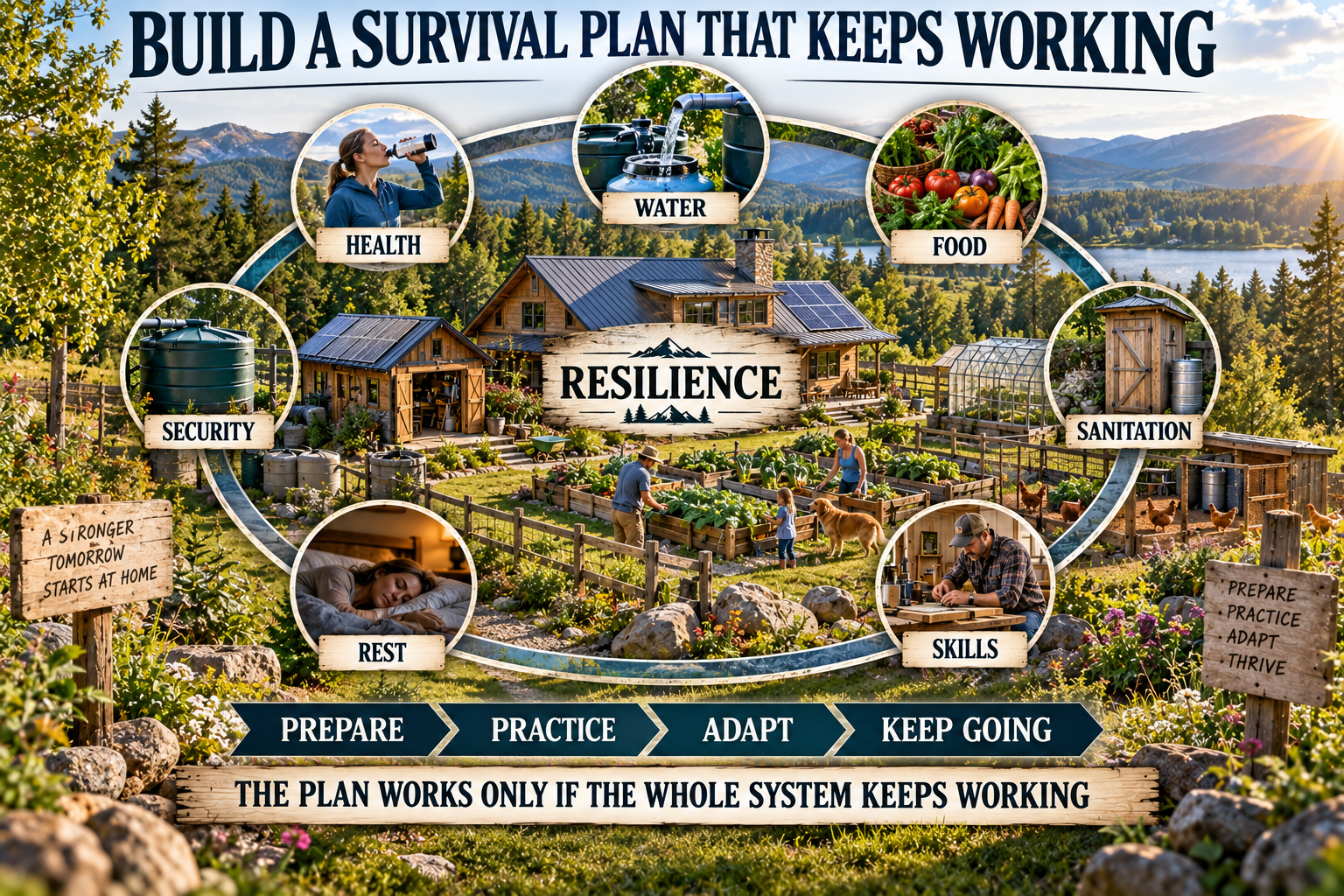
Real preparedness is much less dramatic and much more demanding. It is about keeping an entire household system functioning while normal systems around it are failing. That requires equipment, but it also requires health, skills, knowledge, sanitation, food production, water, cooperation, adaptability, judgment, and the ability to keep working through problems.
Preparedness Action Plan
A useful preparedness review should begin by imagining that normal services have been unavailable for several weeks rather than several hours. Consider whether everyone can physically perform the work expected of them and whether known medical or dental problems can reasonably be addressed now. Examine water storage and treatment, sanitation, hygiene, waste management, food preparation, pest protection, cooking, heating, lighting, communication, and the other ordinary systems that keep the household functioning.
The food system deserves the same examination. Determine approximately how quickly the household consumes stored food, whether those foods can be prepared using backup methods, and whether enough water and fuel exist to prepare them. Consider what happens when stored food begins running low. Gardening, preservation, seed saving, local food knowledge, and other food-production skills become much more valuable when they have already been practiced rather than simply planned.
Next, examine the human side of preparedness. Talk with family members or trusted group members about responsibilities, resources, decision-making, illness, conflict, security, leadership, and the possibility that plans will need to change. Consider sleep, morale, useful routines, and how people will continue contributing if a disruption lasts far longer than expected. A household is not truly resilient if its equipment can operate for months but the people cannot.
Finally, begin testing the plan gradually. There is no need to simulate a disaster or make the exercise miserable. Use backup cooking equipment for dinner. Walk with the emergency pack. Prepare a meal entirely from stored food. Test the water filter. Spend an evening using backup lighting. Practice communications. Grow something and preserve part of the harvest. Each exercise should answer one simple question: does this part of the plan actually work the way we think it does?
When a weakness appears, fix it and test again. Then move to the next one. Over time, this creates something far more valuable than a large collection of survival equipment. It creates a household that has already practiced solving problems together.
Key Takeaways
A survival plan should prepare people for more than the dramatic moment when something goes wrong. It needs to keep working during the long period afterward, when the first emergency may have passed but the normal systems people depend upon have not returned.
Physical capability matters because somebody has to do the work. Preventive medical and dental care matter because small problems become harder to solve when professional care disappears. Clean water, sanitation, hygiene, food safety, pest control, sleep, practical skills, relationships, communication, and psychological resilience all contribute to whether a household can continue functioning.
Security belongs in that system, but it is only one part of it. Preparedness becomes stronger when attention moves beyond the threats that are dramatic and begins addressing the ordinary failures that can quietly accumulate until they become emergencies of their own.
The strongest survival plan is not necessarily the one with the most equipment. It is the one that can continue functioning when several things go wrong at the same time. That is where supplies, knowledge, practiced skills, redundancy, health, and community finally come together as real preparedness.
Disclaimer: This preparedness lesson is intended for general educational and informational purposes only. It is not medical, dental, nutritional, veterinary, or other professional advice. Serious illness, infection, poisoning, injury, or severe malnutrition requires qualified professional care whenever it is available. Wild plants, mushrooms, and other wild foods should never be consumed unless their identity and safety have been reliably established.
© Prepping Communities. This content is for informational purposes only and not professional advice. Use at your own risk.
Terms | Privacy | Guidelines