

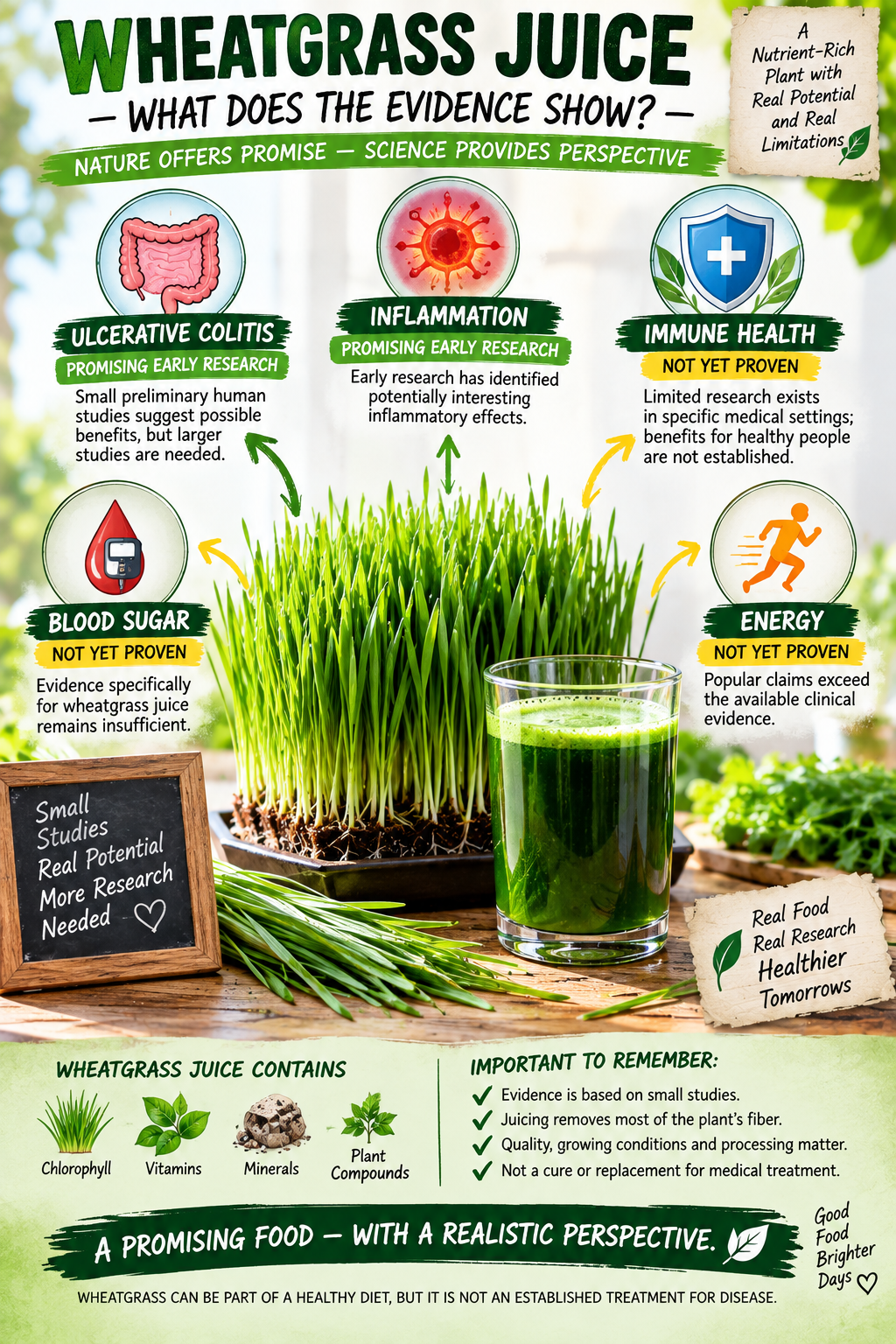
Wheatgrass juice is made from the young shoots of the wheat plant and provides chlorophyll, vitamins, minerals, and numerous plant compounds. It has been promoted for everything from digestive health to inflammation and immune support, but scientific evidence remains relatively limited. One of the more interesting areas of research involves ulcerative colitis, where a small clinical trial found improvements in disease activity and rectal bleeding among participants consuming wheatgrass juice. However, the study involved only a small number of people, so larger trials are needed before wheatgrass can be considered an established therapy. Wheatgrass juice also contains very little fiber compared with whole wheatgrass powder because much of the plant’s fiber is removed during juicing.
Other research has explored possible effects on inflammation and complications associated with certain medical treatments. Some small studies have reported changes in inflammatory markers or potential benefits among cancer patients receiving treatment, but these findings should not be interpreted as evidence that wheatgrass broadly strengthens immunity, increases energy, controls blood sugar, or treats disease. Many popular claims surrounding wheatgrass go considerably beyond what current clinical research can demonstrate. It is better viewed as a nutrient-containing food that may have useful biological properties rather than as a proven natural medicine.
Anyone using wheatgrass should also consider quality, preparation, and food safety. Fresh wheatgrass is commonly grown under warm, moist conditions that can encourage mold and microbial contamination, making clean growing and handling practices particularly important. Commercial powders and juices can also differ substantially in composition depending on how the wheatgrass was grown and processed. People who choose to consume it should use a reputable product, follow appropriate food-safety practices, and introduce it gradually because nausea or digestive discomfort can occur. Anyone considering wheatgrass for ulcerative colitis or another medical condition should discuss it with a qualified healthcare professional and should not use it as a replacement for prescribed treatment.
© Prepping Communities. This content is for informational purposes only and not professional advice. Use at your own risk.
Terms | Privacy | Guidelines