
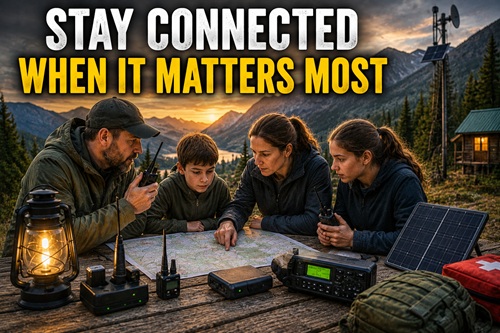
Why Reliable Communication Is One of Your Most Important Preparedness Skills
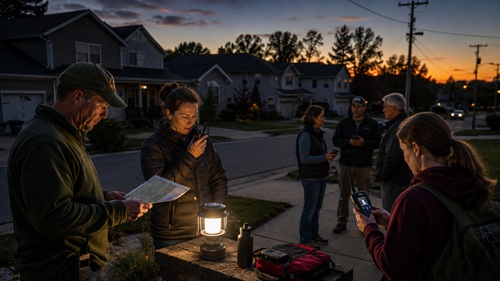
One of the first things many people do during an emergency is reach for their phone. Whether checking on family members, monitoring local conditions, requesting assistance, or looking for updates, communication quickly becomes one of the most important resources available. Yet communication is often taken for granted because modern networks are so dependable during everyday life. It is easy to assume that the ability to make a call or send a message will always be there when needed.
History has repeatedly shown that this assumption is not always correct. Hurricanes, wildfires, floods, earthquakes, severe winter storms, and widespread power outages have all disrupted communication systems for hours, days, and sometimes much longer. Even when communication infrastructure remains physically intact, thousands of people attempting to use the same network at once can overwhelm cellular systems, resulting in delayed messages, failed calls, or complete service interruptions. During these situations, accurate information becomes increasingly valuable, yet it may also become increasingly difficult to obtain.
For anyone interested in preparedness, communication should be viewed in the same way as food, water, shelter, or emergency medical supplies. It is not simply another convenience – it is a critical capability. Knowing that loved ones are safe, understanding changing conditions, coordinating resources, and sharing reliable information all depend on maintaining the ability to communicate. Without that capability, even well-prepared families can find themselves making important decisions with limited or outdated information.
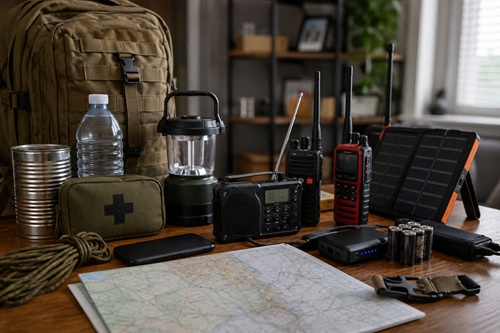
Most preparedness planning focuses on creating backups. Families store food in case grocery stores close. They keep emergency water supplies in case public water systems become unavailable. They purchase generators or solar power to provide electricity during outages. Communication deserves the same level of planning. Rather than assuming one system will always remain available, prepared individuals build multiple ways to stay connected when circumstances change.
One technology that has attracted considerable attention within the preparedness community is mesh networking. Unlike traditional communication systems that depend on cellular towers, internet service providers, or centralized infrastructure, mesh networks allow compatible devices to communicate directly with one another. As more devices join the network, they can relay messages between users, extending communication beyond the range of a single radio while reducing dependence on commercial infrastructure.
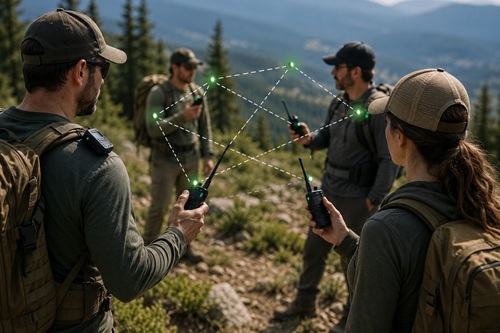
The concept may sound highly technical, but the underlying idea is surprisingly simple. Instead of every message passing through a central communication hub, each device becomes part of the network itself. Every participant has the potential to receive, transmit, and relay information, allowing messages to travel from one device to another until they reach their destination. This decentralized approach creates a communication system that can continue functioning even when traditional infrastructure becomes unreliable or unavailable.
This lesson explores how mesh communication works, where it fits within an overall preparedness strategy, and what realistic expectations users should have before investing in the technology. More importantly, it explains why communication preparedness is about much more than purchasing equipment. Reliable communication is built through planning, practice, and developing multiple ways to remain connected when normal systems can no longer be relied upon.
What Is a Mesh Communication Network?
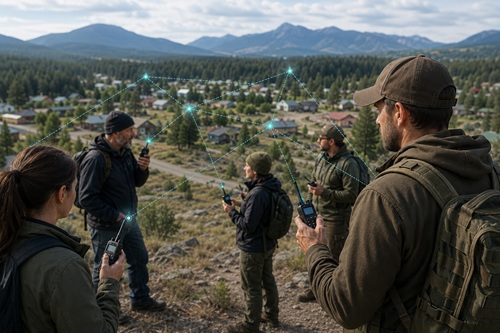
Before deciding whether mesh communication belongs in your preparedness plan, it is important to understand what it actually is – and what it is not. The term mesh network often sounds highly technical, leading many people to assume it requires advanced radio knowledge or specialized training. In reality, the basic concept is surprisingly straightforward. A mesh network is simply a group of compatible devices that communicate directly with one another instead of relying on a centralized communication system.
Most modern communication depends on infrastructure that someone else owns and maintains. When you send a text message or make a phone call, your device communicates with a nearby cellular tower. That tower connects to additional equipment, which routes your message through a network until it reaches the recipient. This process happens almost instantly, making it easy to forget how many different pieces of infrastructure are involved. If any part of that chain becomes unavailable because of power failures, equipment damage, network congestion, or maintenance issues, communication can be interrupted even if your phone is working perfectly.
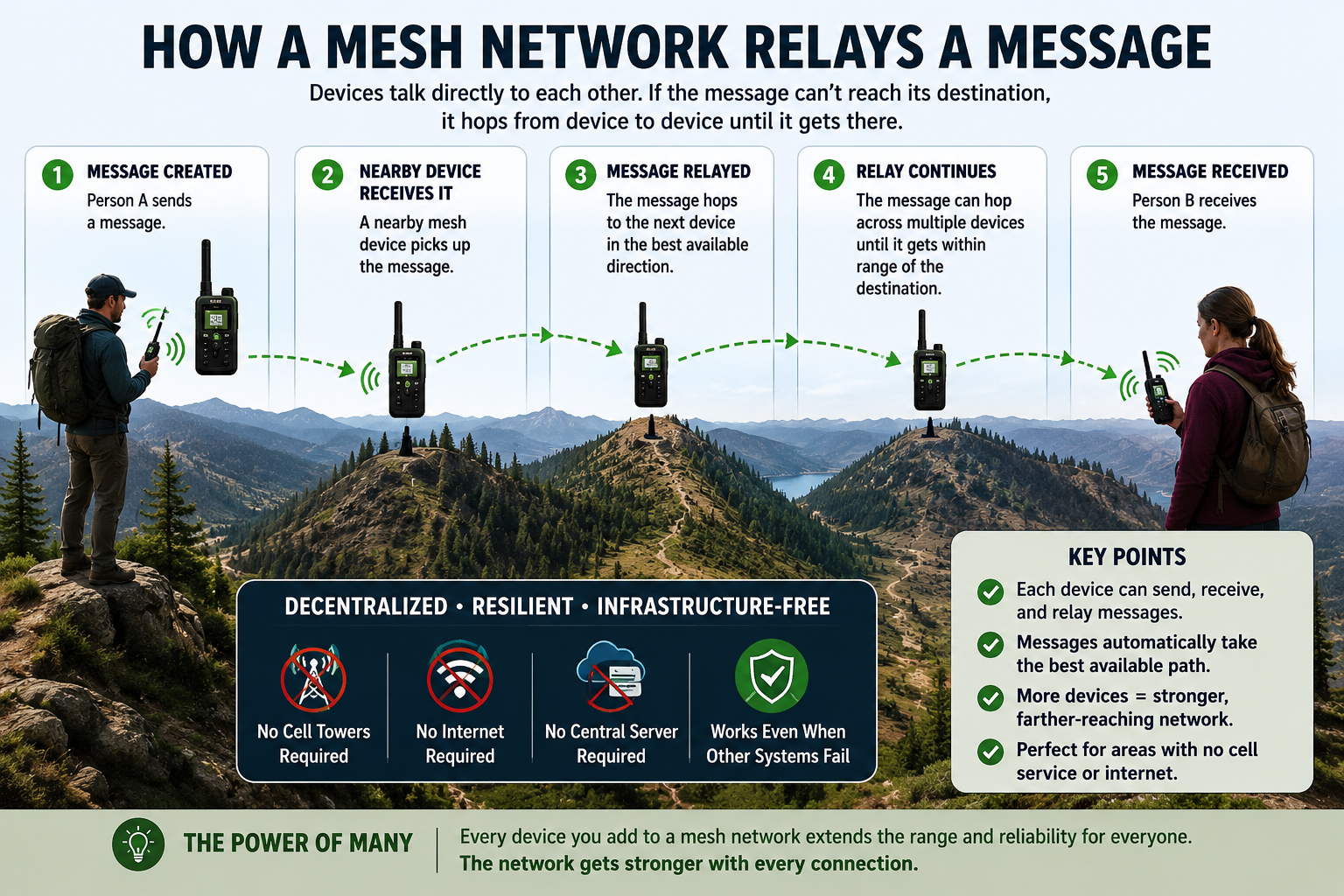
A mesh network operates very differently. Instead of depending on towers or internet connections, each compatible device communicates directly with nearby devices. If the intended recipient is within range, the message is delivered directly. If they are farther away, the message can be automatically passed from one device to another until it reaches its destination. Each participating device becomes another link in the communication chain, allowing the network to expand naturally as additional users join.
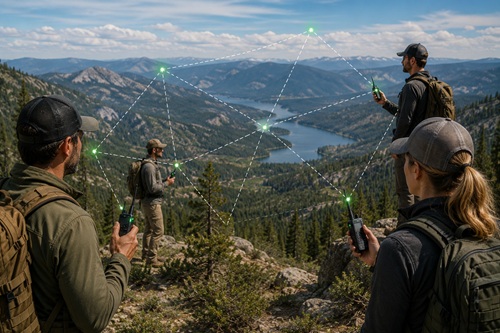
This ability to relay messages is what gives mesh networking its name. Rather than every device connecting to one central point, many devices connect to one another, creating a web or mesh of communication paths. If one path becomes unavailable, the network may be able to route messages through another nearby device. This decentralized design makes the network more adaptable because communication does not depend on a single piece of infrastructure remaining operational.
One of the greatest advantages of this approach is resilience. Traditional communication systems often contain critical points of failure. A damaged cellular tower, overloaded network, or widespread power outage can affect thousands of users simultaneously. A mesh network distributes communication across many independent devices instead. While no communication system is immune to limitations, eliminating dependence on centralized infrastructure significantly reduces the number of single points of failure that can interrupt local communication.
It is also important to understand what mesh networking is not. It is not a replacement for the internet, and it is not designed to provide high-speed data services like streaming video or web browsing. Most preparedness-oriented mesh devices focus on exchanging short text messages, location information, and other small amounts of data. This limitation is intentional. Sending smaller amounts of information requires less power, extends battery life, and increases the likelihood that messages can be delivered successfully under challenging conditions.
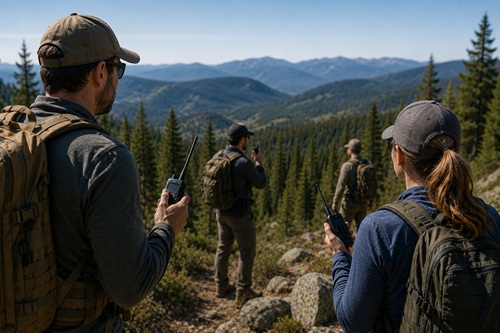
Another common misunderstanding is that mesh networking provides unlimited communication range. It does not. Every device still has a practical transmission distance determined by terrain, buildings, vegetation, weather, antenna quality, and radio power. The difference is that messages no longer have to travel the entire distance in a single transmission. Each additional participant can help move messages farther through the network, extending coverage well beyond what one device could accomplish on its own.
For preparedness purposes, this decentralized design offers a practical way to maintain local communication when conventional systems become unreliable. Families can stay in contact while camping beyond cellular coverage, neighbors can exchange updates during prolonged power outages, and preparedness groups can coordinate activities without relying entirely on commercial infrastructure. The technology itself is only part of the story. Its real value comes from providing another dependable layer within a broader communication strategy—one that helps ensure important information can continue moving even when the systems most people depend upon are no longer available.
Why Mesh Networks Are Different from Traditional Radios
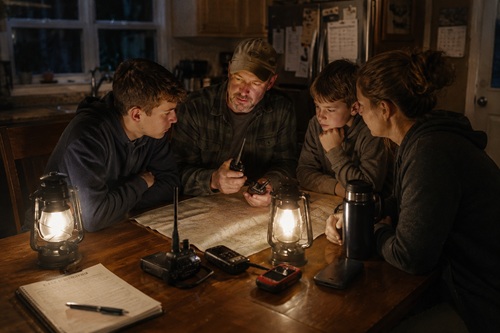
Many people first learning about mesh communication assume it is simply another type of two-way radio. While there are similarities, the two technologies were designed with different purposes in mind. Understanding those differences helps explain why mesh networking has become increasingly popular within the preparedness community and why it complements, rather than replaces, traditional radio communications.
Traditional handheld radios, such as FRS, GMRS, CB, or amateur radios, are primarily designed for real-time voice communication. When one person presses the transmit button, everyone listening on the same channel hears the message immediately. This makes them ideal for fast-moving situations where instant coordination is important, such as search-and-rescue operations, outdoor recreation, or directing emergency response activities. Voice communication is quick, familiar, and highly effective when users are available to listen at the exact moment a message is transmitted.
Mesh communication follows a different approach. Instead of emphasizing live voice conversations, most mesh devices are designed to exchange short text messages, GPS locations, and small amounts of digital information. Messages can often be stored temporarily within the network until a communication path becomes available, allowing them to reach their destination even if the recipient is not immediately within direct radio range. This ability to “store and forward” information is one of the characteristics that makes mesh networking particularly useful during emergencies.
Another significant difference is how communication range is extended. With traditional radios, increasing coverage often requires more transmitter power, better antennas, elevated terrain, or permanently installed repeater stations. If none of those options are available, communication distance remains limited by the capabilities of the individual radios involved. Mesh networking approaches the problem differently. Each additional compatible device can help relay messages farther through the network, allowing communication to expand naturally as more participants become involved.
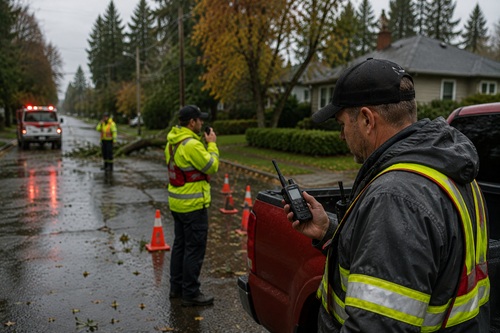
This distinction also affects how each system performs in different situations. A volunteer coordinating traffic around an accident scene may benefit from the immediate voice communication offered by a handheld radio. A neighborhood preparedness group exchanging status updates during a prolonged power outage may find text-based mesh messaging more practical because messages can be read whenever recipients are available rather than requiring everyone to monitor a radio continuously. Neither system is inherently better; they simply solve different communication problems.
Power consumption is another area where the technologies differ. Voice communication generally requires more energy because radios actively transmit audio whenever the microphone is used. Many mesh communication devices transmit only small packets of digital information, allowing them to operate for significantly longer periods using relatively small batteries. This low power requirement makes them especially attractive for extended emergencies, off-grid living, camping, and situations where recharging opportunities may be limited.
Privacy is also handled differently. Most traditional consumer radios broadcast every transmission openly, allowing anyone tuned to the same channel to hear the conversation. Many mesh communication systems support encryption, allowing messages to be read only by authorized devices within the network. While encryption should never be viewed as a substitute for sound operational security, it can provide an additional layer of privacy when sharing sensitive information among trusted participants.
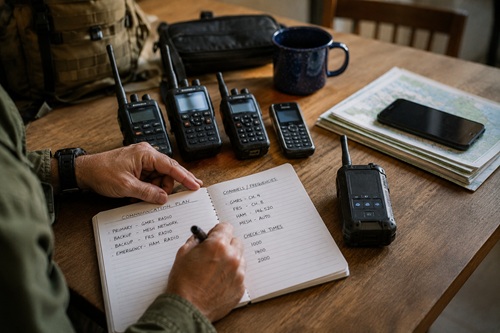
Rather than viewing mesh networking and traditional radios as competing technologies, preparedness planners should see them as complementary tools. Each has strengths that make it well suited for particular situations. Voice radios excel when immediate coordination is required, while mesh networks provide efficient, low-power messaging that can continue operating independently of commercial infrastructure. Together they create a more flexible and resilient communication strategy than either system could provide on its own.
The most effective preparedness plans rarely depend on a single communication method. Instead, they combine several technologies to create overlapping layers of capability. By understanding the strengths and limitations of both traditional radios and mesh networking, you can choose the right tool for each situation and develop a communication strategy that remains effective across a wide range of emergencies.
How Mesh Networks Actually Send Messages
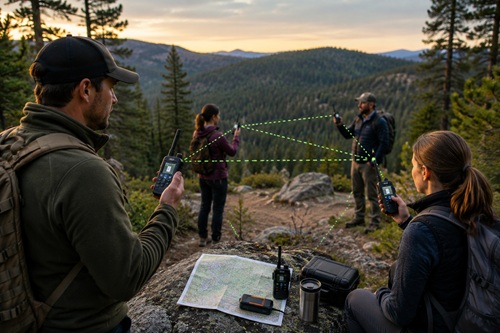
One of the reasons mesh communication seems complicated at first is that most people never see what happens after they press the send button. A text message leaves a smartphone, reaches its destination a few seconds later, and the entire process appears almost effortless. Behind the scenes, however, that message may have traveled through cellular towers, fiber-optic cables, internet providers, switching equipment, and numerous computer systems before arriving at the recipient. Mesh networking follows a much simpler path, and understanding that path helps explain why it can continue working when conventional communication systems cannot.
Imagine standing in a large field with a friend only a few hundred feet away. If you call out, your voice travels directly to that person without needing anyone else to help. Mesh communication works in much the same way. When two compatible devices are within radio range of one another, they exchange information directly. No cellular tower, internet connection, or external infrastructure is required because the devices communicate with each other independently.
The process becomes more interesting when the recipient is farther away than a single radio transmission can reach. Instead of giving up, the sending device looks for another compatible device nearby that can help relay the message. That intermediate device receives the information and automatically forwards it toward the next device in the network. This process continues until the message eventually reaches its intended destination. Each device acts as a temporary relay, extending communication one step at a time.

Because messages may follow different routes through the network, there is rarely only one possible path. If one device becomes unavailable because it is turned off, moved out of range, or experiences a low battery, the network may discover another route using different devices. This flexibility is one of the reasons mesh networks are often described as being resilient. Rather than depending on one central communication hub, they distribute responsibility across many participating devices, reducing the impact of individual failures.
The speed at which messages travel depends on several factors. A direct connection between two nearby devices may deliver a message almost immediately. Messages requiring multiple relay points may take slightly longer because each device must receive, process, and forward the information before it continues toward its destination. In most preparedness situations, these small delays are rarely significant. The priority is maintaining reliable communication rather than achieving the fastest possible transmission speeds.
Every relay within the network also contributes to expanding communication coverage. Imagine several preparedness-minded neighbors living throughout a community, each carrying a compatible mesh device. Individually, each radio covers only a limited area. Together, however, they create a chain capable of moving information much farther than any single device could achieve alone. As more participants join the network, additional communication paths become available, increasing both coverage and reliability.
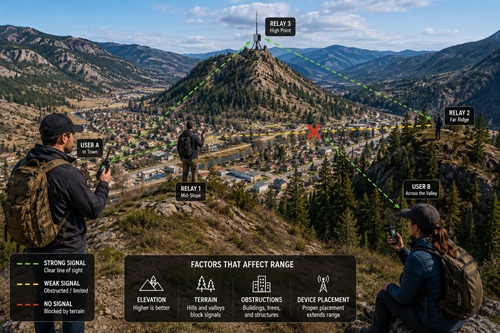
This distributed design also explains why placement matters. Devices positioned on higher ground, mounted in vehicles, or located in central areas often improve overall network performance because they can communicate with more neighboring devices. In contrast, radios located in deep valleys, behind large buildings, or inside heavily reinforced structures may have fewer communication options available. Understanding how geography influences radio signals helps users make better decisions about where to position equipment for the greatest benefit.
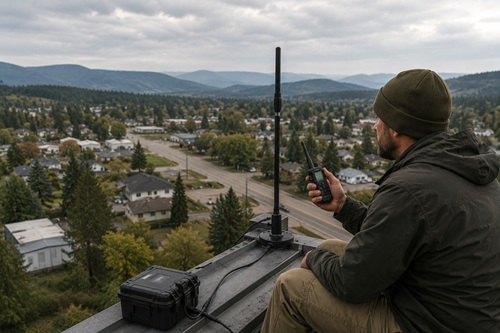
Another important characteristic of mesh communication is that devices automatically perform most of the routing work themselves. Users generally do not need to decide which path a message should take or manually select relay stations. The network continually evaluates available connections and forwards messages using the most appropriate route it can find at that moment. This automation makes mesh networking far more approachable for people with little or no radio experience, allowing them to focus on communicating rather than managing the technical details behind the network.
The key takeaway is that mesh communication succeeds because responsibility is shared rather than centralized. Every participating device contributes to the overall capability of the network, making communication more adaptable as conditions change. While no communication system can guarantee delivery under every circumstance, understanding how messages move from one device to another helps explain why mesh networking has become an increasingly valuable preparedness tool for families, neighborhoods, and community groups seeking greater communication resilience.
Where Mesh Networks Work Best
Like every preparedness tool, mesh networking performs exceptionally well in some situations and less effectively in others. Understanding these strengths and limitations allows you to make informed decisions about where the technology fits within your overall communication plan. Rather than expecting one system to solve every communication challenge, preparedness is about selecting the right tool for the circumstances most likely to affect you and your community.
One of the environments where mesh communication performs particularly well is within local neighborhoods. During severe storms, prolonged power outages, or other community-wide disruptions, families often need to exchange short updates about road conditions, utility outages, available supplies, or the well-being of neighbors. Because these messages usually involve people living within a relatively small geographic area, mesh devices can often provide dependable communication without relying on cellular towers or internet access. As more households participate, the network naturally becomes stronger and extends its coverage throughout the community.
Mesh networking is equally valuable for outdoor activities where cellular coverage may be limited or nonexistent. Campers, hikers, hunters, off-road enthusiasts, and backcountry travelers frequently find themselves in areas where conventional communication systems cannot be relied upon. Carrying compatible mesh devices allows members of a group to exchange messages, share GPS locations, and coordinate activities without requiring satellite service or commercial infrastructure. While these devices should never replace appropriate wilderness safety planning, they can provide another useful layer of communication in remote environments.
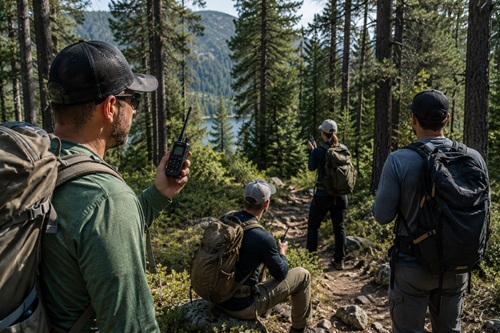
Preparedness groups also benefit from mesh communication during training exercises and community events. Volunteers spread throughout a neighborhood can quietly exchange information without occupying voice radio channels or depending on overloaded cellular networks. Organizers can distribute updates, report changing conditions, and coordinate activities while maintaining a written record of important messages. This type of communication often proves especially useful when managing logistics, tracking resources, or documenting observations that may need to be reviewed later.
Another situation where mesh networking excels is during temporary communication disruptions. Large public gatherings, concerts, festivals, sporting events, and evacuation centers sometimes overwhelm nearby cellular networks simply because thousands of people attempt to use the system at the same time. Even though the infrastructure remains operational, network congestion can delay calls and text messages for extended periods. A local mesh network operating independently of the commercial system may continue functioning normally because it does not rely on that congested infrastructure.
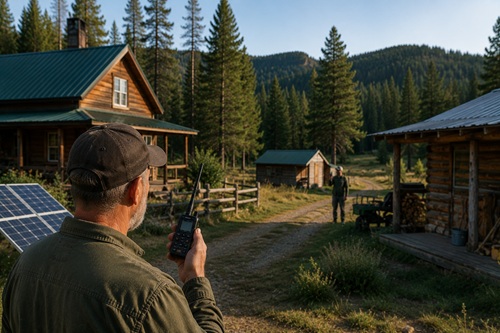
Off-grid properties represent another practical application. Cabins, homesteads, hunting camps, and remote work sites often have limited communication options, particularly in rural regions. Mesh devices can provide reliable communication between buildings, neighboring properties, or nearby family members without requiring monthly service fees or permanent infrastructure. Combined with solar charging systems or other renewable energy sources, they offer an efficient communication solution that supports long-term self-sufficiency.
It is equally important to recognize where mesh networking is less suitable. Communication across hundreds of miles, international messaging, high-speed internet access, and real-time voice conversations with distant users remain better served by other technologies. Mesh communication was designed primarily for local and regional communication among participating devices, not as a replacement for global communication networks. Understanding these limitations helps prevent unrealistic expectations while allowing the technology to be used where it performs best.
Geography also plays a significant role in determining effectiveness. Dense urban environments filled with tall buildings may limit radio signals in some locations while creating unexpected communication paths in others. Mountainous terrain can block transmissions between valleys but provide excellent coverage from elevated ridges. Forests, open farmland, suburban neighborhoods, and coastal areas each present different communication challenges. Testing equipment in your own environment remains the most reliable way to understand how well a mesh network will perform under local conditions.
Perhaps the greatest strength of mesh networking is its flexibility. It is equally at home supporting a family camping trip, helping neighbors coordinate during a prolonged power outage, connecting volunteers during a preparedness exercise, or providing communication around an off-grid property. Its versatility comes not from replacing every communication technology, but from filling the gap between conventional infrastructure and complete communication failure. When viewed as one layer within a comprehensive preparedness strategy, mesh networking provides practical value in a wide variety of real-world situations while strengthening one of preparedness’s most important capabilities: the ability to stay informed and connected when it matters most.
Understanding the Limitations of Mesh Communication
Every preparedness tool has limitations, and mesh networking is no exception. One of the most common mistakes people make is assuming that a new technology will solve every communication problem they might encounter. In reality, preparedness is about understanding both the strengths and the weaknesses of the tools you choose. Knowing what mesh communication cannot do is just as important as understanding what it does well, because realistic expectations lead to better planning and better decisions.
Perhaps the most important limitation is communication range. Although mesh networks can extend coverage by passing messages through multiple devices, they still require participating devices to be positioned where they can communicate with one another. If there are no other compatible devices between the sender and the intended recipient, the message has nowhere to travel. Unlike cellular networks, which may connect to towers many miles away, a mesh network depends on its own participants to create communication paths. The larger and more active the network becomes, the more useful it generally becomes as well.
Terrain also plays a major role in performance. Radio signals do not travel equally well in every environment. Mountains, hills, dense forests, reinforced concrete buildings, and even large industrial structures can reduce communication range by blocking or weakening radio signals. Open farmland may provide excellent coverage, while a heavily built-up downtown area could produce communication dead zones. Every location presents different challenges, which is why testing equipment where it will actually be used is far more valuable than relying on published range estimates.

Network size is another factor that deserves realistic consideration. A family owning only two mesh devices should not expect the same communication capability as an established preparedness group with dozens of active participants spread throughout a community. One of the strengths of mesh networking is that every additional participant has the potential to improve the network. At the same time, very small networks naturally have fewer routing options available. Building a strong mesh network is often less about purchasing more powerful equipment and more about encouraging trusted friends, neighbors, and preparedness groups to participate.
Battery life, while generally excellent, is not unlimited. Many mesh devices can operate for extended periods because they transmit only small amounts of data, but every electronic device eventually requires power. Long-duration emergencies should always include plans for recharging communication equipment through battery banks, vehicle charging systems, portable solar panels, or other backup power sources. A communication device with a depleted battery offers no advantage over one left at home.
Another limitation involves the type of information being transmitted. Most preparedness-focused mesh systems are designed for short messages, location sharing, and small amounts of digital information. They are not intended for lengthy conversations, streaming media, or transferring large files. This is not a design flaw but a deliberate engineering decision that helps conserve power, improve reliability, and maximize communication efficiency. Understanding this purpose helps users appreciate the technology for what it was designed to accomplish rather than expecting capabilities it was never intended to provide.
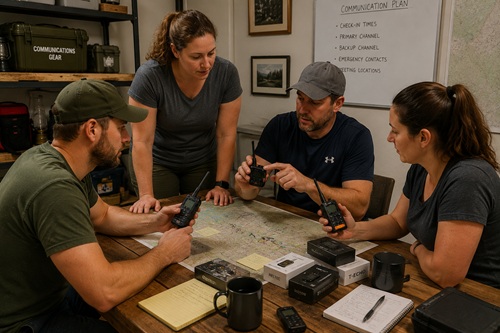
Users should also recognize that mesh communication requires compatible equipment. Unlike ordinary text messages that can usually be exchanged between different brands of smartphones, mesh devices often work best when participants use equipment designed for the same communication protocol and configured with compatible settings. Before investing in equipment for a preparedness group, it is worthwhile to discuss device compatibility, software versions, and network configuration so everyone can communicate effectively from the beginning.
It is equally important to understand that mesh networking is not immune to user error. Poor antenna placement, incorrect settings, depleted batteries, forgotten passwords, or simply failing to practice can reduce the effectiveness of even the best equipment. Fortunately, these are all problems that can be identified and corrected long before an emergency occurs. Regular practice, routine equipment checks, and clear operating procedures are often far more valuable than purchasing additional hardware.
None of these limitations diminish the value of mesh communication. Instead, they reinforce one of the most important principles of preparedness: no single solution should ever become the only solution. Mesh networking works best when combined with other communication methods as part of a layered strategy. Understanding both its capabilities and its limitations allows you to use the technology where it excels while maintaining alternative communication options for situations where another tool may be more appropriate. That balanced approach is what transforms mesh networking from an interesting gadget into a dependable preparedness resource.
Choosing the Right Mesh Communication Equipment
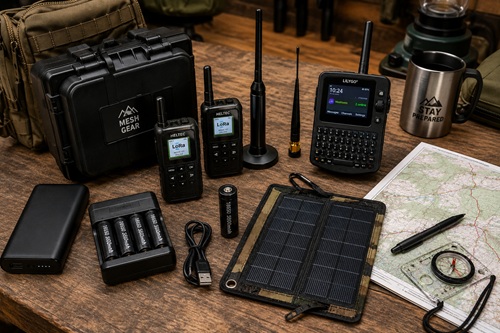
After learning how mesh networking works, many people immediately begin comparing devices, reading reviews, and looking for the model with the greatest range or the longest list of features. While research is important, choosing the right equipment begins with a much simpler question: What problem are you trying to solve? The best communication device is not necessarily the newest or most expensive one. It is the one that best matches your preparedness needs, your environment, and the people you expect to communicate with.
The first consideration should always be how the equipment will be used. A family looking for a reliable way to stay in contact while camping or hiking has different requirements than a neighborhood preparedness group coordinating emergency response activities. Likewise, someone living on a remote homestead faces different communication challenges than a family living in a densely populated suburban community. Defining the intended purpose before purchasing equipment helps narrow the available options and prevents spending money on features that may never be used.
Compatibility is another important consideration. A mesh network is only effective when participating devices can communicate with one another. Before purchasing equipment for a family, preparedness group, or neighborhood network, ensure everyone intends to use compatible hardware and software. Standardizing equipment whenever possible simplifies training, troubleshooting, and future expansion while reducing the likelihood of communication problems caused by incompatible configurations.
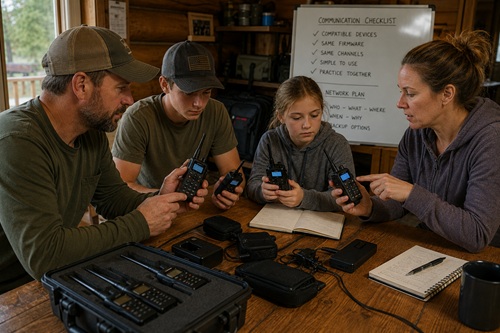
Ease of use should never be overlooked. During an emergency, complicated menus and confusing controls quickly become frustrating. Communication equipment should be simple enough that every family member can operate it confidently, even under stressful conditions. Large, easy-to-read displays, straightforward controls, and intuitive software often provide greater practical value than advanced features that require extensive technical knowledge to use effectively.
Battery performance is equally important. One of the advantages of many mesh communication devices is their ability to operate for extended periods on relatively small batteries. Even so, compare expected operating times under realistic conditions rather than relying solely on manufacturer specifications. Consider how easily batteries can be recharged, whether replacement batteries are readily available, and how the equipment will be powered during prolonged outages. Backup charging options such as portable battery banks, vehicle chargers, or small solar panels should be considered part of the communication system rather than optional accessories.
Durability also deserves careful attention. Preparedness equipment may be exposed to rain, dust, vibration, temperature extremes, and rough handling. Devices designed for outdoor use often include water resistance, stronger housings, and improved protection against accidental drops. While not every user requires ruggedized equipment, choosing devices capable of withstanding realistic operating conditions increases long-term reliability and reduces the likelihood of equipment failure when communication becomes most important.
As your preparedness needs grow, think about expansion rather than immediate perfection. Many successful mesh networks begin with only two or three devices used by a single family. As confidence increases, additional units can be added to include trusted neighbors, preparedness groups, or nearby relatives. Building gradually allows users to gain experience while spreading equipment costs over time. It also provides opportunities to learn what features are genuinely useful before investing in larger systems.
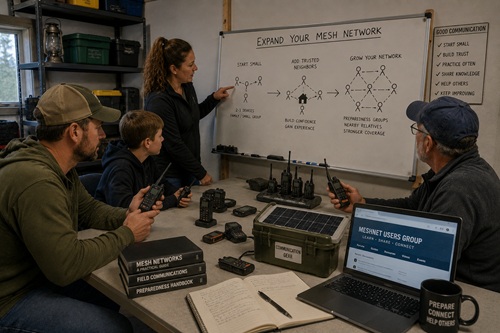
Support from the user community is another factor worth considering. Equipment with active user communities often benefits from detailed documentation, instructional videos, software improvements, and practical advice from experienced operators. A strong community can shorten the learning curve, provide troubleshooting assistance, and introduce new ideas that help users get the most from their equipment. In many cases, the knowledge shared by experienced users becomes almost as valuable as the equipment itself.
Finally, resist the temptation to chase specifications alone. The device with the longest advertised range, highest power output, or greatest number of features is not automatically the best preparedness choice. Reliability, simplicity, compatibility, battery life, and ease of operation often have a greater influence on long-term usefulness than technical specifications. Preparedness equipment should inspire confidence, not require constant adjustment or specialized knowledge to operate effectively.
Choosing mesh communication equipment is ultimately an investment in capability rather than technology. The objective is not to own the most advanced device available but to build a communication system that your family understands, trusts, and practices with regularly. When equipment is selected with realistic goals in mind and integrated into a well-developed communication plan, it becomes a dependable part of your overall preparedness strategy rather than simply another gadget stored in an emergency kit.
Building a Mesh Network for Your Family and Community
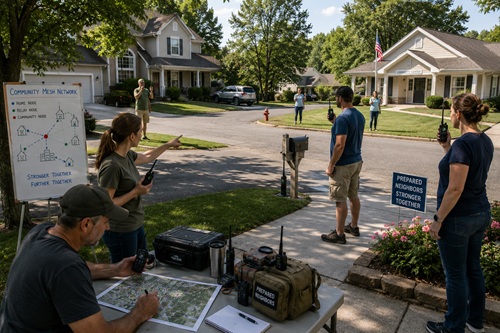
Many people purchase communication equipment with the intention of protecting their own family, but one of the greatest strengths of mesh networking is that it becomes more valuable as additional people participate. Unlike many emergency communication systems that primarily benefit the individual user, a mesh network improves as the community grows. Every new participant has the potential to extend communication coverage, create additional routing paths, and strengthen the overall resilience of the network. This cooperative design makes mesh networking especially well suited for preparedness groups, neighborhoods, and mutual assistance organizations.
The best place to begin is with your own household. Every family member should understand how the communication devices operate, where they are stored, and under what circumstances they should be used. Children, teenagers, and older adults should all become familiar with the equipment appropriate to their abilities. During an emergency, the goal is not to teach someone how the technology works but to use skills that have already been practiced. Familiarity reduces confusion and allows everyone to focus on the situation rather than the equipment.
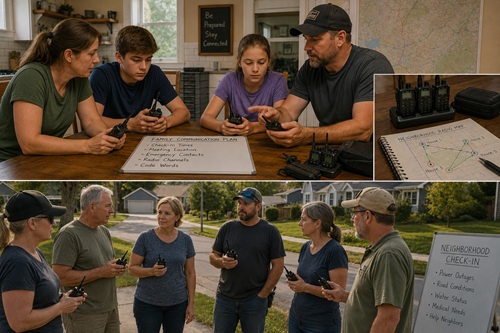
Once the immediate family is comfortable using the system, consider expanding communication to trusted neighbors. Emergencies often affect entire neighborhoods rather than individual households, making local communication especially valuable. A simple network connecting several nearby homes allows residents to exchange information about road conditions, utility outages, damaged property, medical emergencies, or neighbors requiring assistance. Even a small neighborhood network can significantly improve situational awareness while reducing unnecessary travel and uncertainty.
Preparedness groups naturally benefit from this type of communication. Members can coordinate meetings, training exercises, and emergency responses without relying entirely on commercial communication systems. During severe weather, members can report conditions from different parts of the community, helping everyone develop a more complete understanding of changing circumstances. This ability to gather information from multiple trusted sources often proves more valuable than relying on rumors or fragmented reports circulating through social media.
As participation grows, it becomes useful to establish simple communication procedures. These do not need to be complicated, but everyone should understand how the network will be used. Agreeing on naming conventions for devices, determining how frequently communication checks will occur, and establishing priorities for emergency messages helps reduce confusion when communication becomes important. Consistency allows participants to focus on sharing information instead of interpreting different communication styles or procedures.
Community communication also benefits from identifying important locations in advance. Schools, community centers, churches, emergency shelters, medical clinics, fuel stations, and designated meeting locations may all become important points of reference during an emergency. Ensuring these locations can be reached through the communication network strengthens coordination while making it easier to share accurate information about changing conditions. Mapping these locations and periodically testing communication coverage around them provides valuable insight into the strengths and weaknesses of the network.
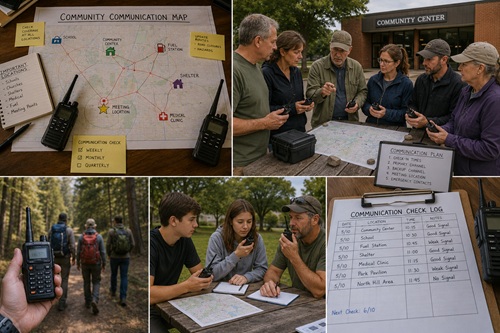
Training together is equally important. A communication network that is never used before an emergency is little more than an untested collection of equipment. Regular practice sessions help participants become familiar with the devices while identifying problems that can be corrected long before communication becomes critical. These exercises need not be elaborate. A monthly neighborhood communication check, a preparedness group exercise, or a family camping trip provides excellent opportunities to practice under realistic conditions while building confidence among all participants.
One of the unexpected benefits of community communication is the relationships it helps build. As neighbors and preparedness groups practice together, they naturally learn more about one another’s skills, equipment, and resources. Some participants may have medical training, others may own generators or chainsaws, while others possess valuable knowledge of local geography or emergency response procedures. Communication becomes the mechanism through which these individual capabilities are brought together, creating a stronger and more resilient community than any household could achieve independently.
Ultimately, building a mesh network is about far more than connecting electronic devices. It is about connecting people. Technology provides the means to exchange information, but trust, cooperation, and regular practice are what transform a collection of radios into a reliable preparedness resource. Families that communicate effectively become more confident. Neighborhoods that share information become more resilient. Communities that practice together become better prepared to face uncertainty, and that is the true strength of any emergency communication network.
Common Mistakes That Reduce Communication Effectiveness
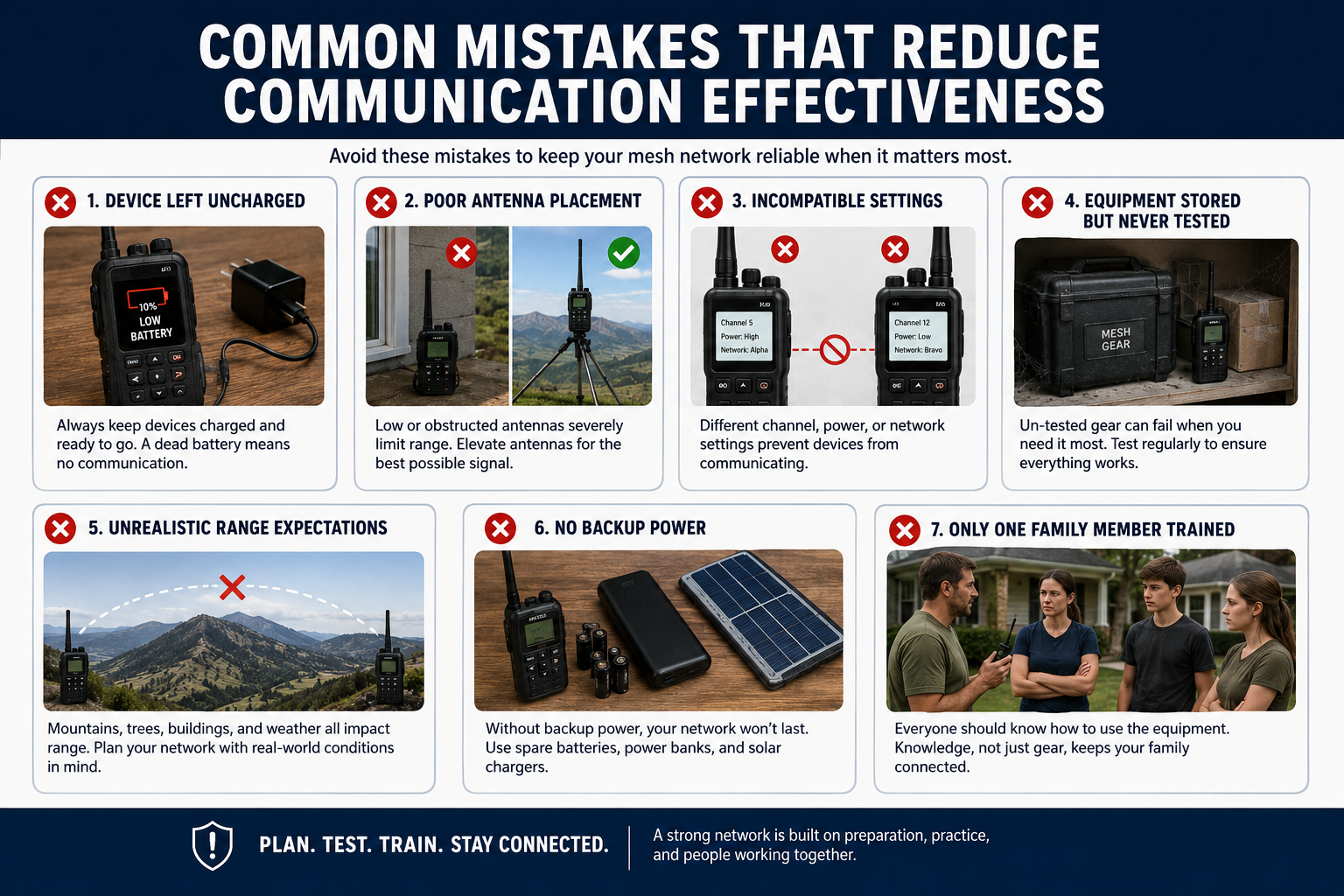
Purchasing reliable communication equipment is an important step, but owning good equipment does not automatically create good communication. Many preparedness-minded individuals invest considerable time comparing radios, antennas, batteries, and technical specifications, yet spend very little time developing a communication plan or practicing with the equipment they already own. As a result, some of the biggest communication failures occur not because the technology stopped working, but because the people using it were unprepared.
One of the most common mistakes is purchasing equipment before identifying the problem it is meant to solve. Mesh communication is an excellent tool for many situations, but it is not the right solution for every communication challenge. A family that wants to stay connected while hiking in remote areas has very different needs than a neighborhood preparedness group coordinating after a severe storm. Defining your communication objectives first makes selecting the right equipment much easier and helps avoid spending money on features that provide little practical benefit.
Another mistake is relying entirely on manufacturer range claims. Communication distances advertised on product packaging are often measured under nearly ideal conditions, such as open terrain with clear line-of-sight and minimal interference. Real-world conditions are rarely so accommodating. Buildings, hills, forests, weather conditions, and even the position of the device can significantly affect communication range. The only way to understand how well a mesh network performs in your area is to test it where you actually expect to use it.
Many new users also underestimate the importance of proper device placement. Radio signals generally travel farther when devices are located on higher ground or in open areas with fewer obstructions. A device carried inside a vehicle or deep within a backpack may not perform as well as one positioned where its antenna has a clearer path to nearby participants. Small changes in location can sometimes produce surprisingly large improvements in communication reliability without requiring any additional equipment.
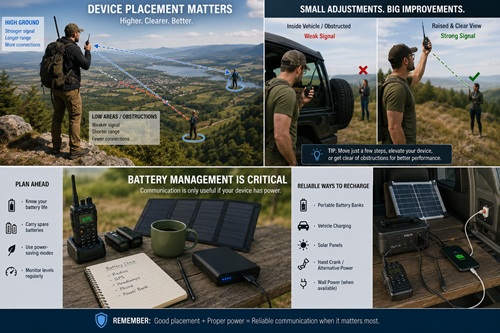
Battery management is another area that deserves attention. Although many mesh devices are extremely energy efficient, every battery eventually requires recharging. It is easy to assume that long battery life eliminates the need for backup power, but extended emergencies often last much longer than expected. Every communication plan should include methods for recharging equipment using portable battery banks, vehicle charging systems, solar panels, or other reliable power sources. Planning for power is every bit as important as planning for communication itself.
Another common mistake is failing to involve the entire family. A communication plan is only effective if everyone understands how it works. Too often, one person becomes the “radio expert” while everyone else assumes they will simply be told what to do during an emergency. This creates another unnecessary point of failure. Every family member should know where communication equipment is stored, how to operate it, and when to use it. Even basic familiarity can make an enormous difference when stress levels are high.
Some preparedness groups also overlook the importance of standardization. If participants use different communication settings, incompatible software versions, or different operating procedures, confusion can quickly develop when communication becomes critical. Establishing common configurations, simple operating guidelines, and regular communication practices helps ensure everyone is working together instead of struggling with unnecessary technical problems.
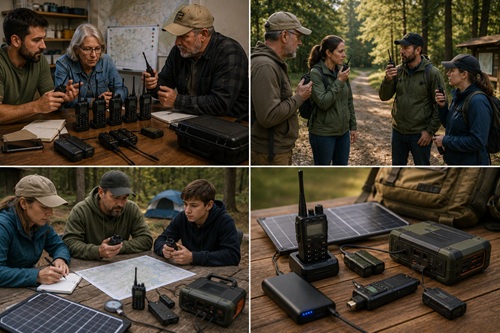
Perhaps the most significant mistake is failing to practice. Communication equipment that remains stored in an emergency kit for years without being tested cannot be assumed to work when needed. Batteries may discharge, settings may be forgotten, software may require updates, and family members may no longer remember how the equipment operates. Regular practice transforms communication from unfamiliar technology into a dependable preparedness skill. Even short monthly exercises provide valuable experience while revealing small problems before they become significant.
Finally, avoid viewing mesh networking as a complete replacement for every other communication method. Preparedness is built on redundancy, not dependence. The strongest communication plans combine multiple technologies, allowing families to adapt as conditions change. Mesh networking, handheld radios, satellite communicators, printed contact lists, paper maps, and predetermined meeting locations each contribute different strengths. When these tools work together, they create a communication system that is far more resilient than relying on any single device or technology alone.
The most successful preparedness planners understand that communication is not about owning the newest equipment. It is about creating a reliable system that can continue functioning under difficult circumstances. Careful planning, realistic expectations, regular practice, and continuous improvement will always contribute more to communication success than technical specifications alone. When these principles become part of your preparedness routine, mesh networking evolves from an interesting technology into a practical capability that strengthens both your family and your community.
Practicing with Your Mesh Network Before an Emergency
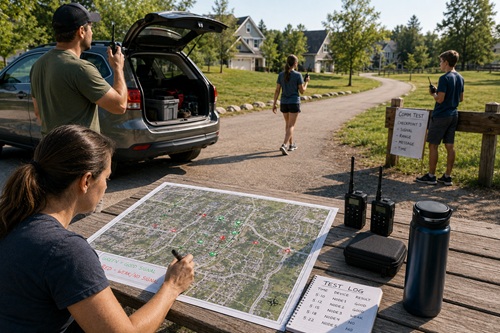
One of the most valuable investments you can make in any communication system costs nothing at all. It is not a new radio, a larger antenna, or a more powerful battery—it is regular practice. Communication equipment that has never been tested under realistic conditions cannot be assumed to perform as expected during an emergency. Familiarity with your equipment, your environment, and your communication procedures is what transforms a collection of electronic devices into a dependable preparedness capability.
Many people purchase emergency equipment with the best intentions, only to place it in a drawer or emergency kit where it remains untouched until it is finally needed. Unfortunately, emergencies are the worst time to discover that batteries have discharged, settings have changed, software requires updating, or family members no longer remember how the equipment operates. These problems are usually simple to correct, but only if they are discovered before communication becomes critical.
The best practice exercises are often the simplest. Take your mesh devices on a neighborhood walk and exchange messages from different locations. Use them during a family camping trip where cellular service is unavailable or intentionally left behind. Test communication while traveling between home and work or while visiting places your family regularly frequents. These everyday experiences provide valuable insight into how the network performs under realistic conditions while helping everyone become comfortable using the equipment.
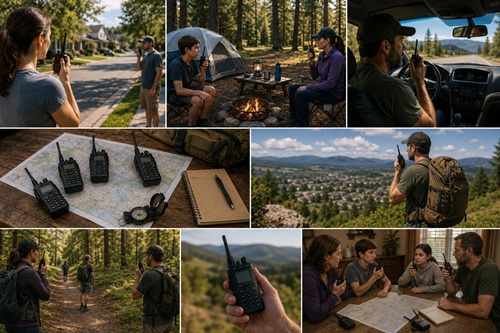
Practicing also helps you understand the influence of your local environment. Every community has areas where communication works exceptionally well and others where signals may be weakened by terrain, buildings, or vegetation. You may discover that standing on a nearby hill dramatically improves coverage or that certain neighborhoods consistently create communication dead zones. This local knowledge cannot be found in a product manual or online review. It is gained only through experience and becomes one of the most valuable parts of your communication planning.
Preparedness groups benefit even more from regular communication exercises. A monthly communication check allows members to verify that equipment is functioning correctly, confirm network settings, and practice exchanging information using established procedures. These exercises also strengthen relationships among participants, improve coordination, and help identify opportunities to expand or improve the network. Over time, communication becomes more efficient because everyone develops confidence through repeated use rather than trying to learn during an emergency.
Practice should extend beyond operating the equipment itself. Use each exercise to evaluate your communication plan. Are messages clear and concise? Does everyone understand when to switch from one communication method to another? Can family members quickly locate their equipment and begin using it without assistance? Are backup charging methods readily available? Every practice session should answer these questions while identifying small improvements that make the entire system more dependable.
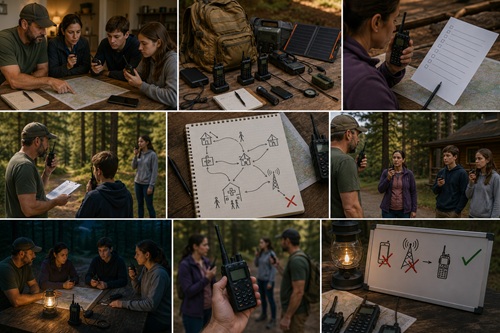
It is also worthwhile to simulate realistic emergency conditions occasionally. Try communicating without using cellular phones for an afternoon or during a camping weekend. Conduct a family exercise where everyone follows the written communication plan as though normal infrastructure has become unavailable. These scenarios often reveal weaknesses that would never become apparent during routine equipment testing. They also build confidence by demonstrating that the communication plan actually works under conditions similar to those you may one day experience.
As confidence grows, encourage other trusted individuals to participate. Every additional family, neighbor, or preparedness group member increases the value of the network while creating new opportunities to practice coordination and information sharing. A communication network that regularly exercises together develops habits, trust, and procedures that cannot be created overnight. These relationships become just as important as the equipment itself because effective communication ultimately depends on people working together.
Perhaps the greatest benefit of regular practice is peace of mind. Knowing that your equipment has been tested, your family understands the procedures, and your communication plan has already been used successfully under realistic conditions removes much of the uncertainty associated with emergencies. When communication is no longer an unknown, attention can be focused on solving problems, helping others, and adapting to changing circumstances. That confidence is earned through practice, and it is one of the most valuable preparedness assets you can develop.
Integrating Mesh Networking Into Your Overall Preparedness Strategy
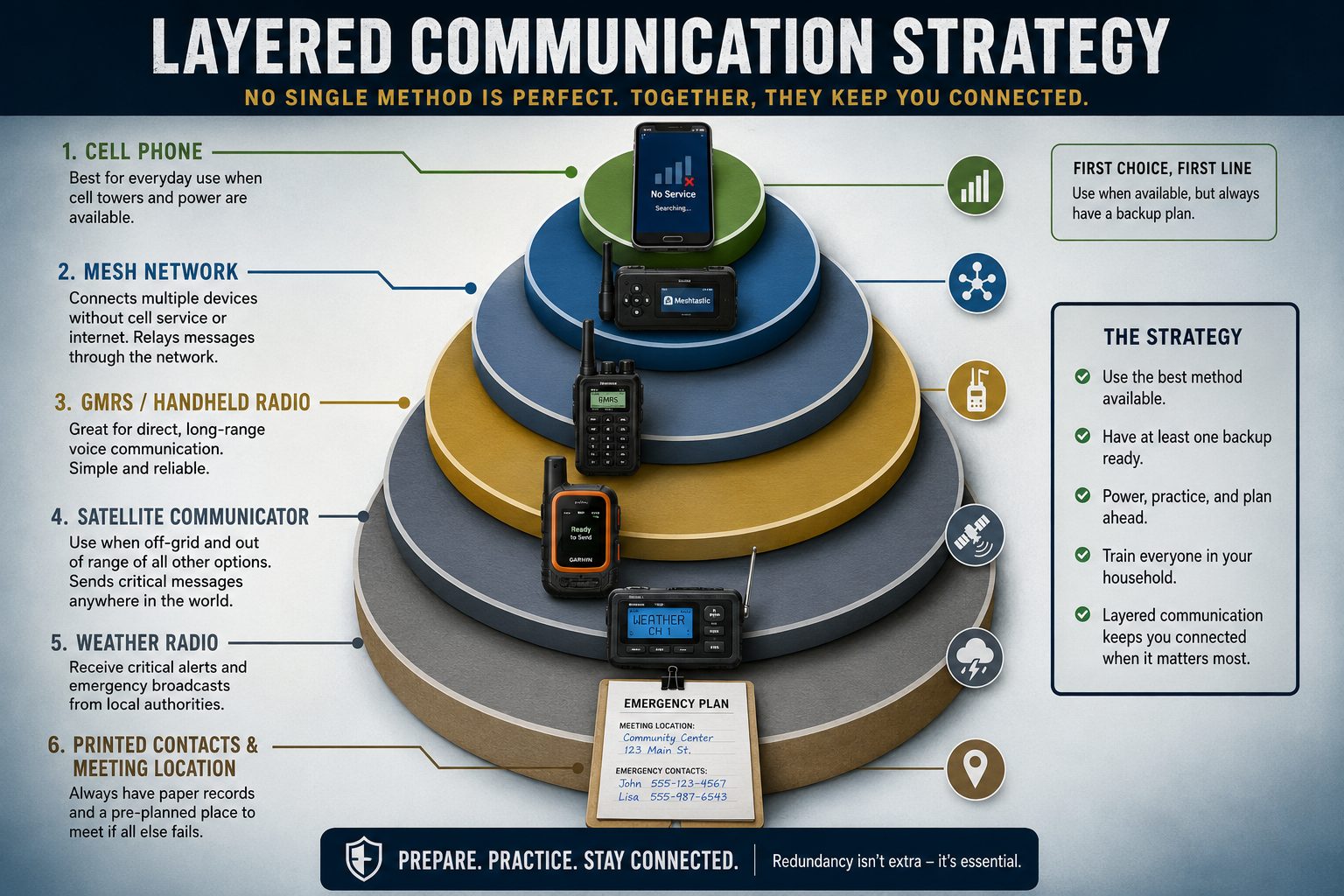
One of the biggest mistakes people make after discovering a new preparedness tool is allowing it to become the center of their preparedness plan. This often happens with generators, solar panels, freeze dryers, water filters, and communication equipment. Every new technology promises to solve an important problem, and it is easy to become enthusiastic about its potential. While that enthusiasm can motivate learning, preparedness has never been about finding one perfect solution. It is about building multiple layers of capability that work together to create resilience.
Mesh networking should be viewed as one layer within a much broader communication strategy. Cell phones remain the most convenient communication tool whenever commercial infrastructure is functioning normally. Handheld radios provide immediate voice communication during rapidly changing situations. Satellite communicators offer dependable long-distance communication from remote locations. Printed contact lists, paper maps, and predetermined meeting locations continue to work even when every electronic device fails. Mesh networking fills another important role by providing decentralized text communication that can continue operating independently of cellular towers and internet service. Each system contributes something different, and together they create a far more reliable communication plan than any single technology could provide.
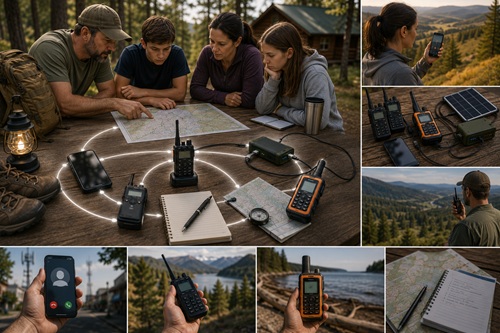
This layered approach reflects one of the most important principles in preparedness: redundancy. A family that stores only one source of drinking water accepts unnecessary risk if that source becomes contaminated. The same principle applies to communication. Depending entirely on a smartphone assumes that cellular infrastructure will always be available. Depending entirely on one radio assumes that equipment will never fail or become damaged. By combining several communication methods, you reduce the likelihood that one unexpected failure will leave your family unable to exchange important information.
Communication planning should also be integrated into every other preparedness activity. Food storage, emergency power, medical preparedness, home security, evacuation planning, and neighborhood response all depend on reliable communication. During a prolonged power outage, communication helps coordinate generator fuel, food preparation, and neighborhood welfare checks. During an evacuation, it helps family members remain connected while sharing road conditions and changing instructions. During severe weather, it provides timely information that influences countless preparedness decisions. Communication should not be viewed as a separate project but as a capability that supports every other aspect of emergency preparedness.
This broader perspective also changes how preparedness groups operate. Rather than purchasing communication equipment simply because it is available, successful groups first determine how communication will support their overall mission. They identify who needs to communicate, what information is most important, how frequently updates should be exchanged, and which communication methods are appropriate for different situations. Technology is then selected to support those objectives rather than allowing the equipment to dictate the communication plan.
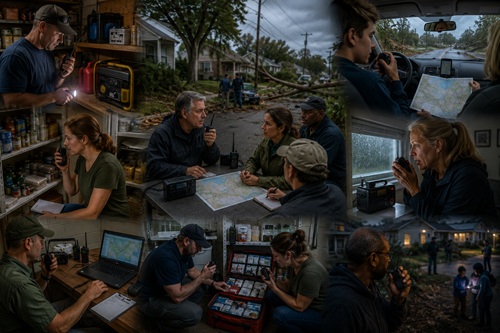
As your preparedness develops, you will likely discover that communication planning becomes increasingly interconnected with other skills. Navigation becomes more effective when combined with reliable communication. First aid response improves when medical information can be shared quickly. Neighborhood security benefits from timely observations reported by trusted participants. Resource management becomes more efficient when families can coordinate supplies, transportation, and assistance without unnecessary confusion. Communication strengthens every one of these capabilities because information allows people to make better decisions.
It is equally important to recognize that preparedness is never static. Families change, children grow older, equipment is upgraded, communities evolve, and new communication technologies continue to emerge. A communication plan should therefore be treated as a living document rather than something written once and forgotten. Periodically reviewing procedures, updating equipment, practicing with family members, and incorporating new knowledge ensures that your communication strategy continues meeting your preparedness needs as circumstances change.
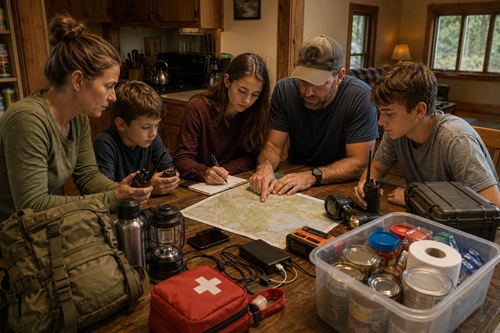
Perhaps the greatest advantage of integrating mesh networking into a broader preparedness strategy is the confidence it creates. Instead of wondering how your family would communicate if normal systems became unavailable, you already have multiple options available. You understand when each communication method should be used, who will use it, and how everyone will respond if conditions continue changing. That confidence reduces uncertainty, improves decision-making, and allows attention to remain focused on solving problems rather than worrying about how information will be shared.
Ultimately, mesh networking is not valuable because it is new or technologically interesting. It is valuable because it strengthens one of the most fundamental principles of preparedness: building resilient systems that continue functioning when circumstances become difficult. When integrated with thoughtful planning, regular practice, and other communication methods, it becomes another dependable layer that helps families and communities remain informed, coordinated, and connected regardless of the challenges they may face.
Looking Toward the Future of Emergency Communications
Communication technology continues to evolve at an extraordinary pace. Only a few decades ago, most households relied on landline telephones, and mobile phones were expensive, bulky, and limited in their capabilities. Today, smartphones combine voice communication, messaging, navigation, photography, weather forecasting, and internet access into a single device that fits in a pocket. While these advancements have made communication more convenient than ever, they have also increased our dependence on complex infrastructure that most people rarely think about until it becomes unavailable.
Mesh networking represents a different direction in the evolution of communication technology. Rather than relying entirely on centralized infrastructure, it returns part of that capability to the people using the network. Every compatible device contributes to the communication system, allowing communities to create their own resilient networks that operate independently of commercial providers. This decentralized approach reflects a broader trend toward local resilience and self-sufficiency that is becoming increasingly important within the preparedness community.
Technology itself will continue improving. Future mesh devices will almost certainly become smaller, lighter, more energy efficient, and easier to operate. Battery technology continues advancing, allowing longer operating times from smaller power sources. Radio hardware is becoming more capable while consuming less electricity, and software developers continue simplifying device configuration so that people with little technical experience can participate. These improvements will likely make mesh networking more accessible to families, neighborhoods, and preparedness groups than ever before.
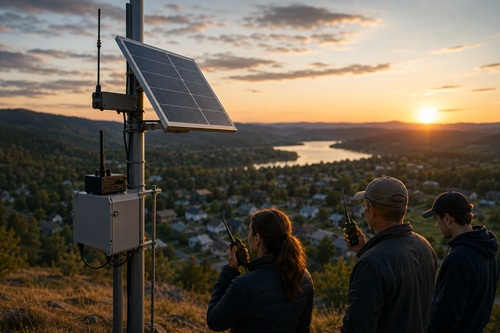
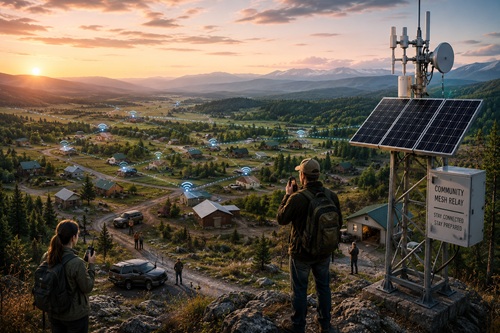
One of the most promising developments is the growth of community-operated communication infrastructure. Around the world, volunteers are installing permanent relay stations powered by small solar panels and rechargeable batteries. Positioned on rooftops, hillsides, towers, or other elevated locations, these relay stations help extend communication coverage while requiring very little ongoing maintenance. Because they are owned and maintained by the communities they serve, they provide another example of preparedness moving away from dependence on centralized systems and toward locally managed resilience.
Another emerging trend is the integration of multiple communication technologies into unified preparedness strategies. Instead of asking which communication system is best, preparedness planners increasingly ask how different systems can work together. Smartphones, mesh networks, handheld radios, satellite communicators, weather radios, and traditional paper maps all contribute different strengths. By combining these tools, families create communication plans that remain flexible as conditions change rather than depending entirely on any single technology.
Preparedness-minded communities are also recognizing that communication is about much more than exchanging messages. Reliable communication strengthens cooperation, encourages regular training, improves resource coordination, and supports neighborhood resilience. As more people adopt decentralized communication systems, the value of those networks extends beyond emergencies into everyday community building. Neighbors who communicate regularly often become better prepared because communication naturally leads to discussions about first aid, emergency power, food storage, water security, and mutual assistance.
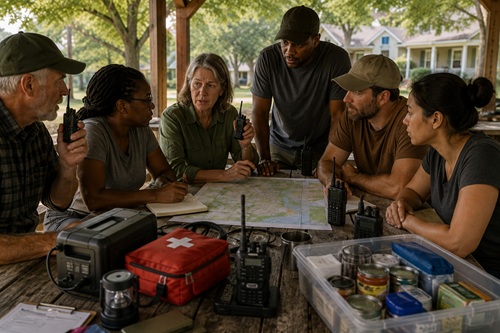
Despite these technological advances, one principle will remain unchanged. Communication equipment is only a tool. The effectiveness of any communication system depends far more on the people using it than on the hardware itself. Families that practice together, review their communication plans, maintain their equipment, and regularly test their procedures will always gain more from their communication systems than those who simply purchase new devices and hope they never need them.
It is also important to recognize that no technology can replace thoughtful planning. Every communication system has limitations, whether those limitations involve distance, terrain, battery life, weather conditions, or infrastructure. Preparedness is about understanding those limitations and planning accordingly. The strongest communication plans are built on flexibility, redundancy, and realistic expectations rather than assuming any single device will solve every problem.
Perhaps the greatest lesson for the future is that resilience begins at the local level. National infrastructure, emergency services, and commercial communication systems all play important roles, but during the first hours of many emergencies, families, neighbors, and local communities are often the first to respond. The ability to exchange accurate information quickly, coordinate resources, and support one another may have a greater impact than any individual piece of equipment. Mesh networking contributes to that capability by giving communities another dependable way to stay connected, strengthening one of the most valuable assets in preparedness: the ability to work together when it matters most.
Final Thoughts
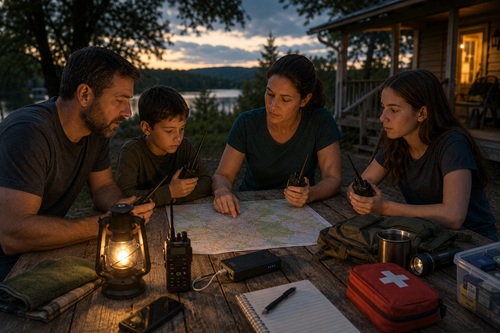
Reliable communication has always been one of the foundations of preparedness. Long before smartphones and the internet existed, families, communities, and emergency responders depended on having dependable ways to exchange information when conditions changed unexpectedly. While the technology has evolved dramatically over the years, the underlying objective has remained the same: ensuring that accurate information reaches the right people at the right time so informed decisions can be made. Mesh networking represents another step in that evolution by giving individuals and communities greater control over their own communications instead of depending entirely on infrastructure they neither own nor control.
Throughout this lesson, one theme has appeared repeatedly: preparedness is about building resilience rather than chasing perfection. No communication system can guarantee that every message will always be delivered under every circumstance. Cellular networks can become overloaded, radio signals can be blocked by terrain, batteries eventually require recharging, and equipment can fail unexpectedly. The goal has never been to eliminate every possible failure. Instead, preparedness focuses on reducing the impact of those failures by building multiple layers of communication that support one another as conditions change.
Mesh networking demonstrates this philosophy exceptionally well. It does not replace smartphones, handheld radios, satellite communicators, or traditional emergency planning. Instead, it fills an important gap by providing decentralized communication that can continue functioning independently of commercial infrastructure. When integrated into a broader communication strategy, it gives families and communities another dependable option for exchanging information when conventional systems become unreliable.
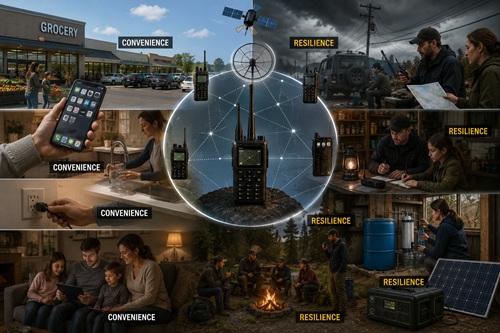
Perhaps the greatest lesson extends beyond communication itself. Every preparedness decision involves balancing convenience with resilience. Grocery stores are convenient, but food storage provides resilience. The electrical grid is convenient, but backup power provides resilience. Municipal water systems are convenient, but stored water and filtration provide resilience. Communication follows exactly the same pattern. Modern communication networks offer incredible convenience, while decentralized communication systems provide additional resilience when circumstances become less predictable. The strongest preparedness plans recognize the value of both rather than relying exclusively on either.
It is equally important to remember that communication equipment alone does not create preparedness. Knowledge, planning, and practice remain far more valuable than technology by itself. A modest communication system that has been tested regularly and is understood by every family member will almost always outperform sophisticated equipment that has never been used outside the box. Preparedness has always been about developing practical capabilities, and communication is no different. Confidence comes from experience, not from specifications printed on product packaging.
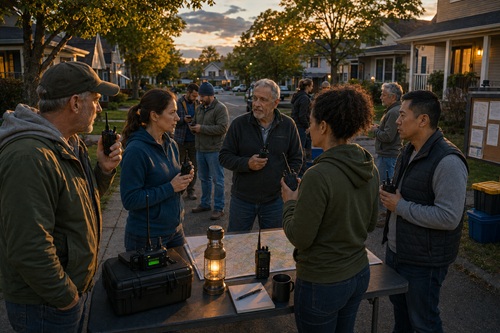
The importance of community should also not be overlooked. Emergencies rarely affect only one individual or one household. Neighbors often become the first source of assistance, information, and support long before outside resources arrive. Communication strengthens those relationships by allowing people to coordinate efforts, share observations, identify urgent needs, and work together toward common goals. Mesh networking is valuable not because it connects electronic devices, but because it helps connect people when communication matters most.
As technology continues advancing, the specific tools discussed in this lesson will undoubtedly change. New devices will be introduced, communication protocols will improve, batteries will become more efficient, and software will continue evolving. Those changes are inevitable. What will not change are the preparedness principles behind them. Families that plan ahead, practice regularly, maintain multiple communication options, and invest in strong community relationships will always be better prepared than those who depend entirely on convenience and assume existing systems will always remain available.
Ultimately, preparedness is an ongoing process of reducing uncertainty. Every improvement made today—whether creating a family communication plan, practicing with new equipment, involving trusted neighbors, or learning a new skill—adds another layer of resilience for tomorrow. Mesh networking is simply one example of how thoughtful planning can reduce dependence on vulnerable systems while increasing your ability to adapt as circumstances change.
If there is one lesson to remember after completing this training, it is this: communication is not just about staying connected. It is about preserving the ability to make informed decisions, coordinate with others, and respond effectively when normal systems become unreliable. That capability supports every other aspect of preparedness and remains one of the most valuable investments any family or community can make.
Build Your Communication Plan
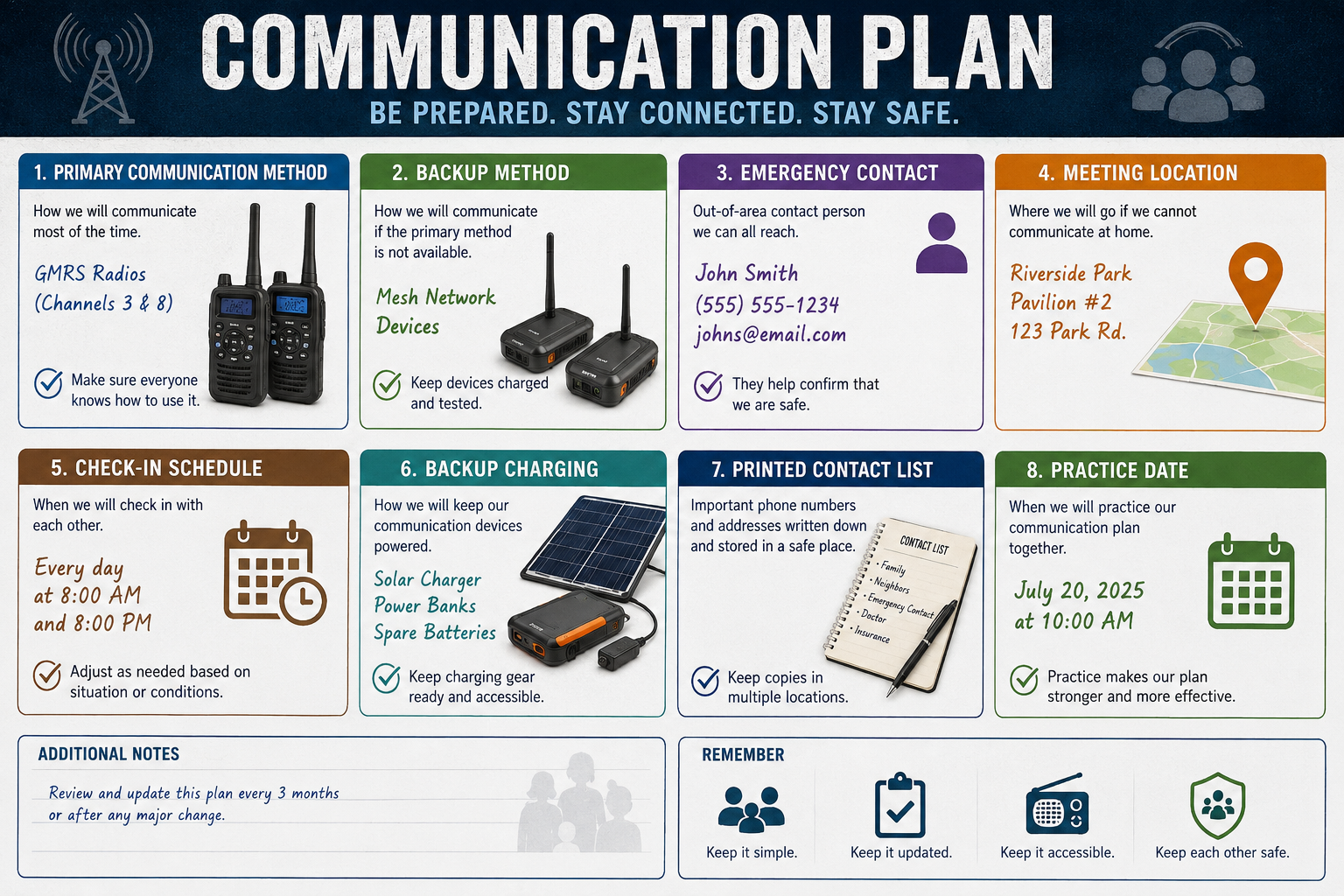
Completing this lesson is only the beginning. The real value of communication preparedness comes from applying what you have learned to your own family and circumstances. Every household has different communication needs, but every household benefits from having a written plan that can be followed when normal communication systems become unreliable. A communication plan reduces uncertainty, minimizes confusion, and allows family members to act confidently instead of making important decisions under stress.
Start by evaluating how your family communicates during a normal week. Consider where everyone spends their time, how far apart they are during work or school hours, and what communication methods they rely on every day. Then imagine that cellular service suddenly becomes unavailable. Think through how you would confirm that everyone is safe, how important information would be shared, and where family members would meet if communication became impossible. This simple exercise often reveals weaknesses that are easy to correct before an emergency occurs.
Next, identify the communication tools you already have available. Smartphones, handheld radios, mesh communication devices, satellite communicators, weather radios, printed contact lists, and paper maps all have strengths and limitations. Instead of searching for one perfect solution, think about how these tools can work together. A layered communication strategy is almost always more reliable than depending on a single device or technology.
Once you understand your current capabilities, write down a simple communication procedure that every family member can follow. Decide which communication method will be used first, when it is time to switch to a backup method, who should contact relatives outside the immediate area, and where everyone should meet if electronic communication is no longer possible. Writing these decisions down before an emergency removes guesswork when clear thinking becomes more difficult.
If you decide that mesh networking belongs in your preparedness plan, begin with a small, manageable system. Learn how the equipment operates, practice sending messages in the places where you expect to use it, and involve every family member in those exercises. As your confidence grows, consider expanding the network by including trusted neighbors, nearby relatives, or preparedness group members. Every additional participant not only strengthens the network but also builds stronger community relationships.
Finally, treat your communication plan as a living part of your preparedness program rather than a document that is created once and forgotten. Review it regularly, update contact information, replace aging batteries, test your equipment, and practice under realistic conditions. Families change, technology evolves, and circumstances rarely remain the same for long. A communication plan that is reviewed and practiced periodically will remain useful long after it is first written.
The purpose of this exercise is not to create a perfect communication system overnight. It is to begin building one deliberate improvement at a time. Every conversation you have, every piece of equipment you learn to use, and every practice session you complete strengthens your ability to stay connected, make informed decisions, and support the people who depend on you when communication matters most.
Skills Learned
By completing this lesson, you have gained a practical understanding of how mesh communication networks fit within an overall preparedness strategy. More importantly, you should now be able to evaluate your own communication readiness and identify opportunities to improve it before an emergency occurs.
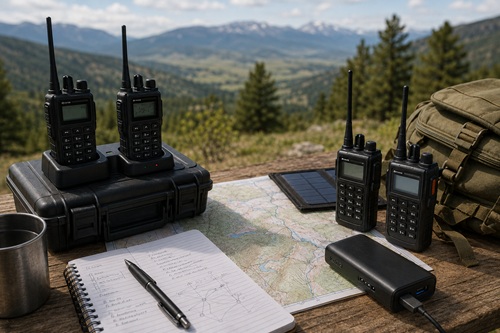
You now understand why modern communication systems can become unreliable during severe weather, power outages, infrastructure failures, and periods of heavy network congestion. Rather than assuming communication will always be available, you have learned the importance of building multiple, independent ways to stay connected when normal systems are disrupted.
You should now be able to explain, in simple terms, how a mesh communication network operates and how it differs from traditional communication systems. You understand how compatible devices communicate directly with one another, how messages can be relayed through additional devices, and why decentralized communication can provide greater resilience during emergencies.
You have also learned how mesh networking differs from traditional two-way radios and why each technology serves a different purpose. Instead of viewing them as competing systems, you now understand how they can work together as part of a layered communication strategy that provides greater flexibility under changing conditions.
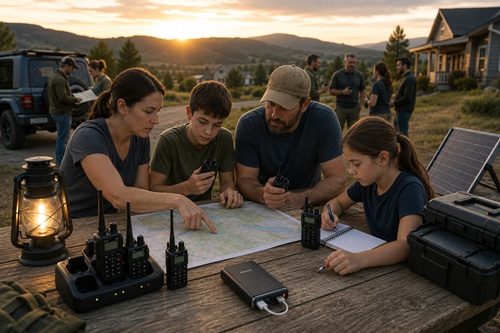
This lesson has also introduced the factors that influence communication performance, including terrain, distance, battery management, device placement, network size, and regular practice. Understanding these variables allows you to make informed decisions based on realistic expectations rather than relying solely on manufacturer specifications or marketing claims.
Beyond the technology itself, you have learned that effective communication depends on planning, preparation, and consistent practice. You should now be able to develop a basic family communication plan, identify potential points of failure within your existing communication methods, and begin building additional layers of communication resilience that match your family’s needs.
You have also gained an appreciation for the role communication plays within the larger preparedness picture. Reliable communication supports emergency planning, neighborhood coordination, resource management, evacuation, medical response, and countless other preparedness activities. It is not an isolated skill but one that strengthens nearly every aspect of emergency preparedness.
Finally, you should now recognize that the greatest strength of any communication system is not the equipment itself but the people using it. Families that plan together, practice together, and communicate regularly are far better prepared to adapt to changing circumstances than those who rely solely on technology. Mesh networking is simply one tool that supports that goal by helping individuals, families, and communities remain informed, connected, and capable of working together when communication matters most.
As you continue building your preparedness knowledge, remember that every lesson should lead to practical action. Communication is not a skill that is mastered once and forgotten. It is a capability that grows through planning, regular practice, and continuous improvement. The knowledge gained from this lesson provides a solid foundation for developing a communication strategy that will continue serving you, your family, and your community for years to come.
© Prepping Communities. This content is for informational purposes only and not professional advice. Use at your own risk.
Terms | Privacy | Guidelines