
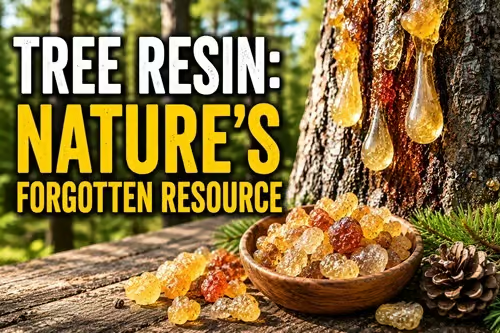
Tree resin is the sticky substance produced by many trees when their bark is damaged or threatened. For the tree, it acts almost like a natural protective seal, covering damaged areas and helping defend against insects and microorganisms. People have collected resins from pine, spruce, fir, frankincense, myrrh and other trees for centuries because this sticky, flammable and water-resistant material has a surprising number of practical uses.
Different tree resins have also played a role in traditional medicine. Modern laboratory research has found antimicrobial, antifungal and anti-inflammatory activity in certain resins and resin compounds, although those properties vary greatly between species. This doesn’t mean any resin found in the woods is automatically medicinal or safe. Proper tree identification matters, and medicinal or internal use requires considerably more knowledge than simply collecting resin for practical purposes.
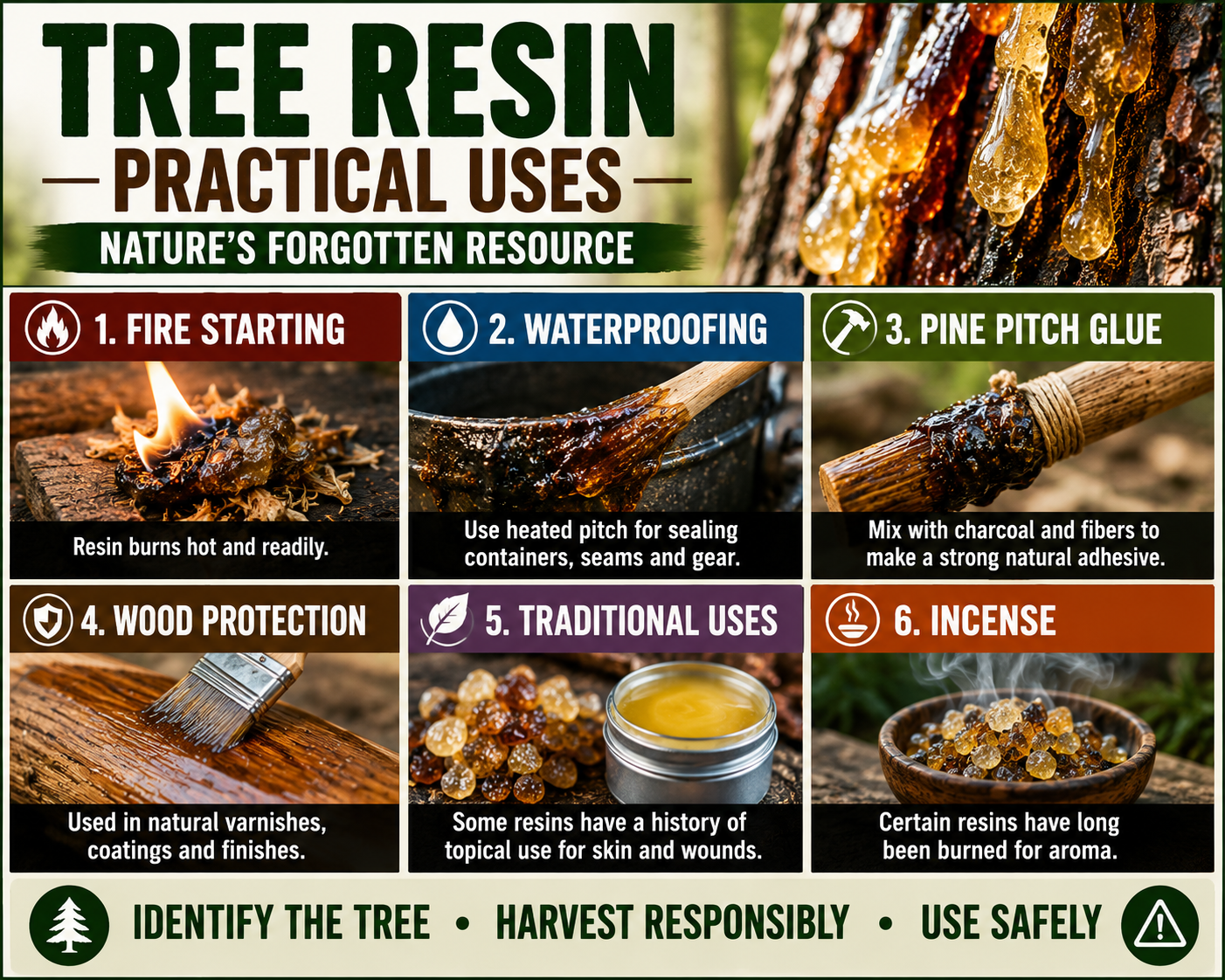
For someone interested in preparedness, resin becomes especially interesting because of what can be done with it. Dry resin is highly flammable and can make useful fire-starting material, particularly when combined with dry wood shavings or tinder. Heated pine resin has traditionally been incorporated into waterproofing and sealing mixtures for wood, containers and other materials. Mixed with materials such as powdered charcoal and plant fibers, resin can also form a primitive adhesive sometimes called pine pitch glue, useful for attaching or repairing certain tools and equipment. Resins have additionally been used in incense, varnishes, protective coatings and traditional topical preparations. These practical uses make knowing how to identify, collect and work with local tree resins a valuable bushcraft and self-reliance skill.
© Prepping Communities. This content is for informational purposes only and not professional advice. Use at your own risk.
Terms | Privacy | Guidelines