

Understanding Gout

Few forms of arthritis are as sudden or as painful as gout. Many people go to bed feeling perfectly normal only to wake during the night with intense pain in a single joint. The affected area often becomes swollen, warm, red, and extremely sensitive to even the lightest touch. For some, the pain is so severe that the weight of a bedsheet is almost unbearable.
While the big toe is the joint most commonly associated with gout, attacks can also affect the ankles, knees, wrists, fingers, and elbows. Episodes may last several days or even weeks, and without proper management they often become more frequent over time.
Gout develops when uric acid levels in the blood become too high. Uric acid is a normal waste product produced as the body breaks down compounds called purines, which are naturally present in human cells and many foods. Under normal circumstances the kidneys filter uric acid from the bloodstream and remove it through urine. Problems begin when the body either produces too much uric acid or the kidneys cannot eliminate enough of it.
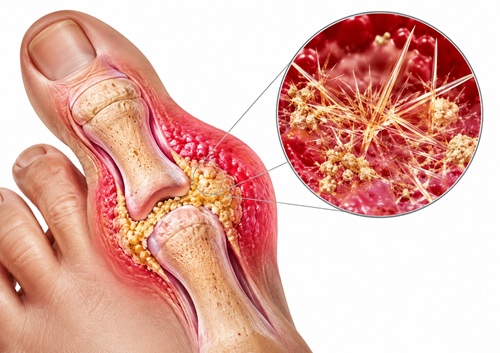
As concentrations rise, microscopic crystals begin forming inside joints and surrounding tissues. These needle-shaped crystals trigger an aggressive immune response that produces the swelling, redness, heat, and severe pain characteristic of a gout attack.
Several factors influence the development of gout. Genetics play an important role, but diet, obesity, dehydration, kidney disease, alcohol consumption, and certain medications can also contribute. Foods particularly high in purines—including organ meats, sardines, anchovies, shellfish, and large amounts of red meat—may increase uric acid levels in susceptible individuals. Sugary beverages containing high-fructose corn syrup and excessive alcohol, especially beer, have also been associated with an increased risk of attacks. Fortunately, many lifestyle changes can significantly reduce both the frequency and severity of flare-ups.
Although prescription medications remain the most effective treatment for acute attacks and long-term uric acid control, many people are interested in natural approaches that support overall joint health. Herbs have been used for centuries to ease inflammation, support kidney function, and promote general wellness. Modern scientific research is beginning to validate some of these traditional uses, although the strength of evidence varies considerably between plants. Natural remedies should be viewed as complementary tools rather than replacements for professional medical care, particularly for individuals experiencing frequent attacks or complications.
Herbs That May Help
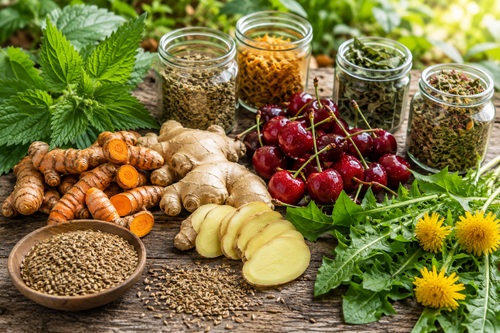
Among all natural remedies, tart cherry has attracted some of the strongest scientific interest. Rich in anthocyanins and other antioxidant compounds, tart cherries appear to help reduce inflammation while also supporting healthy uric acid metabolism. Several clinical studies have suggested that people who regularly consume tart cherry juice or concentrate experience fewer gout attacks than those who do not. Researchers believe these protective effects result from a combination of antioxidant activity and modest reductions in uric acid levels. While drinking tart cherry juice will not stop an acute attack once it begins, incorporating tart cherries into a healthy diet may help reduce future flare-ups over time. Concentrated juice, powdered extracts, and capsules also store well, making them practical additions to a preparedness pantry.
Turmeric has become one of the world’s best-known medicinal herbs because of its remarkable anti-inflammatory properties. The bright yellow spice contains curcumin, a naturally occurring compound that has been studied extensively for its effects on chronic inflammation. Curcumin appears to influence several inflammatory pathways throughout the body rather than simply masking pain. Although research specifically involving gout remains limited, many people include turmeric as part of an overall strategy to support joint comfort and mobility. Because curcumin is absorbed poorly by itself, herbal practitioners commonly recommend taking it with black pepper, whose piperine content can dramatically improve absorption.
Ginger offers another valuable option. Used in traditional medicine for thousands of years, ginger contains gingerols and shogaols that possess natural anti-inflammatory activity.
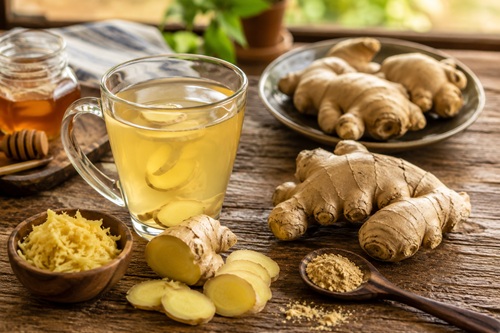
Many people enjoy fresh ginger tea during periods of joint discomfort, while others regularly cook with fresh ginger root to obtain its health benefits year-round. In addition to supporting joint health, ginger has a long history of helping relieve nausea and aiding digestion, making it a particularly versatile herb for both everyday wellness and emergency preparedness.
Several lesser-known herbs also deserve attention. Nettle has traditionally been valued for supporting healthy joints while supplying important vitamins and minerals. Many herbalists recommend nettle tea as part of an anti-inflammatory lifestyle, although modern clinical evidence remains limited. Celery seed has similarly earned a reputation for supporting healthy uric acid metabolism and maintaining normal fluid balance. Dandelion, especially its leaves and roots, has long been appreciated for supporting healthy liver and kidney function. While none of these herbs should be viewed as cures, they illustrate how traditional herbal medicine often focuses on supporting the body’s normal processes rather than targeting a single symptom.
Lifestyle Often Matters More Than Herbs
Even the best herbal remedies cannot overcome poor daily habits. In fact, many healthcare professionals believe lifestyle changes have a greater impact on preventing gout than any individual supplement.

Staying well hydrated allows the kidneys to remove uric acid more efficiently, while maintaining a healthy body weight reduces both inflammation and uric acid production. Regular physical activity improves overall health, although strenuous exercise during an active flare should be avoided until symptoms improve.
Diet also plays a significant role. Reducing foods that are especially high in purines may help lower uric acid levels, while increasing vegetables, whole grains, fresh fruit, and low-fat dairy products supports overall metabolic health. Limiting alcohol—particularly beer—and reducing sugary beverages can also decrease the likelihood of future attacks. These habits not only help manage gout but also improve cardiovascular health, blood sugar control, and overall quality of life.

Many people search for a single “miracle herb” that will eliminate gout forever. Unfortunately, no such herb exists. Lasting improvement usually comes from combining several healthy habits: proper hydration, a balanced diet, maintaining a healthy weight, following medical advice, and using herbs as supportive tools rather than primary treatments. This comprehensive approach addresses the underlying causes of gout instead of simply reacting to painful flare-ups.
Preparedness Perspective
Preparedness is about far more than storing emergency supplies. It also involves maintaining the physical ability to use those supplies when they are needed most. A severe gout attack during a prolonged emergency could make walking, gathering firewood, tending a garden, caring for livestock, or even standing watch extremely difficult. Understanding how nutrition, hydration, and traditional herbal remedies may support long-term joint health adds another layer of resilience to any preparedness plan.

Many of the herbs discussed in this guide serve multiple purposes beyond gout management. Ginger supports digestion, turmeric has numerous culinary and wellness applications, nettle is highly nutritious, and dandelion grows abundantly across much of North America. Stocking versatile herbs rather than single-purpose remedies increases the value of any preparedness pantry while reducing dependence on outside resources. Combined with healthy lifestyle choices and appropriate medical care, these natural options can help support mobility and overall wellness for years to come.

Key Takeaways
Gout develops when excess uric acid forms microscopic crystals inside the joints, triggering painful inflammation that can significantly limit mobility. While prescription medications remain the most effective treatment for acute attacks and long-term uric acid management, several herbs may provide valuable support as part of an overall wellness plan. Among the natural options, tart cherry has the strongest scientific evidence for helping reduce the frequency of gout flare-ups, while turmeric and ginger are widely recognized for their anti-inflammatory properties. Traditional herbs such as nettle, celery seed, and dandelion have also been used for generations to support joint health and normal kidney function.
Natural remedies are most effective when combined with healthy daily habits. Staying well hydrated, maintaining a healthy weight, limiting foods high in purines, reducing alcohol consumption, and eating a balanced diet all play important roles in managing gout. For those focused on preparedness, maintaining mobility is every bit as important as storing supplies. Building knowledge of both conventional medicine and traditional herbal remedies provides additional options when professional medical care may be delayed or temporarily unavailable, helping strengthen long-term resilience and self-reliance.
© Prepping Communities. This content is for informational purposes only and not professional advice. Use at your own risk.
Terms | Privacy | Guidelines