
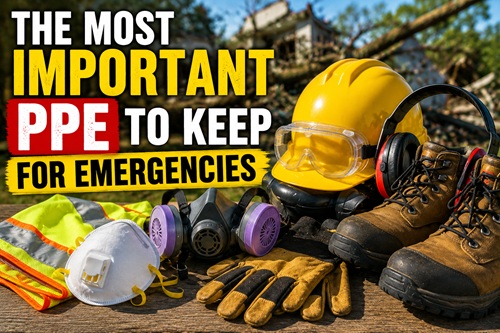
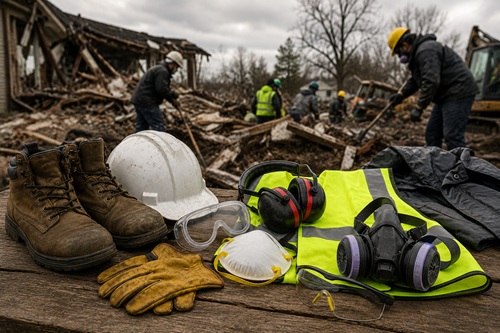
Personal protective equipment can become extremely important during an emergency. Broken glass, smoke, dust, falling debris, contaminated water, loud equipment, sharp metal, chemicals, and severe weather can turn routine tasks into dangerous ones very quickly. Having the right protective equipment available allows you to deal with those hazards without unnecessarily exposing yourself to injury.
PPE doesn’t need to be complicated. The objective is to protect your eyes, lungs, hearing, hands, feet, head, and body from the hazards you’re most likely to encounter. No single piece of equipment protects against everything, which is why a practical emergency PPE setup should contain several different types of protection.
Sturdy Work Boots
Good footwear should be near the top of an emergency PPE list. After storms, earthquakes, floods, fires, or structural damage, the ground may be covered with nails, screws, broken glass, sheet metal, branches, rubble, and other debris.
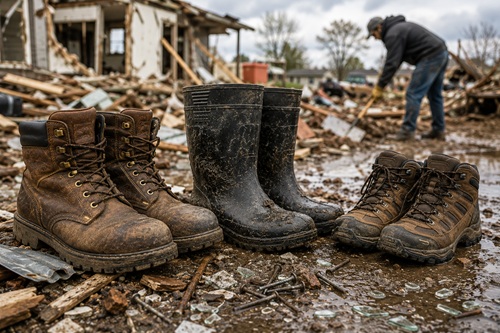
A sturdy work boot with good ankle support and a substantial sole provides considerably more protection than ordinary running shoes. If you expect to work around heavy materials, appropriately rated safety footwear with protective toes may also be useful. If punctures are a concern, choose footwear specifically rated for puncture resistance rather than assuming any thick-looking sole will stop a nail.
Waterproof rubber boots serve another purpose. They are useful when dealing with mud, standing water, wet property cleanup, gardening, livestock, and other situations where keeping your feet dry matters.
Whatever footwear you choose, wear it before putting it into your emergency supplies. Make sure the boots fit properly with the socks you’ll normally wear and that you can comfortably walk and work in them for several hours. An emergency isn’t the time to discover that your new boots cause severe blisters.
Eye Protection
Safety glasses are inexpensive enough that there is little reason not to keep several pairs around the house, workshop, vehicle, and emergency supplies.
They are useful when cutting materials, clearing brush, moving debris, operating tools, or working anywhere small objects could strike your eyes. Even a tiny piece of flying metal, glass, wood, or stone can turn an otherwise manageable emergency into a serious medical problem.
For dusty environments or situations where debris may come from several directions, enclosed safety goggles provide better coverage than ordinary safety glasses.
This distinction is important. Safety glasses protect against many impacts but normally have openings around the sides, top, and bottom. Properly fitted goggles provide much more complete coverage.
Before storing them, wear your eye protection while actually working. Make sure it fits properly, doesn’t constantly fog, and doesn’t interfere with other equipment you may need to wear.
Hearing Protection
Generators, chainsaws, power tools, pumps, construction equipment, and cleanup machinery can all produce enough noise to damage hearing.
Disposable foam earplugs take almost no room, making them easy to store in vehicles, workshops, bug-out bags, and emergency PPE kits. Earmuff-style hearing protection is another useful option when you’re working around loud machinery for longer periods.
The important part is using hearing protection correctly. Foam plugs need to be properly inserted to create an effective seal, and earmuffs need to fit securely around the ears.
Remember that hearing protection also reduces your awareness of what’s happening around you. During an emergency, you may need to hear alarms, vehicles, warning shouts, falling objects, or instructions from other people. Use hearing protection when necessary while remaining aware of your surroundings.
Respiratory Protection
Respiratory protection deserves more thought than simply buying a mask and putting it into a storage bin.
Different airborne hazards require different types of protection. Smoke particles, dust, mold, biological aerosols, chemical vapors, gases, and oxygen-deficient environments are not the same thing.
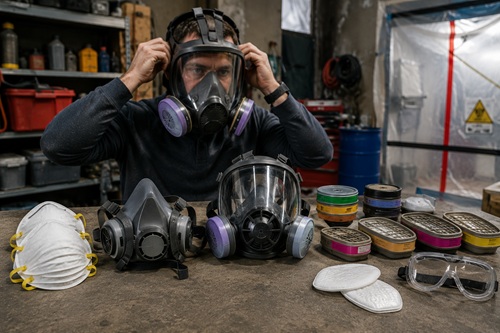
An appropriately approved N95 respirator can provide protection against certain airborne particles when correctly fitted. A reusable half-face respirator can accept different filters and cartridges depending on the model and hazard. A full-face respirator combines respiratory protection with additional eye and face coverage.
The key is understanding exactly what your respirator and filters are designed to protect against.
A cartridge designed for organic vapors isn’t automatically appropriate for every chemical gas. A particulate filter isn’t automatically protection against chemical vapors. Filters and cartridges can also have expiration dates and limited service lives.
Fit is just as important. A respirator that doesn’t seal properly can allow contaminated air to enter around the edges. Facial hair, incorrect sizing, damaged seals, improperly adjusted straps, or interference from other PPE can compromise the seal.
Most importantly, ordinary filtering respirators do not supply oxygen. They should never be treated like firefighting breathing apparatus. A cartridge respirator doesn’t make it safe to enter a burning building or an environment where there may not be enough oxygen.
Buy respiratory protection for the hazards you’re actually preparing for, keep compatible filters or cartridges with it, retain the manufacturer’s instructions, and practice putting it on correctly before you need it.
Work Gloves
There is no single pair of gloves that’s ideal for every emergency job.
A sturdy pair of general-purpose work gloves is useful for moving debris, handling lumber, clearing branches, carrying rough materials, making repairs, and protecting your hands from ordinary cuts and abrasions.
Heavy leather gloves provide more protection for certain rough jobs but reduce dexterity. Chemical-resistant gloves are designed for handling specific chemicals and should be selected according to the substances involved.
Disposable nitrile gloves serve another important purpose. They are useful for first aid, sanitation, cleaning, food preparation, and situations where you need a disposable barrier between your hands and potentially contaminated material.
A practical emergency PPE kit should therefore contain several kinds of gloves rather than trying to make one pair do everything.
Periodically inspect them as well. Work gloves eventually develop holes, disposable gloves deteriorate with age and poor storage conditions, and chemical gloves can become damaged.
Head Protection
A properly rated hard hat or safety helmet can become valuable when working around damaged buildings, falling branches, unstable structures, overhead hazards, or heavy cleanup operations.
Choose protective headgear according to the hazard rather than its appearance.
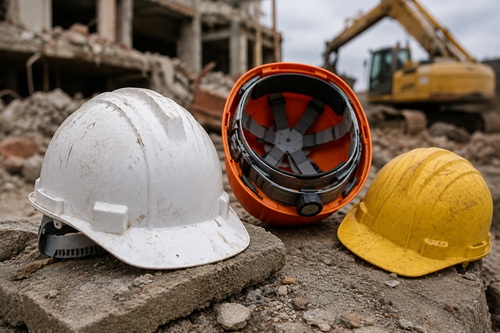
A helmet that looks rugged or tactical isn’t automatically certified for impact, penetration, electrical hazards, or other forms of protection. Look for recognized safety ratings appropriate for the work you expect to perform.
Fit matters here too. The suspension system inside a hard hat helps absorb impact and should be correctly adjusted. A damaged helmet or suspension system should be replaced rather than trusted during an emergency.
Face Protection
A face shield is another inexpensive piece of PPE worth keeping available.
It can provide additional protection when grinding, cutting, handling splash hazards, clearing debris, or performing other work where the entire face could be exposed.
A face shield doesn’t necessarily replace safety glasses or goggles. Depending on the task, it may be worn over appropriate eye protection.
This layered approach is useful when there’s a significant chance of flying fragments or splashing liquids reaching the face.
Protective Clothing
Your clothing itself can become part of your PPE.
Durable work clothes help protect against scratches, dirt, minor abrasions, and environmental exposure. Coveralls can be especially useful during messy cleanup operations because they provide another layer between your regular clothing and whatever you’re working around.
Disposable protective coveralls can also be useful for certain dirty or contaminated environments, but don’t assume that every disposable suit protects against chemicals or biological hazards. Protective clothing needs to be selected according to the specific exposure.
Waterproof pants and a hooded waterproof jacket are also worth having. Staying dry becomes particularly important when you’re working outside for hours in cold, wet, or windy conditions.
A durable leather or heavy work jacket can provide useful protection against brush, rough surfaces, and minor abrasions during general outdoor work.
High-Visibility Clothing
Keep at least one reflective high-visibility vest in every vehicle.
If you have to change a tire at night, walk along a roadway, direct vehicles, clear debris near traffic, or work around heavy equipment, being seen can be just as important as being physically protected.
A reflective vest takes almost no room and can be worn over ordinary clothing or a jacket.
High-visibility clothing can also make it easier for rescuers to locate you if you’re lost or stranded.
Specialized PPE
Some protective equipment requires more than simply owning it.
Fall-arrest equipment and climbing harnesses are good examples. A harness needs to fit correctly, connect to appropriate equipment, use suitable anchor points, and be inspected and used properly.
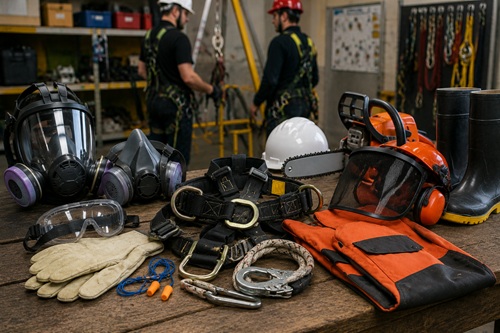
Specialized respirators, chemical-protective equipment, electrical PPE, chainsaw protective clothing, and similar equipment also require knowledge and training.
Don’t assume that buying specialized PPE automatically makes a hazardous activity safe.
Learn how the equipment works, understand what it protects against, understand what it doesn’t protect against, and practice using it under safe conditions.
Build an Emergency PPE Container
One of the easiest ways to organize everything is to create a dedicated PPE container.
Use a sturdy plastic tote with a tight-fitting lid and clearly mark it PPE.
Inside, keep several pairs of safety glasses, enclosed goggles, foam earplugs, earmuff hearing protection, work gloves, disposable nitrile gloves, appropriate respiratory protection, spare filters or cartridges when required, reflective vests, protective clothing, and other equipment appropriate for your household.
Larger items such as boots and hard hats can be stored beside the container.
Keep printed instructions with specialized equipment. Respirator instructions, filter information, equipment limitations, replacement-part numbers, and fitting instructions can be extremely useful when internet access isn’t available.
The container should also be easy to reach. Don’t bury it at the back of a storage room underneath camping equipment and food buckets.
In many emergencies, PPE is something you’ll want to put on before you start dealing with the problem.
Maintain Your PPE
Protective equipment shouldn’t disappear into storage for ten years and be assumed to work when needed.
Open your PPE container periodically and inspect everything.
Check goggles and safety glasses for cracks or severe scratches. Examine straps and seals on respirators. Look for holes in work gloves. Check disposable gloves for deterioration. Inspect hard hats and suspension systems. Check expiration dates and storage requirements for filters and cartridges.
Make sure clothing and boots still fit everyone they’re intended for.
Replace damaged or questionable equipment before you need it.
Practice Using It
The best way to become comfortable with PPE is to use it during ordinary work.
Wear safety glasses when using tools. Put on hearing protection before starting loud equipment. Wear gloves when moving rough materials. Practice putting on your respirator according to the manufacturer’s instructions. Wear your reflective vest when working near a road.
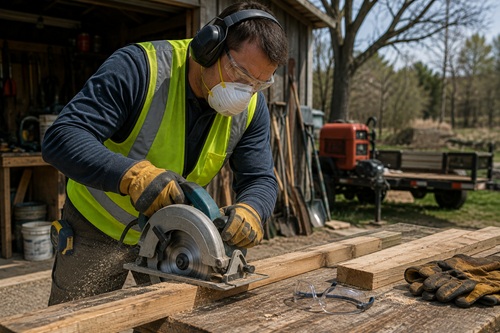
Doing this turns PPE into normal equipment rather than something unfamiliar that only comes out during an emergency.
The habit you’re trying to develop is simple: identify the hazard before starting the job and put on the appropriate protection first.
A practical emergency PPE setup doesn’t require exotic equipment. Good boots, eye protection, hearing protection, several types of gloves, correctly selected respiratory protection, head and face protection, protective clothing, and high-visibility gear cover many of the hazards people are likely to encounter during emergency work.
The important part isn’t simply owning the equipment. It needs to fit properly, match the hazard, remain in good condition, and be familiar enough that you can use it correctly when you actually need it.
© Prepping Communities. This content is for informational purposes only and not professional advice. Use at your own risk.
Terms | Privacy | Guidelines