

What the Great Depression Can Teach Us About Getting By With Less
Practical lessons from the past to help individuals, families, and communities stretch their money, recover useful skills, and get through difficult times.
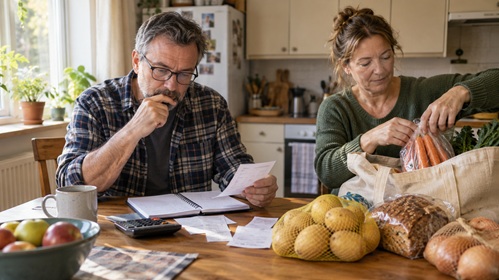
There are a lot of people struggling financially right now. Groceries are expensive, housing takes up a large portion of household income, utility bills keep coming, and even people who work full-time can find themselves wondering how they’re going to make it through another month. Some are cutting back on things they used to enjoy, while others have already cut just about everything they can and are still having trouble covering the basics. Seniors living on fixed incomes, single parents, young adults trying to get established, people who have lost their jobs, and families dealing with unexpected expenses are all facing different versions of the same problem. The money coming in isn’t always enough to cover the money going out.
When we talk about preparedness, we usually think about natural disasters, power outages, supply chain disruptions, or the possibility of an economic collapse. But financial hardship doesn’t have to reach that level before it becomes a survival issue. Losing a job, falling behind on rent, dealing with an expensive vehicle repair, or struggling to afford groceries can turn everyday life into an emergency. And unlike a storm that passes after a few days, financial problems can continue for months or even years. For someone already facing those difficulties, preparedness isn’t about imagining what might happen someday. It’s about finding ways to get through what’s happening now.
This is where the experiences of people who lived through the Great Depression can teach us something useful. During the 1930s, millions of people lost their jobs, businesses failed, banks closed, and families lost homes and farms. Some travelled across the country looking for employment, while others stayed where they were and tried to survive with whatever resources they could find. Many families learned to stretch food, repair possessions, grow vegetables, exchange services, and help their neighbours. Others suffered terribly despite doing everything they could. It’s important not to romanticize those years. Poverty, hunger, homelessness, and illness were very real, and government relief programs, charities, churches, and community organizations helped many people survive. Still, the practical knowledge people relied on during that period offers lessons that remain useful today.
Something that stands out when reading accounts from the Great Depression is how much people knew how to do for themselves. Many could prepare meals from basic ingredients, bake bread, preserve food, grow vegetables, mend clothing, repair furniture, maintain tools, and manage a household with very little money. These weren’t necessarily special talents. They were ordinary skills learned through experience and passed down through families. Women often carried much of the responsibility for cooking, sewing, preserving food, and managing household supplies, while men frequently worked on repairs, farming, equipment maintenance, and whatever employment they could find. Children and other family members contributed according to their abilities. The responsibilities weren’t always shared equally, but the household depended on the knowledge and efforts of everyone.
Those skills aren’t men’s skills or women’s skills. They’re life skills, and they can benefit anyone. Someone living alone needs to know how to feed themselves just as much as a family of five. A person on a fixed income can benefit from learning basic repairs, while someone working full-time may save money by knowing how to prepare inexpensive meals. A young adult starting out may need to learn household budgeting, and a retiree may have years of experience that could help someone else. The circumstances are different, but the underlying principle is the same. The more useful things we know how to do, the more options we have when money becomes tight.
Over time, many of us have become accustomed to purchasing things that earlier generations knew how to make, replacing items that could sometimes be repaired, and paying for services we might be capable of performing ourselves. Modern conveniences have improved our lives in countless ways, and there’s no reason to abandon them simply to live as people did in the 1930s. But when we lose practical skills, we also lose choices. If groceries become too expensive, knowing how to prepare affordable meals can help. If a jacket tears, knowing how to repair it may prevent another purchase. If an appliance stops working, understanding basic maintenance may help determine whether it needs a simple repair or professional attention. None of these abilities will solve every financial problem, but together they can reduce expenses and make everyday life a little more manageable.
And perhaps that’s the most encouraging part of all this. These skills can be learned. Nobody needs to become an expert at cooking, gardening, sewing, mechanics, or household maintenance overnight. A person who learns to prepare one inexpensive meal has gained something useful. Someone who repairs a piece of clothing instead of replacing it has saved money and developed an ability they can use again. A person who starts growing vegetables, learns to maintain a bicycle, or figures out how to reduce an unnecessary expense has taken another step toward greater independence. The goal isn’t to recreate the hardships of the Great Depression. It’s to recover some of the knowledge that helped people get through them and put it to work in our own lives.
Making Food Last When the Grocery Budget Is Tight
Food was one of the biggest concerns for families during the Great Depression, and it’s one of the areas where we can still learn a great deal. People needed to eat whether they had steady employment or not, and many households couldn’t afford the variety of foods they had enjoyed before the economic downturn. Potatoes, beans, rice, oats, flour, cornmeal, cabbage, and seasonal vegetables became important parts of everyday meals. These foods were relatively inexpensive, could be stored for reasonable periods, and could be combined in different ways to feed several people. Families who knew how to cook could often make a small amount of food go much further than someone who depended on purchasing everything ready-made.
One of the most useful practices was learning to stretch expensive ingredients across several meals. Meat was often used to add flavour and nutrition rather than making up most of the plate. A small amount of beef could flavour a large pot of vegetable stew, while a little sausage might be added to beans, potatoes, or cabbage. A whole chicken could provide a roasted dinner, with the remaining meat used in sandwiches, casseroles, or soup. The bones could then be simmered to make stock, which became the base for another meal. The idea wasn’t to eliminate meat or serve nutritionally inadequate meals. It was to combine ingredients in ways that provided enough food without requiring large amounts of the most expensive items.
That same approach can work today. Imagine purchasing a whole chicken when it’s reasonably priced. The first evening, it could be roasted with potatoes and carrots. The following day, some of the remaining meat could be combined with rice and vegetables. The bones could then be used to prepare stock for a soup containing lentils, barley, or beans. Instead of thinking about the chicken as one dinner, the household has planned several meals around the same purchase. The actual savings depend on grocery prices and how much edible meat the chicken provides, but planning ahead can help prevent food from being wasted and reduce the need for additional purchases.
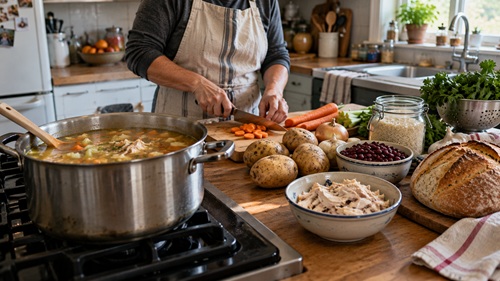
Cooking from scratch is another skill worth recovering, although it doesn’t have to mean spending hours in the kitchen every day. During the Depression, many households made bread, biscuits, soups, gravies, and other foods using basic ingredients because purchasing prepared alternatives was often too expensive. Today, convenience foods can save time, especially for people working long hours, but they can also cost considerably more per serving than some homemade alternatives. A large pot of bean soup, for example, can provide several meals using inexpensive ingredients. Plain oatmeal may cost less than individually packaged flavoured portions, while homemade pancakes or biscuits can be economical when the ingredients are already available. The trick is finding a handful of dependable recipes that are affordable, filling, and easy enough to prepare regularly.
Consider a household that normally spends $25 on takeaway food for one evening. Depending on local grocery prices, that same amount might purchase enough ingredients for a pot of chili, rice, and vegetables that provides several servings. A simple chili made with beans, tomatoes, onions, seasonings, and a modest amount of meat—or no meat at all—can be filling and nutritious. Leftovers can be refrigerated promptly and used for lunches or frozen for another day. The exact savings will vary, but comparing the cost per serving can help people recognize where their grocery money is going. Even replacing one expensive convenience meal each week with an affordable homemade alternative may produce worthwhile savings over time.
Another practice worth recovering is learning to cook without depending on a specific recipe or expensive ingredients. During the Depression, people often prepared meals using whatever was available. A pot of soup might contain potatoes, onions, carrots, cabbage, beans, or leftover meat, depending on what the household had. That flexibility is useful today because grocery prices change, certain foods go on sale, and sometimes the ingredients we normally purchase simply aren’t affordable. Someone who understands how to combine basic foods can adjust a meal without having to purchase every ingredient listed in a recipe.
Food waste is another area where small improvements can make a difference. Depression-era households often saved usable leftovers, turned stale bread into other dishes, and found ways to use ingredients before they spoiled. Clean vegetable trimmings could be used for stock, while leftover cooked vegetables might become part of a casserole or soup. Suitable animal fat was sometimes rendered and saved for cooking, reducing the need to purchase additional fats. Some of these practices remain useful, provided they’re handled safely. Leftovers need to be refrigerated promptly, stored correctly, and used within safe periods. Spoiled food should never be eaten simply to avoid waste, and cooking fats must be handled and stored appropriately. Saving a few dollars isn’t worth food poisoning.
Shopping habits matter just as much as cooking skills. Buying in bulk can reduce the cost of frequently used foods, but only when the unit price is genuinely lower and the household can afford the purchase. A large bag of rice may be economical for someone who eats rice regularly, but it isn’t a bargain for someone who rarely uses it. The same applies to sales. Purchasing several packages of something simply because they’re discounted can increase spending if the food wasn’t needed in the first place. One useful habit is to check the refrigerator, freezer, and pantry before shopping, plan meals around what’s already available, and make a list of what is genuinely needed. It doesn’t require a complicated system. A notebook on the kitchen counter can work just fine.
For someone struggling to afford groceries, these changes don’t need to happen all at once. Start by learning to prepare one inexpensive meal that provides several servings. Then learn another. Try cooking dried beans, making soup from scratch, or planning two dinners around one purchase of meat. Pay attention to the cost, preparation time, and whether the meals are enjoyable enough to make again. Over several weeks, it’s possible to build a small collection of affordable meals that can be relied on when money is tight. That’s a practical form of preparedness because it replaces some of the uncertainty around feeding a household with knowledge and experience.
Growing Food and Preserving What We Can
For many Depression-era families, a garden wasn’t simply a hobby. It was another source of food. People grew potatoes, beans, carrots, cabbage, onions, and whatever other vegetables suited their climate and available land. Some households kept chickens for eggs and meat, while others gathered berries, nuts, and edible wild plants when they were available. A successful garden could provide fresh vegetables during the growing season, and surplus produce could sometimes be preserved for winter. Not everyone had access to land, and droughts, poor soil, or crop failures could make gardening difficult. Still, being able to produce even part of a household’s food could reduce dependence on purchased groceries.
Growing food can still help today, although it’s important to be realistic about the costs and benefits. A small backyard garden probably won’t feed a family throughout the year, and someone gardening for the first time may spend more on supplies than the harvest is worth. But gardening can become more economical as skills improve, reusable equipment is acquired, and unnecessary expenses are avoided. Starting with a few crops in existing soil or inexpensive containers is often a better approach than investing heavily in equipment before learning the basics. Potatoes, beans, leafy greens, and other suitable vegetables may provide useful harvests depending on local conditions. Someone living in an apartment might grow herbs or lettuce in containers, while a person without outdoor space could investigate community gardens or shared growing arrangements.
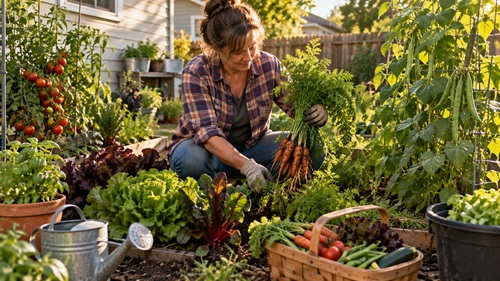
One mistake beginners sometimes make is spending too much money before they’ve learned how to grow anything. Expensive raised beds, specialized soil mixes, elaborate watering systems, and large collections of seeds can quickly turn a money-saving activity into another household expense. There’s nothing wrong with purchasing good equipment when it’s needed, but it makes sense to begin with the basics. Learn what grows well in the local climate, understand the soil, choose crops the household actually eats, and practice watering and pest management. A small productive garden is more useful than a large garden that becomes too expensive or difficult to maintain. Gardening also takes time, which matters for people already balancing employment, family responsibilities, and other demands.
Food preservation was another important part of household survival. Families dried fruits and vegetables, made jams and pickles, canned suitable foods, and stored potatoes and other root vegetables in cool locations. These practices helped extend the usefulness of seasonal harvests and reduced the need to purchase everything throughout the year. Today, freezing, dehydrating, and home canning can provide similar benefits, particularly when someone has access to inexpensive seasonal produce or grows more food than can be eaten immediately. However, traditional methods shouldn’t be copied without checking modern safety guidance. Low-acid foods such as meat, beans, and most vegetables require tested pressure-canning procedures, while water-bath canning is suitable only for appropriately acidic or acidified foods using tested recipes. Improper canning can cause botulism, even when food appears normal.
Foraging can also supplement a household’s food supply, but it requires knowledge that shouldn’t be rushed. Wild berries, greens, nuts, and other edible plants may be available in some areas, yet poisonous plants can resemble edible ones, and mushrooms can be particularly dangerous for inexperienced foragers. Learning from knowledgeable local instructors and reliable identification resources is much safer than relying on guesses or photographs alone. Local harvesting regulations, private property rights, contamination risks, and sustainable harvesting practices also need to be considered. The value of foraging comes from knowing exactly what is safe and available, not from assuming that anything growing outdoors can become dinner.
The encouraging part is that nobody needs a farm or a large garden to begin learning these skills. Growing a few vegetables successfully, freezing seasonal produce, or learning one tested preservation method can be a useful start. Someone who doesn’t have space to grow food may still be able to purchase seasonal produce at lower prices and preserve it for later. Another person might join a community garden or exchange gardening knowledge with a neighbor. The point isn’t to become completely self-sufficient overnight. It’s to gradually increase the number of ways a household can obtain and manage food without depending entirely on what happens to be available at the grocery store.
Making Clothing and Household Goods Last Longer
Clothing was another area where Depression-era families learned to make the most of what they had. A torn shirt wasn’t automatically thrown away, and a pair of socks with worn heels might be repaired several times before it was finally discarded. People patched clothing, replaced buttons, darned socks, altered garments for younger family members, and reused fabric from clothing that could no longer be worn. In some communities, cotton flour and feed sacks were turned into dresses, shirts, towels, quilts, and other household items. Manufacturers eventually recognized that people were reusing these sacks and produced some with printed patterns suitable for sewing. What might seem unusual today was simply one more way of avoiding expenses that families couldn’t afford.
Many of these skills are relatively easy to learn, yet they can save money throughout someone’s life. Sewing on a button, repairing a small tear, or hemming a pair of pants doesn’t require a sewing machine or an expensive collection of supplies. A basic needle, thread, scissors, and a little practice are often enough. Someone who learns to repair clothing can keep useful garments in service longer, particularly work clothes, jackets, children’s clothing, and other items that may be expensive to replace. The same principle applies to household textiles. Worn towels can become cleaning cloths, old sheets can sometimes provide fabric for repairs, and blankets may be patched rather than discarded. Not everything is worth saving, but learning to recognize what can still be used is a valuable habit.
Second-hand shopping can also help reduce expenses, especially when clothing or household items are needed unexpectedly. Thrift stores, clothing exchanges, community swap groups, and local marketplaces sometimes offer usable items at much lower prices than buying new. The important thing is to examine what you’re purchasing and avoid buying something simply because it’s inexpensive. A five-dollar item that isn’t needed is still five dollars spent. But finding a good winter coat, a sturdy pair of work pants, or a useful household item at a fraction of the replacement cost can make a meaningful difference when money is tight.
Repairing Instead of Replacing
The same thinking that helped families extend the life of their clothing also applied to furniture, tools, equipment, and household belongings. During the Great Depression, people often repaired things because replacing them wasn’t financially possible. A broken chair might be fixed, a tool handle replaced, a bicycle repaired, or a piece of machinery kept operating through careful maintenance. People who understood carpentry, mechanics, plumbing, or other practical trades could often help their own households and sometimes earn money assisting others. These skills were valuable because they reduced the number of problems that required cash to solve.
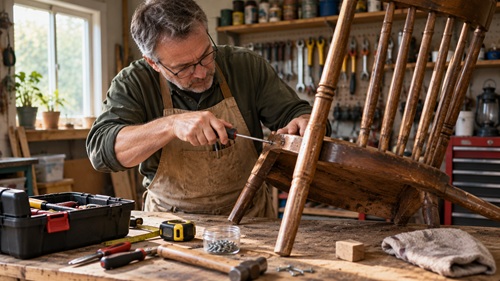
That remains true today. Consider how often a household expense begins with something relatively small. A faucet starts dripping, a chair becomes loose, a bicycle develops a flat tire, or an appliance begins making an unusual noise. Sometimes the problem requires professional attention, but other times a basic repair or routine maintenance could prevent a much larger expense. Knowing how to use common hand tools, maintain equipment, and recognize developing problems can be useful even when someone doesn’t intend to perform major repairs. The goal isn’t to become a professional mechanic, electrician, or plumber. It’s to understand enough about the things we own to maintain them properly and recognize when a repair is within our abilities.
There are limits, of course. Electrical systems, gas appliances, structural problems, and other potentially dangerous repairs should be handled by qualified people when necessary. Attempting an unsafe repair to save money can result in injuries or far more expensive damage. But learning how to maintain a bicycle, repair furniture, replace a worn tool handle, or complete simple household maintenance can still provide meaningful savings. A person who knows how to check tire pressure, maintain basic tools, clean appliance filters, or identify a small plumbing problem before it becomes serious has gained practical abilities that may help for years.
Another benefit of learning repair skills is that they change how we think about our possessions. Instead of assuming something is useless when it stops working, we begin asking whether the problem can be identified and corrected. Sometimes the answer will be no, and replacement will make more sense. Other times, a little knowledge and effort may save an item that would otherwise have been thrown away. Over time, this approach can reduce household expenses while building confidence in our ability to deal with everyday problems. Someone who learns to repair a chair, maintain a bicycle, or fix a small household problem has gained something that can be used again and again. The next time something breaks, they may be more inclined to investigate the problem before assuming they need to purchase a replacement. That doesn’t mean every repair will be successful or worth the effort, but having the knowledge to make that decision provides more options when money is limited.
For someone who has never repaired anything before, getting started can seem intimidating. But most people don’t need to begin with complicated projects. Learning how to tighten loose furniture, replace a damaged bicycle tube, repair a broken drawer handle, or maintain a garden tool can provide useful experience without requiring expensive equipment. Many public libraries have repair manuals, and some communities operate repair cafés where volunteers help people learn how to fix household items. There are also instructional videos and guides available for common repairs, although it’s important to use reliable information and understand the safety requirements before beginning. The first project may take longer than expected, and mistakes are part of learning, but successfully completing even a simple repair can make the next one feel much easier.
It’s also worth considering how much money can be saved through regular maintenance rather than waiting for something to break. A vehicle with properly inflated tires, appropriate fluid levels, and routine servicing may be less likely to develop certain avoidable problems. Tools that are cleaned, sharpened, lubricated, and stored correctly generally last longer than those left exposed to moisture and neglect. Household appliances also benefit from appropriate maintenance, whether that means cleaning filters, checking seals, or following the manufacturer’s recommended service schedule. These aren’t particularly exciting activities, but preventing a costly breakdown can be far more valuable than saving a few dollars on an everyday purchase.
Another useful habit is keeping a small collection of basic repair supplies. A hammer, screwdrivers, adjustable wrench, pliers, measuring tape, suitable fasteners, and a few other common tools can handle many simple household tasks. There’s no need to purchase an expensive tool collection all at once. Start with what is genuinely needed, buy additional tools when a project requires them, and look after them so they remain useful for years. Second-hand tools can sometimes be purchased inexpensively, and borrowing specialized equipment may make more sense than buying something that will only be used once.
People who lived through the Great Depression understood that a useful possession represented more than its original purchase price. It represented money that had already been spent, labour that had gone into acquiring it, and a resource that might be difficult to replace. That way of thinking can still help us today. Before throwing something away, consider whether it can be repaired safely, whether replacement parts are available, and whether the cost of fixing it is reasonable. Sometimes the answer will be to replace it, especially when safety, reliability, or efficiency is a concern. But making that decision after understanding the options is very different from automatically purchasing something new.
For people facing financial hardship, this is one area where progress can begin almost immediately. Look around the house, garage, or storage area and identify something that needs a minor repair. It might be a loose cabinet handle, a torn screen, a wobbly table, or a tool that needs cleaning and maintenance. Choose something safe and manageable, learn what needs to be done, and give it a try. Even if the repair only saves a small amount of money, the experience itself has value because it develops a skill that can be used again.
The important lesson from the repair culture of the Great Depression isn’t that everyone should become capable of fixing everything. It’s that understanding how things work, maintaining what we own, and learning simple repairs can reduce unnecessary expenses. When money is tight, being able to solve even a few problems without purchasing replacements can make a meaningful difference. And once someone begins developing these skills, they often discover that they’re capable of more than they originally thought.
Managing Money When There Isn’t Much Left Over
One of the hardest parts of financial hardship is trying to manage money when there simply isn’t enough coming in. During the Great Depression, families often kept careful records of their expenses because every purchase mattered. They knew how much food was available, which bills had to be paid, and how long their remaining money needed to last. Many households avoided unnecessary borrowing because they understood how quickly debt could become a serious burden when income was uncertain. Those habits remain useful, but we also need to recognize that budgeting alone cannot solve every financial problem. Someone who is already struggling to cover rent, utilities, medication, and groceries may have very little left to reduce.
Even when money is extremely tight, understanding exactly where it goes can help people make better decisions. This doesn’t require an expensive budgeting program or complicated spreadsheet. A notebook and a little time are enough to get started. Write down how much money comes into the household each month, followed by the expenses that absolutely must be paid. Housing, utilities, food, transportation, medication, insurance, and minimum debt payments are common examples. Once those expenses are written down, it’s easier to see how much money remains and whether there are areas where adjustments might be possible. Sometimes the exercise reveals small expenses that have gone unnoticed. Other times it confirms that the household simply needs more income or outside assistance. Either way, having a clear picture is better than constantly wondering where the money went.
One thing people learned during the Depression was to think carefully before spending money they might need later. That doesn’t mean refusing to buy anything enjoyable or feeling guilty about every small purchase. It means learning to separate what is necessary from what can wait. A household might need a reliable vehicle to get to work, but that doesn’t necessarily mean it needs a newer vehicle with a larger payment. Someone may need winter clothing, but a good second-hand coat might provide the same protection as an expensive new one. A family may enjoy eating out occasionally, but preparing meals at home more often could free up money for other expenses. The decisions will be different for every household, and the goal is to find changes that are realistic rather than creating a budget nobody can maintain.
Debt deserves particular attention because it can make an already difficult situation worse. Credit cards and loans can be useful financial tools, but high interest charges can gradually consume money that would otherwise be available for everyday needs. Someone who uses credit to cover groceries or utility bills may find themselves paying for those purchases long after the food has been eaten or the bill has been forgotten. During periods of financial uncertainty, reducing unnecessary borrowing and understanding existing debt obligations can help prevent additional pressure. For people already struggling with payments, contacting creditors early may provide opportunities to negotiate payment arrangements or explore hardship programs. Reputable nonprofit credit counselling services may also be able to help develop a realistic repayment plan.
Another habit worth developing is looking ahead rather than focusing only on the bills that are due today. Some expenses don’t arrive every month, but that doesn’t make them unexpected. Vehicle insurance, property taxes, school supplies, winter heating costs, and routine maintenance can all create financial pressure if no money has been set aside for them. Someone who knows that an annual expense is coming can divide the amount by twelve and work toward saving a little each month. That may not always be possible, especially when income is limited, but even partial preparation can reduce the amount that has to be found at the last minute. Keeping a simple calendar of upcoming expenses can be surprisingly helpful.
Building an emergency fund is another worthwhile goal, although it’s important to be realistic about what people can afford. Financial advice often recommends saving several months of living expenses, but that can seem impossible to someone who barely has enough money to cover the current month. Rather than becoming discouraged by a large savings target, start with whatever amount is manageable. Even putting aside five or ten dollars occasionally can eventually create a small reserve for unexpected expenses. The first goal might simply be having enough money to cover a minor repair or an unusually high utility bill without immediately relying on credit. As circumstances improve, that reserve can gradually grow. Someone who cannot afford to save right now can still begin by identifying what their first savings goal would be when money becomes available.
There is also nothing wrong with using assistance programs when they’re needed. Food banks, community kitchens, utility assistance, employment programs, housing support, and other services exist because financial hardship can affect anyone. Someone who has worked their entire life may suddenly find themselves unemployed or unable to work because of illness. A senior living on a fixed income may struggle when essential expenses increase. Accepting available assistance while working toward greater stability is a practical decision, not a failure of self-reliance. In fact, knowing what resources are available before an emergency occurs is part of being prepared. Sometimes receiving help with groceries for a few weeks can free up enough money to keep the electricity connected or prevent another bill from falling behind.
It’s also important to recognize when cutting expenses is no longer enough. There comes a point when a household may have reduced spending as far as reasonably possible, yet still cannot meet its basic needs. At that stage, the solution has to involve something more than another round of sacrifices. Additional employment, training opportunities, government benefits, affordable housing programs, debt counselling, or assistance from family and community organizations may need to become part of the plan. People shouldn’t be expected to solve an income shortage simply by becoming better at doing without. Financial preparedness includes knowing when a problem requires additional resources rather than more frugality.
For someone who feels overwhelmed by their finances, the best place to begin may be much smaller than they expect. Sit down with a notebook, write down the money available until the next payday, identify the bills and necessities that must be covered, and decide what needs attention first. If a bill cannot be paid, contact the provider before the due date and ask what arrangements might be available. If groceries are running short, investigate local food assistance rather than waiting until there is nothing left. If debt payments are becoming unmanageable, seek advice before the situation gets worse. These steps won’t make every financial problem disappear, but they can replace some of the uncertainty with a clearer understanding of what needs to happen next.
The most useful lesson from Depression-era household budgeting isn’t that people somehow managed to survive because they were better at denying themselves things. Many endured extraordinary hardship, and some simply didn’t have enough resources regardless of how carefully they managed them. The lesson is that understanding your finances, protecting essential needs, avoiding unnecessary obligations, and making deliberate decisions can improve your ability to respond when circumstances change. You don’t need to solve every financial problem today. You need to understand where you stand, identify what matters most, and begin working on the things you can influence.
Learning to Live With Less Without Giving Up Everything
One of the more difficult parts of financial hardship is the feeling that life is becoming smaller. People begin giving up activities they enjoy, postponing purchases, cancelling plans, and worrying about expenses that previously wouldn’t have been a problem. Over time, this can become emotionally exhausting. During the Great Depression, families faced similar challenges, often under much harsher conditions. Yet people still found ways to enjoy themselves. Neighbors gathered to play cards, families shared meals, children played outside, and communities organized inexpensive social activities. These experiences didn’t eliminate financial hardship, but they provided moments of enjoyment and helped people maintain relationships during difficult times.
There is something worth remembering about that today. We’ve become accustomed to paying for many of the things we do for entertainment, whether it’s eating at restaurants, attending events, purchasing subscriptions, or buying new equipment for hobbies. None of these activities is inherently wrong, and people shouldn’t feel guilty about enjoying them when they can afford to. But when money becomes tight, finding less expensive alternatives can help preserve some of the enjoyment in everyday life. A family that normally orders pizza on Friday evening might learn to make it together at home. Friends could organize a potluck dinner instead of meeting at a restaurant. Someone who enjoys reading might borrow books from the library, while another person could explore free community events or spend more time outdoors.
Reducing expenses doesn’t have to mean eliminating everything that makes life enjoyable. Sometimes it simply means changing how those experiences happen. A homemade meal shared with friends can be just as enjoyable as an expensive restaurant dinner. An afternoon spent gardening, fishing where permitted, walking, or working on a project can provide satisfaction without requiring much money. For families with children, teaching practical skills can even become an activity everyone participates in. Baking bread, planting vegetables, repairing a bicycle, or making something from materials already available can be both useful and enjoyable.
Sharing resources is another way people can reduce expenses without giving up access to useful things. Consider how many households own tools or equipment that are used only a few times each year. A ladder, pressure washer, specialized gardening tool, or piece of camping equipment might sit unused for months. If trusted neighbors or relatives are willing to share certain items, everyone may be able to avoid purchasing equipment they rarely need. Libraries, tool-lending programs, community centers, and local sharing groups can also provide access to useful resources. Of course, borrowing arrangements work best when expectations are clear and everyone takes responsibility for returning items in good condition.
There is also value in learning to recognize when something is genuinely needed and when a purchase is simply a habit. During the Depression, people often had little choice but to use what they already owned. Today, we have more options, but that can sometimes encourage unnecessary spending. Before buying something, it may help to consider whether an existing item could serve the same purpose, whether a repair is possible, or whether the purchase can wait. This isn’t about refusing to spend money on anything enjoyable. It’s about making sure the things we buy are actually worth what they cost us.
For people who have spent years working hard to afford a certain lifestyle, adjusting to less money can be particularly difficult. It can feel like going backward, especially when friends, relatives, or neighbors appear to be doing better. But appearances don’t always reflect financial reality. Someone driving a newer vehicle or living in a larger home may also be carrying substantial debt. Comparing our circumstances with what others seem to have rarely helps us make better financial decisions. A more useful measure is whether our own household is becoming more stable, whether essential needs are being met, and whether we’re developing the ability to handle unexpected problems.
There’s no need to change everything at once. Someone might begin by preparing more meals at home, purchasing second-hand clothing when appropriate, or reducing one recurring expense that no longer provides much value. Another person may discover that they enjoy repairing things, growing vegetables, or making household items rather than purchasing them. Over time, some of these changes may become permanent habits, not because money is always scarce, but because they make practical sense.
The goal isn’t to see how little a person can survive on or to turn every moment of life into an exercise in saving money. It’s to find a balance where essential needs are protected, unnecessary expenses are reduced, and there is still room for the things that make life worthwhile. People who lived through the Great Depression often understood the importance of simple pleasures because they had so few opportunities for expensive ones. That’s a lesson worth remembering. Having less money doesn’t mean we have to lose our ability to enjoy life, maintain relationships, or take pride in what we accomplish.
Turning Practical Skills Into Additional Income
During the Great Depression, people often had to find creative ways to earn money when regular employment disappeared. Some repaired equipment, altered clothing, took in laundry, sold vegetables, prepared food, or performed temporary jobs for neighbors. Others used skills they had developed over many years to provide services that people in their communities needed. These activities didn’t always provide enough income to support a household, but even small amounts of additional money or useful goods could help families get through difficult periods.
The same principle applies today, and it’s worth considering because many people underestimate the value of what they already know how to do. Someone who has spent years maintaining their own home may be capable of completing basic repairs for others. A person who enjoys sewing might provide clothing alterations. Someone who understands gardening could help neighbors prepare vegetable beds, maintain yards, or grow food. Other possibilities include tutoring, cleaning, computer assistance, pet care, equipment maintenance, and seasonal work. Not every skill will become a profitable business, and some activities require licenses, insurance, or other approvals, but having several useful abilities can create opportunities that might not otherwise exist.
It’s also important to recognize that earning additional income doesn’t necessarily require starting a formal business. Someone might take occasional part-time work, help a neighbor with a project, or sell items they no longer need. A person who has lost employment might use existing skills to provide temporary services while searching for another job. These activities should be approached realistically, with attention to costs, legal requirements, and whether the work is actually worthwhile. Spending hundreds of dollars on equipment for a service that earns very little money could make financial problems worse rather than better.
There is another way practical skills provide financial value, even when no money changes hands. Every time someone safely repairs something they would otherwise have paid to replace, prepares an affordable meal instead of purchasing an expensive alternative, or maintains equipment that might otherwise fail prematurely, they may be reducing their household expenses. The money saved can be just as useful as additional income. Someone who learns several practical skills over time may discover that their household needs to spend less simply because they’re able to do more for themselves.
For people who don’t know where to begin, it can help to think about the things friends, relatives, or neighbors already ask them to do. Perhaps they’re good at organizing, fixing computers, repairing bicycles, cooking, or helping others understand complicated paperwork. These may seem like ordinary abilities, but they could have value to someone else. The first step is identifying what you know, followed by considering whether those skills could be improved or used in ways that reduce expenses or provide additional income.
One practical way to explore this is to begin with a small project rather than investing heavily in a new business idea. Someone who can repair bicycles might offer to help a few people with basic maintenance, using tools they already own. A person who enjoys sewing could begin with simple alterations for friends or relatives. Someone with gardening experience might offer seasonal assistance to neighbors who need help preparing their gardens. These small experiences can help determine whether there is genuine demand, how much time the work requires, and whether the income justifies the effort. They also provide an opportunity to improve skills before taking on larger responsibilities.
Of course, not everyone has the time, physical ability, or circumstances to take on additional work. Someone caring for children or an elderly relative may already have more responsibilities than they can reasonably manage. A person working long hours may need rest more than another source of income. Financial preparedness should account for those realities. Sometimes the better approach is to develop a skill that reduces household expenses rather than trying to add more paid work to an already demanding schedule.
What matters is recognizing that useful knowledge has value. A person who can cook, sew, garden, repair equipment, maintain a home, or help others solve practical problems possesses abilities that may provide financial benefits throughout life. Those abilities can be improved gradually, and many can be learned without expensive courses or equipment. During the Great Depression, people often relied on whatever skills they had because circumstances left them few alternatives. Today, we have the opportunity to develop some of those abilities before we’re forced to depend on them.
Why Community Matters During Financial Hardship
One of the strongest lessons from the Great Depression is that people often survived by helping one another. Families shared housing, neighbors exchanged food, relatives provided temporary work, and communities organized assistance for people who had fallen on difficult times. Someone who raised chickens might exchange eggs for vegetables, while another person might repair equipment in return for food or other necessities. These arrangements didn’t eliminate poverty, but they helped people make use of resources that might otherwise have been unavailable to them.
Today, we often think of preparedness as something individuals or households do on their own. We store food, purchase equipment, develop emergency plans, and try to become more self-reliant. Those are worthwhile activities, but complete independence is rarely realistic. Most of us depend on other people for medical care, transportation, utilities, repairs, food production, and countless other services. During difficult times, having dependable relationships can be just as important as having supplies stored away.
Consider a neighborhood where several people have different practical skills. One person understands gardening, another knows how to repair equipment, someone else is experienced with sewing, and another has knowledge of food preservation. If these people are willing to share what they know, everyone benefits. The gardener may receive help repairing a tool, while the person doing the repair learns how to grow vegetables. Someone who can sew might help repair clothing in exchange for another service. These arrangements don’t have to be formal or complicated. Sometimes they begin with neighbors getting to know one another and discovering what they can offer.
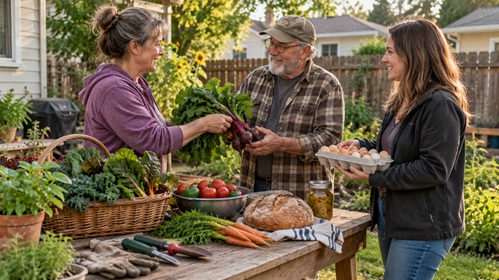
Sharing resources can also reduce expenses. Several households might arrange to purchase bulk food together, allowing them to take advantage of lower prices without each having to purchase more than they can afford. Families could exchange children’s clothing, share gardening equipment, or organize occasional meals where everyone contributes something. Community gardens and local food exchanges may provide additional opportunities. What matters is that people begin looking at the resources available within their community rather than assuming every need must be met through an individual purchase.
Financial hardship can also be isolating, particularly when people feel embarrassed about their circumstances. Someone who has always been financially independent may find it difficult to ask for assistance after losing a job or experiencing unexpected expenses. Yet asking for help when it’s needed is not a sign of weakness. During the Depression, many families depended on neighbors, charities, churches, and government relief programs. Today, food banks, community kitchens, employment services, and other assistance programs can provide similar support. Knowing when to use these resources can help prevent a temporary financial problem from becoming a much larger crisis.
Community relationships are especially valuable when they’re developed before someone urgently needs help. A neighbor who knows you may be more comfortable sharing a tool, offering advice, or checking on your household during an emergency. A local gardening group may provide access to seeds, plants, or practical knowledge. A repair café or community workshop might help someone fix an appliance or learn a skill without paying for expensive training. These opportunities don’t always require money, but they do require people to make connections and participate.
There’s also something important about being able to contribute, even when you don’t have much money. Someone may not be able to donate food or supplies, but they might have time to help an elderly neighbor with yard work. Another person could teach basic computer skills, help prepare a community garden, or share knowledge about affordable cooking. Everyone has different abilities and limitations, and contributions don’t have to be equal to be meaningful. The important thing is creating relationships where people recognize that they have something useful to offer.
For anyone who feels they must handle every difficulty alone, the experiences of Depression-era families provide a useful reminder. Self-reliance doesn’t have to mean isolation. Being prepared can include knowing who to contact, where to find assistance, and how to work with others when circumstances become difficult. Sometimes the most valuable resource a person has isn’t something stored in a pantry or garage. It’s the knowledge, experience, and support available through people they trust.
Keeping the Household Running When Money Is Tight
Financial hardship often becomes more difficult when something in the household breaks or needs maintenance. A washing machine stops working, a vehicle develops a problem, the heating bill increases unexpectedly, or a plumbing issue requires attention. When the household budget is already stretched, even a relatively small expense can create serious problems. This is another area where practical knowledge can help, because routine maintenance and simple repairs may prevent some of these costs from becoming larger. During the Great Depression, families often had to find ways to keep their homes functioning with very little money, and although we have far more conveniences today, many of the principles they relied on are still useful.
One thing people understood during those years was that maintaining what they already owned was usually less expensive than replacing it. Household equipment, furniture, clothing, and tools were cared for because there might not be enough money to purchase another one. Today, it’s easy to overlook routine maintenance until something stops working. A refrigerator that isn’t operating efficiently may use more electricity or fail to keep food at a safe temperature. A neglected heating system may develop problems that could have been identified earlier. A small plumbing leak can waste water and eventually cause damage that costs far more to repair than the original problem. Learning to recognize these issues and deal with them before they become serious is a practical way to protect a limited household budget.
Heating and electricity deserve particular attention because they can represent a substantial portion of household expenses, especially during colder months. Simple improvements such as properly sealing drafts around doors and windows, using curtains to reduce heat loss, maintaining heating equipment, and adjusting household energy habits may help reduce costs. During the Depression, families often relied on wood or coal stoves, heavy blankets, and whatever insulation materials were available to stay warm. Some used newspapers or other materials to reduce drafts, but those historical practices aren’t necessarily safe by modern standards. Today, appropriate weatherstripping, insulation, and safe heating equipment are much better choices. Blocking ventilation, placing combustible materials near heaters, or using outdoor cooking equipment indoors can create serious fire or carbon monoxide hazards. Saving money should never come at the expense of household safety.
Laundry is another everyday expense where small changes can make a difference. During the Depression, washing clothing was often a physically demanding task that involved heating water, scrubbing garments by hand, and hanging everything to dry. Modern washing machines have made that work considerably easier, and nobody needs to abandon them simply to save a few dollars. However, washing suitable clothing in cold water, running reasonably full loads, following garment-care instructions, and using a drying rack or clothesline when practical may reduce electricity consumption and extend the life of clothing. Knowing how to hand-wash essential garments can also be useful if a washing machine breaks and repairs have to wait. It’s not necessarily something a person would want to do every day, but having the ability provides another option.
Cleaning supplies are another area where households can sometimes reduce expenses without sacrificing cleanliness. During the Great Depression, people commonly relied on basic soaps and other simple cleaning materials rather than purchasing numerous specialized products. Some made soap using rendered animal fat and lye, although producing lye soap involves hazardous chemicals and isn’t an appropriate beginner project without proper training and protective equipment. Today, ordinary dish soap, suitable household cleaners, baking soda, and vinegar can handle many common cleaning tasks when used correctly. Vinegar can be useful for certain cleaning purposes, but it isn’t a registered disinfectant and can damage some surfaces. It should never be mixed with bleach, and neither should ammonia or acidic cleaners. The practical lesson is that a household doesn’t necessarily need a separate expensive product for every cleaning job. Understanding which products work safely for particular tasks can reduce unnecessary purchases.
Another habit worth recovering is keeping household supplies organized and knowing what is already available. During the Depression, families often maintained a careful inventory of food, fuel, clothing, and other necessities because replacing them could be difficult. Today, people sometimes purchase duplicate items simply because they can’t remember whether they already have them or can’t find them when needed. A cupboard full of cleaning products, a garage containing several of the same tool, or a pantry with forgotten food approaching its expiry date represents money that has already been spent. Organizing these supplies doesn’t require an elaborate system. Keeping similar items together, checking what is available before shopping, and using older supplies first can prevent unnecessary spending and waste.
It’s also useful to think about how a household would function if a major appliance failed and replacing it wasn’t immediately possible. Could essential clothing be washed without a washing machine? Could meals still be prepared if the stove needed repairs? Is there a plan for keeping food safe if the refrigerator stops working? Some situations require immediate action, particularly when food safety, heating, or medical needs are involved. Others may allow time to investigate repairs, purchase a suitable second-hand replacement, or temporarily use an alternative. Knowing the difference can prevent rushed decisions that result in unnecessary expenses. A person who understands their household’s essential needs is often better positioned to respond calmly when something goes wrong.
For someone who wants to begin improving their household resilience, a simple inspection is a good starting point. Walk through the home and look for small problems that have been ignored. Check for dripping faucets, damaged weatherstripping, loose fixtures, worn appliance seals, or equipment that needs routine maintenance. Make a note of anything that requires attention, then separate the tasks into those that can safely be completed with existing knowledge and those that require professional help. There is no need to fix everything immediately. Start with one manageable task, learn how to complete it properly, and move on to the next when time and money allow. Over several months, these small improvements can help reduce waste, prevent some expensive repairs, and make the household easier to manage.
Perhaps the most useful lesson is that keeping a home running doesn’t always require more money. Sometimes it requires better organization, regular maintenance, a willingness to learn, and knowing when to ask for help. People who lived through the Great Depression often had to make their possessions last because they had no other choice. We can learn from that experience without returning to the hardships they endured. Every household skill we develop gives us another way to manage unexpected problems, protect the resources we already have, and reduce our dependence on constantly purchasing replacements or paying for services.
Taking Care of Your Health When Money Is Limited
Healthcare was another major challenge for people living through the Great Depression. Doctors and hospitals existed, but many families struggled to afford treatment, particularly when employment and savings had disappeared. People often managed minor illnesses and injuries at home using whatever supplies and knowledge they had available. Some relied on traditional remedies passed down through generations, while others sought help from nurses, community members, or local charities. Unfortunately, not every treatment was effective or safe, and many people suffered from illnesses that could be treated much more successfully today. The lesson we should take from that period isn’t that modern medical care is unnecessary, but that basic health knowledge and preparation can help people manage minor problems and recognize when professional treatment is needed.
Learning first aid is one of the most useful skills anyone can develop, regardless of their financial situation. Knowing how to clean and dress a minor wound, respond to a small burn, recognize dehydration, or identify signs of a serious medical emergency can make a difference when something unexpected happens. These skills don’t require becoming a healthcare professional, but they do require learning appropriate procedures and understanding personal limitations. A basic first-aid kit containing bandages, sterile dressings, gloves, and other suitable supplies can be assembled gradually and maintained without excessive expense. Taking a recognized first-aid or CPR course, when available and affordable, can provide knowledge that remains useful throughout life.
Preventive healthcare is equally important because some health problems become more expensive and difficult to manage when they’re ignored. Maintaining dental hygiene, eating balanced meals when possible, staying physically active within personal abilities, and following recommended medical care can help protect long-term health. Financial hardship sometimes causes people to postpone dental appointments, skip prescriptions, or avoid seeking treatment because they’re worried about the cost. Those decisions can create additional problems, particularly for people managing chronic conditions. Anyone struggling to afford medication should speak with a pharmacist or healthcare provider about possible lower-cost alternatives or assistance programs rather than stopping prescribed treatment without medical advice.
Nutrition deserves particular attention when the grocery budget becomes tight. During the Great Depression, families often relied on inexpensive foods that provided enough calories to get through the day, but adequate nutrition wasn’t always possible. Today, we know more about the importance of protein, fibre, vitamins, minerals, and dietary variety. Affordable staples such as beans, lentils, oats, eggs when reasonably priced, frozen vegetables, potatoes, and other basic foods can contribute to balanced meals. The goal isn’t to purchase expensive health foods or follow complicated diets. It’s to learn how to combine affordable ingredients in ways that provide reasonable nutrition while staying within the household budget. People with specific medical dietary requirements may need additional guidance, but many healthy meals can be prepared without costly ingredients.
Financial stress itself can also affect health. Constantly worrying about money, employment, housing, or how to feed a household can interfere with sleep, concentration, relationships, and emotional well-being. Someone who is already exhausted from working long hours may find it difficult to take on additional responsibilities such as cooking everything from scratch, maintaining a large garden, or completing every household repair. Preparedness needs to account for people’s time, energy, and circumstances. Sometimes the most sensible decision is to use a reasonably priced convenience food, accept help from someone else, or postpone a nonessential project. Becoming more self-reliant should make life more manageable, not create an impossible workload.
Another useful step is learning what healthcare resources are available locally. Community health centers, public health programs, prescription assistance, dental services, and other support options vary by location, but they may provide help when household finances are strained. Knowing where to seek medical advice, which services are covered, and what assistance programs exist can prevent unnecessary delays when someone needs care. People who depend on regular medication or medical equipment should also consider how they would manage a temporary interruption in income or transportation. Keeping an accurate medication list, maintaining appropriate supplies within prescribing limits, and understanding how to contact healthcare providers can all contribute to preparedness.
The important thing to remember is that health is part of financial resilience. A household that becomes ill because of unsafe food handling, dangerous home remedies, or neglected medical problems may face expenses and difficulties far greater than the money it was trying to save. Learning basic first aid, maintaining good hygiene, preparing nutritious meals, and seeking appropriate medical care are practical ways to protect both personal well-being and household stability. Taking care of yourself isn’t separate from financial preparedness. It’s one of the foundations that makes everything else possible.
Preparing for Job Loss or a Sudden Reduction in Income
One of the hardest lessons from the Great Depression was how quickly financial stability could disappear. People who had steady employment, homes, businesses, and savings sometimes lost much of what they had when the economy deteriorated. Today, job loss or reduced income can still place enormous pressure on a household. Even a few weeks without a regular paycheque may be enough to create problems with rent, utilities, groceries, or debt payments. Someone who has worked for years and always managed to pay their bills may suddenly find themselves facing decisions they never expected to make. That’s why preparing for a possible interruption in income is worth considering even when employment seems secure.
A useful starting point is to understand how much money the household actually needs to function. This is different from calculating how much is normally spent each month. Essential expenses generally include housing, utilities, food, transportation required for work or medical care, medication, insurance, and other unavoidable obligations. Once these costs are identified, it becomes possible to consider what would happen if income stopped for thirty days, sixty days, or longer. For some households, this exercise may reveal that existing savings could cover essential expenses for a period of time. For others, it may show that even a short interruption would create serious difficulties. Neither result should be treated as a personal failure. The purpose is to understand the situation before an emergency makes decisions more difficult.
Someone who cannot afford to build a large emergency fund may still be able to improve their position gradually. Keeping a modest supply of frequently used pantry foods can reduce grocery expenses during a temporary loss of income, provided those supplies are purchased without neglecting immediate needs. Reducing unnecessary fixed expenses may also help, since recurring payments continue whether someone is employed or not. Maintaining important documents, understanding existing debt obligations, and knowing which service providers offer hardship arrangements can save valuable time if income suddenly changes. These preparations may seem small, but they can provide useful options when a household is under pressure.
Employment skills and professional relationships are another important part of financial preparedness. During the Great Depression, people often travelled to different communities, accepted temporary work, or relied on practical trades when their previous employment disappeared. Today, maintaining an updated resume, learning new skills, and staying connected with former colleagues or professional contacts can help someone respond to changes in the job market. A person who has experience in several areas may have more opportunities to find temporary or alternative work than someone whose skills are limited to one highly specialized task. That doesn’t mean everyone needs to change careers or constantly pursue additional qualifications. It means recognizing that employability is something worth maintaining, even when a person is satisfied with their current job.
It’s also useful to investigate what assistance may be available before it’s urgently needed. Employment insurance, income-support programs, housing assistance, food banks, job-search services, and retraining opportunities can provide important support during periods of unemployment. Eligibility and availability vary, and some programs require applications, documentation, or waiting periods. Knowing where to look and what information may be required can make the process less overwhelming if circumstances change. For someone who has never needed assistance before, simply understanding the available options can provide reassurance that losing employment doesn’t necessarily mean having no support at all.
Another consideration is how quickly expenses can be reduced when income changes. Some costs, such as rent or mortgage payments, may be difficult to adjust immediately. Others, such as optional subscriptions, certain transportation expenses, entertainment, or planned purchases, may be more flexible. Identifying those expenses in advance can help a household respond without making rushed decisions. It may also be worthwhile to discuss potential income disruptions with other household members so everyone understands which expenses would receive priority and what changes might be necessary. These conversations can be uncomfortable, but they are often easier to have before a financial emergency occurs.
For someone who is already unemployed or experiencing reduced hours, the priority may be different. Rather than trying to prepare for a possible future problem, they may need to stabilize the situation they’re facing today. That could involve contacting creditors, applying for benefits, seeking temporary employment, using community food resources, or asking trusted family members for assistance. It may also involve making difficult decisions about housing, transportation, or other major expenses. These situations don’t always have easy solutions, and practical advice should acknowledge that reality. Sometimes the most important step is preventing the situation from becoming worse while working toward a more sustainable source of income.
The purpose of preparing for job loss isn’t to live in constant fear of unemployment. It’s to recognize that employment circumstances can change and that having a plan provides more options than having none. Someone who understands their essential expenses, knows where to find assistance, maintains useful skills, and has thought about how to respond to reduced income may be better equipped to manage the uncertainty. Preparedness doesn’t guarantee that financial hardship won’t happen, but it can help us respond with a clearer understanding of what needs to be done.
Teaching Practical Skills So They Aren’t Lost
Many of the skills that helped families survive the Great Depression were passed from one generation to another. Children learned how to cook by helping prepare meals, how to garden by working alongside adults, and how to maintain possessions by watching repairs being completed. They learned that food required effort to produce, that clothing could be repaired, and that useful household items weren’t always easy to replace. Some children carried responsibilities that were far too demanding for their age, and economic hardship sometimes interfered with their education. That’s not something we should try to recreate. But the knowledge that was passed down through everyday activities remains valuable, and much of it can be taught in ways that are enjoyable, safe, and appropriate for different ages.
Today, many young people reach adulthood without having learned some of the basic skills that previous generations considered ordinary. They may know how to use modern technology but have little experience preparing inexpensive meals, maintaining household equipment, managing debt, or repairing clothing. That’s not necessarily because they lack interest or ability. In many households, parents and caregivers are working long hours, and convenience products have reduced the need to perform certain tasks at home. But when someone eventually has to manage their own household, the absence of those skills can become expensive. A young adult who knows how to prepare several affordable meals, maintain clothing, and understand basic household finances may be better equipped to handle the financial pressures of independent living.
Teaching these skills doesn’t require formal lessons or expensive equipment. Someone preparing dinner can explain how ingredients are selected, why certain foods are less expensive, and how leftovers can be used safely. A person repairing a bicycle can demonstrate how the parts work and why maintenance matters. Gardening provides opportunities to learn about soil, weather, food production, and patience. Even grocery shopping can become a practical lesson in comparing unit prices, identifying unnecessary purchases, and understanding how a limited budget affects decisions. These everyday experiences can help younger people develop abilities that may remain useful throughout their lives.
Adults can benefit just as much from recovering these skills. Not everyone had the opportunity to learn cooking, sewing, gardening, mechanics, or household maintenance while growing up. Some people may feel embarrassed about not knowing how to do something they believe should be simple, but there’s no reason to approach learning that way. Someone who learns to bake bread at fifty has gained a useful skill. A person who grows their first successful vegetable garden at sixty has developed knowledge they didn’t previously possess. Practical skills aren’t restricted by age, and many can be learned gradually through books, community classes, instructional materials, and help from experienced friends or relatives.
There is also something valuable about preserving knowledge that might otherwise disappear. Older family members and community residents may possess practical experience that isn’t always documented in books or online tutorials. Someone may know how to repair an older piece of equipment, prepare an inexpensive traditional meal, maintain a productive garden, or preserve food using methods that can be compared with modern safety recommendations. Taking the time to learn from these people can preserve useful knowledge while strengthening relationships between generations. Writing down recipes, repair instructions, gardening observations, and other practical information can help ensure that those lessons remain available.
The important distinction is between knowing about a skill and actually being able to perform it. Watching someone repair an appliance or reading instructions for growing vegetables can provide useful information, but experience develops through practice. A person who has successfully prepared a meal, completed a repair, or grown a crop has learned things that may not be obvious from instructions alone. They understand what can go wrong, how long the task takes, and what equipment or supplies are genuinely necessary. This practical experience is what turns information into an ability that can be relied on when circumstances become difficult.
For households that want to become more financially resilient, learning together can be a worthwhile activity. Choose a skill that would be useful to everyone and spend some time practicing it. Perhaps one month the focus is preparing inexpensive meals, while another month involves learning basic clothing repairs or starting a small garden. Someone might teach the family how to check vehicle fluids and tire pressure, while another person demonstrates how to prepare a meal using ingredients already available in the pantry. These activities don’t need to become complicated projects or expensive hobbies. The idea is to make learning practical skills a normal part of everyday life, just as it was for many families during the Great Depression.
It’s also worth remembering that not every household has children or several people available to share responsibilities. Someone living alone can still benefit from learning these skills, and in some ways they may be even more important. When there is only one income and one person responsible for every household expense, knowing how to cook, maintain possessions, manage finances, and handle minor problems can provide a greater sense of security. Friends, neighbors, community groups, and local workshops can become valuable places to exchange knowledge. Someone who doesn’t know how to repair something may know a neighbor who does, while that neighbor might benefit from learning a different skill in return.
What matters most is that people don’t become discouraged by everything they don’t yet know. There are hundreds of useful skills a person could learn, but nobody needs to master all of them. Start with something that would make a noticeable difference in your own circumstances. If groceries are your biggest concern, focus on affordable cooking and food storage. If household repairs are consuming too much money, learn basic maintenance. If you’re worried about employment, consider developing skills that could improve your opportunities for work or provide supplemental income. One useful skill leads to another, and over time, those abilities can become an important part of your financial preparedness.
The people who lived through the Great Depression didn’t develop their knowledge overnight. Much of it came from years of experience, watching others, making mistakes, and finding solutions to everyday problems. We have the advantage of being able to learn many of these things through libraries, community programs, instructional materials, and people willing to share their experience. We don’t have to experience the same level of hardship to appreciate the value of what they knew. Every practical skill we learn today is one more ability we can rely on tomorrow, and every skill we pass along helps ensure that useful knowledge isn’t lost.
Staying Mentally and Emotionally Strong During Financial Hardship
One aspect of financial hardship that doesn’t always receive enough attention is the emotional toll it can take on people. When money is constantly tight, even ordinary decisions can become stressful. Buying groceries may involve calculating every item before reaching the checkout. An unexpected vehicle repair can create anxiety about how the rent will be paid. Someone who has lost employment may begin questioning their abilities or worrying about how long their savings will last. These pressures can affect sleep, relationships, concentration, and physical health, particularly when financial difficulties continue for months or years without much relief.
People who lived through the Great Depression experienced many of these same pressures, often under extremely difficult circumstances. Losing a farm, home, business, or source of employment could change an entire family’s future. Some people moved repeatedly looking for work, while others depended on relatives or community assistance to survive. It would be wrong to suggest that everyone simply remained positive and overcame their problems through determination. Many experienced serious emotional suffering, and some hardships could not be resolved through personal effort alone. Yet accounts from that period also describe how routines, relationships, practical work, and small accomplishments helped some families maintain a sense of purpose during uncertain times.
There is something useful in that experience for people struggling today. Financial problems can become overwhelming when everything is considered at once. Someone may be worried about next month’s rent, rising grocery prices, credit card debt, employment uncertainty, and an appliance that needs replacing. Thinking about all these problems together can make the situation feel impossible. A more manageable approach is to identify what requires attention immediately and what can be addressed later. Perhaps the most urgent concern is making sure there is enough food for the coming week. The next priority might be contacting a utility provider about a payment arrangement. Another issue, such as replacing a nonessential appliance, may be able to wait.
Breaking financial problems into smaller decisions doesn’t eliminate the difficulties, but it can make them easier to approach. Instead of trying to completely reorganize a household budget in one evening, someone might begin by reviewing the next two weeks of expenses. Rather than deciding they must grow all their own vegetables, they might start with a few plants. Instead of feeling they need to learn every household repair skill, they could begin with one simple project. These small accomplishments matter because they provide evidence that progress is possible, even when the overall financial situation remains difficult.
Maintaining relationships is another important part of emotional resilience. Financial hardship can cause people to withdraw from friends and family because they feel embarrassed about their circumstances or don’t want to explain why they can no longer afford certain activities. Unfortunately, isolation can make an already stressful situation worse. Staying connected doesn’t have to involve spending money. A visit with a friend, a shared meal, a walk, or a conversation with someone who understands can provide support without adding financial pressure. Sometimes simply knowing that another person is willing to listen can make a difficult week more manageable.
There is also value in maintaining ordinary routines when circumstances become uncertain. Preparing meals at regular times, keeping the household reasonably organized, spending time outdoors, and continuing enjoyable activities can help create a sense of stability. These habits may seem unimportant compared with finding employment or paying bills, but they support the ability to make decisions and manage daily responsibilities. Someone who is constantly exhausted or overwhelmed may have a harder time evaluating options, learning new skills, or following through on a financial plan.
At the same time, people need to recognize their limitations. Someone working long hours, caring for family members, or managing health problems may not have the time or energy to take on numerous new preparedness projects. There is no benefit in turning self-reliance into another source of pressure. A person who learns one useful skill every few months is still making progress. Someone who prepares two inexpensive homemade meals each week rather than cooking everything from scratch is still developing valuable habits. Preparedness should make life more manageable, not become another impossible standard people feel they must meet.
When financial stress becomes severe, reaching out for professional or community support can also be important. Financial counsellors, employment services, healthcare providers, community organizations, and trusted support networks may help people work through problems that are difficult to manage alone. Asking for assistance doesn’t mean someone lacks determination or practical ability. Sometimes it means recognizing that a situation requires resources or expertise beyond what one person can reasonably provide.
Perhaps the most important thing to remember is that financial hardship doesn’t define someone’s worth or abilities. A person can work hard, make careful decisions, and still struggle because of circumstances beyond their control. Losing employment, experiencing illness, or facing rapidly increasing living costs doesn’t erase the knowledge, experience, or capabilities someone already possesses. Those abilities may become especially valuable during difficult times. The goal isn’t to pretend that everything will be easy. It’s to recognize that even when circumstances are difficult, there may still be useful steps we can take, skills we can develop, and people who can help us move forward.
What Would Happen If Your Household Had to Live on Half Its Income?
One practical way to evaluate financial preparedness is to imagine what would happen if household income suddenly dropped by half. This doesn’t have to mean a national economic collapse or another Great Depression. It could happen because someone loses their job, working hours are reduced, a family member becomes ill, or an unexpected expense consumes money that would normally cover everyday needs. For a household already operating on a tight budget, even a much smaller reduction could create serious difficulties. The purpose of considering this situation isn’t to create fear, but to understand where the household may be vulnerable and what could be done to improve its ability to cope.
Begin by looking at the expenses that would continue regardless of income. Rent or mortgage payments, utilities, groceries, medication, insurance, transportation, and existing debt obligations may all remain necessary. Some expenses could potentially be reduced, while others might be difficult to change quickly. Once these costs are understood, compare them with the hypothetical reduced income. The difference between the two provides a clearer picture of the problem. If essential expenses exceed available income, simply reducing entertainment or cancelling a subscription may not be enough. The household may need additional income, financial assistance, negotiated payment arrangements, or more substantial changes.
Next, consider what resources are already available. Is there food in the pantry that could reduce grocery expenses for a few weeks? Are there household items that could be sold without sacrificing essential needs? Does anyone possess skills that could provide temporary income? Are there relatives, friends, or community organizations that could offer assistance? Would the household know how to apply for employment benefits or other support programs? These questions help identify practical options rather than leaving everything to be figured out during an emergency.
It’s also worth examining how dependent the household is on purchasing goods and services. Someone who knows how to prepare affordable meals may be able to reduce grocery expenses more easily than someone who relies heavily on prepared foods. A person who can safely complete minor repairs may be able to postpone certain replacement purchases. Someone who has gardening experience or access to shared food production may have additional ways to supplement their food supply. None of these abilities can replace a lost salary, but they may reduce the amount of money needed to keep everyday life functioning.
For households that discover they have very little financial flexibility, the exercise can still be useful. It may reveal that building even a small emergency reserve should become a priority when circumstances permit. It might encourage someone to investigate assistance programs, reduce an expensive recurring obligation, or develop additional employment skills. It may also show that the household needs to focus on increasing income rather than continuing to cut expenses. The important thing is to use the information to make realistic decisions rather than becoming discouraged by the size of the problem.
Someone who is already experiencing a financial crisis can approach the same exercise differently. Instead of imagining a reduction in income, begin with the money currently available and the most urgent needs. Identify which expenses must be addressed immediately, which creditors or service providers can be contacted, and what assistance may be available. If housing, food, utilities, or necessary medical care are at risk, those concerns deserve prompt attention. Other goals, such as building a larger pantry or purchasing preparedness equipment, may need to wait until the immediate situation is more stable.
This kind of planning is valuable because it turns financial preparedness into something practical. Rather than simply worrying about rising prices or economic uncertainty, a household can begin identifying its strengths, weaknesses, and available options. You may not be able to control the economy, the cost of living, or whether an employer reduces staff, but you can improve your understanding of your own situation and prepare for some of the decisions you may need to make.
Preparedness Action Plan: Turning These Lessons Into Everyday Skills
Reading about the resourcefulness of people who survived the Great Depression can be interesting, but the real value comes from putting some of those lessons into practice. There is no need to change everything at once, purchase expensive equipment, or attempt to become completely self-sufficient. In fact, trying to do too much too quickly can create additional expenses and frustration. A better approach is to begin with the areas where a small improvement could make the greatest difference to your own household. Someone struggling with grocery costs may benefit most from learning affordable cooking skills, while another person might save more money through basic maintenance, better budgeting, or reducing recurring expenses.
Start by examining the resources you already have. Look through the pantry, refrigerator, freezer, closets, garage, and other storage areas. You may discover food that can be incorporated into upcoming meals, clothing that needs only minor repairs, tools that could be maintained rather than replaced, or household items that are no longer needed. This isn’t about saving everything or filling the home with things that might someday be useful. It’s about understanding what is available and making better use of resources that have already been purchased.
Next, identify the skills that would provide the most immediate benefit. If preparing meals from scratch is unfamiliar, choose one affordable recipe and practice until you can make it confidently. If clothing repairs are a problem, learn to sew on a button or repair a simple seam. If gardening interests you, begin with a few suitable plants rather than investing in an elaborate setup. If managing money is the greatest concern, start with a basic household budget and a clear understanding of essential expenses. Each of these activities can be approached gradually, and the experience gained will make future improvements easier.
It’s also useful to set realistic goals. Someone who has never baked bread shouldn’t expect to replace every store-bought loaf immediately. A first-time gardener shouldn’t expect a small container garden to provide enough vegetables for an entire year. A person who is learning repairs will occasionally encounter problems that require more experience or professional assistance. That’s normal. Skills improve through repetition, and even modest progress can have value. The important thing is to continue learning rather than becoming discouraged because the first attempt wasn’t perfect.
Consider setting aside a little time each week to work on one practical improvement. It might involve reviewing grocery prices, learning how to maintain a household appliance, preparing a meal from inexpensive ingredients, or researching local assistance programs. Some activities may save money immediately, while others will become useful later. Over several months, these small efforts can develop into habits that make the household more efficient and less dependent on constantly purchasing replacements or outside services.
Community involvement can also be part of the plan. Find out whether there are local gardening groups, repair workshops, community kitchens, food exchanges, or other opportunities to learn and share practical knowledge. Someone with experience in one area may be able to help another person, while learning something useful in return. These connections can be particularly valuable for people living alone, those with limited resources, or anyone who doesn’t have family members nearby to provide assistance.
And remember that preparedness isn’t only about reducing expenses. It’s also about protecting health, maintaining relationships, improving employment opportunities, and knowing where to find help when it’s needed. A household that saves a few dollars on groceries but ignores serious medical problems or becomes overwhelmed by additional responsibilities isn’t necessarily becoming more resilient. The goal is to create a more manageable and sustainable way of living, one that provides useful options without sacrificing essential well-being.
Financial Survival Skills Checklist
The following checklist can help readers identify what they already know and where they may want to improve. It isn’t a test that anyone needs to pass, and there’s no expectation that every item must be completed. Use it as a starting point for developing practical abilities that fit your circumstances. Check off the skills you can already perform confidently, then choose a few that would make the greatest difference to your financial situation.
Food and Household Cooking
Food Production and Preservation
Clothing, Repairs, and Household Maintenance
Financial Management and Income
Health, Community, and Personal Resilience
Once you’ve reviewed the checklist, choose five unchecked skills that would be most useful in your current circumstances. Someone struggling with groceries may want to focus on cooking and food storage, while someone worried about unemployment may benefit more from budgeting, employment skills, and identifying assistance programs. There is no need to work through the checklist in order. The purpose is to identify where a little knowledge and practice could make the greatest difference.
A Simple 30-Day Challenge to Begin Building Financial Resilience
For someone who feels overwhelmed by everything discussed in this posting, a thirty-day challenge can provide a manageable place to begin. The idea isn’t to completely transform your household in one month. It’s to practice a few useful habits, discover what works, and begin developing skills that can provide benefits long after the month is over.
During the first week, focus on understanding your household finances. Write down essential expenses, review upcoming bills, and identify one area where spending might realistically be reduced. If money is already tight, investigate what assistance or payment arrangements may be available. You don’t need to create a perfect budget. The goal is simply to understand where things stand and identify what deserves attention first.
During the second week, concentrate on food. Choose a few affordable meals and practice preparing them using basic ingredients. Check what is already available in the pantry before shopping, compare unit prices, and look for opportunities to reduce unnecessary waste. If possible, prepare a meal that provides leftovers for another day. By the end of the week, you may have discovered one or two meals that are both economical and worth making again.
During the third week, work on a practical household skill. Repair a piece of clothing, maintain a tool, learn how to complete a simple household task, or organize supplies that have been neglected. Choose something safe and manageable rather than attempting a complicated project. The goal is to experience the satisfaction of solving a problem or extending the life of something you already own.
During the fourth week, turn your attention to longer-term preparedness. Identify one skill you would like to improve over the next few months, investigate local community resources, and consider how your household would respond to an unexpected reduction in income. If possible, connect with someone who has practical knowledge you would like to learn. At the end of the month, review what you’ve accomplished and decide which habits are worth continuing.
These small changes may not seem like much at first, but that’s how practical skills and good habits develop. Someone who learns to prepare a few inexpensive meals may eventually become comfortable cooking almost anything from basic ingredients. A person who successfully repairs one household item may become more willing to tackle other simple repairs. Someone who begins tracking expenses may discover ways to make their money last longer or recognize financial problems before they become serious. The important thing is that each improvement builds on something already learned. There is no requirement to accomplish everything in thirty days, and there’s no reason to become discouraged if progress takes longer.
At the end of the month, take a little time to consider what has changed. Perhaps the grocery bill is slightly lower, an item that would have been thrown away has been repaired, or a household expense has been reduced. Maybe the biggest accomplishment is simply understanding your financial situation more clearly or knowing where to find help if it’s needed. These are all worthwhile improvements. The purpose of the challenge is to demonstrate that financial preparedness doesn’t always require substantial amounts of money. Sometimes it begins with learning something useful, changing an everyday habit, or making better use of resources that are already available.
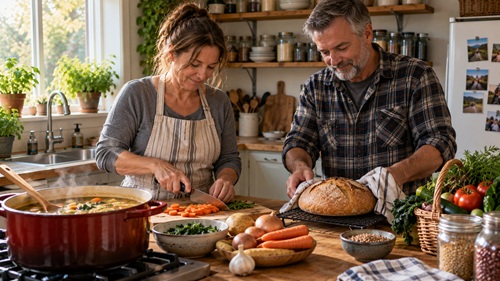
Key Takeaways: Getting Through Hard Times Is About More Than Money
Looking back at the Great Depression, it’s easy to focus on the hardship people endured. Families lost their homes, jobs disappeared, savings were wiped out, and millions struggled to obtain basic necessities. Those were difficult years, and many people suffered through circumstances they had little ability to control. But there is another part of that history worth remembering. Ordinary people found ways to make food last longer, repair what they owned, grow vegetables, preserve harvests, exchange services, and support one another. They didn’t necessarily possess extraordinary abilities. Much of what they knew came from everyday experience, family traditions, and the practical need to solve problems with limited resources.
Those same principles can help us today, even though our circumstances and technology are different. Knowing how to prepare affordable meals can reduce dependence on expensive convenience foods. Learning to repair clothing or maintain household equipment can prevent unnecessary purchases. Growing a few vegetables or preserving seasonal produce can supplement groceries. Understanding household finances can help identify problems and priorities, while maintaining useful skills and community relationships can provide additional options when income becomes uncertain. None of these things guarantees financial security, but each can contribute to a household’s ability to manage difficult circumstances.
One of the most important lessons is that being prepared doesn’t mean having to do everything yourself. The people who survived the Great Depression often relied heavily on relatives, neighbors, churches, charities, and community organizations. They exchanged knowledge, shared resources, and helped one another when money was scarce. That kind of cooperation is still valuable. A person who knows how to repair something may be able to help someone who grows food, while another neighbor may have experience with budgeting, sewing, or maintaining equipment. Sharing knowledge can make everyone a little more capable without requiring everyone to become an expert at everything.
It’s also worth remembering that financial preparedness looks different for everyone. Someone living in an apartment may not have room for a garden, but they can still learn to cook inexpensive meals, maintain clothing, and reduce unnecessary expenses. A senior living on a fixed income may have years of practical experience to share but limited ability to take on physically demanding projects. A young adult may have energy and technical knowledge but little experience managing a household. Someone raising children or working long hours may have very little free time. There is no single approach that will work for every person, and there shouldn’t be an expectation that everyone must live the same way to become more resilient.
For people already struggling financially, it’s especially important not to turn preparedness into another expensive obligation. There is no need to purchase large amounts of emergency food, invest in costly equipment, or attempt to become completely self-sufficient while essential bills remain unpaid. Preparedness can begin with what is already available. Learning to prepare a meal from pantry ingredients, repairing something instead of replacing it, finding a community resource, or understanding the household budget can all be useful steps. Sometimes the most important action is seeking assistance before a financial problem becomes worse.
Another lesson from the Depression is that practical knowledge becomes more valuable when circumstances change. Someone who knows how to cook, garden, sew, repair equipment, manage money, or provide a useful service has abilities that can be applied in different situations. Those skills may save money during ordinary times and become even more important during unemployment, inflation, supply shortages, or other financial disruptions. The more capable we become, the more options we may have when something doesn’t go according to plan.
But perhaps the most important thing readers should take away from this posting is that they don’t need to solve every problem at once. Financial hardship can make people feel overwhelmed, particularly when expenses keep increasing and there doesn’t seem to be much room to improve the situation. Looking at everything that needs to be done can make the challenge seem impossible. Looking at one manageable improvement is different. A person can learn one recipe, repair one item, reduce one expense, or develop one useful skill. Once that becomes familiar, they can move on to something else.
There will still be setbacks. A garden may fail, a repair may turn out to be more complicated than expected, or an attempt to reduce expenses may not produce the savings someone hoped for. That’s part of learning. The important thing is to use those experiences to make better decisions next time. Someone who has never grown vegetables may not produce much food during their first season, but they’ll learn about soil, watering, pests, and local growing conditions. Someone who has never managed a household budget may discover that their first attempt needs adjusting. These experiences aren’t wasted simply because they don’t produce immediate results.
The people who lived through the Great Depression didn’t have all the answers, and neither do we. Many faced circumstances that no amount of thrift or hard work could overcome. But their experiences remind us that practical skills, resourcefulness, cooperation, and the willingness to learn can make a meaningful difference during difficult times. We don’t need to recreate their hardships to benefit from their knowledge.
And while it’s natural to worry about rising costs, employment uncertainty, or what the economy might look like in the coming years, worrying alone doesn’t improve our preparedness. Learning something useful does. Understanding our finances does. Building relationships, maintaining our possessions, reducing waste, and developing practical abilities all give us something we can work with.
Financial resilience isn’t about how little we can survive on. It’s about learning how to make the most of what we have, protecting the things that matter, and developing the knowledge and abilities that help us adapt when circumstances change.
Someone reading this posting may not have much money available right now. They may be behind on bills, worried about their employment, or struggling to afford groceries. They may feel that becoming better prepared is something they’ll have to wait to do until their financial situation improves.
But preparedness doesn’t always have to wait.
If you can learn to make an affordable meal, you can begin. If you can repair something you already own, you can begin. If you can find one way to reduce an expense, identify a source of assistance, or learn a useful skill from someone else, you can begin. Even if you can’t afford to make any changes today, understanding what you want to learn and where to find help is a worthwhile starting point.
You don’t need a large property, expensive equipment, a fully stocked pantry, or years of experience to become more capable. You can begin with the resources, knowledge, and opportunities available to you right now.
And you don’t have to do it all alone.
The goal isn’t to become completely independent of everyone and everything around us. It’s to become capable enough to handle more of life’s challenges, resourceful enough to make better use of what we have, and connected enough to know that help and knowledge can be shared when they’re needed.
The next time something breaks, perhaps you’ll know how to fix it. The next time groceries become more expensive, perhaps you’ll have a few affordable meals you know how to prepare. If your income changes, perhaps you’ll have a clearer understanding of your expenses and the resources available to help. None of these things will make financial hardship easy, but they can make it a little less overwhelming.
That’s what building resilience is really about.
You don’t have to know how to do everything. You don’t have to have everything figured out. You just have to start somewhere, learn what you can, and keep building on it.
And when you look back after a few months, you may discover that you’re capable of far more than you realized.
Because sometimes the most valuable thing we can gain during difficult times isn’t another possession or another supply stored away.
It’s the confidence that comes from knowing, “I can do this.”
© Prepping Communities. This content is for informational purposes only and not professional advice. Use at your own risk.
Terms | Privacy | Guidelines