
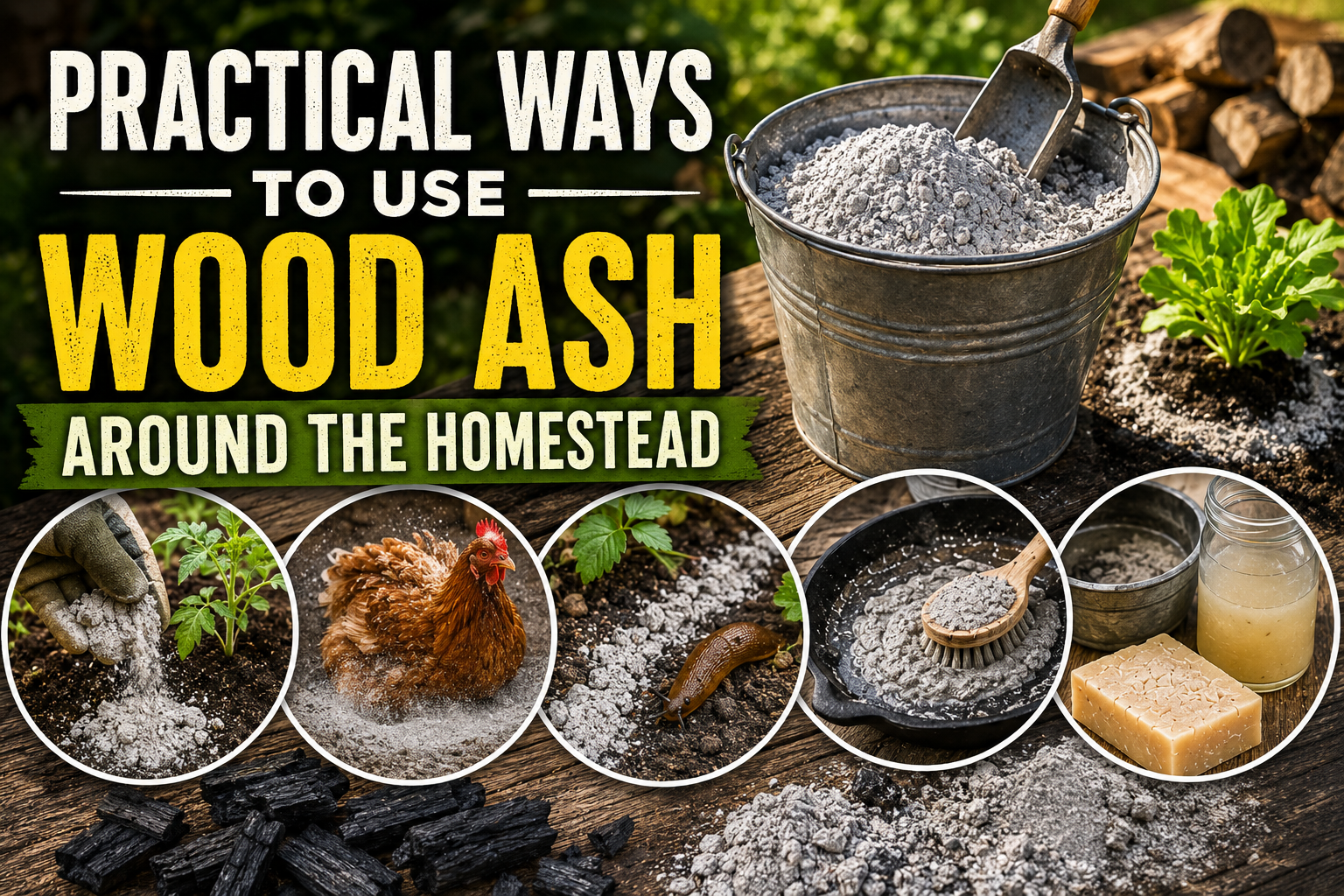
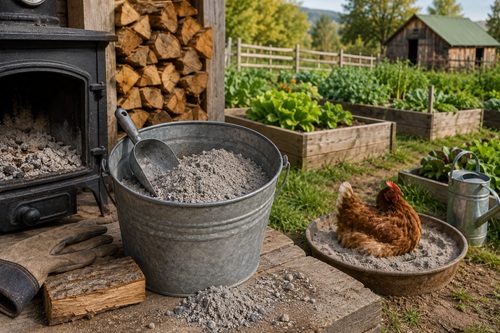
If you heat with wood, have a fireplace, or regularly use an outdoor wood fire, there’s a good chance you produce buckets of ash every year. Most of it probably gets treated as waste. Once the fire is cold, the ash gets shoveled out and dumped somewhere so the stove can be loaded again.
But clean wood ash can still be useful.
For a homesteader or prepper, this is worth understanding because wood ash is something you can produce yourself from a resource you may already be using. It can help in the garden, provide winter traction, become part of a chicken dust bath, assist with certain cleaning jobs, and even serve as a starting material for traditional skills such as making lye for soap.
The trick is knowing where ash actually works and where some of the old advice surrounding it goes too far.
Wood ash contains much of the mineral material that was present in the tree before it burned. Calcium is typically a major component, along with potassium and smaller amounts of magnesium, phosphorus, and other minerals. Wood ash is also alkaline, which explains many of its traditional uses. That alkalinity is useful in the right place, but it also means more isn’t necessarily better.
Throughout this posting, wood ash means ash from clean, untreated natural wood. Ash from painted lumber, pressure-treated wood, plywood, MDF, particleboard, plastics, household garbage, railroad ties, or other questionable materials shouldn’t be used around food gardens, livestock, compost, or anywhere else contaminants could become a problem.
Start With Fire Safety
Before deciding what to do with wood ash, make sure it really is ash and not a container full of hidden embers.
Ash is surprisingly good at insulating heat. A fireplace or wood stove can appear completely cold while small embers remain buried underneath the surface. Those embers can stay hot long after the visible fire has disappeared.
When cleaning a stove or fireplace, shovel the material into a metal container with a metal lid. Move the container outdoors and place it on a noncombustible surface well away from the house, deck, firewood pile, dry grass, vehicles, or anything else that could burn. Don’t immediately dump fireplace ash into a plastic garbage can, cardboard box, compost pile, garden bed, or wooded area.
Give the ash plenty of time to cool completely. If you’re going to save it, a covered metal container kept somewhere dry makes good storage. Dry ash is considerably easier to handle and is more useful for many of the applications described below.
Put Wood Ash to Work in the Garden
One of the most practical places to reuse wood ash is the garden, but this is also where it’s easiest to overdo it. Because wood ash is alkaline, adding it to acidic soil can raise the soil ph. It also returns minerals such as calcium and potassium to the soil.
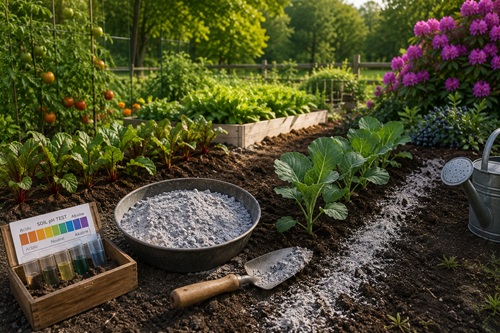
That can make wood ash useful if your soil actually needs what the ash provides.
The important part is knowing your soil first. If your garden soil is already neutral or alkaline, repeatedly spreading ash can eventually push the pH higher than many vegetables prefer. Once that happens, certain nutrients can become less available to plants even though those nutrients are physically present in the soil.
A soil test takes much of the guesswork out of the decision. If the soil is acidic and needs to move upward in pH, clean wood ash may be useful. Spread it lightly and evenly rather than dumping concentrated piles around individual plants.
Think of wood ash as a soil amendment, not simply as free fertilizer that can be applied without limits.
You should also keep it away from plants that actually prefer acidic soil. Blueberries, rhododendrons, azaleas, and several other plants perform better under acidic conditions. Putting an alkaline material around them works against the conditions you’re trying to maintain.
Wood Ash Can Partially Fill the Role of Lime
Gardeners commonly use agricultural lime to raise the pH of acidic soil. Wood ash can perform a similar function because much of its alkalinity comes from calcium compounds.
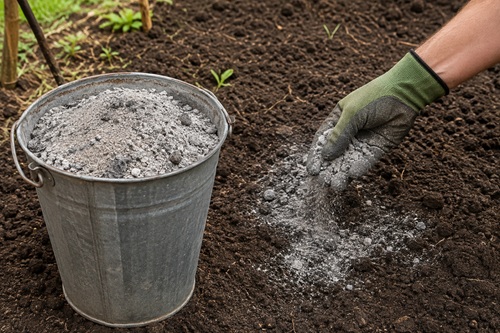
That makes fireplace ash particularly interesting on a homestead. If you’re heating the house with wood during winter, you’re continuously producing a material that may have value when garden season returns.
There is an important difference, though. Commercial agricultural lime is a relatively standardized product. Fireplace ash isn’t. The mineral content and neutralizing ability of ash vary depending on the species of wood, growing conditions, combustion temperature, and how completely the wood burned.
That’s another reason not to treat ash as an exact substitute pound-for-pound for a commercial soil amendment. Use soil testing and conservative applications instead of assuming every bucket of ash has identical strength.
Add Small Amounts to Compost
Some clean wood ash can also go into the compost pile.
Rather than emptying an entire ash bucket onto the compost, sprinkle a thin layer between larger layers of leaves, garden waste, kitchen scraps, and other compostable materials. This spreads the ash through the pile instead of creating one highly alkaline pocket.
A little ash can return minerals to compost that will eventually make their way back into the garden. Large amounts, however, can change the chemistry of the pile and aren’t necessary.
This is a useful general rule for wood ash: small amounts spread over a large area are usually more sensible than concentrated piles.
If the finished compost is intended primarily for blueberries or other acid-loving plants, leaving the ash out is usually the better choice.
Use Dry Ash Against Slugs and Snails – Temporarily
Dry wood ash has sometimes been used around vulnerable plants as a barrier against slugs and snails. The fine, dry material creates an unpleasant surface for these moisture-dependent pests to cross.
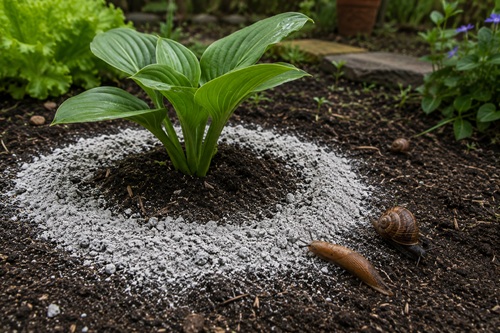
A light ring around a vulnerable plant may provide temporary protection during dry weather.
The problem is moisture. Once rain, irrigation, or heavy dew wets the ash, the barrier loses much of what made it useful. Continually applying another layer after every rainfall also means continually adding an alkaline soil amendment to the same small area.
For that reason, ash can be an occasional tool for protecting plants, but it shouldn’t become the only way you manage slugs and snails.
Give Chickens Another Dust-Bath Material
Anyone who keeps chickens has probably watched them turn a patch of dry dirt into their own bathing area. They’ll lie down, scratch, kick dust through their feathers, shake themselves vigorously, and then get up looking remarkably pleased with the mess they’ve made.
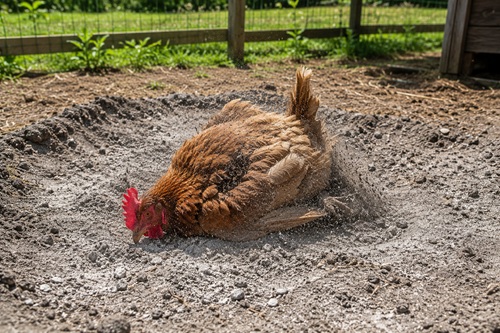
Dust bathing is normal chicken behavior and helps birds maintain their feathers.
A modest amount of completely cooled, clean wood ash can be mixed into an existing dust-bathing area containing dry soil or sand. The key word is mixed. There’s no need to fill a container entirely with fine fireplace ash.
Very fine ash can become airborne easily, and concentrated dust isn’t something you want chickens – or yourself – constantly breathing.
Adding a little clean ash to loose dry soil or sand gives you another productive use for something that otherwise would have been discarded.
Save Some Ash for Icy Walkways
During winter, dry wood ash can become surprisingly handy around a rural property.
Sprinkling a small amount over slippery ice can improve traction under boots. The gritty mineral particles provide a rougher surface, while the dark material absorbs some sunlight when conditions allow.
Ash isn’t the same thing as commercial ice melt, and its greatest benefit is usually traction rather than rapidly melting a thick layer of ice.
It’s especially useful around sheds, barns, gates, paths, and other areas where you simply need enough grip to get across a slippery patch safely.
The obvious downside is the mess. Ash mixed with melting snow creates dirty runoff and sticks readily to boots. Use only what you need, especially near doors where it can be tracked through the house.
Keep Some for Emergency Tire Traction
The same principle can help when a vehicle is spinning its tires on packed snow or ice.
A small amount of dry gritty material placed where the drive tires need traction can sometimes provide enough grip to help get the vehicle moving. Sand is cleaner and generally better suited to this job, but wood ash can be an improvised alternative if that’s what you have available.
On a rural property where ash is already being produced, keeping a covered container near the driveway or equipment shed can make more sense than throwing every bucket away.
If you decide to carry some in a vehicle, seal it extremely well. Fine ash escaping inside a car or truck will make you regret the idea quickly.
Clean the Glass on a Wood Stove
One of the most satisfying uses for wood ash is cleaning the very stove that produced it.
Wood-stove glass gradually develops a dark coating from soot and combustion deposits. Fine ash can work as a mild abrasive that helps loosen that material.
Wait until the stove and glass are completely cold. Slightly dampen a piece of newspaper, paper towel, or soft cloth and touch it lightly into some fine ash. Gently rub the dirty portion of the glass, then wipe it clean with a damp cloth and finish with a dry one.
You don’t need much ash.
Avoid using coarse gritty material that could potentially scratch the glass, and follow the stove manufacturer’s cleaning recommendations. The goal is to take advantage of the fine ash, not aggressively scour the window.
It’s a wonderfully simple closed-loop use: the wood heats the house, and some of what remains afterward helps clean the stove.
Use Ash as a Mild Abrasive
That same mildly abrasive quality can sometimes be useful for cleaning other durable surfaces.
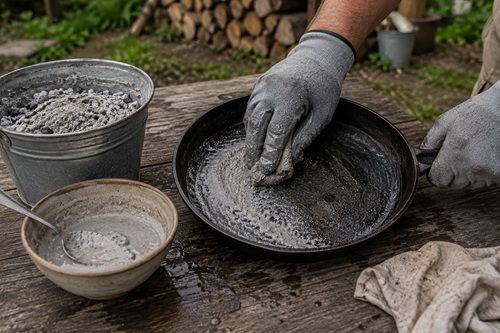
A little fine ash mixed with water produces a simple paste. Applied carefully, it may help remove certain residues from metal or other hard surfaces. Afterward, wipe the material away and rinse the surface thoroughly.
Always test a hidden area first. Fine mineral particles can scratch delicate finishes, and wet wood ash is alkaline enough to irritate skin. Wearing gloves is sensible when you’re handling wet ash for any significant amount of time.
Ash is useful because of its chemical and physical properties. Those same properties are why it should be handled with some respect.
Absorb Small Greasy Messes
Dry ash is absorbent, which can make it useful around a workshop, barn, shed, or garage.
If a small amount of grease or oil is spilled on an appropriate floor or work surface, dry ash can be sprinkled over the area to absorb some of the liquid before cleanup. Let it sit briefly, sweep it up, and finish cleaning the surface appropriately.
Once ash has absorbed motor oil, fuel, solvents, pesticides, or another hazardous substance, however, it isn’t clean wood ash anymore.
Don’t take contaminated ash from the garage and dump it into the vegetable garden or chicken area. Dispose of it according to the requirements for whatever substance it absorbed.
That’s an important distinction whenever you’re trying to reuse materials. Reusing something once doesn’t mean it remains suitable for every subsequent use.
Ash Can Help With Some Odors and Moisture
Dry ash can absorb a limited amount of moisture and odor, which means a small container may be useful in certain utility areas such as sheds or workshops.
Place it somewhere it won’t be knocked over by children, pets, or livestock and replace it when it becomes damp.
Keep expectations realistic, though.
If a basement smells musty because water is entering through the foundation, a bowl of ash isn’t going to solve the problem. If a shed has mold because it lacks ventilation, the building needs ventilation and moisture control.
Ash can absorb a little moisture and odor. It can’t repair the underlying cause of a damp building.
What About Ants and Other Pests?
Traditional advice sometimes recommends spreading wood ash around ant nests or using it as a barrier against various crawling insects.
Dry ash can certainly create an unpleasant environment for some small invertebrates. Its extremely fine particles and drying nature may discourage them from crossing or occupying a particular spot.
That doesn’t make it a dependable solution to every pest problem.
If ants, cockroaches, or rodents are repeatedly entering a building, look for the actual reason they’re there. Food, water, shelter, cracks, gaps, and nesting areas are usually more important than whether a pan of ash is sitting in the corner.
For a prepper or homesteader, knowing why something works is more valuable than simply repeating an old remedy.
Wood Ash and Traditional Soap Making
One of the most interesting uses of wood ash is also one of the oldest.
Long before people could buy standardized commercial lye, alkaline solutions were produced from wood ash. Water was passed through suitable hardwood ash to extract soluble alkaline compounds, creating what is commonly referred to as ash lye or potash lye. Combined properly with fats, it could be used to make soap.
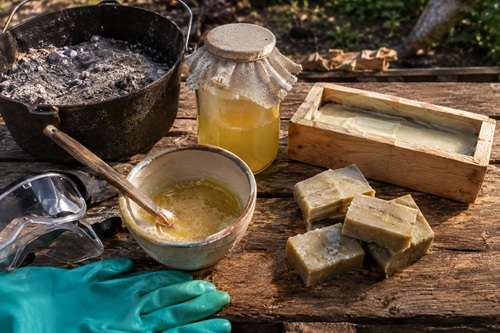
This is a genuinely useful traditional skill to understand, especially from a self-sufficiency perspective, but it isn’t something to approach casually.
Ash-derived lye can cause serious chemical burns. Its concentration can vary considerably, unlike standardized commercial lye, which makes soap formulation more complicated. Proper containers, protective equipment, testing, and an understanding of soap chemistry are necessary.
Wood ash gives you the raw material, but that doesn’t mean dumping water through fireplace ash automatically gives you a safe soap recipe.
Ash-lye soap making deserves to be learned as its own skill.
Ash and Charcoal Are Not the Same Thing
This distinction is particularly important in preparedness.
After a wood fire, you may find both gray powdery ash and black pieces of charcoal. They aren’t interchangeable.
Ash is largely the mineral residue remaining after combustion. Charcoal is carbon-rich material produced when wood has undergone incomplete combustion.
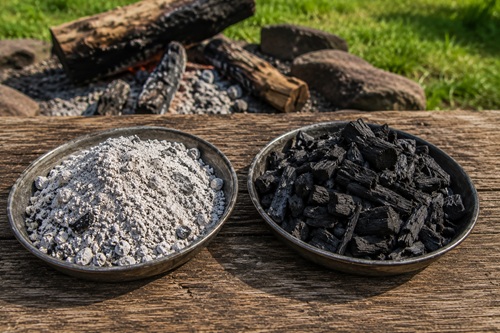
This matters because charcoal, and particularly activated carbon, has properties that wood ash doesn’t.
For example, activated carbon is commonly used in properly designed water-filtration systems because it can adsorb certain contaminants. That has sometimes turned into the dangerous idea that fireplace ash—or even random chunks of campfire charcoal—can simply be used to make questionable water safe to drink.
They can’t.
Filtering dirty water through fireplace material doesn’t reliably remove disease-causing microorganisms or every chemical contaminant. If you’re treating drinking water during an emergency, use a proven treatment method appropriate for the hazard.
Knowing the difference between ash, charcoal, and activated carbon prevents a potentially serious mistake.
Don’t Use Fireplace Ash to Brush Your Teeth
Another old recommendation occasionally repeated is brushing your teeth with wood ash.
This is one of those traditional practices that doesn’t need to become part of your preparedness plan.
Wood ash can be abrasive, strongly alkaline, and chemically inconsistent. Tooth enamel doesn’t grow back after it has been worn away. There are much better ways to maintain dental hygiene than experimenting with combustion residue.
This illustrates an important principle when preserving traditional knowledge: old doesn’t automatically mean useful, and natural doesn’t automatically mean safe.
Traditional practices should be understood, evaluated, and retained when they make sense – not repeated simply because people once did them.
Don’t Experiment With Ash in a Pond
You may also encounter recommendations for putting wood ash into ponds to control algae or alter water chemistry.
That isn’t something to do casually.
Ponds vary tremendously in size, pH, alkalinity, nutrient levels, plant life, fish populations, water sources, and overall chemistry. Because wood ash is alkaline and contains soluble minerals, adding it can change those conditions.
If your homestead pond develops excessive algae, determine what’s causing the problem before dumping fireplace ash into the water. Nutrient runoff, animal waste, fertilizers, sunlight, stagnant conditions, and other factors may all contribute.
A pond used for livestock, fish, irrigation, or emergency water is too valuable to treat like a chemistry experiment.
Be Careful What You Mix With Wood Ash
Because ash is strongly alkaline, it shouldn’t simply be mixed with every fertilizer or soil amendment you happen to have.
In particular, combining strongly alkaline materials with ammonium-containing fertilizers can encourage nitrogen to escape as ammonia gas, reducing fertilizer value and potentially creating irritating fumes.
The practical lesson is simple: don’t make fertilizer mixtures based on the assumption that combining several useful things automatically creates something better.
Test your soil, determine what it needs, and apply amendments accordingly.
That approach may be less exciting than homemade fertilizer experiments, but it produces much more predictable results.
Know Exactly What Was Burned
Before using fireplace ash anywhere important, ask yourself one question:
What went into that fire?
If the answer is clean, untreated firewood, you have a useful material.
If the fire contained pressure-treated lumber, painted boards, plywood, MDF, particleboard, plastics, garbage, synthetic material, treated pallets, glossy printed material, or wood whose history you don’t know, the ash shouldn’t be treated as clean garden material.
Burning doesn’t magically make contaminants disappear. Some undesirable substances can remain behind or become concentrated in the residual ash.
If you don’t know what was burned, don’t put the ash around vegetables, compost, chickens, livestock, or other sensitive areas.
That single rule eliminates a lot of unnecessary risk.
Store Some Instead of Trying to Use Everything
If your wood stove produces several buckets of ash every month, you don’t need to invent a use for every ounce.
Save what you realistically expect to use.
A covered metal container of completely cold, dry ash can be kept for icy walkways. Another supply can be available for appropriate garden applications after you’ve tested the soil. A little can go into the chicken dust bath or compost pile, and a small amount can remain available for cleaning the stove glass.
If you still produce more than you can responsibly use, dispose of the excess appropriately.
Self-sufficiency isn’t about refusing to throw anything away. It’s about recognizing useful resources before automatically treating them as waste.
Why Wood Ash Is Worth Knowing About
Wood ash is a good example of how practical knowledge can change the value of something ordinary.
Without that knowledge, ash is simply the dirty material left in the bottom of the stove.
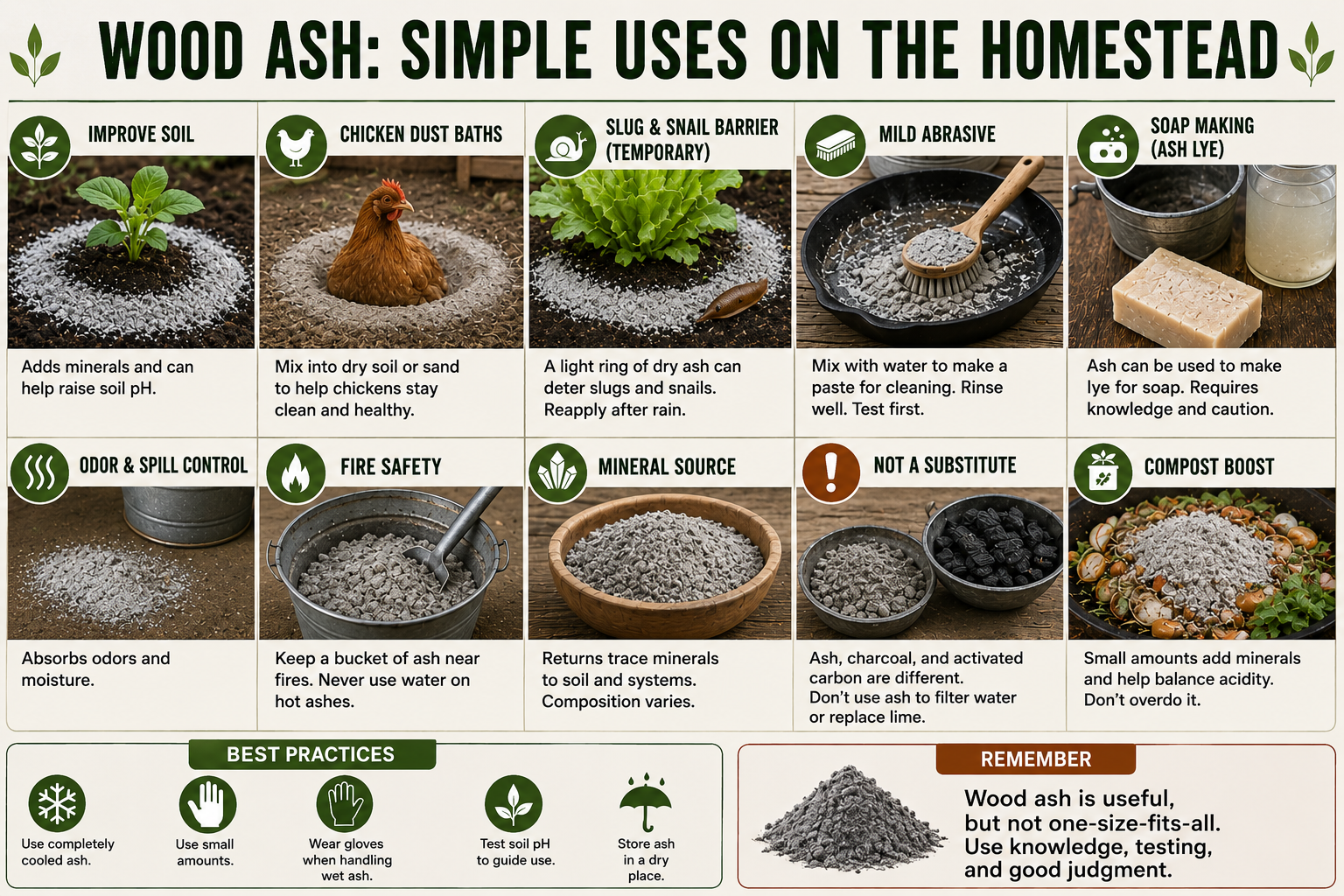
Once you understand what it contains and why it behaves the way it does, you begin seeing possibilities. Its alkalinity can help correct appropriately acidic soil. Its mineral content can be returned to the land in controlled amounts. Its fine texture can assist with certain cleaning jobs. Its gritty nature can provide winter traction. Its absorbency can help with small spills, and its chemistry forms the basis of traditional ash-lye soap making.
Just as importantly, understanding wood ash teaches you where not to use it.
It isn’t a universal fertilizer. It isn’t a dependable rodent treatment. It isn’t a drinking-water purifier. It doesn’t belong indiscriminately in ponds, around acid-loving plants, or on your toothbrush. And ash from questionable burned materials shouldn’t be spread around a food-producing homestead.
That’s what makes learning about a resource more valuable than memorizing a list of “uses.”
When you understand what wood ash is, why it works, and where its limitations are, a bucket of fireplace residue becomes another material you know how to evaluate and use intelligently.
For a homestead or preparedness system, that kind of knowledge is exactly what turns ordinary resources into useful ones.
© Prepping Communities. This content is for informational purposes only and not professional advice. Use at your own risk.
Terms | Privacy | Guidelines