
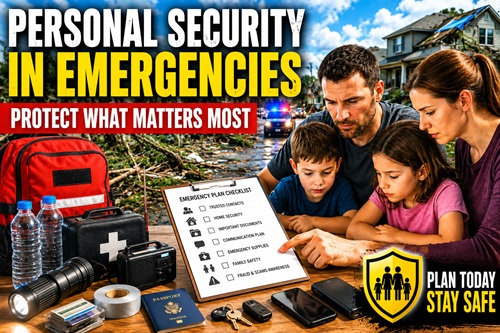
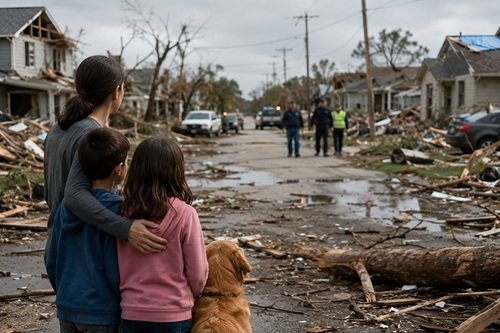
Emergencies can create opportunities for theft, fraud, abuse, scams, and exploitation. Stress, disrupted routines, damaged infrastructure, displacement, and reduced access to normal support services may increase personal security risks for individuals and families.
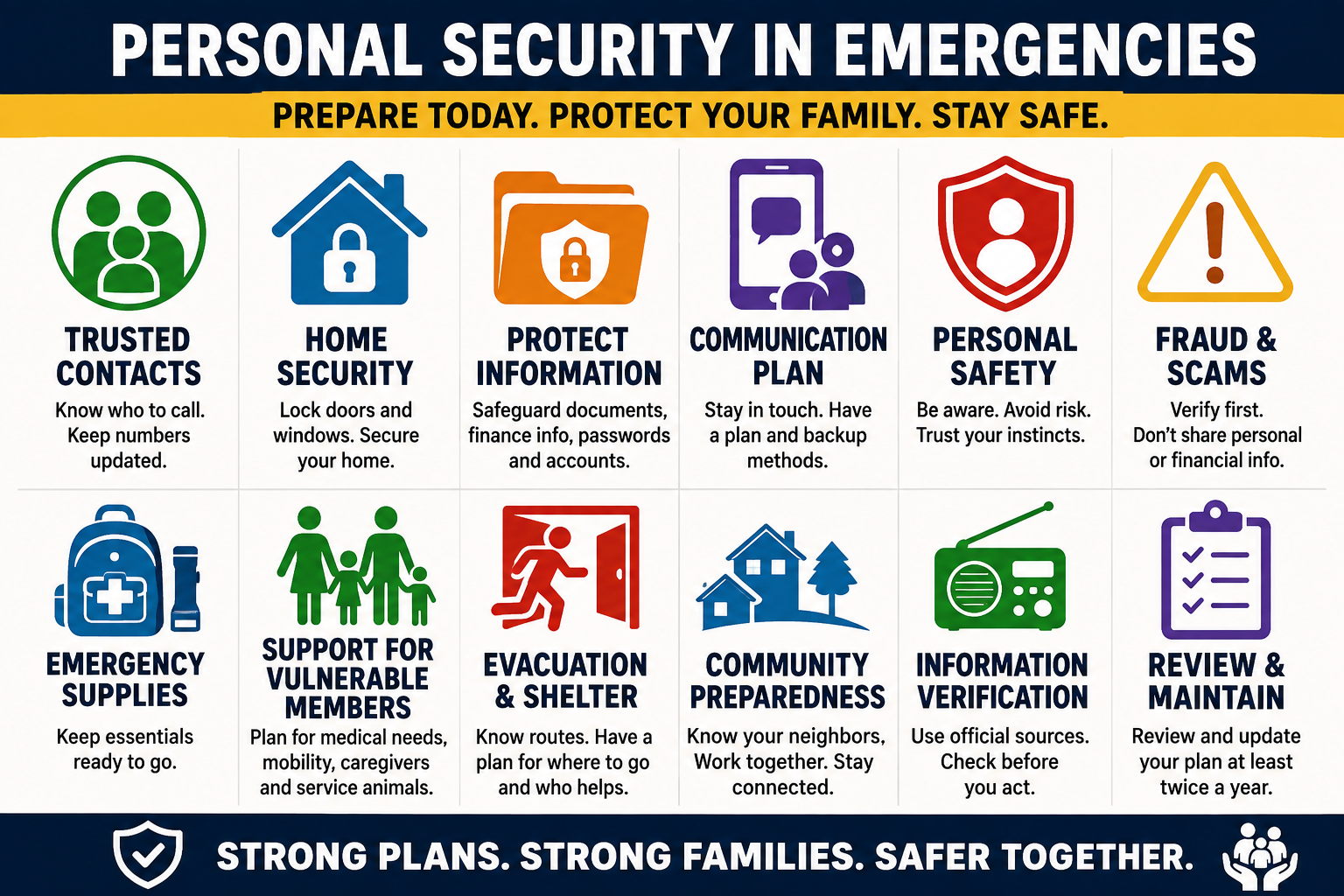
Use this checklist to strengthen personal security, protect children and vulnerable household members, safeguard important information, and establish reliable communication and support plans before an emergency occurs.
Trusted Contacts
□ Create a list of trusted family members, friends, neighbors, and caregivers.
□ Record important telephone numbers on paper in case phones or internet services are unavailable.
□ Identify at least one trusted out-of-area emergency contact.
□ Make sure every household member knows who the trusted contacts are.
□ Give children and dependent family members emergency contact cards.
□ Confirm that trusted contacts know how they may be expected to help during an emergency.
□ Keep copies of the contact list in emergency kits, vehicles, wallets, and important-document storage.
□ Review and update contact information at least once each year.
Home Security
□ Test all exterior door locks.
□ Check that windows close and lock securely.
□ Repair damaged doors, windows, gates, fences, or locks.
□ Test outdoor security lighting.
□ Keep entrances and walkways adequately illuminated.
□ Trim shrubs or vegetation that obstruct visibility around entrances and windows.
□ Secure garages, sheds, workshops, and other outbuildings.
□ Keep emergency or spare keys in a secure location.
□ Avoid leaving valuable equipment visible from outside the home.
□ Know how to secure the home manually if electronic security systems stop working.
□ Include home security checks in your regular emergency preparedness routine.
Personal Information and Important Documents
□ Store important documents in a secure, waterproof container.
□ Keep copies of identification documents.
□ Protect financial and banking records.
□ Maintain copies of insurance information.
□ Keep important account and emergency information organized.
□ Secure digital backup copies of essential documents where appropriate.
□ Protect passwords and online accounts with strong, unique passwords.
□ Use multi-factor authentication where available.
□ Avoid publicly sharing unnecessary information about your location, travel plans, supplies, or household situation during an emergency.
□ Make sure trusted household members know how to access essential information if necessary.
Children and Dependents
□ Identify adults who are authorized to care for or collect children and dependents.
□ Create a family reunification plan.
□ Establish primary and alternate meeting locations.
□ Teach children how to identify trusted adults.
□ Teach children their full name and appropriate emergency contact information when age appropriate.
□ Make sure children know how to contact emergency services.
□ Ensure schools, caregivers, and family members have current emergency contact information.
□ Establish a family password or verification method for unexpected changes in pickup arrangements.
□ Prepare necessary medications, mobility equipment, comfort items, and other essential supplies.
□ Discuss what children should do if they become separated from the family.
□ Review the plan periodically as children grow and circumstances change.
Family Communication
□ Establish a primary method for contacting household members.
□ Establish at least one backup communication method.
□ Choose an out-of-area contact who can help relay information between separated family members.
□ Establish regular family check-in times during extended emergencies.
□ Choose primary and alternate meeting locations.
□ Keep emergency contact cards in wallets, backpacks, school bags, vehicles, and emergency kits.
□ Keep phones and other communication devices charged.
□ Maintain portable charging equipment or backup power where practical.
□ Keep a battery-powered or hand-crank radio for receiving emergency information.
□ Make sure household members know which official information sources to monitor.
□ Practice emergency communication procedures before they are needed.
Personal Safety
□ Stay aware of changing conditions around you.
□ Avoid unnecessary travel through damaged, isolated, or poorly lit areas.
□ Travel with trusted people when practical.
□ Tell someone you trust where you are going and when you expect to return.
□ Keep essential communication equipment accessible.
□ Identify safe public locations that could provide assistance.
□ Avoid confrontations whenever safely possible.
□ Leave potentially dangerous situations early rather than waiting for conditions to worsen.
□ Report suspicious or threatening activity to appropriate authorities when safe to do so.
□ Pay attention when circumstances or behavior around you seem unusual or unsafe.
Fraud and Scams
□ Verify unexpected requests for money before responding.
□ Independently confirm requests supposedly coming from family members or friends.
□ Confirm emergency alerts through official or reliable sources.
□ Never provide banking information simply because someone claims the situation is urgent.
□ Be cautious with unsolicited telephone calls, emails, text messages, and social media messages.
□ Watch for impersonation scams involving government agencies, utilities, charities, insurers, or emergency organizations.
□ Be suspicious of contractors demanding immediate payment after a disaster.
□ Verify charities before making donations.
□ Avoid clicking unfamiliar links in emergency-related messages.
□ Discuss common emergency scams with older adults and other potentially vulnerable household members.
□ Report suspected fraud to the appropriate authorities or financial institution.
Emergency Supplies for Personal Security
□ Flashlight
□ Spare batteries
□ First aid kit
□ Required personal medications
□ Portable phone charger or power bank
□ Whistle
□ Identification
□ Emergency contact card
□ Emergency cash
□ Water
□ Non-perishable snacks
□ Local map
□ Battery-powered or hand-crank radio
□ Copies of important documents
□ Basic hygiene supplies
□ Necessary accessibility or mobility supplies
Support for Vulnerable Family Members
□ Identify anyone who may require additional assistance during an emergency.
□ Review medical and daily living needs.
□ Maintain an updated medication list.
□ Keep necessary medications and medical supplies accessible.
□ Prepare mobility equipment when required.
□ Plan transportation assistance.
□ Identify trusted people who can provide backup assistance.
□ Include service animals and their supplies in emergency plans.
□ Consider communication difficulties, hearing impairment, vision impairment, mobility limitations, or other accessibility requirements.
□ Make sure backup caregivers understand important routines and needs.
□ Maintain emergency contact information for healthcare providers and support services where appropriate.
□ Review these arrangements regularly.
Evacuation and Temporary Shelter
□ Identify safe evacuation destinations before an emergency.
□ Know at least two possible routes away from your home when practical.
□ Determine who will assist children or dependent household members.
□ Keep important documents and essential supplies ready for evacuation.
□ Establish family meeting locations if household members become separated.
□ Keep trusted contacts informed of significant changes in your location when appropriate.
□ Confirm the identity of people offering transportation or accommodation when they are not already known to you.
□ Keep children and dependents with trusted caregivers.
□ Maintain awareness of personal belongings in crowded shelters or temporary accommodation.
□ Follow legitimate instructions from emergency officials and shelter personnel.
Community Preparedness
□ Get to know trusted neighbors.
□ Identify neighbors who may need additional assistance during an emergency.
□ Identify nearby safe locations.
□ Learn local emergency and evacuation procedures.
□ Keep local emergency contact numbers available.
□ Know where emergency shelters or reception centers may be established.
□ Participate in appropriate community preparedness activities.
□ Establish ways neighbors can check on one another after an emergency.
□ Discuss how reliable information can be shared without spreading rumors.
□ Report serious safety concerns through appropriate channels.
Information Verification
□ Identify official emergency information sources before an emergency.
□ Keep a battery-powered radio available.
□ Verify unusual or alarming information before acting when time allows.
□ Check the source, location, date, and time of emergency messages.
□ Be cautious when sharing unverified information.
□ Do not assume screenshots or forwarded messages are current or authentic.
□ Confirm evacuation orders and emergency instructions through official sources whenever practical.
□ Teach household members how to recognize reliable emergency information.
Maintaining Privacy During Emergencies
□ Avoid publicly announcing that your home is vacant.
□ Limit unnecessary social media location sharing.
□ Avoid posting photographs that reveal valuable supplies or security arrangements.
□ Keep financial and identification documents secured.
□ Protect personal information when completing unfamiliar forms.
□ Confirm who is requesting personal information and why it is required.
□ Secure phones, computers, and other devices with passwords or access controls.
□ Keep sensitive documents out of sight in shared or temporary accommodations.
Maintenance
Review your personal security and safeguarding plan at least twice each year and whenever there is a significant change in your household.
□ Update emergency contacts.
□ Review trusted caregivers.
□ Review household security.
□ Test locks and exterior lighting.
□ Test communication equipment.
□ Recharge backup batteries and power banks.
□ Replace expired emergency supplies.
□ Update important documents.
□ Update medication and medical information.
□ Review evacuation and reunification plans.
□ Review plans for children and dependent family members.
□ Practice family emergency communication procedures.
□ Discuss new scams or security concerns with household members.
Key Takeaways
After completing this checklist, you should have:
✓ A trusted network of family members, friends, neighbors, and emergency contacts.
✓ A safer home with basic physical security measures in place.
✓ Important documents, financial information, and personal information properly protected.
✓ A reliable household communication and reunification plan.
✓ Clear arrangements for protecting children and dependent family members.
✓ Preparations that account for older adults, people with disabilities, service animals, and anyone requiring additional assistance.
✓ Backup communication methods for situations where normal services are disrupted.
✓ A plan for recognizing and reducing the risk of scams, fraud, impersonation, and exploitation.
✓ Safer procedures for evacuation, temporary shelter, and displacement.
✓ A routine for reviewing and maintaining your personal security plan.
Personal security is built long before an emergency begins. Strong relationships, reliable communication, situational awareness, protected information, and simple plans that everyone understands can significantly reduce vulnerability when normal routines and support systems are disrupted.
© Prepping Communities. This content is for informational purposes only and not professional advice. Use at your own risk.
Terms | Privacy | Guidelines