
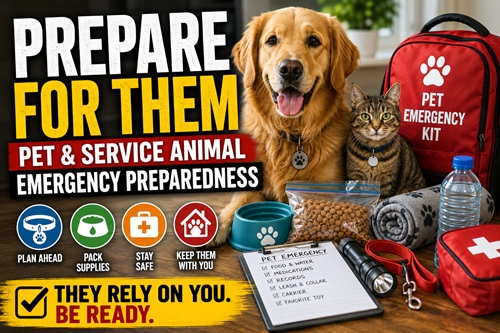
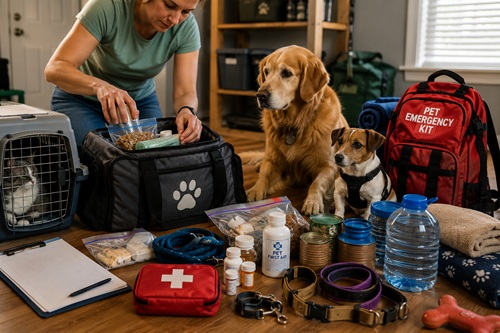
Pets and service animals rely entirely on their owners during an emergency. Evacuations, severe weather, power outages, and other disasters can be confusing and frightening for animals, making preparation essential for their safety and well-being.
Use this checklist to prepare your pets and service animals so they can remain safe, healthy, and cared for before, during, and after an emergency.
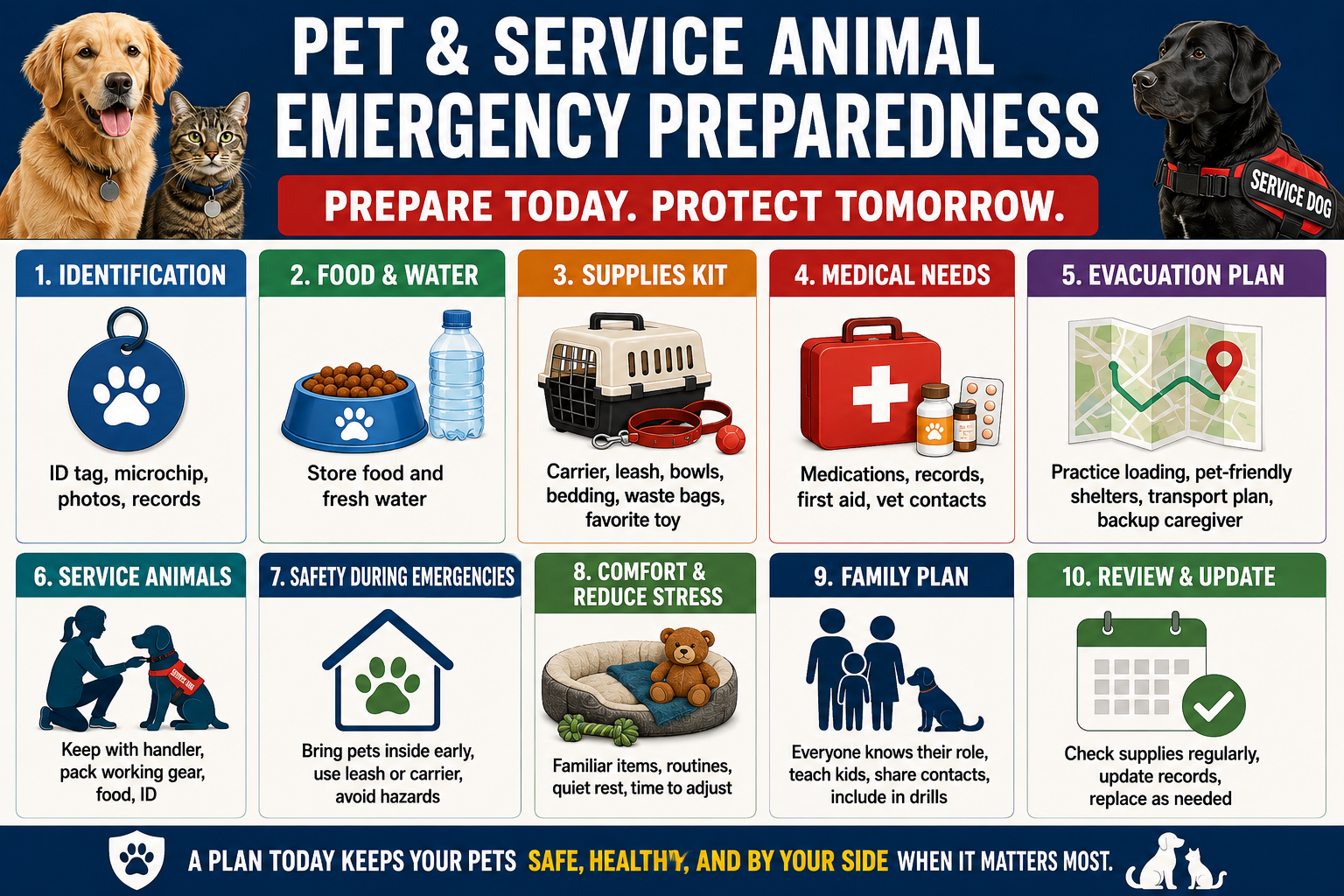
Identification
□ Ensure pets wear identification tags.
□ Keep microchip information current.
□ Take recent photographs of each animal.
□ Record identifying features and markings.
□ Keep copies of vaccination records.
□ Store veterinary contact information.
Food and Water
□ Store at least several days of pet food.
□ Keep fresh drinking water for each animal.
□ Pack collapsible food and water bowls.
□ Rotate stored food before it expires.
□ Include treats to reduce stress during travel.
□ Store food in waterproof containers.
Emergency Supplies
□ Pet carrier or crate
□ Leash or harness
□ Extra collar
□ Waste bags or litter supplies
□ Blanket or bedding
□ Favorite toy
□ Grooming supplies
□ Towels
Medical Care
□ Pack prescription medications.
□ Keep copies of medical records.
□ Include flea and tick treatments if appropriate.
□ Pack a basic pet first aid kit.
□ Review medication expiration dates.
□ Know the location of emergency veterinary clinics.
Evacuation Planning
□ Practice loading pets into carriers.
□ Identify pet-friendly evacuation destinations.
□ Confirm hotels that accept pets.
□ Know local animal shelter locations.
□ Plan transportation for larger animals.
□ Prepare backup caregivers if you are unavailable.
Service Animals
□ Pack working equipment and harnesses.
□ Carry backup identification.
□ Pack food and medications.
□ Include water bowls and cleaning supplies.
□ Identify accessible evacuation locations.
□ Ensure emergency contacts know how to assist if needed.
Comfort and Stress Reduction
□ Pack familiar bedding.
□ Include favorite toys.
□ Maintain feeding routines whenever possible.
□ Provide quiet resting areas.
□ Monitor animals for signs of stress.
□ Allow time for animals to adjust after relocation.
Safety During Emergencies
□ Keep pets indoors during hazardous conditions.
□ Always use a leash, harness, or carrier outside.
□ Prevent access to floodwater and debris.
□ Watch for broken glass, sharp objects, and hazardous materials.
□ Never leave animals unattended inside vehicles.
□ Keep animals separated if stress causes aggressive behavior.
Family Planning
□ Ensure everyone knows who is responsible for each animal.
□ Teach children how to safely handle pets during emergencies.
□ Share veterinary information with trusted family members.
□ Keep emergency contact numbers available.
□ Include pets in household evacuation drills.
Maintenance
Review pet emergency supplies at least twice each year.
□ Replace expired food.
□ Refresh stored water.
□ Update identification information.
□ Replace worn leashes or carriers.
□ Review medications.
□ Update photographs and veterinary records.
Key Takeaways
After completing this checklist, you should have:
✓ Emergency supplies ready for each pet and service animal.
✓ Current identification and veterinary records.
✓ A safe evacuation plan that includes every animal in your household.
✓ Food, water, medications, and comfort items prepared for emergencies.
✓ Backup care arrangements if you become unavailable.
✓ Greater confidence that your pets and service animals can remain safe during unexpected events.
Remember: Your emergency plan is only complete when it includes every member of your household – including the animals that depend on you every day.
© Prepping Communities. This content is for informational purposes only and not professional advice. Use at your own risk.
Terms | Privacy | Guidelines