
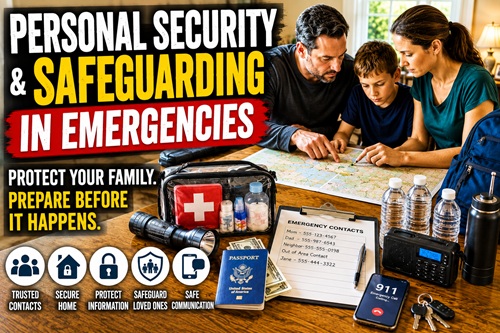
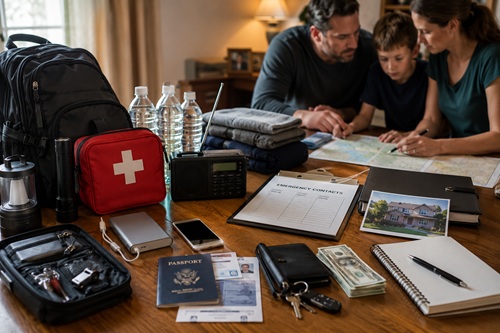
Emergencies can create opportunities for theft, fraud, abuse, scams, and exploitation. Stress, disrupted routines, damaged infrastructure, and reduced access to support services may increase personal security risks for individuals and families.
Use this checklist to strengthen your personal security, protect vulnerable family members, and prepare safe communication and support plans before an emergency occurs.
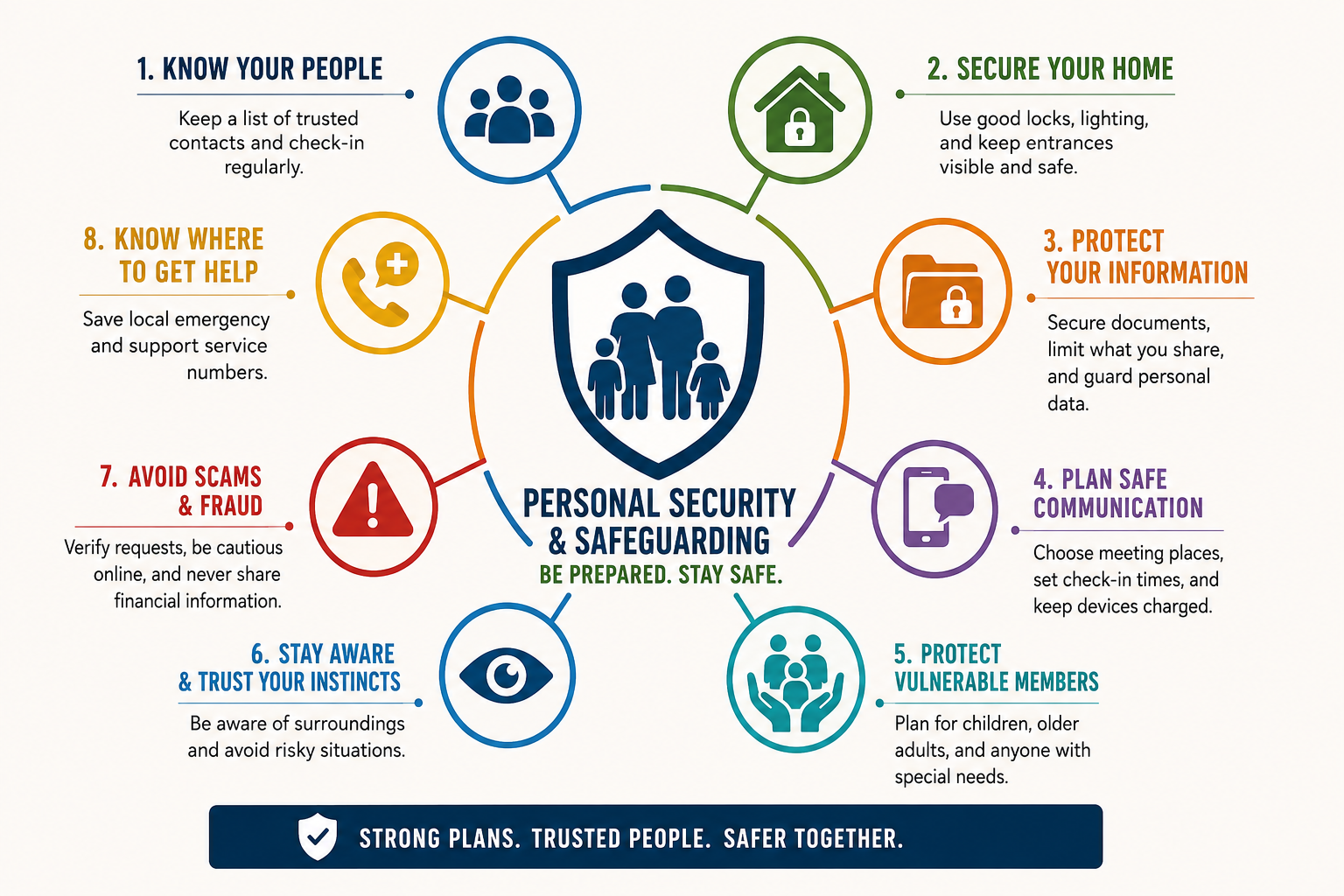
Trusted Contacts
□ Create a list of trusted family members and friends.
□ Record emergency contact numbers on paper.
□ Identify an out-of-area emergency contact.
□ Share emergency contact information with household members.
□ Review contact information at least once each year.
Home Security
□ Test all exterior door locks.
□ Ensure windows lock securely.
□ Install or test outdoor lighting.
□ Keep emergency keys in a secure location.
□ Trim shrubs that block visibility around entrances.
□ Secure garages, sheds, and outbuildings.
Personal Information
□ Store important documents in a waterproof container.
□ Protect financial records.
□ Keep copies of identification documents.
□ Limit sharing your location during emergencies.
□ Protect passwords and online accounts.
□ Secure backup copies of important information.
Children and Dependents
□ Identify approved caregivers.
□ Create a family reunification plan.
□ Teach children how to contact trusted adults.
□ Ensure caregivers have emergency contact information.
□ Prepare comfort items for children.
□ Review plans with family members regularly.
Communication
□ Establish regular family check-in times.
□ Choose primary and alternate meeting locations.
□ Keep emergency contact cards in wallets and backpacks.
□ Maintain charged communication devices.
□ Keep a battery-powered or hand-crank radio.
□ Practice emergency communication procedures.
Personal Safety
□ Stay aware of your surroundings.
□ Avoid isolated or poorly lit areas when possible.
□ Travel with trusted people whenever practical.
□ Report suspicious activity to appropriate authorities.
□ Leave dangerous situations as early as possible.
□ Trust your instincts if a situation feels unsafe.
Fraud and Scams
□ Verify requests for money before responding.
□ Confirm emergency information through reliable sources.
□ Never share banking or personal information without verification.
□ Be cautious of unsolicited phone calls, emails, and messages.
□ Watch for impersonation scams during disasters.
Emergency Supplies
□ Flashlight
□ First aid kit
□ Personal medications
□ Portable phone charger
□ Whistle
□ Identification
□ Emergency cash
□ Water and snacks
Support for Vulnerable Family Members
□ Review medical needs.
□ Prepare mobility equipment if required.
□ Update medication lists.
□ Plan transportation assistance.
□ Ensure service animals are included in emergency plans.
□ Review accessibility requirements.
Community Preparedness
□ Know your neighbors.
□ Identify nearby safe locations.
□ Learn local emergency procedures.
□ Participate in community preparedness activities.
□ Keep local emergency numbers available.
Maintenance
Review your personal security plan at least twice each year.
□ Update emergency contacts.
□ Review household security.
□ Test communication equipment.
□ Replace expired emergency supplies.
□ Update important documents.
□ Practice family emergency procedures.
Key Takeaways
After completing this checklist, you should have:
✓ A trusted network of family and emergency contacts.
✓ A safer home with basic security measures in place.
✓ Protected important documents and personal information.
✓ A communication and reunification plan for your household.
✓ Preparations that consider children, older adults, and anyone requiring additional assistance.
✓ A plan to reduce the risk of scams, fraud, and exploitation during emergencies.
Remember: Personal security is built long before an emergency begins. Strong relationships, good communication, awareness, and thoughtful planning are often your most effective tools for staying safe.
© Prepping Communities. This content is for informational purposes only and not professional advice. Use at your own risk.
Terms | Privacy | Guidelines