
<h1id=”top”>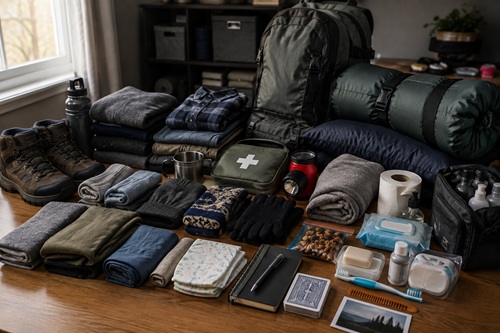
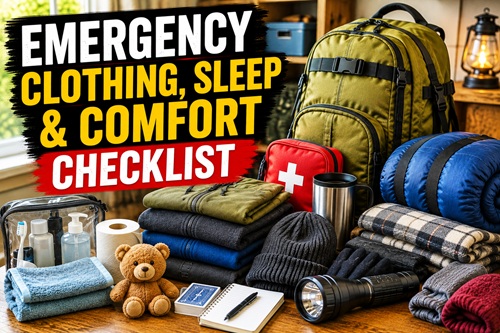
During an emergency, shelter and supplies often receive the most attention, but clothing, sleep, and personal comfort are equally important. Staying warm, dry, well-rested, and comfortable helps maintain clear thinking, reduces stress, and allows you to care for yourself and others more effectively.
Use this checklist to prepare clothing, sleeping equipment, and comfort items before an emergency occurs.
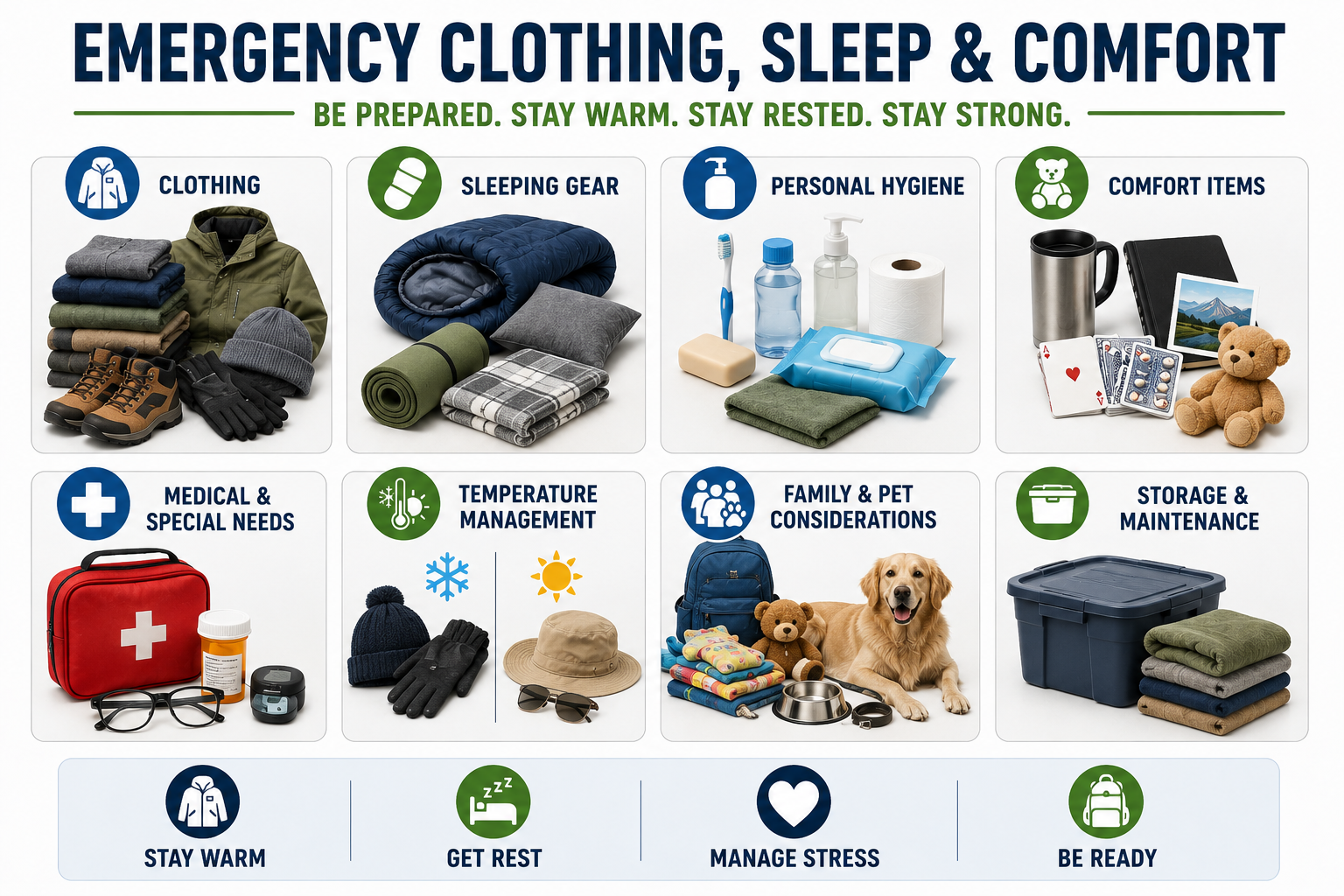
Clothing
□ Pack weather-appropriate clothing for each family member.
□ Include waterproof outer layers.
□ Pack extra socks and underwear.
□ Include warm hats and gloves for cold weather.
□ Pack lightweight clothing and sun protection for hot climates.
□ Choose sturdy, comfortable footwear.
□ Store clothing in waterproof bags or containers.
□ Review clothing sizes for growing children.
Sleeping Equipment
□ Pack a sleeping bag or warm blanket.
□ Include a sleeping pad or inflatable mattress if practical.
□ Pack a compact pillow or travel pillow.
□ Include an emergency blanket.
□ Store sleeping equipment in a dry location.
□ Ensure each family member has their own sleeping gear whenever possible.
Personal Hygiene
□ Toothbrush and toothpaste
□ Soap or body wipes
□ Hand sanitizer
□ Toilet paper
□ Towel or microfiber towel
□ Feminine hygiene products
□ Diapers or incontinence supplies if needed
□ Lip balm
□ Sunscreen
□ Insect repellent
Personal Comfort
□ Favorite book or magazine
□ Playing cards or small travel game
□ Notebook and pen
□ Family photographs
□ Comfort toy for children
□ Ear plugs
□ Sleep mask
□ Reusable water bottle
□ Favorite shelf-stable snacks
Medical and Personal Needs
□ Prescription medications
□ Spare eyeglasses
□ Hearing aid batteries
□ Medical devices
□ Mobility aids if required
□ Skin care products
□ Personal hygiene products
Temperature Management
Cold Weather
□ Extra insulating layers
□ Wool socks
□ Winter boots
□ Warm gloves
□ Toque or winter hat
□ Hand warmers
Hot Weather
□ Lightweight clothing
□ Wide-brim hat
□ Cooling towel
□ Extra drinking water
□ Electrolyte packets
Family Considerations
□ Clothing for infants and children
□ Pet bedding and blankets
□ Pet food and supplies
□ Extra comfort items for children
□ Special clothing for older adults
□ Clothing for medical or mobility needs
Storage
□ Keep clothing clean and dry.
□ Store everything in waterproof containers or bags.
□ Label bags by family member if practical.
□ Rotate seasonal clothing throughout the year.
□ Replace worn or damaged items.
Maintenance
Review your emergency clothing and comfort supplies at least twice each year.
□ Replace clothing that no longer fits.
□ Wash and repack stored clothing.
□ Check sleeping bags and blankets.
□ Replace expired personal care products.
□ Update children’s supplies as they grow.
□ Restock comfort items after use.
Key Takeaways
After completing this checklist, you should have:
✓ Clothing suitable for your local climate.
✓ Reliable sleeping equipment for emergencies.
✓ Personal hygiene supplies for several days.
✓ Comfort items that help reduce stress during difficult situations.
✓ Seasonal clothing ready for changing weather.
✓ Emergency clothing and sleeping supplies that are organized, dry, and ready to use.
Remember: Staying warm, dry, rested, and comfortable is not simply about convenience. These basic needs help protect health, improve decision-making, and make it easier to respond effectively throughout an emergency.
© Prepping Communities. This content is for informational purposes only and not professional advice. Use at your own risk.
Terms | Privacy | Guidelines