
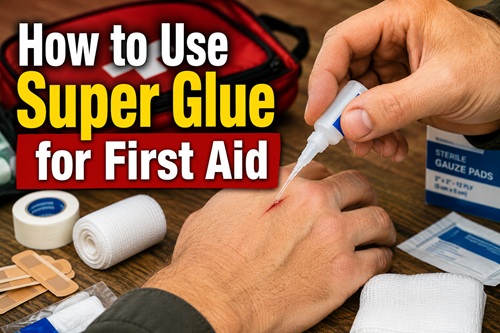
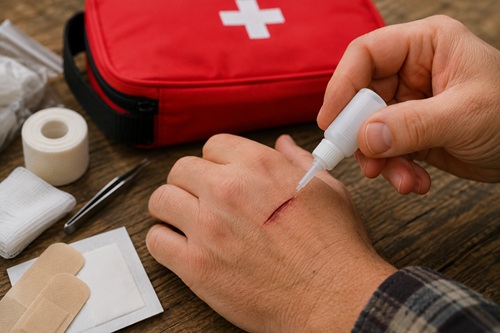
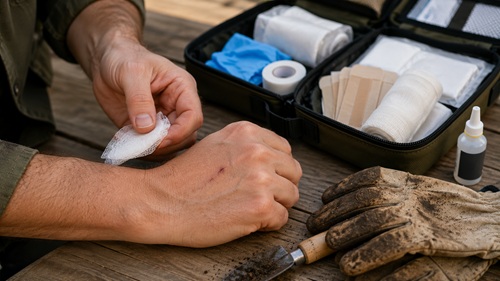
Super glue can have a place in an emergency first aid kit, but it needs to be used carefully. Medical skin adhesive is specifically designed for closing wounds and should always be the first choice when available. Ordinary household super glue is not a medical product, but in a situation where proper medical supplies or timely medical care are unavailable, cyanoacrylate glue may sometimes be used to help close a small, clean, straight, shallow cut.
The most important thing to understand is that super glue belongs on top of the closed skin, not inside the wound. The idea is to bring the edges of the cut together and use a thin layer of adhesive across the surface to hold them there. Filling a cut with glue can irritate or damage tissue and can also trap contamination inside the wound.
Stop the Bleeding First
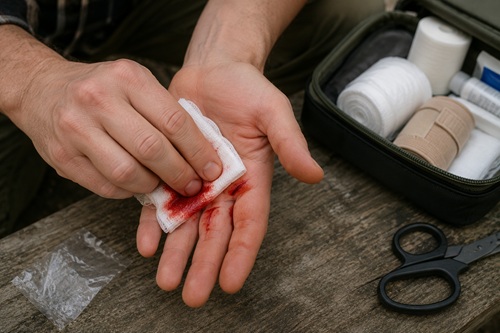
Before attempting to close a cut, get the bleeding under control. Apply firm, direct pressure with clean gauze or another clean dressing until the bleeding stops. A wound that continues bleeding heavily, spurts blood, or quickly soaks through dressings should not simply be glued shut. Those are signs that the injury may require proper medical treatment.
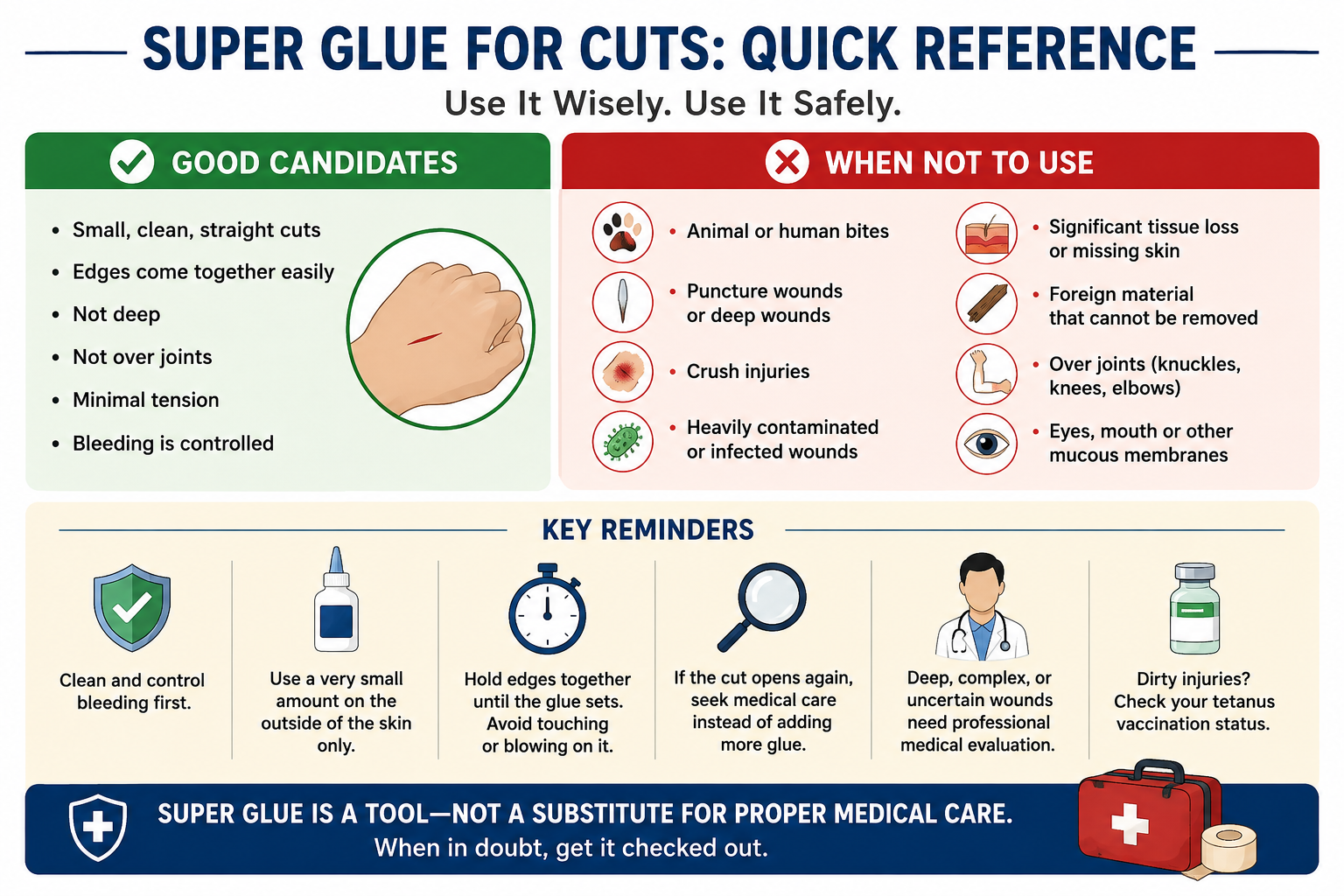
Once the bleeding has stopped, take a good look at the wound. A small straight cut whose edges naturally come together may be suitable for adhesive closure. A deep, jagged, crushed, badly contaminated, or widely separated wound is not.
Clean the Wound Thoroughly
Never glue a dirty wound closed. Rinse the cut thoroughly with clean potable water or sterile saline and remove visible dirt and debris when it can be done safely. The surrounding skin can be washed with soap and water.
Take the time to clean the injury properly. Closing contaminated tissue can trap bacteria inside and create conditions for infection. If dirt, foreign material, or damaged tissue remains deep in the wound, leave it open and seek appropriate medical treatment rather than sealing it.
After cleaning, gently dry the skin surrounding the cut. The bleeding should have stopped and the outside skin should be reasonably dry before adhesive is applied.
Bring the Skin Edges Together
With clean hands or gloves, gently push the two sides of the cut together. The edges should meet fairly easily without having to pull or stretch the skin significantly.
If the wound will not stay together without considerable force, don’t try to overcome the problem by adding more glue. A wound under that much tension may require stitches, staples, wound-closure strips, or another appropriate closure method.
Apply the Glue Over the Cut
While holding the skin edges together, apply a very small amount of adhesive across the surface of the closed cut. Do not put the applicator into the wound and do not squeeze glue between the exposed edges.
Think of the adhesive as forming a thin bridge across the closed skin. The glue is there to keep the two skin edges from separating while healing begins.
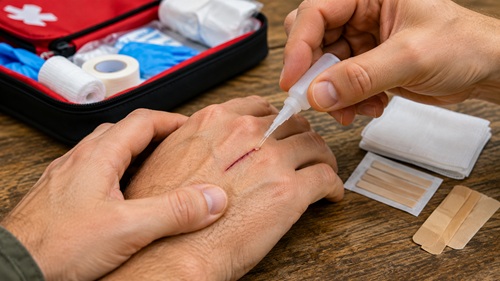
Use only enough adhesive to cover the closure area. More is not necessarily better. Large amounts of cyanoacrylate can generate heat while curing and may irritate or injure tissue.
Continue holding the edges together until the adhesive has set. Avoid touching the wet glue or blowing on it. Once it has hardened sufficiently, slowly release the skin and check whether the cut remains closed.
If the wound immediately opens again, don’t repeatedly add more household super glue. The location, depth, or tension on the wound may make adhesive closure inappropriate.
Protect the Closed Wound
Once the adhesive has set, keep the area reasonably clean and dry. A light protective dressing can be placed over the area when necessary to protect it from dirt, clothing, or equipment, but avoid sticking a bandage directly into wet adhesive.
Don’t pick or peel at the glue as the wound heals. The adhesive should gradually loosen and come away as the outer skin naturally sheds. Continue checking the wound each day rather than assuming that because it is closed everything underneath is fine.
When You Should Not Use Super Glue
Do not use super glue to close animal bites or human bites. These injuries have a significant infection risk and are often deliberately managed differently from clean cuts. Super glue should also not be used to close puncture wounds, deep wounds, crush injuries, heavily contaminated cuts, infected wounds, wounds with significant tissue loss, or injuries containing foreign material that cannot be removed.
Avoid using it around the eyes, eyelids, inside the mouth, or on other mucous membranes. Cuts directly over joints such as knuckles, knees, and elbows can also be poor candidates because repeated movement puts considerable stress on the closure.
If you can see deeper structures, the wound is unusually deep, sensation has been lost, normal movement is affected, or there is any possibility of tendon, nerve, blood vessel, or bone involvement, the injury needs proper medical evaluation rather than simply being glued closed.
Cuts caused by dirty objects should also prompt consideration of whether the person’s tetanus vaccination is current.
Medical Skin Adhesive Is the Better Choice
Although medical skin adhesives and ordinary super glue are related, they aren’t interchangeable products. Medical tissue adhesives are specifically manufactured for use on skin and are generally designed to be more flexible and less irritating than common household super glue.
If you’re intentionally building a first aid kit, purchase medical skin adhesive or wound-closure strips rather than depending on a tube of hardware-store super glue. Ordinary super glue is better understood as an improvised emergency option when better supplies aren’t available.
Watch the Wound for Infection
Continue checking the injury while it heals. Increasing redness, swelling, warmth, worsening pain, pus, red streaking, fever, or the wound beginning to open can indicate a problem. These are reasons to seek appropriate medical care.
Even a small-looking cut can sometimes damage structures underneath the skin. Persistent bleeding, numbness, loss of movement, severe pain, or other unusual symptoms should not be ignored simply because the surface of the wound has been successfully closed.
Keep the Process Simple
For a suitable small cut, the process is straightforward. Control the bleeding, thoroughly clean the wound, dry the surrounding skin, gently bring the edges together, apply a thin layer of adhesive across the closed skin, allow it to set, and then protect and monitor the injury.
The most important rule is equally simple: never pour super glue into an open wound. The adhesive should hold the surface edges of an appropriate cut together, not fill the injury itself.
© Prepping Communities. This content is for informational purposes only and not professional advice. Use at your own risk.
Terms | Privacy | Guidelines