
Introduction
Most people do not think about their medications until it is time to take them.
A prescription is picked up from the pharmacy, placed in a cabinet, and taken according to schedule. Because modern healthcare systems function so reliably, it is easy to assume medications will always be available when needed.
Most of the time, that assumption is correct.
However, emergencies have a way of exposing dependencies that often go unnoticed during normal conditions. A severe winter storm can close roads and delay deliveries. Wildfires may force evacuations that separate people from important medications. Hurricanes can disrupt transportation networks across entire regions, while prolonged power outages can threaten the stability of temperature-sensitive treatments. Even supply chain disruptions, labor shortages, or pharmacy closures can affect the availability of essential prescription drugs.
For individuals who rely on daily medications, these situations can create more than inconvenience. They can introduce uncertainty at a time when people are already dealing with stress, changing conditions, and difficult decisions. While preparedness cannot prevent emergencies from occurring, it can help reduce their impact and improve a household’s ability to maintain continuity of care when normal systems become temporarily unavailable.
 Why Medication Preparedness Matters
Modern healthcare depends on an incredibly complex network of systems working together. Physicians, pharmacies, distributors, manufacturers, transportation providers, insurance companies, communication networks, and computer systems all play a role in ensuring medications reach the people who need them.
Under normal circumstances, most of this complexity remains invisible. Prescriptions are filled quickly, pharmacies are stocked, and medications are readily available. Because these systems work so efficiently, it is easy to overlook how many moving parts are involved.
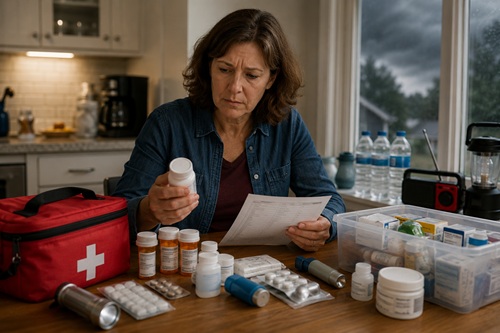
When disruptions occur, however, the effects can ripple through the system. A transportation delay can affect deliveries. A natural disaster can temporarily close pharmacies. Power outages can impact storage conditions. Communication problems can delay prescription approvals or transfers. While these disruptions are usually temporary, they can create challenges for people who depend on medications every day.
Preparedness helps create a buffer between these disruptions and personal health. The goal is not to anticipate every possible emergency. Rather, it is to ensure that temporary interruptions do not become unnecessary medical problems.
The Difference Between a Supply Disruption and a Medical Emergency
One of the most important goals of preparedness is preventing relatively small problems from becoming much larger ones.
A delayed prescription refill may seem like a minor inconvenience under normal circumstances. However, when combined with severe weather, pharmacy closures, transportation challenges, communication disruptions, or evacuation orders, a routine refill can suddenly become much more difficult.
Imagine a situation where a pharmacy closes unexpectedly during a major storm. Someone with only a day or two of medication remaining may face significant stress trying to obtain a refill. By contrast, someone who has planned ahead and maintained a modest reserve may be able to navigate the same situation with far less concern.
Preparedness creates flexibility. It provides additional time to evaluate options, gather information, and make informed decisions. The objective is not to accumulate excessive quantities of medication. It is simply to create enough margin that temporary disruptions remain manageable rather than becoming emergencies.
 Understanding What Causes Medications to Degrade
Proper storage is one of the most important aspects of medication preparedness. Many medications remain stable and effective for long periods when stored correctly. However, several environmental factors can affect their quality over time.
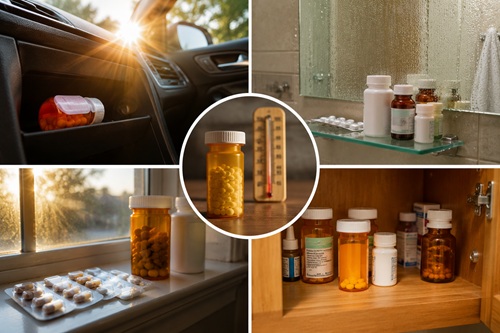
Heat is one of the most significant threats to medication stability. Prolonged exposure to elevated temperatures can accelerate chemical breakdown and reduce effectiveness. Temperatures inside vehicles, garages, attics, and storage sheds can rise dramatically during warm weather, sometimes exceeding recommended storage conditions by a considerable margin.
Moisture presents another challenge. Humidity can affect tablets, capsules, powders, and packaging materials. This is one reason why bathroom medicine cabinets are often less suitable than many people realize. Frequent exposure to steam from showers and baths creates a humid environment that may gradually affect medication quality.
Light can also influence the stability of certain medications. Direct sunlight and prolonged exposure to bright light may contribute to degradation in some products. Original prescription containers are often designed to help protect medications from these environmental factors, which is why medications should generally remain in their original packaging unless directed otherwise by a pharmacist or healthcare provider.
Choosing the Right Storage Location
For most households, the ideal medication storage location is one that remains cool, dry, dark, and relatively stable throughout the year. Interior closets, hallway cabinets, bedroom storage areas, and other climate-controlled locations are often good choices.
By contrast, locations such as bathrooms, garages, sheds, attics, and vehicles should generally be avoided. These environments frequently experience significant fluctuations in temperature and humidity that may affect medication stability.
The objective is not necessarily to find the coldest location in the home. Instead, the goal is consistency. A stable environment helps preserve medication quality and reduces the likelihood of accidental exposure to damaging conditions.
 Building an Emergency Medication Reserve
One of the most practical preparedness measures involves maintaining a reasonable reserve of essential medications whenever possible. The size of that reserve will vary depending on individual circumstances, prescription regulations, insurance policies, and physician recommendations.
Many individuals managing chronic conditions may be able to discuss preparedness with their healthcare provider and explore options such as ninety-day prescriptions, mail-order pharmacy services, or maintenance medication programs. Some insurance plans also allow prescriptions to be refilled before the current supply is completely exhausted, which may gradually create a modest buffer over time.
The most effective approach is usually one developed in consultation with healthcare professionals. Physicians and pharmacists understand the medications involved and can often provide recommendations tailored to an individual’s specific situation.
The Importance of Medication Rotation
Building a reserve is only useful if the medications remain current and effective. Just as food storage programs rely on regular rotation, medication preparedness benefits from a similar approach.
Many preparedness-minded households use a “first in, first out” system. Older supplies are used first while newer refills are placed behind them. This helps maintain freshness while reducing waste and preventing situations where expired medications accumulate unnoticed.
A few times each year, it is worth reviewing medication supplies, checking expiration dates, inspecting packaging, and replacing items that are nearing the end of their recommended shelf life. These simple maintenance habits help ensure that emergency supplies remain useful when they are needed most.
Understanding Expiration Dates
Expiration dates are often misunderstood. Many people assume medications become ineffective the day after the printed date, while others assume expiration dates can be ignored entirely.
The reality is more nuanced.
Expiration dates indicate the period during which manufacturers can guarantee stability and potency when medications are stored according to recommended conditions. Some medications may retain effectiveness beyond those dates, while others may degrade more rapidly.
Storage conditions play a major role. Medications exposed to excessive heat, moisture, or light may deteriorate faster than those stored properly.
Because effectiveness varies depending on the medication involved, individuals should follow guidance from healthcare professionals and avoid making assumptions about expired products. Regular rotation remains the safest and most practical approach.
 When Refrigeration Becomes Part of Your Preparedness Plan
For many households, medication storage is relatively straightforward. Medications are stored properly, supplies are rotated regularly, and expiration dates are monitored as part of routine household maintenance.
For others, the situation can be considerably more complex.
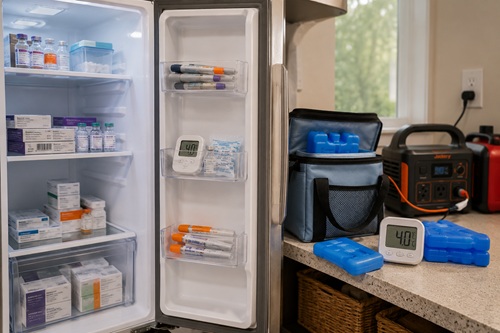
Millions of people rely on medications that must remain within specific temperature ranges to maintain effectiveness. Insulin is perhaps the most widely recognized example, but many injectable therapies, biological medications, and specialty treatments have similar requirements.
This creates a unique preparedness challenge. A power outage that may be little more than an inconvenience for one household can become a significant concern for another.
Understanding the storage requirements of temperature-sensitive medications before an emergency occurs is essential. Many manufacturers provide guidance regarding acceptable temperature ranges, how long medications may remain outside refrigeration, and what actions should be taken if storage conditions are exceeded.
Knowing this information before an emergency eliminates guesswork during stressful situations. Backup solutions such as portable power stations, generators, insulated medical coolers, reusable ice packs, and temperature-monitoring devices may all play a role depending on individual needs.
Preparedness is often most effective when important questions have already been answered before they need to be asked.
Organizing Medical Information
Medication preparedness involves more than storing medications. Access to accurate information can become equally important during an emergency.
Every household should maintain an up-to-date record of medications, dosages, prescribing physicians, pharmacy contact information, allergies, medical conditions, emergency contacts, and insurance information. Having this information readily available can simplify medical care if treatment becomes necessary away from home or from unfamiliar healthcare providers.
Printed copies should accompany medication supplies and emergency kits. Digital copies can provide an additional layer of redundancy and convenience.
 Medication Preparedness Is Not One-Size-Fits-All
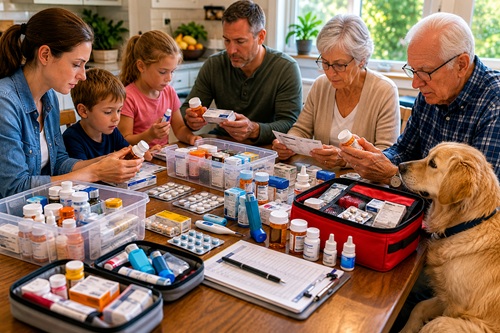
Every household has different medical requirements, which means every preparedness plan will look slightly different.
A healthy young adult may have very different needs than a retiree managing multiple chronic conditions. Families with children may need allergy medications, fever reducers, asthma treatments, or specialized medical equipment. Caregivers may need backup resources for elderly relatives, while pet owners may need medications prescribed by veterinarians.
Preparedness plans work best when they reflect real life. The most effective medication preparedness strategy is the one designed around the actual needs of the people who depend upon it.
Creating a Portable Medication Kit
Some emergencies require rapid evacuation. Having a travel-ready medication kit can save valuable time when every minute matters.
A portable kit should contain essential medications, copies of prescriptions, medical information, emergency contact lists, and basic first aid supplies. The kit should be secure, organized, and easy to access.
When evacuations occur, people are often dealing with multiple priorities at once. Having medications already organized in a dedicated container reduces stress and eliminates the need to gather critical items under pressure.
 Common Medication Storage Mistakes
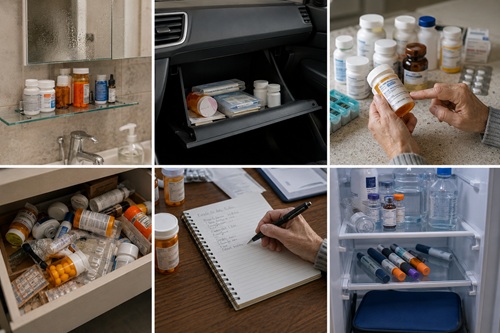
Many medication storage problems are surprisingly common. People frequently store medications in humid bathrooms, leave prescriptions in vehicles, ignore expiration dates, fail to rotate supplies, neglect medication records, or assume pharmacies will always remain accessible.
Others overlook the importance of planning for refrigerated medications or fail to consider how an evacuation might affect access to essential treatments.
Fortunately, most of these problems can be corrected through simple planning, routine reviews, and thoughtful organization.
A Small Investment in Future Peace of Mind
Preparedness is often associated with major disasters, but most disruptions begin with ordinary problems.
A storm delays deliveries. A road closure limits travel. A pharmacy closes unexpectedly. A power outage lasts longer than anticipated.
For individuals who depend on medications, even short interruptions can create uncertainty.
That is why medication preparedness deserves the same attention as food storage, emergency communications, and backup power planning.
The goal is not to prepare for every possible scenario. The goal is to ensure that temporary disruptions do not create unnecessary risks.
By storing medications properly, maintaining organized records, planning for temperature-sensitive treatments, and building a modest reserve when appropriate, households can improve their ability to navigate unexpected events with greater confidence.
Most people hope they never need these preparations.
But if the day comes when access to medications becomes difficult, the time spent planning ahead may prove invaluable.
Sometimes the most important preparedness measures are not the most visible.
They are the ones that quietly protect the health and well-being of the people who depend on them every day.
© Prepping Communities. This content is for informational purposes only and not professional advice. Use at your own risk.
Terms | Privacy | Guidelines