
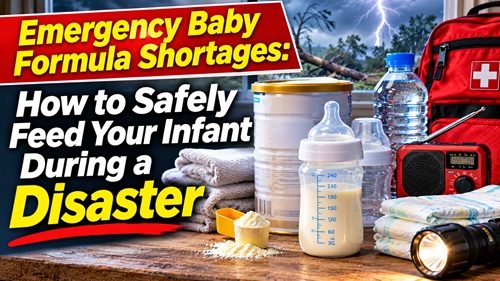
Emergency Baby Formula Shortages: How to Safely Feed Your Infant During a Disaster
Prepping Communities | Emergency Preparedness, Infant Nutrition, and Family Resilience
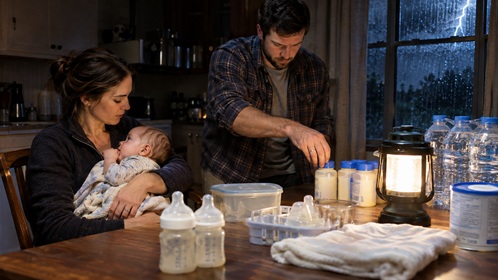
A family can have months of emergency food stored away and still face a serious crisis if it cannot safely feed its baby.
Imagine a storm that leaves an entire region without electricity. Water treatment facilities are damaged, grocery stores cannot reopen, and delivery trucks are unable to reach the community. A family with a three-month-old baby discovers that it has enough infant formula for another four days. There is powdered milk, canned milk, oatmeal, and plenty of other food in the pantry, but none of those products is a safe, nutritionally complete substitute for the baby’s normal formula.
This is one of the less obvious vulnerabilities in household emergency preparedness. Adults can often adapt their meals to whatever supplies remain. Babies, particularly during their first six months, have nutritional requirements that leave little room for improvisation. For families who depend on infant formula, the challenge is not simply storing more food. It is maintaining a reliable feeding system when safe water, electricity, refrigeration, transportation, sanitation, and normal supply chains are disrupted.
Understanding how these dependencies interact can help families prepare before an emergency becomes a medical crisis.
Why Infant Feeding Is Different From Ordinary Emergency Food Storage
During the first year of life, infants grow rapidly and require carefully balanced nutrition. Their kidneys, digestive systems, and other organs are still developing, making them more vulnerable to certain nutritional imbalances and contaminants.
Commercial infant formula is manufactured to provide nutrients in proportions appropriate for infant development. It is not simply powdered milk with a few vitamins added. A homemade mixture might contain enough calories to temporarily satisfy hunger while still providing excessive amounts of protein or minerals, insufficient iron, or inadequate essential fatty acids.
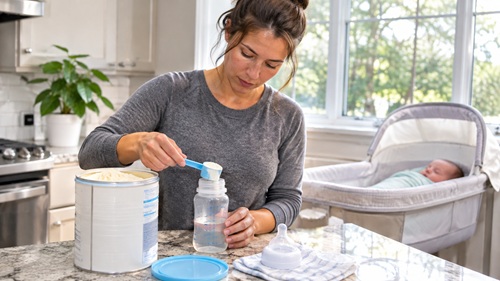
These imbalances can affect growth and development. More immediately, incorrectly prepared feeds can contribute to dehydration or dangerous electrolyte disturbances. A baby may initially appear satisfied after drinking an unsuitable mixture, but that does not establish that the mixture is safe.
This is why infant feeding preparedness requires a different approach from ordinary food substitution. The objective is to preserve access to appropriate breast milk or regulated commercial infant formula, together with the resources needed to provide it safely.
The Truth About Homemade Emergency Baby Formula
Families researching emergency feeding sometimes encounter recipes made from evaporated milk, water, sugar, or molasses. Other recipes use goat’s milk, powdered milk, vegetable oils, or nutritional supplements. Some are based on historical infant feeding practices.
Before modern commercial infant formula became widely available, healthcare professionals sometimes recommended milk-based preparations. These mixtures were used for decades, but their historical use does not mean they meet modern nutritional or safety standards.
Evaporated milk, for example, provides energy, protein, and minerals. However, diluting it and adding sugar does not create a nutritionally complete infant formula. Adding molasses or vitamin drops does not reliably correct the nutritional deficiencies or mineral imbalance. Homemade mixtures also introduce contamination risks, particularly when water and sanitation are compromised.
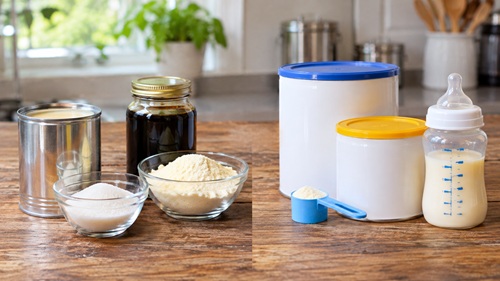
The American Academy of Pediatrics advises against homemade infant formula, including recipes using evaporated milk, because of nutritional and contamination concerns.
Some older humanitarian documents discuss temporary home-prepared feeds under exceptional circumstances. Such interventions require professional assessment and should not be interpreted as general permission to prepare homemade formula independently.
The important preparedness lesson is that historical survival practices are not automatically appropriate modern emergency procedures. A family should not rely on a homemade formula recipe as its planned response to a supply shortage.
Emergency Infant Formula Preparation: Safe Feeding Instructions
Rather than relying on a homemade formula recipe, families should learn how to prepare and serve commercially manufactured infant formula safely during an emergency.
The following instructions are presented in recipe format for practical use. They are not instructions for manufacturing infant formula from household ingredients.
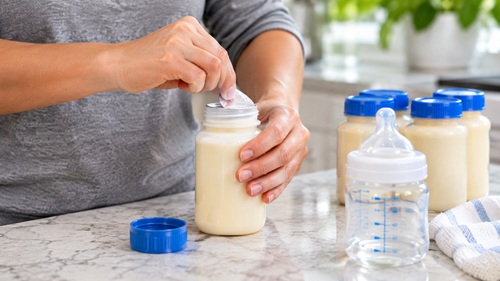
Emergency Ready-to-Feed Infant Formula
Emergency feeding preparation
Preparation time
A few minutes
Yield
One feeding
Cooking required
No
Water required for mixing
No
Ingredients
One unopened container of commercially manufactured ready-to-feed infant formula suitable for the baby.
Equipment
-
Clean hands and a clean preparation surface.
-
A clean feeding bottle and nipple, or the manufacturer’s compatible sterile feeding nipple.
-
A suitable waste container for used feeding supplies.
Preparation instructions
-
Wash hands thoroughly with soap and safe water before handling the feeding equipment. If safe handwashing facilities are unavailable, follow applicable emergency hygiene guidance.
-
Check the formula’s expiration date, packaging integrity, and product instructions. Do not use a container that is damaged, leaking, expired, or otherwise unsafe.
-
Open the ready-to-feed container according to the manufacturer’s instructions.
-
Attach a compatible feeding nipple if the container is designed for direct feeding, or pour the required amount into a clean feeding bottle.
-
Do not add water, sugar, milk, vitamins, or any other ingredients.
-
Feed the baby according to their established feeding needs and any medical instructions.
-
Discard formula remaining in the feeding container after the applicable feeding time limit. Follow the manufacturer’s instructions for any unused formula remaining in the original container.
Important safety information
Ready-to-feed formula does not normally need warming. Never heat infant formula in a microwave. Once opened, the product is no longer protected by its original sterile packaging and must be handled according to the manufacturer’s storage instructions.
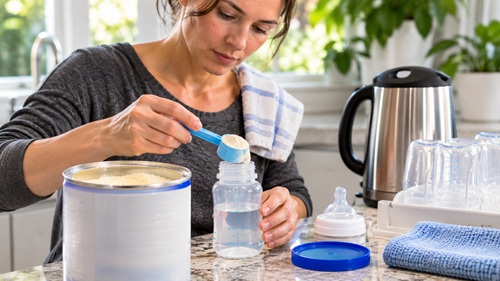
Emergency Powdered Infant Formula Preparation
For situations where safe preparation is possible
Ingredients
-
Commercially manufactured powdered infant formula appropriate for the baby.
-
The exact quantity of safe water specified on the product label.
Equipment
-
The measuring scoop supplied with the formula.
-
Clean and appropriately sanitized feeding equipment.
-
A safe water-heating method where required.
-
A clean preparation area.
Preparation instructions
-
Wash hands and prepare a clean working surface.
-
Confirm that the water source is suitable for infant formula preparation. Follow local public health instructions if a water advisory is in effect.
-
Follow the applicable health authority’s guidance for water temperature and preparation, particularly for newborns, premature infants, and infants with weakened immune systems.
-
Measure the exact amount of water specified by the formula manufacturer.
-
Add the precise number of level scoops indicated on the product label, using only the scoop supplied with that formula.
-
Mix according to the manufacturer’s instructions.
-
If hot water was used, cool the prepared formula to a safe feeding temperature before offering it to the baby.
-
Feed promptly and discard unused formula according to applicable preparation and storage guidance.
Important safety information
Powdered infant formula is not sterile. Do not change the water-to-powder ratio, use extra powder, dilute the formula, or substitute another ingredient. If safe water or adequate cleaning facilities are unavailable, appropriately stored ready-to-feed formula is generally the safer option.
Choosing the Safest Formula for Emergency Storage
The type of commercial formula a family stores can make a substantial difference when normal utilities fail.
Ready-to-feed infant formula is especially useful because it does not require water for preparation and is sterile while its packaging remains intact. Small, single-serving containers also reduce the need to refrigerate leftovers after opening.
Powdered formula, although convenient for normal household use, is not sterile. It requires safe water, correct measurements, and clean feeding equipment. Liquid concentrate provides another commercial option but must be diluted according to the manufacturer’s instructions.
The CDC recommends ready-to-feed formula during emergencies because it reduces the risks associated with unsafe water and preparation equipment.
Families should avoid purchasing unfamiliar or unsuitable formula simply to increase their emergency reserves. Infants who require specialized products for allergies, metabolic disorders, or other medical conditions may not tolerate ordinary substitutions. A suitable emergency reserve should reflect the baby’s actual nutritional requirements.
How Much Infant Formula Should a Family Store?
A three-day emergency supply is a reasonable starting point, but families should recognize that major disasters can interrupt access to essential supplies for considerably longer. Hurricanes, earthquakes, flooding, wildfires, prolonged power outages, civil unrest, and transportation disruptions can prevent stores from reopening or deliveries from reaching communities for days or even weeks. In remote or isolated regions, these interruptions may last longer, particularly when roads, bridges, ports, or other transportation infrastructure are damaged.
The amount of infant formula a household should store depends on several factors, including the baby’s age, daily feeding requirements, local disaster risks, available storage space, and the reliability of regional supply chains. Families living in areas frequently affected by severe weather or infrastructure disruptions may need larger reserves than those with dependable access to multiple suppliers. International emergency preparedness recommendations vary, but the underlying principle remains the same: maintain enough appropriate infant nutrition to cover a realistic disruption while establishing reliable options for obtaining additional supplies.
A family may choose to maintain a seven-day, fourteen-day, or even thirty-day rotating reserve, depending on its circumstances. These are preparedness planning targets rather than universal medical recommendations. The objective is to build a manageable supply gradually during normal conditions, not to purchase excessive quantities during an existing shortage when other families may also be struggling to obtain formula. Any reserve should consist of commercially manufactured formula appropriate for the infant’s nutritional and medical needs.
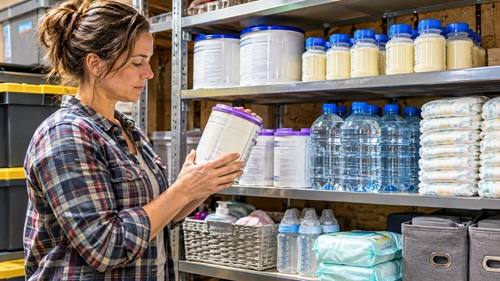
The most accurate calculation begins with the baby’s actual daily consumption. For example, if a baby consumes approximately 750 mL (25.4 US fluid ounces) of prepared formula each day, a seven-day reserve would require 5.25 litres (approximately 1.4 US gallons), while fourteen days would require 10.5 litres (approximately 2.8 US gallons). A thirty-day reserve would require 22.5 litres (approximately 5.9 US gallons). These figures demonstrate how to calculate emergency storage requirements; they are not recommended feeding quantities. Families should use the baby’s established feeding pattern and the manufacturer’s preparation instructions to determine how many containers are needed.
Storage planning should also account for the type of formula being used. Powdered formula generally requires less storage space but depends on safe water, appropriate preparation temperatures, and clean feeding equipment. Ready-to-feed formula requires more storage space and may cost more, but it offers important advantages during emergencies because it does not require dilution. Maintaining a combination of suitable commercial formula formats may provide additional flexibility, particularly in households vulnerable to water contamination or prolonged utility failures.
Families should also consider where their emergency supplies are stored. Keeping every container in one location creates a vulnerability if the household must evacuate unexpectedly or part of the home becomes inaccessible. A smaller reserve in a designated evacuation bag can provide immediate feeding supplies while the main household reserve supports longer disruptions. Formula should always be stored according to the manufacturer’s instructions, in conditions protected from excessive heat, freezing, moisture, and physical damage. Vehicles, outdoor sheds, and poorly insulated garages are generally unsuitable for long-term storage because temperatures can fluctuate significantly.
Finally, infant formula reserves require regular rotation and reassessment. Babies grow quickly, feeding quantities change, and products have expiration dates that must be respected. A supply that covered two weeks several months earlier may no longer provide the same protection. Reviewing the reserve monthly allows families to adjust quantities, replace products approaching expiration, and confirm that the stored formula remains appropriate for the baby’s current needs.
The goal is not simply to accumulate formula. It is to maintain a dependable, safe, and sustainable infant feeding supply that can support the family through realistic emergencies, regardless of where in the world they live.
Safe Water and Formula Preparation During Disasters
A household with a large supply of powdered formula may still be unable to prepare it safely if the water supply becomes contaminated.
Flooding, broken water mains, treatment system failures, and industrial accidents can all affect drinking water. The type of contamination matters because boiling can destroy many disease-causing microorganisms but does not reliably remove hazardous chemicals. Water contaminated by certain chemicals or toxins cannot be made safe simply by boiling, filtering, or adding disinfectants.
Families should follow the specific public health advisory issued for their area rather than assuming that all water contamination can be addressed using the same treatment method.
There is another concern that is frequently overlooked. Even when the water itself is safe, powdered infant formula is not sterile.
The CDC recommends additional preparation precautions for babies younger than two months, premature infants, and infants with weakened immune systems. For these higher-risk infants, when powdered formula must be used, sufficiently hot water—approximately 70°C or 158°F—is used to reduce the risk of harmful bacteria such as Cronobacter. The prepared formula must then be cooled to a safe feeding temperature.

Water treatment and reducing bacteria in formula powder are two separate safety issues. Families should follow the applicable guidance for both rather than assuming that boiling water alone solves every preparation problem.
This is another reason ready-to-feed formula is particularly valuable during emergencies.
Feeding a Baby Without Electricity or Refrigeration
Power outages affect infant feeding in ways that are easy to overlook. A family may normally rely on an electric breast pump, kettle, bottle warmer, refrigerator, or sterilizer. When the electricity fails, several parts of the feeding routine may become difficult at once.
Infant formula does not normally need to be warmed before feeding. If the baby accepts it at a safe room temperature, an electric bottle warmer is unnecessary. Formula should never be heated in a microwave because uneven heating can cause burns.
Refrigeration presents a more serious concern. According to the CDC, prepared formula should be used within two hours of preparation and within one hour after feeding begins. If it is prepared in advance and immediately refrigerated, it should generally be used within twenty-four hours. Formula remaining after a feeding must be discarded.
When refrigeration cannot be maintained at a safe temperature, families should prepare fresh feeds rather than storing prepared formula for later. Unopened ready-to-feed containers can reduce dependence on refrigeration, provided they are stored according to the product instructions. Once opened, the manufacturer’s storage and use limits apply.
Expressed breast milk has its own storage requirements and should not automatically be handled according to formula storage rules.
Maintaining Hygiene When Running Water Is Unavailable
A formula reserve is only useful if the feeding equipment can be kept safe. Bottles, nipples, and preparation containers can retain milk residue, allowing bacteria to multiply when equipment is inadequately cleaned.
During an emergency, families may not have access to a functioning sink, safe tap water, or enough fuel to heat water for cleaning. A preparedness plan should therefore consider the entire feeding process, not just the formula itself.
When safe water and soap are available, reusable equipment should be cleaned and sanitized according to public health guidance. If proper cleaning is impossible, disposable feeding cups can be an alternative. Caregivers should learn appropriate cup-feeding techniques from a qualified professional before an emergency rather than attempting an unfamiliar technique under pressure.
The CDC includes disposable cups and equipment-cleaning supplies in its emergency feeding recommendations.
A useful household exercise is to imagine completing a feeding without electricity or running water. Consider how hands would be cleaned, how the feeding area would be kept sanitary, and what would happen to equipment after use. This exercise often reveals dependencies that ordinary food storage calculations miss.
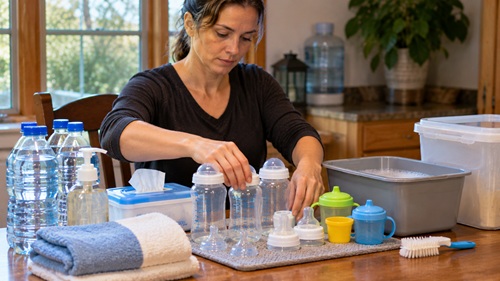
Breastfeeding and Expressed Milk During Emergencies
Breastfeeding can reduce dependence on manufactured formula, preparation water, and feeding equipment during disasters. Breast milk also provides immune components that may help protect infants when sanitation and healthcare access are disrupted.
However, emergency planning must reflect the family’s actual circumstances. Some babies receive only breast milk, others receive both breast milk and formula, and some depend entirely on commercial formula.
For families using electric breast pumps, a manual pump may provide an alternative during power failures, provided its components can be cleaned safely. Learning hand expression is particularly valuable because it does not require electrical equipment. The CDC identifies hand expression as useful when breast pump equipment cannot be cleaned adequately or electricity is unavailable.
Families who wish to increase milk production or explore relactation should seek qualified lactation support. These processes take time and are not guaranteed immediate solutions to a formula shortage.
For infants who cannot receive breast milk, the priority remains uninterrupted access to suitable commercial formula. Emergency feeding plans should support families without assuming that every parent can breastfeed.
When Baby Formula Supplies Begin Running Low
A formula shortage should be addressed while the baby still has an adequate supply, not after the final feeding.
Imagine a household with three days of formula remaining and no reliable estimate of when deliveries will resume. Waiting another two days before seeking assistance would unnecessarily reduce the family’s options.
The family should calculate the remaining supply, identify possible replacement products, and begin contacting reliable sources. Pharmacies, healthcare providers, hospitals, public health services, and established emergency relief organizations may be able to help locate appropriate formula.
For many healthy babies receiving standard formula, switching to another regulated commercial brand may be possible. Infants requiring specialized formula need additional care when considering substitutions.
Families should not dilute formula to stretch supplies. Adding extra water reduces nutrient concentration and can cause serious electrolyte disturbances. They should also avoid unverified online sellers, products without clear labeling, and formula that has been improperly stored or has passed its use-by date.
The safest response to a shortage is to expand access to appropriate supplies while preserving the baby’s normal nutritional intake.
When Every Safe Feeding Option Has Been Exhausted
This is the question that makes infant feeding preparedness so important. What happens when a family has no remaining formula, breastfeeding is unavailable, local stores are empty, and transportation is disrupted?
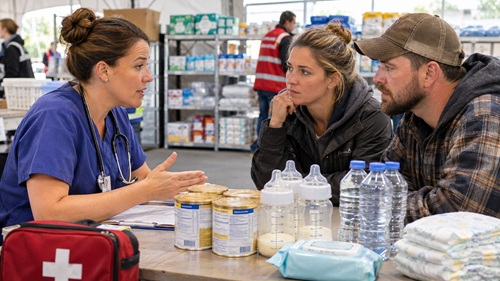
At that point, the situation requires urgent medical and logistical assistance. Families should contact emergency medical services, healthcare providers, public health authorities, or organized emergency relief services before the infant misses necessary feedings. If conventional communications fail, community emergency coordinators, functioning radio networks, or nearby medical facilities may provide alternative routes to help.
When the baby’s next feeding cannot be provided safely, the family should seek urgent medical advice rather than waiting for visible signs of illness.
Are There Any Medically Recognized Emergency Alternatives?
There are limited exceptions in some national guidance, and they deserve careful explanation.
During the 2022 formula shortage, the American Academy of Pediatrics described temporary use of pasteurized whole cow’s milk for certain healthy infants older than six months who normally receive standard formula. This was intended as a short-term emergency measure, generally no longer than one week, and not for babies requiring specialized formula. The AAP advised consulting a healthcare professional and emphasized the risk of inadequate iron intake.
HealthLink BC provides different guidance, allowing the introduction of pasteurized whole cow’s milk for some infants between nine and twelve months who are eating a variety of iron-rich foods.
These recommendations are not interchangeable, and neither supports routine cow’s milk substitution for younger infants. They illustrate an important principle: emergency feeding decisions may depend on the infant’s age, medical circumstances, and the specific guidance of the responsible health authority.
For babies younger than six months, ordinary cow’s milk is not an appropriate formula substitute. Homemade formula, diluted formula, juice, broth, and plant-based beverages should not be used as improvised replacements.
When normal feeding options have failed, individualized professional guidance is essential.
Recognizing When an Infant Needs Medical Attention
Babies can become dehydrated or unwell more quickly than older children. An infant who is unusually sleepy, difficult to wake, feeding poorly, or producing substantially fewer wet diapers may need urgent medical assessment. Other concerning signs include a dry mouth, sunken soft spot, persistent vomiting, or significant diarrhea.

Seizures, unresponsiveness, or serious breathing difficulty require immediate emergency medical services. Families should not attempt to correct suspected dehydration by diluting formula or giving excessive plain water.
Recognizing these warning signs is an important preparedness skill, but the better approach is to identify deteriorating feeding conditions and obtain assistance before a medical emergency develops.
Planning for Infants of Different Ages
A baby’s age affects which foods and feeding options may be appropriate during an emergency.
During approximately the first six months, breast milk or suitable commercial infant formula normally provides the baby’s nutrition. Other foods and liquids are not substitutes for necessary milk feeds.
Around six months, developmentally ready infants begin receiving complementary foods alongside breast milk or formula. Iron-rich foods are particularly important during this period because an infant’s nutritional requirements are changing as growth continues.
Between six and twelve months, complementary foods become increasingly important, but milk feeding continues to play a major nutritional role. National guidance differs concerning the introduction of whole cow’s milk, and parents should follow applicable local recommendations rather than assuming that advice from another country is appropriate for their child.

After twelve months, many healthy children can obtain adequate nutrition through an appropriate varied diet, including suitable milk or alternatives. Individual medical needs may require a different approach.
A preparedness plan should be reviewed as the baby grows because the available feeding options and nutritional requirements change significantly during the first year. The emergency feeding strategy appropriate for a newborn may be quite different from the one needed for an eleven-month-old.
Preparing an Emergency Infant Feeding Kit
An emergency feeding kit should contain everything needed to provide a safe feeding without searching through several different storage locations. Its contents should reflect how the baby is normally fed and what resources would become unavailable during an evacuation or utility failure.
For formula-fed infants, appropriate ready-to-feed formula is particularly useful. Families using powdered formula also need safe water, accurate measuring equipment, and cleaning supplies. For breastfed infants, supplies may include nursing pads, appropriate milk-storage containers, and equipment for expressing milk when necessary.
All families should consider the need for clean feeding equipment, hygiene supplies, suitable clothing, diapers, and written medical and feeding information.
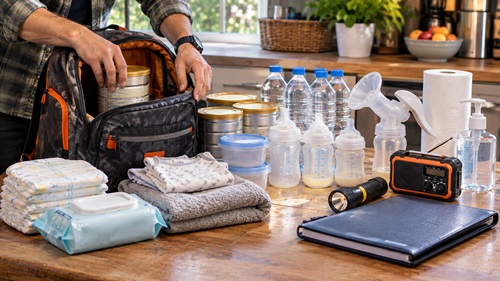
The kit should also include details of the baby’s usual formula, feeding routine, allergies, medical requirements, and relevant healthcare contacts. This information becomes particularly valuable when another caregiver must look after the baby or when emergency personnel need to understand the child’s feeding requirements.
Reviewing these supplies monthly is important because babies grow quickly and their feeding requirements change. A kit that was appropriate several months earlier may contain insufficient formula, expired products, or equipment that no longer meets the baby’s needs.
The CDC’s emergency preparation checklist provides additional guidance for families who use formula, breast milk, or both.
A Seven-Day Emergency: Putting the Plan Into Practice
Consider a family with a three-month-old baby during a prolonged storm-related outage. The household has four days of powdered formula, three days of suitable ready-to-feed formula, bottled water, and a functioning emergency radio.
Local authorities report that the water supply may be contaminated, electricity is unavailable, and roads could remain closed for a week.
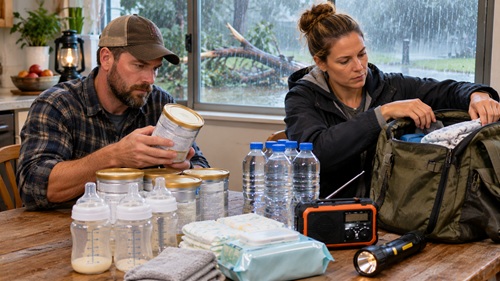
The family begins by confirming its existing formula supplies and calculating how long they will last at the baby’s normal feeding rate. Because safe water is uncertain, they prioritize ready-to-feed formula while determining whether the powdered supply can be prepared safely using the water and equipment available.
They do not dilute formula or reduce feeding amounts. Instead, recognizing that the emergency may continue beyond their reserve, they contact healthcare and emergency response services early to identify additional supply options.
Meanwhile, they prepare their evacuation bag and keep the baby’s medical information with the feeding supplies. If a safe replacement supply cannot be secured, they seek assistance arranging transportation before the baby runs out of appropriate nutrition.
This approach does not guarantee that every problem will be resolved immediately. The storm may last longer than expected, roads may remain closed, and emergency services may be overwhelmed. What the family has done is preserve options and reduce the likelihood of being forced into a last-minute decision.
That is the difference between storing emergency supplies and developing a functioning preparedness plan.
The Role of Preparedness Communities During Infant Feeding Emergencies
Infant feeding preparedness is not exclusively a household responsibility. During widespread disasters, families may depend on emergency shelters, healthcare facilities, relief organizations, and community support networks.
WHO-aligned humanitarian guidance emphasizes coordinated infant feeding support, including individual assessment, appropriate supplies, breastfeeding assistance, and safe feeding arrangements for infants who cannot receive breast milk. It also discourages uncontrolled formula donations because products may be unsuitable, incorrectly stored, or distributed without the equipment and instructions needed for safe use.
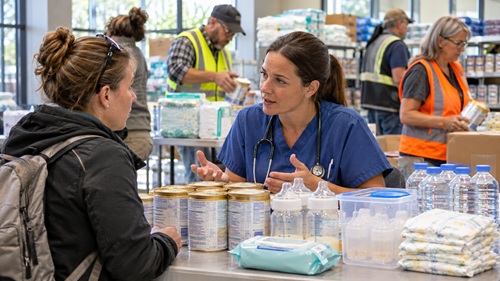
Preparedness groups can contribute by identifying reliable healthcare resources, sharing verified information, supporting transportation, and helping families contact established relief organizations. Community volunteers should not independently distribute homemade formula recipes or attempt to replace qualified medical guidance.
In remote communities, the ability to communicate with outside assistance may be particularly important. A functioning emergency radio network or established community response coordinator can help families obtain support when conventional communications are disrupted.
The strongest community response combines local preparedness with qualified healthcare and organized emergency services. Families benefit when communities understand their needs before a disaster rather than attempting to develop a response after essential supplies have disappeared.
Preparedness Action Plan
Begin by documenting the baby’s normal feeding routine and identifying the resources required to maintain it. Consider formula or breast milk supplies, safe water, feeding equipment, refrigeration, electricity, and sanitation. This assessment should reveal which parts of the feeding routine depend on infrastructure that could become unavailable during an emergency.
Calculate the baby’s typical daily formula consumption where applicable and establish a rotating reserve appropriate to the household’s circumstances. Store products according to their instructions and review expiration dates regularly. Where possible, maintain a suitable ready-to-feed formula reserve that reduces dependence on water treatment and preparation equipment.
Evaluate the household’s emergency water arrangements. Determine what would happen if tap water became unsafe and whether the family could continue preparing feeds without electricity or running water. If the plan depends on boiling water, consider how that would be accomplished safely during an extended power outage.
Families who rely on electric breast pumps should consider appropriate backup arrangements and learn hand-expression techniques. Those using expressed breast milk should understand the applicable storage requirements and plan for refrigeration interruptions.
Identify multiple reliable sources of feeding assistance, including healthcare providers, pharmacies, emergency services, and established community organizations. For infants requiring specialized formula, discuss shortage contingencies with the medical team in advance. Keep the necessary contact information with the emergency supplies so it remains available during evacuation.
Finally, conduct a household exercise based on a seven-day utility disruption. Determine when supplies would run low, how feeding equipment would be kept clean, and when the family would need outside assistance or evacuation. The exercise should identify gaps without interrupting normal feeding or experimenting with unsuitable substitutes.
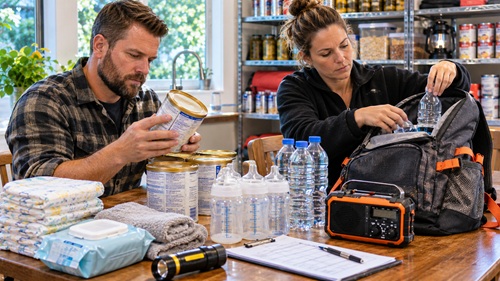
A successful infant feeding plan is one that allows the family to continue meeting the baby’s nutritional needs while dealing with the wider emergency.
Key Takeaways
Infant feeding emergencies are different from ordinary food shortages because babies require age-appropriate, carefully balanced nutrition. Commercial infant formula is designed to meet those requirements, while historical homemade recipes should not be treated as safe modern alternatives.
Ready-to-feed formula offers significant advantages during emergencies because it does not require dilution and is sterile while unopened. Powdered formula can remain part of a household reserve, but its safe use depends on appropriate water, preparation procedures, and sanitation.
A complete feeding plan must account for more than the amount of formula stored. Families need to consider refrigeration, electricity, water contamination, transportation, and reliable supply sources. An emergency reserve is only useful when the family can access it and use it safely.
Emergency feeding alternatives vary by age and medical circumstances. Limited exceptions described by some health authorities should not be generalized to all infants, and families should seek qualified guidance before making significant feeding changes.
Preparedness communities can support families by helping them locate appropriate supplies, maintain communication, arrange transportation, and connect with healthcare and emergency response services.
The most effective emergency infant feeding strategy is not discovering how to improvise formula after supplies disappear. It is preparing thoroughly enough that unsafe improvisation never becomes necessary.
Additional Preparedness Resources
The following official resources provide further guidance for families, healthcare workers, and emergency planners. Because infant feeding recommendations can vary by country and individual medical circumstances, families should also consult their local public health authorities and qualified healthcare providers.
-
Health Canada — Infant Formula Information
This Prepping Communities lesson provides general emergency preparedness education. It does not replace individualized advice from a qualified healthcare professional. Infant feeding requirements and emergency recommendations vary according to age, medical needs, and local public health guidance.
© Prepping Communities. This content is for informational purposes only and not professional advice. Use at your own risk.
Terms | Privacy | Guidelines