
Introduction
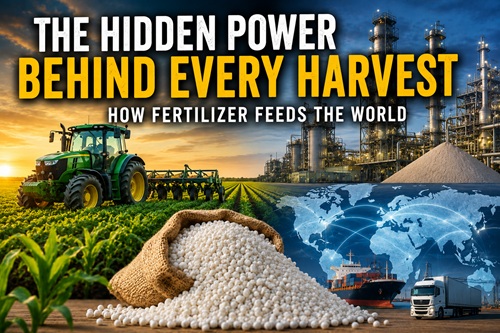
Most consumers rarely think about fertilizer when purchasing groceries. Food prices, weather events, transportation disruptions, and supply chain challenges often receive far more attention. Yet fertilizer remains one of the most important components of modern agriculture and plays a significant role in determining crop yields, food availability, and production costs around the world.
Because fertilizer operates largely behind the scenes, its importance is frequently overlooked. However, changes in fertilizer production, distribution, pricing, or availability can have far-reaching effects that extend well beyond the agricultural sector. Understanding how fertilizer contributes to food production provides valuable insight into the interconnected nature of modern food systems and the challenges involved in feeding a growing global population.
 The Agricultural Revolution That Most People Never See
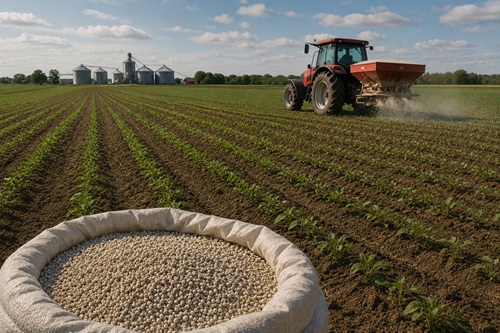
Many of the technologies associated with modern agriculture are highly visible. Large tractors, irrigation systems, combines, grain elevators, and advanced machinery are easy to recognize. Fertilizer, by contrast, is largely invisible to consumers despite being one of the most significant agricultural innovations in human history.
Before the widespread adoption of commercial fertilizers, agricultural productivity was constrained by the natural fertility of the soil. Farmers relied heavily on manure, compost, crop rotations, and fallow periods to replenish nutrients. While these practices were effective, they limited the amount of food that could be produced from a given area of land.
The development of modern fertilizer manufacturing transformed agricultural production. By providing crops with concentrated sources of essential nutrients, farmers were able to significantly increase yields and improve consistency across growing seasons. Agricultural historians often cite synthetic fertilizers as one of the key factors that enabled global food production to keep pace with rapid population growth throughout the twentieth century.
Today, billions of people depend indirectly upon fertilizers every day. The fruits, vegetables, grains, and livestock products available in grocery stores are all connected to agricultural nutrients applied months before harvest. Although consumers rarely see this process, fertilizer remains one of the foundational components of modern food production.
Understanding the Nutrients That Feed the World
Plants require a complex combination of nutrients to grow successfully. While sunlight, water, and carbon dioxide receive much of the attention, healthy crops also depend upon nutrients obtained from the soil.
Nitrogen is responsible for vigorous vegetative growth and is essential for photosynthesis. Phosphorus supports root development, flowering, seed production, and energy transfer within plant tissues. Potassium contributes to overall plant health, disease resistance, water regulation, and crop quality. Together, these three nutrients form the foundation of most fertilizer products used around the world.
In addition to these primary nutrients, crops require secondary nutrients and trace minerals such as calcium, magnesium, sulfur, zinc, boron, manganese, copper, and iron. Even relatively small deficiencies can reduce crop performance, affect plant health, and ultimately influence yields.
The challenge facing agriculture is straightforward: every harvest removes nutrients from the soil. When corn, wheat, potatoes, vegetables, fruits, or forage crops are harvested, nutrients leave the field with them. Unless those nutrients are replaced, soil fertility gradually declines. Fertilizer serves as one of the primary tools for replenishing those nutrients and maintaining productive agricultural land.
 The Global Fertilizer Supply Chain
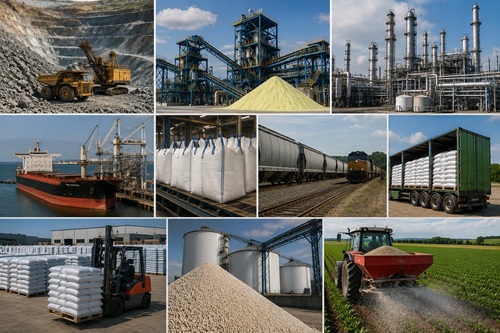
The fertilizer industry operates within a highly interconnected global supply chain. Raw materials are extracted, processed, manufactured, transported, and distributed through a network that spans multiple countries and continents.
Nitrogen fertilizers are closely linked to natural gas production because natural gas serves as a key feedstock during manufacturing. Phosphorus-based fertilizers depend on phosphate mining operations, while potassium fertilizers originate primarily from potash deposits located in specific regions around the world.
Because fertilizer production depends on energy, mining, transportation, manufacturing infrastructure, and international trade, disruptions affecting any of these sectors can influence both fertilizer availability and cost. Energy price fluctuations, transportation bottlenecks, labor shortages, severe weather events, trade restrictions, and geopolitical instability can all contribute to market volatility.
As a result, fertilizer markets often provide valuable insight into broader challenges affecting agricultural production and food systems worldwide.
Why Fertilizer Is Closely Linked to Energy
One aspect of fertilizer production that surprises many people is its strong connection to energy markets. Fertilizer is not simply transported using energy; in some cases, energy is a direct component of the manufacturing process itself.
Nitrogen fertilizer production relies heavily on natural gas, which serves both as an energy source and as a raw material used during manufacturing. Consequently, fluctuations in natural gas prices can have a direct impact on fertilizer production costs.
This relationship helps explain why agricultural economists often monitor energy markets when evaluating future food production trends. Rising energy costs can increase fertilizer expenses, raise transportation costs, affect farm operations, and contribute to higher food production costs across the agricultural sector.
Because these systems are interconnected, changes in one area frequently create ripple effects throughout the broader economy.
 The Invisible Lag Between Agricultural Problems and Consumer Awareness
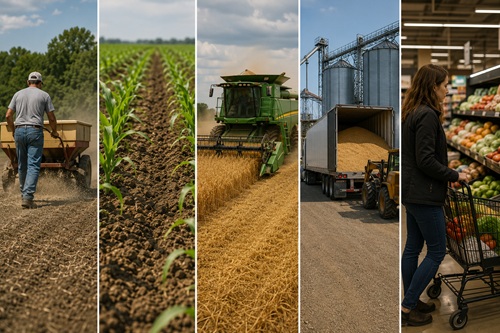
One of the most misunderstood aspects of agriculture is the delay between production challenges and consumer impacts. Agricultural systems operate on seasonal timelines that differ significantly from many other industries.
Farmers make fertilizer decisions months before harvest. Crops are planted long before consumers purchase food. Weather conditions, nutrient management decisions, and input costs often influence harvest outcomes well before products appear on store shelves.
As a result, agricultural challenges frequently remain invisible to the public during their early stages. Fertilizer shortages, drought conditions, transportation disruptions, or rising production costs may begin affecting producers months before consumers notice any changes in food availability or pricing.
By the time grocery prices increase, the underlying causes may have been developing for an entire growing season. This delayed relationship often makes agricultural issues more difficult to recognize and understand than disruptions occurring in industries with shorter production cycles.
The Relationship Between Fertilizer Costs and Food Prices
The connection between fertilizer prices and food prices is rarely immediate, but it is significant. Agricultural production requires farmers to balance numerous expenses while maintaining profitability and productivity.
When fertilizer costs rise substantially, producers may face difficult decisions regarding crop selection, planting strategies, nutrient application rates, and overall farm management. In some situations, farmers may reduce fertilizer applications in an effort to manage expenses. While these decisions vary depending on crop type, soil conditions, and local circumstances, they can influence overall crop performance and final yields.
Over time, sustained increases in production costs can contribute to higher food prices, increased pressure on agricultural operations, and reduced profit margins throughout the food production chain. The effects may not be visible immediately, but they often become apparent over multiple growing seasons.
 Balancing Productivity and Sustainability
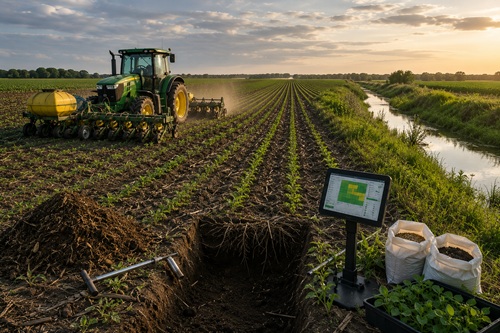
While fertilizers have dramatically increased agricultural productivity, modern agriculture also faces important questions regarding long-term sustainability. Researchers, farmers, policymakers, and environmental organizations continue to examine ways to maintain high yields while minimizing environmental impacts.
Topics such as nutrient runoff, water quality, soil degradation, greenhouse gas emissions, and resource efficiency remain active areas of research and discussion. As agricultural systems evolve, many experts advocate for integrated nutrient management approaches that combine commercial fertilizers with soil-building practices.
Strategies such as composting, cover cropping, conservation tillage, crop rotation, precision agriculture, and organic soil amendments can help improve soil structure, increase water retention, support beneficial microorganisms, and enhance long-term soil fertility.
Rather than viewing fertilizer as either entirely beneficial or entirely problematic, most agricultural professionals recognize that successful food production requires balancing productivity, environmental stewardship, and economic realities.
Emerging Technologies and the Future of Fertility Management
Agriculture continues to evolve rapidly as new technologies reshape how food is produced. Precision agriculture systems now allow farmers to apply nutrients more accurately than ever before. GPS-guided equipment, satellite imagery, soil sensors, drones, and artificial intelligence are helping producers make increasingly informed decisions about nutrient management.
Researchers are also exploring enhanced-efficiency fertilizers, biological soil amendments, microbial solutions, and alternative nutrient sources designed to improve nutrient uptake while reducing environmental impacts.
These innovations have the potential to improve agricultural productivity while reducing waste and increasing sustainability. Although the technologies may change, the underlying principle remains the same: healthy soils and adequate nutrients are essential for successful food production.
 Lessons from Recent Agricultural Disruptions
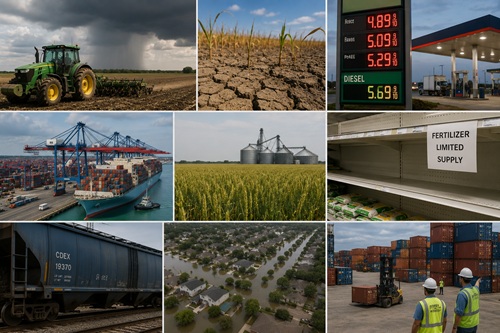
Recent years have demonstrated the vulnerability of global supply chains to unexpected disruptions. Pandemic-related transportation challenges, labor shortages, severe weather events, energy market fluctuations, and regional conflicts have all highlighted the interconnected nature of modern agricultural systems.
Agriculture is particularly sensitive to these disruptions because food production depends on long planning horizons and seasonal cycles. Challenges affecting fertilizer production, transportation, or availability can influence farming decisions months before consumers experience any noticeable effects.
These events have reinforced the importance of diversification, infrastructure resilience, strategic planning, and investment in agricultural innovation.
Conclusion
Fertilizer may be one of the least visible components of modern agriculture, yet it remains among the most important. Its influence extends beyond individual farms to affect food production, agricultural economics, environmental management, and global food security.
Understanding how fertilizer fits within the broader agricultural system provides valuable perspective on the complexity of modern food production. While consumers often focus on the final product appearing on store shelves, the journey begins much earlier with the resources, infrastructure, technologies, and management practices that make food production possible.
As agricultural systems continue to evolve, fertilizer availability, soil management, technological innovation, and sustainable production practices will remain critical topics for farmers, researchers, policymakers, and consumers alike. The future of food production will depend not only on how much food can be grown, but also on how effectively agricultural systems can balance productivity, sustainability, and resilience in an increasingly interconnected world.
© Prepping Communities. This content is for informational purposes only and not professional advice. Use at your own risk.
Terms | Privacy | Guidelines