
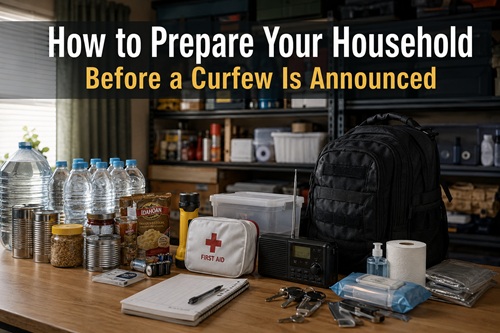
Curfews are often associated with dramatic scenes on television. News reports show empty streets, flashing emergency lights, police vehicles, and businesses closing their doors as residents hurry home. While these images capture attention, they rarely represent the biggest challenges most households actually face.
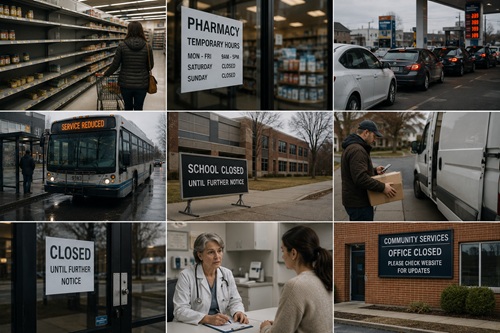
For many families, the real difficulties begin long before a curfew takes effect. A pharmacy may close before a prescription can be filled. Grocery stores may shorten their hours. Fuel stations may become crowded. Public transportation schedules can change, deliveries may be delayed, and everyday routines suddenly become more complicated.
The curfew itself is often only one part of a much larger disruption.
Curfews have been implemented during civil unrest, severe weather events, wildfires, public safety incidents, infrastructure emergencies, and other situations where authorities are attempting to reduce movement and improve public safety. Regardless of the reason, curfews often arrive with little warning.
That is why preparedness matters.
The households that navigate these situations most successfully are rarely the ones rushing to prepare after an announcement is made. They are usually the ones that took simple, practical steps beforehand.
 Understanding What a Curfew Really Means
Most people think of a curfew as a restriction on movement. While that is technically true, the practical effects often extend much further.
Depending on the circumstances, a curfew can affect grocery store access, pharmacy hours, fuel availability, public transportation, school schedules, deliveries, business operations, medical appointments, and community services. For many households, the biggest challenge is not the curfew itself. The challenge is adapting to the changes that occur around it.
A household that normally shops every day may suddenly need to rely on supplies already available at home. Someone who routinely fills prescriptions at the last minute may discover that obtaining medication has become more difficult. A driver who typically keeps only a small amount of fuel in their vehicle may find themselves facing long lineups at gas stations.
Preparedness helps reduce these vulnerabilities before they become problems.
Curfews Are Usually a Symptom, Not the Problem
One of the most common misconceptions about curfews is that the curfew itself is the emergency. In reality, curfews are usually a response to another situation.
The underlying event may involve civil unrest, severe weather, wildfires, flooding, hazardous material incidents, infrastructure failures, public safety concerns, or widespread power outages. The curfew is often intended to support emergency operations, improve safety, or reduce unnecessary movement while responders manage the situation.
Understanding this distinction is important.
If a wildfire threatens a community, the wildfire is the primary concern. If a storm damages infrastructure, the damage and resulting service disruptions are the primary concern. If public safety issues develop, those concerns are what require attention.
The curfew is simply one of many responses to the larger event.
Prepared households focus on the broader situation rather than the restriction alone.
 Recognizing Early Warning Signs
Most curfews do not appear completely without warning. In many cases, there are signs that conditions are changing.
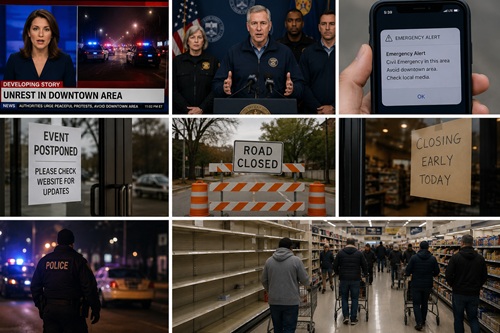
News coverage may increase. Officials may begin holding press conferences more frequently. Emergency alerts may become more common. Community events may be postponed. Road closures may begin appearing, and businesses may start adjusting operating hours. Additional emergency personnel may become visible throughout the community.
None of these indicators automatically mean a curfew is coming.
However, they often suggest that a situation is developing.
Recognizing these signs can provide valuable time to complete preparations before large numbers of people begin reacting. Preparedness is usually easier, less expensive, and far less stressful when completed during normal conditions rather than during a rush.
The Last-Minute Rush
One of the most predictable aspects of any emergency is how quickly public behavior changes once people realize conditions are becoming serious.
News spreads. Social media becomes active. Conversations shift toward shortages and disruptions. Before long, stores become crowded, parking lots fill, and fuel stations begin developing lineups.
Interestingly, many people are not responding to the emergency itself. They are responding to the realization that they may not be prepared.
This is one of the greatest benefits of preparedness.
Households that have already built basic reserves rarely need to participate in this rush. Instead of competing for limited resources, they can focus on monitoring developments, gathering reliable information, and making thoughtful decisions.
Preparedness reduces the need for reactive decision-making during stressful situations.
 The Seven-Day Readiness Goal
One practical preparedness benchmark is ensuring that your household can function comfortably for approximately one week without immediate outside support.
For most families, this goal is far more realistic and achievable than attempting to prepare for months at a time. A seven-day supply of essentials can help households navigate many common disruptions without needing to join crowded stores or compete for resources.
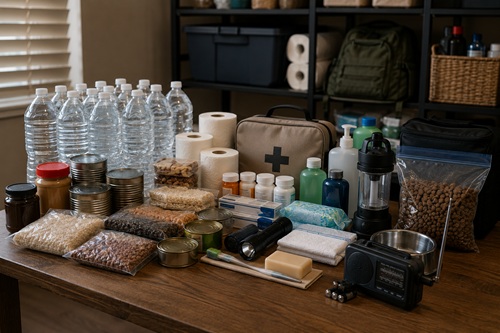
This may include food, drinking water, medications, hygiene supplies, pet supplies, backup lighting, and communication equipment.
The objective is not isolation.
The objective is flexibility.
Having a week’s worth of essential supplies allows families to remain calm, stay home when appropriate, and avoid unnecessary exposure to crowded environments during the most chaotic stages of an emergency.
Food Security During Temporary Restrictions
Many households assume they have enough food available. Often they do.
However, much of that food may depend on refrigeration, fresh ingredients, or frequent shopping trips. One useful preparedness exercise is evaluating what meals could realistically be prepared using only the food currently available in your home.
Would there be enough variety?
Would dietary requirements still be met?
Would everyone in the household actually eat the meals available?
Preparedness works best when it is practical. The objective is not simply storing food. The objective is storing food that can realistically be used when normal routines are disrupted.
Focus on foods your household already consumes regularly. Rice, pasta, beans, oatmeal, canned vegetables, soups, peanut butter, shelf-stable milk, canned meats, and ready-to-eat meals are all examples of foods that can help extend household resilience during short-term disruptions.
A practical pantry is often more useful than an impressive one.
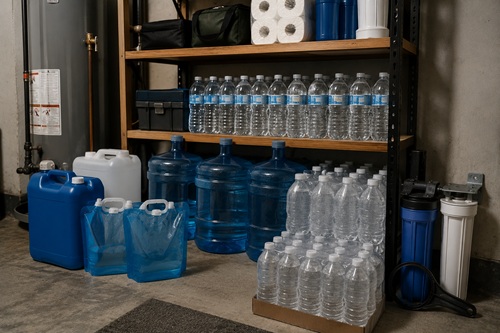 Water: The Resource People Frequently Underestimate
Food receives considerable attention in preparedness discussions, but water deserves equal consideration. In fact, many experienced preppers view water as the first priority because shortages become noticeable much more quickly than food shortages.
People rely on water for far more than drinking. Water is needed for cooking, hygiene, sanitation, cleaning, and caring for pets. A disruption to the water supply can affect nearly every aspect of daily life.
Many preparedness organizations recommend storing at least one gallon of water per person per day as a starting point. Depending on climate, household size, health conditions, and activity levels, additional water may be required.
It is also important to think beyond storage alone. Water filtration systems, purification tablets, and the ability to boil water can provide additional options if normal supplies become unavailable.
Unlike food, water shortages can become serious very quickly. Maintaining even a modest reserve can significantly improve comfort and resilience during short-term disruptions.
Medical Preparedness: The Often Overlooked Priority
Many households focus heavily on food and water while overlooking medical needs. In reality, access to healthcare and medications can become one of the first challenges during a curfew or emergency.
Pharmacies may reduce operating hours. Transportation may become more difficult. Prescription refills may be delayed. Medical appointments may be postponed or canceled altogether.
For households that rely on daily medications, these disruptions can create significant stress.
Before an emergency occurs, take time to review your household’s medical requirements. Consider prescription medications, over-the-counter remedies, first aid supplies, spare eyeglasses, medical equipment batteries, and copies of important medical information.
The objective is not to build a miniature pharmacy. Rather, it is to avoid finding yourself without essential items during a period when obtaining them may be more difficult than normal.
Preparedness is often about reducing avoidable problems before they occur.
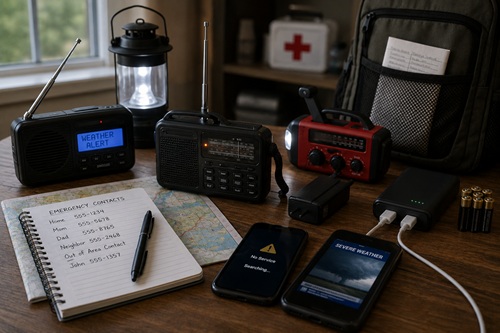 Communication Can Become More Important Than Supplies
One lesson repeatedly observed during emergencies is that uncertainty creates stress.
People naturally want answers.
What is happening?
How long will restrictions last?
Are family members safe?
What services remain available?
What areas should be avoided?
Reliable information becomes extremely valuable during these situations.
Unfortunately, many modern communication systems depend on infrastructure that may become strained during emergencies. Cell networks can become congested. Internet service may become unreliable. Power outages can affect communication equipment.
For this reason, many prepared households maintain multiple ways to receive information.
Battery-powered radios, weather radios, emergency alert systems, backup charging options, and printed contact lists all provide additional layers of communication resilience.
Reliable information helps people make better decisions. In many situations, accurate information can reduce stress just as effectively as physical supplies.
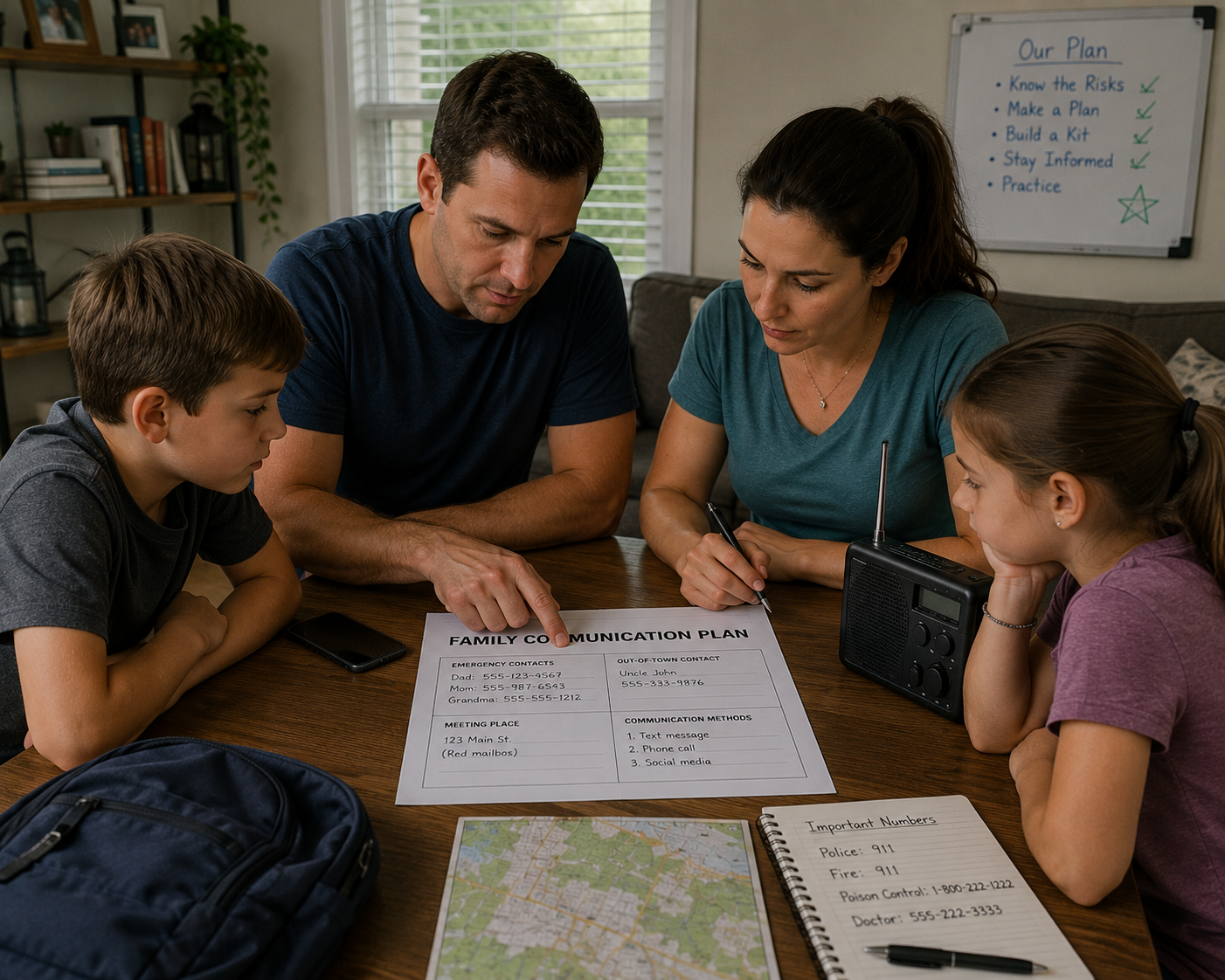 Develop a Family Communication Plan
One of the first concerns during any emergency is often family.
Where is everyone?
Are they safe?
How will they communicate?
Simple planning before an emergency can eliminate much of this uncertainty.
Discuss emergency contact procedures with family members. Identify meeting locations. Determine who should be contacted first and establish an out-of-area contact person if local communication becomes difficult.
The best communication plans are usually the simplest.
Every family member should understand the plan without needing detailed instructions during a stressful situation.
A few minutes of planning today can prevent significant confusion later.
Financial Preparedness Is Often Overlooked
Not every emergency creates physical challenges. Many create financial challenges.
Businesses may temporarily close. Work schedules may change. Transportation costs may increase. Electronic payment systems may experience disruptions.
Financial preparedness does not need to be complicated, but it deserves attention.
Maintaining an emergency fund, organizing important documents, keeping copies of insurance information, and having multiple payment options available can all improve resilience during unexpected disruptions.
Some households also choose to keep a modest amount of emergency cash available in case electronic payment systems become unavailable.
Financial preparedness may not be as visible as emergency gear, but it is often one of the most practical forms of readiness.
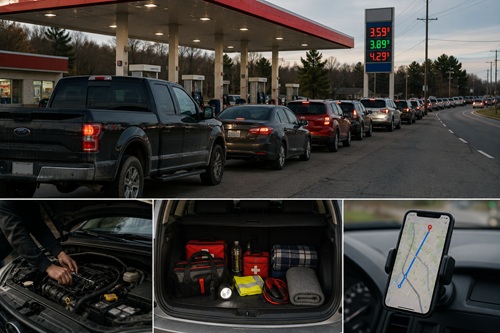 Fuel and Transportation
Transportation disruptions often affect people more quickly than they expect.
Fuel stations may experience increased demand. Traffic patterns may change. Certain roads may become inaccessible. Public transportation schedules may be altered.
Simple habits can significantly improve preparedness.
Keeping vehicles maintained, maintaining reasonable fuel levels, carrying basic emergency supplies, and having alternate routes available all provide additional flexibility during emergencies.
Transportation is often about preserving options.
Whether the need involves work, medical appointments, family responsibilities, or emergency travel, reliable transportation can make a significant difference when circumstances change unexpectedly.
Home Security During Curfews
Curfews often create unusual conditions within communities.
Businesses may close early. Road traffic decreases. Neighborhoods become quieter than normal. More people spend time at home.
These changes can feel unsettling, even when no direct threat exists.
Fortunately, practical preparedness measures are often sufficient.
Ensure doors and windows function properly. Test exterior lighting. Charge flashlights and backup batteries. Review emergency plans and ensure essential supplies remain organized and accessible.
Preparedness does not require turning a home into a fortress.
In most situations, common-sense precautions provide both security and peace of mind.
Children Experience Emergencies Differently
Adults often focus on logistics.
Children often focus on routine.
A sudden disruption can feel confusing or frightening to younger family members. Children may notice changes in schedules, increased stress among adults, school closures, reduced activities, or constant news coverage.
Parents can help by maintaining routines whenever possible.
Regular meals, normal bedtimes, family activities, and age-appropriate explanations all help provide stability during uncertain situations.
Preparedness includes emotional preparedness as well as physical preparedness.
Sometimes maintaining a sense of normalcy can be just as important as maintaining supplies.
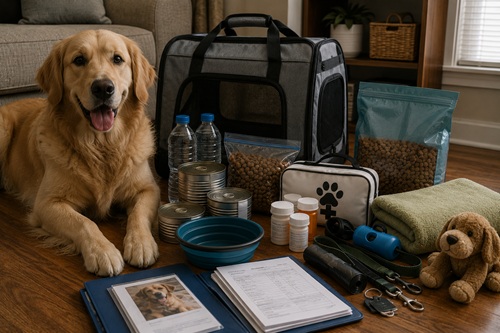 Don’t Forget Pets
Pets are family members too, yet they are frequently overlooked during emergency planning.
A household that plans for pets avoids many common challenges that arise during disruptions.
Consider maintaining extra pet food, water, medications, leashes, carriers, waste disposal supplies, and copies of veterinary records.
Just as people benefit from preparation, animals benefit from having familiar supplies and routines available when conditions become stressful.
Planning ahead helps ensure that pets remain safe and comfortable alongside the rest of the household.
The Psychological Side of Curfews
One of the least discussed aspects of curfews is the psychological impact they can have on individuals and families.
People are accustomed to routines. They leave for work, run errands, attend school, participate in social activities, and move freely throughout their communities. When those routines suddenly change, even temporarily, stress levels often increase.
Restrictions can create feelings of uncertainty, frustration, boredom, and anxiety. Continuous exposure to breaking news and social media updates can amplify these emotions.
During many emergencies, people discover that the emotional challenges can be just as difficult as the logistical ones.
This is one reason why preparedness should extend beyond supplies.
Maintaining structure can help significantly. Regular meal schedules, household chores, exercise, reading, hobbies, family activities, and reasonable limits on media consumption can all contribute to a greater sense of stability.
Preparedness is not only about having what you need.
It is also about maintaining the ability to think clearly and make sound decisions under stress.
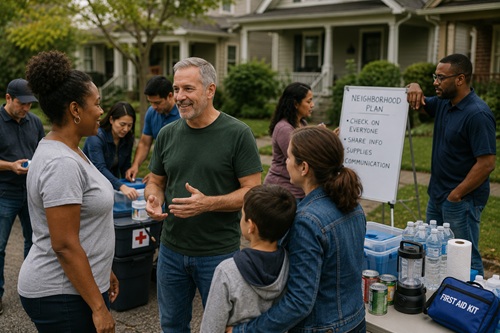 The Importance of Community
One lesson that repeatedly emerges from disasters, emergencies, and community disruptions is that relationships matter.
Preparedness is often viewed as an individual or family activity, but communities frequently play an important role in how people respond to challenges.
Neighbors check on one another.
Friends share information.
Families help solve problems.
Community organizations assist vulnerable individuals.
Strong community relationships often improve resilience far more than many people realize.
This does not mean relying entirely on others.
Rather, it means recognizing that preparedness works best when people support one another.
Building positive relationships before emergencies occur can be one of the most valuable preparedness investments available.
A trusted neighbor may one day provide information, assistance, or support that no piece of equipment could ever replace.
Common Curfew Preparedness Mistakes
Many households make similar mistakes when preparing for emergencies.
One of the most common mistakes is waiting until restrictions are announced before taking action. By that point, stores may already be crowded, supplies may be harder to find, and stress levels may be increasing rapidly.
Another common mistake is focusing heavily on one category of preparedness while ignoring others.
Some households stockpile food but overlook water.
Others purchase emergency supplies while neglecting medications.
Some focus entirely on physical supplies while failing to create communication plans.
There is also a tendency to purchase items that look useful without considering whether they fit the household’s actual needs.
Preparedness works best when it is practical and tailored to real life.
The goal is not to own the most equipment.
The goal is to reduce vulnerabilities and improve flexibility.
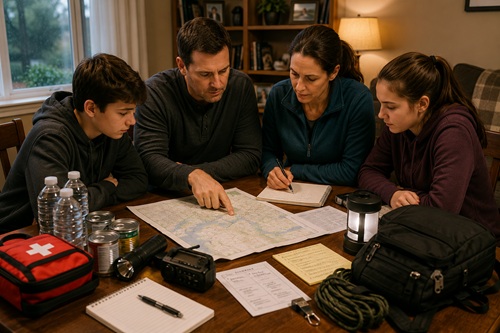 What Happens During the First 24 Hours
The first day following a curfew announcement is often the most chaotic.
People rush to complete errands before restrictions begin.
Fuel stations become busy.
Popular grocery items disappear from shelves.
Pharmacies experience increased demand.
Road traffic may increase dramatically as people attempt to finish tasks before movement becomes limited.
At the same time, information continues to change.
News coverage intensifies.
Rumors spread online.
Officials release updates.
People attempt to determine how the situation may affect their families.
For unprepared households, this period can feel overwhelming.
For prepared households, it is often much calmer.
Instead of rushing to gather supplies, they can focus on monitoring developments, communicating with family members, and adapting to changing circumstances.
This ability to remain calm is one of the most significant benefits of preparedness.
Managing Life During a Curfew
Once a curfew takes effect, the focus shifts from preparation to adaptation.
Daily routines may need adjustment.
Errands may require additional planning.
Travel opportunities may be reduced.
Households often spend more time together than usual.
During this phase, preparation begins paying dividends.
Stored food reduces the need for shopping trips.
Emergency supplies reduce dependence on outside services.
Communication plans reduce uncertainty.
Backup lighting and power solutions improve comfort.
Most importantly, preparation provides options.
The more options a household has, the easier it becomes to adapt to changing circumstances.
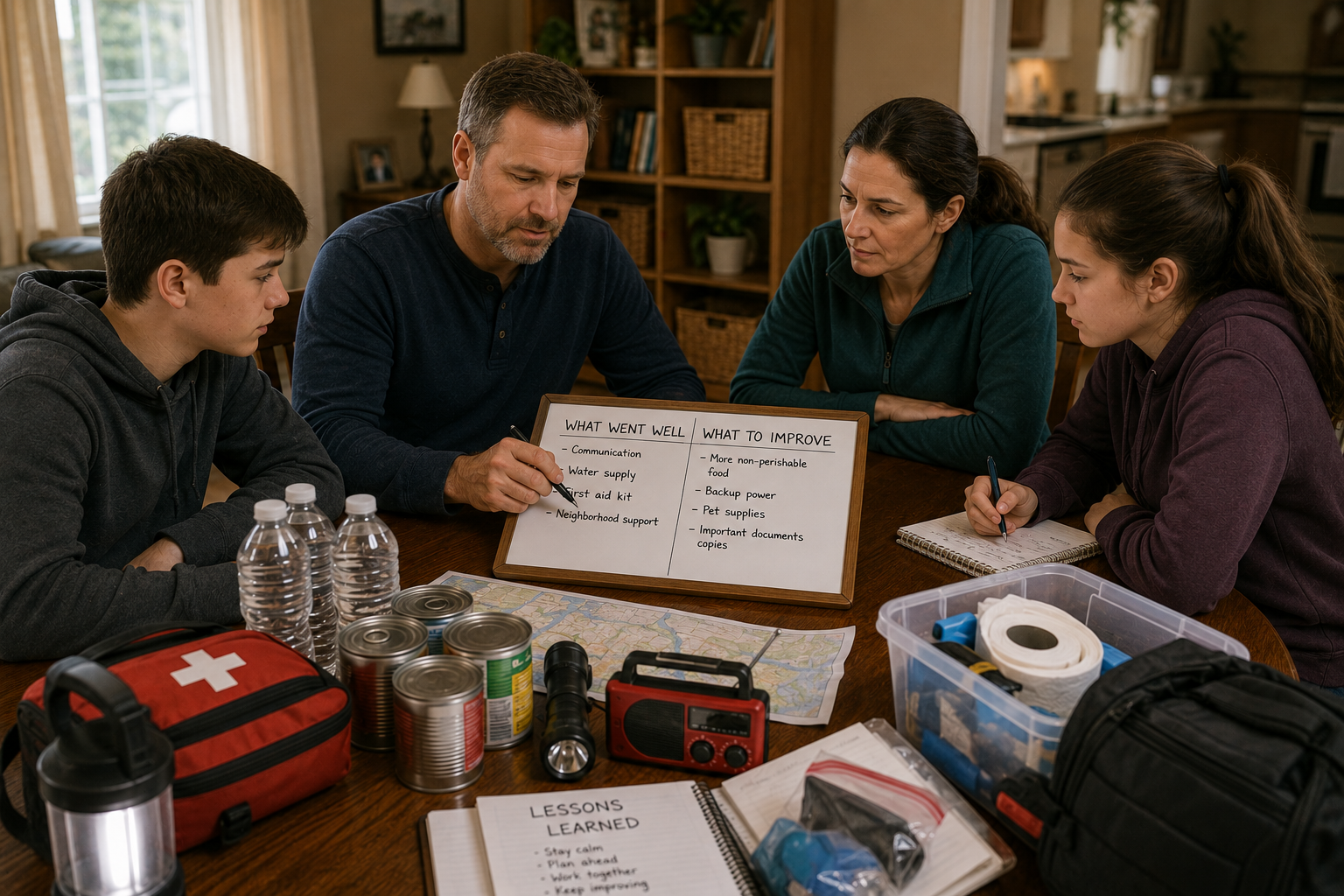 After the Curfew Ends
Eventually, restrictions are lifted.
Businesses reopen.
Traffic returns.
Deliveries resume.
Life begins moving back toward normal.
For many people, this is where the experience ends.
For prepared households, it is often where learning begins.
Every emergency provides an opportunity to evaluate plans and identify improvements.
Ask yourself:
What worked well?
What supplies proved useful?
What items were missing?
What unexpected challenges occurred?
What would you do differently next time?
Preparedness is not a destination.
It is a continuous process of learning and improvement.
Every experience helps build future resilience.
The Real Purpose of Preparedness
Most people hope they never experience a curfew.
Hopefully they never do.
But preparedness is not really about curfews.
A curfew simply highlights how quickly normal routines can change.
The food stored for a curfew may prove useful during a winter storm.
The emergency supplies gathered today may help during a power outage.
The communication plan developed for one emergency may be valuable during many others.
Preparedness works because different emergencies often create similar challenges.
Access becomes more limited.
Information becomes more valuable.
Options become more important.
The specific cause of the disruption often matters less than the ability to adapt.
Households that navigate these situations most successfully are rarely the ones with the largest stockpiles or the most expensive equipment.
They are usually the ones that took time to think ahead, identify vulnerabilities, create practical plans, and prepare before preparation became urgent.
Curfews Are Temporary. Preparedness Is Long-Term.
Most curfews last days, not months.
Eventually roads reopen.
Businesses return to normal operating hours.
Schools resume activities.
Communities begin settling back into familiar routines.
What often remains are the lessons learned.
Many people discover vulnerabilities they did not know existed.
Others discover that a few simple preparations made a tremendous difference.
Some realize that they were far more prepared than they thought.
Others identify areas where improvement is needed.
The value of preparedness is not measured by how often you use it.
It is measured by how much stress, uncertainty, inconvenience, and disruption it helps you avoid when normal systems become temporarily unavailable.
A curfew may never affect your community.
But the habits that help you prepare for one—maintaining supplies, staying informed, planning ahead, building relationships, and improving resilience—can help you navigate many other emergencies as well.
Preparedness is not about fear.
It is not about expecting the worst.
It is not about predicting the future.
It is about recognizing that disruptions can occur and taking reasonable steps to reduce their impact.
In the end, preparedness is really about creating options.
When circumstances become uncertain, options provide flexibility.
Flexibility creates resilience.
And resilience helps households navigate challenges with greater confidence, stability, and peace of mind.
© Prepping Communities. This content is for informational purposes only and not professional advice. Use at your own risk.
Terms | Privacy | Guidelines