
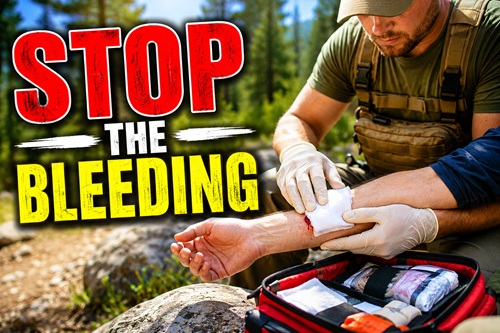
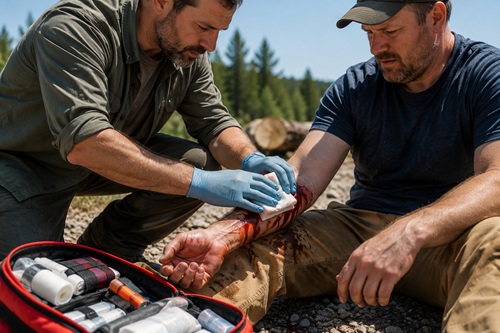
Most preparedness conversations focus on food storage, water purification, emergency power, and communication. While these topics are important, one of the most valuable preparedness investments you can make is learning how to control severe bleeding. Serious injuries can occur without warning while using power tools, splitting firewood, hunting, working around the homestead, responding to vehicle accidents, or cleaning up after storms and natural disasters. During those first critical minutes, before emergency responders arrive, your actions may determine whether someone survives.
Fortunately, stopping severe bleeding is not complicated, but it does require understanding a few basic principles and remaining calm under pressure. Having the right knowledge before an emergency occurs can make all the difference.
Understand the Different Types of Bleeding
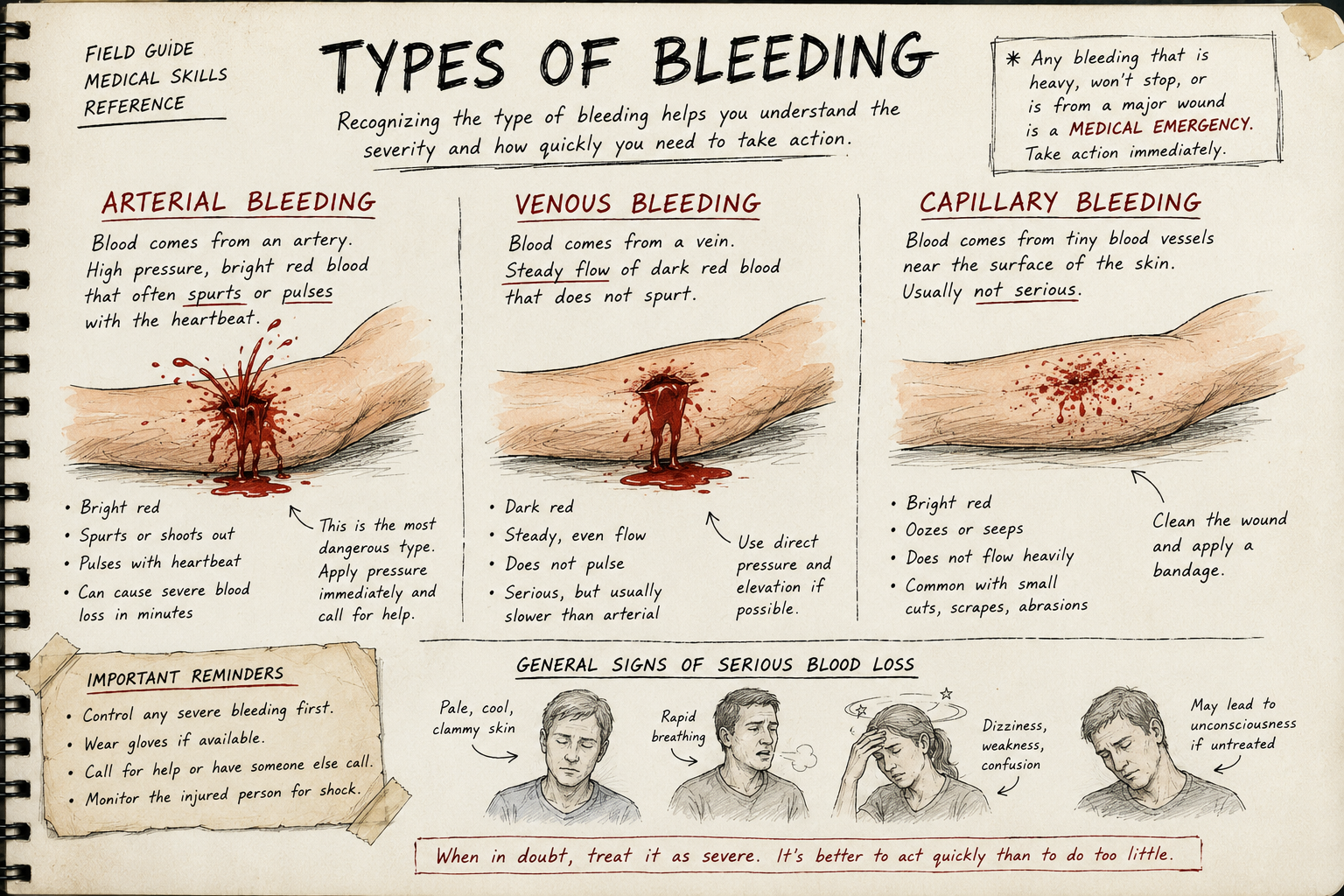
Not every wound is life-threatening. Small cuts and scrapes usually stop bleeding on their own with basic first aid. More serious injuries, however, require immediate action.
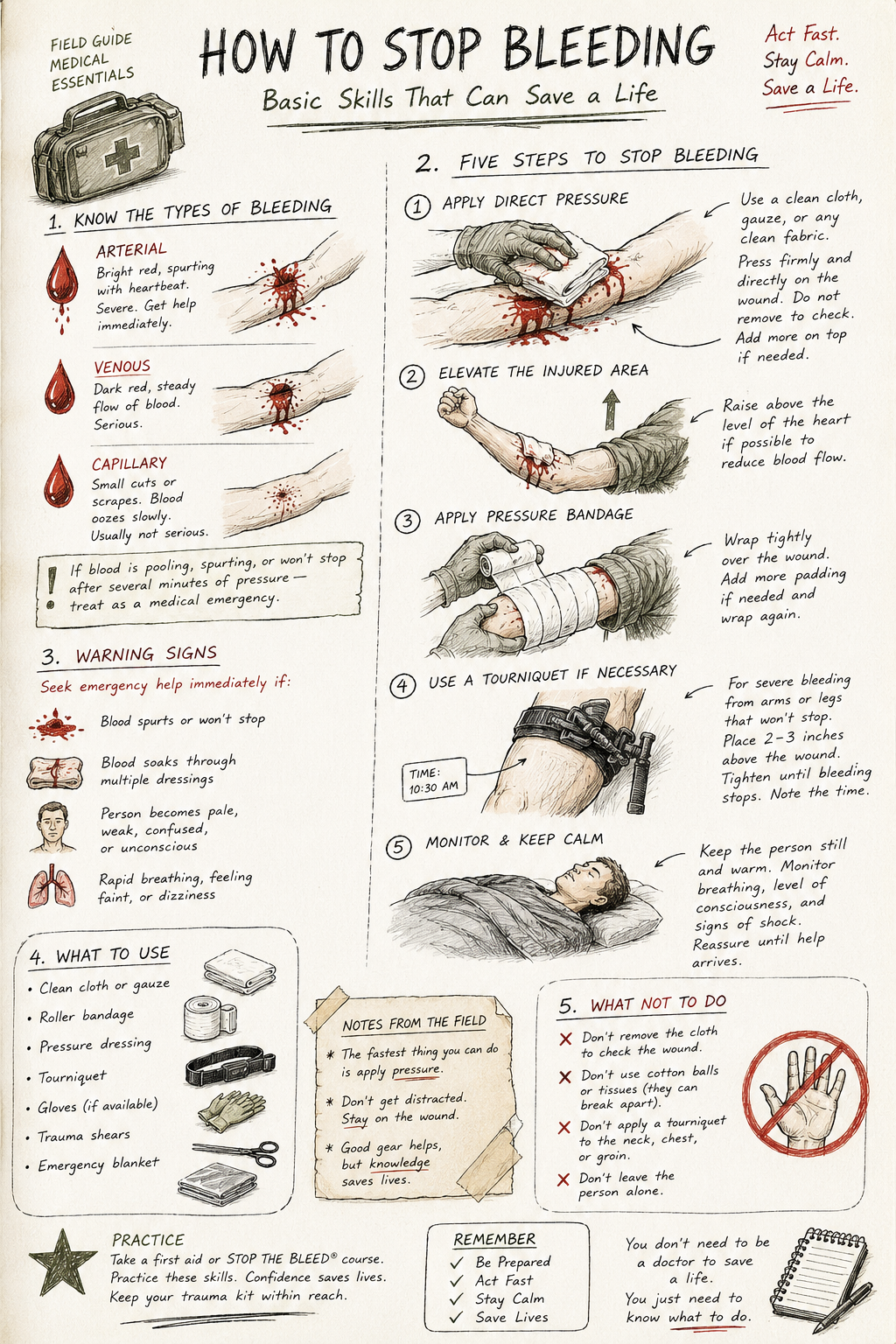
Arterial bleeding is the most dangerous because it involves blood flowing directly from an artery under pressure from the heart. It is often bright red and may spurt or pulse with each heartbeat. Venous bleeding usually produces a steady flow of darker red blood, while capillary bleeding appears as a slow ooze from smaller cuts or abrasions.
You don’t need to identify the exact type of bleeding before taking action. If blood is flowing rapidly, soaking clothing or pooling on the ground, treat it as a medical emergency and begin controlling the bleeding immediately.
Stay Safe Before Helping
Before assisting an injured person, quickly assess the scene for hazards. Broken glass, fire, downed power lines, unstable structures, traffic, or aggressive animals can quickly turn one victim into two. Your safety always comes first.
If available, wear disposable medical gloves to reduce exposure to bloodborne pathogens. If gloves aren’t available, use any reasonable barrier such as plastic bags or other waterproof materials if circumstances allow. While controlling life-threatening bleeding takes priority, protecting yourself helps ensure you remain capable of providing assistance.
Direct Pressure Is Your First Priority
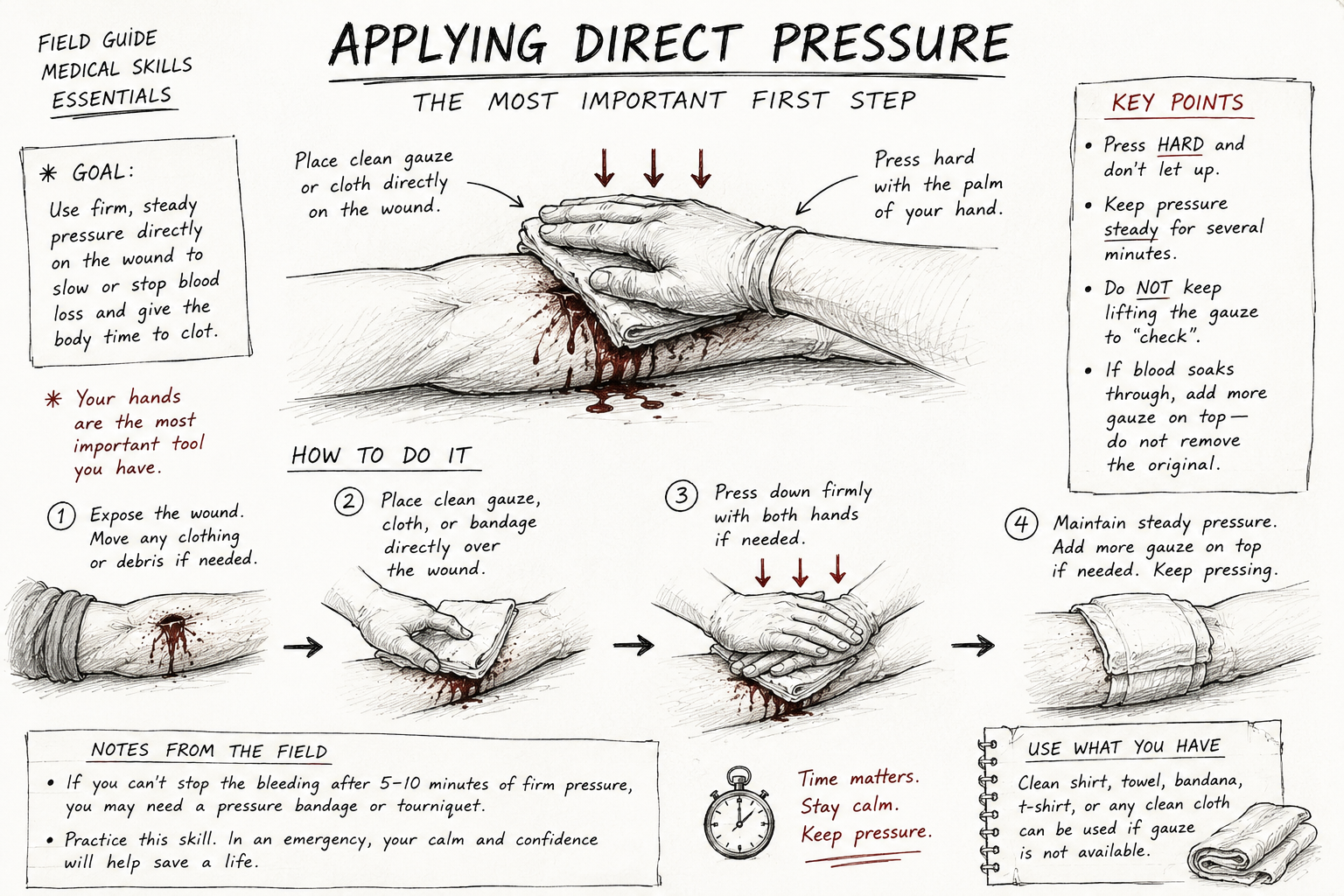
The most effective way to stop severe bleeding is surprisingly simple – apply firm, continuous pressure directly over the wound.
Use sterile gauze if available, but don’t waste precious time searching for perfect supplies. A clean towel, folded shirt, bandana, or other clean cloth works well in an emergency. Place the material directly over the wound and press firmly using both hands if necessary.
One of the most common mistakes is repeatedly lifting the dressing to “see if it’s working.” Every time pressure is removed, developing blood clots can be disturbed, allowing heavy bleeding to begin again. Instead, maintain steady pressure for several minutes. If blood soaks through the dressing, place additional material on top and continue pressing without removing the original layer.
Recognize When Bleeding Is Life-Threatening
Some injuries require immediate emergency medical care regardless of your first aid skills. Warning signs include blood that cannot be controlled after several minutes of firm pressure, blood rapidly soaking through multiple dressings, spurting or pulsating blood, partial amputations, deep penetrating wounds, or injuries involving large areas of tissue damage.
Pay close attention to the injured person’s condition as well. Pale or clammy skin, rapid breathing, confusion, dizziness, unusual weakness, excessive thirst, or loss of consciousness are all signs that shock may be developing and immediate medical attention is required.
Pressure Bandages and Elevation
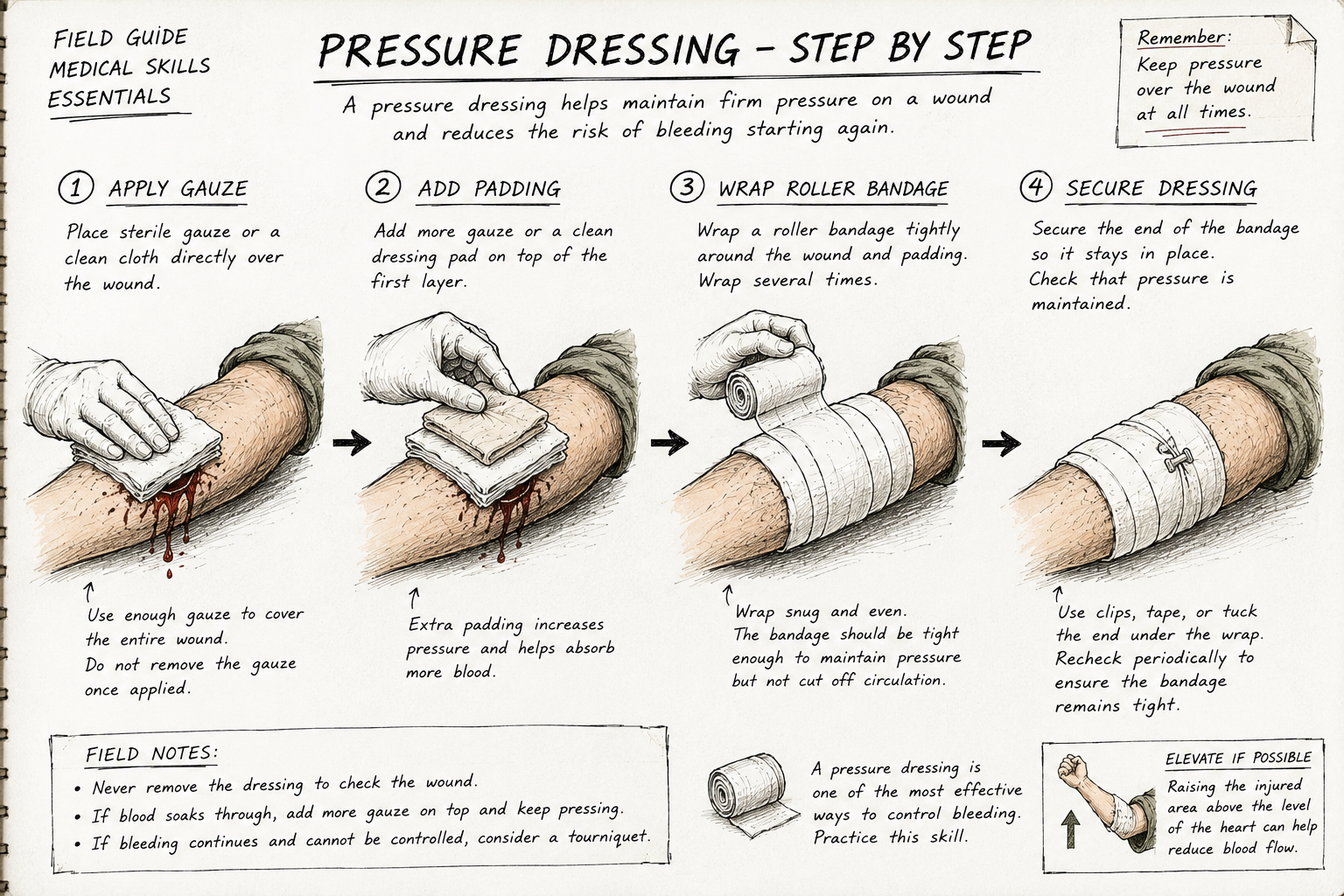
Once bleeding begins to slow, a pressure bandage can help maintain constant compression while allowing you to continue caring for the injured person. Wrap the bandage firmly enough to hold pressure against the wound but not so tightly that it completely cuts off circulation below the injury.
If the injury involves an arm or leg and there is no suspected fracture, raising the limb above the level of the heart may help reduce blood flow while pressure is maintained. Although elevation alone will not stop severe bleeding, it can be a useful supplement to direct pressure.
When a Tourniquet Is Appropriate
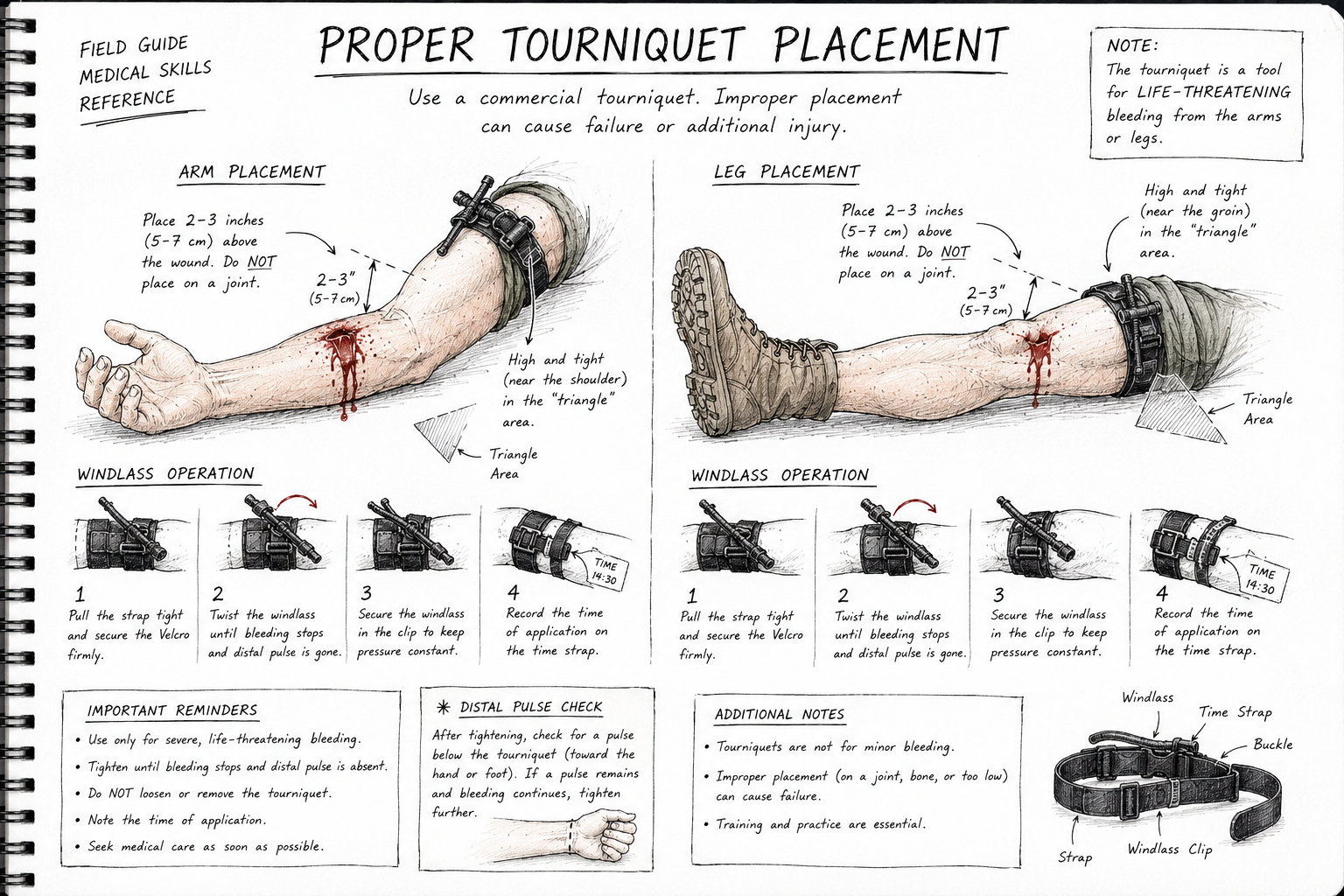
Modern trauma care has changed significantly over the past two decades. Tourniquets were once viewed as a last resort, but extensive military and civilian medical experience has demonstrated that properly applied commercial tourniquets save lives when used appropriately.
A tourniquet should be considered for severe bleeding from an arm or leg that cannot be controlled with direct pressure or when the amount of bleeding is immediately life-threatening. Position it several inches above the wound, avoiding joints whenever possible, and tighten it until the bleeding stops. Record the time it was applied if practical, and do not loosen or remove it yourself. That decision should be left to trained medical professionals.
Sometimes You Must Improvise
Preparedness teaches us that ideal conditions rarely exist during emergencies. While commercial trauma supplies are excellent, don’t hesitate to improvise if necessary. Clean towels, shirts, triangular bandages, or other clean fabric can all serve as pressure dressings until better equipment becomes available.
The objective is simple: control blood loss as quickly as possible using the best materials immediately available. Perfect equipment is helpful, but prompt action is often far more important.
Don’t Forget About Shock
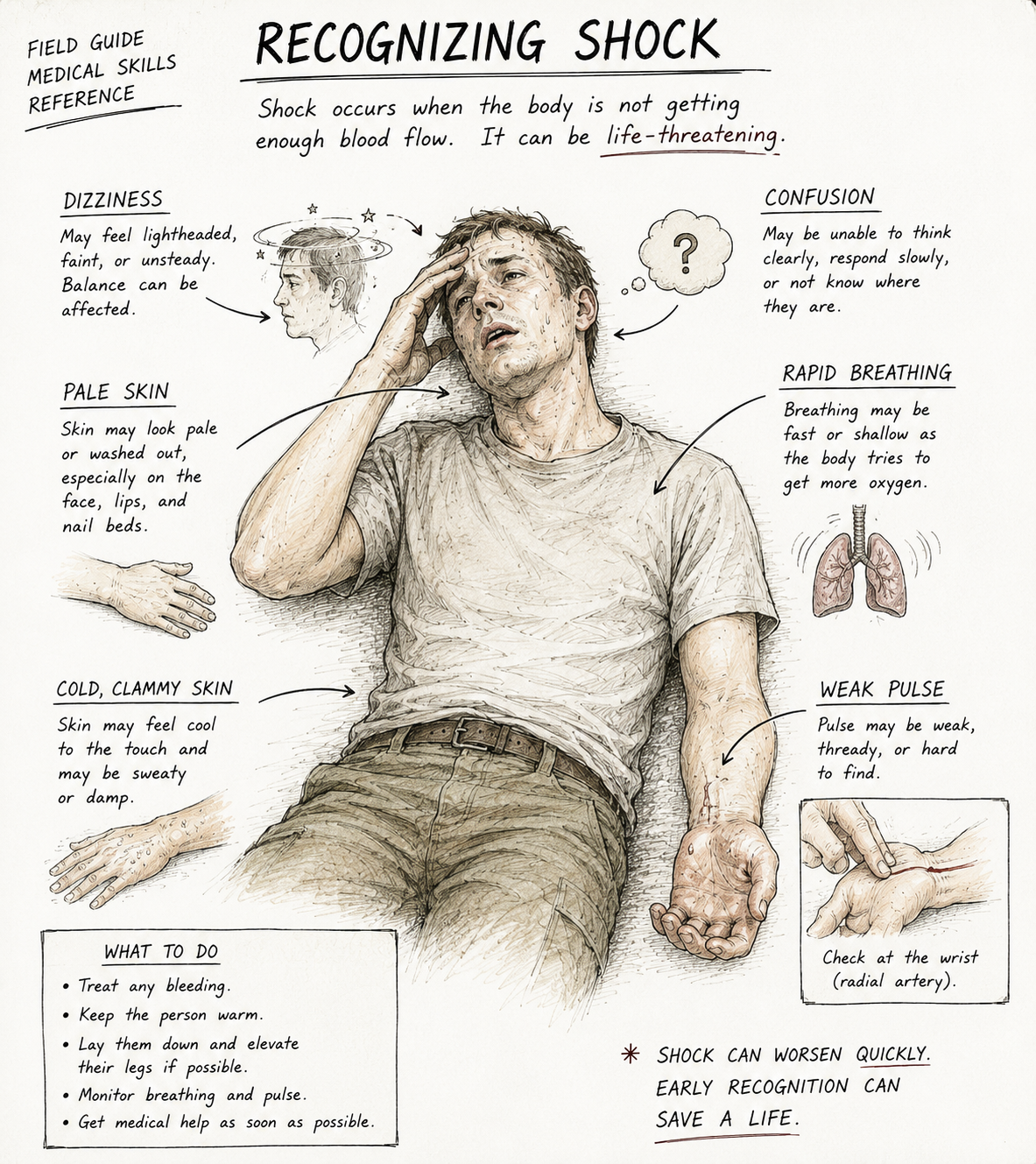
Even after bleeding has been controlled, the emergency is not over. Significant blood loss reduces the body’s ability to deliver oxygen to vital organs. As a result, shock can develop quickly.
Keep the injured person lying down if possible, maintain normal body temperature with a blanket or jacket, reassure them continuously, and monitor their breathing and level of consciousness while waiting for emergency medical assistance. Small actions like keeping someone warm and calm can have a meaningful impact on their condition.
Build Skills Before You Need Them
Medical emergencies create stress, and stress makes it difficult to remember unfamiliar procedures. Reading about bleeding control is an excellent first step, but practical training builds confidence that reading alone cannot provide.
Many communities offer first aid, CPR, and Stop the Bleed® courses that teach participants how to apply pressure dressings, pack deep wounds, and correctly use commercial tourniquets. These courses often take only a few hours but provide practical experience that could one day save a life.
Preparedness is about much more than accumulating equipment. It is about developing the knowledge, judgment, and practical skills needed to protect yourself and others when help may be delayed. Learning how to stop severe bleeding is one of the most valuable preparedness skills anyone can acquire. It requires relatively little time to learn, very little equipment to practice, and could make all the difference during those critical first minutes of a medical emergency.
© Prepping Communities. This content is for informational purposes only and not professional advice. Use at your own risk.
Terms | Privacy | Guidelines