
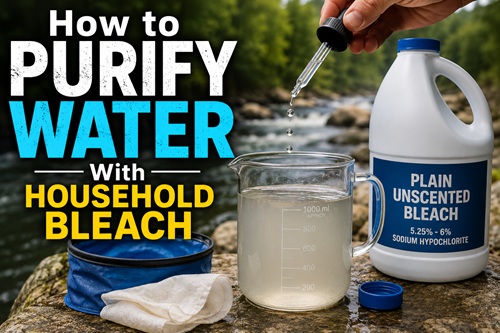
If you ever find yourself without safe drinking water, ordinary household bleach can be one of the simplest ways to disinfect water in an emergency. But before reaching for whatever bottle is under the sink, make sure you’re using the right kind.
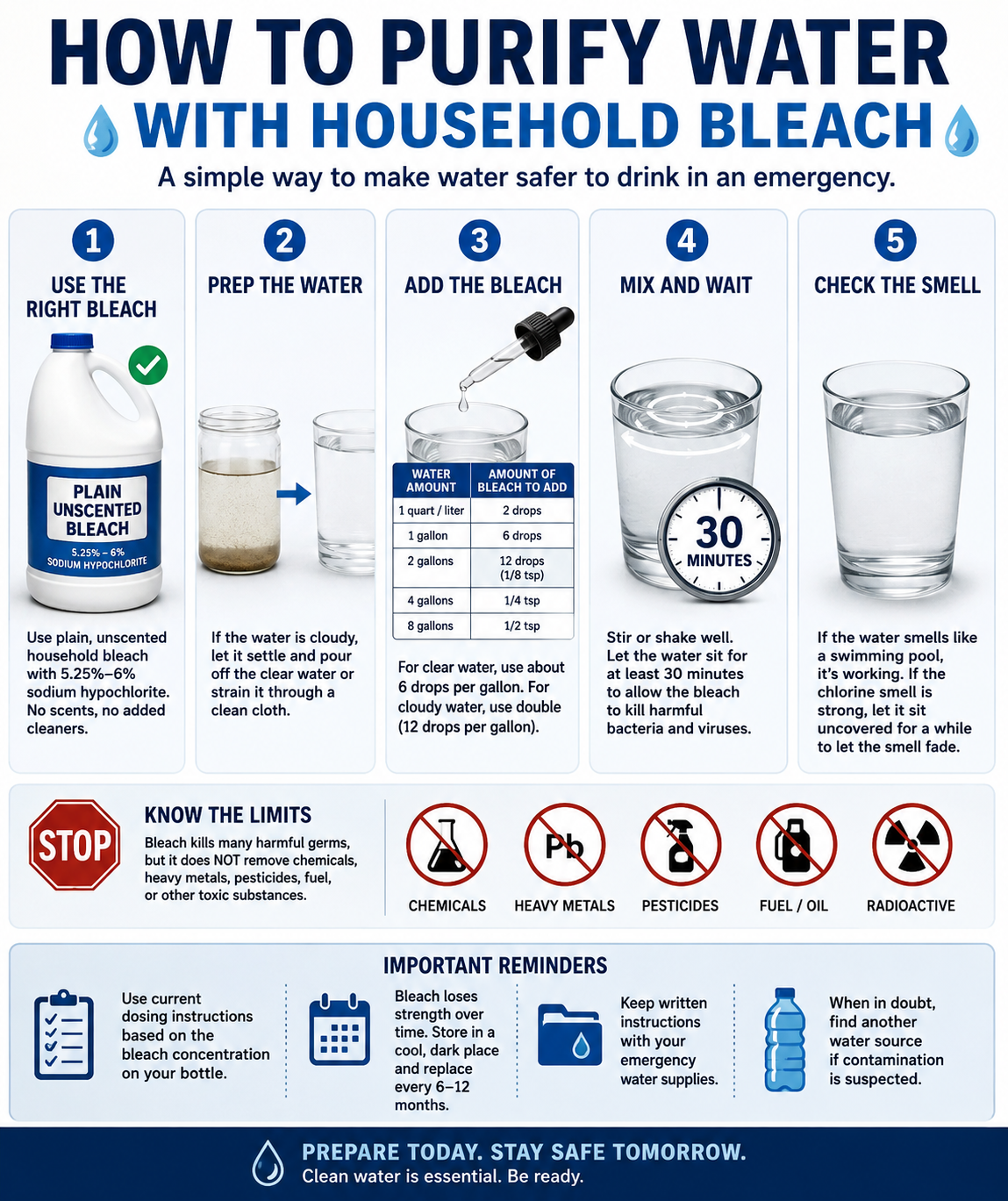
Use plain, unscented household bleach containing sodium hypochlorite. Avoid scented bleach, splashless bleach, color-safe products, or anything containing additional cleaners. Check the percentage of sodium hypochlorite on the label too, because bleach isn’t all the same strength.
If the water is cloudy, muddy, or has debris floating in it, deal with that first. Let the water sit until the sediment settles, then carefully pour the clearer water into another container. You can also strain it through a clean cloth or coffee filter. This doesn’t make the water safe by itself, but it gives the bleach a better chance to disinfect it properly.
Next, add the correct amount of bleach for the concentration you’re using. This is where it’s important to be careful with old charts found online. Many were created when household bleach commonly contained around 5.25% to 6% sodium hypochlorite. Some bleach sold today is considerably stronger, so the same number of drops may not apply.
After adding the bleach, stir or shake the water thoroughly and let it stand for at least 30 minutes before drinking it. The water should have a slight chlorine smell afterward. Emergency treatment guidance may recommend another treatment and additional waiting time if there is no chlorine odor.
Bleach is useful because it can kill many disease-causing microorganisms, but it isn’t a solution for every kind of contaminated water. It won’t reliably remove fuel, pesticides, heavy metals, toxic chemicals, radioactive contamination, or many other harmful substances. If you suspect chemical contamination, look for another water source rather than assuming bleach will make it safe.
It’s also worth remembering that bleach doesn’t last forever. It gradually loses strength, especially when stored somewhere hot. If bleach is part of your emergency water plan, check it periodically and replace it when necessary.
The easiest way to avoid mistakes is to keep current emergency water-disinfection instructions right beside your water supplies. Write down the concentration of the bleach you’re storing and the correct amount needed for that particular strength. When you’re dealing with a real emergency, that’s much better than trying to remember a number you saw years ago.
Key Takeaways
Plain household bleach can be an effective emergency water disinfectant when used correctly. Start with the clearest water possible, use only appropriate unscented sodium-hypochlorite bleach, follow dosing guidance for the actual concentration on the bottle, and give the chlorine enough time to work.
Most importantly, remember the limitation: bleach can disinfect water, but it cannot make every contaminated water source safe to drink.
© Prepping Communities. This content is for informational purposes only and not professional advice. Use at your own risk.
Terms | Privacy | Guidelines